
As per case facts, Gujchem Distillers India Ltd., an industrial alcohol manufacturer, was granted a license by the State of Gujarat. The State appointed supervisory staff for the company's distillery, ...
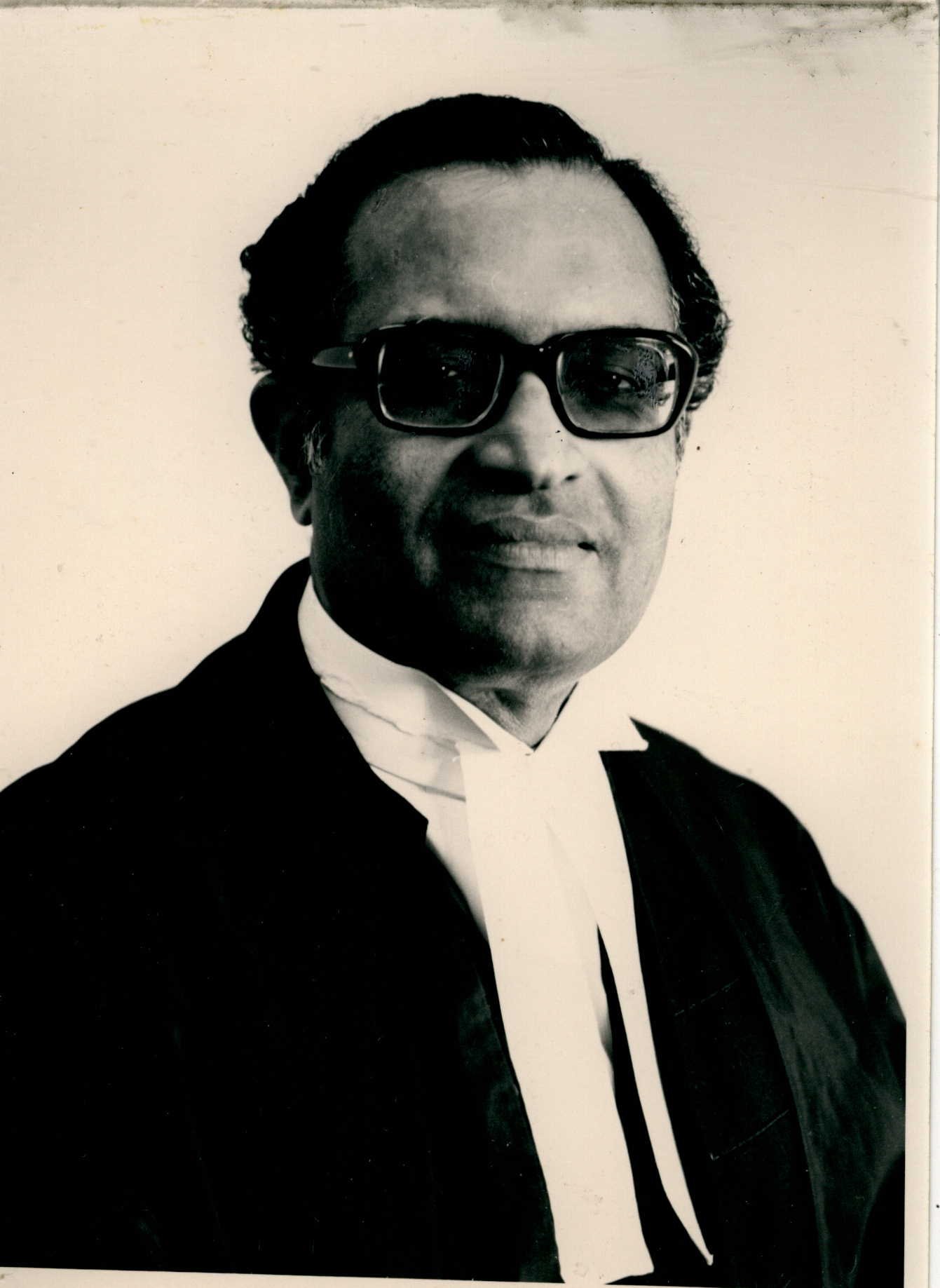
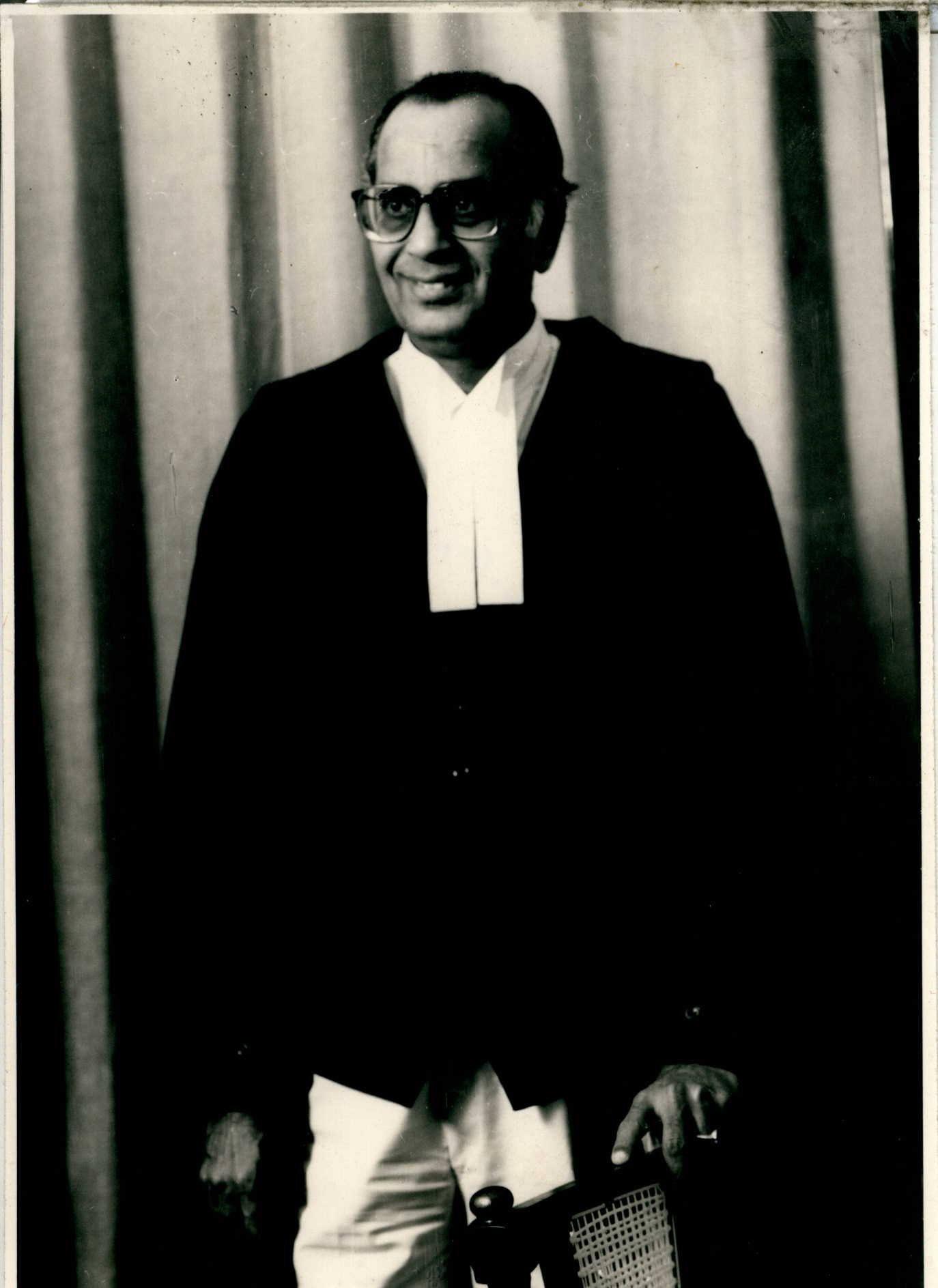
http://JUDIS.NIC.IN SUPREME COURT OF INDIA Page 1 of 8
PETITIONER:
GUJCHEM DISTILLERS INDIA LTD.
Vs.
RESPONDENT:
STATE OF GUJARAT AND ANR.
DATE OF JUDGMENT17/02/1992
BENCH:
MOHAN, S. (J)
BENCH:
MOHAN, S. (J)
SAWANT, P.B.
CITATION:
1992 AIR 1256 1992 SCR (1) 675
1992 SCC (2) 399 JT 1992 (2) 20
1992 SCALE (1)447
ACT:
Bombay Prohibition Act, 1949-Section 58(A)-
Constitutional validity of-supervision under-Legality of.
Constitution of India, 1950-Article 136-Appeal-matter
not contended before High court whether permitted to contend
in appeal.
HEADNOTE:
The appellant, a company registered under the Indian
Companies Act, 1956, was using industrial alcohol as one of
the raw materials for manufacturing resins, chemicals,
sodium carboxy methyl, cellulose and certain other
chemicals. In May, 1970, the company installed its own
distillery for the purpose of manufacturing industrial
alcohol from mollasses.
The respondent No.2 on 3.7.1969 issued a licence to the
company for manufacturing spirit. In accordance with the
conditions No. 2 and No. 3, the respondent No. 2 appointed a
9 member supervisory staff consisting of one Inspector, one
Sub-Inspector, one Nayak, one Jamadar and five constables,
to supervise the manufacture of the spirit in the company's
distillery plant. The appellant-company was required to
provide residential accommodation to the supervisory staff
within its factory premises and to deposit supervisory
charges from time to time. The company complied the
requirements.
In 1973 the appellant-company filed a Civil Application
in the High Court challenging the constitutional validity of
the Section 58(A) of the Bombay Prohibition Act, 1949.
The High Court dismissed the petition, hence this
appeal by certificate granted by the High Court under
Articles 132(1)133(1)(a) of the Constitution.
The appellant-company contended that this Court in
Synthetics and Chemicals Ltd. case, [1989] Supp.1 SCR 623
held that in respect of
676
industrial alcohol, the States had no power to impose the
impost;that in view of the judgment of this Court, the
theory of privilege as adumbrated by the High Court could
not be sustained, and that there was no quid pro quo.
The respondent-State submitted that the Synthetics and
http://JUDIS.NIC.IN SUPREME COURT OF INDIA Page 2 of 8
Chemicals Ltd. case dealt merely with the vend fees, and not
about supervisory charges.
Dismissing the appeal, this Court
HELD: 1.01. The States have the power to regulate the
use of alcohol and that power must include power to make
provisions to prevent and/or check industrial alcohol being
used as intoxicating or drinkable alcohol. This is an added
reasoning to uphold the validity of Section 58(A).
[684D, F-G]
Synthetics & Chemicals Ltd.v.State of U.P. and Ors.,
[1989] Supp.1 SCR 623-Followed.
1.02.Section 58(A) of the Bombay Prohibition Act
creates a statutory duty of supervision and incidentally
provides for recovering from a manufacturer or a businessman
having been permitted under a licence to carry on lawfully a
business or industrial activity which would otherwise have
been unlawful. [684G-685A]
1.03.The maintenance of the staff contemplated under
Section 58(A) of the Act is primarily for the purpose of
ensuring that while dealing with industrial alcohol, no
attempt shall be made to divert non-potable alcohol.
Therefore, by regulatory measures, the State sees to it that
industrial alcohol is not diverted for the use as potable
alcohol. Such a regulatory measure is perfectly valid.
However, such a power was sustained though not on police
power but as a regulatory measure. [679C-D]
Southern Pharmaceuticals & Chemicals v. State of
Kerala, AIR 1981 S.C. 1863; Sh. Bileshwar Khand Udyog Khedut
Sahakari Mandali Ltd. v. The State of Gujarat & Anr., C.A.
No. 503 of 1974-Followed.
2. The appellants are precluded from contending that
the services did not make the impost, since the High Court
has noted that it was not contended before it that there was
not sufficient quid pro quo between the
677
quantum of impost and the services rendered to the
manufacturer or businessman. [679E-F]
JUDGMENT:
CIVIL APPELLATE JURISDICTION: Civil Appeal No. 350 of
1974.
Appeal by Certificate from the Judgment and Order dated
29/30-8-1973 of the Gujarat High Court in Special Civil
Application No. 163 of 1973.
M.H.Baig, Rajiv Shakdhar, R.Sasi Prabhu (for M/s S.A.
Shroff & Co.) for the Appellants.
P.S. Poti, Bimal Roy Jad. Anip Sachthey and Ms. Rashmi
Dhariwal for the Respondents.
The Judgment of the Court was delivered by
MOHAN, J. This is an appeal by certificate granted by
the High Court of Gujarat at Ahmedabad under articles 132(1)
and 133 (1)(a) of the Constitution of India. It is directed
against the judgment dated 29/30th August, 1973 in special
Civil Application No. 163 of 1973.
The facts leading to this appeal are briefly as under:-
The Appellant is a company registered under Indian
Companies Act. It is engaged in the business of
manufacturing resins, chemicals, sodium carboxy methyl,
cellulose and certain other chemicals. Industrial alcohol is
one of the raw materials used by the appellant company.
Though, till the year 1969, the appellant was
purchasing industrial alcohol from the market, it installed
its own distillery from may 1970 at Bilimora, within the
http://JUDIS.NIC.IN SUPREME COURT OF INDIA Page 3 of 8
State of gujarat. This was for the purpose of manufacturing
industrial alcohol from molasses.
On July 3rd, 1969 the second respondent, the Director
of Prohibition and excise, Gujarat State, Ahmedabad issued a
licence to the appellant for manufacturing spirit. In
accordance with the conditions No. 2 and 3 of the licence,
the 2nd respondent appointed a staff of 9 persons. The said
staff consisted of one Inspector, one Sub-Inspector, one
Nayak, one jamadar and five constables to supervise the
manufacture of spirit in the
678
appellant's distillery plant. The appellant was also
required to provide residential accommodation to the
supervisory staff within the factory premises. On July 3rd,
1969 the 2nd respondent asked the appellant to deposit the
supervisory charges. From time to time, these supervisory
charges were also deposited in accordance with the
directions of 2nd respondent.
It requires to be stated at this stage that the levy of
supervisory charges, is traceable to section 58(A) of Bombay
Prohibition Act of 1949. The Section says:
"Sec.58(A) : The State government may be general
or special order direct that the manufacture,
import, export, transport, storage, sale,
purchase, use collection or cultivation of any
intoxicant, denatured spirituous preparation, hemp,
mhowra flowers, or molasses shall be under the
supervision of such Prohibition and Excise or
Police Staff as it may deem proper to appoint, and
that the cost of such staff shall be paid to the
State Government by person manufacturing,
importing,exporting,transporting, storing,selling,
purchasing, using, collecting or cultivating the
intoxicant, denatured spirituous preparation
hemp, mhowra flowers or molasses:
Provided that the State Government may exempt any
class of persons or institution from paying the
whole or any part of the cost of such staff."
Section 143 of the said Act confers power for making
rules. Rules have been framed called Bombay Prohibition
(Manufacture of Spirit) (Gujarat)Rules, 1963. These rules
inter alia regulate the working of distilleries,
manufacturing spirit. Rule 2 provides for the licence.
Condition Nos.2 and 3 of the licence require payment of the
supervisory staff and for provision of quarters for the
residential accommodation of the staff respectively.
The appellant filled Civil Application No. 163 of 1973
in the High court of Gujarat challenging the constitutional
validity of Section 58(A) of the Act. By the impugned
judgment,, the said petition was dismissed.
Hence, the present civil appeal.
679
The arguments of the appellant briefly stated will boil
down to this. It has been categorically laid down in
Synthetics & Chemicals Ltd. v. State of U.P. & Ors., [1989]
Supp. 1 SCR 623 that in respect of industrial alcohol, the
states have no power to impose the impost as is sought to be
done in the instant case. The theory of privilege as
adumbrated by the High court can no longer be sustained in
view of the judgement.
Even otherwise, there is no quid pro quo.
In countering the submissions, it is argued on behalf
of the State that Synthetics and Chemicals Ltd. etc. (supra)
dealt merely with the vend fees. That is not the case here.
The maintenance of the Staff contemplated under Section
http://JUDIS.NIC.IN SUPREME COURT OF INDIA Page 4 of 8
58(A) of the Act is primarily for the purpose of ensuring
that while dealing with industrial alcohol, no attempt shall
be made to divert nonpotable alcohol. Therefore, by
regulatory measures, the States sees to it that industrial
alcohol is not diverted for the use as potable alcohol.
Such a regulatory measure is perfectly valid as seen from
Southern Pharmaceuticals & Chemicals v. State of Kerala, AIR
1981 SC 1863. This decision was noted with approval in
Synthetics & Chemicals Ltd. Etc. (Supra). However, such a
power was sustained though not on police power but as a
regulatory measure.
As regards the services rendered, the appellants are
precluded from contending that the services did not make the
impost, since the High Court has noted that it was not
contended before it that there was not sufficient quid pro
quo between the quantum of impost and the services rendered
to the manufacturer or businessman.
We are relieved of the necessity of deciding the
correctness of these submissions by a detailed judgment,
since identical points were raised in Civil Appeal No. 503
of 1974 (Sh. Bileshwar Khand Udyog Khedut Sahakari Mandali
Ltd. v. The State of Gujarat & Anr.) to which one of us
(Mohan, J.) was a party. The said Civil Appeal has been
dismissed considering these aspects and upholding the
validity of Section 58(A). The said judgment will squarely
cover this case as well. We fully concur with the reasons
contained therein. In Synthetics & Chemicals Ltd. etc.
(supra) concerning the power to make regulations in order
that non-potable alcohol may not be diverted for use as
potable alcohol, the following observations are found at
page 681:
680
"The position with regard to the control of
alcohol industry has undergone material and
significant change after the amendment of 1956 to
the IDR Act. After the amendment, the state is
left with only the following powers to legislate
in respect of alcohol:
(a) it may pass any legislation in the nature of
prohibition of potable liquor referable to entry 6
of list II and regulating powers.
(b) it may lay down regulations to ensure that
non-potable alcohol is not diverted and misused as
a substitute for potable alcohol.
(c) the State may charge excise duty on potable
alcohol and sales tax under entry 52 of list II,
However, sales tax cannot be charged on industrial
alcohol in the present case, because under the
Ethyl Alcohol (price Control) Orders, sales tax
cannot be charged by the State on industrial
alcohol.
(d) however, in case State is rendering any
service, as distinct from its claim of so-called
grant of privilege, it may charge fees based on
quid pro quo."
In this connection, we may also usefully refer to
southern Pharmaceuticals & Chemicals (supra). This case
related to the constitutional validity of Sections 12-A, 12-
B,14(e) & (f), 68-A of Kerala Abkari Act (1 of 1077) and
Rules 13 and 16 of the Kerala Rectified Spirit Rules, 1972.
One of the contentions raised was that the provision
contained under Section 14 (e) of the Act for the collection
of supervisory charges was clearly invalid inasmuch as:
(a) They are in conflict of Rule 45 of Central Excise
Rules and,
http://JUDIS.NIC.IN SUPREME COURT OF INDIA Page 5 of 8
(b) They could not be sustained as fee as there was no
quid pro quo.
In the said judgment at page 1875, para.27 Southern
Pharmaceuticals & Chemicals (supra) reads as under:
" A fee may be charged for the privilege or
benefit conferred,
681
or service rendered or to meet the expenses
connected there-with. A fee my be, levied to meet
the cost of supervision and may be, something more.
It is in consideration for the privilege, licence
or service".
Again in para 29, it was stated thus:
"There is a broad co-relationship between the fee
collected and the cost of the establishment under
Section 14(e) of the Act it is provided that the
commissioner, with the previous approval of the
Government may prescribe the size and nature of the
establishment necessary for supervision of a
manufactory and the cost of the establishment and
other incidental charges in connection with such
supervision be realised from the licensee. There
can be no doubt that the supervisory staff is
deployed in a bonded manufactory by the Government
for its own protection to prevent the leakage of
revenue, but there is no denying the fact that a
licensee undoubtedly receives a service in return.
The cost of the establishment levied under Section
14(e) of the Act is to be collected from
the licensee in the manner provided by Rule 16(4)
of the Kerala Rectified Spirit Rules, 1972,relevant
part of which reads:
"(4) All the transactions in the spirit store shall
be conducted only in the presence of an Excise
Officer not below the rank of an Excise Inspector.
Such officer shall be assisted by at least two
Excise Guards. The cost of establishment of such
officer and the guards shall be payable by the
licensee in advance in the first week of every
month as per counter-signed challan to be obtained
from such officer. The rate at which the cost of
establishment is to be paid by the licensee shall
be fixed by the Commissioner from time to time and
intimated to the licensee in writing....."
There is admittedly no provision made in the
Central Rules for the recovery of supervisory
charges, perhaps because as the Court observed in
the Hyderabad Chemicals and Pharmaceutical's case
(AIR 1964 SC 1870) (supra) it was felt that the
duty on medicinal and toilet preparations
containing alcohol
682
would be sufficient to defray the cost of such
supervision. But the absence of such a provision
in the Central Rules, as we have already indicated,
does not deprive the State from making a provision
in that behalf. It is true that the supervisory
charges are in the nature of a compulsory exaction
from a licensee and the collections are not
credited to a separate fund, but are taken to the
consolidated fund of the State and are not
separately appropriated towards the expenditure
incurred in redering the service. However, as
observed in Government of Madras v. Zenith Lamp &
Electricals Ltd., [1973] 2 SCR 973; (AIR 1973 SC
http://JUDIS.NIC.IN SUPREME COURT OF INDIA Page 6 of 8
724) followed in State of Rajasthan v. Sajjanlal
Panjawat,[1974] 2 SCR 741; (AIR 1975 SC 706) that
by itself is not decisive, by reason of ART. 266 of
the Constitution. It is equally true that normally
a fee is uniform and no account is taken of the
paying capacity of the recipient of the service,
but absence of uniformity will not make it a tax if
co-relationship is established [see Commissioner
H.R.E., Madras v. Lakshmindra Thirtha Swamiar of
Shirur Mutt and Government of Madras v.Zenith Lamp
and Electricals Ltd., AIR 1954 SC 282 and AIR 1973
SC 724 (supra)]. The cost of supervision would
necessarily vary with the nature and extent of the
business carried on by a licensee. Therefore, the
supervisory charges can be sustained even if they
are regarded as a fee for services rendered by the
State or its instrumentalities."
In dealing with Synthetics Chemical case (supra) the
following observations were made:
"Learned Advocates-General for the States of
Gujarat and Kerala have also made their
submissions, and referred to several decision and
the concept of police power, and contented that
imposition of a fee would be the most effective
method of regulating intoxicating liquor other than
alcohol. According to the Advocate-General of
Kerala, that would be justified as the reasonable
measure in regard to intoxicating liquor. According
to him, it has been accepted by courts all along
that the 'police power' of the State enables
regulations to be made regarding manufacture,
transport, possession
683
and sale of intoxicating liquor. Such police power
could be exercised as to impose reasonable
restriction as to effectuate the power. He
referred to the observations of this Court in
Cooverjee B.Bharucha v. The Excise Commissioner and
the Chief Commissioner, Ajmer & Ors., [1954] SCR
873 which quoted the passage from Crowley v.
Christensen,(1890) 24 Lawyers' Edn. 620. Reference
was also made to Hari Shanker's case (supra). Where
this Court quoted Vol. 38 of the American
Jurisprudence where it was stated that the higher
the fee is imposed for a licence, better is the
regulation. Reliance was also placed on P. N.
Kaushal's case (supra). It was contended that it
has been accepted by this Court that the police
power is excercisable for regulation of an activity
of a legislature within the permissible field or
impost as regulatory measure. It may be valid
though it may neither be fee nor a tax in the
limited sense of the term. See the observations of
this court in Southern Pharmaceuticals & Chemicals.
Trichur & Ors., etc. v. State of Kerala &
Ors.,etc.[1982] 1 SCR 519 at 537 . Regarding
regulatory measures in connection with medicinal
preparations containing alcohol it was observed by
this Court that the impugned provisions had to be
enacted to ensure that the Rectified spirit is not
misused under the pretext of being used for toilet
and medicinal preparations containing alcohol. Such
a regulation is a necessary concomitant of the
police power of the State to regulate such trade or
business which is inherently dangerous to public
http://JUDIS.NIC.IN SUPREME COURT OF INDIA Page 7 of 8
health. The American doctrine of police power is
not perhaps applicable as such in India, but power
of sovereignty to regulate as part of the power of
the competent legislature to effectuate its aim are
there.
It is true that that in the State of West
Bengal v. Subodh Gopal Bose & Ors., [1954]V SCR 587
at 601-604 and Kameshwar Prasad & Ors., v. The
State of Bihar & Anr., [1962] 3 Suppl.SCR 369 the
concept of police power was accepted as such, but
this doctrine was not accepted in India as an
independent power but was recognised as part of the
power of the State to legislate with respect to the
matters enumerated in the State and Concurrent
Lists, subject to constitutional limitations. It
684
was that the American jurisprudence of police
power as distinguished from specific legislative
power is not recognised in our Constitution and is,
therefore, contrary to the scheme of the
Constitution. In interpreting the provisions of our
Constitution, we should go by the plain words used
by the Constitution makers and the importing of
expression like 'police power', which is a term of
variable and indefinite connotation can only make
the task of interpretation more difficult. It was
contended that in enacting a law with respect to
intoxicating liquor as part of the legislative
power measures of social control and regulation of
private rights are permissible and as such may even
amount to prohibition.
We are of the opinion that we need not
detain ourselves on the question whether the States
have the police power or not. We must accept the
position that the States have the power to regulate
the use of alcohol and that power must include
power to make provisions to prevent and or check
industrial alcohol being used as intoxicating or
drinkable alcohol. The question is whether in the
grab of regulations a legislation which is in pith
and substance, as we look upon the instant
legislation, fee or levy which has no connection
with the cost or expenses administering the
regulation, can be imposed purely as regulatory
measure. Judges by the pith and substance of the
impugned legislation, we are definitely of the
opinion that these levies cannot be treated as part
of regulatory measures. in this view of the matter
we do not detain ourselves with examining the
numerous American decisions to which our attention
was drawn by learned counsel very elaborately and
thoroughly."
This is an added reasoning to uphold the validity of
Section 58(A).
Turning to the second argument about the absence of
quid pro quo, we need only extract the following from the
judgment of the High Court:
"Section 58(A) of the Bombay Prohibition Act
creates a statutory duty of supervision and
incidentally provides for recovering from a
manufacturer or a businessman the cost of
supervision which is primarily necessitated by the
manufacturer
685
or businessman having been permitted under a
http://JUDIS.NIC.IN SUPREME COURT OF INDIA Page 8 of 8
licence to carry on lawfully a business or
industrial activity which would otherwise have been
unlawful. We need not go into the details of this
aspect because it has not been contended before us
that if the levy under Section 58A is held to be a
fee, there is no sufficient quid pro quo between
the quantum of the impost and the services rendered
to the manufacturer or businessman."
In the result, the appeal fails and is dismissed with
cost.
V.P.R. Appeal dismissed.
686

 Login with google
Legal Notes
Add a Note....