
As per case facts, the appellants, who were former ministers in Orissa, were prosecuted for criminal misconduct involving disproportionate assets during their tenure. One appellant, Habibulla Khan, challenged the prosecution, ...
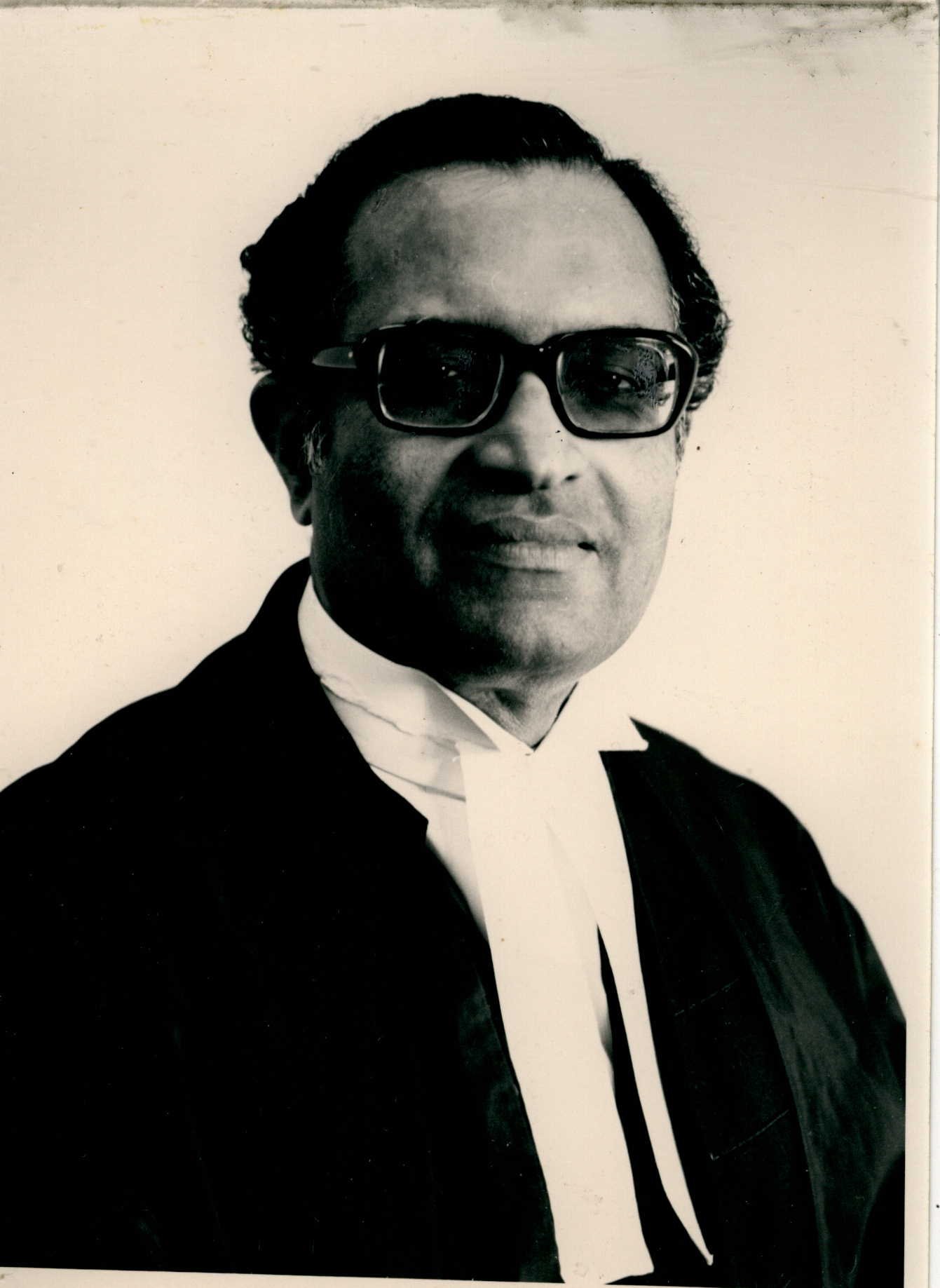

No Acts & Articles mentioned in this case
http://JUDIS.NIC.IN SUPREME COURT OF INDIA Page 1 of 4
PETITIONER:
HABIBULLA KHAN
Vs.
RESPONDENT:
STATE OF ORISSA & ANR.
DATE OF JUDGMENT02/02/1995
BENCH:
SAWANT, P.B.
BENCH:
SAWANT, P.B.
RAY, G.N. (J)
CITATION:
1995 AIR 1123 1995 SCC (2) 437
JT 1995 (2) 1 1995 SCALE (1)419
ACT:
HEADNOTE:
JUDGMENT:
1. Leave granted.
2. A common question of law, viz., whether sanction is
required for launching a criminal prosecution against the
appellants, has been raised in these appeals.
3.The Orissa Special Courts Act,1990 [hereinafter referred
to as the "Special Courts Act"] which came into force on
27th July, 1992 after receiving the assent of the President,
provides for constitution of special courts for the speedy
trial of certain classes of offences and for the
confiscation of the property involved in such offences.
Section 2 [d] of that Act defines "offence" to mean an
offence of criminal misconduct within the meaning of clause
(e) of sub-section [1] of Section 13 of the Prevention of
Corruption Act, 1988 [hereinafter referred to as the "Act"].
Section 5 [1] of the Special Courts Act, as amended by the
Amendment of 1993 reads as follows:
"5 [1]. If the State Government is of the
opinion that there is prima facie evidence of
the commission of an offence alleged to have
been combined by a person who held high public
or political office in the State of Orissa,
the State Government shall make a declaration
to that effect in every case in which it is of
the aforesaid opinion".
4. Rule 2 (1) [f] (i) of the Orissa Special Courts Rules
[hereinafter referred to as the "Rules"] reads as follows:
"2 (1} [f]. "Person holding high political
office" includes-
(i) members of the Council of Ministers and
the Chief Minister".
5.Clause [e] of sub-section [1] of Section 13 of the Act
defines "offence of criminal misconduct" as follows:
"13. Criminal misconduct by a public servant.
- [1] A public servant is said to
commit the offence of criminal misconduct -
http://JUDIS.NIC.IN SUPREME COURT OF INDIA Page 2 of 4
x x x x x x
(e) if he or any person on his behalf, is.
in possession or has, at any time during
the period of his office, been in possession
for which the public servant cannot
satisfactorily account, of pecuniary resources
or property disproportionate to his known
sources of income.
Explanation. - For the purposes of this
section, "known sources of income" means
income received from any lawful source and
such receipt has been intimated in accordance
with the provisions of any law, rules or
orders for the time being applicable to a
public servant.
6. It is not disputed that all the appellants were
Ministers in the Council of Ministers of the respondent-
State of Orissa during the period in which they were alleged
to have been found in possession of pecuniary resources or
property disproportionate to their known sources of income.
Subsequently, they ceased to be Ministers due to the change
of Government and thereafter were elected as the Members of
the Legislative Assembly of the State ["MLA" for short].
They continued to be such Members till the prosecutions were
launched against them for the said criminal misconduct under
Section 13 [1] (e) of the Act.
7. Shri Habibulla Khan, the appellant in the appeal
arising out of SLP No. 1563 of 1993 filed an application
before the Special Court on 25th July, 1991 for recalling
the orders of the cognisance of the offence on the ground
that at the time of taking the cognisance, he was an MLA and
as such a public servant within the meaning of Section 2 [c]
(viii) of the Act and, therefore, he could not be tried for
the offence under Section 13 [1] (e) of the Act without the
sanction of the Governor of the State under Section 19 of
the Act who according to him was competent to remove an MLA
under Article 192 of the Constitution. On 18th January,
1991, the Special Court dismissed the application holding
that an MLA was not a public servant and further the
Governor was not competent to remove an MLA and hence no
sanction was required under the said provision. This order
was assailed by the appellant before the High Court under
Section 482 of the Code of Criminal Procedure on 22nd
January, 1993. The learned Single Judge of the High Court
referred the matter to Division Bench which dismissed the
matter by its impugned judgment of 5th May, 1993 holding
that an MLA is a public servant within the meaning of
Section 2 [c] (viii) of the Act; but the power of "removal"
mentioned in Section 19 of the Act partakes the character of
punishment and the Governor has no power of removal of an WA
under Article 192 of the Constitution by way of punishment.
There was a distinction between the concept of "removal" as
used in Section 19 of the Act and that of "disqualification"
as used in Article 192 of the Constitution. Since the
Governor was not the authority to remove an &MA, the
sanction was not necessary under Section 19 of the Act.
8. The appellant, Nagarjuna Pradhan in appeal arising out
of SLP No.2261 of 1994 raised similar plea on 17th August,
1993 but a long time after the prosecution was launched
against him and 31 prosecution witnesses were examined.
9. Similarly, the appellant, Rama
3
Chandra Ulaka in appeals arising out of to SLP Nos.2259-60
of 1994 raised the same plea belatedly in the two
prosecutions launched against him after 16 and 18 pros-
http://JUDIS.NIC.IN SUPREME COURT OF INDIA Page 3 of 4
ecution witnesses respectively were examined in those cases.
10. The appellants are being prosecuted for the criminal
misconduct which they are alleged to have committed during
the period they were holding high political office within
the meaning of Section 5 [1] of the Special Courts Act read
with Rule 2 (1) [f] (1) of the Rules made under that Act.
The Special Courts Act incorporates the definition of
"criminal misconduct" given in section 13 [1] (e) of the
Act. The procedure for prosecution to be followed, however,
is as laid down under the Special Courts Act. All that the
Special Courts Act requires for launching a criminal pros-
ecution against a person holding high political office is
that the State Government should make a declaration under
Section 5 [1] of that Act that there is prima facie evidence
of the commission of an offence by a person who held high
public or political office in the State. Hence the provi-
sions of Section 19 of the Act do not come into the picture
in the present case. That being so, no sanction of the
Governor or any other authority is necessary for launching
the criminal prosecutions in question.
11. Assuming, however, that the procedure to be followed
before launching criminal prosecution is that under the Act,
the admitted facts are that the appellants are being
prosecuted for the misconduct alleged to have been committed
by them during their tenure as the Members of the Council of
Ministers and not in their capacity as the MLAs. Hence the
provisions of Section 19 of the Act are inapplicable to the
facts of the present case as held in R.S. Nayak v. A.R.
Antulay [(1984) 2 SCR 495].
12. The second question is whether the appellants could be
prosecuted for the offence which they are alleged to have
committed during their tenure as ministers after they ceased
to be the ministers. This question has also been answered
by two decisions of this Court. In S.A. Venkataraman v. The
State [(1958) SCR 1040], it is held while construing similar
provision of Section 6 of the predecessor of the present Act
which provision was similar to the provisions of Section 19
of the present Act that no sanction was necessary for the
prosecution of the appellant in that case, as he was not a
public servant at the time of the taking of cognizance of
the offence. The Court there observed as follows:
"In construing the provisions of a statute it
is essential for a Court, in the first in-
stance, to give effect to the natural meaning
of the words used therein, if those words are
clear enough. It is only in the case of any
ambiguity that a Court is entitled to
ascertain the intention of the legislature.
Where a general power to take cognizance of an
offence is vested in a Court, any prohibition
to the exercise of that power, by any
provision of law, must be confined to the
terms of the prohibition. The words in S.6
(1) of the Act are clear enough and must be
given effect to. The more important words 'in
cl. (c) of s. 6 (1) are "of the authority
competent to remove him from his office". A
public servant who has ceased to be a public
servant is not a person removable from any
office by competent authority. The conclusion
is inevitable that at the time a Court is
asked to take cognizance not only must the
offence have
been committed by a public servant but the
person accused must still be a public servant
http://JUDIS.NIC.IN SUPREME COURT OF INDIA Page 4 of 4
removable from his office by a competent
authority before the provisions of s.6 can
apply."
13.Similarly, a Constitution Bench in Veeraswami v. Union of
India and others [(1991) 3 SCC 655], while construing the
provisions of the same Section 6 of the Prevention of
Corruption Act, 1947 held that no sanction under Section 6
of that Act was necessary for prosecution of the appellant
in that case since he had retired from service on attaining
the age of superannuation and was not a public servant on
the date of filing the charge sheet.
14.However, it was contended that while the Governor had
given sanction to prosecute the Chief Minister when he con-
tinued to be an MLA in the case of R.S. Nayak v. A.R.Antulay
[supra], the question whether the sanction was necessary to
prosecute an MLA as a public servant did not arise. It,
was, therefore, contended that although the offence alleged
to have been committed was during the appellants' tenure as
ministers, the appellants continued to be MLAs and,
therefore, as public servants on the day of the launching of
prosecution and hence sanction of the Governor under Article
192 of the Constitution was necessary. This question has
also been answered in R.S. Nayak v. A.R. Antulay [supra].
Referring to this Court's decision in The State of (S.P.E.
Hyderabad) v. Air Commodore Kailash Chand [(1980) 2 SCR
697], this Court held as follows:
"......... We would however, like to make it
abundantly clear that if the two decisions
purport -to lay down that even if a public
servant has ceased to hold that office as
public servant which he is alleged to have
abused or misused for corrupt motives, but on
the date of taking cognizance of an offence
alleged to have been committed by him as a
public servant which he ceased to be and holds
an entirely different public office which he
is neither alleged to have misused or abused
for corrupt motives, yet the sanction of
authority competent to remove him from such
latter office would be necessary before taking
cogaizance of the offence alleged to have been
committed by the public servant while holding
an office which he is alleged to have abused
or misused and which he has ceased to hold,
the decisions in our opinion, do not lay down
the correct law and cannot be accepted as
making a correct interpretation of Sec.6
Therefore, upon a true construction of Sec. 6,
it is implicit therein that sanction of that
competent authority alone would be necessary
which is competent to remove the public
servant from the office which he is alleged to
have misused or abused for corrupt motive and
for which a prosecution is intended to be
launched against him."
15. Assuming therefore, that the MLA is a public servant
within the meaning of Section 2 (c) (viii) of the Act, in
view of the aforesaid proposition of law laid down in R.S.
Nayak v. A.R. Antulay [supra], this contention also does not
merit any consideration.
16.In view of the above, the appeals are dismissed.
8

 Login with google
Legal Notes
Add a Note....