
As per the case facts, an individual, an Assistant General Manager, faced a complaint and subsequent FIR for allegedly possessing disproportionate income. A charge-sheet was filed years after the period ...

No Acts & Articles mentioned in this case
REPORTABLE
IN THE SUPREME COURT OF INDIA
CRIMINAL APPELLATE JURISDICTION
CRIMINAL APPEAL NO. 1562 OF 2022
ARISING OUT OF SLP (CRL) NO. 9601 OF 2016
KANCHAN KUMAR ...APPELLANT
VERSUS
THE STATE OF BIHAR ...RESPONDENT
J U D G M E N T
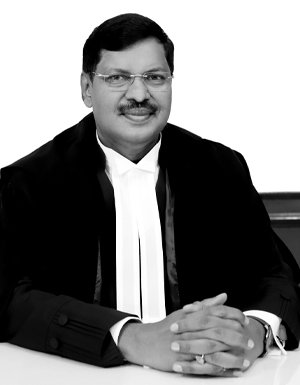
PAMIDIGHANTAM SRI NARASIMHA J.
1. Leave granted.
2.This appeal is against the concurrent dismissals by the
Trial
1
and the High Court
2
of the application for discharge filed by
the Appellant under Section 227 of the Code of Criminal
Procedure, 1973
3
.
1 Special Judge (Vigilance), Patna, in Special Case No. 9 of 2000 dated 28.03.2016.
2 High Court of Judicature at Patna, in Criminal Miscellaneous No. 23031 of 2016 dated
05.10.2016.
3 hereinafter referred to as the ‘Cr.P.C.’
Page 1 of 16
3. Facts leading to the filing of this Appeal: The Appellant
joined the Bihar State Financial Corporation
4
in the capacity of
an Assistant General Manager on 19.07.1974. After a period of
thirteen years, in 1987, a complaint came to be filed against the
Appellant for having allegedly purchased three houses and two
pieces of land in Bihar, which according to the complainant, was
disproportionate to Appellant’s known sources of income. This
complaint was inquired into, and after a detailed investigation,
the allegations were found to be false. Except for a residential
house in Patna, which the Appellant had purchased on
29.08.1988 for Rs. 2,26,500 with the help of a loan from the
BSFC, no other assets could be traced to the ownership of the
Appellant. However, despite finding no merit in the allegation, the
investigation was kept pending.
4.In the meanwhile, life moved on and in 1996, the Appellant
joined the Oil and Natural Gas Commission
5
as Deputy General
Manager on deputation, keeping his lien with the BSFC. Four
years after joining ONGC, an FIR came to be registered against
him on 21.02.2000, under Sections 13(l)(d) and 13(2) of the
4 hereinafter referred to as ‘the BSFC’.
5 hereinafter referred to as ‘the ONGC’.
Page 2 of 16
Prevention of Corruption Act, 1988
6
, on the same allegation that
he possessed assets disproportionate to his known sources of
income. These alleged assets were purportedly acquired during
his tenure with the BSFC, and consequently, the check period in
the FIR was considered from the date he joined BSFC, i.e.,
19.07.1974 to the date of registration of the residential house
purchased by him, i.e., 29.08.1988. The Appellant wrote a letter
to the Director General of Police (Vigilance), Patna, on
18.04.2002, raising a grievance that the calculations in the FIR
undervalued his income and overvalued his assets, thus
depicting a false and inflated account of his expenditure.
5.Eventually a charge sheet came to be filed on 11.09.2007,
i.e., about seven years after the registration of the FIR, and in
fact, twenty years after the complaint on this very allegation was
found to be false by the authorities. Be that as it may, the
chargesheet filed against the Appellant indicated that he earned
a total income of Rs. 3,01,561 and incurred an expenditure of Rs.
5,24,386 during the check period. In view of this, the charge
against the Appellant was of having amassed Rs. 2,22,825,
disproportionate to his known sources of income. The charge
6 hereinafter referred to as the ‘PC Act’.
Page 3 of 16
sheet indicated two components of his income, being i) savings
of Rs. 1,13,081 (1/3
rd
of his salary), and ii) home and car loan
from BSFC worth Rs. 1,88,480. On the other hand, the charge
sheet included six components of his expenditure, being – i)
payment of Rs. 2,26,500 towards the construction of his house,
ii) general expenditure during the check period of Rs. 24,800, iii)
amount in bank deposit worth Rs. 55,000, iv) loan repayment of
Rs. 53,467, v) LIC deposit worth Rs. 6,057, and vi) estimated
value of articles found during a search conducted on 21.02.2000,
as being Rs. 1,58,562.
6.At the relevant stage, the Appellant applied for discharge
under “Section 239” of the Cr.P.C (which should have been under
Section 227
7
) before the Court of Special Judge (Vigilance), Patna,
alleging that there were glaring errors in the calculation.
However, the Court summarily dismissed the application by its
order dated 28.03.2016, without analysing or examining the
documents produced and the arguments advanced. The Court
held that:
7 Though the Appellant stated that the application is under Section 239 of the Cr.P.C., as
Special Judges appointed under the PC Act are deemed to be Court of Session, the
discharge application should have been filed under Section 227 of the Cr.P.C., and not
under Section 239 therein. The Ld counsel for the Appellant Shri Sunil Kumar, Senior
Advocate clarified this position of law while making his submissions.
Page 4 of 16
“Perused the record and I find that there is
sufficient materials against accused in this case
at least prima facie at this stage to frame
charge against the accused against whom there
is allegation that he during the check period
amassed. Although certain explanations have
been advanced by the learned counsel for the
petitioner but the same appears to be looked
into and appreciated during the course of trial
when the accused petitioner wife have a chance
to prevents innocence producing his oral or
documentary evidences. For the present I am
not satisfied with the explanation so produced
by the accused in his favour in support of his
discharge application.
Considering the aforesaid facts and
circumstances the charge petition of the
accused petitioner namely Kanchan Kumar is
hereby rejected. Put up on 22.04.2016 for
framing of charge. The accused is directed to
remaining physically present on the date so
fixed by this court for framing of charge.”
7.Aggrieved by the dismissal of his application for discharge,
the Appellant moved the High Court. After recounting the
chronology of events, the High Court proceeded to quote
judgment after judgment, and finally dismissed the revision
application by merely holding that:
“15. In the aforesaid circumstances, even if
considering the submissions made on behalf of
petitioner, for argument’s sake needs proper
verification attracting roving enquiry which
could be permissible only during course of trial.
Page 5 of 16
16. Much emphasis has been laid at the end of
the petitioner relating to valuation. With the cost
of repetition, the contention of the petitioner is
that as the raid was conducted on 21.02.2000,
on account thereof, the valuation having been
shown against the article so seized at the end
of the Vigilance must be considered to be in
consonance with the date of recovery. That
argument happens to be fallacious in the
background of the fact that from the case diary,
it is evident that valuation has been estimated
only. There happens to be complete absence of
prima facie material whereupon one could infer
that the value so affixed at that very moment
was prevailing rate on the alleged date of
seizure. Furthermore, to ascertain genuineness
on this score will again attract roving enquiry
which for the present stage is found forbidden.
17. Consequent thereupon, the instant petition
is found devoid of merit and is, accordingly,
rejected.”
8.It is against the aforesaid order that the Appellant has
approached this Court.
9.Submissions of parties:The Ld. Senior Counsel Shri Sunil
Kumar has submitted that the basic objection relating to the
calculation and wrongful inclusion of certain items was sufficient
for the Trial Court to discharge the Appellant. In a simple and
straight forward submission, he took us through certain glaring
errors that were evident from the record of the case before the
Page 6 of 16
Special Judge (Vigilance). In support of his submissions, he also
referred to the decisions of this Court in Union of India v. Prafulla
Kumar Samal and Anr.
8
and Ghulam Hassan Beigh v. Mohammad
Maqbool Magrey
9
.
10.The counsel for the Respondent Shri Abhinav Mukerji AOR,
has contended that the Trial Court was right in dismissing the
discharge application. He submitted that the Courts could not
have conducted a roving inquiry while adjudicating an
application under Section 239 of the Cr.P.C.
11.Issue: The short question arising for consideration is
whether the Appellant is entitled to be discharged of the
proceedings initiated against him under the PC Act.
12.Legal provision and precedents: Section 227 of the Cr.P.C
relating to discharge is as under:
“227. Discharge — If, upon consideration of
the record of the case and the documents
submitted therewith, and after hearing the
submissions of the accused and the prosecution
in this behalf, the Judge considers that there is
not sufficient ground for proceeding against the
accused, he shall discharge the accused and
record his reasons for so doing.”
8 (1979) 3 SCC 4.
9 2022 SCC OnLine SC 913.
Page 7 of 16
13.The threshold of scrutiny required to adjudicate an
application under Section 227 of the Cr.P.C., is to consider the
broad probabilities of the case and the total effect of the material
on record, including examination of any infirmities appearing in
the case. In Prafulla Kumar Samal (supra), it was noted that:
“10. Thus, on a consideration of the authorities
mentioned above, the following principles
emerge:
(1) That the Judge while considering the
question of framing the charges under
Section 227 of the Code has the undoubted
power to sift and weigh the evidence for the
limited purpose of finding out whether or not
a prima facie case against the accused has
been made out.
(2) Where the materials placed before the
Court disclose grave suspicion against the
accused which has not been properly
explained the Court will be fully justified in
framing a charge and proceeding with the
trial.
(3) The test to determine a prima facie case
would naturally depend upon the facts of
each case and it is difficult to lay down a
rule of universal application. By and large
however if two views are equally possible
and the Judge is satisfied that the evidence
produced before him while giving rise to
some suspicion but not grave suspicion
against the accused, he will be fully within
his right to discharge the accused.
Page 8 of 16
(4) That in exercising his jurisdiction under
Section 227 of the Code the Judge which
under the present Code is a senior and
experienced court cannot act merely as a
Post Office or a mouthpiece of the
prosecution, but has to consider the broad
probabilities of the case, the total effect of the
evidence and the documents produced before
the Court, any basic infirmities appearing in
the case and so on. This however does not
mean that the Judge should make a roving
enquiry into the pros and cons of the matter
and weigh the evidence as if he was
conducting a trial.”
(emphasis supplied)
14. In Sajjan Kumar v. Central Bureau of Investigation
10
, the
Court cautioned against accepting every document produced by
the prosecution on face value, and noted that it was important to
sift the evidence produced before the Court. It observed that:
“21. On consideration of the authorities about
the scope of Sections 227 and 228 of the Code,
the following principles emerge:
...
(v) At the time of framing of the charges, the
probative value of the material on record cannot
be gone into but before framing a charge the
court must apply its judicial mind on the
material placed on record and must be satisfied
that the commission of offence by the accused
was possible.
(vi) At the stage of Sections 227 and 228, the
court is required to evaluate the material and
10 (2010) 9 SCC 368.
Page 9 of 16
documents on record with a view to find out if
the facts emerging therefrom taken at their face
value disclose the existence of all the
ingredients constituting the alleged offence. For
this limited purpose, sift the evidence as it
cannot be expected even at that initial stage to
accept all that the prosecution states as gospel
truth even if it is opposed to common sense or
the broad probabilities of the case...” (emphasis
supplied)
15. Summarising the principles on discharge under Section 227
of the Cr.P.C, in Dipakbhai Jagdishchandra Patel v. State of
Gujarat,
11
this Court recapitulated:
“23. At the stage of framing the charge in
accordance with the principles which have been
laid down by this Court, what the court is
expected to do is, it does not act as a mere post
office. The court must indeed sift the material
before it. The material to be sifted would be the
material which is produced and relied upon by
the prosecution. The sifting is not to be
meticulous in the sense that the court dons the
mantle of the trial Judge hearing arguments
after the entire evidence has been adduced
after a fullfledged trial and the question is not
whether the prosecution has made out the case
for the conviction of the accused. All that is
required is, the court must be satisfied that with
the materials available, a case is made out for
the accused to stand trial. A strong suspicion
suffices. However, a strong suspicion must be
founded on some material. The material must
be such as can be translated into evidence at
11 (2019) 16 SCC 547.
Page 10 of 16
the stage of trial. The strong suspicion cannot
be the pure subjective satisfaction based on the
moral notions of the Judge that here is a case
where it is possible that the accused has
committed the offence. Strong suspicion must be
the suspicion which is premised on some
material which commends itself to the court as
sufficient to entertain the prima facie view that
the accused has committed the offence.”
(emphasis supplied)
16.1 Analysis: Without getting into too many details, we
consider it to be appropriate and in fact sufficient to confine our
inquiry to three heads of expenditure indicated in the charge
sheet itself. This limited inquiry will also satisfy the requirements
of Section 227 of the Cr.P.C.
16.2 The first objection pertains to the inclusion an amount
of Rs. 55,000, recorded as the balance amount in the Appellant’s
bank account during the check period, and accordingly counted
as an expenditure in the charge sheet. However, the Bank
Passbook filed by the Appellant, which was available to the
Investigation Officer and the Special Judge (Vigilance), evidently
records a balance amount of only Rs. 11,998 during the check
period. The difference in the figures was not explained by the
Prosecution. Accordingly, the Special Judge (Vigilance) and the
Page 11 of 16
High Court failed to reconcile such a simple and straightforward
inconsistency in the Prosecution’s evidence. We are of the opinion
that only an amount of Rs. 11,998, recorded in the Appellant’s
Bank Passbook during the checkperiod as the balance amount,
is validly admissible as expenditure under this head.
16.3 The second objection relates to the inclusion of an
amount of Rs. 53,467 as expenditure towards repayment of the
loan from the BSFC. However, the amount repaid towards loan
instalments was already deducted from Appellant’s gross salary,
and the deducted figure was recorded as the total disposable
income with the Appellant during the check period. Hence, the
loan repayment cannot be separately counted as an expenditure
yet again. This is a glaring mistake. The Special Judge (Vigilance)
as well as the High Court did not consider this objection on the
ground that a roving inquiry is not permissible the stage of
discharge.
16.4 The third objection relates to the inclusion of Rs.
1,58,562 as the value of the articles found during a search
conducted in Appellant’s house on 21.02.2000, twelve years after
the check period of 1974 to 1988. There is nothing to indicate,
Page 12 of 16
even prima facie, that these articles found during the search in
the year 2000 were acquired during the check period. In the
absence of any material to link these articles as having been
acquired during the check period, it is impermissible to include
their value in the expenditure. We are therefore of the opinion
that the Appellant’s objection about inclusion of this amount in
the list of expenditure is fully justified. Unfortunately, even this
objection, which did not require much scrutiny of the material on
record, was not considered by the Special Judge (Vigilance) or the
High Court.
17. The three heads of expenditure discussed hereinabove must
be excluded from Appellant’s total alleged expenditure during the
check period. First, the Appellant’s actual balance amount
reflected in the Bank Passbook, i.e., Rs. 11,998, as against the
purported account balance of Rs. 55,000, must be taken into
account. Further, the second and third amounts, as indicated
above, must be excluded from Appellant’s total expenditure
mentioned in the chargesheet. Accordingly, the total expenditure
comes only to Rs. 2,69,355, and not Rs. 5,24,386, which is based
on certain mistakes that we have indicated hereinabove. It is this
Page 13 of 16
expenditure of Rs. 2,69,355 which is to be contrasted with the
income of Rs. 3,01,561 during the checkperiod. These facts
clearly demonstrate that there is no prima facie case made out by
the prosecution and therefore the Appellant was entitled to be
discharged.
18.The conclusions that we have drawn are based on materials
placed before us, which are part of the case record. This is the
same record that was available with the Special Judge (Vigilance)
when the application under Section 227 of the Cr.P.C. was taken
up. Despite that, the Special Judge (Vigilance) dismissed the
discharge application on the simple ground that a roving inquiry
is not permitted at the stage of discharge. What we have
undertaken is not a roving inquiry, but a simple and necessary
inquiry for a proper adjudication of an application for discharge.
The Special Judge (Vigilance) was bound to conduct a similar
inquiry for coming to a conclusion that a prima facie case is made
out for the Appellant to stand trial. Unfortunately, the High Court
committed the same mistake as that of the Special Judge
(Vigilance).
Page 14 of 16
19.Apart from the above analysis, we would note with great
distress that the allegation relating to Appellant’s
disproportionate income in the period between 1974 and 1988
was levelled in an FIR filed twelve years after the said period
concluded. The chargesheet came to be filed seven years after
the registration of the FIR. The application for discharge came to
be dismissed on 28.03.2016, almost after a decade of filing of the
charge sheet. The dismissal was affirmed by the High Court
seven months thereafter, i.e., on 05.10.2016. Finally, and most
unfortunately, the present SLP has been pending before this
Court for the last six years. In the meanwhile, the Appellant
superannuated from service in 2010, but had no option except to
contest the case. He is now 72 years. Continuation of the
prosecution, apart from the illegality as indicated hereinabove,
would also be unjust.
20.For the reasons stated above, we allow the Criminal Appeal
arising out of SLP (Crl) No. 9601 of 2016, and set aside the
judgment and order of the High Court of Patna in CRLM No.
23031 of 2016 dated 05.10.2016, and that of the Court of Special
Page 15 of 16
Judge (Vigilance), Patna in Special Case No. 09 of 2000, dated
28.03.2016, and discharge the Appellant.
21.No order as to costs.
……………………………….J.
[B.R. GAVAI]
……………………………….J.
[PAMIDIGHANTAM SRI NARASIMHA]
NEW DELHI;
SEPTEMBER 14, 2022
Page 16 of 16

 Login with google
Legal Notes
Add a Note....