
As per case facts, the petitioner, a CISF constable, was removed from service following a major penalty charge sheet for consuming alcohol while on duty, which led to incomplete training ...
No Acts & Articles mentioned in this case
IN THE HIGH COURT AT CALCUTTA
Constitutional Writ Jurisdiction
Appellate Side
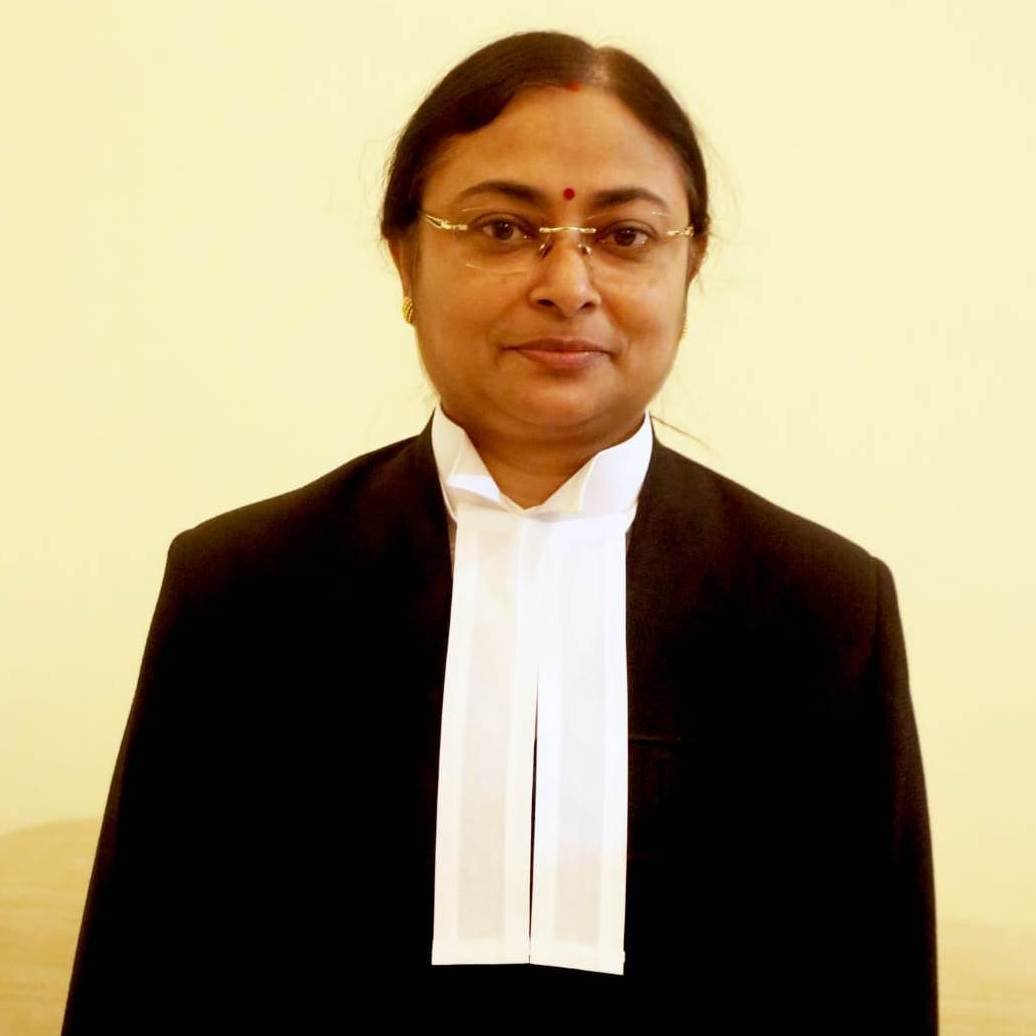
Present :- Hon’ble Justice Amrita Sinha
WPA No. 26270 of 2024
Karamveer Singh
Vs.
The Union of India & Ors.
For the writ petitioner :- Ms. Jhuma Sen, Adv.
Ms. Swastika Chatterjee, Adv.
Ms. Aasthita Dutta Majumder, Adv.
Mr. Samsul Laskar, Adv.
For the Union of India :- Mr. Swapan Kumar Nandi, Adv.
Mr. Pradyut Saha, Adv.
Ms. Shreyosi Chakraborty, Adv.
Hearing concluded on :- 18.05.2026
Judgment on :- 21.05.2026
Amrita Sinha, J.:-
1. The petitioner was serving as a constable in the Central Industrial
Security Force (CISF). A major penalty charge sheet under Rule 36 of
CISF Rules, 2001 was issued against him on 25
th
January, 2023. After
conducting a disciplinary proceeding, the petitioner was removed from
service on 4
th
May, 2023. An appeal was preferred before the appellate
authority who affirmed the order of the disciplinary authority. A petition
for revision was filed thereafter, which also stood rejected.
2. The charge against the petitioner was that he consumed liquor while on
duty and was found under the influence of liquor. Breath analyser test
2
was conducted to ascertain consumption of liquor. The same was found
positive. Consuming liquor while he was on duty has been held to be an
act of indiscipline and unbecoming of a member of the disciplined Force.
Due to such indisciplined act, he was sent back to his unit for which he
could not complete the rotational training and thus failed to perform his
duty and the responsibility assigned to him. Such act was held to be
disobedience of lawful order, dereliction of duty and unbecoming of a
disciplined member of the armed Force.
3. Further charge was that despite providing reasonable opportunity to
improve and mend himself, the petitioner developed incorrigible habit of
consuming alcohol during discharge of bona fide Government duty during
duty hours which is highly unbecoming of a disciplined member of the
armed Force. Four minor punishm ents for his indisciplined act,
negligence in duty, misconduct and disobedience of lawful order was
earlier awarded to him. All the four minor punishments were awarded in
respect of acts committed under the influence of alcohol during duty
hours.
4. The penalty of removal from service which shall not be disqualification of
future employment under the Government was imposed upon him. The
petitioner has challenged the disciplinary proceeding and the penalty
imposed upon him. He has prayed for setting aside the order passed by
the disciplinary authority, affirmed by the appellate and revising
authority.
3
5. Submission of the petitioner is that the contents of the charge
memoranda were ambiguous and specifics regarding the petitioner’s act
of indiscipline, dereliction of duty were not mentioned. It has been alleged
that there is no substantive evidence or complaint of alcohol
consumption, altercation, neglect of duty or disobedience towards any
superior officials during the training course.
6. The charge memoranda failed to specify the identities of the individuals
who were allegedly disturbed or subjected to pressure by the petitioner on
the influence of alcohol. It has been contended that apart from taking
breath analyser test, the authority ought to have conducted blood and
urine test of the petitioner to get a more conclusive finding on the level of
intoxication.
7. It has been argued that the breath test result of the petitioner did not
contain the details such as the presence of alcohol odour, gait
abnormalities, speech impairment, consciousness level or whether the
alcohol consumption was moderate or excessive.
8. It has been further argued that the charge memoranda did not clarify
whether the breath test result was final or standard assessment
conducted by the doctor. The breath analysers do not directly measure
complete alcohol contents and, as such, further analysis of alcoholism
through blood and urine samples ought to have been conducted. The
authorities failed to conduct and subject the petitioner to the divided
attention test, walk and run test or the one leg stand test.
4
9. It has been admitted that though the petitioner consumed alcohol in
small quantity but he was not intoxicated and did not exert any undue
influence on any individual.
10. It has been highlighted that none of the prosecution witnesses examined
during the disciplinary proceeding testified either in the examination-in-
chief or cross that the petitioner behaved in an intoxicated manner,
engaged in physical altercation, used abusive language or behaved in a
manner which may be taken as gross indiscipline, dereliction of duty or
unbecoming of a member of an armed Force.
11. Learned advocate for the petitioner relies on the decision passed by the
Hon’ble Supreme Court in the matter of Roop Singh Negi vs. Punjab
National Bank & Ors. reported in (2009) 2 SCC 570 wherein the Court
held that in a disciplinary proceeding a decision must be arrived at on
some evidence, which is legally admissible. The provisions of the Evidence
Act may not be applicable in a departmental proceeding, but the
principles of natural justice are. Suspicion, however high it may be, can
under no circumstances be held to be substitute for legal proof.
12. According to the petitioner, the breath analyser test report relied upon by
the authority was not sufficient to arrive at a confirmed conclusion that
the petitioner acted under influence of alcohol.
13. The petitioner also relies on the judgment delivered by the Hon’ble
Supreme Court in the matter of Bachubhai Hassanalli Karyani –vs-
State of Maharashtra reported in 1971(3) SCC 930 wherein the Hon’ble
5
Supreme Court held that in the absence of proper report it cannot be
inferred that the person was drunk at the time the accident occurred. No
urine test of the appellant was carried out and although the blood of the
appellant was sent for chemical analysis, no report of the analysis was
produced by the prosecution. Penalty was imposed on the conclusion of
the doctor that the appellant’s breath was smelling of alcohol, his gait was
unsteady, his speech was incoherent and his pup ils were dilated. The
Court interfered with the penalty imposed upon the person.
14. According to the petitioner, the punishment imposed upon him is highly
disproportionate. The authority ought not to have imposed capital
punishment in the absence of proper test result to determine alcoholism.
15. In support of such submission, reliance has been placed on the judgment
delivered by the Hon’ble Supreme Court in the matter of Munna Lal –vs-
Union of India & Ors. reported in (2010) 15 SCC 399 wherein the Court
held that in the absence of positive evidence, charge levelled against the
delinquent was not proved satisfactorily. The disciplinary authority
should not have imposed the penalty. The Court was pleased to interfere
with the penalty imposed.
16. Reliance has also been placed on the judgment delivered by the Hon’ble
Division Bench of this Court in Narendra Dutta Rai –vs- Union of India
reported in 2018 SCC OnLine Cal 8613 : (2018) 5 CHN 208 wherein the
Court held that before imposing major penalty upon an employee , the
respondent authorities ought to have conducted the necessary medical
6
test(s) to come to a definite finding that the employee was under the
influence of alcohol which resulted in his misconduct. The respondents
ought to have satisfied themselves that the employe e was in such a
mental and physical condition so as to deprive him of clearness of
intellect and control of himself which he would otherwise possess and the
said behaviour was under the influence of alcohol. In the absence of any
corroborating piece of evidence, an employee ought not to be removed
from service.
17. Learned advocate for the respondents opposes the submission and prayer
made by the petitioner. The affidavit in opposition affirmed by the senior
commandant of the CISF unit, Farakka Barrage project , Farakka has
been relied upon. It has been submitted that the petitioner is addicted to
alcohol and he has developed an incorrigible habit of consuming alcohol
during discharge of Government duties. In spite of providing reasonable
opportunities to mend himself, he showed no improvement.
18. It has been submitted that members of CISF are deployed in barrages,
ports, airports, Government buildings, VIP security, atomic energy, space
installation, power plants etc. which demands highest level of obedience
and discipline. Any disobedience of lawful order or negligence/ dereliction
of duty or refusal of duty/ order may lead to loss of lives and properties.
The petitioner cannot be entrusted with any responsibility which may
make the life and put the property of others in danger. He cannot be
trusted with any kind of sensitive duty.
7
19. It has been contended that reasonable opportunity was provided to the
petitioner to defend himself and disprove the allegations levelled against
him. There hasn’t been violation of the principle of natural justice. Proper
evidence by the breath analyser test was relied upon to conclude that the
petitioner was under the influence of alcohol. Despite clear direction of
CISF Unit at Farakka that, none should leave the unit campus without
permission of the competent authority; the petitioner, contravening the
lawful direction, went out for consuming alcohol.
20. It has been argued that being a member of the armed Force of the Union
of India engaged in highly sensitive duty, a high standard of discipline is
expected from the Force personnel. The same enhances the image of the
disciplined Force. The petitioner often indulges in the act of contempt by
displaying poor conduct. The petitioner had to be sent back to his parent
unit without completing the rotational training for which he was detailed
by CISF unit FPB, Farakka. Getting intoxicated by consuming alcohol
while on Government duty amounts to gross misconduct.
21. The respondents contend that the petitioner himself admitted that he
consumed alcohol during lunch at a dhaba. It has been argued that as
the delinquent member admitted of consuming alcohol, there was no
requirement of conducting other tests of blood and urine, as claimed by
the petitioner.
22. Respondents stress that the scope of judicial review in disciplinary
proceeding is extremely limited and the Court ought not to interfere with
8
the penalty imposed. It has been denied that the punishment is
disproportionate as alleged by the petitioner. It has been submitted that
the employer, upon perusal of all evidences, decided to remove the
petitioner from service. As there are sufficient evidences for imposing
such punishment, accordingly, there is no scope to entertain the prayer of
the petitioner.
23. It has been submitted that penalty of removal from ser vice has been
imposed upon the petitioner by the disciplinary authority. The same has
been affirmed by the appellate and the revising authority. Prayer has been
made by the respondents not to interfere with the penalty imposed.
24. Learned advocate for the respondents relies on the judgment delivered by
the Hon’ble Supreme Court in the matter of Union of India & Ors. Vs.
Const. Sunil Kumar reported in (2023) 3 SCC 622 wherein the Court
held that imposing appropriate punishment/ penalty is the prerogative of
the disciplinary authority. For interfering with the penalty/ punishment,
the same has to be strikingly disproportionate to the gravity of the
offence. According to the respondents, the penalty imposed upon the
petitioner is appropriate and just. The same ought not to be interfered
with.
25. Reliance has also been placed on the judgment delivered by the Hon’ble
Supreme Court on 15
th
July, 2019 in Civil Appeal No. 5525 of 2019
arising out SLP (C) 31448 of 2018 in the matter of Union of India & Ors.
–vs- Narendra Dutta Rai & Anr. wherein the Court held that no Force
9
can be run if constables are allowed to abuse their seniors, threaten them
with dire consequences in a state of over-drunkenness. It has been
submitted that the petitioner is strongly addicted towards alcohol and his
conduct is unbecoming of a member of the disciplined Force.
26. Reliance has also been placed on the judgment delivered by the Hon’ble
Division Bench of this Court on 9
th
July, 2025 in MAT 2290 of 2024 with
IA no. CAN 1 of 2025 and IA no. CAN 2 of 2025 in the matter of Union of
India & Ors. –vs- R. Kasivelu wherein the Court was pleased to uphold
the punishment of dismissal from service by holding that the penalty
ought not to be interfered with unless the same is strikingly
disproportionate.
27. Reliance has been placed on the judgment delivered by the Hon’ble
Supreme Court in the matter of State of Rajasthan & Ors. Vs.
Bhupendra Singh reported in 2024 Online SC 1908 wherein the Court
relied upon various earlier decisions passed by the Hon’ble Supreme
Court and reiterated that reappraisal of facts and evidence in judicial
review is impermissible.
28. Reliance has also been placed on the judgment delivered by the Hon’ble
Supreme Court in the matter of Union of India & Ors. vs. Subrata
Nath reported in 2022 SCC Online SC 1617; 2023(1) CHN (SC) 70
wherein the Hon’ble Supreme Court commented on the non -desirability of
continuing a delinquent member in the armed Force by ignoring his past
conduct while imposing the penalty of dismissal from service.
10
29. Prayer has been made to dismiss the writ petition.
30. Upon hearing the submissions made on behalf of both the parties and on
perusal of the materials placed before this Court it appears that as many
as three charges were framed against the petitioner. First, the petitioner
while detailed over second batch rotational training at STC CISF unit,
FSTPP, Farakka with effect from 16
th
January, 2023 to 20
th
January,
2023 consumed alcohol and was found under the influence of alcohol
during fall-in at 15 hours on 17
th
January, 2023. His breath analyser test
was found to be positive by the doctor of NTPC, Farakka. Such act of
consuming alcohol during duty hours amounts to gross indiscipline,
dereliction of duty and unbecoming of a disciplined member of the armed
Force of the Union, like CISF.
31. Second, the petitioner was found under the influence of alcohol at 15
hours on 17
th
January, 2023 and for this indiscipline during the course of
duty, he was sent back to FBP Farakka, and thus, he did not complete
the rotational training for which he was detailed by the office and, hence
failed to perform his duty and responsibility assigned to him. Such act
was found to be gross indiscipline, disobedience of lawful order,
dereliction of duty and unbecoming of a disciplined member of an armed
Force of the Union, like CISF.
32. Third, the petitioner was awarded four minor punishments for in -
disciplined act, negligence in duty, misconduct and disobedience of lawful
order. In spite of providing reasonable opportunity to mend himself, the
11
petitioner developed incorrigible habit of consuming alcohol during
discharge of duty in the duty hours which is highly unbecoming of a
disciplined member of an armed Force of the Union, like CISF.
33. A departmental enquiry was conducted and the petitioner was given
fullest opportunity to defend himself. In the enquiry proceeding, the
petitioner admitted of consuming alcohol in small quantity. The breath
analyser test conducted upon the petitioner was found to be positive.
34. The sheet anchor of the petitioner’s submission is that apart from the
breath analyser test, no other test to prove alcoholism was conducted.
According to the petitioner, blood and urine test also should have been
conducted to prove alcoholism.
35. The other contention of the petitioner is that, assuming that the petitioner
consumed alcohol, but he did not behave in any manner which could
have been held to be unbecoming of the member of the Force. It has been
stressed that the petitioner was not intoxicated and did not disturb any
other individual. There was no compliant from any other member of the
Force against the petitioner alleging consumption of alcohol.
36. Submission has been advanced that drinking alcohol, per se, does not
amount to misconduct. If only the petitioner behaved differently,
disturbed people or acted in an unruly manner, then misconduct may
have been alleged. By mere consumption of alcohol which the petitioner
admits, the capital punishment of removal from service ought not to have
been imposed.
12
37. From the tenor of the submission made on b ehalf of the petitioner it is
evident that the fact of consuming alcohol has not been denied. On the
contrary, the same has been admitted by the petitioner at the time of
giving evidence and the same has also been admitted in the averment of
the instant writ petition.
38. Learned advocate for the petitioner has painstakingly tried to make out a
case that, as consuming alcohol during duty hours, per se, does not
constitute misconduct as per the CISF Act, 1968 and the Rules made
thereunder and even if consuming alcohol is taken as misconduct, then
the capital punishment of removal from service ought not to have been
imposed. The punishment imposed upon the petitioner is submitted to be
grossly disproportionate to the offence committed.
39. The Court is not inclined to accept such submissions of the petitioner. It
is evident from the charges levelled against the petitioner that he was
detailed for rotational training at a particular project. Because of the
consumption of alcohol and being under the influence of alcohol, he could
not complete the training and had to be sent back to his parent unit.
Such act of the petitioner certainly amounts to indiscipline, disobedience
of order passed by superior officer resulting in misconduct.
40. It has been contended by the authority that members of CISF are required
to manage important government buildings and security of persons. A
member of the Force is required to remain always alert and attentive
during duty hours. While on training, all the members were specifically
13
directed not to leave their place of training. Disregarding and disobeying
the order passed by the superior officer, the petitioner left the unit and
went out to have his lunch at a dhaba where he consumed alcohol. Such
misbehaviour of the member of the disciplined armed Force cannot be
accepted and ought not to be tolerated.
41. As many as four instances are mentioned in the Article of Charges where,
due to consumption of alcohol and intoxication, minor punishment was
imposed upon the petitioner. The petitioner ought to have rectified his
behaviour, but he failed to do so. In fact, it is alleged, that he got addicted
to alcohol and despite repeated opportunities granted to him, he could
not amend himself.
42. The Force consists of several members who come from various parts of
the country and they dedicate their lives for the service of the nation. The
citizens of the country are proud of the members of the disciplined armed
Force. Any member who behaves in such a manner which undermines
the high prestige of the Force, ought to be dealt with appropriately. A
member cannot be allowed or permitted to damage the values that the
Force stands for.
43. Misplaced sympathy shown to an errant member will lower the morale of
the other members of the Force. If such type of addiction is spared, then
others may follow suit leading to degeneration of the standard of the
Force which cannot be permitted under any circumstances.
14
44. The petitioner failed to appreciate that the quantity of alcohol consumed
or whether he misbehaved with anyone else doe s not matter. A CISF
personnel has to perform several responsible duties. A person under the
influence of alcohol may not be in a position to deliver up to the optimum
level. If the personnel cannot be trusted to perform a work diligently and
efficiently, then there is no point in retaining such a member in the Force.
45. This is not a case that penalty has been imposed upon the petitioner
without any evidence at all. The opinion of the doctor of NTPC, Farakka
was obtained for concluding that the petitioner was under the influence of
alcohol. His breath analyser test was found to be positive. If a delinquent
member admits of the charge levelled against him, then there is hardly
any requirement for conducting further medical test of blood and urine as
alleged by the petitioner only for detecting the quantity of alcohol
consumption. Law prescribes that, facts admitted need not be proved.
Even minute quantity of alcohol consumption is not permitted while a
member of the Force is on duty.
46. On a perusal of the charges levelled against the petitioner it does not
appear that the same are vague, ambiguous or specifics of the mis-deeds
are not mentioned. The charges appear to be absolutely clear and
understandable. The minor specifics of alcohol consumption which the
petitioner alleges to be lacking, are not required to be disclosed separately
in the charge sheet. As long as the charges are distinct and
comprehensible, the same cannot be faulted.
15
47. It is very well settled that the scope of judicial review in disciplinary
proceeding is extremely limited. The same is restricted only to ascertain
as to whether the decision-making process was proper or not and whether
there has been any procedural lapse on the part of the authority or has
there been violation of the principle of natural justice.
48. In the case at hand, it appears that the principle of natural justice has
been duly adhered. The petitioner was provided sufficient opportunities to
disprove the allegations levelled against him. Instead of controverting the
allegations, he admitted the fact of consumption of alcohol. Rest of the
charges are the consequences of such consumption of alcohol.
49. In Munna Lal (supra) the Court was not satisfied with the evidence relying
on which punishment was imposed upon the delinquent. In the instant
case, the fact of consumption of alcohol was admitted by the petitioner,
confirmed by the doctor and the breath analyser test was found to be
positive. The same implies that sufficient evidence was available on record
to bring home the charges levelled against the petitioner.
50. Moreover, the petitioner was awarded minor punishments on account of
alcoholism on four earlier occasions. So, it cannot be argued that, there
was no evidence against the petitioner for which penalty has been
imposed.
51. The Division Bench judgment relied upon by the petitioner in the matter
of Narendra Dutta Rai (supra) has been set aside by the Hon’ble Supreme
Court in Civil Appeal No. 5525 of 2019 arising out of SLP (C) No. 31448 of
16
2018 on 15
th
July, 2019, accordingly, no reliance can be placed on the
same.
52. In Roop Singh Negi (supra) the Court was of the opinion that a decision in
the disciplinary proceeding must be arrived at on some evidence, which is
legally admissible. Here, the report of the breath analyser test is a legally
admissible document and the admission of the petitioner of consuming
alcohol is enough evidence in support of the charges levelled against him.
53. In Bachubhai Hassanalli Karyani (supra) the Court held that the evidence
of alcoholism was not proper. Under such circumstances, the Court was
pleased to interfere in the matter. Such is not the case here. In the
instant case, alcoholism has been proved and the fact that the petitioner
did not complete his training and had to be sent back is on record. The
same amounts to disobedience of order passed by the superior officer.
54. In Subrata Nath (supra) the Court reiterated the principle that evidence
ought not to be re-appreciated while exercising power of judicial review
under Article 226 of the Constitution. The Court held that a member of
the disciplined Force was expected to discharge duty diligently. The Court
was of the opinion that desirability of continuing a delinquent member in
the armed Force is certainly questionable and the disciplinary authority
could not be expected to wear blinkers in respect of his past conduct
while imposing penalty of dismissal from service. The Court took note of
the fact that the delinquent member failed to mend his ways despite
repeated opportunities granted to him. Here also, the petitioner was
17
imposed minor penalty on four earlier occasions. As he failed to rectify
himself, he has been rightly removed from service for repetition of the
offence under the influence of alcohol.
55. In Sunil Kumar (supra) the Court was of the opinio n that imposing
appropriate punishment/ penalty is the prerogative of the disciplinary
authority. Unless the punishment imposed is strikingly disproportionate,
interference under Article 226 is not warranted. Here, it does not appear
that the punishment imposed is disproportionate, as alleged.
56. The Central Industrial Security Force Act, 1968 was promulgated to
provide for the constitution and regulation of an armed Force of the Union
of India for better protection and security of industrial undertakings
owned by the Central Government, certain other industrial undertakings,
employees of all such undertakings and to provide technical consultancy
services to industrial establishments in the private sector and for matters
connected therewith.
57. The very purpose of constitution of such an armed Force was for
providing security to vital industrial undertakings. After the amendment
in 2009, industries in the private sector and joint venture which have
contributed to the growth of economy were also being provided security by
members of CISF.
58. As per the provisions of the Act any supervisory officer of the Force may
remove any enrolled member of the Force whom he thinks remiss or
negligent in the discharge of his duty or unfit for the same. The aforesaid
18
implies that the Act gives ample power to a supervisory officer to take
action against an errant member if it is found that the behaviour of the
member is such that it is unbecoming of a member of the disciplined
armed Force.
59. The facts and circumstances of the instant case reveal that the authority
exercised its power judiciously and in accordance with law to arrive at a
just and reasonable conclusion that the service of the petitioner is
unbecoming of a member of the Force. It is evident that the presence of
the petitioner in the Force will be more of a liability than an asset. Such
members are simply not fit to be retained in the Force. The Court is
satisfied that the penalty imposed upon the petitioner is not
disproportionate, far less strikingly disproportionate, warran ting
interference by the Court.
60. In view of the above, the Court is not inclined to interfere in the instant
writ petition. The writ petition fails and is hereby dismissed.
61. No costs.
62. Urgent certified photocopy of this judgment, if applied for, be supplied to
the parties or their advocates on record expeditiously on compliance of
usual legal formalities.
(Amrita Sinha, J.)

 Login with google
Legal Notes
Add a Note....