
As per case facts, the appellant company manufactured power-driven pumps and purchased electric motors to integrate into these pumps. The Superintendent of Central Excise initiated proceedings for a short levy ...

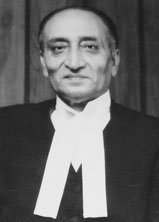
No Acts & Articles mentioned in this case
http://JUDIS.NIC.IN SUPREME COURT OF INDIA Page 1 of 14
PETITIONER:
KIRLOSKAR BROTHERS LTD., DEWAS (M.P.)
Vs.
RESPONDENT:
UNION OF INDIA AND ORS.
DATE OF JUDGMENT10/03/1992
BENCH:
YOGESHWAR DAYAL (J)
BENCH:
YOGESHWAR DAYAL (J)
RANGNATHAN, S.
RAMASWAMI, V. (J) II
CITATION:
1992 AIR 1324 1992 SCR (2) 81
1992 SCC (2) 658 JT 1992 (2) 286
1992 SCALE (1)599
ACT:
Central Excises and Salt Act, 1944: Section 4-
Explanation (prior to Amendment) and Section 36(2).
Excise Duty-Central Government's Notification No.
84/72-CE dated 17.3.72 as amended by Notification No. 113/72
dated 22.3.72-Power driven and monoblock pumps-Electric
Motors purchased and used in manufacture of pumps-Excise
duty paid on Electric Motors-Whether deductible in arriving
at assessable value.
Trade discount-Discount given to distributors providing
after sales service-Also discount given to wholesalers not
providing after sales service-Whether entitled for deduction
from excise value.
HEADNOTE:
The appellant-Company was manufacturing power-driven
pumps and monoblock pumps. It was purchasing electric
motors from another company and using them in the
manufacture of these pumps. The Superintendent of Central
Excise issued show cause notice to the appellants for
recovery of short levy of duty relating to the period from
17th March, 1972 to 31st March 1973 stating that (1) there
was less determination of the assessable value of pumps due
to non-inclusion of Central Excise duty paid on electric
motors used in the manufacture of pumps and that (2) there
was deduction of irregular trade discount on wholesale cash
price while determining the assessable value of the articles
in question.
The Assistant Collector directed the appellant to pay
the duties short levied holding that the excise duty paid by
the appellant on electric motors fitted to the pumps could
not be deducted while computing the assessable value of the
pump sets for purposes of assessment and that the wholesale
cash price minus the trade discount, which is uniformly
given to all wholesale dealers, would represent the
assessable value for assessment purposes.
82
Against the orders of the Assistant Collector the
appellant preferred an appeal before the Appellate Collector
who allowed the appeal and quashed the demand notice holding
http://JUDIS.NIC.IN SUPREME COURT OF INDIA Page 2 of 14
(i) that the assessable value of the pumps had to be arrived
at after deduction from the wholesale cash price of the
excise duty payable not only on the pumps which are
manufactured but also the excise duty paid on the electric
motors which were used as a component of the pumps and (ii)
that in determining the assessable value of the PD pumps a
discount of 30 per cent declared by the appellant and
allowed to wholesale dealers was liable to be deducted from
the wholesale cash price of the pumps under the provisions
of the section 4 of the Central Excises and Salt Act, 1944.
In exercise of the powers conferred on it under
section 36(2) of the Act the Central Government suo moto
issued a show cause notice dated 21st June, 1976 to the
appellant proposing to set aside the order of the Appellate
Collector and restore the orders of the Assistant Collector
stating that the Appellate Collector has erred in his
decision. The appellant filed its reply to the notice and
also made its submissions during the course of personal
hearing. After considering the appellant's reply as well as
points urged by it during the course of personal hearing the
Central Government set aside the Appellate Collector's order
and restored the Assistant Collector's orders.
The appellant filed a writ petition in the Madhya
Pradesh High Court challenging the Central Government's
order contending that the Central Government erred in
setting aside the order of the Appellate Collector and in
restoring the orders of the Assistant Collector. The High
Court held that the Explanation to Section 4 of the Act
provides for deduction of trade discount and the amount of
duty payable at the time of removal of the article from the
factory. The 'duty' referred to in the explanation is the
duty payable on the product which is manufactured and does
not refer to the duty paid on the raw material or the
component of the product manufactured. The High Court
agreed with the order of the Central Government on the
deduction on trade discount and rejected the appellant's
contention that the excise duty paid on the component parts
could not be treated as manufacturing cost and that it was
not competent for the Government to levy excise duty on
excise duty paid.
In appeal to this Court it was contended on behalf on
the appellant
83
(1) that while computing the assessable value the duty paid
on electric motors for purposes of manufacturing monoblock
pumps was also liable to be excluded; (2) that the Central
Government ignored the Notification No. 84/72-CE dated
17.3.1972 as amended by Notification No. 113/72 dated
22.3.72; and (3) that besides the depots of the appellant
there are other five independent wholesalers and the Central
Government should not have ignored the trade discount
allowed to them.
Dismissing the appeal, this Court,
HELD: 1.It is clear from the Explanation to Section 4
of the Central Excises and Salt Act, 1944 that while
computing the assessable value the deduction has to be
allowed apart from trade discount to the amount of duty
payable at the time of removal of the article chargeable
with duty from the factory. Here the article concerned was
the 'pump' which had an electric motor which was duty paid.
But what was deductible while assessing the assessable value
was merely the excise duty payable on the 'pump' and not the
excise duty already paid on the electric motor which was
merely a component. [98C-D]
M/s Narne Tulaman Manufactures Pvt. Ltd., Hyderabad v.
http://JUDIS.NIC.IN SUPREME COURT OF INDIA Page 3 of 14
Collector of Central Excise, Hyderabad, [1989] 1.S.C.C. 172,
referred to.
2. It is clear from the Government Notification that
while charging duty after computing the assessable value,
the appellant will be entitled to reduction of duty paid on
the electric motors from the over all excise duty payable on
the 'pump'. The value of the excise duty paid on the
electric motor is not deductible while arriving at the
assessable value under Section 4(a) of the Act. This
becomes further clear from the wording of the second proviso
to the Notification which contemplates where the duty of
excise on power driven pumps becomes less than the excise
duty paid on the electric motor then no part of the excise
duty is liable to be refunded to the manufacturer.
Therefore the purpose of the first proviso and the second
proviso of the Notification is only to the calculation of
excise duty payable and has no relevance to the calculation
of assessable value of the articles manufactured when it is
cleared from the factory. [100C-E]
3. It is clear from the submission made by the
appellant itself before the Central Government that the
discount to area distributors was also in consideration for
providing after sales service which is not required to be
84
taken into account while dealing with trade discount within
the meaning of explanation to Section 4(a) of the Act.
Therefore the Central Government rightly did not take into
account such area distributors who may have to provide after
sales service. The trade discount given to such wholesalers
who were under no obligation to provide after sales service
is the relevant trade discount given to the wholesalers.
[96E-G]
A.K. Roy & Anr. v. Voltas Ltd., [1973] 2 SCR 1089,
referred to.
JUDGMENT:
CIVIL APPELLATE JURISDICTION :Civil Appeal No. 1773 of
1981.
From the Judgment and Order dated 27.11.1980 of the
Madhya Pradesh High Court in M.P.No. 134 of 1977.
S.Murlidhar and M.S.Ganesh for the Appellant.
K.T.S Tulsi, Add1. Solicitor General, P. Parmeshwaran
and Dalip Tandon for the Respondents.
The Judgment of the Court was delivered by
YOGESHWAR DAYAL, J. This Civil Appeal arises from the
order dated 27th November, 1980 passed by the Division
BNench of Madhya Pradesh High Court in proceedings under
Article 226 of Constitution of India. The proceedings under
Article 226 of the Constitution were directed against an
order dated 19th January, 1977 passed by the Government of
India in exercise of the powers conferred upon them under
Section 36 of the Central Excises and Salt Act, 1944
(hereinafter called 'the Act').
The proceedings before the Central Government arose out
of the review of an order in appeal passed by the Appellate
Collector of Central Excise, New Delhi dated 14th July,
1975. The appellate Collector by the aforesaid order had
accepted various appeals filed by M/s. Kirloskar Brothers
Limited, appellant before us against various order passed by
the Assistant Collector Central Excise, Indore.
The material facts giving rise to this litigation are
as follows :-
The appellant carries on business of manufacturing
http://JUDIS.NIC.IN SUPREME COURT OF INDIA Page 4 of 14
power-driven pumps and monoblock pumps at Dewas. For
manufacturing mono block
85
type P.D. pump sets and power driven pumps, the appellant
purchases electric motors from another company M/s.
Kirloskar Electric Co. Ltd. The Superintendent Central
Excise issued eight show cause notices to the appellant
calling upon them to show cause why the short levy as
mentioned in the notices should not be recovered from the
appellant. The period to which the alleged short levy
related was from 17th March, 1972 to 31st March, 1973.
The grounds on which the amount referred to in the
notices issued was proposed to be recovered were (i) less
determination of the assessable value of pumps due to non-
inclusion of Central Excise duty paid on electric motors
used in the manufacture of pumps and (ii) deduction of
irregular trade discount on wholesale cash price while
determining the assessable value of the articles in
question.
The Assistant Collector of Central Excise held that the
excise duty paid by the appellant on electric motors fitted
to the pumps could not be deducted while computing the
assessable value of the pumps sets for purposes of
assessment under the Act.
With regard to the question of trade discount the
Assistant Collector held that in terms of explanation to
Section 4 of the Act deduction in respect of trade discount
on wholesale cash price of the articles to be removed from
the factory has to be allowed; the trade discount allowed
has to be at uniform rate as held by the Supreme Court; once
the wholesale price is fixed and the quantum of trade
discount is decided it must be given uniformly to all
wholesalers irrespective of their relations with the
manufacturers. The Assistant Collector observed :-
"The party had admitted that they have three types
of wholesale dealers and each of them allowed trade
discount at different rate. The first category of
wholesale dealers numbering about 15 got the
maximum trade discount. A perusal of the list of
these 15 wholesale dealers reveal that most of them
are merely selling Depots of the party who get the
maximum trade discount in comparison to other types
of wholesale dealers of the party. The Hon'ble
Supreme Court has held that the wholesale price has
to be ascertained only on the basis of transactions
at 'arms length'. Their Lordships have further
opined that if there is
86
relative of the manufacturer and if he is charged
specially low price, the price charged would not
constitute the wholesale cash price for levying the
excise duty. The maximum trade discount allowed to
a particular class of wholesale dealers which is
mostly consisted of their own selling depots,
therefore, does not represent the trade discount in
its true sense in terms of Section 4 according to
which the trade discount has to be allowed at a
uniform rate and not arbitrarily. Therefore, the
fixation of wholesale cash price after allowing the
maximum trade discount to a particular type of
wholesale dealers cannot be treated as a
transaction made at arms length in an ordinary
course of business and, therefore, not in keeping
with provisions of Section 4 of the Act and
consequently cannot represent the correct wholesale
http://JUDIS.NIC.IN SUPREME COURT OF INDIA Page 5 of 14
cash price in terms of Section 4 the Act for
assessment purposes.".
The Assistant Collector held that the wholesale cash
price minus the trade discount, which is uniformly given to
all wholesale dealers, would represent the assessable value
for assessment purposes. Accordingly the Assistant
Collector directed that duties short levied, as pointed out
in the show cause notices, should be paid by the appellant.
Aggrieved by the orders of the Assistant Collector the
appellant preferred an appeal before the Appellate Collector
who held that the assessable value of the pumps had to be
arrived at after deduction from the wholesale cash price of
the excise duty payable not only on the pumps which are
manufactured but also the excise duty paid on the electric
motors which were used as a component of the pumps. The
Appellate Collector further held that in determining the
assessable value of PD pumps a discount of 30 per cent
declared by the appellant and allowed to wholesale dealers
was liable to be deducted from the wholesale cash price of
the pumps under the provisions of Section 4 of the Act. In
this view of the matter the Appellate Collector allowed the
appeals and quashed the demand notices. While allowing the
appeals the Appellate Collector, dealing with the deduction
of trade discount observed as follows:-
"With regard to the second issue i.e.
admissibility of trade discount of 30% declared by
the appellants and approved by the jurisdictional
Central Excise officer, it was contended by
87
the appellants that according to the pattern of
their sale they had appointed 16 area dealers for
sales of their products over a particular area.
These area dealers had also appointed subdealers
within their respective jurisdiction. Thus where
the sales were made by the area dealer himself the
full discount of 30% was allowed to him while if
the goods were despatched on the advice of the area
dealer to any of his sub-dealers was passed on to
the sub-dealers while the discount remaining out of
the 30% was passed on by a credit voucher to the
area dealer. In either case the full discount of
30% was being passed on to the trade on all
wholesale transactions. The above contention of
the appellants was verified from the sales invoices
produced by them in respect of wholesale
transactions and it was noticed that the above
contention of the appellants is correct. It was
also noticed that some sales were also made in
small lots by the appellants to the dealers falling
outside the jurisdiction of the area dealers.
These sales represented 1% to 9.7% of the total
sales and could be regarded as sales to retailers.
In their case the discount passed on was less than
30% discount allowed in the case of wholesale
dealers. It was explained that in view of the fact
that such dealers did not have the facility and the
technical know-how for providing after sale
service, the discount allowed to them was lesser
than that allowed to the dealers (wholesale
dealers) who were required to afford the services
after sales. However, in view of the fact that
such sales are meager and are in much smaller lots,
they did not materially change the situation."
(emphasis supplied)
When this order came to the notice of the Central
http://JUDIS.NIC.IN SUPREME COURT OF INDIA Page 6 of 14
Government the Central Government suo moto issued show cause
notice to the appellant proposing to set aside the order of
the Appellate Collector, which appeared to it to be not
correct in law, and restore the order passed by the
Assistant Collector of Central Excise, Indore. The reasons
for the proposed revision were contained in the show cause
notice dated 21st June, 1976, the relevant part of which,
for facility of understanding, is reproduced hereunder:-
88
"6. In terms of the explanation to Section 4 of the
Central Excise and Salt Act, 1944 in determining
the price of any article under that section a
deduction is admissible from the wholesale cash
price towards the amount of duty payable at the
time of the removal of the article chargeable with
duty from the factory or other premises. It
appears to the Central Government that the
deduction contemplated therein is in respect of the
duty leviable on the article which is being cleared
from the factory and not the duty paid or leviable
on the raw materials or component which went into
the manufacture of that excisable article. In
other words what is allowed deduction is only that
duty leviable on the finished excisable article and
not the total duty incidence. To held otherwise
appears to be repugnant to the correct construction
of the expression "amount of duty payable at the
time of removal of the article chargeable with duty
from the factory".
7. It, therefore, appears to the Central Government
that in holding that the deduction was admissible
not only in respect of the duty leviable on the PD
Pumps but also in respect of the duty paid on the
electric motor the Appellate Collector has in his
decision.
8. The second question to be determined by the
Appellate Collector was the admissibility of a
trade discount of 30% which the party was granting
in respect of sales to their area dealer or through
area dealers to sub-dealers which to another
category of dealers called independent dealers a
less amount of trade was granted. The case records
reveal that the party had three types of wholesale
dealers namely the following:-
(a) Area dealers which number about 15 get the
maximum trade discount.
(b) The sub-dealers of these area dealer.
These sub-dealers usually get the goods from
the area dealers at the particulars.
discount and can also get the goods directly
from the party on a discount advised by the
area dealers and the
89
balance discount out of the total 30% discount
is passed on thereafter to the areas dealers
and;
(c) The lst category of dealers who operate in
area covered by the area dealers and get a
less amount of discount.
9.It also appears that approximately 90% of the
goods are sold through the area dealers or their
sub-dealers and only the rest through other
independent dealers.
10.The Appellate Collector held that the sales to
dealers other than the area area dealers were only
http://JUDIS.NIC.IN SUPREME COURT OF INDIA Page 7 of 14
upto 10% of the total sales and as such these could
be regarded as a sales to retailers. Accordingly
the Appellate Collector held that since a
substantial quantity of goods was sold through the
area dealers or their sub-dealers the price charged
to them was the correct wholesale cash price and
that the 30% trade discount given to them was
admissible and sales to other dealers which were in
small quantity could be ignored and could be
treated as sales to retailers.
11.It appears to the Central Government that the
Appellate Collector failed to take note of the fact
that the sales to these independent dealers in
their respective areas, however, small in quantity
were nonetheless sales to wholesale dealers. These
could not be categorised as retail sales which are
essentially different from wholesales sales.
These independent dealers were as much wholesale
dealers as the areas dealers. Further the
Appellate Collector also failed to take note of the
fact that the so-called area dealers in a large
number of cases were no other than the party's own
selling depots and the price charged to them could
not prima facie be accepted as genuine unless there
was compelling evidence to establish that the
transaction was at arm's length. It accordingly
appears to the Central Government that the
wholesale cash price charged to the independent
dealers and discount given to them is along a
genuine wholesale cash price and that the genuine
whole sale cash price is ascertainable the quantum
of sale however meagre is irrelevant. By holding
that the discount
90
given to the area to the area dealers was
admissible and that sales to independent dealers
being meager could be treated as retail sales and
thus ignored, it appears to the Central Government
that the Appellate Collector has erred in his
decision.".
The appellant filed a reply dated 30th August, 1976 and
inter alia contended :-
"We deal with these two points separately as below :-
(i) ASSESSABLE VALUE OF MONOBLOCK PUMPS;
At the outright we wish to state that the
grounds of appeal advanced, against the various
orders in appeal issued by the Assistant Collector,
Central Excise, Indore before Appellate Collector,
Central Excise and Customs, New Delhi, will form
part of our reply and we would rely on them. We
presume that the records of the case are already
with you and there is no need of reproduce here our
arguments.
However without prejudice to whatever stated
in above referred Appeal Memo we wish to state as
under :-
(A) Central Excise duty is an indirect tax and this
tax is not taken into consideration for assessment
purposes. In accordance with the explanation given
in section 4 it is true that what is clear by us is
a Monoblock Pump and not electric motor alone and
not a mere pump. Since we are paid Central Excise
duty to our suppliers of electric motor, we have to
recover the same from the parties to whom monoblock
pumps are sold.
http://JUDIS.NIC.IN SUPREME COURT OF INDIA Page 8 of 14
(B) Had we sold only an Electric motor, the same
recovery to duty would have been made separately by
us and our cost would have been the price paid to
supplier exclusive of central excise duty.
(C) Just because the motor is used in the
manufacture of Monoblock Pumps, it does not deprive
us of our right to recover the duty on the Electric
Motor paid by us when this is ascertainable.
(D) The same would be the case in respect of other
components
91
of Monoblock pumps, viz. Steel, paint, shafting,
material etc. However, we are not in a position to
ascertain the duty paid on these Raw Materials.
That is why we have to recover the total amount
including the cost and Central Excise duty paid on
the Raw Material, so that the Central Excise duty
paid on them will automatically be recovered. Such
an amount has to go into the total value. But in
respect of the items of the raw materials if we can
ascertain the central excise duty paid, we can
certainly recover the same in from of duty and not
by way of the cost of the material.
(E) The whole principle of costing is to see what
an article produced by any manufacturer has cost
him. If the duty is ascertainable, there is no
reason as to why it should be go into the cost
necessarily. There is no law to warrant such a
procedure.
(F) The inclusion of Central Excise duty as the
cost of Monoblock pumps, it would further
complicate the matters. In that event we will not
be in a position to recover the full duty paid on
electric motor as we have to allow the
proportionate trade discount on the duty elements.
This would tantamount depriving us of our right to
recover the full amount of Central Excise duty paid
by us.
(G) Further without prejudice, if the duty is so
included what would be the amount to be included
and at what stage. It will have to be decided
whether the whole of the duty on electric motor
i.e. 15% is to be included in the cost or the
balance available from the said duty amount after
availing of the set off admissible under
Notification No. 84/72 as amended by No.113/72.
Under these circumstances, we would request
you not to force us to include the element of
Central Excise duty paid on Electric motors, in the
value of our Monoblock Pumps for purpose of
assessments.
(ii) WHOLESALE CASH PRICE AND QUANTUM OF DISCOUNT
At the outsight we wish to state that the
grounds of appeal
92
advanced against the various order in appeal issued
by the Assistant Collector, Central Excise, Indore
before the Appellate Collector, Central Excise and
Customs, New Delhi will form part of our reply and
we would rely on them. We presume that the records
of the case are already with you and there is no
need to reproduce there our arguments.
However, without prejudice to whatever, stated
in above referred appeal memos we would like to
state as follows:-
http://JUDIS.NIC.IN SUPREME COURT OF INDIA Page 9 of 14
ii(A) It is contended in the Show Cause Notice
that the wholesale cash price, charged to the
independent dealers and the discount given to them
is alone a genuine wholesale cash price and that
once the wholesale cash price is ascertainable the
quantum of the sale, however meagre, is irrelevant.
Further it is also contended that the so called
dealer in a large number of cases were no other
than parties own selling depots and the price
charged to them could not prima facie be accepted
as genuine. Unless there was compelling evidence
to establish that the transaction was at arms
length.
In this connection we would like to submit as
follow:
ii(C) The Kirloskar Brother's depots are being
treated on par with these area dealers and the
dealings are from principle to principle. Simply
because they are depots of Kirloskar Brothers it
cannot be presumed that the dealings are not at
arms length.
ii(D) It is not the case of department that
the goods are sold to these area dealers at a
specially low rate. The facts that there are 5
independent dealers alongwith depots goes to prove
93
that no special treatment is accorded to the
depots.
ii(E) We would insist with all force that
these transactions are at arms length and these
represents the normal trade practice. The sales to
independent dealers may not be treated as retail
sales but there is no reason as to why the price
charged to these few so called independent dealers
should be preferred to the price charged to
independent area dealers.
ii(F) The whole idea of assessment seems to
have been mis-conceived. Now it is an established
law that "EXCISE IS A TAX ON THE PRODUCTION AND
MANUFACTURE OF GOODS (SEE UNION OF INDIA VS. DELHI
CLOTH AND GENERAL MILLS 1963) SECTION 4 ACT
THEREFORE PROVIDES THAT THE REAL VALUE SHOULD BE
FOUND AFTER DEDUCTING THE SELLING COST AND THE
SELLING PROFITS AND THE REAL VALUE CAN INCLUDE ONLY
THE MANUFACTURING COST AND THE MANUFACTURING
PROFIT".
ii(G) The section also makes it clear that the
excise is levied only on the amount representing
the manufacturing cost plus the manufacturing
profit, and the excludes post manufacturing costs
and the profit arising from the post manufacturing
operation.
ii(H) In our case the amount charged by giving
lesser discount to the so called independent
dealers represents the selling profits and cannot
be attributed to the manufacturing activity. Under
these circumstances the value that could be
approved for our assessment would be the list price
less maximum and this will represent the
manufacturing cost plus the manufacturing profit.
ii(I) Under the circumstances it is abundantly
clear that the price cannot be loaded with any kind
of selling cost or selling profit irrespective of
whether the same is of the wholesellers or of the
manufacturer, the reason being that neither it is
http://JUDIS.NIC.IN SUPREME COURT OF INDIA Page 10 of 14
attributable to manufacturing activity.
94
ii(J) After the decision in VOLTAS case there
have been a number of cases both the Supreme Court
and various High Court, wherein the decision in
VOLTAS case have been followed meticulously.
Under these circumstance there are no reason
to reopen the matter and given an adverse
decision."
An opportunity of personal hearing was also granted.
It is noticed in the order of the Central Government that :
"During the course of personal hearing on
19.10.1976 various contentions were reiterated and
it was emphasised that the manufacturers had two
patterns of sales, namely - (i) through area
distributors who are given exclusive rights of sale
within their respective areas and who were further
authorised to appoint sub-distributors, and (ii)
some 10% sales were to other dealers to whom a less
percentage of discount was given. It was
emphasised that the discrimination between the two
patterns of sales was on account of the fact that
area distributors provided after sales service etc.
which could be treated as post manufacturing
operations. It was pointed out to them during the
course of personal hearing that majority of the so-
called area distributors were depots of M/s.
Kirloskar Brothers Ltd., only. They contended that
though the over-all controlling authority was the
Kirloskar Group of Companies, yet these depots were
independent entities by themselves. They were
asked to submit detailed information about the
composition of all the Directors of M/s. Kirloskar
Electricals, Bangalore, the Directors of Dewas
factory and their agreements with various area
distributors with their sub-distributors. The
information was to be submitted by November 16,
1976 but could not be received within the time
stipulated.".
The Central Government after considering the points
raised by the appellant in its written reply to the show
cause notice as well as points urged during the course of
personal hearing took the view that under Section 4 of the
Act the abatement of duty is admissible only in respect of
the article in question and not the duty paid on the raw
material or the component which had gone into its
manufacture, and accordingly held that
95
the view of the Appellate Collector is incorrect. Regarding
the question of discount the Central Government took the
view that the independent wholesale dealers are those who
are other than the depots of M/s. Kirloskar Brothers. The
view of the Appellate Collector treating sales to these
dealers as retail sales is incorrect. The Central
Government held that once the wholesale cash price is
ascertainable the quantum of sales to such wholesale dealers
is irrelevant and in the instant case even the quantum of
sale to the independent wholesale dealers is 10%. The
wholesale cash price is thus ascertainable. In this view of
the matter the Central Government in exercise of the powers
conferred in it under sub-section (2) of Section 36 of the
Act set aside the impugned order passed by the Appellate
Collector and restored all the orders passed by the
Assistant Collector of Central Excise.
Before the High Court the above referred order of the
http://JUDIS.NIC.IN SUPREME COURT OF INDIA Page 11 of 14
Central Government was impugned in the aforesaid
circumstances. It was contended on behalf of appellant
before the High Court that the Government of India erred in
holding that the duty paid on the electric motors was not
deductible in computing the wholesale cash price under the
provisions of Section 4 of the Act. It was also contended
that the Government of India erred in restoring the orders
of the Assistant Collector whereby only 25 per cent discount
was held to be deductible by way of trade discount in
computing the wholesale cash price of the pumps in question.
The High Court held that the explanation to Section 4 of the
Act provides for deduction of trade discount and the amount
of duty payable at the time of removal of the article from
the factory. The 'duty' referred to in the explanation is
the duty payable on the product which is manufactured and
does not refer to the duty paid on the raw material or the
component of the product manufactured. Faced with this
difficulty before the High Court the counsel for the
appellant stated that he was not relying on the explanation
to Section 4 of the Act for contending that the duty paid on
electric motors fitted to the pumps was liable to be
deducted from the wholesale cash price of the article in
question. It was urged before the High Court that the
excise duty paid on the component parts could not be treated
as manufacturing cost and that it was not competent for the
Government to levy excise duty on excise duty paid. The
High Court rejected the contention. As regards the
deduction of trade discount the High Court agreed with the
order of the Central Government.
96
Before us learned counsel for the appellant has
submitted that the Central Government erred in disturbing
the appellate order of the Collector and submitted - (1)
that beside the depots of the appellant there are other five
independent wholesales and the Central Government should not
have ignored the trade discount allowed to them; (2) that
the Central Government, though has passed the impugned order
only on 14th April, 1977, did not refer to the information
which was submitted after 16th November, 1976; (3) that the
Central Government ignored by Notification No.84/72- CE DT
17.3.1972 as amended by Notification No. 113/72 dated
22.3.1972 and (4) that while computing the assessable value
the duty paid on electric motors for purposes of
manufacturing monoblock pumps was also liable to be
excluded.
It will be noticed that we are concerned with old
section 4 of the Act as operative during the relevant time.
In A.K. Roy & Anr. v. Voltas Limited, [1973] 2 S.C.R.
1089, the Supreme Court emphasised at page 1097 that there
can be no doubt that the 'wholesale cash price' has to be
ascertained only on the basis of transactions at arm's
length. Once wholesale dealings at arm's length are
established, the determination of the wholesale cash price
for the purpose of Section 4(a) of the Act may not depend
upon the number of such wholesale dealers. Before the
Central Government it was emphasised by the appellant itself
that the discrimination between the two patterns of sales
was on account of the fact that area distributors provided
after sales service etc. which could be treated as post
manufacturing operation. It is thus clear from the
submission made by the appellant itself before the Central
Government that the discount to area distributors was also
in consideration for also providing after sales service
which is not required to be taken into account while dealing
with trade discount within the meaning of explanation of
http://JUDIS.NIC.IN SUPREME COURT OF INDIA Page 12 of 14
Section 4(a) of the Act. Therefore the Central Government
rightly did not take into account such area distributors who
may have to provide after sales service. The trade discount
given to such wholesalers who were under no obligation to
provide after sales service is the relevant trade discount
given to the wholesalers.
In view of our conclusion on the first point itself no
useful purpose would be served in examining the second
question as the appellant himself had given the reasons
before the Central Government as to why they gave
97
higher trade discount to their depots and other area
distributors.
We may take point Nos. 3 and 4 together. In M/s. Narne
Tulaman Manufacturers Pvt. Ltd., Hyderabad v. Collector of
Central Excise, Hyderabad, [1989] 1 S.C.C. 172, the Supreme
Court had the occasion to deal with somewhat similar
situation as in the present case. Sabyasachi Mukharji, J.
(as His Lordship then was) speaking for the Court observed
:-
"The activity carried out by the appellant of
assembling the three components of the weighbridge
brings into being complete weighbridge which has a
distinctive name, character or use. As a result of
the work of assembling a new product known in the
market and known under the excise item
"weighbridge" comes into being. The appellant will
become a manufacturer of that product and as such
liable to duty".
His Lordship further observed thus :
"A part may be goods as known in the excise laws
and may be dutiable. If the indicator system is a
separate part and a duty had been paid on it and if
the rules so provide then the appellant may be
entitled to abatement under the rules. But if the
end product is a separate product which comes into
being as a result of the endeavour and activity of
the appellant then the appellant must be held to
have manufactured the said item. When parts and the
end product are separately dutiable - both are
taxable."
Section 4(a) of the Act read with its explanation reads as
under :-
"4. Determination of value for the purposes of duty
- Where, under this Act, any article is chargeable
with duty at a rate dependent on the value of the
article, such value shall be deemed to be-
(a) the wholesale cash price for which an article
of the like kind and quality is sold or is capable
of being sold at the time of the removal of the
article chargeable with duty from the factory or
any other premises of manufacture of production, or
if a wholesale market does not exist for such
article at such place, at the
98
nearest place where such market exists, or
(b)..... ....... ....... .......
Explanation - In determining the price of any
article under this section, no abatement or
deduction shall be allowed except in respect of
trade discount and the amount of duty payable at
the time of the removal of the article chargeable
with duty from the factory or other premises
aforesaid.".
It is clear from the explanation itself that while
http://JUDIS.NIC.IN SUPREME COURT OF INDIA Page 13 of 14
computing the assessable value the deduction has to be
allowed apart from trade discount to the amount of duty
payable at the time of removal of the article chargeable
with duty from the factory. Here the article concerned was
the 'pump' which had an electric motor which was duty paid.
But what was deductible while assessing the assessable value
was merely the excise duty payable on the 'pump' and not the
excise duty already paid on the electric motor which was
merely a component.
The relevant part of the Notification No.84/72-CE dated
17.3.1972 as amended by Notification No. 113/72 dated
22.3.1972 reads as follows:-
"In exercise of the powers conferred by rule 8(1)
of the Central Excise Rules, the Central Government
hereby exempts power driven pumps falling under
tariff item no. 30a of the first schedule to the
Central Excise and Salt Act, 1944 (1 of 1944) and
specified in column (2) of the table annexed hereto
from so much of duty of the excise leviable thereon
as in excess of the duty specified in the
corresponding entry in column (3) of the said
table.
------------------------------------------------------------
S.No Description Duty
(1) (2) (3)
------------------------------------------------------------
1. POWER DRIVEN PUMPS PRIMARILY DESIGNED 10%
FOR HANDLING WATER NAMELY ADVALOREM
i) CENTRIFUGAL PUMPS (HORIZONTAL
OR VERTICAL PUMPS)
ii) DEEP WELL TURBINE PUMPS
iii) SUB MERSIBLE PUMPS AND
99
iv) AXIAL FLO AND MIXED FLOW NIL
VERTICAL PUMPS.
2. OTHERS NIL
------------------------------------------------------------
PROVIDED THAT
(i) Where the aforesaid pumps on which the duty of
excise is leviable are fitted with duty paid
internal combustion engine falling under sub-item
(ii) of item no. 29 or Electric motors falling under
sub-item(ii) of item no.30 of the first schedule to
the aforesaid Act such power driven pumps shall
also be exempted from so much of the duty of excise
leviable hereon as is equivalent to the duty
of excise leviable thereon as is equivalent to the
duty of excise or the additional excise duty under
section 2A of the Indian Tariff Act 1934 (32 of
1934) the case may be already paid on such internal
combustion engine or Electric Motors.
(ii) ..... .... ... ... ...
Provided further that where the duty of excise
leviable on power driven pumps is less than the
amount of duty of excise or the additional duty
under section 2A of the Indian Tariff Act aforesaid
specified in clause (i) or as the case may be
calculated under clause (ii) of the first proviso
with respect to internal combustion engine, elect.
motor, rotors or stator then no part of the duty so
specified or calculated shall be refunded to the
manufacturer.
It will be noticed that first part of the Notification
exempts the 'Power Driven Pumps' falling under Tariff Item
No. 30A of the first schedule to the Act and reduces the
http://JUDIS.NIC.IN SUPREME COURT OF INDIA Page 14 of 14
duty to 10% advalorem.
To understand more conveniently the meaning and scope
of provisos, the provisos shorn of unnecessary words may
read as under :-
"PROVIDED THAT :-
(i) Where the aforesaid pumps on which the duty of
excise is leviable are fitted with duty
paid...Electric motors....Such power driven pumps
shall also be exempted from so much of the duty of
excise leviable thereon ...as is equivalent to the
100
duty of excise ......paid on such .....electric
motors.
(ii) .... ...... ..... .......
Provided further that where the duty of excise
leviable on powers driven pumps is less than the
amount of duty of excise or the additional duty
under section 2 A of the Indian Tariff Act
aforesaid specified in clause (i) or as the case
may be calculated under clause (ii) of the first
proviso with respect to internal combustion engine
electric motor, rotors or stator then no part of
the duty so specified or calculated shall be
refunded to the manufacturer."
It is thus clear from the proviso that while charging
duty after computing the assessable value, the appellant
will be entitled to reduction of duty paid on the electric
motors from the over all excise duty payable on the 'pump'.
The value of the excise paid on the electric motor is not
deductible while arriving at the assessable value under
Section 4(a) of the Act. This becomes further clear from
the wording of the second proviso which contemplates where
the duty of excise on power driven pumps become less than
the excise duty paid on the electric motor then no part of
the excise duty is liable to be refunded to the
manufacturer. Therefore the purpose of the first proviso
and the second proviso is only to the calculation of excise
duty payable and has no relevance to the calculation of
assessable value of the articles manufactured when it is
cleared from the factory.
There is thus no merit in this appeal and the same is
accordingly dismissed with costs.
T.N.A. Appeal dismissed.
101

 Login with google
Legal Notes
Add a Note....