
Ruby General Hospital Limited was founded by Dr. Kamal Kumar Dutta (Appellant 1), his brother Sajal Kumar Dutta (Respondent 2), and others. Initially, the company aimed to establish a hospital ...


No Acts & Articles mentioned in this case
http://JUDIS.NIC.IN SUPREME COURT OF INDIA Page 1 of 9
CASE NO.:
Appeal (civil) 5756 of 2005
PETITIONER:
Kishansing Tomar
RESPONDENT:
Municipal Corporation of the City of Amedabad & Ors
DATE OF JUDGMENT: 19/10/2006
BENCH:
CJI, K.G. Balakrishnan & S.H. Kapadia C.K. Thakkar P.K. Balasubramanyan
JUDGMENT:
J U D G M E N T
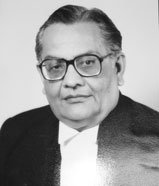
K.G. BALAKRISHNAN, J.
This appeal is directed against the judgment of the
Division Bench of the High Court of Gujarat. The appellant
filed a Special Civil Application No. 9847 of 2005 praying for
a writ of mandamus or any other appropriate writ or direction
to the respondents in the writ petition, namely, the Municipal
Corporation of the City of Ahmedabad, the State of Gujarat
and the Gujarat State Election Commission, to take all steps
necessary for the purpose of holding elections for constituting
the Municipal Corporation of the city of Ahmedabad before
the expiry of the duration of the Municipal Corporation
constituted pursuant to the elections held in October, 2000.
The appellant, who was the writ petitioner before the High
Court, was the Chairman of the Standing Committee of the
Ahmedabad Municipal Corporation (hereinafter referred to as
"AMC"). The elected body of the AMC was constituted for the
relevant period pursuant to an election held in October, 2000
and its term was due to expire on October 15, 2005. The
appellant apprehended that the authorities may delay the
process of election to constitute the new Municipal body and
therefore filed the aforesaid writ petition on 23rd August,
2005. The AMC filed an affidavit before the High Court
stating that it was the responsibility of the third respondent,
namely, the State Election Commission, to conduct the
elections in time. The State Election Commission, in a
separate affidavit in reply, submitted that under the
provisions of the Bombay Provincial Municipal Corporations
Act, 1949, the State Govt. had issued a Notification on 8th
June, 2005 determining the wards for the city of Ahmedabad
by which the total number of wards had been increased from
43 to 45 and in view of the increase in the number of wards,
the Commission was required to proceed with the exercise of
delimitation of the wards of the city of Ahmedabad in
accordance with the provisions of the Bombay Provincial
Municipal Corporation (Delimitation of Wards in the City &
Allocation of Reserved Seats) Rules, 1994 and that the
Commission had issued a circular requiring the Collectors
and the Designated Officers to furnish the details and to
make proposals for delimitation of the wards. The
Commission contended that it would take two months' time to
complete the process of delimitation as the preparation of
voters' list in each ward had to be revised in accordance with
the Bombay Provincial Municipal Corporation (Registration of
Voters) Rules, 1994. It was alleged by the Commission that it
was required to consult the political parties to carry out the
delimitation of the wards and that it would take at least six
http://JUDIS.NIC.IN SUPREME COURT OF INDIA Page 2 of 9
months' time for completing the process of election and the
Commission could act only after the State Govt. issued the
notification. The State Govt. produced a chart showing the
detailed steps taken by the State Govt. at various stages
culminating in the issue of Notification dated 8th June, 2005.
The appellant contended before the Single Judge that in
view of Article 243-U of the Constitution, the authorities were
bound to complete the process at the earliest and the elections
should have been held before the expiry of the term of the
existing Municipal Corporation. The learned Single Judge
accepted the timeframe suggested by the State Election
Commission and directed that it should be strictly followed
and the process of elections must be completed by 31st
December, 2005, and that no further extension for holding
the elections would be permissible.
Aggrieved by the decision of the Single Judge, the
appellant filed a Letters Patent Appeal before the High Court
and the Division Bench of the High Court by the impugned
judgment held that the timeframe given by the State Election
Commission was perfectly justified and the Election
Commission was directed to begin and complete process as
per the dates given in its affidavit and the L.P.A. was
dismissed. Aggrieved thereby, the present appeal is
preferred before us by the appellant.
We heard appellant's counsel as also the counsel for the
respondents. The main thrust of the arguments of the
appellant's counsel was that in view of the various provisions
contained in Part IX of the Constitution of India, it was
incumbent on the part of the authorities to complete the
process of election before the expiry of the period of five years
from the date appointed for first meeting of the Municipality.
The counsel for the respondents, especially the counsel for the
State Election Commission contended that every effort was
made by the Election Commission to conduct the elections
before the stipulated time, but due to unavoidable reasons,
the elections could not be held and the preparation of the
electoral rolls and the increase in the number of wards had
caused delay in the process of election and under such
circumstances the delay was justified in conducting the
elections.
The question that arises for consideration is whether
Article 243-U of the Constitution, by which the duration of
the Municipality is fixed is mandatory in nature and any
violation could be justified in the circumstances stated by the
respondents. Article 243-U of the Constitution reads as
follows :
"243-U. Duration of Municipalities, etc. (1) Every
Municipality, unless sooner dissolved under any law
for the time being in force, shall continue for five
years from the date appointed for its first meeting
and no longer:
Provided that a Municipality shall be given a
reasonable opportunity of being heard before its
dissolution.
(2) No amendment of any law for the time being in
force shall have the effect of causing dissolution of a
Municipality at any level, which is functioning
immediately before such amendment, till the
expiration of its duration specified in clause (1).
http://JUDIS.NIC.IN SUPREME COURT OF INDIA Page 3 of 9
(3) An election to constitute a Municipality shall be
completed,---
(a) before the expiry of its duration specified in
clause (1);
(b) before the expiration of a period of six months
from the date of dissolution:
Provided that where the remainder of the period for
which the dissolved Municipality would have
continued is less than six months, it shall not be
necessary to hold any election under this clause for
constituting the Municipality for such period.
(4) A Municipality constituted upon the dissolution
of a Municipality before the expiration of its
duration shall continue only for the remainder of
the period for which the dissolved Municipality
would have continued under clause (1) had it not
been so dissolved."
Article 243-ZA provides that the superintendence,
direction and control of the preparation of electoral rolls for,
and the conduct of, all elections to the Municipalities shall be
vested in a State Election Commission referred to in Article
243-K.
Article 243-S states that there shall be constituted
Wards' Committees consisting of one or more wards, within
the territorial area of a Municipality having a population of
three lakhs or more and that the State Legislature may by
law make provision with respect to (a) the composition and the
territorial area of a Wards Committee; and (b) the manner in
which the seats in a Wards Committee shall be filled.
Under Article 243-T, it is provided that the seats shall
be reserved for the Scheduled Castes and the Scheduled
Tribes in every Municipality and the number of seats so
reserved shall bear, as nearly as may be the same proportion
to the total number of seats to be filled by direct election in
that Municipality as the population of the Scheduled Castes in
the Municipal area or of the Scheduled Tribes in the Municipal
area bears to the total population of that area and such seats
may be allotted by rotation to different constituencies in a
Municipality. Further clause (2) of Article 243-T says that
not less than one third of the total number of seats reserved
under clause (1) shall be reserved for women belonging to the
Scheduled Castes or, as the case may be, the Scheduled
Tribes. Clause (3) of this Article further provides that not less
than one third (including the number of seats reserved for
women belonging to the Scheduled Castes and the Scheduled
Tribes) of the total number of seats to be filled by direct
election in every Municipality shall be reserved for women and
such seats may be allotted by rotation to different
constituencies in a Municipality. Clause (6) empowers the
State Legislature to make any provision for reservation of seats
in any Municipality or offices of Chairpersons in the
Municipalities in favour of backward class of citizens.
The provisions contained in the Bombay Provincial
Municipal Corporations Act, 1949 also are relevant to be noted
here. Section 6 of this Act deals with the duration of a
http://JUDIS.NIC.IN SUPREME COURT OF INDIA Page 4 of 9
corporation. It reads as under :
"6. Duration of Corporation :
(1) Every Corporation unless sooner dissolved,
shall continue for five years from the date
appointed for its first meeting and no longer.
(2) A Corporation constituted upon the dissolution
before the expiration of its duration shall continue
only for the remainder of the period for which it
would have continued under Sub-Section (1) had it
not been so dissolved."
Section 6A reads as under :
"6A. Terms office of Councillors :
The term of the office of the Councillors shall be co-
extensive with the duration of the corporation."
Section 6B is to the following effect :
"Election to Constitute the Corporation :
An election to constitute a corporation shall be
completed\027
(a) before the expiration of its duration specified
in sub-section (1) of the section 6.
(b] before the expiration of six months from the
date of its dissolution :
Provided that where the remainder of the period for
which the dissolved Corporation would have
continued is less than six months, it shall not be
necessary to hold any election under this section for
constituting the Corporation for such period."
It may be noted that Part IX-A was inserted in the
Constitution by virtue of the Seventy Fourth Amendment Act,
1992. The object of introducing these provisions was that in
many States the local bodies were not working properly and
the timely elections were not being held and the nominated
bodies were continuing for long periods. Elections had been
irregular and many times unnecessarily delayed or postponed
and the elected bodies had been superseded or suspended
without adequate justification at the whims and fancies of the
State authorities. These views were expressed by the then
Minister of State for Urban Development while introducing the
Constitution Amendment Bill before the Parliament and thus
the new provisions were added in the Constitution with a view
to restore the rightful place in political governance for local
bodies. It was considered necessary to provide a
Constitutional status to such bodies and to ensure regular
and fair conduct of elections. In the statement of objects and
reasons in the Constitution Amendment Bill relating to urban
local bodies, it was stated :
"In many States, local bodies have become weak
and ineffective on account of variety of reasons,
including the failure to hold regular elections,
prolonged supersessions and inadequate devolution
of powers and functions. As a result, urban local
bodies are not able to perform effectively as vibrant
democratic units of self-Government.
http://JUDIS.NIC.IN SUPREME COURT OF INDIA Page 5 of 9
Having regard to these inadequacies, it is
considered necessary that provisions relating to
urban local bodies are incorporated in the
Constitution, particularly for \026
(i) putting on a firmer footing the relationship
between the State Government and the Urban Local
Bodies with respect to :
(a) the functions and taxation powers, and
(b) arrangements for revenue sharing.
(ii) ensuring regular conduct of elections.
(iii) ensuring timely elections in the case of
supersession; and
(iv) providing adequate representation for the
weaker sections like Scheduled Castes, Scheduled
Tribes and women.
Accordingly, it has been proposed to add a new Part
relating to the Urban Local Bodies in the
Constitution to provide for ---
\005\005\005\005\005\005\005
(f) fixed tenure of 5 years for the Municipality and re-
election within a period of six months of its dissolution."
The effect of Article 243-U of the Constitution is to be
appreciated in the above background. Under this
Article, the duration of the Municipality is fixed for a term of
five years and it is stated that every Municipality shall
continue for five years from the date appointed for its first
meeting and no longer. Clause (3) of Article 243-U states that
election to constitute a Municipality shall be completed -
(a) before the expiry of its duration specified in clause (1), or
(b) before the expiration of a period of six months from the
date or its dissolution. Therefore, the constitutional mandate
is that election to a Municipality shall be completed before
the expiry of the five years' period stipulated in Clause (1) of
Article 243-U and in case of dissolution, the new body shall be
constituted before the expiration of a period of six months and
elections have to be conducted in such a manner. A Proviso
is added to Sub-clause (3) Article 243-U that in case of
dissolution, the remainder of the period for which the
dissolved Municipality would have continued is less than six
months, it shall not be necessary to hold any election under
this clause for constituting the Municipality for such period.
It is also specified in Clause (4) of Article 243-U that a
Municipality constituted upon the dissolution of a
Municipality before the expiration of its duration shall
continue only for the remainder of the period for which the
dissolved Municipality would have continued under Clause (1)
had it not been so dissolved.
So, in any case, the duration of the Municipality is fixed
as five years from the date of its first meeting and no longer.
It is incumbent upon the Election Commission and other
authorities to carry out the mandate of the Constitution and
to see that a new Municipality is constituted in time and
elections to the Municipality are conducted before the expiry of
its duration of five years as specified in Clause (1) of Article
243-U.
http://JUDIS.NIC.IN SUPREME COURT OF INDIA Page 6 of 9
The counsel for the respondents contended that due to
multifarious reasons, the State Election Commission may not
be in a position to conduct the elections in time and under
such circumstances the provisions of Article 243-U could not
be complied with stricto sensu.
A similar question came up before the Constitution
Bench of this Court in Special Reference No. 1 of 2002 with
reference to the Gujarat Assembly Elections matter. The
Legislative Assembly of the State of Gujarat was dissolved
before the expiration of its normal duration. Article 174(1) of
the Constitution provides that six months shall not intervene
between the last sitting of the Legislative Assembly in one
session and the date appointed for its first sitting in the next
session and the Election Commission had also noted that the
mandate of Article 174 would require that the Assembly
should meet every six months even after dissolution of the
House and that the Election Commission had all along been
consistent that normally a Legislative Assembly should meet
at least every six months as contemplated by Article 174 even
where it has been dissolved. As the last sitting of the
Legislative Assembly of the State of Gujarat was held on
3.4.2002, the Election Commission, by its order dated
16.8.2002, had not recommended any date for holding
general election for constituting a new Legislative Assembly
for the State of Gujarat and observed that the Commission will
consider framing a suitable schedule for the general election to
the State Assembly in November-December, 2002 and
therefore the mandate of Article 174(1) of the Constitution of
India to constitute a new Legislative Assembly cannot be
carried out. The Reference, thus, came up before this Court.
Speaking for the Bench, Justice Khare, as he then was,
in paragraph 79 of the Answer to the Reference, held :
"However, we are of the view that the employment of
the words "on an expiration" occurring in Sections
14 and 15 of the Representation of the People Act,
1951 respectively show that the Election
Commission is required to take steps for holding
election immediately on expiration of the term of the
Assembly or its dissolution, although no period has
been provided for. Yet, there is another indication
in Sections 14 and 15 of the Representation of
People Act that the election process can be set in
motion by issuing of notification prior to expiry of
six months of the normal term of the House of the
People or Legislative Assembly. Clause (1) of
Article 172 provides that while promulgation of
emergency is in operation, Parliament by law can
extend the duration of the Legislative Assembly not
exceeding one year at a time and this period shall
not, in any case, extend beyond a period of six
months after promulgation has ceased to operate.
\005\005\005\005\005\005\005
The aforesaid provisions do indicate that on the
premature dissolution of the Legislative Assembly,
the Election Commission is required to initiate
immediate steps for holding election for constituting
Legislative Assembly on the first occasion and in
any case within six months from the date of
premature dissolution of the Legislative Assembly."
http://JUDIS.NIC.IN SUPREME COURT OF INDIA Page 7 of 9
Concurring with the foregoing opinion, Pasayat, J. in
paragraph 151, stated as follows :
"The impossibility of holding the election is not a
factor against the Election Commission. The maxim
of law impotentia excusat legem is intimately
connected with another maxim of law lex no cogit
ad impossibilia. Impotentia excusat legem is that
when there is a necessary or invincible disability to
perform the mandatory part of the law that
impotentia excuses. The law does not compel one
to do that which one cannot possibly perform.
"Where the law creates a duty or charge, and the
party is disabled to perform it, without any default
in him." Therefore, when it appears that the
performance of the formalities prescribed by a
statute has been rendered impossible by
circumstances over which the persons interested
had no control, like an act of God, the
circumstances will be taken as a valid excuse.
Where the act of God prevents the compliance with
the words of a statute, the statutory provision is not
denuded of its mandatory character because of
supervening impossibility caused by the act of
God. (See Broom's Legal Maxims, 10th Ed., at pp
1962-63 and Craies on Statue Law, 6th Edn., p.
268.) These aspects were highlighted by this Court
in Special Reference No. 1 of 1974. Situations may
be created by interested persons to see that
elections do not take place and the caretaker
Government continues in office. This certainly
would be against the scheme of the Constitution
and the basic structure to that extent shall be
corroded."
From the opinion thus expressed by this Court, it is clear
that the State Election Commission shall not put forward any
excuse based on unreasonable grounds that the election could
not be completed in time. The Election Commission shall try
to complete the election before the expiration of the duration of
five years' period as stipulated in Clause (5). Any revision of
electoral rolls shall be carried out in time and if it cannot be
carried out within a reasonable time, the election has to be
conducted on the basis of the then existing electoral rolls. In
other words, the Election Commission shall complete the
election before the expiration of the duration of five years'
period as stipulated in Clause (5) and not yield to situations
that may be created by vested interests to postpone elections
from being held within the stipulated time.
The majority opinion in Lakshmi Charan Sen & Ors. Vs.
A.K.M. Hassan Uzzaman & Ors. (1985) 4 SCC 689 held that
the fact that certain claims and objections are not finally
disposed of while preparing the electoral rolls or even
assuming that they are not filed in accordance with law
cannot arrest the process of election to the Legislature. The
election has to be held on the basis of the electoral rolls which
are in force on the last date for making nomination. It is true
that Election Commission shall take steps to prepare the
electoral rolls by following due process of law, but that too,
should be done timely and in no circumstances, it shall be
delayed so as to cause gross violation of the mandatory
provisions contained in Article 243-U of the Constitution.
It is true that there may be certain man-made calamities,
http://JUDIS.NIC.IN SUPREME COURT OF INDIA Page 8 of 9
such as rioting or breakdown of law and order, or natural
calamities which could distract the authorities from holding
elections to the Municipality, but they are exceptional
circumstances and under no circumstance the Election
Commission would be justified in delaying the process of
election after consulting the State Govt. and other authorities.
But that should be an exceptional circumstance and shall not
be a regular feature to extend the duration of the Municipality.
Going by the provisions contained in Article 243-U, it is clear
that the period of five years fixed thereunder to constitute the
Municipality is mandatory in nature and has to be followed in
all respects. It is only when the Municipality is dissolved for
any other reason and the remainder of the period for which
the dissolved Municipality would have continued is less than
six months, it shall not be necessary to hold any elections for
constituting the Municipality for such period.
In our opinion, the entire provision in the Constitution
was inserted to see that there should not be any delay in the
constitution of the new Municipality every five years and in
order to avoid the mischief of delaying the process of election
and allowing the nominated bodies to continue, the provisions
have been suitably added to the Constitution. In this direction,
it is necessary for all the State governments to recognize the
significance of the State Election Commission, which is a
constitutional body and it shall abide by the directions of the
Commission in the same manner in which it follows the
directions of the Election Commission of India during the
elections for the Parliament and State Legislatures. In fact, in
the domain of elections to the Panchayats and the Municipal
bodies under the Part IX and Part IX A for the conduct of the
elections to these bodies they enjoy the same status as the
Election Commission of India.
In terms of Article 243 K and Article 243 ZA (1) the same
powers are vested in the State Election Commission as the
Election Commission of India under Article 324. The words in
the former provisions are in pari materia with the latter
provision.
The words, 'superintendence, direction and control' as
well as 'conduct of elections' have been held in the "broadest of
terms" by this Court in several decisions including in Re :
Special Reference No. 1 of 2002 (2002) 8 SCC 237 and
Mohinder Singh Gill's case (1978) 1 SCC 405 and the
question is whether this is equally relevant in respect of the
powers of the State Election Commission as well.
From the reading of the said provisions it is clear that the
powers of the State Election Commission in respect of conduct
of elections is no less than that of the Election Commission of
India in their respective domains. These powers are, of
course, subject to the law made by Parliament or by State
Legislatures provided the same do not encroach upon the
plenary powers of the said Election Commissions.
The State Election Commissions are to function
independent of the concerned State Governments in the
matter of their powers of superintendence, direction and
control of all elections and preparation of electoral rolls for,
and the conduct of, all elections to the Panchayats and
Municipalities.
Article 243 K (3) also recognizes the independent status
of the State Election Commission. It states that upon a
http://JUDIS.NIC.IN SUPREME COURT OF INDIA Page 9 of 9
request made in that behalf the Governor shall make available
to the State Election Commission "such staff as may be
necessary for the discharge of the functions conferred on the
State Election Commission by clause (1). It is accordingly to
be noted that in the matter of the conduct of elections, the
concerned government shall have to render full assistance and
co-operation to the State Election Commission and respect the
latter's assessment of the needs in order to ensure that free
and fair elections are conducted.
Also, for the independent and effective functioning of the
State Election Commission, where it feels that it is not
receiving the cooperation of the concerned State Government
in discharging its constitutional obligation of holding the
elections to the Panchayats or Municipalities within the time
mandated in the Constitution, it will be open to the State
Election Commission to approach the High Courts, in the first
instance, and thereafter the Supreme Court for a writ of
mandamus or such other appropriate writ directing the
concerned State Government to provide all necessary
cooperation and assistance to the State Election Commission
to enable the latter to fulfill the constitutional mandate.
Taking into account these factors and applying the
principles of golden rule of interpretation, the object and
purpose of Article 243-U is to be carried out.
As the elections to the Ahmedabad Municipal
Corporation have already been held and the new Municipal
body constituted, no further direction is required in the
matter. With these observations, we dispose of the appeal
with no order as to costs.

Legal Notes
Add a Note....