
As per case facts, a land dispute led to a violent incident where the deceased was fatally injured by several accused using weapons. The Trial Court acquitted all accused citing ...

Page 1 1
REPORTABLE
IN THE SUPREME COURT OF INDIA
CRIMINAL APPELLATE JURISDICTION
CRIMINAL APPEAL NO. 635 OF 2006
KRISHNEGOWDA & ORS. ... APPELLANTS
VERSUS
STATE OF KARNATAKA BY ARKALGUD POLICE ... RESPONDENT
WITH
CRIMINAL APPEAL NO. 1067 OF 2006
NANJE GOWDA & ANR. ... APPELLANTS
VERSUS
STATE OF KARNATAKA BY ARKALGUD POLICE ...RESPONDENT
JUDGMENT
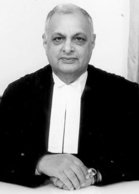
N.V. RAMANA, J.
These two appeals arise out of a common judgment and order
passed by the Division Bench of the High Court of Karnataka in Criminal
Appeal No. 763/1999 wherein the High Court has set aside the order of
Page 2 2
acquittal passed by the Trial Court and convicted the accused under
various sections of Indian Penal Code (for short ‘IPC’).
2. The Criminal Appeal 635/2006 is preferred by accused [A1, A4
and A10] who were convicted by the High Court for the offence punishable
under Section 324 read with Section 149, IPC and sentenced them to
undergo imprisonment for a period of one year and to pay a fine of
Rs. 500/-, in default to undergo 2 months further imprisonment. A10 was
further convicted for the offence under Section 323, IPC and imposed fine
of Rs 500/- and in default to undergo imprisonment for a further period of 2
months.
3. The Criminal Appeal 1067/2006 is preferred by accused Nos. 2
& 5 who were convicted by the High Court for the offences punishable
under Section 302 read with 34, IPC and Section 324 read with 149, IPC.
Under Section 302 they were sentenced to undergo life imprisonment and
to pay fine of Rs 10,000/-, in default to undergo further imprisonment for
one year. Under Section 324 the punishment imposed was imprisonment
for a period of one year and fine of Rs 500/- and in default to undergo
imprisonment for a further period of 2 months.
Page 3 3
4. Brief facts as unfolded by the prosecution are that
Chennegowda (deceased), the resident of Mudugere Village, had 12 acres
of land near Masarangala Village out of which eight acres were consisting
of coffee plantation and four acres were wet land. Due to construction of
bridge over Hemavathi river which caused submersion of some
surrounding lands in the backwaters, Channegowda and his sons used to
pass through the cart track in Survey No. 42 and other lands in Survey No.
43 belonging to the accused persons since they were located between
coffee estate of Chennegowda and the road to Kendenne village, to have
access to his coffee estate, the deceased could get a road sanctioned from
the authorities. Accused No. 7, Rajappa got temporary injunction against
that sanction which led to the deceased to move the Court and got the
temporary injunction vacated. When a Court commissioner inspected the
disputed lands, a quarrel had erupted between the accused and victim
parties. The Panchayat settled the issue by directing the deceased to pay
Rs.1000/- to the brother of Accused No. 13. Accordingly the payment was
made but the enmity between the two groups continued.
5. In the backdrop of this factual scenario, on 27
th
February, 1991
at about 8 am, when Sannegowda (PW1), Channegowda (PW5) and
Page 4 4
Swamygowda (PW6) - all belonging to victim party, were carrying milk to
the collection centre of Daarikongalale village, accused Nos. 1 to 7 and 9 to
13 formed into an unlawful assembly and restrained Sannegowda (PW1)
near Higher Primary School and assaulted him with clubs and stones. At
that point of time Channegowda (father of PW1), Mogannagowda (PW2)
and Papegowda (PW3) came and interfered questioning the accused
reasons for the assault. Then Puttegowda (A5) and Nanjegowda (A2)
attacked Channegowda (father of PW1) seriously injuring him with chopper
and club respectively. Sannegowda (PW1), Moganangowda (PW2) and
Papaegowda (PW3) were injured at the hands of A2 and A3. The injured
were shifted to hospital and the same was informed to police.
6. The Investigating Officer, Lakshmi Prasad, PSI (PW19)
recorded the statement (Ex.P1) of Sannegowda (PW1) and registered the
case against Krishnegowda (A1) and five others for the offences
punishable under Sections 143, 147, 148 and 324 read with Section 149,
IPC. Meanwhile, the seriously injured Channegowda (father of PW1) was
treated in S.C. Hospital at Hassan for two days, thereafter he was shifted to
NIMHANS, Bangalore, from there to Victoria Hospital, Bangalore and finally
again to S.C. Hospital at Hassan where on 6
th
March, 1991 he succumbed
Page 5 5
to the injuries. Consequently, charge under Section 302, IPC was added
against the accused, inquest report prepared, postmortem conducted,
statements of witnesses have been recorded and Investigating Officer got
prepared sketch of scene of occurrence and seized choppers and clubs
from the place of occurrence and sent it to Forensic Science Laboratory at
Bangalore.
7. The Principal Sessions Judge at Hassan took cognizance of the
offence and framed charges. Before framing charges, accused No. 8 died.
Hence charges were framed against remaining 12 accused for the offences
punishable under Sections 148, 302/149, 324/149 and 323/249 of IPC. In
order to bring home the guilt of the accused, prosecution examined 22
witnesses, PWs 1 to 6 and 11 being eyewitnesses, marked Ext. P-1 to P-41
and MOs 1 to 6 were produced at trial. However, in defence no witness was
examined on behalf of the accused.
8. The Trial Court after a full fledged trial has acquitted the
accused as the Court came to the conclusion that the prosecution could not
prove the guilt of the accused beyond reasonable doubt. The whole
Page 6 6
emphasis and basis for the Trial Court to come to such a conclusion is on
the following:
(a)The evidence of the eyewitnesses is inconsistent and not
trustworthy. The first information report did not contain the names
of accused and this would lead to the inference that the evidence
given by PW1 before the Court is an obvious improvement.
(b)The evidence of PW2 is that A11 & 12 hit the deceased with
stones on his chest which is not spoken by PW1 and also not
supported by medical evidence. When there is inconsistency
between medical evidence and ocular evidence, the benefit of
doubt should be given to the accused.
(c)The omission on the part of the prosecution to explain the injuries
on the person of the accused assumes greater importance. In view
of the inherent improbabilities, the serious omissions and
infirmities, the prosecution miserably failed to prove the case.
(d)The police suppressed the factum of the direction given to police
to seize the gun held by the deceased and to include an offence
punishable under relevant Sections of the Arms Act.
(e)Accused Nos. 7-13 were implicated in the case after 06-03-1991
as their names do not find place in the first or second FIR.
(f)The prosecution has not stated PW4 as witness and PW 1 & 2 had
not mentioned about his presence at the time of occurrence.
(g)The evidence of PW5 is not consistent with other witnesses.
Page 7 7
(h)The evidence of the Investigation Officer and PW 1 & 2 with regard
to the arrest is inconsistent with others and appears to be tainted.
(i)The blood found on MO4 is of ‘O’ group and both the blood groups
of the deceased and A5 are of same group.
(j)The statement given by PW1 is inconsistent with previous
statement recorded by police u/sec 171, CrPC.
(k)PW2 who was injured on 27-02-1991 went to hospital on
08-03-1991 for examination and treatment which creates an
amount of doubt.
9. Basing on the above inconsistent evidence of prosecution
witnesses with that of medical evidence and other probable
circumstances, Trial Court came to the conclusion that the
prosecution could not prove the guilt of the accused beyond
reasonable doubt and therefore acquitted the accused from the
offences charged against them.
10. Aggrieved by the judgment passed by the Trial Court, the
State of Karnataka carried the matter to the High Court. The Division
Bench of the High Court being conscious of the powers of the
appellate Court in an appeal against acquittal observed that,
appellate Court should not interfere with the order of the acquittal, if
the view taken by the Trial Court is also a reasonable view of the
evidence on record and the findings recorded by the Trial Court are
Page 8 8
not manifestly erroneous, contrary to the evidence on record or
perverse proceedings. The High Court went ahead to scrutinize the
legality or otherwise of the order of acquittal.
11. The High Court has compartmentalized the reasons given
by the Trial Court and thereafter dislodged the same one by one on
the following grounds:
(a)PW1 to PW3 who are sons of deceased consistently deposed
about the injuries inflicted by A2 & A5 and their evidence is
consistent and unshaken. The evidence of PW1 establishes
factum of happening of the incident. Even though there were
contradictions in the evidence of eye witnesses it does not
affect the pith and substance of eye witnesses. Hence need not
be considered.
(b)Though these witnesses are interested witnesses they are
natural witness and nothing contra is elicited as such their
evidence has to be taken into consideration.
(c)Though the evidence with regard to injuries on the chest of the
deceased allegedly inflicted by A11 & 12 is contrary to medical
evidence, still the reliable testimony of the eyewitnesses cannot
be disregarded and these contradictions will not go to the root
of the matter.
Page 9 9
(d)The medical evidence of PW10 fully corroborates with the
evidence of eyewitnesses with regard to the injuries sustained
by the deceased at the hands of A 2 & 5.
(e)The motive for the commission of offence is successfully
established.
(f)The investigation by the police is fair and genesis of the
incident is not suppressed as everything is in black and white.
(g)The presence of PSI (PW 19) at the place of occurrence before
recording the complaint (Ex-P1) is not a serious infirmity in the
prosecution case when the evidence of eyewitnesses is
straightforward and there is nothing to show that Ex-P1 was
concocted.
(h)The other aspects such as initially arresting Sannegowda and
Mogannagowda, sons of deceased and later on transposing
them as PWs 1 & 2, medical examination of PW 2 taking place
on 08-03-1991 when he was injured on 27-02-1991, the MOs 1,
2 and 4 stained with blood and the blood group of deceased
and A5 being same ‘O’ group, inconsistency in the evidence of
PW1 relating to non mentioning of the names of A2 and A5 are
not at all ‘fatal’ to the case of the prosecution.
(i)The seizure of weapons from the place of occurrence and later
at police station, are not serious defects.
Page 10 10
(j)The High Court found only A2 & A5 had common intention in
taking away the life of the deceased and others did not have
common intention.
(k)A1 to A5, A9 and A10 have common object of assaulting PW1.
The High Court felt that Trial Court’s view was perverse,
erroneous and contrary to the evidence available on record,
hence it is a fit case where the appellate Court has to interfere
with the order of acquittal passed by the Trial Court.
12. The High Court found A2 and A5 guilty of committing the
offence under Section 302/34, IPC and sentenced them to life
imprisonment and to pay a fine of Rs.10,000/- each, in default, to
suffer further imprisonment of one year. A1 to A5, A9 and A10 were
convicted under Section 324/149, IPC and sentenced to suffer
imprisonment for a period of one year and to pay fine of Rs.500/-, in
default, to suffer further imprisonment of two months. Whereas A6,
A7, A9, A10 and A13 were convicted under Section 323, IPC and they
were directed to pay a fine of Rs.500/-, in default, to suffer two
months imprisonment. The substantive sentences were directed to
run concurrently.
13. That is how A 1, 3, 4 and 9 are before this Court by way of
special leave petition. On 11
th
May, 2006 this Court granted leave to
Page 11 11
accused Nos. 1, 3 and 4 making them appellants in Criminal Appeal
No. 635 of 2006. The Court however dismissed the S.L.P. of accused
No. 9, Ramesha, as he has not surrendered. Accused Nos. 2 and 5
have preferred Criminal Appeal No. 1067 of 2006 challenging the
order of the High Court.
14. We have heard the learned counsels appearing on either
side and perused the material available on record.
15. Learned counsel appearing for the appellant has
submitted that the Court below has failed to appreciate the case and
counter case. There are several contradictions in the evidence of
prosecution witnesses on several material aspects and the same
goes to the root of the matter. It is urged that the medical evidence is
not in consonance with the ocular evidence. The prosecution witness
has concealed the genesis of the incident and did not place the true
facts before the Court. Because the prosecution party was politically
influential, the complaint lodged by the father of A5 was not
investigated properly by the police. Even the injuries on A5 were not
properly explained and these are latches on the part of investigation
and fatal to the case of prosecution. In support of the same senior
counsel relied on the judgment of Takhaji Hiraji V. Thakore
Page 12 12
Kubersing Chamansing & ors, (2001) 6 SCC 45 and also placed
reliance on State of MP V. Mishrilal (dead) & Ors., (2003) 9 SCC
426. Non- mentioning of the names of A2 & A5 at the earliest point of
time is lapse on the part of investigation and the High Court
committed a serious error of law in not taking these factors into
consideration. The learned senior counsel finally submitted that the
High Court based its conclusion by ignoring several material factors
and hence the impugned judgment needs to be set aside.
16. Learned counsel appearing for the State supported the
impugned judgment.
17. Now the issue that falls for consideration before us is
whether the High Court was justified in reversing the order of acquittal
passed by the Trial Court.
18. In view of the voluminous evidence placed on record and
the divergent views taken by the Courts below, it has become
imperative for us to evaluate the material on record in detail to come
to a just conclusion. First and foremost we would like to analyze the
oral evidence adduced by the prosecution in support of its case.
Page 13 13
Oral Evidence: (i) PWs 1 to 3 are sons of the deceased. As rightly
observed by the High Court their evidence is consistent about one aspect
that is with regard to the injuries sustained by the deceased at the hands of
accused, but the evidence on record makes it clear that there are several
contradictions in the evidence of the witnesses which creates doubt in the
mind of the Court as rightly observed by the Trial Court.
(ii) According to PW1 on 27-02-1991 he took milk to the milk
collection centre at Parikongalale Village along with PW5 & PW6 at 07:30
a.m. At that time A1, A3, A5, A6 held him and assaulted him with clubs and
stones and fisted him. Then he has narrated how A1, A2, A3 and A4
assaulted him. Then the deceased, PW2 & PW3 came to the place of
occurrence and asked him why they are assaulting PW1. A5 & A2 with
chopper and club again assaulted their father and he fell down and became
unconscious. Then PW6 carried his father to the veranda of the school and
laid him down. After that again A2, A3, A10 assaulted his brother. At that
time police came to the scene of offence at 10 a.m. and shifted the
deceased and PW1 to the hospital and then he wrote a complaint and gave
it to the police. Police recorded the statement and it is attested by him.
Page 14 14
(iii) Again at the time of inquest his statement was recorded by the
police. Then in the cross examination PW1 has deposed altogether a
different version with regard to the injuries inflicted by the accused on him
and PWs 2 & 3 and added A5 & A10 for the first time. It is stated by him
that his statement was recorded by police at 12 pm and he has not given
any complaint in writing. He further states that he has not given the names
of accused to the police. He denied the fact that father of A5 gave a
complaint to the police against their family at 10 a.m on 27-02-1991 and
police seized the gun. Then for the first time he stated the names of the
accused who assaulted at the time of inquest.
(iv) A close look at the evidence of PW2 reveals that according to him
they reached the scene of offence along with deceased at 9 a.m. A1-7 and
A 9-13 were present there by the time they reached the place. His evidence
was consistent with regard to injuries inflicted by A2 and A5 but stated that
A11 and A12 inflicted injuries on the deceased with stones which is
contrary to the medical evidence. He stated that the weapons were
recovered from the drain. According to PW1 he left the place at 07:30. As
per PW2’s version, PW1 left the place at 06:30 and PW3 gave a different
version with regard to reaching the place. According to him they reached
Page 15 15
the place at 07:30 or 08:00 a.m and very interestingly he deposed that his
father fell into the drain and later he was lifted from there and laid him in the
school veranda.
(v) Later police reached the place of occurrence at 09:00 a.m. and
Police have arrested PWs 2 & 3 and released them at 05:00 p.m. He has
specifically stated that police have not seized and sealed the chopper
marked as MO 4. According to PW3, when they reached the place of
occurrence, only 4-5 persons were there. According to PW2 all accused
persons were present and even with regard to injuries also he took a contra
stand. As per his version the whole incident has taken place for 15 minutes
i.e. between 08:30-08:45 a.m. PW4 was not cited as a witness but was
examined as a witness. Whereas PW5 gave altogether a different version.
According to him, incident took place at 07:00 a.m. and A6 & A2 were
standing near the culvert. He released PW1 from clutches of the accused.
According to him, police came at 09:00 a.m. This aspect was also not
deposed by PW1. PW6 states that A6 holding PW1’s collar which was also
not deposed by PW1. According to him, he has attended the seizure
mahazar but the MOs were not shown to him nor, any seal was affixed on
them at the time of seizure.
Page 16 16
(vi) The next important evidence is that of Doctor i.e. PW10.
According to PW10 the weapons were not sent to him for opinion. PW10 in
his cross examination has categorically deposed that the injuries 1 & 4 are
possible if a person were to fall on the curve stone of a drain.
(vii) PWs 13 and 15 are the Head Constables and PW 19 is the
Inspector of Police (I.O.). According to PW13, SI has registered the
complaint at 11:30 a.m. and 2
nd
FIR was registered altering the Sections on
06-03-1991. PW15 deposed that ‘galata’ was informed to them at 09:15 am
and they reached the scene of offence at 10 a.m. PW1 had not sustained
any visible injuries. PW1 took the SI near to the drain. In the cross
examination he said that at 08:00 a.m. ‘galata’ took place and he does not
know how they came to know about the information. When they reached
the scene of offence 50-60 persons were present there. SI (PW19) reached
the place of occurrence at 10:15 am and enquired PW1 and others. The
evidence of PW19 in the chief is that at 08:00 a.m. he came to know about
the incident, went to the scene of occurrence along with PWs 15 & 18.
Chopper, stones, club were lying near the place. By the time they reached
the place at 08:15 a.m., 10 to 15 persons were present. He has not made
Page 17 17
any enquiry and, he has recorded Ex. PI in police station at 10:30 a.m. on
the same day. He returned to the police station at 09:45 a.m. It is
specifically stated that he has not arrested PWs 1, 2 & 3 and has not
produced sample seal.
19. Having gone through the evidence of the prosecution
witnesses and the findings recorded by the High Court we feel that
the High Court has failed to understand the fact that the guilt of the
accused has to be proved beyond reasonable doubt and this is a
classic case where at each and every stage of the trial, there were
lapses on the part of investigating agency and the evidence of the
witnesses is not trustworthy which can never be a basis for
conviction. The basic principle of criminal jurisprudence is that the
accused is presumed to be innocent until his guilt is proved beyond
reasonable doubt.
20. Generally in the criminal cases, discrepancies in the
evidence of witness is bound to happen because there would be
considerable gap between the date of incident and the time of
deposing evidence before the Court, but if these contradictions create
Page 18 18
such serious doubt in the mind of the Court about the truthfulness of
the witnesses and it appears to the Court that there is clear
improvement, then it is not safe to rely on such evidence.
21. In the case on hand, the evidence of eyewitnesses is only
consistent on the aspect of injuries inflicted on the deceased but on
all other factors there are lot of contradictions which go to the root of
the matter.
22. Even with regard to seizure of weapons it was observed
by the Trial Court that at one breath it was stated that the MOs were
seized from the scene of offence and another version was they were
seized in the police station and consistently it was stated that the
MOs were not sealed and the Doctor observed that those were not
sent to her for opinion. Then the immediate question which comes to
the mind of a prudent person is whether the MOs which are before
the Court were the ones seized from the scene of offence. Hence an
adverse inference has to be drawn on the prosecution case. The
witnesses gave different versions on how the weapons were seized.
Some of them indicated that they were in the drain and some other
witnesses said that they were lying on the ground at the place of
Page 19 19
occurrence. The High Court was correct so far as not attributing
importance to the injuries inflicted by A 11 and 12 as it did not go to
the root of the matter.
23. In the evidence of the prosecution witnesses in respect of
exact time when the incident had happened, who were the people
present at the scene of offence, the time of police reaching the scene
of offence, place of registering the complaint, there were lot of
variations. According to PW1 the complaint was recorded at hospital
at 12 p.m. whereas the Investigating Officer deposed that he
registered the complaint at 10:30 a.m. at the police station. PWs 1-3
say that they were arrested by Investigating Officer but the I.O. gave
a contradictory statement that he has not arrested them. PW1 initially
gave a statement before the police saying A1, A5, A3, A4 had not
assaulted him. Later he gave a contradictory statement which is
marked as Exhibit D1.
24. The eyewitnesses have not mentioned the names of
accused 7 to 13 in any of the FIR and subsequent addition of their
Page 20 20
names after 06-03-91 clearly demonstrates that it was an
afterthought, only to implicate them.
25. It is to be noted that all the eyewitnesses were relatives and the
prosecution failed to adduce reliable evidence of independent witnesses for
the incident which took place on a public road in the broad day light.
Although there is no absolute rule that the evidence of related witnesses
has to be corroborated by the evidence of independent witnesses, it would
be trite in law to have independent witnesses when the evidence of related
eyewitnesses is found to be incredible and not trustworthy. The minor
variations and contradictions in the evidence of eyewitnesses will not tilt the
benefit of doubt in favor of the accused but when the contradictions in the
evidence of prosecution witnesses proves to be fatal to the prosecution
case then those contradictions go to the root of the matter and in such
cases accused gets the benefit of doubt.
25. It is the duty of the Court to consider the trustworthiness
of evidence on record. As said by Benthem, “witnesses are the eyes
and ears of justice”. In the facts on hand, we feel that the evidence of
these witnesses is filled with discrepancies, contradictions and
Page 21 21
improbable versions which draws us to the irresistible conclusion that
the evidence of these witnesses cannot be a basis to convict the
accused.
26. Latches in Investigation: (i) One of the major lacuna in the
case is non-mentioning of the names of A2 & A5 by PW1 to the police
at the earliest point of time. The High Court went wrong in observing
that this will not amount to latches and it will not go to the root of the
matter. These are the glaring defects which will virtually collapse the
case of the prosecution. It is no doubt true that the FIR need not be
an encyclopedia and also it need not contain all the details but when
the names of A2 & A5 were not figured in the FIR it casts a doubt on
the whole episode. According to the eyewitnesses, accused had
inflicted major injuries and that was the reason for the death of the
deceased. It is expected from a prudent man to disclose the names of
accused. If the accused cannot be identified or not known to the PWs
then it is not a serious thing to dwell upon but these people are very
much known to PW1’s family. It therefore creates a serious doubt in
the mind of the Court.
Page 22 22
(ii) The other glaring defect in the investigation is when A1 has
sustained injuries and admittedly a complaint was given by his father, a
duty is cast upon the prosecution to explain the injuries. The doctor has
also categorically deposed about the injuries sustained by A1. These
lapses on the part of Investigating Officer assume greater importance and
prove to be fatal to the case of the prosecution. When the Investigating
Officer deposed before the Court that the complaint given by A5’s father
was investigated and he filed ‘B form’ and the case was closed, not
marking the document is fatal to the case of prosecution. Investigating
Officer further suppressed the fact that there was a direct evidence to seize
the gun used by the deceased and register a complaint against the
deceased under the relevant provisions of the Arms Act which is evident
from the endorsement made on Exhibit P22.
(iv) The Investigating Officer himself deposed that he had not
seen the MOs and as per the punch witnesses also they were not seized.
The Doctor (PW10) deposed that those articles were not placed before her
and no opinion was sought.
Page 23 23
(v) PW2 was also an injured witness. According to the
prosecution he was injured on 27-02-1991. But he went to the hospital on
08-03-91 and the reasons for delay were left unexplained.
27. It is settled law that mere latches on the part of
Investigating Officer itself cannot be a ground for acquitting the
accused. If that is the basis, then every criminal case will depend
upon the will and design of the Investigating Officer. The Courts have
to independently deal with the case and should arrive at a just
conclusion beyond reasonable doubt basing on the evidence on
record.
28. Medical Evidence: When we look at the medical evidence, the
Doctor (PW10) has categorically stated that the weapons were not
sent to her. In the chief examination, it was stated that the injuries 1 &
4 on the body of the deceased are possible with chopper and club.
But in the cross examination it was deposed that even if a person
falls on a sharp object these injuries could happen. According to
PW3, the deceased fell into the drain.
Page 24 24
(i)As per the evidence of prosecution witnesses, accused by
using the sharp edge of the weapon assaulted on the right side
of the forehead but the Doctor’s evidence in this regard is that
the deceased has not sustained incised wound on the
forehead. PW10 further stated that if a person is assaulted with
an object like MO4 it would result in fracture of frontal bone.
(ii) The other ground is, when the father of A5 gave a complaint
against the deceased’s family as the police filed ‘B form’ the same was
closed and not filed before the Court. Apart from that, the direction of the
Court to seize the gun of the deceased and file a case under the relevant
provisions of the Arms Act was not brought to the notice of the Court. Non
explanation of injuries on A5 is another major defect.
29. Once there is a clear contradiction between the medical
and the ocular evidence coupled with severe contradictions in the oral
evidence, clear latches in investigation, then the benefit of doubt has
to go to the accused.
Page 25 25
30. Going by the material on record, we disagree with the
finding of the High Court that the ocular evidence and the medical
evidence are in conformity with the case of prosecution to convict the
accused. The High Court has brushed aside the vital defects involved
in the prosecution case and in a very unconventional way convicted
the accused.
31. The Court should always make an endeavor to find the
truth. A criminal offence is not only an offence against an individual
but also against the society. There would be failure of justice if
innocent man is punished. The Court should be able to perceive both
sides i.e. the prosecution as well as the defence and in our
considered opinion the judgment of the High Court suffers from
several defects as discussed in the preceding paragraphs.
32. Hence we deem it appropriate to set aside the judgment
of the High Court and re-affirm the order of acquittal passed by the
Trial Court. The accused shall be set at liberty provided they are not
required in any other case. Accordingly the appeals are allowed.
Page 26 26
..................................J
(N. V. RAMANA)
.................................J
(PRAFULLA C. PANT)
NEW DELHI
DATED: March 28, 2017

 Login with google
Legal Notes
Add a Note....