
As per case facts, the appellant, a bus driver, was convicted by the trial court for rash and negligent driving under Sections 279 and 304A IPC, and Section 134 read ...
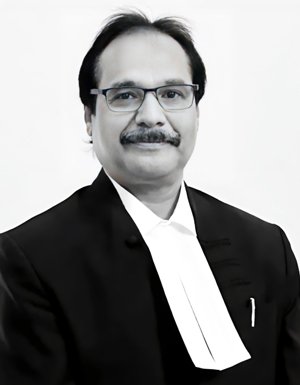
2026 INSC 565
Criminal Appeal @ SLP (Crl.) No. 573 of 2026 Page 1 of 18
REPORTABLE
IN THE SUPREME COURT OF INDIA
CRIMINAL APPELLATE JURISDICTION
CRIMINAL APPEAL NO.2902 OF 2026
(Arising out of SLP (Crl.) No.573 of 2026)
MOHAMMAD HANIF JAINUM
KHALIFA …APPELLANT
VERSUS
THE STATE OF KARNATAKA …RESPONDENT
J U D G M E N T
N.V. ANJARIA, J.
Leave granted.
2. The appellant herein, who was serving as a driver
in the Karnataka State Road Transport Corporation
1 bus,
came to be tried and convicted by the Court of learned 1
st
Addl. Civil Judge & JMFC, Athani at Athani
2 by judgment
and order dated 26.12.2015 passed in C.C. No.933 of 2011
for the offences under Sections 279 and 304A of the Indian
1
Hereinafter, “KSRTC”.
2
Hereinafter, “trial court”.
Criminal Appeal @ SLP (Crl.) No. 573 of 2026 Page 2 of 18
Penal Code, 1860
3 and under Section 134 read with Section
187 of the Motor Vehicles Act, 1988
4. The appellant came to
be sentenced to undergo simple imprisonment for four
months for the offence punishable under Section 279, IPC
and to undergo simple imprisonment for six months for the
offence punishable under Section 304A, IPC.
2.1 The Court of VII Addl. Dist. & Sessions Judge,
Belagavi, sitting at Chikodi
5 dismissed Criminal Appeal
No.12 of 2016 preferred by the appellant against the
judgment of the trial court by maintaining the conviction
and sentence recorded by the trial court.
2.2 The aggrieved appellant approached the High Court
of Karnataka, Dharwad Bench
6 by filing Criminal Revision
Petition No.100222 of 2018 under Section 397 of the Code
of Criminal Procedure, 1973. The High Court, by order dated
25.03.2025 which is the order impugned in this appeal,
allowed the Revision Petition in part, maintaining the
conviction of the appellant, however, observed that the
3
Hereinafter, “IPC”.
4
Hereinafter, “MV Act”.
5
Hereinafter, “Appellate Court”.
6
Hereinafter, “High Court”.
Criminal Appeal @ SLP (Crl.) No. 573 of 2026 Page 3 of 18
doctrine of merger would apply and since the sentence of six
months’ simple imprisonment was awarded for the offence
punishable under Section 304A, IPC, sentence under
Section 279, IPC could not have been separately awarded.
Accordingly, the High Court set aside the sentence of four
months simple imprisonment imposed by the trial court for
the offence punishable under Section 279, IPC, maintaining
the rest of the sentence.
3. As per the case in the complaint filed by the
informant, who was a permanent resident of village
Mangasuli, on 17.04.2011 at around 03.30 pm, he along
with his sister-in-law Shobha and her mother Housabai took
the bus bearing registration No.KA-23-F-390 driven by the
appellant to travel from Athani to return home. At around
04.30 pm, since they were to alight from the bus, the bus
conductor whistled to stop the bus near Mallayya Temple.
3.1 It is the prosecution case that while the informant
along with his sister-in-law and mother were in the process
of taking off from the bus, the appellant-accused, driver of
the said bus, moved the bus in a rash and negligent manner
which resulted in falling down of said Shobha from the bus.
Criminal Appeal @ SLP (Crl.) No. 573 of 2026 Page 4 of 18
She sustained grievous injuries on her head. She was
thereafter shifted to the hospital, however, later she
succumbed to her injuries. Based on the complaint of the
informant, First Information Report
7 was registered against
the appellant at Kagawad Police Station for the offences
punishable under the aforementioned sections of IPC and
MV Act.
3.2 For convicting the appellant, the trial court
reasoned that the informant (PW1) and Housabai (PW4)-
mother of deceased testified consistently that the appellant-
accused moved the bus while deceased Shobha was in the
process of getting down from the bus, and thus she fell down
from the bus and subsequently died due to injuries
sustained by her. It was held that starting the vehicle before
the passenger could safely disembark would constitute rash
and negligent driving. It was further observed that the
evidence of Popat Ramchandra Patil (PW5), who was coming
from behind the said bus on a motorcycle, corroborated that
7
Hereinafter, “FIR”.
Criminal Appeal @ SLP (Crl.) No. 573 of 2026 Page 5 of 18
the bus had stopped near Mallayya Temple and that it
started moving when Shobha was getting down.
3.3 The Appellate Court dismissed the appeal
confirming the judgment and order passed by the trial court
convicting and sentencing the appellant by relying upon the
testimonies of PW1, PW4 and PW5. It was the defence taken
by the appellant that the deceased tried to alight from the
bus herself in a hurried manner and because of that she
suffered injuries. As stated above, the High Court partly
allowed the Revision Petition by maintaining the conviction
of the appellant, however, setting aside the sentence in
respect of the offence punishable under Section 279, IPC
and the sentence for the offence punishable under Section
304A, IPC was maintained.
3.4 Offence under Section 279, IPC relates to rash
driving or riding on a public way. It says whoever drives any
vehicle or rides on any public way in a manner so rash or
negligent as to endanger human life, or to be likely to cause
hurt or injury to any other person, shall be punished with
imprisonment which may extend to six months or fine or
with both. The other section under which the appellant was
Criminal Appeal @ SLP (Crl.) No. 573 of 2026 Page 6 of 18
charged was Section 304-A, IPC, which is about causing
death by negligence. The offence is committed when anyone
causes the death of any person by doing any rash or any
negligent act not amounting to culpable homicide, and such
offender shall be punished with imprisonment of either
description for a term which may extend to two years or with
fine or with both.
4. Heard learned advocate-on-record Mr. Deshpande
Chinmay Arvind for the appellant and learned Additional
Advocate General Mr. Prateek K Chadha assisted by learned
advocate-on-record Mr. Naveen Sharma and other advocates
for the respondent. They took the court through the relevant
evidence on record.
5. Taking a bird’s eye view of the evidence led by the
prosecution, it consisted of the testimony of the complainant
Shamra Yalu Mane (PW1) who deposed about his going in
the bus with deceased Shobha and her mother and about
they having told the conductor that they would be getting
down near Mallaiah Temple. PW1 stated that when they
were getting down, the bus conductor whistled to stop the
bus, upon which the bus was stopped. While said Shobha
Criminal Appeal @ SLP (Crl.) No. 573 of 2026 Page 7 of 18
had been alighting, the accused driver drove the bus leading
to her fall from the bus and suffer fatal injury, it was stated.
Housabai Dadasaheb Mali (PW4), mother of deceased
Shobha, also travelling along, narrated the similar account
that the driver moved the bus while her daughter Shobha
was yet to get down. In her cross-examination, she stated
that the conductor and the driver stopped the bus in order
to enable them to get down from the bus but drove the bus
early and negligently.
5.1 Rajaram Sukaram Male (PW2) was called by the
police for the Panchnama purpose. He turned hostile
partially and stated that the police did not take his signature
on the Panchnama and he did not sign the Panchnama.
Govind Maruthi Inamdar (PW3), who was another witness,
going on his motorcycle at the place in question, stated in
his deposition that his signature was taken by the police
who insisted him that he (PW3) had seen the accident and
accordingly his signature was taken on the document.
Nothing material came out from the deposition of PW1 and
PW3. PW5, Popat Ramachandra Patil, who was coming from
behind the bus on a motorcycle, was examined and stated
Criminal Appeal @ SLP (Crl.) No. 573 of 2026 Page 8 of 18
that he saw the deceased falling down from the bus and
suffering a head injury. Investigating Officer Jayappa
Sharanappa Nyamegoudar (PW7), who had carried out the
investigation and filed the chargesheet, was another witness
examined.
5.2 Figures in the set of evidence is the testimony of
Kalludeppa Muthappa Batakurki (PW6), who was the
conductor in the bus in question. The translated version of
the examination-in-chief of PW6 as on record, in its relevant
part, is extracted below,
“On the said date when the passengers asked me to
stop the said bus near the cross, and I gave the
signal for stopping the bus by whistling. And on my
whistling the accused have stopped the bus and the
passengers have got down from the bus. And after
the passengers got down from the bus, I have told
to the accused to move the bus, and while the
accused was driving the bus, I heard the
passengers the screaming noise and when I looked
into,…”
5.2.1 PW6 further stated that he saw a woman falling
down from the bus and after the bus was stopped,
subsequently, they took the said woman (Shobha) to
Mangasuli Hospital, and thereafter to Miraj Hospital for
treatment, where she subsequently died. The aforequoted
Criminal Appeal @ SLP (Crl.) No. 573 of 2026 Page 9 of 18
part of evidence of PW6 remained intact during his cross-
examination. He denied in his cross-examination that it was
correct to suggest that it was on account of negligence of the
accused driver that Shobha fell down from the bus.
5.2.2 It unequivocally emanates from the testimony of
PW6-conductor of the bus that the passenger had asked him
to stop the bus, that he gave signal by whistling for stopping
the bus, that the bus was therefore stopped by the
appellant-accused-driver, at which juncture the passengers
alighted from the bus. He stated that after passengers got
down from the bus, he told the driver to move the bus. At
that time, he listened to the screaming of the passengers.
5.3 It needs no more than the common knowledge that
in any vehicle, particularly in a passenger bus, the
conductor happens to be a person in-charge, who not only
issues the tickets, but also discharges the function to
regulate the movement of the bus. It is at the indication of
the conductor by whistling or by ringing bell, as the case
may be, that the driver of the bus is conveyed as to when
the bus should be stopped to enable the passengers to alight
at a particular station and when to start the bus again.
Criminal Appeal @ SLP (Crl.) No. 573 of 2026 Page 10 of 18
5.3.1 It is the conductor who signals the driver in
appropriate way to start the bus or to start again after
stoppage, the passengers having got off the bus. The driver
of the bus, who would otherwise be concentrating on the
driving, would depend upon the indications, signals or
whistling from the conductor to monitor and regulate the
movement of the bus. The application of the mind by the
driver has to stay in driving of the bus for the stakes of
safety, while he would follow the conductor’s signals for
starting, stopping and moving the bus. The above aspect
and the consideration would be material and would weigh in
concluding about the negligence of the bus driver-appellant-
accused.
5.4 The testimony of PW6 in terms suggests that upon
his whistle, the accused driver has stopped the bus and after
the passenger got down from the bus, he again whistled.
Thereupon the appellant started the bus. In other words, the
appellant-driver acted by following the indication of
whistling provided by the conductor for stopping and
restarting the bus, as deceased Shobha, her mother and the
appellant were to get down from the bus near Mallaiah
Criminal Appeal @ SLP (Crl.) No. 573 of 2026 Page 11 of 18
Temple. When the appellant accused had followed the
instructions of the conductor in stopping and moving the
bus, which the appellant was duty-bound to do, it would be
both unreasonable and illogical to attribute any negligence
on his part.
5.4.1 The appellant driver was not expected to turn his
head back and to see himself whether the passengers had
alighted. His dependence on the signal of whistling to start
the bus was a normal and natural conduct. Holding that the
appellant-accused in capacity of the driver conducted
himself without due care or with negligence would not be a
justifiable conclusion in the facts of the case. It is therefore
difficult to conclude with definitiveness that deceased
Shobha had died on account of driver’s negligence. The
driver acted as per the conductor’s indicative instructions.
The deceased might have slipped from the bus due to her
own conduct less than careful. The driver, in any view,
deserves to be exonerated from the charge of acting
negligently.
Criminal Appeal @ SLP (Crl.) No. 573 of 2026 Page 12 of 18
5.5 Ravi Kapur vs. State of Rajasthan
8
, was the case
of a road accident involving an issue of rash and negligent
driving. This Court expressed itself about relevant
considerations and nature of proof to be applied. It was
observed that the negligence has to be inferred from the
attendant circumstances. It quoted with approval the
concept of negligence analysed in Halsbury's Laws of
England (4th Edition), Volume 34, Para 1 (pg. 3), which
stated,
“Negligence is a specific tort and in any given
circumstances is the failure to exercise that care
which the circumstances demand. What amounts
to negligence depends on the facts of each
particular case. It may consist in omitting to do
something which ought to be done or in doing
something which ought to be done either in a
different manner or not at all. Where there is no
duty to exercise care, negligence in the popular
sense has no legal consequence…”
5.5.1 In Ravi Kapur (supra), the Court highlighted the
concept of “culpable rashness” and “culpable negligence”.
These concepts and considerations become relevant in the
road accident cases to judge the negligence for becoming an
offence in eye of law. The “culpable rashness” or “culpable
8
(2012) 9 SCC 284.
Criminal Appeal @ SLP (Crl.) No. 573 of 2026 Page 13 of 18
negligence” amounts to acting with the consciousness that
mischievous and illegal consequences may follow by such
act, but with the hope that they will not, and often with the
belief, that the actor has taken sufficient precautions to
prevent their happening.
5.5.2 In the facts of the case, it could not be said that the
driver did not exercise the due care which he was required
to take. In the totality of facts and the scenario from evidence
emerging, this Court is not inclined to hold that there was
any culpable negligence on the part of the appellant.
5.6 “Recklessness” is perhaps a higher degree of
“carelessness”. One acts reckless when one conducts
himself regardless or heedless of the possible harmful
consequences of one’s act. The recklessness covers a whole
range of state of mind from failing to give any thought to
what is to be acted upon. Recklessness presupposes that no
thought was given in the matter by the doer before he did
the act.
5.6.1 When the appellant-driver acted by following the
conductor’s instructions and moved the bus, he cannot be
Criminal Appeal @ SLP (Crl.) No. 573 of 2026 Page 14 of 18
said to be reckless, even though the movement of the bus
had the consequence of the passenger falling down. The act
on part of the appellant was preceded by a thought and the
thoughtfulness of the mind by heeding to and guided by the
conductor’s whistling. The passenger in the present case,
though fell down, the appellant-driver could not have been
saddled with the negligence. Nor was it a case of res ipsa
loquitur.
5.7 It was observed in Ravi Kapur (supra) that
negligence and rashness, to be punishable in terms of
Section 304A, IPC must be attributable to a state of mind
wherein the criminality arises because of no error of
judgment but of a deliberation in the mind risking the crime
as well as the life of the person who may lose his life as a
result of the crime. The factor of such “deliberation in mind”
could be said to be absent in the instant case on part of the
driver, who acted bona fide on the instructions of the
conductor in moving the bus. He could not be said to have
acted with negligence, much less criminally negligence.
Criminal Appeal @ SLP (Crl.) No. 573 of 2026 Page 15 of 18
5.8 In State of Karnataka vs. Satish
9
, this Court
observed that merely because a truck was driven at a high
speed, it does not bespeak of either “negligence” or
“rashness” by itself. These are relative terms, observed the
Court. In a given case, therefore, “rashness” or “negligence”
cannot become presumptive, but must be informed by
attendant facts, circumstances and the evidence.
6. The dictum of common sense often guides the
process of interpretation and application of law, for, the law
is also common sense when exposed to certain set of facts
and circumstances. In natural exposition, the law becomes
common sense. Therefore, the common sense and common
wisdom can well be a canon for appreciating the evidence.
This is more true when it comes to dealing with or judging
human conduct. Applying common sense, common wisdom
and common understanding while appreciating day-to-day
affairs and natural human activities in the walks of life helps
one to judge the things nearer to the truth. The truth, more
often than not, emanates from common sense. Therefore,
applying the yardstick of common sense and common
9
(1998) 8 SCC 493
Criminal Appeal @ SLP (Crl.) No. 573 of 2026 Page 16 of 18
wisdom in appreciating the evidence and the effect thereof,
more particularly in criminal cases, brings home the correct
picture.
6.1 The factum obtained that the appellant-driver acted
regarding stoppage and movement of the bus upon whistling
of the conductor, as established from the above-highlighted
evidence of PW6, guides this Court to conclude that the
driver could not have been held negligent. He discharged his
duty to drive the bus and regulate the movement of the bus
in accordance with the instructive signals from the
conductor. In the ultimate analysis, it was the conductor
who was to ensure the due movement of the bus and who
would be stepping inside the bus or alighting from the bus,
as the case may be. The evidence does not suggest that the
driver was negligent and whose negligence resulted into the
fall of said passenger-Shobha from the bus while getting off
the bus.
7. In light of the above facts, circumstances and the
principles of law to be applied, it is not possible to hold that
the appellant-driver acted “in a manner so rash or
negligent”. He could not have been treated as guilty of some
Criminal Appeal @ SLP (Crl.) No. 573 of 2026 Page 17 of 18
omission or doing something which may require him to
adjudge as negligent, nor the appellant was guilty of any
rash or negligent act satisfying the ingredients of Section
304A, IPC. It is difficult to conclude with definitiveness by
pinpointing and attaching negligence on the part of the
appellant that deceased-Shobha died on account of
negligence in driving or because of rash or reckless driving
by the appellant.
7.1 The deceased might have slipped while alighting
from the bus because of her own movement being less than
careful at the time of getting down. The appellant-driver
acted as per the conductor’s indicative instructions in
moving the bus. The appellant deserves to be exonerated
from the charge of acting negligently.
8. For the discussion and the reasons supplied as
above, the courts below as well as the High Court committed
a concurrent manifest error in convicting and sentencing the
appellant.
9. The impugned order dated 25.03.2025 passed by
the High Court of Karnataka, Dharwad Bench in Criminal
Criminal Appeal @ SLP (Crl.) No. 573 of 2026 Page 18 of 18
Revision Petition No. 100222 of 2018, convicting the
appellant for the offences under Sections 279 and 304A, IPC
and sentencing him under Section 304A IPC, deserves to be
set aside. The same is hereby set aside.
10. The appellant is held not guilty and is acquitted of
the offences under Section 279 as well as under Section
304A, IPC. He shall be released forthwith if still behind the
bars, provided his detention is not required for any other
offence.
11. The appeal is accordingly allowed.
Any interlocutory application, as may be pending,
shall not survive in view of disposal of the main appeal.
……………………………………...J.
[PRASHANT KUMAR MISHRA]
………………………….J.
[N.V. ANJARIA]
NEW DELHI;
MAY 27, 2026.

Legal Notes
Add a Note....