
As per the case facts, the case involved miscellaneous applications within curative petitions, which were themselves part of review petitions. The central issue was the procedure followed when the registration ...

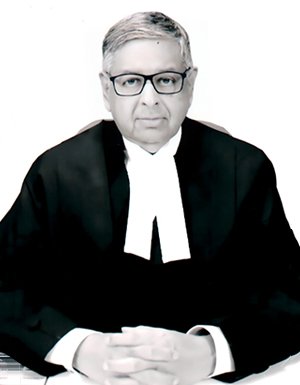
No Acts & Articles mentioned in this case
2024 INSC 145 REPORTABLE
IN THE SUPREME COURT OF INDIA
INHERANT JURISDICTION
MISCELLANEOUS APPLICATION (CIVIL) NO. 2045 OF 2022
IN
CURATIVE PETITION (CIVIL) DIARY NO. 23828 OF 2020
IN
REVIEW PETITION (CIVIL) NO.789 OF 2019
IN
CIVIL APPEAL NO.8450 OF 2016
M/S BRAHMAPUTRA CONCRETE
PIPE INDUSTRIES ETC. ETC. …APPELLANT(S)
VERSUS
THE ASSAM STATE ELECTRICITY
BOARD AND OTHERS …RESPONDENT(S)
WITH
MISCELLANEOUS APPLICATION (CIVIL) NOS. 2046, 2047, 2048
AND 2050 OF 2022
IN
CURATIVE PETITION (CIVIL) DIARY NOS. 23829, 23830,
23831 OF 2020 AND 14718 of 2021
IN
REVIEW PETITION (CIVIL) NOS. 786 787 OF 2019
IN
1
CIVIL APPEAL NOS. 8442 8443 OF 2016
WITH
MISCELLANEOUS APPLICATION (CIVIL) NO. 2049 OF 2022
IN
CURATIVE PETITION (CIVIL) DIARY NO. 23833 OF 2020
IN
REVIEW PETITION (CIVIL) NO. 788 OF 2019
IN
CIVIL APPEAL NO. 8445 OF 2016
J U D G M E N T
ANIRUDDHA BOSE, J.
The appellants before us are firms who are aggrieved by an
order of a Registrar (JIV) of this Court passed on 31.10.2022
declining registration of a set of petitions labelled as “curative
petitions.” This was a common order passed in six similar petitions
(including the one instituted by the appellant in the Miscellaneous
Application No. 2045 of 2022, instituted by Brahmaputra Concrete
Pipe Industries) founded on similar factual and legal grounds. These
appeals have been filed under Rule 5 of Order XV of the Supreme
2
Court Rules, 2013 (hereinafter the “2013 Rules”). In this judgment,
we shall refer to the pleadings and orders made in Misc. Application
No.2045 of 2022 treating it as the lead matter. The said Rule reads:
“Order XV
PETITIONS GENERALLY
.
.
.
5. The Registrar may refuse to receive a petition on the
ground that it discloses no reasonable cause or is frivolous or
contains scandalous matter but the petitioner may within
fifteen days of the making of such order, appeal by way of
motion, from such refusal to the Court.
.
.
.”
2.The order of the Registrar, which is under appeal before us,
reads:
“The above mentioned Curative Petitions filed by M/s. Nuli
& Nuli, Advocates against the judgment dated 18.12.2019
passed in the Review Petitions were heard and disposed of in
the Open Court.
In this regard the relevant Rule 2(1), Order XLVIII, S.C.R.,
2O13 reads as under:
“The petitioner, in the curative petition, shall aver
specifically that grounds mentioned therein had been
taken in the Review Petition and that it was
dismissed by circulation.”
Since the aforesaid Review Petitions were disposed of in
open court and not by circulation, the aforementioned Curative
Petitions are declined for registration and are lodged under
Order XV Rule 5 of Supreme Court Rules, 2013.
Inform the Advocate accordingly.”
3
3.The origin of the dispute ultimately leading to passing of the
aforesaid order relates to maintainability of a suit instituted by the
appellant under “The Interest on Delayed Payments to Small Scale
and Ancillary Industrial Undertakings Act, 1993” (the 1993 Act). The
suit of the appellant was decreed by the Civil Judge, Senior Division,
Tinsukia, Assam (Trial Court) but was dismissed by the High Court
in appeal mainly on the ground of the suit not being maintainable.
The High Court, interalia, held that the suit under the 1993 Act
would not lie in respect of the transactions which had taken place
prior to 23.09.1992, the date on which the Act became operational.
The appeal against the High Court judgment was dismissed by a
three Judge Bench of this Court on 23.01.2019. The plea of review of
the said judgment also failed and the review petition was dismissed
on 18.12.2019 after open court hearing. In this judgment, we shall
deal with the legality of the Registrar’s order refusing to receive the
curative petitions of the appellants.
4
4.The 1993 Act was preceded by an ordinance permitting certain
small scale industrial undertakings to claim interest on delayed
payment. That ordinance was promulgated on 23.09.1992. The
ordinance later transformed into the aforesaid statute. A question
arose as to whether the right to sue for interest under the said Act
could relate back to delayed payments made under agreements
entered into before the date of promulgation of the ordinance or not.
A Full Bench of the Gauhati High Court opined that the right to
claim interest under the said statute would not extend to agreements
or contracts entered prior to 23.09.1992.
5.In this judgment, we shall discuss the factual position involved
in the petition filed by the appellant in the lead matter. Its case had
ultimately reached this Court and in the judgment delivered on
23.01.2019, it was held by the three Judge Bench that the material
date for instituting the suit for interest would depend on whether
delivery was made by the supplier after coming into operation of the
5
said statute or not. If that was the case, then a suit for recovery of
interest on delayed payment would be maintainable in the opinion of
the three Judge Bench. In the case of the appellant before us, the
three Judge Bench found no evidence of any delivery being made
subsequent to the statute becoming operational. What the appellant
had sought to rely on was the dates of raising of bills subsequent to
23.09.1992. The threeJudge Bench of this Court was not satisfied
that the goods were supplied subsequent to that date, in respect of
which interest was being claimed on account of delayed payment.
6.As we have already indicated, the three Judge Bench of this
Court dismissed the review petition in open court after oral hearing,
finding no error apparent on the face of record of the judgment
under review. It was thereafter the curative petition was instituted
with which we are concerned in this judgment.
7.Under the Constitution of India or any other statutory
provision, there is no specific jurisdiction conferred on this Court to
6
entertain curative petitions excepting the Rules of this Court made in
2013. The Supreme Court Rules 2013 deals with the procedure for
filing of curative petitions and we shall revert to these Rules later in
this judgment. Article 137 of the Constitution of India lays down the
jurisdiction of the Court to review its own judgment or order. Article
145 of the Constitution of India empowers this Court to make rules
for regulating the general practice and procedure of the Court. The
said two Articles read:
“137: Review of judgements or orders by the Supreme
Court
Subject to the provisions of any law made by Parliament or
any rules made under Article 145, the Supreme Court shall
have the power to review any judgment pronounced or order
made by it.
145: Rules of Court, etc.
(1) Subject to the provisions of any law made by Parliament,
the Supreme Court may from time to time, with the approval of
the President, make rules for regulating generally the practice
and procedure of the Court including –
(a) rules as to the persons practicing before the Court;
(b) rules as to the procedure for hearing appeals and other
matters pertaining to appeals including the time within which
appeals to the Court are to be entered;
(c) rules as to the proceedings in the Court for the
enforcement of any of the rights conferred by Part III;
(cc) rules as to the proceedings in the Court under Article
139A;
(d) rules as to the entertainment of appeals under sub
clause (c) of clause (1) of article 134;
(e) rules as to the conditions subject to which any judgment
pronounced or order made by the Court may be reviewed and
7
the procedure for such review including the time within which
applications to the Court or such review are to be entered;
(f) rules as to the costs of and incidental to any proceedings
in the Court and as to the fees to be charged in respect of
proceedings therein;
(g) rules as to the granting of bail;
(h) rules as to stay of proceedings;
(i) rules providing for the summary determination of any
appeal which appears to the Court to be frivolous or vexations
or brought for the purpose of delay;
(j) rules as to the procedure for inquiries referred to in clause
(1) of article 317.
(2) Subject to the provisions of clause (3), rules made under
this article may fix the minimum number of Judges who are to
sit for any purpose, and may provide for the powers of single
Judges and Division Courts.
(3) The minimum number of Judges who are to sit for the
purpose of deciding any case involving a substantial question
of law as to the interpretation of this Constitution or for the
purpose of hearing any reference under Article 143 shall be
five:
Provided that, where the Court hearing an appeal under any
of the provisions of this Chapter other than article 132
consists of less than five Judges and in the course of the
hearing of the appeal of the Court is satisfied that the appeal
involves a substantial question of law as to the interpretation
of this Constitution the determination of which is necessary
for the disposal of the appeal, such Court shall refer the
question for opinion to a Court constituted as required by this
clause for the purpose of deciding any case involving such a
question and shall on receipt of the opinion dispose of the
appeal in conformity with such opinion.
(4) No judgment shall be delivered by the Supreme Court save
in open Court, and no report shall be made under article 143
save in accordance with an opinion also delivered in open
Court.
(5) No judgment and so such opinion shall be delivered by the
Supreme Court save with the concurrence of a majority of the
Judges present at the hearing of the case, but nothing in this
clause shall be deemed to prevent a Judge who does not
concur from delivering a dissenting judgment or opinion.”
8
8.The expression “curative petition” was used by Constitution
Bench of this Court comprising of five Hon’ble Judges in the case of
Rupa Ashok Hurra vs Ashok Hurra and Another [(2002) 4 SCC
388]. This Court, in the said judgment, opined that to prevent abuse
of the Court’s process and to cure a gross miscarriage of justice, the
Supreme Court may reconsider its judgments in exercise of its
inherent powers. This inherent power or jurisdiction was traced to
Articles 129 and 142 of the Constitution of India. It was interalia,
held in this judgment:
“50. The next step is to specify the requirements to entertain
such a curative petition under the inherent power of this Court
so that floodgates are not opened for filing a second review
petition as a matter of course in the guise of a curative petition
under inherent power. It is common ground that except when
very strong reasons exist, the Court should not entertain an
application seeking reconsideration of an order of this Court
which has become final on dismissal of a review petition. It is
neither advisable nor possible to enumerate all the grounds on
which such a petition may be entertained.
51. Nevertheless, we think that a petitioner is entitled to
relief ex debito justitiae if he establishes (1) violation of the
principles of natural justice in that he was not a party to the
lis but the judgment adversely affected his interests or, if he
was a party to the lis, he was not served with notice of the
proceedings and the matter proceeded as if he had notice,
and (2) where in the proceedings a learned Judge failed to
disclose his connection with the subjectmatter or the parties
9
giving scope for an apprehension of bias and the judgment
adversely affects the petitioner.
52. The petitioner, in the curative petition, shall aver
specifically that the grounds mentioned therein had been
taken in the review petition and that it was dismissed by
circulation. The curative petition shall contain a certification
by a Senior Advocate with regard to the fulfilment of the
above requirements.
53. We are of the view that since the matter relates to re
examination of a final judgment of this Court, though on
limited ground, the curative petition has to be first circulated
to a Bench of the three seniormost Judges and the Judges
who passed the judgment complained of, if available. It is
only when a majority of the learned Judges on this Bench
conclude that the matter needs hearing that it should be listed
before the same Bench (as far as possible) which may pass
appropriate orders. It shall be open to the Bench at any stage
of consideration of the curative petition to ask a Senior
Counsel to assist it as amicus curiae. In the event of the
Bench holding at any stage that the petition is without any
merit and vexatious, it may impose exemplary costs on the
petitioner.
54. Insofar as the present writ petitions are concerned, the
Registry shall process them, notwithstanding that they do not
contain the averment that the grounds urged were specifically
taken in the review petitions and the petitions were dismissed
in circulation.”
9.As would be evident from the aforesaid passages of the said
judgment, one of the preconditions for filing a curative petition is
that the petitioner must specifically aver that the grounds mentioned
in such petition had been taken in the review petition and that it was
dismissed by circulation. This is contained in paragraph 52 of the
said report. The grounds on which a curative petition could be
10
founded have been specified in paragraph 51 of the report in the
case Rupa Ashok Hurra (supra). The provision pertaining to filing of
curative petitions have been incorporated in Order XLVIII of the
2013 Rules. The said Rules, along with its subclauses is
reproduced below:
“ORDER XLVIII
CURATIVE PETITION
1. Curative Petitions shall be governed by Judgment of the
Court dated 10'" April, 2002 delivered in the case of 'Rupa
Ashok Hurrah v. Ashok Hurrah and Ors.' in Writ Petition (C)
No. 509 of 1997.
2. (1) The petitioner, in the curative petition, shall aver
specifically that the grounds mentioned therein had been
taken in the Review Petition and that it was dismissed by
circulation.
(2) A Curative Petition shall be accompanied by a certificate
of the Senior Advocate that the petition meets the
requirements delineated in the above case.
(3) A curative petition shall be accompanied by a certificate
of the Advocate on Record to the effect that it is the first
curative petition in the impugned matter.
3. The Curative Petition shall be filed within reasonable time
from the date of Judgment or Order passed in the Review
Petition.
4. (1) The curative petition shall be first circulated to a Bench
of the three seniormost judges and the judges who passed
the judgment complained of, if available.
(2) Unless otherwise ordered by the Court, a curative
petition shall be disposed of by circulation without any oral
arguments but the petitioner may supplement his petition by
additional written arguments.
(3) If the Bench before which a curative petition was
circulated concludes by a majority that the matter needs
hearing then it shall be listed before the same Bench, as far
as possible.
11
(4) If the Court, at any stage, comes to the conclusion that the
petition is without any merit and vexatious, it may impose
exemplary costs on the petitioner.”
10.The main point urged on behalf of the appellant is that the
Registrar has no power or jurisdiction to decline registration of a
curative petition and it should be decided by a Bench of this Court.
There appears to be no decision directly on this point and we had
requested Mr. Raju Ramachandran, learned Senior Advocate to
assist us as an Amicus Curiae in this matter, a request he graciously
accepted. Mr. Anand Sanjay M. Nuli has appeared on behalf of the
appellants and we have already recorded his main submissions. Mr.
Vijay Hansaria, learned Senior Counsel appearing on behalf of the
respondent has drawn our attention to the Order XLVIII of the 2013
Rules to point out that since this was a case where review petition
was dismissed in open Court hearing after oral submissions were
advanced, it does not satisfy the mandate of the five Judge Bench
laid down in the case of Rupa Ashok Hurra (supra). Mr. Hansaria
12
has also taken the point of delay in filing the curative petition. The
review petition was dismissed on 18.12.2019 and the curative
petition was filed on 31.10.2020, after a lapse of ten months. He has
taken us through the provisions of Rule 3 of Order XLVIII of the
2013 Rules which requires a curative petition to be filed within a
reasonable time from the date of judgment or order passed in the
review petition. But the Rules do not provide any specific time period
within which a curative petition has to be filed from the date of
dismissal of the review petition. Thus, it ought to be left to the
discretion of the Court while entertaining such petition to decide the
question of delay.
11.Mr. Hansaria also referred to the thirty days’ limitation period
for filing a review petition in terms of Order XLVII, Rule 2 of the 2013
Rules. Our opinion on this point is that the curative jurisdiction
being a special jurisdiction derived from inherent power or
jurisdiction of this Court, the limitation prescribed for filing of review
13
petition cannot be extended to apply in the cases of curative petition.
We hold so because curative jurisdiction of this Court does not flow
from its power to review, but this jurisdiction is derived from Articles
129 and 142 of the Constitution of India. Moreover, Rule 3 of Order
XLVIII of the 2013 Rules specifically stipulates that curative petition
has to be filed within reasonable time from the date of judgment or
order passed in a review petition. No timeframe has been formulated
in the 2013 Rules either for filing a curative petition.
12.Mr. Hansaria’s further argument has been that the judgment in
the case of Rupa Ashok Hurra (supra) requires to be reconsidered.
But the aforesaid decision having been delivered by a high authority,
of five Hon’ble Judges of this Court, we cannot test its legality or
comment on the question as to whether it requires to be
reconsidered or not. For this reason, we are unable to accept his
submission on this point. He cited a decision of this Court in the
case of P.N. Eswara Iyer and Others vs Registrar, Supreme
14
Court of India [(1980) 4 SCC 680] in which distinction has been
drawn between an original or first hearing of a matter and a relook
thereto at the stage of review. In this judgment, it was held that the
parameters for hearing these two proceedings are different. This
judgment was delivered in connection with amendment of the
Supreme Court Rules, 1966 dispensing with oral hearing of review
petitions. But this authority does not aid the respondent, having
been delivered in a different context under different set of Rules. In
any case, oral hearing has not altogether been dispensed with in
curative jurisdiction also and it has been left at the discretion of the
Bench to decide as to whether the curative petitions ought to be
dismissed by circulation without oral arguments or there shall be
oral submission after notice to the opposite party. This procedure is
contained in Rule 4 of Order XLVIII of the 2013 Rules which has
been reproduced earlier in this judgment.
15
13.While in the case Rupa Ashok Hurra (supra), it was specified
by the five Judge Bench that a curative petition must contain an
averment that review petition was dismissed by circulation, the
consequence of dismissal on oral hearing in open Court has not been
specified in that judgment. Rules have been framed lifting the
directions of this Court in the case of Rupa Ashok Hurra (supra) to
statutory level. While testing the appellant’s submissions, we shall
refer to these Rules as well.
14.Mr. Ramachandran, learned Amicus Curiae has argued that the
making of averment to the effect that the review petition was
dismissed by circulation should not by itself guide the question of
maintainability of a curative petition. His submission is that in terms
of Order LV Rule 2 of the 2013 Rules, this Court has been vested
with power to excuse from compliance with the requirements with
any of the rules and if an application to that effect is made, the
Registry should take instructions from the Judge in chamber in that
16
regard and communicate the same to the parties. The said Rule
further provides that if in the opinion of the Registrar, it is desirable
that the application should be dealt with in open Court, she may
direct the applicant to serve the other parties with a notice of motion
returnable before the Court. Mr. Ramachandran has also cited an
order passed on 08.02.2016 in the case of Rama Rao Poal vs
Samaj Parivartana Samudaya [Curative Petition (Civil) D.
No.35404/2015], in which this Court had initially directed that the
question of maintainability ought to be decided by the concerned
Bench. In the said order, a Coordinate Bench of this Court
observed:
“Two issues arise in the appeal. The first is whether a
curative petition would be maintainable against an order
passed in a review petition which has been heard in open
Court. The second is whether the preconditions laid down in
"Rupa Ashok Hurra vs. Ashok Hurra & Anr. ", (2002) 4 SCC
389, are satisfied. The Registrar has decided both the issues
against the applicant/petitioner holding the curative petition to
be not maintainable.
Upon hearing the learned counsel for the applicant/petitioner
and after perusing the relevant provisions of the Supreme
Court Rules, 2013, we are of the view that the aforesaid
questions are to be decided by the Bench.
17
The Registry is therefore directed to circulate the curative
petition in accordance with the relevant provisions of the
Supreme Court Rules.
Appeal against the Registrar order is disposed of in the above
terms.”
15.That proceeding had also reached the Coordinate Bench in
appeal from an order of a Registrar. Subsequently, however, a Bench
of this Court comprising of four Hon’ble Judges dismissed the
curative petition on 29.03.2016.
16.Moreover, in the judgment of this Court in the case of Mohd.
Arif vs Registrar, Supreme Court of India [(2014) 9 SCC 737] it
has been observed that where death sentence is awarded, a right of
limited oral hearing shall be given to the convict at the stage of
review petition. Subsequently, in the case of Union of India & Ors.
vs M/s. Union Carbide Corporation & Ors. [Curative Petition
(Civil) Nos.345347 of 2010], a five Judge Bench of this Court by an
order passed on 14.03.2023, upon hearing the parities in exercise of
its curative jurisdiction chose to dismiss the same. In this
18
proceeding the Court was examining a curative petition brought by
Union of India seeking to reopen the settlement arrived at in the
case arising out of Bhopal gas tragedy that occurred in 1984. Earlier
review petitions questioning the settlement order stood dismissed
and Union of India had not asked for review thereof. Mr.
Ramachandran has submitted that the earlier review petitions were
dismissed after hearing in open Court and in spite of that, the
Constitution Bench chose to hear the parties invoking curative
jurisdiction of this Court.
17.In the decision of this Court in the case of Union Carbide
(supra), the Constitution Bench of this Court in substance
reaffirmed the direction contained in the case of Rupa Ashok Hurra
(supra) limiting the scope of curative petitions by holding :
“28. We have great hesitation in allowing such a prayer and
granting such sui generis relief through the means of curative
petitions. Although this Court in Rupa Ashok Hurra chose not
to enumerate all the grounds on which a curative petition
could be entertained; the Court was clear in observing that its
inherent power ought not to be exercised as a matter of
course, and that it should be circumspect in reconsidering an
19
order of this Court that had become final on dismissal of the
review petition. Nevertheless, looking at the nature of the
matter before us, it would be advisable to also examine the
curative petition(s), apart from the aforesaid preliminary
objection.”
18.What is apparent from the tenor of the aforesaid judgments is
that the question of maintainability of a curative petition has to be
ultimately examined by a Bench of this Court. The composition of
such bench has also been laid down in the case of Rupa Ashok
Hurra (supra). This has further been incorporated in Rule 4 of Order
XLVIII of the 2013 Rules. But the question of composition of the
Bench can arise only after the curative petition is entertained. The
point with which we are dealing with in this judgment is not whether
the curative petition ought to be dismissed by circulation or not. The
issue we have to address is as to whether Registry has the power to
dismiss a curative petition solely on the ground that no averment
has been made to the effect that the review petition was dismissed
by circulation. We accept the submission of Mr. Ramachandran that
this is a matter which ought to be decided by a Bench of this Court
20
and not by the Registry. This is a judicial exercise. That is what in
effect flows from the Bench of coordinate strength in its order of
08.02.2016 in the case of Rama Rao Poal (supra). Moreover, while in
the case of Rupa Ashok Hurra (supra) certain conditions have been
prescribed on satisfaction of which a curative petition would lie,
there is no discussion or stipulation in the judgment that in absence
of averment to that effect, the curative petition ought to be dismissed
at the registration stage itself. Further, the grounds on which the
Registrar may refuse to receive a petition have been enumerated in
Rule 5 of Order XV of the 2013 Rules. In the order under appeal, the
aforesaid Rule has been referred to. But this Rule does not empower
the Registrar to decline registration of a curative petition on the
ground as disclosed in declining registration of the present curative
petition. Hearing of a review petition in open Court cannot be
brought within the ambit of the expression “that it discloses no
reasonable cause” as employed in Rule 5 of Order XV of the 2013
21
Rules. That factor would be, at best, a technical shortcoming.
Considering the importance of the question raised before it, in the
case of Union Carbide (supra) the Constitution Bench of this Court
chose to examine the curative petition in spite of there being
dismissal of the review petition in open Court hearing though
ultimately the curative petition stood dismissed.
19.Now we shall turn to the question as regards the course open to
the Registry after it finds a curative petition lacking the averment to
the effect that the grounds mentioned therein had been taken in the
review petition and that it was dismissed by circulation. We have
referred to two precedents where this Court chose to invoke its
curative jurisdiction after the respective review petitions were
dismissed in open Court. Registry cannot be vested with power to
decide whether a review petition, after being dismissed in open Court
hearing, merited relook through the curative jurisdiction. As we have
already observed, that would be a judicial exercise. The Registry in a
22
situation of this nature, cannot keep the matter pending as
“defective” either, as is done in the cases of delayed filing of petition
unaccompanied by applications for condonation of delay. We are
referring to this context by way of an illustration only. In such a
situation, filing of an application for condonation of delay would cure
the initial defect and it would be for the Court to decide as to
whether the delay has to be condoned or not. In cases like the
present one, curing the defect would not be within the Registry’s
jurisdiction. We also do not think an appeal under Order XV Rule 5
of the 2013 Rules would be the proper course, as under that Rule
situations in which Registry can refuse to entertain a petition have
been clearly expressed. Failure to make averment in terms of Rule
2(1) of Order XLVIII of the 2013 Rules is not one of the conditions
which vests the Registry with power to refuse to receive a curative
petition in itself.
23
20.In our opinion, the course to be followed by the Registry in a
proceeding of this nature is contained in Order LV Rule 2 of the
2013 Rules. This was the submission of the learned Amicus Curiae
and we quote below the said Rule:
“ORDER LV
POWER TO DISPENSE AND INHERENT POWERS
.
.
.
2. An application to be excused from compliance with the
requirements of any of the rules shall be addressed, in the
first instance, to the Registrar, who shall take instructions
ofthe Judge in Chambers thereon and communicate the same
to the parties, but, if, in the opinion of the Registrar, it is
desirable that the application should be dealt with in open
Court, he may direct the applicant to serve the other party
with a notice ofmotion returnable before the Court.
.
.
.”
21.We are of the view that a curative petition arising from an order
dismissing a review petition upon hearing in open Court must
contain a plea or prayer seeking excuse from compliance of making
averment as contained in Order XLVIII Rule 2(1) of the 2013 Rules.
The proper course for the Registry on receiving such a petition with a
prayer to be excused from the above requirement would be to obtain
24
instructions from the Judge in chambers and thereafter
communicate such instructions to the parties. In the second part of
Rule 2 it is provided that the Registrar herself can direct the
applicant to serve the other party with a notice of motion returnable
before the Court while she opines that it is desirable that the
application should be dealt with in the open Court. The said part of
the Rule would not apply in a case where the applicant seeking to
invoke curative jurisdiction approaches this Court after the review
petition is dismissed in open court hearing. The applicant for
invoking curative jurisdiction, in such a situation, as we have
already observed, must file an application praying to be excused
from compliance with Rule 2(1) of Order XLVIII of the 2013 Rules
and such application shall also contain a request for the matter to be
placed before the chamber judge for proper instructions. In other
cases pertaining to curative petitions, in which the review plea is
dismissed by circulation, the curative petition has to be circulated
25
first to a Bench of three seniormost Judges of this Court and the
Judges who passed the judgment complained of, if available.
Thereafter, the course prescribed in subclauses (2), (3) and (4) of
Rule 4 of Order XLVIII of the 2013 Rules shall be followed as may be
applicable.
22.So far the present appeal is concerned, this course was not
followed when the order was passed declining registration of the
curative petition. This order, in our opinion, is contrary to the
provisions of the Rules and thus, we set aside the impugned order.
23.We, however, do not consider it fit to remand the matter to the
Registrar as the curative petitions were filed in the year 2020 and
substantial time has lapsed since then. We have ourselves gone
through the initial order passed in the Special Leave Petition as also
the order of the Review Court. We have perused the curative
petitions as well. We do not think any case has been made out by
the appellant for invoking the curative jurisdiction to take relook into
26
the appellant’s case. Hence, we refrain from entertaining the curative
petitions. We do not think any purpose would be served in sending
the matter back to the Chamber Judge for instructions in the given
circumstances.
24.We record our appreciation for the assistance given to us by
Mr. Ramachandran, learned senior counsel as Amicus Curiae.
25.The appeal shall stand disposed of in the above terms.
26.This judgment will cover five other miscellaneous applications
which are in effect appeals from the order of the Registrar and all
these appeals shall stand disposed of in the same terms.
……………………………….J.
(ANIRUDDHA BOSE)
……………………………….J.
(SUDHANSHU DHULIA)
New Delhi;
26
th
February, 2024
27

 Login with google
Legal Notes
Add a Note....