
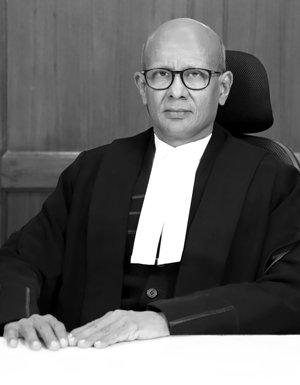


No Acts & Articles mentioned in this case
2025 INSC 91 REPORTABLE
IN THE SUPREME COURT OF INDIA
CIVIL APPELLATE JURISDICTION
CIVIL APPEAL NO. OF 2025
(Arising out of S.L.P.(C) No. of 2025 @ Diary No.3776 of 2023)
M/s Tamil Nadu Cements Corporation Limited …..Appellant
Versus
Micro and Small Enterprises Facilitation
Council and Another …..Respondents
J U D G M E N T
Sanjiv Khanna, CJI
Leave granted.
2. The seminal issue which arises for consideration in the present appeal
is whether a writ petition under Article 226 of the Constitution would be
maintainable against an order passed by the Micro and Small
Enterprises Facilitation Council
1
in exercise of power under Section 18
of the Micro, Small and Medium Enterprises Development Act, 2006,
2
and if yes, under what circumstances.
1 For short, ‘MSEFC’.
2 For short, ‘MSMED Act’.
Civil Appeal a/o. SLP (C) Diary No.3776/2023 Page 1 of 24
3. Section 18 of the MSMED Act reads as under:
“Reference to Micro and Smal enterprises Facilitation
Council.— (1) Notwithstanding anything contained in any
other law for the time being in force, any party to a dispute
may, with regard to any amount due under section 17, make a
reference to the Micro and Small Enterprises Facilitation
Council.
(2) On receipt of a reference under sub-section (1), the Council
shall either itself conduct conciliation in the matter or seek the
assistance of any institution or centre providing alternate
dispute resolution services by making a reference to such an
institution or centre, for conducting conciliation and the
provisions of sections 65 to 81 of the Arbitration and
Conciliation Act, 1996 (26 of 1996) shall apply to such a
dispute as if the conciliation was initiated under Part III of that
Act.
(3) Where the conciliation initiated under sub-section (2) is not
successful and stands terminated without any settlement
between the parties, the Council shall either itself take up the
dispute for arbitration or refer it to any institution or centre
providing alternate dispute resolution services for such
arbitration and the provisions of the Arbitration and Conciliation
Act, 1996 (26 of 1996) shall then apply to the dispute as if the
arbitration was in pursuance of an arbitration agreement
referred to in sub-section(1) of section 7 of that Act.
(4) Notwithstanding anything contained in any other law for the
time being in force, the Micro and Small Enterprises
Facilitation Council or the centre providing alternate dispute
resolution services shall have jurisdiction to act as an Arbitrator
or Conciliator under this section in a dispute between the
supplier located within its jurisdiction and a buyer located
anywhere in India.
(5) Every reference made under this section shall be decided
within a period of ninety days from the date of making such a
reference.”
4. A two Judges Bench of this Court in Jharkhand Urja Vikas Nigam
Limited v. State of Rajasthan and Others,
3
after interpreting the
provisions of the MSMED Act, including the powers of the MSEFC
under sub-section (2) and (3) of Section 18, had observed:
3 (2021) 19 SCC 206.
Civil Appeal a/o. SLP (C) Diary No.3776/2023 Page 2 of 24
“14. From a reading of Sections 18(2) and 18(3) of
the Msmed Act it is clear that the Council is obliged to conduct
conciliation for which the provisions of Sections 65 to 81 of the
Arbitration and Conciliation Act, 1996 would apply, as if the
conciliation was initiated under Part III of the said Act. Under
Section 18(3), when conciliation fails and stands terminated,
the dispute between the parties can be resolved by arbitration.
The Council is empowered either to take up arbitration on its
own or to refer the arbitration proceedings to any institution as
specified in the said section. It is open to the Council to
arbitrate and pass an award, after following the procedure
under the relevant provisions of the Arbitration and Conciliation
Act, 1996, particularly Sections 20, 23, 24 and 25.
15. There is a fundamental difference between conciliation and
arbitration. In conciliation, the conciliator assists the parties to
arrive at an amicable settlement, in an impartial and
independent manner. In arbitration, the Arbitral
Tribunal/arbitrator adjudicates the disputes between the
parties. The claim has to be proved before the arbitrator, if
necessary, by adducing evidence, even though the rules of the
Civil Procedure Code or the Evidence Act may not apply.
Unless otherwise agreed, oral hearings are to be held.
16. If the appellant had not submitted its reply at the
conciliation stage, and failed to appear, the Facilitation Council
could, at best, have recorded the failure of conciliation and
proceeded to initiate arbitration proceedings in accordance
with the relevant provisions of the Arbitration and Conciliation
Act, 1996, to adjudicate the dispute and make an award.
Proceedings for conciliation and arbitration cannot be
clubbed.”
5. Thereupon, referring to the facts in the case, this Court struck down the
order dated 06.08.2012 passed by the MSEFC as being nullity and
contrary to the provisions of the MSMED Act and the mandatory
provisions of the Arbitration and Conciliation Act, 1996.
4
This court
observed that the order under challenge was not an award in the eyes
of law and hence the recourse to Section 34 of the A&C Act was not
required. The writ petition was held to be maintainable notwithstanding
the objections on account of delay and laches.
4 For short, “A&C Act”.
Civil Appeal a/o. SLP (C) Diary No.3776/2023 Page 3 of 24
6. Another Division Bench of this Court in Gujarat State Civil Supplies
Corporation Limited v. Mahakali Foods Private Limited (Unit 2)
and Another,
5
without noticing the judgment in Jharkhand Urja Vikas
Nigam Limited (supra), observed that the specific non-obstante
clauses in sub-sections (1) and (4) of Section 18 of the MSMED Act
have the effect of overriding any other law for the time being in force,
including the A&C Act, and, consequently, the MSEFC can act as a
conciliator, and thereupon itself take up the dispute for arbitration or
refer it to any institution or centre for such arbitration. This would be
valid, despite Part III of the A&C Act comprising Sections 65 to 81
being applicable to conciliation in terms of sub-section (2) of Section 18
of the MSMED Act. In other words, there is no bar on the MSEFC acting
as a conciliator and, thereupon, acting as an arbitrator even when
Section 80 of the A&C Act states that unless otherwise agreed by the
parties, the conciliator shall not act as an arbitrator or as a
representative or counsel of a party in any arbitral or judicial
proceeding in respect of a dispute that is the subject matter of the
conciliation proceedings; and the conciliator shall not be presented by
the parties as a witness in the arbitral or judicial proceedings.
6
It was
also held that the provisions relating to conciliation, and thereupon,
arbitration in the MSMED Act being statutory in nature, would override
an arbitration agreement as contracted by the parties. The
5 (2023) 6 SCC 401.
6 80. Role of conciliator in other proceedings.—Unless otherwise agreed by the
parties,—
(a) the conciliator shall not act as an arbitrator or as a representative or counsel of a
party in any arbitral or judicial proceeding in respect of a dispute that is the subject of the
conciliation proceedings;
(b) the conciliator shall not be presented by the parties as a witness in any arbitral or
judicial proceedings.
Civil Appeal a/o. SLP (C) Diary No.3776/2023 Page 4 of 24
MSEFC/Arbitral Tribunal under Section 18(3) of the MSMED Act is
competent to rule on its own jurisdiction as also the other issues in
view of Section 16 of the A&C Act. This observation was made in the
context of the objections raised that the party being subjected to
arbitration was not a ‘supplier’ as per the definition in Section 2(n) of
the MSMED Act or on the ground that any subsequent registration
obtained under the MSMED Act would be prospective and, therefore,
statutory arbitration under Section 18 of the MSMED Act could not be
invoked.
7
7. A three-Judges Bench of this Court in M/s India Glycols Limited and
Another v. Micro and Small Enterprises Facilitation Council,
Medchal - Malkajgiri and Others,
8
referring to the judgment in
Gujarat State Civil Supplies Corporation Limited (supra), held that a
writ petition under Articles 226/227 of the Constitution was not
maintainable as Section 18 of the MSMED Act provides for recourse to
a statutory remedy for challenging an award under Section 34 of the
A&C Act. A particular reference was made to Section 19 of the MSMED
Act which states that no application for setting aside a decree, award or
order made by the MSEFC/institution/centre providing for alternate
dispute resolution services shall be entertained by a court unless the
appellant (not being a supplier) has deposited with it seventy-five per
cent of the amount in terms of the decree, award or order in the
manner as directed by the court. Proviso to the Section 19 of the
7 A two Judges Bench of this Court Bench in NBCC (India) Ltd. v. The State of West Bengal and
Others, 2025 INSC 54, has referred this issue to a larger Bench.
8 2023 SCC OnLine SC 1852.
Civil Appeal a/o. SLP (C) Diary No.3776/2023 Page 5 of 24
MSMED Act states that pending disposal of the application for setting
aside of the decree, award or order, the court shall order that such
percentage of the amount deposited shall be paid to the supplier, as it
considers reasonable under the circumstances of the case and on such
conditions as it deems necessary to impose.
9
This judgment of three
Judges Bench does not refer to the earlier judgment of two Judges
Bench of this Court in Jharkhand Urja Vikas Nigam Limited (supra).
8. Section 18 of the MSMED Act provides for statutory and mandatory
conciliation on the reference being made to the MSEFC by any party to
a dispute with regard to an amount due under Section 17 of the
MSMED Act. Section 17 states that for the goods supplied or services
rendered by the supplier, the buyer shall be liable to pay the amount
with interest thereon as provided in Section 16. Section 16 states that
where a buyer fails to make payment of the amount to the supplier, as
required under Section 15, the buyer shall, notwithstanding anything
contained in any agreement between the buyer and the supplier or in
any other law for the time being in force, be liable to pay compound
interest with monthly rests to the supplier from the appointed date or
from the date immediately following the date agreed upon, at three
times of the bank rate notified by the Reserve Bank.
10
9 19. Application for setting aside decree, award or order.—No application for setting aside any
decree, award or other order made either by the Council itself or by any institution or centre providing
alternate dispute resolution services to which a reference is made by the Council, shall be entertained
by any court unless the appellant (not being a supplier) has deposited with it seventy-five per cent of
the amount in terms of the decree, award or, as the case may be, the other order in the manner
directed by such court: Provided that pending disposal of the application to set aside the decree,
award or order, the court shall order that such percentage of the amount deposited shall be paid to the
supplier, as it considers reasonable under the circumstances of the case, subject to such conditions
as it deems necessary to impose.
10 Sections 15, 16 and 17 of the MSMED Act, read as under:
Civil Appeal a/o. SLP (C) Diary No.3776/2023 Page 6 of 24
9. It would be appropriate at this stage to refer to the basic facts of the
present case.
The appellant – Tamil Nadu Cements Corporation Limited
11
is a
wholly-owned undertaking of the Government of Tamil Nadu. It is
registered under the Companies Act, 1956 and has two cement
manufacturing units at Alangulam and Ariyalur. For the units at
Ariyalur, TANCEM had called for tender on 27.01.2010 on turnkey
basis for design, supply, erection and commissioning of two
Electrostatic Precipitators
12
for clinker coolers at a total contract
value of Rs.7.50 crores under the provisions of Tamil Nadu
Transparency in Tenders Act, 1998 and the Tamil Nadu
Transparency in Tenders Rules, 2000.
On 16 April 2010, TANCEM issued a work order in favour of M/s
Unicon Engineers for design, supply, erection and commissioning of
two ESPs for clinker coolers at Ariyalur Cement Works on turnkey
basis for the total value of Rs.7,50,60,543/- as per drawing and
specification mentioned in tender documents. It is averred that M/s
15. Liability of buyer to make payment.—Where any supplier supplies any goods or
renders any services to any buyer, the buyer shall make payment therefor on or before the date
agreed upon between him and the supplier in writing or, where there is no agreement in this behalf,
before the appointed day:
Provided that in no case the period agreed upon between the supplier and the buyer in writing
shall exceed forty-five days from the day of acceptance or the day of deemed acceptance.
16. Date from which and rate at which interest is payable.—Where any buyer fails to
make payment of the amount to the supplier, as required under Section 15, the buyer shall,
notwithstanding anything contained in any agreement between the buyer and the supplier or in any
law for the time being in force, be liable to pay compound interest with monthly rests to the supplier on
that amount from time the appointed day or, as the case may be, from the date immediately following
the date agreed upon, at three times of the bank rate notified by the Reserve Bank.
17. Recovery of amount due.—For any goods supplied or services rendered by the supplier,
the buyer shall be liable to pay the amount with interest thereon as provided under Section 16.
11 For short, ‘TANCEM’.
12 For short, ‘ESP’.
Civil Appeal a/o. SLP (C) Diary No.3776/2023 Page 7 of 24
Unicon Engineers failed to deliver on its promise to build and
commission the ESPs as undertaken.
From 16.05.2012 till 08.10.2012, TANCEM issued several warning
letters to M/s Unicon Engineers for delay in execution of civil works.
TANCEM also sent a letter dated 16.11.2013 to M/s Unicon
Engineers requesting to complete all the works before 30.11.2013.
It also raised concerns regarding the substandard quality of work
done for the ESPs, which on inspection were found not to be in
accordance with the contractual stipulations.
Thereafter, M/s Unicon Engineers, on 17.01.2014, filed the petition
under Section 18 of the MSMED Act before the MSEFC claiming an
amount of Rs.2,66,80,157 /- with interest.
On 20.01.2014, the MSEFC wrote a letter to TANCEM stating that
M/s Unicon Engineers had filed a plea before it to facilitate the
realization of the pending payment of Rs.50,08,801/- and
Rs.2,16,71,296 towards the cost overrun, totalling Rs.2,66,80,157/-
and requested TANCEM to give its comments on the petition filed
by M/s Unicon Engineers.
On 26.01.2014, TANCEM, citing the poor performance of the ESPs
commissioned by M/s Unicon Engineers, issued a work order
amounting to Rs.3,07,800/- to one V. Sundararajan, contractor, to
carry out modification work at those ESPs.
Thereafter, M/s Unicon Engineers sent a demand letter dated
14.02.2014 to TANCEM seeking payment of Rs.14,15,167
Civil Appeal a/o. SLP (C) Diary No.3776/2023 Page 8 of 24
immediately, extension of delivery period of ESPs up to 30.07.2014
and for issuance of amended work order with the revised price.
On 27.03.2014, TANCEM sent a letter to its Ariyalur Unit and
marked a copy to M/s Unicon Engineers. TANCEM directed its
Ariyalur Unit for exploring possibility of amicable settlement with M/s
Unicon Engineers to resolve the various issues raised in respect of
smooth functioning of ESPs and the excess payment being claimed
by them through MSEFC towards design, supply, erection and
commissioning of the ESPs.
Thereafter, on 08.04.2014, TANCEM sent a letter to M/s Unicon
Engineers stating that cooler ESPs commissioned by it were not
running to its full efficiency and requested it to submit an action plan
for rectification.
On 27.05.2014, 19.06.2014 and 01.10.2014, TANCEM had sent
letters to M/s Unicon Engineers to attend to the problems being
faced with the ESPs. It is alleged that M/s Unicon Engineers failed
to rectify the issues cropping up in the ESPs and hence, TANCEM
issued a work order in favour of M/s Perfect Engineers to repair
ESP insulation amounting to Rs.4,02,417/-.
On 14.10.2014, MSEFC, M/s Unicon Engineers was directed to
produce documentary evidence in support of its case and to rectify
the issues with the ESPs.
MSEFC on 04.06.2016, held that this was the fourth hearing of the
case, and adequate opportunities had been given to TANCEM, and
the council was of the opinion that the conciliation proceedings had
Civil Appeal a/o. SLP (C) Diary No.3776/2023 Page 9 of 24
failed. Accordingly, M/s Unicon Engineers was free to approach the
MSEFC for arbitration. Sections 15 and 16 of the MSMED Act are
simply quoted by the MSEFC to issue directions to TANCEM to pay
Rs.39,66,144, along with the interest. The relevant portion of the
order dated 04.06.2016 reads:
“This is 4
th
hearing in this case. Since adequate
opportunities were given to the respondent, the Council
recorded the failure of conciliation between the petitioner
and the respondent. In view of above facts and
circumstances, the council ordered that the applicant is
free to approach the council for arbitration as conciliation
between them has failed.
Section 15 of the MSMED Act 2006 is extracted
hereunder:
“Where any supplier supplies any goods or renders any
services to any buyer, the buyer shall make payment
there for on or before the date agreed upon between him
and the supplier in writing or where there is no agreement
in this behalf, before the appointed day: Provided that in
no case the period agreed upon between the supplier and
the buyer in writing shall exceed forty-five days from the
day of acceptance or the day of deemed acceptance.
Section 16 of the MSMED Act 2006 is extracted
hereunder:
“Where any buyer fails to make payment of the amount to
the supplier, as required under section 15, the buyer
shall, notwithstanding anything contained in any
agreement” between the buyer and the supplier or in any
law for the time being. Being in force be liable to pay
compound interest with monthly rests, to the supplier on
that amount from the appointed day or, as the case may
be, from the date immediately following the date agreed
upon, at three times of the bank rate notified by the
Reserve Bank.
The council directs that the petitioner is entitled to recover
the balance retention amount of Rs. 39,66,144/- along
with interests due to piecemeal releases of the total
retention money, of Rs.1,17,57,399/- with effect from
31.03.2011 (2) Rs.1,57,59,537/- along with interests, with
effect from 17.01.2014 towards additional expenditures
Civil Appeal a/o. SLP (C) Diary No.3776/2023 Page 10 of 24
incurred by, the petitioner due to the delay of 3 years in
execution of civil works by the respondent.
Therefore, the Respondent shall be liable to pay the
balance retention amount of Rs.39,66,144/- along with
interests due to piece meal releases of the total retention
money of Rs.1,17,57,399/-with effect from 31.03.2011 &
(2) Rs.1,57,59,537/- along with interests with effect from
17.01.2014 towards additional expenditures incurred by
the petitioner due to the delay of 3 years in execution of
civil works by the respondent, together with compounded
interest with monthly rest, at three times of the Bank rate
notified by the Reserve Bank of India as stipulated in the
MSMED Act 2006 from the appointed due dates
respectively as above, to, the petitioner, till the date of
settlement.
With this order, the petition filed before the council on
17.01.2014 by the petitioner stands disposed.”
On 30.06.2016, M/s Unicon Engineers herein sent a letter to
TANCEM to release the payment as per the order dated 04.06.2016
passed by the MSEFC.
On 19.09.2016, TANCEM filed a petition under Section 33 of the
A&C Act to recall/set aside the order/award dated 04.06.2016
passed in favour of M/s Unicon Engineers.
On 26.09.2016, M/s Unicon Engineers sent a letter to MSEFC
requesting to reject the petition filed by TANCEM on the grounds
that it was barred by limitation and that TANCEM had not furnished
75% of the amount as pre-deposit, as mandated by Section 19 of
the MSMED Act.
TANCEM filed a detailed reply on 06.10.2016 qua the objections
raised by M/s Unicon Engineers. Similar objections were again
raised by M/s Unicon Engineers to the response filed by TANCEM.
Civil Appeal a/o. SLP (C) Diary No.3776/2023 Page 11 of 24
Thereafter, MSEFC passed an order dated 25.10.2016 dismissing
the recall petition on grounds of delay, objections raised by M/s
Unicon Engineers and lack of provision to recall the award.
On 16.12.2016, M/s Unicon Engineers filed an execution petition
before the High Court of Judicature at Madras claiming an amount
of Rs.5,88,88,591/- in terms of the order passed by the MSEFC.
On 31.12.2016, TANCEM filed a petition under Section 34 of the
A&C Act before the High Court of Judicature at Madras to set aside
the award passed by MSEFC and to direct M/s Unicon Engineers to
pay the amount due for the loss incurred towards various heads
including interest and damages.
TANCEM also filed a counter affidavit in the execution proceedings
initiated by M/s Unicon Engineers.
TANCEM filed a writ petition before the High Court of Judicature at
Madras in 2017 challenging the vires of Sections 16 to 19 of
MSMED Act.
The objections of TANCEM in the execution proceedings before the
High Court of Judicature at Madras were dismissed vide order
dated 10.10.2017 and it was held that an executing court cannot go
beyond a final and binding decree even if it is erroneous until the
same is set aside in appeal or revision.
TANCEM filed an Application for waiver of pre-deposit of 75% of the
award amount as stipulated under Section 19 MSMED Act, which
was disposed of vide order dated 20.07.2018 by the Single Judge
of the High Court of Judicature at Madras directing TANCEM to pre-
Civil Appeal a/o. SLP (C) Diary No.3776/2023 Page 12 of 24
deposit the amount as per the MSMED Act within eight weeks from
the date of the order.
Meanwhile, the High Court of Judicature at Madras vide order dated
25.02.2019 directed attachment of the movables of TANCEM in the
execution proceedings. TANCEM sought a stay against the
attachment order. The High Court of Judicature at Madras vide
order dated 11.03.2019 granted an interim stay on the condition that
TANCEM deposit an amount of Rs. 3 crores.
The High Court of Judicature at Madras vide order dated
29.04.2019 noted that there were 7 Special Leave Petitions
13
pending before this Court challenging the vires of Section 16 to 19
of the MSMED Act and hence, the writ petition filed by TANCEM
raising a similar challenge, be listed after the disposal of SLPs
pending before this Court.
Thereafter, on 04.07.2019, TANCEM was granted three weeks to
make the pre-deposit of 75% of the decretal amount for maintaining
the appeal as per Section 19 of the MSMED Act.
TANCEM deposited the differential amount of Rs.1,41,66,443/- as
against the 75% of the decretal amount since it had already
remitted Rs.3 crores.
M/s Unicon Engineers filed an application before the High Court of
Judicature at Madras to withdraw Rs. 3 crores which was deposited
by TANCEM. The Single Judge vide order dated 31.07.2019
allowed M/s Unicon Engineers to withdraw Rs.1.50 crores. On
appeal by TANCEM, the Division Bench vide order dated
13 For short, ‘SLP’.
Civil Appeal a/o. SLP (C) Diary No.3776/2023 Page 13 of 24
06.08.2019 directed that M/s Unicon Engineers will furnish an
undertaking that if TANCEM succeeds before the executing court it
would refund the sum of Rs.1,50,00,000/- with interest @ 6% per
annum from the date of receipt to the date of refund. The
disbursement of Rs.1,50,00,000/- to the decree holder was subject
to the final decision of the executing court. The Master of the Court
vide order dated 16.08.2019 directed to issue a cheque of Rs. 1.5
crore in favour of M/s Unicon Engineers.
TANCEM filed an SLP against the order dated 06.08.2019 of the
Division Bench before this Court. This Court vide order dated
11.01.2021, after recording the statement of TANCEM that the
amount deposited had not been withdrawn, directed that the order
of withdrawal of Rs.1,50,00,000/- shall remain stayed.
The SLP was subsequently disposed of by directing M/s Unicon
Engineers to furnish a security for Rs. 1,50,00,000/- and the High
Court was requested to expedite the hearing of the objections and
decide O.P. Nos. 692/2019 and 1030/2019 expeditiously, and
preferably within six months.
TANCEM also filed a transfer petition before this Court seeking
transfer of the writ petition filed by it before the High Court of
Judicature at Madras challenging the vires of Sections 16 to 19 of
the MSMED Act. The writ petition of TANCEM before the High Court
was tagged with the batch of petitions pending before this Court
vide order dated 15.10.2020.
Civil Appeal a/o. SLP (C) Diary No.3776/2023 Page 14 of 24
By the order dated 09.09.2021 of the Single Judge, objections filed
by TANCEM under Section 34 of the A&C Act were held to be not
maintainable on account of being barred by limitation and as being
beyond the condonable period. The same were also dismissed on
account of the failure of TANCEM to make mandatory deposit in
terms of Section 19 of the MSMED Act.
The appeal preferred against the same was dismissed as
withdrawn vide order dated 28.04.2022 by the Division Bench of the
High Court of Judicature at Madras. In the meanwhile, M/s Unicon
Engineers filed a calculation memo claiming Rs.8,18,26,844/- as
the balance amount due from TANCEM. This amount was later
revised to Rs.7,88,23,549/-. Objections to the said calculation were
filed by TANCEM.
In these circumstances, TANCEM again preferred a fresh writ
petition assailing the order dated 04.06.2016 of the MSEFC in
which an interim order was passed in its favour. However, vide
order dated 13.07.2022, the Single Judge dismissed the writ
petition observing that the relief sought by TANCEM would be
governed by the fate of the proceedings challenging the vires of
Sections 16 to 19 of the MSMED Act, which was now pending
before this Court in a batch of matters. It was held that in case
TANCEM’s challenge to the vires of the aforesaid provisions
succeeded, the relief as sought by it may be granted and the
amount already disbursed/released to M/s Unicon Engineers would
be refunded.
Civil Appeal a/o. SLP (C) Diary No.3776/2023 Page 15 of 24
TANCEM being aggrieved by the said order preferred a writ appeal
before the High Court, which came to be dismissed by the
impugned judgment dated 07.12.2022 observing that TANCEM had
already exhausted all remedies and that the dismissal on grounds
of limitation cannot be challenged by contending that the award was
null and void.
After the said judgment was pronounced, M/s Unicon Engineers
pursued the execution petition in the High Court of Judicature at
Madras and the executing court vide order dated 14.12.2022
directed to bring the property of TANCEM for sale.
In such circumstances referred to above, TANCEM has filed the
present SLP.
10.In our opinion, there is a direct confrontation between the judgment of
the two Judges Bench of this Court in Jharkhand Urja Vikas Nigam
Limited (supra) and Gujarat State Civil Supplies Corporation
Limited (supra).
11.We also have reservations on the dictum in M/s India Glycols Limited
(supra) which holds that a writ petition is not maintainable against any
order passed by the MSEFC and the only recourse available is in terms
of Section 34 of the A&C Act, and that too would require a deposit in
terms of Section 19 of the A&C Act.
12.This is a case of statutory arbitration that is mandatory. It is possible to
argue that it bars a party from moving the court of law under Section 9
Civil Appeal a/o. SLP (C) Diary No.3776/2023 Page 16 of 24
of the Code of Civil Procedure, 1908.
14
Section 18 also overrides the
principle of party autonomy when they enter into an arbitration
agreement which prescribes the procedure for the appointment of an
arbitrator and conduct of arbitral proceedings. The statute further
prescribes an undoubtedly high rate of interest – three times the
Reserve Bank rate of interest – presently 6.5 per cent i.e. 19.5 per
cent. The interest is compounded with monthly rests. Lastly, an order or
award can be challenged by ‘the buyer’
15
only on deposit of seventy-
five per cent of the awarded amount, thereby restricting the right to
challenge the order/award passed except on compliance of stringent
conditions, which are not prescribed when an appeal is preferred under
the CPC. Pre-deposit is a condition for hearing a decision on the
objections to the award. The issue therefore which arises and needs
consideration is whether there would be an absolute and complete bar
to invoke writ jurisdiction under Article 226 of the Constitution even in
exceptional and rare cases where fairness, equity and justice may
warrant the exercise of writ jurisdiction.
13.The access to High Courts by way of a writ petition under Article 226 of
the Constitution of India, is not just a constitutional right but also a part
of the basic structure. It is available to every citizen whenever there is a
violation of their constitutional rights or even statutory rights. This is an
inalienable right and the rule of availability of alternative remedy is not
an omnibus rule of exclusion of the writ jurisdiction, but a principle
14 For short, ‘CPC’.
15 Section 2(d) of the MSMED Act defines ‘buyer’ as - (d) “buyer” means whoever buys any goods or
receives any services from a supplier for consideration.
Civil Appeal a/o. SLP (C) Diary No.3776/2023 Page 17 of 24
applied by the High Courts as a form of judicial restraint and refrain in
exercising the jurisdiction. The power to issue prerogative writs under
Article 226 of the Constitution is plenary in nature and the same is not
limited by any provision of the Constitution and cannot be restricted or
circumscribed by a statute.
16
It has been well settled through a legion of
judicial pronouncements of this Court that the writ courts, despite the
availability of alternative remedies, may exercise writ jurisdiction at
least in three contingencies – i) where there is a violation of principles
of natural justice or fundamental rights; ii) where an order in a
proceeding is wholly without jurisdiction; or iii) where the vires of an Act
is challenged. Noticeably, the MSEFC as a statutory authority performs
a statutory role and functions within the four corners of the law.
14.Following the aforesaid dictum, this Court in Harbanslal Sahnia and
Another v. Indian Oil Corporation and Others
17
, had taken notice of
the fact that the High Court had referred to the arbitration clause which
the writ petitioner could take recourse to, to hold that the rule of
exclusion of writ jurisdiction is a rule of discretion and not of
compulsion. In an appropriate case, in spite of availability of alternative
remedy, the writ courts can exercise its jurisdiction at least in three
contingencies, as referred to above. In the facts of the said case, this
Court interfered observing that there were peculiar circumstances as
the dealership had been terminated on an irrelevant and non-existence
cause. Therefore, there was no need to drive the parties to initiate
16 Whirlpool Corporation v. Registrar of Trade Marks, Mumbai and Others (1998) 8 SCC 1. See also,
L. Chandra Kumar v. Union of India and Others, (1997) 3 SCC 261; S.N.Mukherjee v. Union of India,
(1990) 4 SCC 594; Union of India and Others v. Parashotam Dass, 2023 SCC OnLine SC 314.
17 (2003) 2 SCC 107.
Civil Appeal a/o. SLP (C) Diary No.3776/2023 Page 18 of 24
arbitration proceedings. Following the judgments in Whirlpool
Corporation v. Registrar of Trade Marks, Mumbai and Others
18
and
Harbanslal Sahnia (supra), this Court in Radha Krishan Industries v.
State of Himachal Pradesh and Others
19
laid down the following
principles:
“27. The principles of law which emerge are that:
27.1. The power under Article 226 of the Constitution to
issue writs can be exercised not only for the enforcement
of fundamental rights, but for any other purpose as well.
27.2. The High Court has the discretion not to entertain
a writ petition. One of the restrictions placed on the power
of the High Court is where an effective alternate remedy
is available to the aggrieved person.
27.3. Exceptions to the rule of alternate remedy arise
where: (a) the writ petition has been filed for the
enforcement of a fundamental right protected by Part III
of the Constitution; (b) there has been a violation of the
principles of natural justice; (c) the order or proceedings
are wholly without jurisdiction; or (d) the vires of a
legislation is challenged.
27.4. An alternate remedy by itself does not divest the
High Court of its powers under Article 226 of the
Constitution in an appropriate case though ordinarily, a
writ petition should not be entertained when an
efficacious alternate remedy is provided by law.
27.5. When a right is created by a statute, which itself
prescribes the remedy or procedure for enforcing the right
or liability, resort must be had to that particular statutory
remedy before invoking the discretionary remedy under
Article 226 of the Constitution. This rule of exhaustion of
statutory remedies is a rule of policy, convenience and
discretion.
27.6.In cases where there are disputed questions of
fact, the High Court may decide to decline jurisdiction in a
writ petition. However, if the High Court is objectively of
the view that the nature of the controversy requires the
18 (1998) 8 SCC 1.
19 (2021) 6 SCC 771.
Civil Appeal a/o. SLP (C) Diary No.3776/2023 Page 19 of 24
exercise of its writ jurisdiction, such a view would not
readily be interfered with.”
15.Thus, it would be true to say that the existence of the statutory remedy
does not affect the jurisdiction of the High Court to issue a writ.
Nevertheless, the writ jurisdiction being discretionary by policy, the writ
courts generally insist that the parties adhere to alternative statutory
remedies, as this reinforces the rule of law. However, in exceptional
cases, writ jurisdiction can still be exercised as a power to access the
court for justice and relief. It is in this context, that a Constitution Bench
of five Judges way back in 1954 in Himmatlal Harilal Mehta v. State
of Madhya Pradesh and Others
20
had observed that the principle that
the High Court should not issue a prerogative writ when an alternative
remedy is available may not apply when the remedy under the statutes
is onerous and burdensome in character, such as when the party has
to deposit the whole amount of the tax before filing an appeal. An
alternative remedy must be equally efficacious and adequate. While
examining the scope of the right to file a writ petition when the statute
requires a pre-deposit of tax—an obligation argued as imposing an
onerous condition on the right to appeal—this Court in Shyam Kishore
and Others v. Municipal Corporation of Delhi and Another,
21
after
relying upon several other decisions, observed that the validity of rigid
provisions banning entertainment of appeal when taxes are not paid
have been upheld so long as the conditions are not so onerous as to
amount to unreasonable restriction. In the alternative, the right is
20 (1954) 1 SCC 405.
21 (1993) 1 SCC 22.
Civil Appeal a/o. SLP (C) Diary No.3776/2023 Page 20 of 24
almost illusory. Diluting the requirement to pay the disputed tax, this
Court observed:
“44. (…)Sometimes, to compel the assessee to pay up
the demanded tax for several years in succession might
very well cripple him altogether. This apart, an assessee
may not be able to deposit the tax while filing the appeal
but may be able to pay it up within a short time, or at any
rate, before the appeal comes on for hearing in the
normal course. There is no reason to construe the
provision so rigidly as to disable him from doing this.
Again, when an appeal comes on for hearing, the
appellate judge, in appropriate cases, where he feels
there is some great hardship or injustice involved, may be
inclined to adjourn the appeal for some time to enable the
assessee to pay up the tax. Though it will not be
expedient or proper to encourage adjournment of an
appeal, where it is ripe for hearing otherwise, only on this
ground and as a matter of course, an interpretation which
leaves some room for the exercise of a judicial discretion
in this regard, where the equities of the case deserve it,
may not be inappropriate. The appellate judge's incidental
and ancillary powers should not be curtailed except to the
extent specifically precluded by the statute. We see
nothing wrong in interpreting the provision as permitting
the appellate authority to adjourn the hearing of the
appeal thus giving time to the assessee to pay the tax or
even specifically granting time or instalments to enable
the assessee to deposit the disputed tax where the case
merits it, so long as it does not unduly interfere with the
appellate court's calendar of hearings. His powers,
however, should stop short of staying the recovery of the
tax till the disposal of the appeal. We say this because it
is one thing for the judge to adjourn the hearing leaving it
to the assessee to pay up the tax before the adjourned
date or permitting the assessee to pay up the tax, if he
can, in accordance with his directions before the appeal
is heard. In doing so, he does not and cannot injunct the
department from recovering the tax, if they wish to do so.
He is only giving a chance to the assessee to pay up the
tax if he wants the appeal to be heard. It is, however, a
totally different thing for the judge to stay the recovery till
the disposal of the appeal; that would result in modifying
the language of the proviso to read: “no appeal shall be
disposed of until the tax is paid”. Short of this, however,
there is no reason to restrict the powers unduly; all he
has to do is to ensure that the entire tax in dispute is paid
up by the time the appeal is actually heard on its merits.
We would, therefore, read clause (b) of Section 170 only
Civil Appeal a/o. SLP (C) Diary No.3776/2023 Page 21 of 24
as a bar to the hearing of the appeal and its disposal on
merits and not as a bar to the entertainment of the appeal
itself.”
16.Equally important are the observations with reference to the right to file
a writ petition under Articles 226 and 227 of the Constitution in certain
situations. In this regard, this Court in Shyam Kishore (supra) has
observed:
“45.If the provision is interpreted in the manner above
suggested, one can steer clear of all problems of
constitutional validity. The contention on behalf of the
Corporation to read the provision rigidly and seek to
soften the rigour by reference to the availability of
recourse to the High Courts by way of a petition under
Articles 226 and 227 in certain situations and the
departmental instructions referred to earlier does not
appear to be a satisfactory solution. The departmental
instructions may not always be followed and the resort to
Articles 226 and 227 should be discouraged when there
is an alternative remedy. A more satisfactory solution is
available on the terms of the statute itself. The
construction of the section approved by us above vests in
the appellate authority a power to deal with the appeal
otherwise than by way of final disposal even if the
disputed tax is not paid. It enables the authority to
exercise a judicial discretion to allow the payment of the
disputed tax even after the appeal is filed but, no doubt,
before the appeal is taken up for actual hearing. The
interpretation will greatly ameliorate the genuine
grievances of, and hardships faced by, the assessee in
the payment of the tax as determined. Though an
assessee may not be able to acquire an absolute stay of
the recovery of the tax until the dispute is resolved, he will
certainly be able to get breathing time to pay up the same
where his case deserves it. If this interpretation is placed
on the provision, no question of unconstitutionality can at
all arise.”
17.In Govind Parameswar Nair and Others v. Municipal Corporation
of Greater Bombay and Others,
22
a Constitution Bench of five Judges
22 (2001) 9 SCC 166
Civil Appeal a/o. SLP (C) Diary No.3776/2023 Page 22 of 24
agreed with the interpretation given by the three-Judges Bench in
Shyam Kishore (supra).
18.Recently, in Tecnimont Private Limited (Formerly known as
Tecnimont ICB Private Limited) v. State of Punjab and Others,
23
in
regard to the question relating to alternative remedy where the
disputed amount is required to be deposited to avail the statutory
remedy, this Court observed that there is some divergence of opinion,
albeit several cases like Shyam Kishore (supra) have attempted to
find a solution to provide some support in cases involving extreme
hardship where the writ petition would not be dismissed on the ground
of equally efficacious alternative remedy.
19.In the light of the aforesaid decisions, we deem it appropriate to refer
the following questions raised in the present appeal to a larger Bench
of five Judges, namely:
(i)Whether the ratio in M/s India Glycols Limited (supra) that a
writ petition could never be entertained against any order/award
of the MSEFC, completely bars or prohibits maintainability of the
writ petition before the High Court?
(ii)If the bar/prohibition is not absolute, when and under what
circumstances will the principle/restriction of adequate
alternative remedy not apply?
23 (2021) 12 SCC 477.
Civil Appeal a/o. SLP (C) Diary No.3776/2023 Page 23 of 24
(iii)Whether the members of MSEFC who undertake conciliation
proceedings, upon failure, can themselves act as arbitrators of
the arbitral tribunal in terms of Section 18 of the MSMED Act
read with Section 80 of the A&C Act?
The first and second question will subsume the question of
when and in what situation a writ petition can be entertained
against an order/award passed by MSEFC acting as an arbitral
tribunal or conciliator.
20.The Registry is directed to place the papers before the Chief Justice so
that an appropriate decision can be taken on the administrative side for
the constitution of a larger Bench in the present case.
...….......………………......CJI.
[Sanjiv Khanna]
…........……………….….......J.
[Sanjay Kumar]
…........……………….….......J.
[Manmohan]
New Delhi;
January 22, 2025.
Civil Appeal a/o. SLP (C) Diary No.3776/2023 Page 24 of 24

Legal Notes
Add a Note....