
As per case facts, the petitioner, M/s. Venky Steel Private Limited, a manufacturer of alloy steel ingots, experienced severe power supply disruption in October 2009 due to a transformer breakdown. ...
IN THE HIGH COURT OF JUDICATURE AT PATNA
Civil Writ Jurisdiction Case No.3292 of 2017
======================================================
M/s. Venky Steel Private Limited Son of late Brahmdeo Prasad Resident of
Srikrishna Nagar, P.O and P.S. Begusarai, District Begusarai.
... ... Petitioner/s
Versus
1.The Bihar State Power Holding Company Limited Vidyut Bhawan, Bailey
Road, Patna through its Chairman-cum-Managing Director
2.The North Bihar Power Distribution company Limited,Vidyut Bhawan,
Bailey Road, Patna, through its Managing Director
3.The Chief Engineer Commercial,North Bihar Power Distribution company
Limited, Vidyut Bhawan, Bailey Road, Patna
4.The Electrical Superitending Engineer, North Bihar Power Distribution
company limited, Electric Supply Circle, Purnea
5.The Electrical Executive Engineer, Commercial and Revenue, North Bihar
Power Distribution Company Limited, Electric Supply Circle, Purnea.
... ... Respondent/s
======================================================
Appearance :
For the Petitioner/s: M/s Suraj Samdarshi
Avinash Shekhar,
Abhilasha Jha
Simran Kumari, Advocates
For the Respondent/s: Mr. Kunal Tiwary, Advocate
======================================================
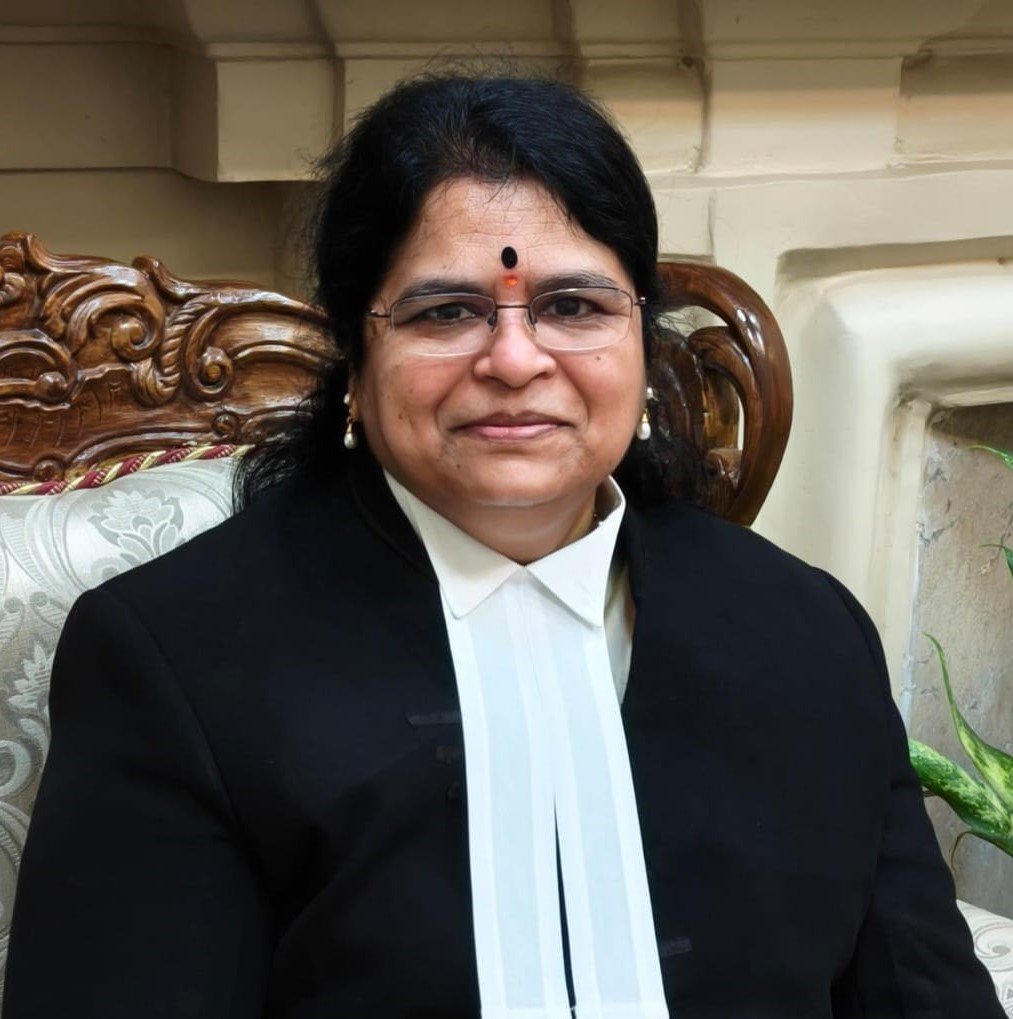
CORAM: HONOURABLE JUSTICE SMT. G. ANUPAMA CHAKRAVARTHY
ORAL JUDGMENT
Date : 27-07-2026
1. The petitioner has filed the Writ
application for the following reliefs:
“(i) For quashing of the order dated
9.2.2017 passed in Appeal Case No. 10
of 2014 by the Electricity Ombudsman,
Bihar Electricity Regulatory Commission,
by which despite acknowledging the fact
that the petitioner was not supplied
energy to the extent of its contract
Patna High Court CWJC No.3292 of 2017 dt.27-07-2026
2/17
demand, the learned Ombudsman
refused to grant remission, rather asked
the parties to approach the Bihar
Electricity Regulatory Commission for
making such provision, as being wholly
illegal and arbitrary and contrary to the
agreement.
(ii) For a direction to the respondents
not to take any coercive step for
realization of the bill dated 9.11.2009
issued against minimum guaranteed
charges during the period when the
transformer was burnt and the supply
was not to the extent of contract
demand, in terms of the agreement; and
for any other relief or reliefs to which
the petitioner is found entitled."
2. The brief facts culled out of the Writ
petition are that the petitioner is engaged in the
business of manufacturing alloy steel ingots
through an electrical induction furnace, for which
electricity is an essential raw material.
3. The petitioner entered into a High
Tension Specified Service (HTSS) Agreement dated
27.02.2006 with the erstwhile Bihar State
Patna High Court CWJC No.3292 of 2017 dt.27-07-2026
3/17
Electricity Board for a contract demand of 1887
KVA with 33 KV supply for running its industrial
unit. The petitioner stated that under the
applicable tariff, HTSS consumers are liable to pay
demand charges based on the contracted load,
which presupposes assured supply of electricity by
the licensee.
4. It is the case of the petitioner that in
the month of October, 2009, due to breakdown of
the 50 MVA transformer at Purnea Grid Sub-
Station, there was severe disruption in power
supply and the petitioner could not operate its
induction furnace due to insufficient and
interrupted supply of electricity. Despite of several
representations dated 04.07.2009, 03.09.2009,
04.09.2009, 08.09.2009 and 09.10.2009, the
electricity supply could not be restored to the
required level.
5. The Learned counsel for the
petitioner submits that the failure of the
respondents to supply electricity to the extent of
the contracted demand, a bill dated 09.11.2009 for
Patna High Court CWJC No.3292 of 2017 dt.27-07-2026
4/17
the month of October, 2009 was raised charging
minimum guarantee/demand charges amounting
to approximately Rs.13.20 lakhs.
6. Aggrieved by the said action, the
petitioner earlier approached this Court by filing
C.W.J.C. No.15450 of 2009, which was disposed of
with liberty to approach the Consumer Grievances
Redressal Forum constituted under the Electricity
Act, 2003. The Consumer Grievances Redressal
Forum, after considering the matter, observed that
the petitioner's claim for remission on account of
interrupted and insufficient power supply was
justified, but directed the respondents to approach
the Bihar Electricity Regulatory Commission for
framing an appropriate mechanism for remission.
The appeal preferred before the Electricity
Ombudsman was also disposed of without granting
the remission claimed by the petitioner.
7. The grievance of the petitioner is
that despite the admitted fact of interrupted and
insufficient power supply, the respondents have
charged the petitioner on the basis of 100%
Patna High Court CWJC No.3292 of 2017 dt.27-07-2026
5/17
minimum guarantee without granting
proportionate remission for the period during which
the required electricity supply was not made
available.
8. The Learned counsel for the
petitioner further submits that the HTSS tariff
structure itself, is based on the presumption that
the licensee would ensure supply of electricity up
to the contracted demand, and the petitioner has
been charged demand charges on the basis of
such assurance.
9. It is submitted that during the
relevant period, due to failure of the respondents
to supply electricity to the extent of the contracted
demand owing to the breakdown of the
transformer, the petitioner's industrial unit
remained non-functional and, therefore, charging
the petitioner for 100% of the contracted demand
without granting proportionate remission is wholly
unjust and arbitrary.
10. The Learned counsel for the
petitioner further submits that the Consumer
Patna High Court CWJC No.3292 of 2017 dt.27-07-2026
6/17
Grievances Redressal Forum itself recorded a
finding that the petitioner's claim for remission was
justified, but the petitioner has not been granted
any effective relief. It is contended that the
absence of a specific formula in the tariff cannot
deprive the petitioner of the benefit of remission
when the respondents failed to supply electricity
as agreed under the agreement.
11. It is submitted that demand
charges are payable on the basis of the maximum
electricity supplied up to the contracted demand.
When the licensee fails to provide electricity up to
the contracted demand, it would be inequitable to
charge the consumer for the entire contracted
load.
12. The Learned counsel for the
petitioner further contends that the action of the
respondents in raising bills without considering the
actual supply position is arbitrary and violative of
Article 14 and Article 19(1)(g) of the Constitution of
India and prayed that the impugned orders
passed by the Consumer Grievances Redressal
Patna High Court CWJC No.3292 of 2017 dt.27-07-2026
7/17
Forum and the Electricity Ombudsman are to be
set aside and appropriate remission be granted to
the petitioner for the period of insufficient power
supply.
13. In support of his submissions, the
Learned counsel for the petitioner relied upon the
rulings passed by Hon'ble Supreme Court in
Raymond Limited vs. Madhya Pradesh
Electricity Board (2001 (1) SCC 534,
paragraph 21) and Tata Iron & Steel Company
vs. Bihar State Electricity Board (AIR 1989
Patna 119, paragraph 12) .
14. A counter affidavit was filed on
behalf of the respondent Nos. 2 to 5. Learned
counsel appearing on behalf of the respondent
Nos. 2 to 5 submits that the present Writ petition is
not maintainable and is liable to be dismissed.
15. It is submitted by the Learned
counsel for the respondents that the petitioner has
challenged the order dated 09.02.2017 passed by
the Electricity Ombudsman in Appeal Case No. 10
of 2014, whereby the claim of the petitioner for
Patna High Court CWJC No.3292 of 2017 dt.27-07-2026
8/17
remission in maximum demand charges was not
accepted. It is submitted that the Consumer
Grievances Redressal Forum, vide order dated
11.06.2014 passed in Case No. 15 of 2013, had
already considered the claim of the petitioner and
found that in absence of any provision in the tariff
for such remission, the petitioner was not entitled
to the relief claimed.
16. The Learned counsel for the
respondents submits that the petitioner is a HTSS
consumer having a contract demand of 1887 KVA
with 33 KV supply and is governed by the tariff
provisions applicable to HTSS category. Under the
applicable tariff, the billing methodology itself
provides for consideration of hours of supply and
minimum monthly charges, and therefore, the
petitioner cannot claim any further remission
beyond the provisions contained in the tariff.
17. It is further submitted by the
Learned counsel for the respondents submitted
that the petitioner is wrongly relying upon Clause
13 of the earlier HT agreement, which has no
Patna High Court CWJC No.3292 of 2017 dt.27-07-2026
9/17
application to HTSS consumers after introduction of
the special tariff applicable to HTSS category. The
tariff framed by the Bihar Electricity Regulatory
Commission has statutory force and is binding
upon both the licensee and the consumer.
18. The Learned counsel for the
respondents further submits that the electricity
supply to the petitioner was made through
Gulabbagh Sub-Station from a 20 MVA transformer
and the allegation of complete disruption of supply
due to breakdown of the 50 MVA transformer at
Purnea Grid Sub-Station is incorrect and
misleading. The bills raised for the period in
question were prepared strictly in accordance with
the applicable tariff provisions. The tariff already
contains a mechanism for calculation of minimum
charges based on the actual hours of supply and
the petitioner has already been given the benefit
available under the tariff. Therefore, no further
remission against maximum demand charges is
permissible.
19. The Learned counsel for the
Patna High Court CWJC No.3292 of 2017 dt.27-07-2026
10/17
respondents accordingly contends that there is no
illegality in the orders passed by the Consumer
Grievances Redressal Forum and the Electricity
Ombudsman, and the present Writ petition, being
devoid of merit, is liable to be dismissed.
20. Heard the Learned counsel for the
parties and perused the records.
21. The Hon'ble Apex Court in
Raymond Limited (supra ) observed in paragraph
21 as follows:
“21. So far as the cases under
consideration and the liability of the
consumers relating to minimum guarantee
are concerned, the relevant clause
relating to minimum guarantee charges as
well as the tariff notification relied upon,
would go to show that what was
guaranteed was not the payment of a flat
sum or amount of money to be calculated
with reference to a particular number or
percentage of units, dehors the quantum
of electrical energy distributed and
supplied by the Board. In other words, the
guarantee was of “… such minimum
consumption as when calculated at the
tariff…” will yield a particular
Patna High Court CWJC No.3292 of 2017 dt.27-07-2026
11/17
monthly/annual sum to the Board. Even
going by the tariff notification which
prescribes also a minimum entitling the
Board to collect it [vide clause 21(b)] it
merely casts liability on the consumer to
“guarantee a minimum monthly
consumption equivalent to 40% load
factor of the contract demand”.
Consequently, for the consumer to honour
his/its commitment so undertaken to give
a minimum consumption there should
essentially be corresponding supply by the
Board at least to that extent, without
which the consumption of the agreed
minimum is rendered impossible by the
very lapse of the Board. The minimum
guarantee, thus, appears to be not in
terms of any fixed or stipulated amount
but in terms of merely the energy to be
consumed. The right, therefore, of the
Board to demand the minimum
guaranteed charges, by the very terms of
the language in the contract as well as the
one used in the tariff notification is made
enforceable depending upon a
corresponding duty, impliedly undertaken
to supply electrical energy at least to that
extent, and not otherwise. It is for this and
only reason we find that the ultimate
Patna High Court CWJC No.3292 of 2017 dt.27-07-2026
12/17
conclusion arrived at by the Full Bench of
the High Court does not call for any
interference in these appeals.”
22. The Division Bench of this Court in
Tata Iron & Steel Company (supra ) observed in
paragraph 12 as follows:
“12. The words ‘constant
supply of electrical energy’ must mean
that continuous supply of electrical energy.
That to us appears to be the plain meaning
of the words used. In the modern context
where even our day to day life is so much
dependent upon supply of electricity, it is
not too much to expect that the Board
should supply electrical energy throughout
the 24 hours. However, having regard to
the fact that annual charges are payable
by consumers who generally require
electrical energy in larger quantities than
any ordinary domestic consumer for
carrying on his business or establishment,
the annual charges payable by him have a
direct relationship with the supply of
electrical energy to him at a time when he
can consume the supply. The minimum
guaranteed consumption itself implies that
the energy is supplied when it can be
Patna High Court CWJC No.3292 of 2017 dt.27-07-2026
13/17
consumed. No doubt, even beyond his
normal working hours, such a consumer
requires electrical energy for other
purposes, such as security lighting etc.
However, the consumption for such
purposes is so small as compared to the
main purpose for which electrical energy is
taken, that it may be ignored in the matter
of determining the liability for annual
charges. So viewed, ‘constant supply’ in
the context of annual charges must mean
continuous supply during the normal
working hours of the consumer when the
supply can be consumed. This to us
appears to be a fair interpretation of the
agreement having regard to its purpose,
commercial nature and preacticability. We
are of the view that when the Board wants
a guarantee from the consumer about
minimum units it would consume, any
prudent businessman would agree to pay
that amount only if the Board fulfils its
obligation. If in fact it is found that there
had not been constant suppy of electricity
at the contract demand during the period
the factory of the petitioner was expected
to work, the petitioner can certainly claim
that it is entitled to a reduction in annual
charges proportionate to the period for
Patna High Court CWJC No.3292 of 2017 dt.27-07-2026
14/17
which there was no supply of electrical
energy or supply as per the contract
demand. The case of TISCO is that its units
at Adityapur complex work 24 hours and
electrical energy at the contract demand is
required for all 24 hours. It was urged that
in this case, constant supply must,
therefore, mean constant supply for 24
hours. On behalf of the Board it was not
stated that TISCO's units at Adityapur
complex do not work for 24 hours.”
23. Upon considering the rival
submissions advanced by the learned counsel for
the parties and on perusal of the materials
available on record, this Court finds that the core
issue involved in the present Writ petition is with
regard to the entitlement of the petitioner for
remission in maximum demand charges on
account of failure of the respondents to supply
electricity to the extent of the contracted demand.
24. It is not in dispute that the
petitioner is an HTSS consumer having a contract
demand of 1887 KVA with 33 KV supply and that
the petitioner was liable to pay charges as per the
Patna High Court CWJC No.3292 of 2017 dt.27-07-2026
15/17
applicable tariff. The grievance of the petitioner is
that despite the obligation of the licensee to supply
electricity, as per the contracted demand, the
petitioner was subjected to demand charges
without granting proportionate remission for the
period during which adequate supply was not
made available.
25. This Court finds that the Consumer
Grievances Redressal Forum as well as the
Electricity Ombudsman failed to properly
appreciate the effect of the contractual obligation
and the tariff provisions in the light of the law laid
down by the Hon'ble Supreme Court in
Raymond Limited vs. Madhya Pradesh
Electricity Board and the judgment of this Court
in Tata Iron & Steel Company vs. Bihar State
Electricity Board.
26. The Hon'ble Supreme Court has
categorically held that the concept of minimum
guarantee charges is not an unconditional liability
of the consumer and such liability is dependent
upon the corresponding obligation of the licensee
Patna High Court CWJC No.3292 of 2017 dt.27-07-2026
16/17
to supply electricity to the required extent.
Similarly, this Court in Tata Iron & Steel
Company (supra) has held that where the
licensee fails to provide supply at the contracted
demand, the consumer is entitled to claim
proportionate reduction in charges.
27. In the present case, the Forum as
well as the Ombudsman have proceeded on the
ground that there was no specific provision or
formula in the tariff for granting remission
28. The absence of a specific formula
cannot defeat the substantive right of the
consumer, when the obligation of the licensee to
supply electricity at the contracted demand is not
fulfilled. The authorities were required to examine
the claim of the petitioner, in the light of the
contractual terms and the principles laid down by
the Hon'ble Supreme Court and this Court.
29. Therefore, this Court is of the
considered view that the orders passed by the
Consumer Grievances Redressal Forum and the
Electricity Ombudsman do not stand the test of law
Patna High Court CWJC No.3292 of 2017 dt.27-07-2026
17/17
and require interference in exercise of jurisdiction
under Article 226 of the Constitution of India.
30. Accordingly, the order dated
09.02.2017 passed by the Electricity Ombudsman,
Bihar Electricity Regulatory Commission in Appeal
Case No.10 of 2014 is hereby quashed and set
aside.
31. Accordingly, the Writ petition is
allowed.
32. Interlocutory Application(s), if any,
shall stand disposed of.
Spd/-
(G. Anupama Chakravarthy, J)
AFR/NAFR NAFR
CAV DATE NA
Uploading Date 05.08.2026
Transmission Date

 Login with google
Legal Notes
Add a Note....