
As per case facts, a person engaged in the vegetable business was transporting his goods in a tractor-trailer when he suffered a fatal accident due to rash and negligent driving. ...
http://JUDIS.NIC.IN SUPREME COURT OF INDIA Page 1 of 5
CASE NO.:
Appeal (civil) 5478 of 2004
PETITIONER:
National Insurance Co. Ltd.
RESPONDENT:
V. Chinnamma & Ors.
DATE OF JUDGMENT: 25/08/2004
BENCH:
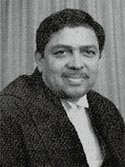
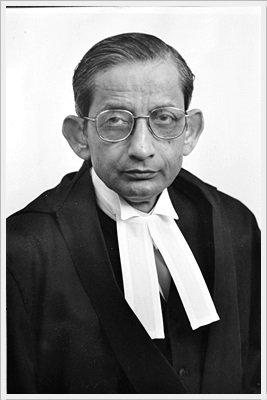
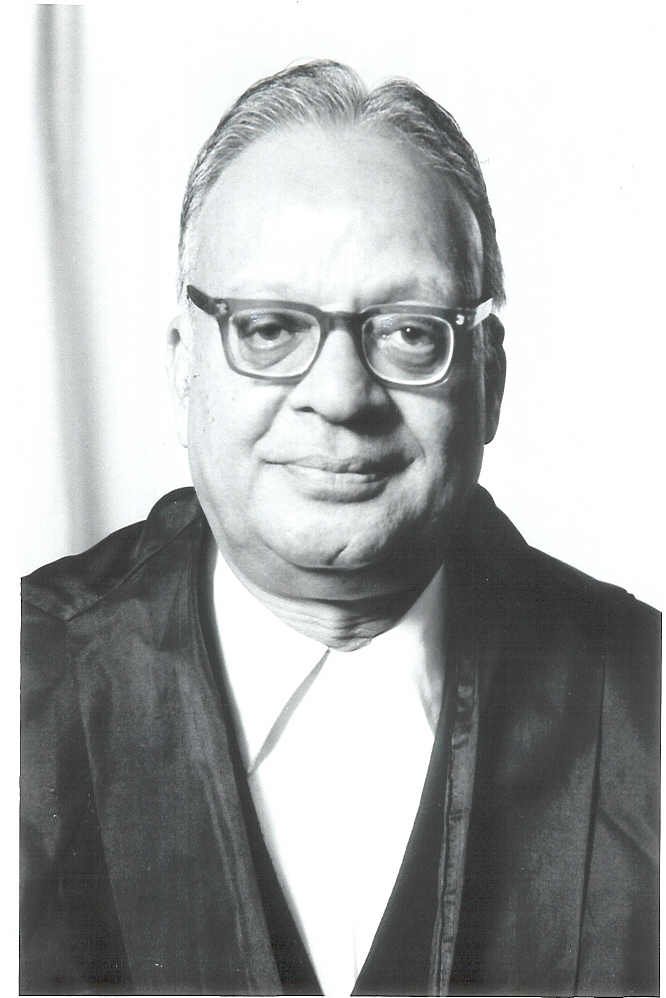
N. Santosh Hegde,S.B. Sinha & A.K. Mathur
JUDGMENT:
J U D G M E N T
(Arising out of S.L.P. ) No. 12019 of 2003)
S.B. SINHA, J:
Leave granted.
The Appellant \026 Insurance Company aggrieved by and dissatisfied
with a judgment and order dated 28th March, 2002 passed by the High Court
of Judicature Andhra Pradesh at Hyderabad in AAO No. 216 of 1997 is in
appeal before us.
The respondents herein are heirs and legal representatives of one V.
Gopal. The said V. Gopal (the deceased) used to carry on business in
vegetables. He purchased 5 bags of vegetables on 24.11.1991 in a village
known as Ayyapareddipalem and loaded the same in a trailer of a tractor
bearing No. MH33-8109. He was traveling therein. He wanted to buy some
more vegetables at a village known as Peddapadu. While the tractor
approached the said village, a bus was seen coming from opposite direction.
Because of rash and negligent driving on the part of the driver of the said
tractor, and which was driven at a very high speed, it went to the extreme
left side of road margin and because of heavy jerks, the deceased fell down
and received serious injuries. He was immediately shifted to Peddapadu
where he breathed his last.
A claim petition was filed by the respondents herein before the Addl.
Motor Accidents Claims Tribunal, Nellore claiming a sum of Rs. 1,00,000/-.
The Appellant herein denied and disputed its liability to pay any amount to
the Respondents by way of compensation inter alia on the ground that the
deceased was traveling in the said tractor as a 'paid passenger'.
The learned Addl. Motor Accidents Claims Tribunal inter alia held
that carrying the goods, i.e., vegetables, by the deceased as owner thereof
would entitle the Applicants to receive compensation from the Appellant.
The learned Tribunal observing that a person who is not a party to
contract of insurance would be the 'third party' and in that view of the
matter the respondents would be entitled to the amount of compensation
even if the vehicle was only having third party insurance (Act policy). It
was further held that the Tribunal was empowered to grant compensation
over and above the amount claimed. A sum of Rs. 1,53,000/- was awarded
by way of compensation in favour of the Respondents. The High Court by
reason of the impugned judgment has dismissed the appeal preferred by the
Appellant herein from the said judgment and award holding that as the
deceased was traveling in the trailer alongwith his goods being vegetables, it
was liable to pay compensation.
Mr. P.K. Seth, learned counsel appearing on behalf of the appellant
http://JUDIS.NIC.IN SUPREME COURT OF INDIA Page 2 of 5
would submit that as this Court in New India Assurance Co. Ltd. Vs. Asha
Rani and Others [(2003) 2 SCC 223] overruled its earlier decision in New
India Assurance Co. Vs. Satpal Singh [(2000) 1 SCC 237] holding that the
insurance company would not be liable for paying compensation to a
passenger in a goods vehicle, whether he was travelling as an owner of the
goods when that vehicle meets with an accident, the impugned judgment is
not sustainable.
Mrs. K. Sharda Devi, learned counsel appearing on behalf of the
respondents, on the other hand, would submit that a tractor is not a 'goods
carriage' vehicle and as carrying of vegetables in a tractor would be for
agricultural purpose, the appellant cannot be absolved from its liability to
pay the amount of compensation.
Section 147(1) of the Motor Vehicles Act, 1988 is in pari materia with
the provisions of Section 95(1) of the Motor Vehicles Act, 1939. In the
year, 1994, Section 147 was amended by reason of Act 54 of 1994 with
effect from 14.11.1994 in terms whereof the words "including owner of the
goods or his authorized representative carried in the vehicle" were added
after the words "against any liability which may be incurred by him in
respect of the death of or bodily injury to any person".
In Asha Rani (supra), this Court overruling its earlier decision in
Satpal Singh (supra) observed:
"9. In Satpal Singh's case (supra) the Court
assumed that the provisions of section 95(1) of
Motor Vehicles Act, 1939 are identical with
section 147(1) of the Motor Vehicles Act, 1988, as
it stood prior to its amendment. But a careful
scrutiny of the provisions would make it clear that
prior to the amendment of 1994 it was not
necessary for the insurer to insure against the
owner of the goods or his authorised representative
being carried in a goods vehicle. On an erroneous
impression this Court came to the conclusion that
the insurer would be liable to pay compensation in
respect of the death or bodily injury caused to
either the owner of the goods or his authorised
representative when being carried in a goods
vehicle the accident occurred."
One of us in a supplemental judgment in Asha Rani (supra) opined:
"25. Section 147 of 1988 Act, inter alia,
prescribes compulsory coverage against the death
of or bodily injury to any passenger of "public
service vehicle". Proviso appended thereto
categorically states that compulsory coverage in
respect of drivers and conductors of public
service vehicle and employees carried in a goods
vehicle would be limited to the liability under the
Workmen's Compensation Act. It does not speak
of any passenger in a 'goods carriage'.
26. In view of the changes in the relevant
provisions in the 1988 Act vis-a-vis the 1939
Act, we are of the opinion that the meaning of the
words "any person" must also be attributed
having regard to the context in which they have
been used i.e. 'a third party'. Keeping in view the
provisions of the 1988 Act, we are of the opinion
that as the provisions thereof do not enjoin any
statutory liability on the owner of a vehicle to get
his vehicle insured for any passenger travelling in
http://JUDIS.NIC.IN SUPREME COURT OF INDIA Page 3 of 5
a goods vehicle, the insurers would not be liable
therefor.
27. Furthermore, sub-clause (i) of clause (b) of
sub-section (1) of section 147 speaks of liability
which may be incurred by the owner of a vehicle
in respect of death of or bodily injury to any
person or damage to any property of a third party
caused by or arising out of the use of the vehicle
in a public place, whereas sub-clause (ii) thereof
deals with liability which may be incurred by the
owner of a vehicle against the death of or bodily
injury to any passenger of a public service
vehicle caused by or arising out of the use of the
vehicle in a public place.
28. An owner of a passenger carrying vehicle
must pay premium for covering the risks of the
passengers. If a liability other than the limited
liability provided for under the Act is to be en-
hanced under an insurance policy, additional
premium is required to be paid. But if the ratio of
this Court's decision in New India Assurance Co.
v. Satpal Singh [2000] 1 SCC 237 is taken to its
logical conclusion, although for such passengers,
the owner of a goods carriage need not take out
an insurance policy, they would be deemed to
have been covered under the policy wherefor
even no premium is required to be paid.
29. We may consider the matter from another
angle. Section 149(2) of the 1988 Act enables the
insurers to raise defences against the claim of the
claimants. In terms of clause (c) of sub-section
(2) of section 149 of the Act one of the defences
which is available to the insurer is that the
vehicle in question has been used for a purpose
not allowed by the permit under which the
vehicle was used. Such a statutory defence
available to the insurer would be obliterated in
view of the decision of this Court in Satpal
Singh's case (supra)."
Asha Rani (supra) was followed by this Court in Oriental Insurance
Co. Ltd. Vs. Devireddy Konda Reddy and Others [(2003) 2 SCC 339]
holding:
"10. The inevitable conclusion, therefore, is that
provisions of the Act do not enjoin any statutory
liability on the owner of a vehicle to get his vehicle
insured for any passenger travelling in a goods
carriage and the insurer would have no liability
therefore."
Yet again in National Insurance Co. Ltd. Vs. Ajit Kumar and Ors. [JT
2003 (7) SC 520] this Court held:
"11. The difference in the language of "goods
vehicle" as appearing in the old Act and "goods
carriage" in the Act is of significance. A bare
reading of the provisions makes it clear that the
legislative intent was to prohibit goods vehicle
from carrying any passenger. This is clear from the
http://JUDIS.NIC.IN SUPREME COURT OF INDIA Page 4 of 5
expression "in addition to passenger" as contained
in definition of "goods vehicle" in the old Act. The
position becomes further clear because the expres-
sion used is "goods carriage" is solely for the
"carriage of goods". Carrying of passengers in a
goods carriage is not contemplated in the Act.
There is no provision similar to clause (ii) of the
proviso appended to section 95 of the old Act
prescribing requirement of insurance policy. Even
section 147 of the Act mandates compulsory
coverage against death of or bodily injury to any
passenger of "public service vehicle". The proviso
makes it further clear that compulsory coverage in
respect of drivers and conductors of public service
vehicle and employees carried in goods vehicle
would be limited to liability under the Workmen's
Compensation Act, 1923 (in short 'WC Act').
There is no reference to any passenger in "goods
carriage"."
The effect of 1994 amendment came up for consideration before a 3-
Judge Bench of this Court in National Insurance Co. Ltd. Vs. Baljit Kaur
and Others [(2004) 2 SCC 1] wherein again it was held:
"19. In Asha Rani (supra), it has been noticed that
sub-clause (i) of clause (b) of sub-section (1) of
Section 147 of the 1988 Act speaks of liability
which may be incurred by the owner of a vehicle
in respect of death of or bodily injury to any
person or damage to any property of a third party
caused by or arising out of the use of the vehicle in
a public place. Furthermore, an owner of a
passenger-carrying vehicle must pay premium for
covering the risks of the passengers travelling in
the vehicle. The premium in view of the 1994
Amendment would only cover a third party as also
the owner of the goods or his authorised
representative and not any passenger carried in a
goods vehicle whether for hire or reward or
otherwise.
20. It is therefore, manifest that in spite of the
amendment of 1994, the effect of the provision
contained in Section 147 with respect to persons
other than the owner of the goods or his authorized
representative remains the same. Although the
owner of the goods or his authorized representative
would now be covered by the policy of insurance
in respect of a goods vehicle, it was not the
intention of the legislature to provide for the
liability of the insurer with respect to passengers,
especially gratuitous passengers, who were neither
contemplated at the time the contract of insurance
was entered into, nor was any premium paid to
the extent of the benefit of insurance to such
category of people."
(Emphasis supplied)
An insurance for an owner of the goods or his authorized
representative travelling in a vehicle became compulsory only with effect
from 14.11.1994, i.e., from the date of coming into force of Amending Act
54 of 1994.
http://JUDIS.NIC.IN SUPREME COURT OF INDIA Page 5 of 5
Furthermore, a tractor is not even a goods carriage. The "goods
carriage" has been defined in Section 2(14) to mean "any motor vehicle
constructed or adapted for use solely for the carriage of goods, or any motor
vehicle not so constructed or adapted when used for the carriage of goods"
whereas "tractor" has been defined in Section 2(44) to mean "a motor
vehicle which is not itself constructed to carry any load (other than
equipment used for the purpose of propulsion); but excludes a road-roller".
The "trailer" has been defined in Section 2(46) to mean "any vehicle, other
than a semi-trailer and a side-car, drawn or intended to be drawn by a motor
vehicle".
A tractor fitted with a trailer may or may not answer the definition of
goods carriage contained in Section 2(14) of the Motor Vehicles Act. The
tractor was meant to be used for agricultural purposes. The trailer attached
to the tractor, thus, necessarily is required to be used for agricultural
purposes, unless registered otherwise. It may be, as has been contended by
Mrs. K. Sharda Devi, that carriage of vegetables being agricultural produce
would lead to an inference that the tractor was being used for agricultural
purposes but the same by itself would not be construed to mean that the
tractor and trailer can be used for carriage of goods by another person for his
business activities. The deceased was a businessman. He used to deal in
vegetables. After he purchased the vegetables, he was to transport the same
to market for the purpose of sale thereof and not for any agricultural
purpose. The tractor and trailer, therefore, were not being used for
agricultural purposes. However, even if it be assumed that the trailer would
answer the description of the "goods carriage" as contained in Section 2(14)
of the Motor Vehicles Act, the case would be covered by the decisions of
this Court in Asha Rani (supra) and other decisions following the same, as
the accident had taken place on 24.11.1991, i.e., much prior to coming into
force of 1994 amendment.
For the reasons aforementioned, the impugned judgments cannot be
sustained which are set aside accordingly. This appeal is allowed. In the
facts and circumstances of this case, there shall be no order as to costs.
The landmark judgment in National Insurance Co. Ltd. vs. V. Chinnamma, a pivotal case under the Motor Vehicles Act 1988, recently clarified the scope of insurance liability concerning passengers in goods vehicles prior to the significant 1994 amendment. This crucial ruling, decided on August 25, 2004, is prominently featured on CaseOn, offering invaluable insights for legal practitioners and students alike.
The case originated from a tragic accident on November 24, 1991. The deceased, V. Gopal, a businessman, was transporting five bags of vegetables in a tractor-trailer (bearing No. MH33-8109) when it met with an accident due to the tractor driver's rash and negligent driving. Gopal fell from the vehicle and succumbed to his injuries. His heirs and legal representatives filed a claim petition before the Addl. Motor Accidents Claims Tribunal, Nellore, seeking compensation.
The Tribunal initially awarded Rs. 1,53,000/-, holding the Appellant Insurance Company liable on the grounds that carrying goods by their owner entitled them to compensation, even under a basic 'third party insurance' (Act policy). This decision was upheld by the High Court of Judicature Andhra Pradesh. The National Insurance Co. Ltd. subsequently appealed to the Supreme Court.
Could the Insurance Company be held statutorily liable to pay compensation for the death of a person traveling in a tractor-trailer carrying his own goods (vegetables) for business purposes, where the accident occurred prior to the 1994 amendment to the Motor Vehicles Act, 1988?
The Supreme Court relied on several precedents to establish the legal framework governing insurance liability for passengers in goods vehicles, particularly those operating before the 1994 amendment to the Motor Vehicles Act, 1988:
The crucial point of contention was the date of the accident: November 24, 1991. This date is critical because it falls *before* the 1994 amendment to the Motor Vehicles Act, which came into effect on November 14, 1994. The Supreme Court meticulously applied its established jurisprudence on this matter.
The Court observed that prior to the 1994 amendment, Section 147 did not impose a statutory obligation on insurers to cover the risk of death or bodily injury to the owner of goods or their representative while traveling in a goods vehicle. The series of judgments, particularly Asha Rani and its progeny, clearly established that the insurer's liability for such persons arose only *after* the 1994 amendment, and even then, it was specific to the owner of the goods or their authorized representative, not a general passenger.
Furthermore, the Court considered whether a tractor-trailer, used in this instance, could even be classified as a 'goods carriage' under the Act. A tractor, by definition (Section 2(44)), is not constructed to carry a load. While a trailer (Section 2(46)) can be drawn, a 'goods carriage' (Section 2(14)) is specifically for the sole purpose of carrying goods. The deceased was using the vehicle to transport vegetables for his business, not for agricultural purposes, further complicating its classification. However, even assuming, for argument's sake, that the trailer could somehow be considered a 'goods carriage,' the overriding principle from the aforementioned precedents remained: no statutory liability for such passengers prior to November 14, 1994.
Legal professionals often find themselves needing to quickly grasp the essence of such detailed rulings. CaseOn.in's 2-minute audio briefs serve as an excellent resource, allowing lawyers and law students to efficiently analyze the nuances of judgments like National Insurance Co. Ltd. vs. V. Chinnamma, ensuring they stay informed without sifting through extensive legal texts.
The Tribunal and High Court, by holding the insurer liable, had erred in their interpretation of the pre-amendment law, failing to consider the precise date of the accident and the clear statutory position at that time.
The Supreme Court concluded that the judgments of the Addl. Motor Accidents Claims Tribunal and the High Court were unsustainable. Since the accident occurred on November 24, 1991, *before* the 1994 amendment to the Motor Vehicles Act, 1988, there was no statutory liability on the Appellant Insurance Company to cover the death of V. Gopal, who was traveling with his goods in the tractor-trailer. The appeal filed by National Insurance Co. Ltd. was, therefore, allowed, and the impugned judgments were set aside.
The Supreme Court case of National Insurance Co. Ltd. vs. V. Chinnamma centered on an accident that occurred in 1991, involving a businessman transporting vegetables in a tractor-trailer. The crucial legal question was whether the insurance company was liable for compensation when the accident predated the 1994 amendment to the Motor Vehicles Act, 1988. The Court meticulously reviewed the definitions of 'tractor,' 'trailer,' and 'goods carriage' and, more importantly, relied on a series of its own precedents (including Asha Rani and Baljit Kaur) to establish that prior to November 14, 1994, there was no statutory mandate for insurers to cover the owner of goods or their authorized representative traveling in a goods vehicle. Consequently, the Supreme Court overturned the decisions of the Tribunal and the High Court, absolving the insurance company of liability for the accident.
This judgment serves as a critical precedent for several reasons:
All information provided in this blog post is for informational purposes only and does not constitute legal advice. While efforts have been made to ensure accuracy, readers are advised to consult with a qualified legal professional for advice on any specific legal matter.

 Login with google
Legal Notes
Add a Note....