
The case involves a dispute between the appellant, a local authority under the New Delhi Municipal Act, and certain Meter Readers who claimed parity in their pay scales with a ...
No Acts & Articles mentioned in this case
http://JUDIS.NIC.IN SUPREME COURT OF INDIA Page 1 of 5
CASE NO.:
Appeal (civil) 1214 of 2007
PETITIONER:
New Delhi Municipal Council
RESPONDENT:
Pan Singh & Ors
DATE OF JUDGMENT: 08/03/2007
BENCH:
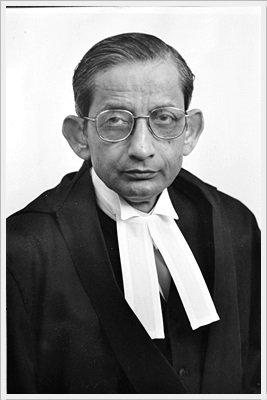
S.B. Sinha & Markandey Katju
JUDGMENT:
J U D G M E N T
[Arising out of SLP(C) No. 21024 of 2005]
S.B. Sinha, J.
Leave granted.
Appellant is a local authority constituted under the New Delhi
Municipal Act, 1994. It has been performing its municipal functions in the
New Delhi area; one of them being distribution of electricity to the
consumers upon buying the same from the Electricity Supply Companies.
For the said purpose, it has a electricity department. In the said department,
there were posts of Meter Readers as also Shifts Incharge. The pay scale of
Shifts In-charge was Rs. 220-400 and that of the Meter Readers Rs. 185-300.
The post of Meter Readers was meant to be filled up by direct recruitment.
17 senior most Shift In charge, however, for certain reasons opted to become
Meter Readers. As they were working in a higher scale of pay, their pay was
protected. Such protection of pay was given to them by an Order dated
10.2.1982, stating :
"1. The matter regarding revision of pay scale from Rs.
185-300 to Rs. 220-440 of those Meter Readers who were
promoted as Meter Readers from the Cadre of Shift-In-
charge II Grade was discussed in the meeting held on
15.12.81 at 11.00 AM under the Chairmanship of the
Administrator. It was decided by the Administrator that
the matter be examined whether higher pay scale of Rs.
220-400 could be given to the 17 such senior-most Meter
Readers, purely as on ad hoc measure which would be
personal to them.
2. Accordingly, the case was discussed in the meeting
of Heads of Departments namely CE(E)/CE(C)/FA,CA,
Secretary, MOH, DD(H) and LWO headed by the
Administrator on 06.02.1982 and was decided that the pay
scale of Rs. 220-10-300-EB-400 be allowed w.e.f. 6.2.82
to all those 17 Meter Readers who had previously worked
as Shift In charge Grade II, but this revision of scale will
be personal to them without making any precedent\005"
Some other Meter Readers who were in services of the appellant at the
relevant time raised an industrial dispute purported to be on the premise that
they had been discriminated against. Reference was made to the Presiding
Officer, Industrial Tribunal No. 3, Delhi for determination of inter-alia the
following industrial dispute:-
http://JUDIS.NIC.IN SUPREME COURT OF INDIA Page 2 of 5
"1. Whether the pay scale of Meter Readers should be
revised from Rs. 520-815 to Rs. 590-1000/- as has been
done in case of 17 Meter Readers namely 1) Shri Turen
Singh, 2) Ram Chander Singh, 3) Shri Rameshwar Lal
Bali, 4. Shri Prem Chand Sharma, 5. Raj Kumar Kalia
(6) Sh. Prabhu Dayal, (7) Sh. Anand Kishore Aggarwal
(8) Shri Jagannath Parshad (9) Sh. D.P. Malhotra (10)
Sh. Bhu Dev Sharma (11) Sh. Sukh Dev Singh (12)
Shri Ajaib Singh (13) Shri H.C. Chauhan (14) Shri K.S.
Rawat (15) Shri Devi Sanai, (16) Shri Mansa Ram, (17)
Shri Subhash Chand Sharma and if so what directions
are necessary in this respect?"
Respondents were not parties therein. They did not file any
application for their impleadment. By reason of an Award dated 7.1.1998,
the Industrial Court directed :-
"In the light of the above observations of the meter
readers, who were in service at the time when the benefit
was given to 17 meter readers, whose names are morefully
detailed in Annexure B of claim statement are entitled to
get the benefit of the said order in the similar manner in
which the same has been given to those 17 meter readers
purely as an adhoc measure to be personal to them and
discrimination made by the management amongst the same
class of meter readers is an act of arbitrariness and
amounts to misuse of the principles of law. The
management is directed to pay the arrears of the said
amount on the same analogy to which 17 meter readers
have been given benefit to the same as per order dated
12.02.82 within a period of 6 months from the date the
award become enforceable under law failing which the
meter readers of the said period will be entitled to get an
interest @ 18% per annum to the same..."
The respondents were appointed after 12.2.1982 i.e during the period
1.4.1982 and 3.6.1984. They filed a Writ Petition claiming parity in the
matter of grant of scale of pay by filing a Writ Petition with the Awardees
before the High Court of Delhi. By reason of the impugned Judgment, the
said Writ Petitions have been allowed stating that although they are not
covered by the Award, the appellant being model employer must treat the
employees similarly situated and, thus as the respondents had passed the test
in June, 1981, they could not be denied the pay scale which has been granted
to them.
Respondent filed the Writ Petition in July, 1999 claiming inter-alia the
following reliefs:-
"a) Issue an appropriate writ, order or direction to the
Respondent to grant to the petitioners the benefit of the
revised pay scale, as had been granted to other meter
readers vide office order dated 10.02.1982 (Annexure-
B). Office order dated 23.12.1998 (Annexure-D) and
office order dated 17.5.1999 (Annexure \026 D-1)
alongwith all the consequential reliefs.
b) Grant to the petitioners the appropriate amount of
damages including cost of the present petition as also
such other or further relief's as this Hon'ble Court may
deem fit, proper and expedient in the facts and
circumstances of the present case."
http://JUDIS.NIC.IN SUPREME COURT OF INDIA Page 3 of 5
Mr. Rakesh K. Khanna, learned senior counsel appearing on behalf of
the appellant would urge that once the cut off date was fixed by the Tribunal
as on 6.2.1982, the respondents, having joined the services of the appellant
thereafter, could not have been directed to be treated alike in the matter of
grant of the same scale of pay. In any event, the Writ Petitions having been
filed in July, 1999, the High Court committed a serious illegality in directing
back wages in their favour.
Ms. Asha Jain Madan, learned counsel appearing on behalf of the
respondent, on the other hand, would submit that the Award of the Industrial
Tribunal was binding upon the appellant in terms of Section 18(3)(b) of the
Industrial Disputes Act and in that view of the matter, as respondents
perform same or similar nature of duties as are performed by the other
workmen, they were entitled to be treated alike. The learned counsel would
contend that the respondent did not raise a separate industrial dispute as they
had all along been under the impression that they would be covered by the
Award which may be made in the said Reference.
Respondents were appointed on different dates, admittedly after
6.2.1982. Entitlement of an employee to be placed on a particular scale of
pay would depend upon the terms and conditions laid down in the contract
of service.
Seventeen persons who were granted higher scale of pay as noticed
hereinbefore had been working as Shifts in charge. As Shifts In charge, they
were entitled to a higher scale of pay. They were given a higher scale so as
to protect their pay which were personal to them and that too on an ad-hoc
measure. It was not by way of a revision of scale of pay as understood in
the ordinary sense of the term.
Those Meter Readers who were purported to be similarly situated
meaning thereby those who were in service as on 12.2.1982 i.e the date
when the purported pay scales of 17 senior most Meter Readers on ad-hoc
basis were revised, raised an industrial dispute. The Industrial Tribunal in
its Award proceeded on the basis that the concerned workmen were entitled
to the benefit of higher scale as they were similarly situated to those 17
senior most Meter Readers.
The direction in terms of the Award was confined only to those who
were in employment at the time when the said benefit was given to the said
17 Meter Readers.
They, thus, formed a class by themselves. A cut-off date having been
fixed by the Tribunal, those who were thus not similarly situated, were to be
treated to have formed a different class. They could not be treated alike with
the others. The High Court, unfortunately, has not considered this aspect of
the matter.
Submission of learned counsel for the respondent that Section
18(3)(b) of the Industrial Disputes Act would govern the Award, in our
opinion is not correct. Section 18(3)(b) although, provides that all workmen
who were employed in an establishment, subsequently become employed
therein would also be bound by the Award of the Industrial Tribunal. But,
they must be entitled to the similar benefits. Respondents were not parties to
the said dispute. They did not raise any grievance in regard to their
conditions of service.
Had they been parties to the Reference, the matter might have been
otherwise, as was held in Punjab National Bank And Others v. Manjeet
Singh And Another [(2006) 8 SCC 647], whereupon Ms. Asha Jain Madan,
learned counsel for respondent strongly relied upon. Section 18(3)(b) does
not postulate that although the concerned workmen would form different
classes, an Award made in favour of another class of workmen would
automatically be extended to the other. In Punjab National Bank (supra), the
workman contended that they were not bound by the Award, which
http://JUDIS.NIC.IN SUPREME COURT OF INDIA Page 4 of 5
contention was rejected having regard to the fact that they were similarly
situated and in fact were parties in the industrial disputes and were
represented through their Union.
There is another aspect of the matter which cannot be lost sight of.
Respondents herein filed a Writ Petition after 17 years. They did not agitate
their grievances for a long time. They, as noticed herein, did not claim
parity with the 17 workmen at the earliest possible opportunity. They did
not implead themselves as parties even in the reference made by the State
before the Industrial Tribunal. It is not their case that after 1982, those
employees who were employed or who were recruited after the cut-off date
have been granted the said scale of pay. After such a long time, therefore,
the Writ Petitions could not have been entertained even if they are similarly
situated. It is trite that the discretionary jurisdiction may not be exercised in
favour of those who approach the Court after a long time. Delay and laches
are relevant factors for exercise of equitable jurisdiction. See Govt. of W.B.
v. Tarun K. Roy And Others [(2004) 1 SCC 347], Chairman, U.P. Jal Nigam
& Anr. v. Jaswant Singh And Anr. [2006 (12) SCALE 347] and Karnataka
Power Corpn. Ltd. through its Chairman & Managing Director and Another
v. K. Thangappan and Another [(2006) 4 SCC 322]
Although, there is no period of limitation provided for filing a Writ
Petition under Article 226 of the Constitution of India, ordinarily, Writ
Petition should be filed within a reasonable time.
See Lipton India Ltd. And Others v. Union of India And Others
[(1994) 6 SCC 524], M.R. Gupta v. Union of India And Others [(1995) 5
SCC 628].
In Shiv Dass v. Union of India & Ors. [ 2007(2) SCALE 325 : (2007)
1 Supreme 455], this Court held:-
"9. It has been pointed out by this Court in a
number of cases that representations would not be
adequate explanation to take care of delay. This was
first stated in K.V. Raja Lakshmiah v. State of Mysore
(AIR 1967 SC 993). There is a limit to the time which
can be considered reasonable for making
representations and if the Government had turned down
one representation the making of another representation
on similar lines will not explain the delay. In State of
Orissa v. Sri Pyarimohan Samantaray, (AIR 1976 SC
2617) making of repeated representations was not
regarded as satisfactory explanation of the delay. In
that case the petition had been dismissed for delay
alone. See State of Orissa v. Arun Kumar (AIR 1976
SC 1639 also).
10. In the case of pension the cause of action
actually continues from month to month. That,
however, cannot be a ground to overlook delay in filing
the petition. It would depend upon the fact of each
case. If petition is filed beyond a reasonable period say
three years normally the Court would reject the same or
restrict the relief which could be granted to a reasonable
period of about three years. The High Court did not
examine whether on merit appellant had a case. If on
merits it would have found that there was no scope for
interference, it would have dismissed the writ petition
on that score alone."
We, therefore, are of the opinion that it was not a fit case where the
High Court should have exercised its discretionary jurisdiction in favour of
the respondents herein.
http://JUDIS.NIC.IN SUPREME COURT OF INDIA Page 5 of 5
For the reasons aforementioned, impugned Judgment cannot be
sustained which is set aside accordingly. The Appeal is allowed. In the
facts and circumstances of the case, however, there shall be no order as to
costs.

Legal Notes
Add a Note....