
This case focuses on the determination of which party is responsible for presenting evidence in proceedings governed by the Public Premises (Eviction of Unauthorised Occupants) Act, 1971. The appellants, who ...
No Acts & Articles mentioned in this case
http://JUDIS.NIC.IN SUPREME COURT OF INDIA Page 1 of 13
CASE NO.:
Appeal (civil) 5879 of 2007
PETITIONER:
New India Assurance Company Ltd.
RESPONDENT:
Nusli Neville Wadia and another
DATE OF JUDGMENT: 13/12/2007
BENCH:
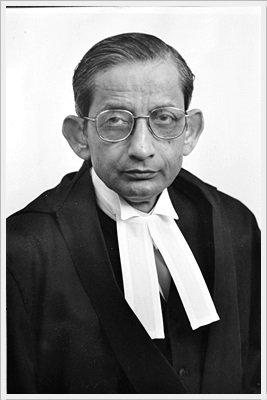
S.B. SINHA & HARJIT SINGH BEDI
JUDGMENT:
JUDGMENT
(Arising out of SLP (C) No. 8232 OF 2006)
WITH
CIVIL APPEAL NO. 5871 OF 2007
(Arising out of SLP (C) No. 10348 OF 2006)
New India Assurance Company Ltd. \005\005Appellant
Versus
KLM Engineering Co. Pvt. Ltd. and others \005\005Respondents
S.B. SINHA, J.
1. Leave granted.
Introduction
2. Who should begin to lead evidence in a proceeding under the
Public Premises (Eviction of Unauthorised Occupants) Act, 1971 (in
short \021the Act\022) is the question involved in these appeals.
Background Facts
3. Appellant is a company incorporated under the Companies Act,
1950. It is a State within the meaning of Article 12 of the
Constitution of India. It owns a building in the town of Mumbai
commonly known as Mayfair Gardens. Respondents herein are the
tenants occupying two apartments in the said building. We would
notice the fact of each matter in brief separately.
Facts in appeal \026 Nusli Neville Wadia and Anr.
4. In this appeal a notice terminating the tenancy of first
respondent was issued on 9th February, 2001. However, on the
premise that no ground of eviction had been mentioned therein,
another notice was issued on 18th February, 2002 enumerating the
grounds of eviction. Replies were given thereto by the respondent.
Appellant filed an application before the Estate Officer praying for
eviction of the respondent and for damages for unauthorized
occupation of the premises with effect from 1st April, 2002 @
Rs.4,91,700/- per month with interest @ 9 % per annum thereupon.
5. The Estate Officer purported to be satisfied that the occupation
of the first respondent is unauthorized and that an order of eviction
may have been passed against it issued a show cause notice to
respondent No.1 on 28th July, 2003 under Section 4 of the Act. The
http://JUDIS.NIC.IN SUPREME COURT OF INDIA Page 2 of 13
grounds for first respondent\022s eviction as set out in the application
were :-
\0231. The New India Assurance Co. Ltd. needs and
requires the premises for its own use and
occupation for accommodating its own senior
executives ;
2. The New India Assurance Co. Ltd. is being evicted
from tenanted premises and being called upon to
pay exhorbitant rents for tenanted premises ;
3. Increase in business, globalization of economy and
liberalization of policies have necessitated the New
India Assurance Co. Ltd. to use and occupy the
New India Assurance Co. Ltd.\022s own properties ;
4. The tenancy of Respondent No. 1 has been duly
terminated by the New India Assurance Co. Ltd.\022s
notice dated 18.02.2002;
5. Respondent No.1 is a rich and wealthy industrialist
who has several flats for his residence.\024
6. Notice was also issued on the same date i.e. 28th July, 2003
under the provisions of Section 7(3) of the Act calling upon the
tenant-respondent to show cause why he should not be required to pay
damages. Reply to the formal show cause notices were filed by the
first respondent on 23rd February, 2004. A detailed written statement
was filed by him on 3rd September, 2004.
7. Upon an application filed by the appellant, the Estate Officer
by an order dated 26th August, 2005 directed the first respondent to
lead evidence wherein his advocate was directed to file an affidavit of
evidence. The matter was adjourned for cross-examination of the first
respondent\022s witnesses by the appellant\022s advocate. First Respondent,
however, filed an application before the Estate Officer praying inter
alia that he should vary his order dated 26th August, 2005 and direct
the appellant to lead its evidence first and offer its witnesses for cross-
examination by the first respondent whereafter he would file his
affidavit of evidence. The said application was rejected by the Estate
Officer by an order dated 12th January, 2006. Aggrieved by and
dissatisfied therewith the first respondent filed a writ petition before
the Bombay High Court which, by reason of the impugned judgment,
has been allowed.
Facts in appeal - KLM Engineering Co. Pvt. Ltd. and Ors.
8. Respondent No.1 was inducted as a licensee in a furnished flat
in an apartment in the said building. The period of lease was for 5
years beginning from 1st October, 1994. Allegedly on the premise that
the respondent No.1 did not renew the \021licence\022 by giving two
months\022 prior notice as required, a notice to quit and handover
possession was issued on 13th December, 1999. In response to the
said notice the respondents contended that they had exercised their
option to renew the licence vide their letter dated 9th December, 1999.
Thereafter by a notice dated 9th February, 2001 the tenancy of
respondent No.1 was terminated by the appellant. As the said notice
did not contain any ground for termination of tenancy, another notice
was issued on 18th February, 2002. Composite application was filed
by the appellant under Sections 4 and 7 of the Act before the Estate
Officer on 16th January, 2003 whereupon two show cause notices
were issued by the Estate Officer to the first respondents in terms of
Section 4 and 7(3) of the Act on 21st February, 2003.
http://JUDIS.NIC.IN SUPREME COURT OF INDIA Page 3 of 13
9. Before the Estate Officer, the appellant filed its affidavits of
evidence. Dates after dates were fixed for cross-examination of the
witnesses of the appellant. Appellant had been taking adjournments
in the matter. On 22nd August, 2005 the first respondent moved an
application for direction before the Estate Officer. On or about 20th
September, 2005 the appellant had filed an application inter alia
stating that as it had already placed all the evidence on record, it was
for the first respondent to file its evidence and produce witnesses first
for cross-examination by it and prayed inter alia for the following
relief :-
\023the Opposite Party be directed to show cause to
the Statutory Notice issued by the erstwhile
Learned Estate Officer under sections 4 and 7 of
the PP Act and the case submitted by the
Applicants.\024
By order dated 30th January, 2006 the Estate Officer directed
the first respondent to lead evidence by the following order :-
\023Both applications disposed of. Application dated
22nd August, 2005 of the Opposite Party is not
allowed. As regards application dated 20th
September 2005 taken out by the Applicants, I
direct the Opposite Party to file their documents
and witness affidavits in lieu of evidence in chief
on or before 21.02.2006 complete inspection of
documents, if any, by 28.02.2006 and adjourn the
matter to 03.03.2006 at 3.30 p.m. for further
directions.\024
10. Aggrieved by and dissatisfied therewith, the Respondent Nos.
1 and 2 filed a writ petition before the High Court being W.P. No. 557
of 2006 which has been allowed by reason of the impugned order.
Contentions
11. Mr. P.N . Lekhi, learned senior counsel appearing on behalf of
the appellant inter alia submitted:
i) Having regard to the scheme of the 1971 Act and the Rules
framed thereunder the respondent-tenant should have been
directed to lead evidence.
ii) The Estate Officer having satisfied itself that the respondent-
tenant was in unauthorized occupation of the public
premises, it was for the tenant to establish that his
occupation is authorized.
iii) The premises in question being a public premises the
Noticee does not enjoy any protection as envisaged under
the provisions of the Maharashtra Rent Control Act, 1999
and in that view of the matter termination of tenancy itself is
sufficient for directing eviction of the tenant and thus, the
onus would lie upon the respondent to show that it is not in
unauthorized occupation.
iv) The procedure prescribed under the Act for eviction of the
unauthorized occupants being governed by the provisions of
the Act and the Rules thereunder, the provisions of the Code
of Civil Procedure or the Evidence Act would not be
attracted.
v) The High Court committed a serious error in passing the
impugned judgment relying on or on the basis of the
guidelines issued by the Central Government which have no
statutory force; being advisory in character, and as such the
same could not have been relied upon ignoring the statutory
enactment.
vi) The Division Bench of the High Court acted illegally in so
http://JUDIS.NIC.IN SUPREME COURT OF INDIA Page 4 of 13
far as it failed to take into consideration several binding
precedents operating in the field.
12. Mr. F.S. Nariman, learned senior counsel, appearing on behalf
of the first respondent in Civil Appeal arising out of SLP (C) No.8232
of 2006 would submit that:
(a) Section 4 of the Act deals with two types of cases; first \026
those who are in unauthorised occupation in the sense of
being in occupation without any authority therefor which
is governed by the first part of Section 4 of the Act; and
second, those who have continued in occupation of
public premises as Rent Control Acts permitted them to
continue to occupy but in respect whereof the tenancy
has been terminated \023for any reason whatsoever\024 as
envisaged in Section 2(g) of the Act.
(b) Whereas in the first group of cases the onus of proof
would be on the tenant to establish that no order of
eviction should be passed, however, in the second group
of cases it would be for the landlord to establish their
bona fide need, although the provisions of the Code of
Civil Procedure and the Evidence Act stricto sensu are
not applicable, having regard to the statutory scheme as
also the principles of natural justice which are required to
be complied with.
(c) As the Act and the Rules envisage a lis between the
parties and the decision of the Estate Officer is an
appealable one, not only evidence is required to be
recorded , an opportunity to cross-examine the witnesses
must also to be given.
(d) A party to the lis cannot ordinarily be directed to prove a
negative and in that view of the matter, it would be for
the insurance company to lead evidence at the first
instance.
13. Mr. Anil B. Diwan, learned senior counsel appearing on behalf
of respondent Nos. 1 and 2 in Civil Appeal arising out of SLP (C) No.
10348 of 2006 submitted that:
(1) As a composite application for eviction as also the
damages has been filed and a composite notice having
been issued, the onus of proof lay upon the appellant.
(2) Appellant having filed an affidavit of its witnesses
accepted that it was for it to lead evidence and having
taken a large number of adjournments on the dates fixed
for cross-examination of the said witnesses, could not
have gone back thereupon and contended that it was for
the respondents to lead evidence.
(3) As the principle of natural justice contemplate cross-
examination of the witnesses as also inspection of
documents, the High Court cannot be said to have
committed an error in passing the impugned judgment.
THE ACT
14. Indisputably the respondents herein are not protected tenants
under the provisions of the Maharashtra Rent Control Act, 1999.
15. Section 15 of the Act bars the jurisdiction of a civil court or any
other court to entertain any proceedings in respect of eviction of any
person who is in unauthorized occupation of any public premises.
Public premises has been defined in Section 2(e) to mean any
premises belonging to, or taken on lease by any corporation
established by or under a Central Act and owned or controlled by the
Central Government. It is not in dispute that the premise in question
is a public premise.
16. Section 3 of the Act provides for appointment of an Estate
http://JUDIS.NIC.IN SUPREME COURT OF INDIA Page 5 of 13
Officers. Sections 4 provides for issuance of a show cause notice in
the following terms :-
\023Section 4 - Issue of notice to show cause against order
of eviction - (1) If the estate officer is of the opinion that
any persons are in unauthorised occupation of any public
premises and that they should be evicted, the estate
officer shall issue in the manner hereinafter provided a
notice in writing calling upon all persons concerned to
show cause why an order of eviction should not be made.
(2) The notice shall--
(a) specify the grounds on which the order of eviction
is proposed to be made; and
(b) require all persons concerned, that is to say, all
persons who are, or may be, in occupation of, or claim
interest in, the public premises,--
(i) to show cause, if any, against the proposed
order on or before such date as is specified in the
notice, being a date not earlier than seven days
from the date of issue thereof, and
(ii) to appear before the estate officer on the date
specified in the notice along with the evidence
which they intend to produce in support of the
cause shown, and also for personal hearing, if such
hearing is desired.
(3) The estate officer shall cause the notice to be served
by having it affixed on the outer door or some other
conspicuous part of the public premises, and in such
other manner as may be prescribed whereupon the notice
shall be deemed to have been duly given to all persons
concerned.\024
17. Section 5 deals with the procedure for eviction of unauthorized
occupants. It reads :-
\023Section 5 - Eviction of unauthorised occupants.- (1) If,
after considering the cause, if any, shown by any person
in pursuance of a notice under section 4 and any evidence
produced by him in support of the same and after
personal hearing, if any, given under clause (b) of sub-
section (2) of section 4], the estate officer is satisfied that
the public premises are in unauthorised occupation, the
estate officer may make an order of eviction, for reasons
to be recorded therein, directing that the public premises
shall be vacated, on such date as may be specified in the
order, by all persons who may be in occupation thereof or
any part thereof, and cause a copy of the order to be
affixed on the outer door or some other conspicuous part
of the public premises.
(2) If any person refused or fails to comply with the order
of eviction on or before, the date specified in the said
order or within fifteen days of its publication under sub-
section (1) whichever is later, the estate officer or any
other officer duly authorized by the estate officer in this
behalf may evict that person from, and take possession
of, the public premises and may, for that purpose, use
such force as may be necessary.\024
18. Section 7 empowers the Estate Officer to require payment of
rent or damages in respect of public premises by the person who is in
unauthorized occupation thereof.
19. Section 9 provides for appeal from an order of the Estate
Officer.
THE RULES;
http://JUDIS.NIC.IN SUPREME COURT OF INDIA Page 6 of 13
20. Rules have been framed by the Central Government in exercise
of its powers under Section 18 of the Act known as the Public
Premises (Eviction of Unauthorised Occupants) Rules, 1971. Rule 5,
which is material for these appeals reads as under :-
\0235. Holding of inquiries. \026 (1) Where any person on
whom a notice or order under this Act has been served
desires to be heard through his representative he should
authorize such representative in writing
(2) The estate officer shall record the summary of such
evidence and any relevant documents filed before him
shall form part of the records of the proceedings. \023
GUIDELINES
21. A tenant of a public premise although ordinarily does not get
any protection from eviction from the tenanted premises under the
provisions of the Maharashtra Rent Control Act, 1999, it is accepted
that the action of the part of the landlord, which is a State within the
meaning of Article 12 of the Constitution of India must in this behalf
be fair and reasonable. In other words the action of the State in terms
of the provisions of the Act should not be arbitrary, unreasonable or
mala fide. With that end in view only, and for determining the legal
effect arriving thereunder, the Central Government had, from time to
time, issued several guidelines. The guidelines so issued are dated
14th January, 1992 ; 5th August, 1992 ; 7th July, 1993 ; 14th July, 1993 ;
23rd July, 1993; 9th June, 1998, 2nd September, 2002 and 23rd July,
2003. In terms of the said guidelines, however, a distinction is sought
to be made between a tenant who is rich or industrialist etc. vis-a-vis a
person who is poor and uses the tenanted premises only for his
residence as would appear from the guidelines dated 23rd July, 2003,
the relevant portion whereof reads as under :-
\0233. The Government Resolution dated
30.05.2002 embodies the guidelines dated
14.01.1992 for observance by the Public Sector
Undertakings. However, clarification was issued
vide OM No.21011/790 Pol.1 IV.H.11 dated
07.07.1993 that the guidelines are meant for
genuine non affluent tenants and these are not
applicable to the large business houses and
commercial entrepreneurs.\024
22. Issuance of such guidelines, however, is not being controlled by
statutory provisions. The effect thereof is advisory in character and
thereby no legal right is conferred upon the tenant. (See 1990 (Supp)
SCC 440 at 508 : Narendra Kumar Maheshwari vs. Union of India
and others ; (1981) 1 SCC 166 at 232 : Maharao Sahib Shir Bhim
Singhji vs. Union of India and others ; (1988) 4 SCC 464 (paragraph
31) : J.R. Raghupathy and others vs. State of A.P. and others ; (2002)
100 DLT 487 : Uttam Parkash Bansal and others vs. L.I.C. of India
and 1992 (2) CLR 457 : Punjab National Bank vs. M/s. The Lord
Krishna Paper Industries and others.
23. We may, however, hasten to add that having regard to the fact
that the appellants themselves referred to guidelines issued by the
Central Government from time to time, its ultimate effect on the
application need not be finally determined by us.
APPLICATION OF THE ACT AND THE RULES
24. Where an application is filed for eviction of an unauthorized
http://JUDIS.NIC.IN SUPREME COURT OF INDIA Page 7 of 13
occupant it obligates the Estate Officer to apply his mind so as to
enable him to form an opinion that the respondent is a person who has
been in unauthorized occupation of the public premises and that he
should be evicted. When a notice is issued in terms of Section 4 of
the Act, the noticee may show cause. Section 5 of the Act postulates
that an order of eviction must be passed only upon consideration of
the show cause and any evidence produced by him in support of its
case also upon giving him a personal hearing, if any, as provided
under clause (ii) of sub-section 2 of Section 4 of the Act.
25. Although Section 5 ex-facie does not make any classification in
regard to the two classes of tenancies but the same is evident from the
decisions rendered by this Court as also by the different High Courts.
26. The occupants of public premises may be trespassers, or might
have breached the conditions of tenancy, or have been occupying the
premises as a condition of service, but were continuing to occupy the
premises despite cessation of contract of service.
27. However, there may be another class of tenants who are
required to be evicted not on any of the grounds mentioned
hereinbefore but inter alia on the ground, which requires proof of the
fairness and reasonableness on the part of the landlord which may
include requirement for its own use and occupation.
28. Furthermore a proceeding may be initiated under Section 4
simplicitor. A composite proceedings may also be initiated both
under Sections 4 and 7 of the Act. In the latter category of cases the
landlord would be required to establish not only the bona fide need on
its part but also quantum of damages to which it may hold to be
entitled to, in the event that an order is passed in favour of the
establishment.
29. Admittedly in these cases two notices for eviction were issued.
If the contention of Mr. Lekhi is correct, the first notice was not
required to be withdrawn and the second notice was not required to
be issued, specifying the grounds on which the eviction of the
respondents were sought for.
30. When an application for eviction is based on such grounds,
which require production of positive evidence on part of the landlord,
in our opinion, it would be for it to adduce evidence first; more so in a
composite application where the evidence is also required to be led on
the quantum of damages to be determined by the Estate Officer.
31. There may be a case where the tenant may take a defence which
discloses no prima facie case in which event the Estate Officer may
ask him to lead evidence. But there may be cases where the ground of
eviction, having regard to the defence taken by the occupants, may be
required to be gone into.
32. Appellant\022s stand in this case is clear and unambiguous. It
intends to evict the respondents on the grounds specified in the notices
issued by the Estate officer.
33. The Estate Officer with a view to determine the lis between the
parties must record summary of the evidence. Summary of the
evidence and the documents shall also form part of the record of the
proceedings.
34. Procedure laid down for recording evidence is stated in the
Rules. The Estate Officer being a creature of the statute must comply
the same. When a notice is issued, the occupant of the public
premises would not only be entitled to show cause but would also be
entitled to produce evidence in support of the cause shown.
http://JUDIS.NIC.IN SUPREME COURT OF INDIA Page 8 of 13
CONCEPT OF FAIRNESS
35. The procedural aspect as to who should lead evidence first, thus
may have to be determined on the basis of the issues arising in the
matter. When we say so, we do not mean that the procedure involved
being a summary one, the issues are required to be specifically framed
but that which is the principal issue(s) between the parties must be
known to the Estate officer.
36. Thus under the Public Premises (Eviction of Unauthorized
Occupants) Act, 1971 the occasion would arise for multi-level
inquiry: Primary inquiry will be to arrive at a conclusion on
\023unauthorized occupant\024; and intermediate inquiry would be as to the
eviction of \023unauthorized occupant\024.
37. The question has been succinctly dealt with by a Division
Bench of the Bombay High Court in: Minoo Framroze Balsara vs.
Union of India and others (1992 Bom 375) wherein Bharucha, J. (as
the learned Chief Justice then was) opined: \023the Government
company or corporation must so act not only when terminating the
authority of an occupant of public premises of its ownership to occupy
the same but also when, thereafter, it seeks his eviction therefrom\024.
38. The statute, although, does not require a lengthy hearing or a
lengthy cross-examination but the noticee should be given an
opportunity to file an effective show cause. An effective show cause
can be filed when eviction is sought for a specified ground and the
occupants must know the particulars in relation thereto.
39. For the said purpose, Sections 4 and 5 of the Act must be read
together. Even the Rules which are validly framed must be read
alongwith the statutory provisions. Ordinarily although a tenant
occupying the property belonging to a government may be somewhat
in a worse position than a tenant having protection under the Rent
Control Act as has been held by a Full Bench of the Calcutta High
Court in AIR 1968 Calcutta 1 : Standard Literature Co. Private Ltd.
and Ors. vs. Union of India, but with a view to interpret the
provisions of the Act, we must take into consideration the decisions of
this Court laying down the concept of \021bona fide act\022 and the \021fair
action\022 on the part of the owner as laid down in (1989) 3 SCC 293
Dwarkadas Marfatia and Sons vs. Board of Trustees of the Port of
Bombay and (1990) 4 SCC 406 : Ashoka Marketing Ltd vs. Punjab
National Bank.
40. In Dwarkadas Marfatia (supra) this Court clearly held that \023the
public authorities which enjoy this benefit without being hidebound
by the requirements of the Rent Act must act for public benefit.
Hence, to that extent, that is liable to be gone into and can be the
subject matter of adjudication\024. Dwarkadas Marfatia was applied in
Ashoka Marketing (supra) stating :-
\02369. It has been urged by the learned counsel for
the petitioners that many of the corporations
referred to in Section 2( e )(2)( ii ) of the Public
Premises Act, like the nationalised banks and the
Life Insurance Corporation, are trading
corporations and under the provisions of the
enactments whereby they are constituted these
corporations are required to carry on their business
with a view to earn profit, and that there is nothing
to preclude these corporations to buy property in
possession of tenants at a low price and after
buying such property evict the tenants after
terminating the tenancy and thereafter sell the said
property at a much higher value because the value
of property in possession of tenants is much less as
http://JUDIS.NIC.IN SUPREME COURT OF INDIA Page 9 of 13
compared to vacant property. We are unable to cut
down the scope of the provisions of the Public
Premises Act on the basis of such an apprehension
because as pointed out by this Court in Dwarkadas
Marfatia and Sons v. Board of Trustees of the Port
of Bombay (SCC p. 306, para 27)
\023...every activity of a public authority especially in
the background of the assumption on which such
authority enjoys immunity from the rigours of the
Rent Act, must be informed by reason and guided
by the public interest. All exercise of discretion or
power by public authorities as the respondent, in
respect of dealing with tenants in respect of which
they have been treated separately and distinctly
from other landlords on the assumption that they
would not act as private landlords, must be judged
by that standard.\024
These observations were made in the context of the
provisions of the Bombay Rents, Hotel and
Lodging Houses Rates (Control) Act, 1947
whereby exemption from the provisions of the Act
has been granted to premises belonging to the
Bombay Port Trust. The consequence of giving
overriding effect to the provisions of the Public
Premises Act is that premises belonging to
companies and statutory bodies referred to in
clauses (2) and (3) of Section 2( e ) of the Public
Premises Act would be exempted from the
provisions of the Rent Control Act. The actions of
the companies and statutory bodies mentioned in
clauses (2) and (3) of Section 2( e ) of the Public
Premises Act while dealing with their properties
under the Public Premises Act will, therefore, have
to be judged by the same standard.\024
Constitutional Backdrop
41. Constitutional validity of the Act as also its predecessors\022 Act
being Public Premises (Eviction of Unauthorised Occupants) Act,
1958 and the Government Public Premises Eviction Act, 1950 was
challenged in several proceedings. The Public Premises Act, 1950
was struck down in AIR 1956 All. 507 (DB) Brigadier Commandant,
Meerut vs. Gangaprasad ; 58 CWN 1056 : Jaggu Singh vs. Shakuat
Ali and 1957 (59) PLR 621 : Satish Chander vs. Delhi Improvement
Trust. 1950 Act was repealed by the Public Premises (Eviction of
Unauthorised Occupants) Act, 1958 wherein, however the
jurisdiction of the civil court was not barred. A Constitution Bench of
this Court in 1967 (3) SCC 399 : Northern India Caterers Pvt. Ltd. vs.
State of Punjab held Section 5 thereof to be void as an additional
remedy over and above the usual remedy by way of a suit was
conferred thereby providing for two alternative remedies or leaving it
to the unguided discretion of the Statutory Authorities to resort to one
or the other procedure. Northern India Caterers Pvt. Ltd. (supra),
however, was overruled by a Bench of 7 Judges of this Court in
(1974) 2 SCC 402 : Maganlal Chaganlal vs. Municipal Corporation.
We must also notice that 1958 Act was struck down by Delhi High
Court in P.L. Mehra vs. D.R. Khanna (Civil Writ No. 431 of 197).
42. On the aforementioned premises the 1971 Act was enacted after
removing the vice which led to it having been declared as void with
effect from 16th September, 1958. It suffered another challenge in
(1972) 2 SCC 259 : Hari Singh vs. Military Estate Officer.
However, the challenge to its validity was negatived holding that the
1971 Act did not provide for two procedures but only one procedure.
Yet again in (1988) 4 SCC 324 : Accountant and Secretarial Services
vs. Union of India challenge to the validity of the Act on the premise
http://JUDIS.NIC.IN SUPREME COURT OF INDIA Page 10 of 13
that one of the officers of the Statutory Authority may be appointed as
an Estate Officer and thus violative of Article 14. However, the Court
negatived the challenge and observed:
\02432. Dr Chitale, while initially formulating his
contentions, outlined an argument that the
provision in the 1971 Act appointing one of the
officers of the respondent Bank as the Estate
Officer is violative of Article 14. We do not see
any substance in this contention. In the very nature
of things, only an officer or appointee of the
government, statutory authority or corporation can
be thought of for implementing the provisions of
the Act. That apart, personal bias cannot
necessarily be attributed to such officer either in
favour of the bank or against any occupant who is
being proceeded against, merely because he
happens to be such officer. Moreover, as pointed
out earlier, the Act provides for an appeal to an
independent judicial officer against orders passed
by the Estate Officer. These provisions do not,
therefore, suffer from any infirmity. In fact, Dr
Chitale did not pursue this objection seriously.\024
43. It was on the aforementioned premise that the dicta laid down
in Ashoka Marketing Ltd. (supra) must be considered wherein this
Court held that the Act overrides Delhi Rent Control Act, 1958,
although both were Acts of Parliament.
Natural Justice Issue:
44. If some facts are to be proved by the landlord, indisputably the
occupant should get an opportunity to cross-examine. The witness
who intends to prove the said fact has the right to cross-examine the
witness. This may not be provided by under the statute, but it being a
part of the principle of natural justice should be held to be indefeasible
right. [See 1984 (1) SCC 43 : K.L. Tripathi vs. State Bank of India
and others and 2005 (10) 634 : Lakshman Exports Limited
Vs.: Collector of Central Excise]
45. We may also take note of the fact that this Court in 1972 (1)
SCR 241 : Bareilly Electricity Supply Co. Ltd. vs. The Workmen
this Court held as under :-
\023The application of the principle of natural justice does
not imply that what is not evidence can be acted upon.
On the other hand what it means is that no material can
be relied upon to establish a contested fact which are not
spoken to by persons who are competent to speak about
them and are subjected to cross-examination by the party
against whom they are sought to be used.\024
46. It is axiomatic that when in support of its case the landlord
intends to rely upon a document which is to be taken on record, it
would be obligatory on the part of the Estate Officer to allow
inspection thereof to the noticee. Denial of such inspection of
documents shall be violative of the principle of natural justice. It
would run counter to the doctrine of fairness in the matter of
determination of a lis between the parties.
47. We may also notice that in (2007) 1 SCC 174 : Sarbananda
Sonowal (II) vs. Union of India this Court having regard to the fact
that burden of proof was on the notice held :
\02356. Status of a person, however, is determined
according to statute. The Evidence Act of our
http://JUDIS.NIC.IN SUPREME COURT OF INDIA Page 11 of 13
country has made provisions as regards \023burden of
proof\024. Different statutes also lay down as to how
and in what manner burden is to be discharged.
Even some penal statutes contain provisions that
burden of proof shall be on the accused. Only
because burden of proof under certain situations is
placed on the accused, the same would not mean
that he is deprived of the procedural safeguard.\024
It was observed :
\02360. Having regard to the fact that the Tribunal in
the notice to be sent to the proceedee is required to
set out the main grounds; evidently the primary
onus in relation thereto would be on the State.
However, once the Tribunal satisfied itself about
the existence of grounds, the burden of proof
would be upon the proceedee.\024
Interpretative Approval
48. Section 5 of the Act, on a plain reading, would place the entire
onus upon a noticee. It, in no uncertain terms, states that once a
notice under Section 4 is issued by the Estate Officer on formation of
his opinion as envisaged therein it is for the noticee not only to show
cause in respect thereof but also adduce evidence and make oral
submissions in support of his case. Literal meaning in a situation of
this nature would lead to a conclusion that the landlord is not required
to adduce any evidence at all nor it is required even to make any oral
submissions. Such a literal construction would lead to an anomalous
situation because the landlord may not be heard at all. It may not
even be permitted to adduce any evidence in rebuttal to the one
adduced by the noticee nor it would be permitted to advance any
argument. Is this contemplated in law? The answer must be rendered
in the negative. When a landlord files an application, it in a given
situation must be able to lead evidence either at the first instance or
after the evidence is led by the noticee to establish its case and/ or in
rebuttal to the evidence led by the noticee.
49. The literal interpretation of the statute, if resorted to, would also
lead to the situation that it would not be necessary for the landlords in
any situation to plead in regard to its need for the public premises. It
could just terminate the tenancy without specifying any cause for
eviction.
50. Except in the first category of cases, as has been noticed by us
hereinbefore, Sections 4 and 5 of the Act, in our opinion, may have to
be construed differently in view of the decisions rendered by this
Court. If the landlord being a State within the meaning of Article 12
of the Constitution of India is required to prove fairness and
reasonableness on its part in initiating a proceeding, it is for it to show
how its prayer meets the constitutional requirements of Article 14 of
the Constitution of India. For proper interpretation not only the basic
principles of natural justice have to be borne in mind, but also
principles of constitutionalism involved therein. With a view to read
the provisions of the Act in a proper and effective manner, we are of
the opinion that literal interpretation, if given, may give rise to an
anomaly or absurdity which must be avoided. So as to enable a
superior court to interpret a statute in a reasonable manner, the court
must place itself in the chair of a reasonable legislator/ author. So
done, the rules of purposive construction have to be resorted to which
would require the construction of the Act in such a manner so as to
see that the object of the Act fulfilled; which in turn would lead the
beneficiary under the statutory scheme to fulfill its constitutional
obligations as held by the court inter alia in Ashoka Marketing Ltd
(supra).
51. Barak in his exhaustive work on \021Purposive Construction\022
explains various meanings attributed to the term \023purpose\024. It would
be in the fitness of discussion to refer to Purposive Construction in
http://JUDIS.NIC.IN SUPREME COURT OF INDIA Page 12 of 13
Barak\022s words:
\023Hart and Sachs also appear to treat \023purpose\024 as a
subjective concept. I say \023appear\024 because, although
Hart and Sachs claim that the interpreter should imagine
himself or herself in the legislator\022s shoes, they introduce
two elements of objectivity: First, the interpreter should
assume that the legislature is composed of reasonable
people seeking to achieve reasonable goals in a
reasonable manner; and second, the interpreter should
accept the non-rebuttable presumption that members of
the legislative body sought to fulfill their constitutional
duties in good faith. This formulation allows the
interpreter to inquire not into the subjective intent of the
author, but rather the intent the author would have had,
had he or she acted reasonably.\024
(Aharon Barak, Purposive Interpretation in Law, (2007) at pg. 87)
52. In Bharat Petroleum Corpn. Ltd. v. Maddula Ratnavalli and
Ors., (2007) 6 SCC 81, this Court held:
\023The Parliament moreover is presumed to have enacted a
reasonable statute (see Breyer, Stephen (2005): Active
Liberty: Interpreting Our Democratic Constitution,
Knopf (Chapter on Statutory Interpretation - pg. 99 for
"Reasonable Legislator Presumption" ).\024
53. The provisions of the Act and the Rules in this case, are, thus
required to be construed in the light of the action of the State as
envisaged under Article 14 of the Constitution of India. With a view
to give effect thereto, the doctrine of purposive construction may have
to be taken recourse to. [See 2007 (7) Scale 753 : Oriental Insurance
Co. Ltd. vs. Brij Mohan and others.]
Conclusion:
54. Although the provisions of the Evidence Act are not applicable,
the underlying principles of Section 101 thereof would apply. In
Sarkar on Law of Evidence 16th Edition Volume 2 at pg. 1584 it is
stated as under:-
\023Principle and Scope .- This section is based on the
rule, ie incumbit probation qui dicit, non qui negat
\026 the burden of proving a fact rests on the party
who substantially asserts the affirmative of the
issue and not upon the party who denies it; for a
negative is usually incapable or proof. \023It is an
ancient rule founded on consideration of good
sense and should not be departed from without
strong reasons.\024 [per LORD MAUGHAM in
Constantine Line vs. I S Corpn. (1941) 2 All ER
165, 179]. This rule is derived from the Roman
law, and is supportable not only upon the ground
of fairness, but also upon that of the greater
practical difficulty which is involved improving a
negative than in proving an affirmative [Hals 3rd
Ed Vol 15 para 488].
(Emphasis supplied)
55. The said principle has been approved by this Court in (1983) 4
SCC 491: Shambhu Nath Goyal vs. Bank of Baroda and others ;
(1999) 8 SCC 744 :Garden Silk Mills Ltd. and another vs. Union of
India and others and (2007) 2 SCC 433 (para 18) : J.K. Synthetics Ltd.
vs. K.P. Agrawal and another.
http://JUDIS.NIC.IN SUPREME COURT OF INDIA Page 13 of 13
56. We, however, must not shut our eyes to the objects for which
the Act was enacted. It provided for a speedy remedy. The Estate
Officer is expected to arrive at a decision as expeditiously as possible.
The provisions of the Code of Civil Procedure and Evidence Act
being not applicable, what is necessary to be complied with is the
principles of natural justice.
57. Even if we assume that in terms of the statutory provisions the
respondents must lead evidence first the same can be waived,
Appellant not only had filed affidavits in one of the cases but time and
again sought adjournments when the deponent of the affidavit was to
be cross-examined. Although the appellant had pleaded requirements
of the premises on an urgent basis, it kept on taking adjournments for
more than 2 years. Why the witnesses were not produced before the
Estate Officer for cross-examination for such a long time is not
known. Only after a long period, an application was filed asking the
respondents to show cause. Cause had already been shown by the
respondents. They pleaded that no case has been made out for their
eviction. We, therefore, fail to understand on what basis the Estate
Officer passed the order impugned before the High Court.
58. We, therefore, direct that both the parties must file their
documents within a week from today and the Estate Officer must give
both the parties inspection of the said documents within a week
thereafter. In the appeal arising out of SLP (C) No. 10348 of 2006 the
appellant must file the affidavits of its witnesses within two weeks
and thus shall be produced for cross-examination within one week
thereafter. In appeal arising out of SLP (C) No. 8232 of 2006 the
witnesses must be produced for cross-examination as expeditiously as
possible, but not beyond a period two weeks.
59. The proceedings before the Estate Officer, being summary in
nature, the cases must go on a day to day basis. The Estate Officer is
directed to pass a final order, as expeditiously as possible but not
beyond a period of 10 weeks from the date of receipt of a copy of this
order.
60. These appeals are dismissed with the aforesaid direction with
costs. Counsel fee in each case is assessed at Rs.25,000/- (Rupees
twenty five thousand only).

 Login with google
Legal Notes
Add a Note....