
As per case facts, the second respondent, a consignor, hired trucks to transport broken rice, which was subsequently lost. The first respondent, an insurance company, settled the consignor's claim, after ...

No Acts & Articles mentioned in this case
http://JUDIS.NIC.IN SUPREME COURT OF INDIA Page 1 of 7
PETITIONER:
OBERAI FORWARDING AGENCY
Vs.
RESPONDENT:
NEW INDIA ASSURANCE CO. LTD. & ANR.
DATE OF JUDGMENT: 01/02/2000
BENCH:
S.P.Bharucha, N.S.Hegde, S.S.M.Quadri
JUDGMENT:
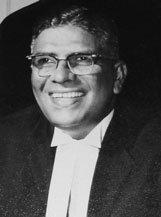
BHARUCHA, J.
The facts are set out only in so far as they are
relevant to the two issues in this appeal, namely, whether
the first respondent insurance company was subrogated to the
rights of the second respondent consignor in respect of the
lost consignment or whether it was the assignee of the
rights of the second respondent in respect thereof; and, if
the latter, whether it was a consumer within the meaning
of the Consumer Protection Act, 1986, entitled to maintain a
complaint thereunder.
The second respondent, through its agent, hired two
trucks from M/s. Bhasin Goods Carriers of Bareilly to
transport broken rice to Barpeta, Assam. According to the
appellant, it was asked by M/s. Bhasin Goods Carriers and
the second respondents agent only to settle the freight for
the consignment, which it did. The trucks loaded with the
consignment did not reach their destination and the
consignment was lost.
The second respondent made a claim for the value of
the consignment upon the first respondent, who had insured
it, in the sum of Rs.93,925.55. The claim was settled by
the first respondent in the sum of Rs.64,137/- , and that
sum was paid to the second respondent.
Consequent upon the claim being settled, the second
respondent executed in favour of the first respondent, a
Letter of Subrogation on 15th June, 1992. It stated :
In consideration of your paying to us the sum of Rs.64137/-
only say Rupees Sixty four thousand one hundred and thirty
seven only in full settlement of our claim for non-
delivery/shortage & damage under policy No.2142140400015
Cert. No./decl. No.269240001/54 & 55 issued by you all on
the undermentioned goods, we hereby assign, transfer and
abandon to you all our rights against the Railway
Administration Road transport carriers or other persons
whatsoever, caused or arising by reason of the said damage
or loss and grant you full power to take and use all lawful
ways and means in your own name and otherwise at your risk
and expense to recover the claim for the said damage or loss
and we hereby subrogate to you the same rights as we have in
consequence of or arising from the said loss or damage.
http://JUDIS.NIC.IN SUPREME COURT OF INDIA Page 2 of 7
And we hereby undertake and agree to make and execute
at your expense all such further deeds, assignments and
documents and to render you such assistance as you may
reasonably require for the purpose of carrying out this
agreement.
On the same day the second respondent also executed in
favour of the first respondent a Special Power of Attorney,
inter alia for the following purpose : To file suit in the
court of law against the Railways Adm. if necessary for the
recovery of the claim moneys for the afore said claim, on
our behalf and in our name and to give valid discharges and
effectful receipt thereto.
On 9th September, 1992 the first respondent filed
against the appellant a complaint under the Consumer
Protection Act in respect of the loss of the consignment
wherein it stated that the second respondent had
assigned/transferred their rights to claim the amount from
the O.P. in favour of the complainant by executing Letter
of Subrogation and power of attorney in it favour. .
The complainant stands subrogated to the rights of M/s.
M.S. Industries as consumer and is consumer under the law
and the purview of the C.P. Act.. The appellant in its
written statement contended that the first respondent was
not a consumer and had no right to file the complaint and
that the provisions of the Consumer Protection Act were not
attracted. The complaint was thereafter amended and the
second respondent was added as a co-complainant.
The District Forum, Shahjahanpur, in which the
complaint was filed, allowed it and directed the appellant
to pay to the respondents the sum of Rs.98,924.55 and
interest. The appellant preferred an appeal before the
State Forum. The appeal was dismissed, but the amount of
compensation was reduced to Rs.69,137/-. Against the order
of the State Commission, a Revision Petition was filed
before the National Consumer Dispute Redressal Commission.
The same was dismissed and the appellant was directed to pay
to the respondents the sum of Rs.98,924.55 as compensation.
The appellant impugns the order of the National Consumer
Disputes Redressal Commission by special leave.
Learned counsel for the appellant submitted that the
document quoted above, though styled Letter of
Subrogation, was an assignment by the second respondent of
its rights to the first respondent. Upon such assignment,
the assignor second respondent had no right left. And the
assignee first respondent was not a consumer. For the
first respondent, on the other hand, it was submitted that
the document was indeed a letter of subrogation and that,
therefore, the first respondent and the second respondent
were entitled to maintain the complaint.
Our attention was drawn by learned counsel for the
appellant to the judgments of this Court in Union of India
vs. Sri Sarada Mills Ltd., 1972 (2) SCC 877, and New India
Assurance Co. Ltd. vs. G.N. Sainani, 1997 (6) SCC 383;
the judgments of the Madras and Andhra Pradesh High Courts
in Vasudeva Mudaliar vs. Caledonian Insurance Co. & Anr.,
AIR 1965 Madras 159, and United India Fire and General
Insurance Co. Ltd. vs. Pelaniappa Transport Carriers &
http://JUDIS.NIC.IN SUPREME COURT OF INDIA Page 3 of 7
Anr., AIR 1986 Andhra Pradesh 32; and to the judgments of
the National Consumer Disputes Refressal Commission in M/s.
Green Transport Company vs. New India Assurance Company
Ltd., 1992 (2) CPJ 349, and Transport Corporation of India
Ltd. vs. Davangera Cotton Mills Ltd. & Ors., 1998 (2) CPJ
16.
Before we proceed to consider the judgments and
arguments, it is convenient to set out the relevant
provisions of the Consumer Protection Act. Under Section
2(b) a consumer can be a complainant. A consumer, under
the terms of Section 2(d)(ii), is, inter alia: any person
who hires or avails of any services for a consideration
which has been paid or promised or partly paid and partly
promised, or under any system of deferred payment and
includes any beneficiary of such services other than the
person who hires or avails of the service for consideration
paid or promised, or partly paid and partly promised, or
under any system of deferred payment, when such services are
availed of with the approval of the first mentioned person;
Section 3 states:
The provisions of the Consumer Protection Act are in
addition to and not in the derogation of the provisions of
any other law for the time being in force.
In the case of Vasudeva Mudaliar (ibid) a learned
Single Judge of the Madras High Court said : (4) A
contract of motor insurance, like marine or accident
insurance, is, in essence, one of indemnity. The
underwriter, for consideration, guarantees the assured
compensation against loss or risks, the limits of the
guarantee against accident or loss or damage suffered,
totally or partially, being subject to the maximum
stipulated in the contract of insurance. Conversely, the
rights of the assured are not to profit out of the bargain.
It is implied in the very nature of the contract of
indemnity that the indemnifier is entitled to re-coupe or
minimise the damages he is obliged to pay the assured, by
ways and means the assured himself could resort to, in order
to reimburse himself against loss caused to him by third
party negligence. Such a right of the insurer is, of
course, conditional upon his having already indemnified the
assured. In other words, arising out of the nature of a
contract of indemnity, the insurer, when he has indemnified
the assured, is subrogated to his rights and remedies
against third parties who have occasioned the loss. This
right of the insurer to subrogation or to get into the shoes
of the assured as it were, need not necessarily flow from
the terms of the motor insurance policy, but is inherent in
and springs from the principles of indemnity. This is as a
matter of law relating to indemnity, and the basis of the
right is justice, equity and good conscience, namely, the
indemnifier should be in a position to reduce the extent of
his liability within limits.
(5) Where, therefore, an insurer is subrogated to the
rights and remedies of the assured, the former is to be more
or less in the same position as the assured in respect of
third parties and his claims against them founded on
tortious liability in cases of motor accidents. But it
should be noted that the fact that an insurer is subrogated
to the rights and remedies of the assured does not ipso jure
http://JUDIS.NIC.IN SUPREME COURT OF INDIA Page 4 of 7
enable him to sue third parties in his own name. It will
only entitle the insurer to sue in the name of assured, it
being an obligation of the assured to lend his name and
assistance to such an action. By subrogation, the insurer
gets no better rights or no different remedies than the
assured himself. Subrogation and its effect are, therefore,
not to be mixed up with those of a transfer or an assignment
by the assured of his rights and remedies to the insurer.
An assignment or a transfer implies something more than
subrogation, and vests in the insurer the assureds
interest, rights and remedies in respect of the subject
matter and substance of the insurance. In such a case,
therefore, the insurer, by virtue of the transfer or
assignment in his favour will be in a position to maintain a
suit in his own name against third parties. .
This Court in the case of Union of India vs. Sri
Sarada Mills Ltd. (ibid) was hearing an appeal by the
Railways in a suit for damages for bales of cotton which had
been damaged in transit. All the three learned Judges who
heard it were agreed that subrogation did not confer any
independent right on underwriters to maintain in their own
name and without reference to the persons assured an action
for damage to the things insured. The majority took the
view that in the case before them the insurance company and
the consignor mill had proceeded on the basis that the
former was only subrogated to the rights of the latter and
the insurance company had allowed the respondent mill to
sue; the cause of action of the mill against the Railways
did not perish on giving the letter of subrogation. Mathew,
J., dissenting, referred to the finding of the High Court
that there had been an assignment of a mere right to sue by
the respondent mill to the insurance company and, therefore,
in his view, the question was whether what was assigned was
a mere right to sue or something which the law of insurance
recognised as assignable. The reason why a mere right to
sue could not be assigned was that such an assignment
offended the rule of champerty and maintenance. The learned
Judge concluded that the assignment had conveyed to the
insurance company the entire right in respect of the subject
matter of the insurance, including the right of the insured
to sue in its own name, and that, after the assignment, the
respondent mill had no cause of action to institute the suit
against the Railways for the recovery of damages.
The case of United India Fire and General Insurance
Co. Ltd. (ibid) related to a document in its favour which
recited that it had paid to the consignor compensation for
the loss of the consigned goods and the consignor hereby
assigned and transferred to you all our rights title and
interest in respect of the said goods and all rights and
claims against any person or persons in respect thereof.
The Andhra Pradesh High Court held that the appellant
insurance company had been assigned the right, title and
interest of the consignor and the suit by it for recovery of
damages was maintainable, though the consignor was not
impleaded as a co-plaintiff.
In New India Assurance Co. Ltd. vs. G.N. Sainani
(ibid) this Court was examining a complaint filed by the
appellant insurance company under the Consumer Protection
Act. The question that arose was whether the assignee could
be said to be a beneficiary so as to be able to make the
complaint. What had been assigned was found to be the
http://JUDIS.NIC.IN SUPREME COURT OF INDIA Page 5 of 7
amount of the loss that was suffered by the assured on
account of short landing of the concerned goods, meaning
thereby that what had been assigned was the right to recover
the loss. It was merely the assignment of a right to sue
for the loss on account of short landing. It was,
therefore, difficult to see how it could be said that the
assignee was the beneficiary of any service. While the
assignee might have the right to recover the loss from the
insurer by filing a suit in a civil court, he could not
avail of the remedy under the Consumer Protection Act
because he was not a consumer.
The Consumer Protection Forum in the case of M/s.
Green Transport Company (ibid) analysed the definition of
consumer under the Consumer Protection Act and found that
it was only the person who had hired a service for
consideration or any other person availing of the benefit of
such service with his approval who could be regarded as a
consumer thereunder. In the case before it, the
respondent insurance company was the complainant. It had
insured a consignment which had been lost. The fact that it
had acquired rights of subrogation against the transporter
did not improve its position so far as proceedings under the
Consumer Protection Act were concerned. Neither the
subrogation nor the deed of transfer of the right of action
nor the Special Power of Attorney clothed it with the legal
status of a consumer so as to entitle it to invoke the
special jurisdiction of and maintain the complaint under the
Consumer Protection Act. In the Transport Corporation of
India Ltd. case (ibid) the insurance company was not the
sole complainant. The consignor and the consignee of the
lost consignment were parties to the complaint. It was held
that the transporter was liable to indemnify them for the
loss of goods. Though the claim had been settled by the
insurance company and the consignor had issued a letter of
subrogation, that did not effect the rights of the consignor
and consignee to claim the value of the goods from the
transporter. Accordingly, the complaint was maintainable.
In its literal sense, subrogation is the substitution
of one person for another. The doctrine of subrogation
confers upon the insurer the right to receive the benefit of
such rights and remedies as the assured has against third
parties in regard to the loss to the extent that the insurer
has indemnified the loss and made it good. The insurer is,
therefore, entitled to exercise whatever rights the assured
possesses to recover to that extent compensation for the
loss, but it must do so in the name of the assured.
The distinction between subrogation and assignment is
explained in the standard text book on Insurance Law by
MacGillivray & Parkington (Seventh Edition).
1131. Difference between subrogation and assignment.
Both subrogation and assignment permit one party to enjoy
the rights of another, but it is well-established that
subrogation is not a species of assignment. Rights of
subrogation vest by operation of law rather than as the
product of express agreement. Whereas rights of subrogation
can be enjoyed by the insurer as soon as payment is made, an
assignment requires an agreement that the rights of the
assured be assigned to the insurer. The insurer cannot
require the assured to assign to him his rights against
third parties as a condition of payment unless there is a
http://JUDIS.NIC.IN SUPREME COURT OF INDIA Page 6 of 7
special clause in the policy obliging the assured to do so.
This distinction is of some importance, since in certain
circumstances an insurer might prefer to take an assignment
of an assureds rights rather than rely upon his rights of
subrogation. If, for example, there was any prospect of the
insured being able to recover more than his actual loss from
a third party, an insurer, who had taken an assignment of
the assureds rights, would be able to recover the extra
money for himself whereas an insurer who was confined to
rights of subrogation would have to allow the assured to
retain the excess.
1132. Another distinction lies in the procedure of
enforcing the rights acquired by virtue of the two
doctrines. An insurer exercising rights of subrogation
against third parties must do so in the name of the assured.
An insurer who has taken a legal assignment of his assureds
rights under statute should proceed in his own name ..
With the distinction between subrogation and
assignment in view, let us examine the Letter of Subrogation
executed by the second respondent in favour of the first
respondent. Its operative portion may be broken up into
two, namely, (i) we hereby assign, transfer and abandon to
you all our rights against the Railway Administration Road
transport carriers or other persons whatsoever, caused or
arising by reason of the said damage or loss and grant you
full power to take and use all lawful ways and means in your
own name and otherwise at your risk and expense to recover
the claim for the said damage or loss; and (ii) we hereby
subrogate to you the same rights as we have in consequence
of or arising from the said loss or damage.
By the first clause the second respondent assigned and
transferred to the first respondent all its rights arising
by reason of the loss of the consignment. It granted the
first respondent full power to take lawful means to recover
the claim for the loss, and to do so in its own name. If it
were a mere subrogation, first, the word assigned would
not be used. Secondly, there would not be a transfer of all
the second respondents rights in respect of the loss but
the transfer would be limited to the recovery of the amount
paid by the first respondent to the second respondent.
Thirdly, the first respondent would not be entitled to take
steps to recover the loss in its own name; the steps for
recovery would have to be taken in the name of the second
respondent. Thus, by the first clause there was an
assignment in favour of the first respondent.
The second clause, undoubtedly, used the word
subrogate, but it conferred upon the first respondent the
same rights that the second respondent had in consequence
of or arising from the said loss or damage, which meant
that the transfer was not limited to the quantum paid by the
first respondent to the second respondent but encompassed
all the compensation for the loss. Even by the second
clause, therefore, there was an assignment in favour of the
first respondent.
Learned counsel for the first respondent submitted
that the Letter of Subrogation and the Special Power of
Attorney should be read together and, so read, it would be
seen that the first respondent was not an assignee of the
second respondents rights but was merely subrogated to
http://JUDIS.NIC.IN SUPREME COURT OF INDIA Page 7 of 7
them. The terms of the Letter of Subrogation are clear.
They cannot be read differently in the light of another,
though contemporaneous, document.
Now, as is clear, the loss of the consignment had
already occurred. All that was assigned and transferred by
the second respondent to the first respondent was the right
to recover compensation for the loss. There was no question
of the first respondent being a beneficiary of the service
that the second respondent had hired from the appellant.
That service, namely, the transportation of the consignment,
had already been availed of by the second respondent, and in
the course of it the consignment had been lost. The first
respondent, therefore, was not a consumer within the
meaning of the Consumer Protection Act and was, therefore,
not entitled to maintain the complaint.
By reason of the transfer and assignment of all the
rights of the second respondent in the first respondents
favour, the second respondent retained no right to recover
compensation for the loss of the consignment. The addition
of the second respondent to the complaint as a
co-complainant did not, therefore, make the complaint
maintainable.
In the premises, the appeal is allowed. The judgment
and order under appeal is set aside. The complaint filed by
the respondents is dismissed.

 Login with google
Legal Notes
Add a Note....