
As per case facts, the appellants, Paparambaka Rosamma (A-1), Baduru Sashi @ Sashikala (A-2), and Baduru Venkatesarlu (A-3), appealed against their conviction for offences under Sections 498-A, 302, and 302/114 ...
http://JUDIS.NIC.IN SUPREME COURT OF INDIA Page 1 of 6
PETITIONER:
PAPARAMBAKA ROSAMMA & ORS.
Vs.
RESPONDENT:
STATE OF ANDHRA PRADESH
DATE OF JUDGMENT: 13/09/1999
BENCH:
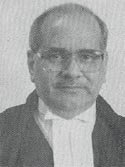
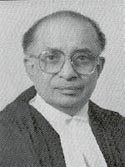
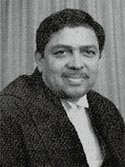
S.P.Kurdukar, K.T. Thomas, N.Santosh Hedge
JUDGMENT:
S.P.KURDUKAR, J.
The three appellants, namely, Paparambaka Rosamma
(A-1), Baduru Sashi @ Sashikala (A-2) and Baduru
Venkatesarlu (A-3) have filed this criminal appeal after
obtaining the leave of this Court, challenging the legality
and correctness of the judgment and order of conviction for
offences punishable under Sections 498-A, 302 and 302/114
IPC passed by the Andhra Pradesh High Court, Hyderabad.
Originally A-1 to A-3 and acquitted accused A-4 were put up
for trial for the aforesaid offences. The appellants, the
acquitted accused and Venkata Ramana (since deceased) are
closely related to each other. A-1 is the maternal grand
mother of Venkata Ramana, A-2 is the daughter of A-1 and is
married to A-3. A-4 is the son of A-1. A-4 was married to
Venkata Ramana and he happened to be the real maternal uncle
of Venkata Ramana. A-3 is also the son of sister of A-1.
2. The marriage between A-4 and Smt. Venkata Ramana
was solemnised some time in 1990 and since then she was
residing at her matrimonial home. A-4 was working as a
coolie in a steel company and had constructed a thatched hut
at Tenali. The hut of parents of Smt. Venkata Ramana was
situated at a short distance from the hut of A-4 at Tenali.
A-2 and A-3 after their marriage had come to stay with A-1.
It was not liked by Smt. Venkata Ramana and, therefore, she
was instigating A-4 to live separately or A-2 and A-3 should
be asked to leave the hut. It is the prosecution case that
A-2 and A-3 were residing in a separate portion in the same
hut. It is then alleged by the prosecution that there used
to be frequent quarrels between Smt. Venkata Ramana on one
side and A-1 to A-4 on the other as Smt. Venkata Ramana was
insisting that she should stay along with her husband
separately. A-1 to A-4 were not prepared to concede to her
demand and as a result thereof, they meted out ill treatment
to Smt. Venkata Ramana. It has come on record that Smt.
Venkata Ramana on the earlier occasion tried to commit
suicide, but, however, failed in her attempt.
3. The incident in question which gave rise to the
present prosecution occurred on March 4, 1994 at about 12.30
noon. It is alleged by the prosecution that when Smt.
Venkata Ramana was in her hut, A-2 and A-3 came there and
picked up a quarrel with Smt. Venkata Ramana. A-2 and A-3
http://JUDIS.NIC.IN SUPREME COURT OF INDIA Page 2 of 6
then at the instigation of A-1, poured kerosene on Smt.
Venkata Ramana and thereafter they threw a lighted
matchstick on her. Within a short time, the clothes of Smt.
Venkata Ramana caught fire. A-3 then poured the water and
tried to extinguish the fire. The injured was then taken to
the government hospital at Tenali where Dr. K. Vishnupriya
Devi ( PW 10) examined her and found to be in a serious
condition. She sent a requisition to K.Lakshmana Rao (PW
13), the Addl. Munsiff Magistrate, Tenali, for recording
the dying declaration. K.Lakshamana Rao (PW 13) reached the
hospital at about 2.30 p.m. and recorded the dying
declaration (Ex.P-14). The injured was then shifted to
Guntur Medical College, Guntur, for further treatment. The
injured succumbed to her injuries on March 9, 1994 in the
hospital. Vaitheru Sambaiah (PW 2)-the father of Smt.
Venkata Ramana, lodged the first information report at
Tenali police station as regards the incident and on the
basis thereof, a crime came to be registered for the
offences punishable under Sections 498-A, 307 read with
Section 34 IPC. After receipt of the information about the
death of injured, offence punishable under Section 307 IPC
read with Section 34 IPC came to be altered to one under
Section 302/114 and 498-A IPC. After completing the
investigation, charge sheet came to be filed against all the
four accused for the offences punishable under Sections
498-A, 302, 302/114 IPC. The trial court framed the charges
against all the four accused, but they denied all these
charges. According to them, they are innocent and have been
falsely implicated in the present crime.
4. All the close relatives of Smt. Venkata Ramana,
who could have deposed to the ill-treatment meted out to her
did not support the prosecution and turned hostile. This
list included the parents, brother and other relatives of
Smt. Venkata Ramana. Consequently, the trial court as well
as the High Court could not rely upon the evidence of these
witnesses and had to consider and rely upon the dying
declaration (Ex.P- 14) and the evidence in that behalf. The
dying declaration of Smt. Venkata Ramana is at Ex. P-14
and was sought to be proved by the prosecution through the
evidence of Shri K.Lakshamana Rao (PW 13), the then Addl.
Munsiff Magistrate, Tenali, and Dr. K.Vishnupriya Devi (PW
10). It is, therefore, admitted position that the judgments
and order of convictions passed by the courts below is
solely based upon the dying declaration Ex.P-14. We are,
therefore, required to consider carefully the dying
declaration Ex.P-14 and the evidence of two witnesses,
namely, K.Lakshamana Rao (PW 13) and Dr. K.Vishnupriya Devi
( PW 10 ).
5. We are conscious of the fact that the trial court
and the High Court accepted the evidence of Dr.
K.Lakshamana Rao (PW 13) and Dr. K.Vishnupriya Devi (PW 10)
and held that the dying declaration Ex.P-14 is a true and
voluntary and was made by the injured while in a fit state
of mind and free from any tutoring or prompting.
6. The original dying declaration of Smt. Venkata
Ramana was recorded in vernacular (Telugu) and during the
course of hearing, an admitted translation thereof was
produced before us. Since the conviction and sentence is
solely based upon the dying declaration, we deem it proper
to reproduce the same:- DYING DECLARATION
Declaration of Paparabaka Venkata Ramana, W/o Srinu,
http://JUDIS.NIC.IN SUPREME COURT OF INDIA Page 3 of 6
Ravinder Nagar, resident of Tenali village, Taluk-District
recorded by me in the presence of Duty Doctor Sri Dr.
Vishnu Priya of Government Hospital, Tenali.
Received a requisition to record a dying declaration
from the Medical Officer, Government Hospital, Tenali at
1.57 p.m. and at once I proceeded to the Hospital and
reached the same at 2.20 p.m. on 04.03.1994.
I send away all persons from the patients room except
the Medical attendants with a view to secure privacy. I put
the following single questions to the declarant to elicit
answers from him with a view to know her state of mind.
Q: What is your name? A: Ramana-Venkata Ramana.
Q: What is your Fathers/Husbands name? A: Srinu. Q:
Which village do you belong to? A: Tenali. Q: Do you
know where you are? A: I am in the hospital. Q: Do you
know that I am the Magistrate? If not then un derstand that
I am the Magistrate? A: I was told so. I came to know.
Q: Can you make the statement? A: Yes, I will tell.
On the basis of answers elicited from the declarant to
the above questions I am satisfied that she is in a fit
disposing state of mind to make a declaration.
Q: What happened to you? A: Venkateswarlu Boduru
and Boduru Sashi are wife and husband. Parambaka Rosamma my
grand mother poured kerosene on me. I also poured kerosene
on myself. They have burnt me with a lighted matchstick.
They poured water.
Q: When, where and what happened-give details. A:
Around 12.30 p.m. in the afternoon, Venkateswarlu and
Shashi came into my house with an electric tester used in
electric repairs, threatening to stab. Venkateswarlu came
and poked me on the chest. Shashi beat me. Both beat me.
Rosamma abused me and told me to leave the house. Everyday
she used to get into same sort of quarrel. She also made
others to beat me. Venkateswarlu is my grandmothers
sisters son. Shashi is his wife. They live in our house.
Both Shashi and Venkateswarlu poured kerosene on me.
They threw lighted matchstick on me. My grandmother
instigated them to burn me. Everything was done at her
instance. Kerosene was poured on me and when lit, I went in
flames. Venkateswarlu poured water. My husband was not
there. He had gone to work in the steel company. They say
that I wanted to live separately. Due to this, my husband
beat me yesterday afternoon. All of them did not want us to
live separately. I have not taken any food for days. My
grandmother did not come to my rescue. I was married in
1990 when cyclone had come. I have two children. Both are
daughters. My husband is my maternal uncle. My grandmother
disliked me. Since the day of our marriage Venkateswarlu
and his wife are living with us.
Q: Do you have anything further to add? A: Nothing.
My children were not present in the house, they had gone
out. There is nothing more. They used to instigate my
husband to beat me. Venkateswarlu is engaged in putting up
tents.
Q: Would you like to put thumb impression or
signatures? A: I will put thumb impression.
http://JUDIS.NIC.IN SUPREME COURT OF INDIA Page 4 of 6
Certified that the patient is in consciousness state
and has sound of mind to give her declaration. She@@
JJJJJJJJJJJJJJJJJJJJJJJJJJJJJJJJJJJJJJJJJJJJJJJJJJJJJJJ
understood about the contents of her dying declaration given@@
JJJJJJJJJJ
before me.
Certified that the contents of dying declaration of
the deponent have been read over and explained to her in
Telugu and she admitted that the contents of dying
declaration are to be true and correct.
Certified that except myself and duty Doctor no others
were present at the patient-deponent at the time of
recording this statement from her.
Closed the proceedings at 2.55 p.m. on 04.03.1994.
Sd/- K.Lakshmana Rao, 04.03.1994.
Patient is conscious, while recording the statement.
Sd/-
Priya, K.Vishnu 04.03.1994 at 3.00 p.m.@@
IIIIIIII
7. After going through the evidence of K.Lakshamana
Rao (PW 13) and Dr. K.Vishnupriya Devi (PW 10) and on very
careful perusal of the said document, there are some
inherent defects and improbabilities which could not
persuade us to accept the said dying declaration as a
truthful and voluntary for the reasons set out hereinafter.
8. The main question is as to whether she was
conscious and was in a fit mental condition to make a
voluntary disclosure of the incident. Dr. K.Vishnupriya
Devi (PW 10) who was attached to Tenali Government Hospital
examined Smt. Venkata Ramana on 4th March, 1994 at 1.30
p.m. She then sent a requisition (Ex.P9) to the Magistrate
Shri K.Lakshamana Rao (PW 13) to record the dying
declaration of the injured. All that Dr. K.Vishnupriya
Devi has stated is that injured was conscious but she has
not deposed that the injured was in a fit state of mind to
make a statement. It has come on record that Smt. Venkata
Ramana had sustained 90% burn injuries. K.Lakshamana Rao
(PW 13) who recorded the dying declaration has made a note
in Ex.P-14-the dying declaration after putting some
preliminary questions to the injured and it reads as under:
- On the basis of answers elicited from the declarant to
the above questions I am satisfied that she is in a fit
disposing state of mind to make a declaration.
Thereafter, the learned Magistrate proceeded to record
the dying declaration. At the end, Dr. K.Vishnupriya Devi
(PW 10) has appended a certificate saying patient is
conscious while recording the statement. The question that
needs to be considered is as to whether the Magistrate could
have come to a definite conclusion that the injured was in a
fit state of mind to make a declaration in the absence of a
certificate by the doctor certifying the state of mind that
existed before recording the dying declaration? In our
http://JUDIS.NIC.IN SUPREME COURT OF INDIA Page 5 of 6
opinion, in the absence of medical certification that the
injured was in a fit state of mind at the time of making the
declaration, it would be very much risky to accept the
subjective satisfaction of a Magistrate who opined that the
injured was in a fit state of mind at the time of making a
declaration. It is a case of circumstantial evidence and
only circumstance relied upon by the prosecution is dying
declaration.
9. It is true that the medical officer Dr.
K.Vishnupriya Devi (PW 10) at the end of the dying
declaration had certified patient is conscious while
recording the statement. It has come on record that the
injured Smt. Venkata Ramana had sustained extensive burn
injuries on her person. Dr. P.Koteswara Rao (PW 9) who
performed the post mortem stated that injured had sustained
90% burn injuries. In this case as stated earlier, the
prosecution case solely rested on the dying declaration. It
was, therefore, necessary for the prosecution to prove the
dying declaration being genuine, true and free from all
doubts and it was recorded when the injured was in a fit
state of mind. In our opinion, the certificate appended to
the dying declaration at the end by Dr. Smt. K.Vishnupriya
Devi (PW 10) did not comply with the requirement inasmuch as
she has failed to certify that the injured was in a fit
state of mind at the time of recording the dying
declaration. The certificate of the said expert at the end
only says that patient is conscious while recording the
statement. In view of these material omissions, it would
not be safe to accept the dying declaration (Ex.P-14) as
true and genuine and was made when the injured was in a fit
state of mind. From the judgments of the courts below, it
appears that this aspect was not kept in mind and
resultantly erred in accepting the said dying declaration
(Ex.P-14) as a true, genuine and was made when the injured
was in a fit state of mind. In medical science two stages
namely conscious and a fit state of mind are distinct and
are not synonymous. One may be conscious but not
necessarily in a fit state of mind. This distinction was
overlooked by the courts below.
10. Apart from these serious lacunas, mentioned
herein above, we find some more infirmities in the dying
declaration (Ex.P-14). In the dying declaration, Smt.
Venkata Ramana had stated that A-1 to A-3 poured the
kerosene on her and thereafter she also poured kerosene on
herself. Then she stated they have burnt me with a lighted
match stick. It is difficult to understand as to why she
poured the kerosene on herself. It has also come on the
record that on the earlier occasion, Smt. Venkata Ramana
(since deceased) had tried to commit suicide. In her dying
declaration (Ex.P-14) she had stated I had not taken food
for days. These circumstances again are pointer to the fact
that Smt. Venkata Ramana (since deceased) was disappointed
and frustrated in her married life. It is in these
circumstances, we find it difficult to accept the dying
declaration wherein all the three appellants alleged to have
committed the crime. It is difficult to understand as to
why three persons poured the kerosene and again all the
three persons burnt her with a lighted matchstick. The
above statements in the dying declaration raises a
reasonable doubt as to whether she was in a fit disposing
state of mind at the time when the dying declaration was
recorded.
http://JUDIS.NIC.IN SUPREME COURT OF INDIA Page 6 of 6
11. The incident in question occurred in a thatched
hut. There is nothing to indicate in the dying declaration
that Smt. Venkata Ramana (since deceased) was held by any
of these appellants and/or she was prevented from running
out of the hut or prevented from raising the shouts.
Several huts were situated adjacent to each other. There
was sufficient opportunity and time to the injured to escape
from the hut and also to raise shrieks. This we are saying
so after taking into account the sequence and the time
factor, which has been narrated, in the dying declaration.
The conduct of A-3 is also relevant as he tried to
extinguish the fire by putting water.
12. It is unfortunate for the prosecution that the
parents of the deceased as well as other close relatives
have turned hostile. A-1 is although a mother in law, also
happened to be the real grand mother of the victim. A-2 is
the daughter of A-1 and also happened to be sister of mother
of the deceased. As stated earlier, there were number of
huts
around the hut in question but nobody has come forward
to support the prosecution. There is also no evidence on
record to indicate that Smt. Venkata Ramana (since
deceased) was meted out any ill treatment or there was any
dowry demand. The only grievance made in the dying
declaration was that she wanted to live separately but her
husband was not prepared and on that score, the husband
(acquitted) had beaten her in the after-noon on the previous
day. It was then stated therein that her grand mother
disliked her. These statements in the dying declaration, in
our opinion, are not sufficient to substantiate the
prosecution case that Smt. Venkata Ramana (since deceased)
was meted out with ill treatment, an offence punishable
under Section 498-A of the Indian Penal Code.
13. We are thus unable to share the view and
reasoning given by the courts below. Consequently, we are
unable to uphold the conviction and sentence inflicted upon
A-1, A-2 and A-3 by the courts below. The conviction and
sentence of each of A-1, A-2 and A-3 is accordingly quashed
and set aside.
14. In the result, the appeal is allowed. The order
of conviction and sentence dated 17th June, 1996 passed by
the Second Addl. Sessions Judge, Guntur and on appeal
confirmed by the High Court of Andhra Pradesh vide its
judgment and order 26th March, 1997 are quashed and set
aside and the appellants (A-1 to A-3) are acquitted of all
the charges. The appellants be set at liberty forth with,
if not required in any other case. It appears that the
first appellant was ordered to be released on bail by this
Court vide order dated 18th January, 1999. If she is
released on bail, her bailbond to stand cancelled.
The Supreme Court's pronouncement in **Paparambaka Rosamma v. State of Andhra Pradesh** stands as a pivotal judgment concerning **Dying Declaration Admissibility** in Indian jurisprudence. This significant ruling, delivered on September 13, 1999, carefully scrutinizes the reliability of dying declarations when they form the sole basis of conviction. This and numerous other vital legal precedents are meticulously documented on CaseOn, serving as an indispensable resource for legal professionals and students alike.
The case involves an appeal filed by Paparambaka Rosamma (A1), Baduru Sashi @ Sashikala (A2), and Baduru Venkatesarlu (A3) challenging their conviction for offences under Sections 498-A, 302, and 302/114 IPC. The High Court of Andhra Pradesh had upheld their conviction, leading to this appeal.
Smt. Venkata Ramana married A4 in 1990. The dispute arose when A2 (daughter of A1, married to A3) and A3 (son of A1's sister) came to reside with A1, the maternal grandmother of the victim. Venkata Ramana disliked this arrangement and frequently instigated A4 to live separately or for A2 and A3 to leave the hut. The prosecution alleged that this led to frequent quarrels and ill-treatment of Venkata Ramana by A1 to A4. It was also noted that Venkata Ramana had previously attempted suicide, albeit unsuccessfully.
On March 4, 1994, around 12:30 PM, the incident occurred. A2 and A3 allegedly initiated a quarrel with Venkata Ramana in her hut. The prosecution claimed that A1 instigated them, leading to A2 and A3 pouring kerosene on Venkata Ramana, after which they threw a lighted matchstick on her. A3, however, attempted to extinguish the fire by pouring water. The severely injured Venkata Ramana was admitted to the government hospital at Tenali, where Dr. K. Vishnupriya Devi (PW10) found her in a serious condition. A requisition was sent to K. Lakshmana Rao (PW13), the Addl. Munsiff Magistrate, who recorded her dying declaration (Ex.P-14). Venkata Ramana was later shifted to Guntur Medical College but succumbed to her injuries on March 9, 1994. Following an FIR by her father (PW2), charges under Sections 498-A, 302, and 302/114 IPC were framed against the accused.
The central issue before the Supreme Court was whether the dying declaration (Ex.P-14) of Smt. Venkata Ramana was reliable, voluntary, and made while she was in a 'fit disposing state of mind' to form the sole basis for conviction, particularly given the nature of her injuries and the medical certification.
Under Section 32(1) of the Indian Evidence Act, 1872, a dying declaration made by a person as to the cause of their death, or as to any of the circumstances of the transaction which resulted in their death, is admissible in evidence. The courts have consistently held that a dying declaration can form the sole basis of conviction if it inspires full confidence and is free from any form of tutoring, prompting, or imagination. Crucially, the declarant must be in a 'fit state of mind' at the time of making the declaration. There is a clear distinction between merely being 'conscious' and being in a 'fit disposing state of mind.' While a person may be conscious, severe injuries could impair their mental capacity to give a coherent and truthful statement. Medical certification, therefore, plays a vital role in affirming the declarant's mental fitness.
Both the trial court and the High Court accepted the dying declaration (Ex.P-14) as true, voluntary, and made by the injured while in a fit state of mind. Consequently, the conviction of A1, A2, and A3 was based solely on this declaration, as all close relatives, including the victim's parents and brother, had turned hostile and did not support the prosecution's case of ill-treatment.
The Supreme Court undertook a meticulous review of the evidence, highlighting several significant flaws in the lower courts' reliance on the dying declaration:
Analyzing these specific rulings can be intricate, but CaseOn.in offers 2-minute audio briefs that help legal professionals quickly grasp the essence and implications of such critical judgments, facilitating efficient legal research and understanding.
Considering these inherent defects, improbabilities, and the lack of a clear medical certificate regarding the victim's 'fit disposing state of mind,' the Supreme Court found it unsafe to accept the dying declaration as a truthful and voluntary statement. The Court concluded that the cumulative circumstances raised a reasonable doubt about whether the victim was indeed in a 'fit disposing state of mind' when the declaration was recorded.
In light of the significant lacunas and infirmities found in the dying declaration (Ex.P-14), the Supreme Court held that the conviction and sentence passed by the lower courts could not be sustained. Consequently, the appeals of Paparambaka Rosamma (A1), Baduru Sashi @ Sashikala (A2), and Baduru Venkatesarlu (A3) were allowed. Their convictions and sentences were quashed, and they were acquitted of all charges.
The case of Paparambaka Rosamma v. State of Andhra Pradesh serves as a cornerstone judgment for several reasons:
This judgment is a vital reference for legal practitioners and students to understand the nuanced approach required in evaluating dying declarations and the standards of proof in criminal law.
All information provided in this article is for informational purposes only and does not constitute legal advice. While efforts have been made to ensure accuracy, readers should consult a qualified legal professional for advice pertaining to their specific circumstances.

Legal Notes
Add a Note....