
As per the case facts, various appeals were filed against decisions related to the establishment of pharmacy colleges. The Pharmacy Council of India had issued executive resolutions imposing a moratorium ...

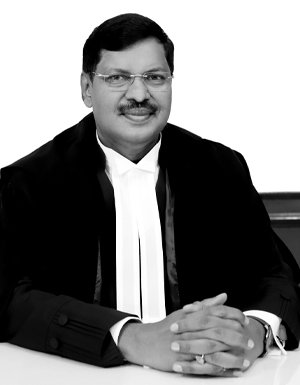
No Acts & Articles mentioned in this case
REPORTABLE
IN THE SUPREME COURT OF INDIA
CIVIL APPELLATE/ORIGINAL JURISDICTION
CIVIL APPEAL NO. 6681 OF 2022
[Arising out of Special Leave Petition (Civil) No.19671 of
2021]
PHARMACY COUNCIL OF INDIA ...APPELLANT(S)
VERSUS
RAJEEV COLLEGE OF PHARMACY
AND ORS. ...RESPONDENT(S)
WITH
CIVIL APPEAL NOS. 66826683 OF 2022
[Arising out of Special Leave Petition (Civil) Nos.13871388
of 2022]
WRIT PETITION (CIVIL) NO.564 OF 2022
WRIT PETITION (CIVIL) NO.565 OF 2022
CIVIL APPEAL NOS. 66846685 OF 2022
[Arising out of Special Leave Petition (Civil) Nos.14295
14296 of 2021]
CIVIL APPEAL NO. 6686 OF 2022
[Arising out of Special Leave Petition (Civil) No.1050 of
2022]
1
CIVIL APPEAL NO. 6687 OF 2022
[Arising out of Special Leave Petition (Civil) No.1887 of
2022]
CIVIL APPEAL NO. 6688 OF 2022
[Arising out of Special Leave Petition (Civil) No.2570 of
2022]
CIVIL APPEAL NO. 6690 OF 2022
[Arising out of Special Leave Petition (Civil) No.4862 of
2022]
CIVIL APPEAL NO. 6689 OF 2022
[Arising out of Special Leave Petition (Civil) No.5673 of
2022]
WRIT PETITION (CIVIL) NO.406 OF 2022
CIVIL APPEAL NO. 6691 OF 2022
[Arising out of Special Leave Petition (Civil) No.13792 of
2022]
WRIT PETITION (CIVIL) NO.563 OF 2022
JUDGMENT
B.R. GAVAI, J.
1.Leave granted in all the Special Leave Petitions.
2
2.The appeals filed by the Pharmacy Council of India
(hereinafter referred to as “PCI”) mainly challenge the (i)
judgments dated 9
th
November 2021, passed by the Division
Bench of the High Court of Karnataka at Bengaluru in Writ
Appeal No. 746748 of 2020; (ii) judgment dated 7
th
March
2022, passed by the learned Single Judge of the High Court of
Delhi at New Delhi in Writ Petition (Civil) No.175 of 2021; and
(iii) judgment dated 22
nd
April 2022, passed by the learned
Single Judge of the High Court of Chhattisgarh at Bilaspur in
Writ Petition (Civil) No.3766 of 2021. Several interim orders
passed by these Courts during the pendency of these matters
are also subject to challenge in some of the appeals. They are
also being disposed of by the present judgment.
3.By the said judgments and orders, the aforesaid three
High Courts of Karnataka, Delhi and Chhattisgarh had allowed
the writ petitions filed by the respondentsinstitutions, which
were, in turn, filed challenging the
Resolutions/communications of the appellantPCI dated 17
th
3
July 2019 and 9
th
September 2019 and dismissed the Writ
Appeals filed by the PCI. Vide Resolution/Communication
dated 17
th
July 2019, the appellantPCI had resolved to put a
moratorium on the opening of new pharmacy colleges for
running Diploma as well as Degree courses in pharmacy for a
period of five years beginning from the Academic Year 2020
2021. Vide Resolution/communication dated 9
th
September
2019, the aforesaid moratorium was modified, thereby
exempting its application to (i) Government Institutions; (ii)
Institutions in North Eastern region; and (iii) States/Union
Territories where the number of institutions offering D. Pharm
and B. Pharm courses (both combined) is less than 50.
Additionally, vide the said Resolution/communication dated 9
th
September 2019, the institutions which had applied for opening
colleges offering D.Pharm and/or B. Pharm courses for 2019
2020 academic session were allowed to apply for conducting
diploma as well as degree courses in Academic Session 2020
2021 and existing approved pharmacy institutions were allowed
4
to increase the intake capacity as per PCI norms and/or to
start additional pharmacy course(s).
4.The writ petitions filed by the Institutions before the three
High Courts challenged the validity of the said moratorium and
also prayed for a direction to be issued to the appellantPCI to
grant approval for opening new pharmacy institutions
imparting pharmacy courses for the ensuing academic year of
20222023 on the basis of inspection conducted by the PCI in
February 2020 and to not insist on fresh applications from the
institutions pursuant to the PCI’s circular of 3
rd
July 2022,
which was issued in compliance of the interim order of this
Court dated 31
st
May 2022 passed in Special Leave Petition
(Civil) No.4862 of 2022.
5.We have heard Shri Maninder Singh, learned Senior
Counsel appearing on behalf of the appellantPCI and Shri
Rakesh Dwivedi and Shri Vinay Navare, learned Senior
Counsel, Shri Amit Pai, Shri Sanjay Sharawat, Shri Siddharth
5
R. Gupta, and Shri Shivam Singh, learned counsel appearing
on behalf of their respective respondent(s).
6.Shri Maninder Singh, learned Senior Counsel would
submit that the High Courts have totally erred in interfering
with the Resolution dated 17
th
July 2019 passed by the
appellantPCI. He submits that the perusal of the preamble of
the Pharmacy Act, 1948 (hereinafter referred to as “the said
Act”) read with Sections 3, 10 and 12 thereof would clearly
reveal that the appellantPCI has a power to regulate in the
field of pharmacy education. He submits that the power to
regulate would also include a power to put a moratorium for a
certain period. The learned Senior Counsel submits that
perusal of Section 3 of the said Act would reveal that the
Central Council of the PCI consists of experts from various
fields including teachers in the subject concerning pharmacy,
elected by the University Grants Commission (“UGC” for short),
persons possessing a degree or diploma in and practicing
pharmacy or pharmaceutical chemistry, nominated by the
6
Central Government; a representative of the Medical Council of
India; representatives of States elected from the members of the
State Council, so also a member to represent each State
nominated by the State Government, who shall be a registered
pharmacist. He, therefore, submits that the Body, which
consists of so many experts from various fields, is a Body which
is competent to take decisions in the best interests of the
pharmacy education.
7.Shri Maninder Singh, learned Senior Counsel submits
that the decision was taken by the appellantPCI after a sub
committee of experts was appointed to study the issue. It is
submitted that after the subcommittee recommended
moratorium in view of mushrooming growth of pharmacy
colleges, the Central Council of the appellantPCI, after taking
into consideration all these aspects, recommended a
moratorium. He submits that this was done in order to prevent
a situation which would lead to uncontrolled growth of
pharmacy colleges, resultantly producing many pharmacists,
7
who will be without any employment. It is submitted that these
factors have not been taken into consideration by the High
Courts in the impugned judgments.
8.Shri Maninder Singh further submitted that the perusal of
the Communication of the Government of India, Ministry of
Health & Family Welfare dated 22
nd
April 2022 would reveal
that the Central Government was consulted as required under
Section 10 of the said Act.
9.Shri Maninder Singh further submitted that the power to
regulate would also include a power to prohibit. He relies on
the judgments of this Court in the case of Madhya Bharat
Cotton Association Ltd. vs. Union of India and another
1
and in the case of Star India Private Limited vs.
Department of Industrial Policy and Promotion and
others
2
in this regard.
1 AIR 1954 SC 634
2 (2019) 2 SCC 104
8
10.Shri Maninder Singh would further submit that a Division
Bench of the Bombay High Court, Aurangabad Bench, in a
batch of writ petitions being Writ Petition No. 4919 of 2020
(Sayali Charitable Trust’s College of Pharmacy vs . The
Pharmacy Council of India, decided on 6
th
November 2020)
along with connected matters has upheld the moratorium. He
submits that, however, the said judgment of the Bombay High
Court has not been considered by all the three High Courts of
Karnataka, Delhi and Chhattisgarh.
11.Shri Maninder Singh submits that, having regard to the
scheme of the said Act and the purpose sought to be achieved
therein, it will have to be held that it is not only the jurisdiction
of the PCI, but its duty and responsibility to impose a
moratorium so as to prevent mushrooming growth of pharmacy
colleges in the country. Learned Senior Counsel further
submits that the power to impose such regulations has been
upheld by this Court in the case of Jawaharlal Nehru
Technological University Registrar vs. Sangam Laxmi Bai
9
Vidyapeet and others
3
. He submits that the facts in the
present case and the facts in the case of Jawaharlal Nehru
Technological University Registrar (supra) are totally
identical. It is, therefore, submitted that the view taken by all
the three High Courts is liable to be set aside and it is required
to be held that the moratorium imposed, being in the larger
public interest, is legal and valid.
12.Shri Maninder Singh relies on the judgment of this Court
in the case of Jigya Yadav (Minor) (Through
Guardian/Father Hari Singh) vs. Central Board of
Secondary Education and others
4
in support of his
submission that the moratorium could also be imposed by a
resolution of the appellantPCI and it would be a law as per
Article 13 of the Constitution of India.
13.Per contra, Shri Rakesh Dwivedi, learned Senior Counsel,
submitted that it is the fundamental right of the respondent –
3 (2019) 17 SCC 729
4 (2021) 7 SCC 535
10
Institutions to establish educational institutions under Article
19(1)(g) of the Constitution of India. He relies on the judgments
of this Court in the cases of T.M.A. Pai Foundation and
others vs. State of Karnataka and others
5
, Islamic
Academy of Education and another vs. State of Karnataka
and others
6
, and P.A. Inamdar and others vs. State of
Maharashtra and others
7
in that regard.
14.Shri Rakesh Dwivedi submits that there is no doubt that
reasonable restrictions could be imposed on the fundamental
rights. However, the burden lies on the State to establish that
the restrictions so imposed are reasonable and have a nexus
with the object to be achieved. He submits that the appellant
PCI has totally failed to discharge the said burden. It is
submitted that the restriction, which is in the nature of
absolute prohibition, is totally unreasonable, arbitrary and
5 (2002) 8 SCC 481 [Para 18 to 25]
6 (2003) 6 SCC 697 [Para 120]
7 (2005) 6 SCC 537 [Para 92]
11
discriminatory. It is submitted that it has no nexus with the
object to be achieved.
15.Shri Rakesh Dwivedi further submits that the impugned
communications of the appellantPCI are arbitrary. To buttress
his submission that the impugned communications of the
appellantPCI are arbitrary, Shri Rakesh Dwivedi submitted
that the appellantPCI itself has exempted Government Colleges
from the moratorium imposed, which has in effect added about
34000 seats in the field of pharmacy. He further submits that
the impugned communication exempts the North Eastern
region from its operation. As such, the power has been
exercised in a manifestly arbitrary manner. It is submitted that
the only justification given is that if there is no moratorium, it
will lead to unemployment. He submits that if such a ground is
to be accepted, then all the colleges imparting education in
different areas like Medicine, Law, Engineering, Technology,
etc. will have to be banned.
12
16.Shri Rakesh Dwivedi further submitted that, unless the
power to ban is specifically provided in the statute, such a
power cannot be exercised. In any case, he submitted that if
such a power was to be exercised, the same could have been
exercised only by framing a Regulation in accordance with
Section 10 of the said Act. He further submitted that for such
a Regulation to be valid, the following four factors are required
to be complied with:
(i)The copies of the draft Regulations should be
furnished by the Central Council to all the State
Governments and before the Central Council submits
the Education Regulations to the Central
Government for approval, the comments of the State
Governments are to be invited and considered;
(ii)That such Regulations must have approval of the
Central Government;
13
(iii)In view of Section 10(4), such Regulations will have
to be published in the Official Gazette;
(iv)In view of subsection (4) of Section 18 of the said
Act, such Regulations have to be laid before each
House of Parliament.
17.Shri Vinay Navare, learned Senior Counsel submitted that
the perusal of Section 3 of the said Act would reveal that the
Central Council of the appellantPCI consists essentially of
persons who are connected with the practice of Pharmacy. He
submits that the moratorium is imposed with a mala fide
intention by those persons who are already connected with the
profession of Pharmacy so as to create a monopoly in the field.
He submits that if the composition of the Central Council of the
appellantPCI under the said Act is compared with the
composition of the Council under the All India Council for
Technical Education Act, 1987 (hereinafter referred to as
“AICTE Act”), it would reveal that the Council under the AICTE
14
Act has a wider spectrum. It also consists of the persons not
connected with Technical Education.
18.Shri Navare further submitted that the powers under
Section 10 of the AICTE Act are much wider than the powers of
the Central Council under Section 10 of the said Act.
19.Shri Navare further submitted that the Resolution which
is sent to the State Government is only for the purpose of
intimation and, therefore, there is no sufficient compliance of
requirement under Section 10(3) of the said Act.
20.Relying on the judgment of this Court in the case of V.T.
Khanzode and others vs. Reserve Bank of India and
another
8
, Shri Navare submits that since the appellantPCI is a
statutory body, its powers would be circumscribed by the
statutory provisions. He submitted that since the power to
impose prohibition is not provided under the said Act, such an
exercise is wholly impermissible in law.
8 (1982) 2 SCC 7
15
21.He further submits that there can be no restrictions on
fundamental rights except by a valid law enacted by the
legislature. In this respect, he relies on the judgment of this
Court in the case of Modern School vs. Union of India and
others
9
.
22.Shri Navare further submits that the words used in sub
section (1) of Section 10 of the said Act are “subject to the
approval of the Central Government”. He, therefore, submits
that unless there is an approval of the Central Government
with regard to the moratorium, the same would not be valid in
law. He relies on the judgments of this Court in the cases of
Padubidri Damodar Shenoy vs. Indian Airlines Limited
and another
10
, and Vijay S. Sathaye vs. Indian Airlines
Limited and others
11
in support of this proposition.
23.Shri Amit Pai, learned counsel also submitted that the
impugned communications are totally beyond the powers of the
9 (2004) 5 SCC 583
10 (2009) 10 SCC 514
11 (2013) 10 SCC 253
16
appellantPCI and, as such, no interference is warranted with
the impugned judgments and orders of the High Courts.
24.Shri Sanjay Sharawat, learned counsel submitted that the
decision to impose moratorium has been taken by the
appellantPCI without conducting any survey. No material is
placed on record in support of its decision. He submits that
the decision to impose moratorium is wholly arbitrary. He
further submits that the appellantPCI has acted in an
arbitrary manner. On one hand, it has imposed ban and on
the other hand it has granted permission to about 2500
institutions to start pharmacy courses. As such, it has acted in
a totally arbitrary and discriminatory manner.
25.Shri Siddharth Gupta, learned counsel, submitted that
the impugned communications are totally discriminatory in
nature and tend to create a monopoly in respect of the existing
colleges inasmuch as they have been permitted to expand the
number of existing seats. He further submits that the cap of 50
colleges imposed for all the States is totally arbitrary. He
17
submits that the cap for a highly populated State like Uttar
Pradesh and for a small State like Goa is the same. He submits
that in the State of Chhattisgarh, 7 colleges have been granted
permission on the ground that they were in the pipeline. As
such, there is no consistency in the policy of the appellantPCI.
He relies on the judgments of this Court in the case of Index
Medical College, Hospital and Research Centre vs. State of
Madhya Pradesh and others
12
in support of his submission.
26.Relying on the judgment of this Court in the case of
Modern Dental College and Research Centre and others vs.
State of Madhya Pradesh and others
13
, he submits that
unless the impugned restriction satisfies the test of
proportionality of restrictions, the same would not be tenable in
law. He submits that it will be necessary to find out as to
whether the limitation on constitutional rights is for a purpose
which is reasonable and necessary in a democratic society. He
submits that applying the said test, the impugned
12 2021 SCC OnLine SC 318
13 (2016) 7 SCC 353
18
communication which imposed a total ban for a period of five
years does not stand the proportionality test.
27.Shri Shivam Singh, learned counsel submitted that the
decisionmaking process is totally vitiated. He submits that
taking into consideration the pandemic situation, the
Authorities ought to have considered that there is a need to
have a larger number of Pharmacy colleges. However, this
aspect has been totally ignored by the appellantPCI.
28.All the three High Courts, i.e., Karnataka, Delhi and
Chhattisgarh, while allowing the writ petitions filed by the
respondentinstitutions and quashing and setting aside the
Resolutions/communications of the Central Council of the
appellantPCI, have, in a nutshell, held thus:
(i)That the right to establish educational institutions is
a fundamental right guaranteed under Article 19(1)
(g) of the Constitution of India;
19
(ii)That there can be reasonable restrictions on such a
right. However, such a restriction can be imposed
only by law enacted by the competent legislature;
(iii)The Resolution/communication dated 17
th
July
2019, vide which the moratorium was imposed is an
executive instruction and could not be construed as
a law and, therefore, the moratorium imposed by an
executive instruction is not sustainable in law.
29.Apart from that, the learned Single Judge of the
Karnataka High Court has further found that the petitioners
before the High Court were entitled to establish colleges on the
principles of promissory estoppel and legitimate expectation.
The learned Single Judge of the Karnataka High Court as well
as the learned Single Judge of the Delhi High Court have also
held that the Resolution of the appellantPCI was violative of
Article 14 of the Constitution of India inasmuch as the
government institutions and the institutions in the North
Eastern region were exempted from the applicability of the
20
moratorium. It was found that such an act was discriminatory.
It was further found that the cap of 50 Pharma institutes per
State was also arbitrary inasmuch as the appellantPCI does
not take into consideration the fact that the population of the
States varies from State to State and, as such, there could not
have been a uniform formula of capping 50 pharmacy institutes
for every State.
30.Undisputedly, the Central Council of the appellantPCI
vide its Resolution/communication dated 17
th
July 2019 has
resolved as under:
“RESOLUTION
Taking into consideration the availability
of sufficient qualified pharmacist
workforce, the House unanimously
resolved to put a moratorium on the
opening of new pharmacy colleges for
running Diploma as well as Degree
course in pharmacy for a period of five
years beginning from the academic year
20202021. This moratorium shall not
be applicable in the North Eastern region
of the country where there is a shortage
of pharmacy colleges.”
21
31.It can thus be seen that vide the said Resolution, the
Central Council resolved to put a moratorium on the opening of
new pharmacy colleges for running Diploma as well as Degree
course in pharmacy for a period of five years beginning from the
academic year 20202021. The said Resolution dated 17
th
July
2019 was modified in the 107
th
meeting of the Central Council
of the appellantPCI held on 5
th
and 6
th
August 2019. The
relevant part of the modified Resolution reads thus:
“1252.4In view of it, it was
unanimously decided that
moratorium on the opening of
new pharmacy colleges for
running Diploma as well as
Degree course in pharmacy for
a period of five years beginning
from the academic year 2020
2021 will be subject to
following conditions
a)The moratorium will not
apply to the Government
institutions.
b)The moratorium will not
apply to the institutions
in North Eastern region.
c)The moratorium will not
apply to the States/Union
22
Territories where the
number of D. Pharm and
B. Pharm institutions
(both combined) is less
than 50.
d)The institutions which
had applied for opening
D. Pharm and/or B.
Pharm colleges for 2019
20 academic session
either to the PCI or to the
AICTE and the proposal
was rejected or not
inspected due to some
reason or the other will be
allowed to apply for 2020
21 academic session and
this relaxations is given
only for one year i.e. for
202021 academic
session only.
e)Existing approved
pharmacy institutions will
be allowed to apply for
increase in intake
capacity as per PCI norms
and/or to start additional
pharmacy course(s).”
32.It is thus clear, and in all fairness, not even disputed by
the appellantPCI, that the moratorium was issued by the
Central Council of the appellantPCI in its executive powers
23
and not by framing any regulation, as provided under Sections
10 and 18 of the said Act.
33.The moot question, therefore, that requires consideration,
is as to whether the moratorium, as imposed by the Central
Council of the appellantPCI, could have been imposed by the
said Resolution, which is in the nature of an executive
instruction of the Central Council.
34.It will be relevant to refer to the following observations of
the Constitution Bench, consisting of 11 Judges, of this Court
in the case of T.M.A. Pai Foundation (supra):
“18. With regard to the establishment of
educational institutions, three articles of
the Constitution come into play. Article
19(1)(g) gives the right to all the citizens
to practise any profession or to carry on
any occupation, trade or business; this
right is subject to restrictions that may
be placed under Article 19(6). Article 26
gives the right to every religious
denomination to establish and maintain
an institution for religious purposes,
which would include an educational
institution. Article 19(1)(g) and Article 26,
therefore, confer rights on all citizens and
24
religious denominations to establish and
maintain educational institutions….”
35.It could thus clearly be seen that the Constitution Bench
of this Court in the aforesaid case, in unequivocal terms, holds
that in view of Article 19(1)(g) and Article 26 of the Constitution
of India, all citizens and religious denominations are conferred
with a right to establish and maintain educational institutions.
36.Another Constitution Bench, consisting of five Judges, of
this Court in the case of Islamic Academy of Education
(supra) has held thus:
“120. So far as institutions imparting
professional education are concerned,
having regard to the public interest, they
are bound to maintain excellence in the
standard of education. To that extent,
there cannot be any compromise and the
State would be entitled to impose
restrictions and make regulations both in
terms of Article 19(1)(g) and Article 30 of
the Constitution of India. The width of
the rights and limitations thereof of
unaided institutions whether run by a
majority or a minority must conform to
the maintenance of excellence. With a
25
view to achieve the said goal,
indisputably, the regulations can be
made by the State.
121.The right to administer does not
amount to the right to maladminister and
the right is not free from regulation. The
regulatory measures are necessary for
ensuring orderly, efficient and sound
administration. The regulatory measures
can be laid down by the State in the
administration of minority institutions.”
37.It could thus be seen that the Constitution Bench in
Islamic Academy of Education (supra) holds that the State
would be entitled to impose restrictions and make regulations
both in terms of Article 19(1)(g) and Article 30 of the
Constitution of India for maintaining excellence in the standard
of education. It has been held that regulatory measures are
necessary for ensuring orderly, efficient and sound
administration.
38.Thereafter the Constitution Bench, consisting of Seven
Judges, of this Court in the case of P.A. Inamdar (supra),
observed thus:
26
“92. As an occupation, right to impart
education is a fundamental right under
Article 19(1)(g) and, therefore, subject to
control by clause (6) of Article 19. This
right is available to all citizens without
drawing a distinction between minority
and nonminority. Such a right is,
generally speaking, subject to the laws
imposing reasonable restrictions in the
interest of the general public. In
particular, laws may be enacted on the
following subjects: (i) the professional or
technical qualifications necessary for
practising any profession or carrying on
any occupation, trade or business; (ii) the
carrying on by the State, or by a
corporation owned or controlled by the
State of any trade, business, industry or
service whether to the exclusion, complete
or partial of citizens or otherwise. Care is
taken of minorities, religious or linguistic,
by protecting their right to establish and
administer educational institutions of
their choice under Article 30. To some
extent, what may be permissible by way of
restriction under Article 19(6) may fall foul
of Article 30. This is the additional
protection which Article 30(1) grants to
the minorities.”
39.It could thus be seen that the Constitution Bench of this
Court in P.A. Inamdar (supra) has again reiterated that the
27
right to impart education is a fundamental right under Article
19(1)(g) and, therefore, subject to control by clause (6) of Article
19. It has been held that such a right is subject to the laws
imposing reasonable restrictions in the interest of the general
public. It has further been held that the laws may be enacted
for prescribing the professional or technical qualifications
necessary for practising any profession or carrying on any
occupation, trade or business. The laws could also be enacted
for the purposes of the carrying on by the State, or by a
corporation owned or controlled by the State of any trade,
business, industry or service whether to the exclusion,
complete or partial of citizens or otherwise.
40.In the case of Modern Dental College and Research
Centre (supra), the Constitution Bench, consisting of Five
Judges, of this Court held that though private unaided minority
and nonminority institutions have a right to establish
educational institutions, in order to balance the public interest,
the State is also empowered to frame Regulations in the interest
28
of general public. This Court held that, while considering the
scope of reasonable restrictions which are sought to be brought
in, in the interest of the general public, the exercise that is
required to be undertaken is the balancing of the fundamental
rights to carry on a trade or occupation on one hand and the
restrictions so imposed on the other hand. This Court held
that it was necessary to find out as to whether the restrictions
so imposed were proportional or not.
41.It is thus clear that though there is a fundamental right to
establish educational institutions, the same can be subject to
reasonable restrictions, which are found necessary in the
general public interest. However, the question that requires to
be answered is as to whether the same can be done by
executive instructions or not.
42.The question is directly answered by this Court in the case
of State of Bihar and others vs. Project Uchcha Vidya,
29
Sikshak Sangh and others
14
in paragraph 69, which reads
thus:
“69. The right to manage an institution is
also a right to property. In view of a
decision of an elevenJudge Bench of this
Court in T.M.A. Pai Foundation v. State of
Karnataka [(2002) 8 SCC 481]
establishment and management of an
educational institution has been held to
be a part of fundamental right being a
right of occupation as envisaged under
Article 19(1)(g) of the Constitution. A
citizen cannot be deprived of the said
right except in accordance with law.
The requirement of law for the
purpose of clause (6) of Article 19 of
the Constitution can by no stretch of
imagination be achieved by issuing a
circular or a policy decision in terms
of Article 162 of the Constitution or
otherwise. Such a law, it is trite, must
be one enacted by the legislature.”
[emphasis supplied]
43.It could thus be seen that this Court has categorically
held that a citizen cannot be deprived of the said right except in
accordance with law. It has further been held that the
requirement of law for the purpose of clause (6) of Article 19 of
14 (2006) 2 SCC 545
30
the Constitution can by no stretch of imagination be achieved
by issuing a circular or a policy decision in terms of Article 162
of the Constitution or otherwise. It has been held that such a
law must be one enacted by the legislature.
44.Shri Maninder Singh, learned Senior Counsel, relied on
the judgment of this Court in the case of Jawaharlal Nehru
Technological University Registrar (supra) to submit that in
the said case also, a moratorium which was imposed by the
State of Telangana was found to be valid since it was done to
control mushrooming growth of educational institutions.
45.A perusal of the judgment of this Court in the case of
Jawaharlal Nehru Technological University Registrar
(supra) would reveal that this Court found that Section 20 of
the Telangana Education Act, 1982 specifically empowered the
State to issue such a direction imposing a moratorium. No such
provision can be found in the said Act, which would empower
31
such a restriction to be imposed by the Resolution of the
Central Council.
46.It will also be relevant to refer to the following observation
of the Constitution Bench, consisting of five Judges, of this
Court in the case of State of M.P. vs. Thakur Bharat Singh
15
:
“Viewed in the light of these facts the
observations relied upon do not support
the contention that the State or its
officers may in exercise of executive
authority infringe the rights of the
citizens merely because the Legislature of
the State has the power to legislate in
regard to the subject on which the
executive order is issued.”
47.It is thus clear that the Constitution Bench of this Court
holds that the State or its officers cannot exercise its executive
authority to infringe the rights of the citizens merely because
the Legislature of the State has the power to legislate in regard
to the subject on which the executive order is issued.
48.It could thus be seen that the Constitution Bench holds
that even an Executive cannot do something to infringe the
15 (1967) 2 SCR 454
32
rights of the citizens by an executive action, though the State
Legislature has legislative competence to legislate on the
subject.
49.Shri Maninder Singh, learned Senior Counsel appearing
on behalf of the appellantPCI, relies on the judgment of this
Court in the case of Jigya Yadav (Minor) (Through
Guardian/Father Hari Singh) vs. Central Board of
Secondary Education and others (supra) in support of his
contention that since the Central Council of the appellantPCI
is a public authority and discharges public functions, the
Resolution resolved by it would partake the character of a law
within the meaning of Article 13 of the Constitution of India. It
may be noted that in the case of Jigya Yadav (Minor)
(Through Guardian/Father Hari Singh) vs. Central Board
of Secondary Education and others (supra) , this Court was
considering the powers of the Central Board of Secondary
Education (“CBSE” for short), which is a society registered
33
under the Societies Registration Act, 1860. CBSE is not a body
incorporated under any statutory provisions. However, the
Central Council of the appellantPCI is a statutory body
constituted under the said Act.
50.It will be relevant to refer to the observations of this Court
in the case of Shrimati Hira Devi and others vs. District
Board, Shahjahanpur
16
, which reads thus:
“The defendants were a Board created
by statute and were invested with powers
which of necessity had to be found
within the four corners of the statute
itself.
51.It will also be relevant to refer to paragraph 18 of the
judgment of this Court in the case of V.T. Khanzode (supra),
which is as follows:
“18. In support of this submission,
reliance is placed by the learned counsel
on the statement of law contained in para
1326 and 1333 (pp. 775 and 779)
16 (1952) SCR 1122
34
of Halsbury's Laws of England, 4th Edn.
In para 1326 it is stated that:
“Corporations may be either
statutory or nonstatutory, and a
fundamental distinction exists between
the powers and liabilities of the two
classes. Statutory corporations have
such rights and can do such acts only
as are authorised directly or indirectly
by the statutes creating them; non
statutory corporations, speaking
generally, can do everything that an
ordinary individual can do unless
restricted directly or indirectly by
statute.”
Para 1333 says that:
“The powers of a corporation created
by statute are limited and
circumscribed by the statutes which
regulate it, and extend no further than
is expressly stated therein, or is
necessarily and properly required for
carrying into effect the purposes of its
incorporation, or may be fairly
regarded as incidental to, or
consequential upon, those things
which the legislature has authorised.
What the statute does not expressly or
impliedly authorise is to be taken to be
prohibited.”
There is no doubt that a statutory
corporation can do only such acts as
are authorised by the statute creating
it and that, the powers of such a
corporation cannot extend beyond
35
what the statute provides expressly or
by necessary implication. If an act is
neither expressly nor impliedly
authorised by the statute which
creates the corporation, it must be
taken to be prohibited. This cannot,
however, produce the result for which
Shri Nariman contends. His contention is
not that the Central Board has no power
to frame staff regulations but that it must
do so under Section 58(1) only. On that
argument, it is material to note that
Section 58(1) is in the nature of an
enabling provision under which the
Central Board “may” make regulations in
order to provide for all matters for which
it is necessary or convenient to make
provision for the purpose of giving effect
to the provisions of the Act. This
provision does not justify the argument
that staff regulations must be framed
under it or not at all. The substance of
the matter is that the Central Board has
the power to frame regulations relating to
the conditions of service of the Bank's
staff. If it has that power, it may exercise
it either in accordance with Section 58(1)
or by acting appropriately in the exercise
of its general power of administration and
superintendence.”
[emphasis supplied]
36
52.It could thus be seen that this Court has approved
paragraph 1326 and 1333 (pp. 775 and 779) of Halsbury's
Laws of England, 4th Edition, to the effect that a statutory
corporation can do only such acts as are authorised by the
statute creating it and that the powers of such a corporation
cannot extend beyond what the statute provides expressly or by
necessary implication. Though in the said case, this Court held
that the said principle is not applicable inasmuch as the
Central Board has the power to frame regulations relating to
the conditions of service of the Bank's staff, the said principle
will indeed be applicable to the case at hand.
53.Shri Maninder Singh, learned Senior Counsel, further
submitted that the preamble of the said Act itself used the word
“regulate” and the word “regulate” would include within its
ambit the power to “prohibit”. Strong reliance is placed on the
judgment of this Court in the case of Star India Private
Limited (supra). However, it is to be noted that in the said
case, certain clauses of the Telecommunication (Broadcasting
37
and Cable) Services Interconnection (Addressable Systems)
Regulations, 2017 notified on 332017, made under Section 36
of the Telecom Regulatory Authority of India Act, 1997, together
with the Telecommunication (Broadcasting and Cable) Services
(Eighth) (Addressable Systems) Tariff Order, 2017 notified on
the same date were under challenge. In the present case, what
is being sought to be done was done by a Resolution of the
Central Council of the appellantPCI and not by any Regulation
framed under the provisions of the said Act. As such, the
judgment of this Court in the case of Star India Private
Limited (supra) is not applicable to the facts of the present
case.
54.Shri Maninder Singh further relied on the judgment of the
Division Bench of the Bombay High Court, Aurangabad Bench,
in Sayali Charitable Trust’s College of Pharmacy (supra) .
However, since we have held that the right to establish an
educational institution is a fundamental right under Article
19(1)(g) of the Constitution of India and reasonable restrictions
38
on such a right can be imposed only by a law and not by an
execution instruction, we are of the view that the Division
Bench of the Bombay High Court, Aurangabad Bench, in the
said case does not lay down the correct position of law. In our
view, the view taken by the High Courts of Karnataka, Delhi
and Chhattisgarh lays down the correct position of law.
55.Since we have held that the Resolutions/communications
dated 17
th
July 2019 and 9
th
September 2019 of the Central
Council of the appellantPCI, which are in the nature of
executive instructions, could not impose restrictions on the
fundamental right to establish educational institutions under
Article 19(1)(g) of the Constitution of India, we do not find it
necessary to consider the submissions advanced on other
issues. We find that the Resolutions/communications dated
17
th
July 2019 and 9
th
September 2019 of the Central Council
of the appellantPCI are liable to be struck down on this short
ground.
39
56.Before parting, we may observe that there could indeed be
a necessity to impose certain restrictions so as to prevent
mushrooming growth of pharmacy colleges. Such restrictions
may be in the larger general public interest. However, if that
has to be done, it has to be done strictly in accordance with
law. If and when such restrictions are imposed by an Authority
competent to do so, the validity of the same can always be
scrutinized on the touchstone of law. We, therefore, refrain
from considering the rival submissions made on that behalf.
57.It is further to be noted that the applications seeking
approval for D. Pharm and B. Pharm courses are required to be
accompanied by a “No Objection Certificate” (“NOC”) from the
State Government and consent of affiliation from the affiliating
bodies. While scrutinizing such applications, the Council can
always take into consideration various factors before deciding
to allow or reject such applications. Merely because an
institution has a right to establish an educational institution
does not mean that such an application has to be allowed. In a
40
particular area, if there are more than sufficient number of
institutions already existing, the Central Council can always
take into consideration as to whether it is necessary or not to
increase the number of institutions in such an area. However,
a blanket prohibition on the establishment of pharmacy
colleges cannot be imposed by an executive resolution.
58.In the result, the appeals filed by the Pharmacy Council of
India are dismissed. However, in the facts and circumstances
of the case, there shall be no order as to costs.
59.The writ petitions filed by the institutions shall stand
disposed of in terms of the above.
60.Pending application(s), if any, shall also stand disposed of.
CIVIL APPEAL ARISING OUT OF SPECIAL LEAVE PETITION
(CIVIL) NO.1887 OF 2022 [SHAHEED TEG BAHADUR
COLLEGE OF PHARMACY VS. PHARMACY COUNCIL OF
INDIA]
61.The appeal filed by Shaheed Teg Bahadur College of
Pharmacy challenges the order dated 23
rd
December 2021
41
passed by the learned Single Judge of the High Court of Delhi
at New Delhi in CM Application No. 41337 of 2021 in Writ
Petition (Civil) No.175 of 2021.
62.In view of the judgment passed by this Court today in Civil
Appeal arising out of Special Leave Petition (Civil) No.19671 of
2021 and connected matters, this appeal has been rendered
infructuous and is disposed of as such. However, there shall
be no order as to costs. Pending application(s), if any, shall
stand disposed of.
…….........................J.
[B.R. GAVAI]
………………….…….........................J.
[PAMIDIGHANTAM SRI NARASIMHA]
NEW DELHI;
SEPTEMBER 15, 2022.
42

 Login with google
Legal Notes
Add a Note....