
The appeal by Pradeep Kumar challenges his conviction for murder under the Indian Penal Code, following a life sentence upheld by the Punjab & Haryana High Court, with the case ...

No Acts & Articles mentioned in this case
2024 INSC 21
1
REPORTABLE
IN THE SUPREME COURT OF INDIA
CRIMINAL APPELLATE JURISDICTION
CRIMINAL APPEAL NO. 1338 OF 2010
PRADEEP KUMAR ...APPELLANT
VERSUS
STATE OF HARYANA …RESPONDENT
J U D G M E N T
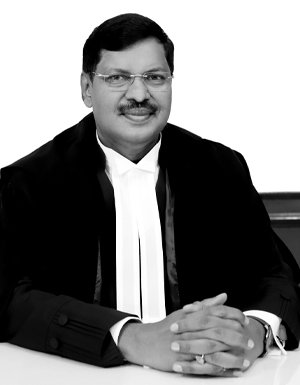
PAMIDIGHANTAM SRI NARASIMHA , J.
1. The sole appellant herein was tried along with another
accused for the murder of one Samsher Singh and convicted under
Section 302 read with Section 34 of the Indian Penal Code, 1860
for murder and sentenced to rigorous imprisonment for life by the
Trial Court
1. In appeal, the High Court of Punjab & Haryana
2 by
the judgment impugned here in dismissed the appeal and
confirmed the conviction and sentence. Thus, the present appeal.
2. The case of the prosecution is that while the Assistant Sub-
Inspector Balbir Singh, later examined as PW-21 was with other
police officials on duty at Deyod Kheri Village, Jind-bypass road,
1
The Additional Sessions Judge Kaithal in Sessions Case No. 43 of 2004 dated 31.08.2007.
2
In Criminal Appeal No. 805-DB 2007 dated 05.09.2009.
2
Kaithal, on 11.04.2004, the complainant-Sunil Kumar Bhura
(later examined as PW-20) met him and got his statement (EX.PY)
recorded. The statement had that he is a resident of Nehru Garden
Colony, Kaithal and the deceased-Shamsher Singh is related to
him, being son of his paternal aunt. PW-20 was in business of real
estate and was living in Adarsh Nagar, Kaithal. The previous day,
that is on 10.04.2004, when PW-20 was in the office of the
deceased along with one Balwant Singh (PW-18), the deceased
received a call on his mobile phone at about 9.15 PM. A little
thereafter, that is about 9.30 PM, the deceased received another
phone call. After conversing on the mobile phone, the deceased
informed them that he has to go to Gole Market and left on his
motorcycle. The complainant and Balwant Singh also left the shop
of the deceased. In the morning, the deceased’s wife informed
PW-20 that the deceased had not returned the previous night. On
receiving the said information, PW-20 and PW-18 reached the
house of the deceased and thereafter went on a search for the
deceased.
3. When PW-20 got the information that a dead body was found
lying, he along with PW-18 and one Mr. Naresh (PW-13) reached
the spot and saw that the deceased lying there, with his throat
3
having knotted with some cloth, and the right eye being badly
injured. They also noticed some injuries on the head of the
deceased. The motorcycle of the deceased was parked by the side.
While Naresh and PW-18 remained at the spot, PW-20 had come
to inform the police about the incident and his statement was thus
recorded and read over to him by the investigating officer (PW-21)
with his endorsement at Ex. PW-21/1. After the FIR was
registered, PW-24 took over the investigation and recorded the
statements of witnesses.
4. During the investigation, the police recorded the statement of
Rajesh, later examined as PW-11 and Jogi Ram later examined as
PW-12. The statement and deposition of these two person s
assumed importance as their evidence was relied on by the Trial
Court as well as the Appellate Court.
5. The statement of Rajesh (PW-11) was that on 10.04.2004
while he was driving from Chandigarh to Hisar, about half a
kilometre before Karnal bypass his vehicle got punctured. As he
was changing the wheel, he saw four young people on motorcycle
coming from eastern side and they had to slow down because of
the Karnal bypass. At that time, he saw the accused were carrying
dandas and one of the boy’s clothes were stained with blood. Being
4
suspicious he noted the registration number of the motorcycle
being HR 08 E 4962. This witness also says that he read about the
murder of the deceased in the newspaper two days later, i.e. on
12.04.2004 and while he was returning back to Chandigarh on
13.04.2004, he saw a police vehicle standing at the Karnal bypass
Chowk with some police officials and the accused. He stopped his
vehicle and informed the police about the occurrence on
10.04.2004. The prosecution thus relied on this person in support
of the case as a witness to have last seen the deceased with the
accused.
6. Similarly, PW-12 made a statement to the police. His version
is that he is a resident of Sector 19/1 Huda, Kaithal and on
10.04.2004, he was taking an evening walk on Kaithal Road T-
Point near Huda Road/Street. About 9.45-10 pm, while urinating
by the roadside, he saw a motorcycle ridden by 3 young boys of
about 20-21 years of age holding dandas in their hands. He
recognised the appellant and when he started coughing, that is
while urinating, the 3 boys drove away towards Karnal Road. His
statement was recorded by the police on 12.04.2004.
5
7. The police also recorded the statement of one Dilbag Singh,
later examined as PW-16 who recorded his version of having seen
the deceased in the company of the accused at the same spot.
8. It is the case of the prosecution that on 17.04.2004, the
Appellant (A-1), Sumit Gupta (A-2), Anil & Jaswinder surrendered
before the investigating officer through Ex-Sarpanch of village
Geong, Balbir Singh (PW-10) to whom the accused made an extra-
judicial confession. Pursuant to the surrender, the prosecution
says that disclosure statements of A-1, A-2, Anil & Jaswinder were
recorded, and certain recoveries were also made.
9. Upon completion of investigation, charge sheet was filed. It
may be mentioned at this stage that prosecution of Anil and
Jaswinder was separated from this case after they were declared
to be juveniles. Thus, only the Appellant and Sumit Gupta (A-2)
stood trial. Before the Trial Court, the prosecution examined 24
witnesses and marked certain exhibits. The defence on the other
hand examined 3 witnesses as DW 1, 2 and 3.
10. The Trial Court having noticed that there are no eyewitnesses
and that the case of the prosecution is based only on
circumstantial evidence, copiously referred to the statements of
each witness, but rested its decision only on the evidence of
6
PW-10, 11 & 12 and certain recoveries and the FSL Report. The
reasoning, which is in two paragraphs is extracted herein below
for ready reference:
“In the present case, the chain of circumstances is
interwoven which has been corroborative through
the testimony of PW-11 Rajesh and PW-12 Jogi
Ram who have last seen accused Sumit Gupta and
accused Pradeep Kumar with Shamsher Singh
deceased. Extra Judicial confession has been
made before Ex. Sarpanch Balbir Singh. Motive is
also proved through cheques which have been
issued by accused Sumit Gupta in the name of
Shamsher Singh (deceased) from which accused
Sumit Gupta has taken a loan of Rs. 29,000/- and
failed to return back that money in time. There is
recovery of Mobile Phone of accused Sumit Gupta
and Shamsher Singh vide recovery memo Ex. PV.
In FSL report Ex. PRR/1 blood group of deceased
Shamsher Singh is cited to be ‘O’ group. In the
‘danda’ recovered from accused vide recovery
memo Ex. PQQ, blood group ‘O’ tallies. Similarly, on
the pant worn by the accused Pardeep Kumar
recovered later, blood ‘O’ group has been found on
the stains of pant vide recovery memo Ex. PJ.
Hence, the prosecution case is also proved through
scientific investigation also. Hence, these are chain
of evidence so far complete, so as not to leave any
reasonable ground for conclusion consistent with
the guilt of the accused. The guilt of accused Sumit
Gupta and accused Pardeep Kumar is proved to the
fact that in all human probability act of murder has
been committed by accused Sumit Gupta and
Pardeep Kumar.
Hence, it is proved to the hilt that on 10.04.2004,
at about 10 PM in the area of Dhand Road Deokheri
turning accused Sumit Gupta and Pardeep Kumar
in furtherance of their common intention caused
death of deceased Shamsher Singh intentionally
7
and committed offence punishable under Section
302 read with Section 34 IPC.”
11. In appeal by the Appellant herein and accused No.2, Sumit
Gupta, the High Court also relied on the evidence of PW-11
and 12. In fact, the High Court seemed to have accepted the
submission of the defence that the evidence of Ex. Sarpanch,
PW-10 is unreliable. However, without discussing the evidence of
PW-10, the High Court observed that the evidence of PW-11 and
PW-12 are sufficient to confirm the conviction and sentence
imposed by the Trial Court.
12. We heard Mr. Pranab Kumar Mullick, learned counsel for the
appellant who took us through his meticulously prepared written
submissions and statements of relevant witness and the reasoning
of the High Court.
13. As the case of the prosecution, as accepted by the Trial Court
and High Court, is based on circumstantial evidence said to have
been established by PW-10, 11 and 12, we will examine them in
detail.
14. PW-10 is an Ex. Sarpanch of the village Geong. His testimony
is that on 17.04.2004, while he was in his house, the Appellant (A-
1), Sumit (A-2), Anil and Jaswinder came to him and confessed
8
about committing the murder of the deceased. He stated that
Sumit Gupta (A-2) disclosed to him that he borrowed money from
the deceased and as such there was pressure on him to return the
money. When the deceased demanded the money on 10.04.2004,
he was apprehensive of being insulted and therefore planned to kill
the deceased with the help of other accused. For this purpose, he
called the deceased to the T-Point at Kaithal, Dhand Road at 9.30
PM saying that he has arranged the repayment. By the time the
deceased came there, other accused were already present at the
spot, they all assaulted the deceased with dandas, killed him and
threw the dead body in the field near Shergha Road. This witness
also stated that all other accused disclosed similar version. Himself
being an Ex. Sarpanch, he has thereafter produced the accused
before the SHO Police Station Kaithal.
15. Having considered the submissions of the appellant about
contradictions in the statement of this witness (PW-10), the High
Court concluded, “even if we ignored the evidence of PW-10 before
whom the appellants have made an extra judicial confession having
committed the crime, there is more emphatic evidence led by the
prosecution compelling this Court to believe that the appellants had
committed the crime of murdering Shamsher Singh.” In other words,
9
the High Court has not relied on the evidence of PW-10 as it found
other sufficient evidence.
16. We have however independently examined the evidence of
PW-10 and come to the conclusion that this witness is not
trustworthy and this is evident from the following:
a. This witness denied having met the deceased earlier “I
have never met Shamsher Singh earlier” . However, the
complainant (PW-20) in his statement on 11.04.2004 says
“today we came to know that Malkhan, Prem Singh, Balbir
Sarpanch met Shamsher on Dhand Road, Kaithal at about 10
PM.” The said statement is also recorded in the FIR and
charge sheet, though he leaves doubt about this version in
his deposition.
b. Similarly, Balwant Singh (PW-18) in his deposition on
08.12.2006 states that, “since Shamsher Singh did not reach
back to home and hence his family members started searching
for him. Malkhan, Prem Singh and Balbir Singh r/o Geong
informed that Shamsher Singh was seen at Dh and Road,
Kaithal”.
c. Further, Balbir Singh, ASI (PW-21) also deposed about
the deceased having met the Sarpanch. He says “it is correct
to state that Balbir Sarpanch, Malkhan and Prem Singh
residents of Geong had met Shamsher Singh deceased on
10.04.2004 at 10 PM at Dhand Road, Kaithal, according to
10
statements of PWs gathered at the spot that is Sunil and
Balwant PWs.”
17. Apart from the above referred contradiction, yet another fact
about the extra-judicial confession on 17.04.2004 is noteworthy.
The statement of the accused Sumit Gupta (A-2) in his Section 313
CrPC statement is that they were arrested on 11.04.2004 itself and
not 17.04.2004. This statement gets corroborated by the
deposition of Rajesh (PW-11), who stated that; “Thereafter I read
news in newspaper regarding murder on 12.04.2004. On
12.04.2004 I read in the newspaper regarding murder at Kaithal in
the surrounding area in which I was changing the stepney. On
13.04.2004 in the morning, I was going to Chandigarh through
Kaithal and I saw a police vehicle standing on Karnal by pass
Chowk in the area of Kaithal. I saw police inspector along with 4/5
police officials and saw the same accused along with police. Then I
stopped and told the police regarding occurrence on 10.04.2004.
Police recorded my statement on the spot.” If the statement of
PW-11 is to be accepted, which the prosecution wants us to
believe, then the arrest had already taken place by 13.04.2004 and
therefore the accused were seen in the presence of the police on
that day. If this is true, then there is no doubt in our mind that
11
the extra judicial confession on 17.04.2004 is false and
unbelievable. The evidence of this witness that is PW-11 is strongly
relied on by the prosecution. In fact, the Trial Court as well as the
High Court proceeded on the basis of this witness’s statement to
convict and sentence the Appellant. This is perhaps the reason
why the High Court did not consider it appropriate to rely on the
evidence of PW-10 and proceeded to confirm conviction and
sentence on the basis of other evidence. There are some other
aspects which Mr. Mullick has relied on to cast a doubt about
evidence of PW-10 but we are of the opinion that the above referred
factors are sufficient to reject the version of PW-10.
18. PW-11 – His evidence is relied on by the Trial Court as well
as the High Court. He is admittedly a chance witness. In fact, he
chances the episode twice over, first on 10.04.2004 at about 10.30
PM when he was going from Chandigarh to Hisar. His version is
that at about 1.5 kilometres near Karnal bypass, his car tyre got
punctured and when he was putting the stepney, he saw four
people on motorcycle armed with dandas. He noticed blood stain
on the deceased’s pant and also records the registration number
of the motorcycle. Secondly, he again chances the police party
12
standing with the accused on his way back to Chandigarh. He
stops and gets the incidence of 10.04.2004 recorded by the Police.
19. This witness is completely unreliable. It is his own statement
that he started from Chandigarh at 6 PM on 10.04.2004. The
distance between Chandigarh and the place of occurrence is about
120 kilometres and takes about 2 hours to cover the distance even
by car. There is no explanation as to how he took more than four
hours to reach the scene of offence. This uncertainty is
compounded when he admits his ignorance about the person in
whose name the car is registered. Further, upon being questioned
about where he stayed in Chandigarh the night of 09.04.2004, his
answer is simply that he does not remember the name of the lodge.
He could not even remember the shops near by the lodge. It is
rather surprising that this witness while engrossed in changing the
wheel of his car at 10.30 PM manages to note the blood stains on
the pant and also recorded the registration number of the
motorcycle. There is nothing to indicate that he had a pen or a
paper to readily note the registration number. His statement is to
be contrasted with the version of Ram Kumar IO (PW-24) who
stated that “I did not see any arrangement of the light on the Karnal
bypass road especially the alleged place where the car of Rajesh
13
Kumar got punctured and he saw the accused while riding the
motorcycle. It is correct that there is no light arrangement on the
place of occurrence because it is an agriculture area.” We are not at
all impressed with the evidence of PW-11. There are too many
coincidences in his version and his story is improbable in the
context of the facts and circumstances of the case. He is certainly
an unreliable witness.
20. PW-12 – He is again a chance witness, relied on by the
prosecution to prove the last seen theory. This witness is said to
have gone out for an evening walk on Kaithal Road between 9.45
to 10 PM. While urinating by the roadside, he sees a motorcycle
with three accused on it. He states that the accused moved away
towards Karnal bypass, the moment he started coughing while
urinating. He reports this incident two days later, that is on
12.04.2004 by going to Sadar Police Station, Kaithal. We will
analyse his statement.
21. As per the statement of PW-12, he went on an evening walk
between 9.45 to 10 PM, two Kilometres away from his house,
particularly in an area which does not have streetlights. The multi-
tasking of urinating, coughing, seeing the motorcycle, noting the
blood stains clothes and recording the registration number
14
happens simultaneously. There is no evidence as to the manner in
which he had recorded the registration number. He is said to have
studied only up to 6
th class. How could he notice and also
memorise the registration number having seen it from a long
distance. He himself says the motorcycle was at a distance. His
version is highly improbable.
22. This witness says that the blood stained trouser and dandas
in the hands of the accused caused suspicion and therefore, he
recorded the number. However, that did not compel him to go to
the police station. Instead, he reports the incident only on the
12.04.2004, that is two days later. Strangely, instead of reporting
the incident to the police chowki which is next to his residence, he
goes all the way to Sadar Police Station, Kaithal. We are of the
opinion that the evidence of PW-12 does not inspire confidence at
all.
23. PW-16 – This is yet another witness relied on by the
prosecution, however, the Trial and the High Court have not laid
much emphasis. We will nevertheless examine the evidence of this
witness. He is a witness who was on his way to Haridwar along
with his Fufa (father’s sister’s husband). He is supposed to have
seen the deceased sitting on a motorcycle along with A-2 at T-Point
15
at Karnal bypass. After speaking to him for 2 to 3 minutes, he
proceeded further. This witness reports this incident to the Police
on 14.04.2004 when he comes back from Haridwar. His statement
is similarly relied on by the prosecution in support of the last seen
theory.
24. This witness is a relative of the deceased. The Fufa who was
travelling with him is not examined. He does not even know the
driver of the vehicle in which he travelled or its registration
number, even though he went all the way to Haridwar and stayed
there for two to three days. This witness describes the incidence of
meeting the deceased and A-2 at a place where even PW-12 is
supposed to have seen the deceased. Neither this witness spoke of
PW-12, nor did PW-12 speak about this witness. Nothing much
flows from the evidence of this witness, apart from his own version
which is highly improbable and therefore unreliable.
25. Apart from the improbable and contradictory versions of the
three witnesses, Mr. Mullick has also brought to our notice that
the weapons recovered by the IO and the ones seen by the
witnesses are only sticks. However, the deceased has suffered an
incise wound which according to the doctor, PW-14 who conducted
the post-mortem, is caused by a sharp-edged weapon. The
16
prosecution has not recovered any sharp-edged weapon. In fact,
there is no mention about a sharp-edged weapon at all.
26. The FSL report states that the “pant” sent to them for
examination was one dirty blue “terikot pant”. However, as per the
recovery memo a “jeans pant” was recovered from the Appellant.
Additionally, the FSL report states that the blood on the sticks,
blood-stained pants and the blood group of the deceased is the
same “O+”. Mr. Mullick has rightly contended that this is not an
indication of the guilt. Moreover, nothing of these recoveries took
place in the presence of an independent witness. In fact, the IO
(PW-24) has admitted that he did not try to join any private person
before carrying out the recoveries.
27. Mr. Mullick has also made detailed submission with respect
to place and time of the recovery of the body of the deceased and
the alleged motive behind the crime. We are of the opinion that it
is not necessary to examine those aspects in detail. Admittedly,
there are no eyewitnesses, and the entire case of the prosecution
depends upon circumstantial evidence.
28. In a recent decision, Pritinder Singh v. State of Punjab, (2023)
7 SCC 727, one of us (Justice Gavai) has taken note of the
17
judgment in Sharad Birdhichand Sarda v. State of Maharashtra
3,
(1984) 4 SCC 116 and observed:
17. It can thus be seen that this Court has held that
the circumstances from which the conclusion of
guilt is to be drawn should be fully established. It
has been held that the circumstances concerned
“must or should” and not “may be” established. It
has been held that there is not only a grammatical
but a legal distinction between “may be proved”
and “must be or should be proved”. It has been held
that the facts so established should be consistent
only with the hypothesis of the guilt of the accused,
that is to say, they should not be explainable on
any other hypothesis except that the accused is
guilty. It has been held that the circumstances
should be of a conclusive nature and tendency and
they should exclude every possible hypothesis
except the one sought to be proved, and that there
must be a chain of evidence so complete so as not
to leave any reasonable ground for the conclusion
3
“153. A close analysis of this decision would show that the following conditions must be
fulfilled before a case against an accused can be said to be fully established:
(1) the circumstances from which the conclusion of guilt is to be drawn should be fully
established.
It may be noted here that this Court indicated that the circumstances concerned “must
or should” and not “may be” established. There is not only a grammatical but a legal
distinction between “may be proved” and “must be or should be proved” as was held by
this Court in Shivaji Sahabrao Bobade v. State of Maharashtra [Shivaji Sahabrao
Bobade v. State of Maharashtra, (1973) 2 SCC 793: 1973 SCC (Cri) 1033] where the
following observations were made: (SCC p. 807, para 19)
“Certainly, it is a primary principle that the accused must be and not merely may be
guilty before a court can convict and the mental distance between “may be” and “must
be” is long and divides vague conjectures from sure conclusions.”
(2) the facts so established should be consistent only with the hypothesis of the guilt of
the accused, that is to say, they should not be explainable on any other hypothesis
except that the accused is guilty,
(3) the circumstances should be of a conclusive nature and tendency,
(4) they should exclude every possible hypothesis except the one to be proved, and
(5) there must be a chain of evidence so complete as not to leave any reasonable ground
for the conclusion consistent with the innocence of the accused and must show that in
all human probability the act must have been done by the accused.
154. These five golden principles, if we may say so, constitute the panchsheel of the proof
of a case based on circumstantial evidence.”
18
consistent with the innocence of the accused and
must show that in all human probability the act
must have been done by the accused.
18. It is a settled principle of law that however
strong a suspicion may be, it cannot take place of a
proof beyond reasonable doubt. In the light of these
guiding principles, we will have to consider the
present case.”
In the background, we have analysed the evidence and the
testimonies of the witnesses.
29. There is a yawning gap between the charge against the
Appellant and the evidence that the prosecution has adduced. The
circumstances do not establish the guilt of the Appellant at all.
While the principle applicable to circumstantial evidence requires
that the facts must be consistent with the hypothesis of the guilt
of the accused, in the present case the evidence adduced gives rise
to doubts, improbabilities and inconsistencies.
30. Having considered the matter in detail and having noted the
various discrepancies and improbabilities, we are of the firm view
that the prosecution has not established its case beyond
reasonable doubt. The Appellant is entitled to be acquitted.
31. We, therefore, allow Criminal Appeal No. 1338 of 2010 and
set aside the judgment of the High Court of Punjab and Haryana
19
at Chandigarh in Pradeep Kumar & Anr. v. State of Haryana in Crl.
Appeal No. 805-DB of 2007 dated 05.09.2009 and the judgment of
the Court of Additional Sessions Judge, Kaithal in Sessions Case
No. 43 of 2004 dated 31.08.2007 convicting and sentencing the
appellant under Section 302 read with Section 34 of the Indian
Penal Code, 1860.
32. The Appellant is acquitted of all charges, and his bail bonds,
if any, stand discharged.
33. Pending interlocutory applications, if any, stand disposed of
in terms of the above order.
34. The parties shall bear their own costs.
……..……………………………….J.
[B.R. Gavai]
.………….………………………….J.
[Pamidighantam Sri Narasimha]
New Delhi;
January 05, 2024

Legal Notes
Add a Note....