
As per case facts, the petitioner, Rajab Ali @ Babloo, a life convict for rape, sought premature release after nearly 22 years of actual custody. His case was rejected 10 ...
W.P. (CRL) No. 1336/2025 Page 1 of 36
* IN THE HIGH COURTOF DELHI AT NEW DELHI
% Reserved on: 29
th
October, 2025
Pronounced on: 06
th
April 2026
+ W.P. (CRL) No. 1336/2025, CRL.M.A. 12561/2025
RAJAB ALI @ BABLOO
S/o Liyakat Ali
(Presently confined in CJ-02, Tihar, New Delhi) ....Petitioner
Through: Ms. Vrinda Bhandari, Ms. Vanshita
Gupta, Ms. Shrutika Pandey and Ms.
Ragini Nagpal, Advocates.
versus
1. STATE (NCT OF DELHI)
Through the Home Department
5th Level, C-Wing, Delhi Secretariat
New Delhi-110002 .....Respondent No. 1
2. DIRECTOR GENERAL OF PRISONS
CJ-02, Tihar, New Delhi-110064 ....Respondent No. 2
Through: Mr. Sanjeev Bhandari, ASC with SI
Seema, PS Gandhi Nagar.
CORAM:
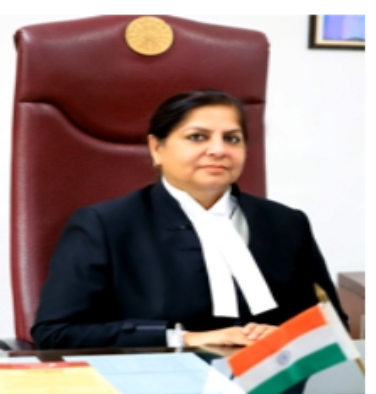
HON'BLE MS. JUSTICE NEENA BANSAL KRISHNA
J U D G M E N T
NEENA BANSAL KRISHNA, J.
1. Writ Petition under Article 226 of the Constitution of India read with
Section of the Bharatiya Nagarik Suraksha Sanhita, 2023 (hereinafter
referred to as „B.N.S.S.‟), has been filed on behalf of the Petitioner, Rajab
Ali @ Babloo for quashing of the Minutes of the Meeting of Sentence
Review Board dated 30.08.2024 and 19.09.2024, duly approved by the
W.P. (CRL) No. 1336/2025 Page 2 of 36
Hon‟ble Lt. Governor, Delhi, rejecting his premature release and has
further sought issuance of appropriate Writ for directing his premature
release.
2. The Petitioner has submitted that FIR No. 216/2003 under Section
376 of the Indian Penal Code, 1860 (hereinafter referred to as „IPC‟),
Police Station Gandhi Nagar, was registered and the Petitioner was arrested
on 26.01.2003 on the allegation of allegedly raping a 3.5-year-old child, on
21.01.2003. The Court of learned ASJ, Delhiconvicted him under Section
376 IPC on 21.12.2005 and sentenced him on 22.12.2005, to undergo Life
Imprisonmentand also imposed fine, under Section 376 IPC.
3. The Criminal Appeal No. 58/2006 was dismissed by this Court on
22.01.2010 and the Order of Conviction and Sentence was upheld. To the
knowledge of the Petitioner, no SLP was ever preferred before the Hon‟ble
Supreme Court of India and thus, the Order of conviction and sentence,
attained finality.
4. The Petitioner has stated that he is in judicial custody since
26.01.2003 and has been in actual custody for nearly 22 years, 06 months,
27 days. The Petitioner is presently in Semi-Open Jail, Central Jail No. 2,
Tihar and is working as a cleaner/sweeper/helper.
5. The case of the Petitioner was considered for the first time by the
SRB for pre-mature releaseon 06.01.2016, in view of the fulfilment of the
conditions for pre-mature release. However, vide Minutes of Meeting dated
06.01.2016, the SRB rejected the Petitioner‟s premature release on the basis
of nature and gravity of the offence and the threat to the family of the victim,
despite the recommendation of the Chief Probation Officer. This was
W.P. (CRL) No. 1336/2025 Page 3 of 36
followed by second rejection by SRB vide its Minutes of Meeting dated
01.09.2016.
6. Thereafter, the Petitioner suffered third Rejection by on similar
grounds as earlier rejections, and also by observing that there was opposition
by the Police.
7. The Petitioner has submitted that he thereafter, suffered 06 other
Rejections vide Minutes of Meeting dated 28.02.2020; 05.08.2020 and
06.08.2020; 11.12.2020; 25.06.2021; 21.10.2021 and 30.06.2023.
8. The Petitioner faced his 10
th
Rejectionvide Minutes of Meeting of
SRB dated 30.08.2024 and 18.09.2024; again, on the basis of heinousness
and manner of crime, gravity and perversity of the crime, age of the convict
and strong opposition by the Police authorities, etc.
9. The details of the rejection by SRB, are detailed as under:-
Sr.
No.
Date of
SRB
Meeting
Actual
Imprisonm
ent
Imprisonmen
t with
Remission
Opposed By SRB
Recommendatio
n
Grounds
Relied on by
SRB
Order by
the Lt.
Governo
r
1. 06.01.2016 12 years,
05 months
and 19
days
15 years, 07
months and
04 days
(1) Ld. Addl.
Sessions
Judge
(2) Delhi
Police
Recommende
d By:
(1) Chief
Probation
Officer
Rejected
(Serial No. 29)
(i) Nature and
gravity of the
offence: and
(ii) He is
threatening
the family of
victim
Rejected.
2. 01.09.2016 13 years,
04 months
and 21
days
16 years, 10
months
(1) Delhi
Police
Recommende
d By:
(i) Chief
Probation
Officer
Rejected
(Serial No. 73)
(i) Nature of
crime; and
(ii) He has not
lost his
potential to
commit such
a crime
Rejected
W.P. (CRL) No. 1336/2025 Page 4 of 36
3. 06.09.2017 14 years,
04 months
and 20
days
17 years, 11
months and
21 days
(1) Delhi
Police
Recommende
d By:
(1) Chief
Probation
Officer
Rejected
(Serial No. 83)
(i) Nature of
crime;
(ii)
Circumstance
s in which
crime was
committed;
and
(iii)
opposition by
police
Rejected
4. 28.02.2020 17 years
02 months
and 18
days
22 years, 01
month and 26
days
(1) Delhi
Police
(2) Director,
Social
Welfare
Department
Recommende
d By:
(1) Social
Welfare
Department
Rejected
(Serial No.
1045)
(i) facts and
circumstances
of the case as
the convict
(Petitioner
herein) has
committed
rape upon
31⁄2 years
minor girl
child;
(ii) Perversity
of the crime;
and
(iii)
Possibility of
committing
similar crime
again.
Rejected
5. 05.08.2020
and
06.08.2020
17 years,
01 month
and 28
days
22 years, 01
month and 13
days
(1) Delhi
Police
(2) Director,
Social
Welfare
Department
Recommende
d By:
(1) Social
Welfare
Department
Rejected
(Serial No. 58)
(i) Facts and
circumstances
of the case
i.e.,
committing
rape upon a 3
½ years minor
girl child; and
(ii) Perversity
of the crime.
Rejected
vide
order
dated23.
10.2020.
(Serial
No.109)
6. 11.12.2020
17 years,
08 months
and 18
days
22 years, 07
months, 26
days
(1) Delhi
Police
(2) Director,
Social
Welfare
Department
Recommende
d By:
(1) Social
Rejected
(Serial No. 167)
(i) Facts and
circumstances
i.e.,
committing
rape upon a 3
½ years minor
girl child;
(ii) Manner in
which the
offence was
committed
Rejected
vide
order
dated
05.03.20
21
W.P. (CRL) No. 1336/2025 Page 5 of 36
Welfare
Department
(ii) the gravity
and
perversity of
the crime;
and
(iii)
Possibility of
committing
such crime
7. 25.06.2021 18 years,
01 month
and 18
days
23 years, 01
month, 11
days
(1) Delhi
Police
(2) Chief
Probation
Officer
Recommende
d By:
(1) Social
Welfare
Department
Rejected
(Serial No.
166)
(i) Facts and
circumstances
i.e.,
committing
rape upon
a 3 ½ years
minor girl
child;
(ii) Manner in
which the
offence was
committed;
(iii) Gravity
and perversity
of the crime;
and
(iv)
Possibility of
committing
such crime
Rejected
8. 21.10.2021 19 years,
05 months
and 28
days
24 years, 07
months, 12
days
(1) Delhi
Police
(2) Special
Secretary cum
Director,
Social
Welfare
Department
Recommende
d By:
(1) Social
Welfare
Department
Rejected
(Serial No. 150)
(i) Facts and
circumstances
i.e.,
committing
rape upon a 3
½ years minor
girl child;
ii) Manner in
which the
offence was
committed;
(iii) Gravity
and perversity
of the crime;
and
(iv)
Possibility of
committing
such crime
again
Rejected
vide
order
dated
17.01.20
22
(Serial
No. 131)
9. 30.06.2023 20 years,
11 months
and 18
days
25 years, 01
month and 03
days
(1) Delhi
Police
(2) Social
Welfare
Rejected
(Serial No. 220)
(i) Facts and
circumstances
i.e.,
committing
rape upon a 3
½ years minor
Rejected
vide
order
dated
21.11.20
23
W.P. (CRL) No. 1336/2025 Page 6 of 36
Department girl child;
(ii) Manner in
which the
offence was
committed;
(iii) Gravity
and perversity
of the crime;
and
(iv)
Possibility of
committing
such crime
again.
(Serial
No. 197)
10. 30.08.2024
and
18.09.2024
22 years
01 month
and 18
days
27 years, 05
months & 20
days
(1) Delhi
Police
(2) Social
Welfare
Department
Rejected
(Serial No.
183)
(i) Brutality
of crime, i.e.,
committing
rape upon a 3
½ years minor
girl child;
(ii) Manner of
heinous
offence so
committed
(iii) Gravity
and perversity
of crime;
(iv) Age of
the convict;
(v) Strongly
opposed by
Police
authorities
etc.
(vi) Crime
being
desperate and
shaking the
confidence of
the society;
(vii) Release
of convict not
being in the
interest of the
society at
large.
Rejected
vide
order
dated
04.12.20
24
(Serial
No. 149)
W.P. (CRL) No. 1336/2025 Page 7 of 36
10. Thus, the case of the Petitioner has been placed before Sentence
Review Board (SRB) for 10 times from September 2007 till September 2024
and lastly, on 30.08.2024 and 19.09.2024. On every occasion, the case of the
Petitioner has been duly considered and SRB but rejected keeping in view
the gravity of the offence, minor age of the child, opposition of Police
authorities and the larger interest of the society.
11. To explain his good conduct, the Petitioner has enumerated that was
awarded on 21.06.2018, a certificate of Yoga Training conducted by the
Panchvati Yogasharam and Nature Cure Centre at the Tihar Jail from
07.04.2018 to 21.06.2018.
12. The Jail Authorities shifted the Petitioner to Semi-Open Jail at A-
Block & B-Block, JTS quarters, Tihar vide Order dated 04.09.2017, subject
to furnishing of one surety of Rs.10,000/- along with his personal bond to
the satisfaction of the Jail Superintendent. By the Order dated 16.10.2018,
the Petitioner was transferred from Semi-Open Jail, Tihar to Semi-Open Jail,
Mandoli. Thereafter, on 11.06.2019, the Petitioner was transferred to Open
Prison at Tihar Jail.
13. The Petitioner in the interim, had been released on emergency Parole
during the Covid-19 period, after which, he surrendered himself but was
lodged in Regular Jail due to paucity of place in Semi-Open Jail. Thereafter,
he was transferred vide Transfer Parcha dated 11.10.2023 to Semi-Open
Jail.
14. The Petitioner has stated that he had been released on Parole thrice
and on emergency Parole from 03.04.2020 to 29.05.2020, and thereafter
W.P. (CRL) No. 1336/2025 Page 8 of 36
again, from 14.05.2021 to 12.08.2021. He has also been granted Furlough
22 times.
15. In addition, during his course of incarceration from 2006 to 2023, he
assumed several positions of responsibility including but not limiting to
carrying on welding work, at Langar, learning yoga, cleaning work, Tea
serving duties, managing prison canteen. Further, while working in Semi-
Open Jail in 2023, he worked at Tihar Haat. While he was on Emergency
Parole during Covid-19 Pandemic, he was gainfully employed as an e-
rickshaw driver, before he surrendered on 06.04.2023.
16. The Petitioner has sought the remission on the grounds that the SRB
has erroneously applied Notification dated 16.07.2004 by placing reliance
on State of Haryana vs. Jagdish, (2010) 4 SCC 216 wherein it was held that
the Remission Policy existing on the date of conviction, shall apply.
However, it has not been considered that in the Judgment of Joseph vs.
State of Kerala, (2023) INSC 843, it has been made clear that when a more
liberal Policy is in effect at the time of a „lifer‟s‟ consideration for premature
release, the Policy which is more beneficial to the individual, must be
applied. The DPR, 2018 Rules, which had been notified, should have thus,
been considered, to assess the case of the Petitioner, for pre-mature release.
The misapplication of law undermines the fairness and legality of the SRB‟s
decision.
17. Rule 1253 of Delhi Prison Rules, 2018 (DPR) states that all the
convicted male prisoners not covered by Section 433A of the Code
undergoing sentence of life imprisonment, would be entitled to be
considered for premature release after they have served at least 14 years of
W.P. (CRL) No. 1336/2025 Page 9 of 36
imprisonment inclusive of remission, but only after completion of 10 years
of actual imprisonment, i.e. without remissions.
18. It is further submitted that perusal of Minutes of Meeting including
the impugned Minutes, would divulge that relevant factors, including the
conduct of the Petitioner inside and outside the prison, his socio-economic
background and his family, has been routinely discounted. Such repeated
rejections, without consideration of relevant facts, reflects a mechanical and
perfunctory approach that undermines the very objective of the SRB‟s
mandate.
19. The SRB has time and again, failed to give due weight to the
Petitioner‟s exemplary conduct, while in incarceration. His participation in
rehabilitation/training programs, Certificates of recognition as awarded to
him, and his contributions to prison activities, has been consistently
overlooked.
20. The fact that the Petitioner had been working in Semi-Open Jail in
2019, prior to his release on emergency parole during Covid-19 Pandemic
and that he is presently also working in Semi-Open Jail, demonstrates, both
trust and reformative progress, a factor which should have weighed in his
favour, for his pre-mature release. The record of the Petitioner and his
eligibility for Semi-Open Jail as per DPR, 2018, is compelling evidence that
he has demonstrated a significant reduction in his propensity to commit
crime; has shown excellent conduct and has performed labour allotted to
him with devotion and diligence, andhas shown potential for rehabilitation.
The exemplary conduct of the Petitioner, in the Jail, is evidenced through
W.P. (CRL) No. 1336/2025 Page 10 of 36
recommendation for pre-mature release by Chief Probation Officer and
Social Welfare Department, on multiple occasions.
21. His adherence to legal and procedural requirements, such as
surrendering upon completion of Interim Bail, Parole, and Furlough,
underscores his commitment to lawful reintegration into the society.
22. The Petitioner has not only exhibited exemplary and reformed
behavior within jail, but has also demonstrated strict adherence to law
during his release on Interim Bail, Parole and Furlough. He has never
indulged in any notorious activity. His conduct during the periods of release,
outside the prison, reinforces his commitment to rehabilitation and lawful
reintegration into the society. By ignoring such crucial aspects and merely
reiterating a generalized assumption, the SRB has acted arbitrarily,
rendering its decision unreasonable and unjust.
23. There is repetitive and flawed decision-making process of the SRB,
wherein in each rejection, reliance has been placed on identical grounds i.e.,
facts and circumstances of the case, without fresh evaluation or meaningful
application of judicial principles. The exercise has become routine and
devoid of any substantive engagement with the Petitioner‟s evolving
circumstances, thereby, rendering the entire process arbitrary and unfair. It
is evident that the Petitioner‟s case has not been assessed on its merits;
instead he has fallen victim to the mechanical and prejudicial approach,
warranting judicial intervention to rectify this manifest injustice.
24. The SRB has significantly erred in stating that “The Board felt that
such a desperate crime shakes the confidence of society and recommending
release may develop lack of faith of the general public in the legal system (at
W.P. (CRL) No. 1336/2025 Page 11 of 36
least in cases of rape convict).” This assertion is manifestly prejudicial,
reeks of bias and reflects an improper reliance on public sentiment; rather
than an objective assessment of the individual case or the factors, to be
considered by SRB. The Board‟s reasoning fails to consider the fundamental
principles of rehabilitation, proportionality, and individualized justice.
25. The SRB has drawn an arbitrary distinction amongst life convicts,
solely on the basis of nature of crime and has attempted to create a class of
convicts merely by virtue of the offence committed, which amounts to
impermissible classification and is constitutionally unsustainable.
26. The Petitioner has relied on Vijay Kumar Shukla vs. State of NCT of
Delhi &Anr., 2024 SCC Online Del 7805 wherein while setting aside the
remission rejection by the SRB‟s Order for release of the Petitioner, the
indispensability of a speaking and reasoned order as a third pillar of pre-
mature justice, was upheld.
27. It is further submitted that the impugned Rejection by the SRB, is
liable to be set-aside. Firstly,the discretion should have been based on
relevant factors as laid down in DPR, 2018, which include the loss of
propensity for committing the crime; possibility of reclaiming the convict as
a useful member of the society and the socio-economic condition of the
convict‟s family.
28. Secondly,the pre-mature rejection could not be solely based on lack
of recommendation by the Police.
29. Reliance is placed on Hari Singh vs. State (NCT of Delhi), 2023 SCC
OnLine Del 7118 wherein it was held that a court shall be mindful of the
gravity and nature of the offence committed by the Petitioner, however, that
W.P. (CRL) No. 1336/2025 Page 12 of 36
cannot be the only factor to deny the benefit of premature release of the
Petitioner. Furthermore, SRB‟s mala fide consideration of „age of convict‟
for pre-mature release, is completely unreasoned and dehors any
substantiation.
30. Reference is made to Satish @ Sabbe vs. The State of Uttar Pradesh,
SLP (CRL.) No. 8326/2019 wherein while referring to Zahid Hussain vs.
State of West Bengal, 2001(3) SCC 750, the Supreme Court of India, has
held that assessment regarding predilection to commit crime upon release,
must be based on antecedents as well as conduct of the prisoner while in
jail, and not merely on his age.
31. On the ten occasions of consideration of the case of the Petitioner for
remission, the SRB has relied on the Report of the Police Department that it
has opposed the release of the Petitioner. However, such a consideration is
irrelevant and extraneous as per Rule 1257(c) of DPR, 2018, which states
that “Board shall not ordinarily decline a premature release of a prisoner
merely on the ground that the police have not recommended his release.”
32. Reliance has also placed on Kartik Subramaniam vs. Union of India
&Anr., AIR OnLine 2021 DEL 76, which was in respect of a challenge
against the decision of the Central Government, which did not concur with
the recommendations of the SRB, on the point of pre-mature release, the
Supreme Court of India, observed that “it is implicit that the said consent
cannot be arbitrarily or unreasonably withheld. It is well settled that all
State actions must be informed by reasons and cannot be arbitrary.
Considering that such decisions of the Central Government concern the
right of life and liberty, it is imperative that such a decision also stand the
W.P. (CRL) No. 1336/2025 Page 13 of 36
test of reasonableness on the anvil of Article 14 of the Constitution of
India.”
33. It is further asserted that the primary object in modern penology is
reformation and correction and the objective of punishment, is to reform the
Petitioner and to bring him back to the society; assist his reintegration and
not to wreak vengeance because of his past conduct. The Petitioner‟s case
merits release, for which he has reliance on Wahid Ahmed vs. State of NCT
of Delhi, 2022 SCC OnLine Del 2948 and Vijay Kumar Shukla (supra).
34. The conduct of the Petitioner inside the jail, has been recorded as
satisfactory as on 18.08.2025. The Petitioner has undergone custody for 22
years, 06 months, 06 days without remission and 28 years, 08 months with
remission. The grievance of the Petitioner regarding premature release does
not hold merit in view of a repeated consideration by SRB and its rejection
on valid grounds.
35. Hence, a prayer is made that the Order of the Hon‟ble Lt. Governor
dated 04.12.2024, approving the Minutes of the Meeting of SRB held on
30.08.2024 and 18.09.2024, be set-aside and the pre-mature release of the
Petitioner, be directed.
36. The Petitioner in hisWritten Submissions, in addition to the
reiteration of the contents of Petition, has stated that the criterion and
procedure for selection to be confined in Semi-Open Prison is stipulated in
Rule 1321 and 1323 of DPR, and forOpen Prison in Rule 1325 and 1326 of
DPR. Among other criteria, only convicts who:
(i) are found to be of good behavior, mentally fit and self-
disciplined;
W.P. (CRL) No. 1336/2025 Page 14 of 36
(ii) have maintained excellent conduct inside Semi-Open Prison
and have performed allotted labour with devotion and diligence
(iii) are fit to be trusted for confinement in Open Jail, are considered
for lodgment in Open Prison.
37. Since the Petitioner exhibited excellent conduct in Semi-Open Prison,
the Jail Authorities found it appropriate to repose trust in the Petitioner to be
kept in Open Prison. It reflects that Petitioner‟s good character, discipline
and devotion in discharging work allotted, is a testament of the fact that he
is reformed and is fit to be reintegrated into the society. Considering his
usefulness inside Semi-Open Prison and good character, he has become
harmless and is now eligible to be reclaimed as a useful member of the
society in terms of Rule 1244 and 1251 of DPR.
38. Further, in gross violation of the rules, the petitioner‟s case was
summarily rejected by SRB, simply on the grounds:
(i) manner of heinous crime so committed;
(ii) gravity and perversity of the crime;
(iii) age of convict;
(iv) strong opposition by the Police authorities, etc.
39. Reference was made to Sushil Kumar vs. State, W.P. (Crl.) No.
3798/2018 wherein the Division Bench of this Court held that the SRB must
exercise its discretion in a just and reasonable manner after due and proper
consideration of all the relevant material.
40. The perusal of the impugned Minutes shows the multiple factors
pertaining to the Petitioner which are completely discounted by the SRB.
These are:
W.P. (CRL) No. 1336/2025 Page 15 of 36
(i) his residence in Semi-Open Prison since 2017 and the
recommendation to Open Prison in 2019;
(ii) his sterling and satisfactory conduct in prison, including his
multiple release on Parole;
(iii) significant reduction of propensity to commit crime as there is
no finding of misconduct in last 28 years of incarceration;
(iv) his family socio-economic background as his parents are dead
and he is the eldest of four siblings who has to support his younger
brothers who has a mental disability, and he himself is suffering from
various health problems; and
(v) his usefulness to the society especially considering his
temporary employment as an e-rickshaw driver when released
temporarily from Prison and including and also various positions of
responsibility inside the Prison, such as, welding work, langar work,
cleaning, tea services, management of prison canteen, etc.
41. The impugned Minutes have placed overemphasis on the nature of
crime, without consideration of other relevant factors.
42. Reliance is also placed on Satish @ Sabbe vs. State of Uttar Pradesh,
SLP (Cr/) No. 7369/2019 and Shor vs. State of Uttar Pradesh and Anr.,
(2021) 14 SCC 820 wherein the Court directed the release of the Petitioner
noting that the Remission Board in the impugned Orders had taken a myopic
view of focusing mainly on the nature of crime, without considering the
post-conviction conduct of the life convicts. It was observed that assessment
by SRB regarding predilection to commit crime, cannot be based merely on
the age of the convict and is bad in law.
W.P. (CRL) No. 1336/2025 Page 16 of 36
43. The SRB has failed to consider the penological goal of punishment
and reformation and rehabilitation being the cornerstone of a criminal justice
system rather than retribution for which reliance is placed on Joseph vs.
State of Kerala and Others, W.P. (Crl.) No. 520/2022.
44. The Supreme Court in Rajo vs. State of Bihar, 2023 SCC OnLine SC
1068 reiterated that the aim and ultimate goal of imprisonment in even in the
most serious crime is reformative, after the offender undergoes a
significantly long spell of punishment through imprisonment. While the
nature of the offence and its societal impact are relevant consideration for
the SRB, the same cannot be the sole basis for continued incarceration. The
continued incarceration of the Petitioner herein on the basis of nature of
crime committed by him, defeats the entire substratum of reformative
theories, tight custom and poses a threat of overlooking the reformative
potential of the Petitioner.
45. The Petitioner has placed reliance on Vijay Kumar Shukla vs. NCT of
Delhi, 2024 SCC OnLine Del 7805, Wahid Ahmed vs. State of NCT of Delhi
and Ors., 2022 SCC OnLine Del 2948, Sushil Sharma (supra) Division
Bench and on Zafar Ul Islam vs. State of NCT of Delhi, W.P. (Crl.) No.
2518/2022 wherein the premature release of the Petitioner has been allowed
by the Court in exercise of power under Article 226 Constitution of India.
46. These judgments also emphasized that the role of SRB is especially
important for the SRB meetings are not being conducted regularly and the
convicts continue to languish in jail despite they being eligible for
consideration for premature release. Notably, the Social Welfare Department
after analyzing the history of the Petitioner, his behavior during custody and
W.P. (CRL) No. 1336/2025 Page 17 of 36
overall conduct, had recommended premature release of the Petitioner. The
Police Department, however, mechanically opposed the same without any
assigning any reason.
47. Relying on Notification dated 16.07.2004 issued by Respondent No. 1
and Letter dated 26.09.2003 issued by National Human Rights Commission,
it is submitted that eligibility criteria for consideration of premature release
enures soon after completion of 10 years of actual imprisonment. The
Petitioner had completed 10 years in the year 2013 since when he became
eligible for premature release. However, for the reasons best known to SRB
his case was considered for the first time only in 2015-16 and onwards. It is
therefore, submitted that the Petitioner may be granted premature release
from the Prison forthwith.
48. The State/Respondent No.1 in its Written Submissions has explained
that the SLP filed by the Petitioner against his dismissal of his Appeal by the
Division Bench of this Court, also met the same fate and was dismissed.
49. Reliance has been placed on Union of India vs. V Sriharan @
Murugan & Ors., (2016) 87 SCC 1 wherein it has been held that the Court
may review Executive orders on remission only in cases of blatant illegality
or constitutional violations. The Court‟s role is limited to directing the
consideration of remission claims, without the authority to grant remission
or order premature release. The appropriate Government retains the
discretion to consider and grant remission under Section 432 and 433
Cr.P.C.
50. Reliance has further been placed on Ram Chander vs. State of
Chhattisgarh &Anr., (2022) 12 SCC 52, Laxman Nascar vs. State of West
W.P. (CRL) No. 1336/2025 Page 18 of 36
Bengal and Anr., (2000) 7 SCC 626, Shashi Shekhar @ Neeraj vs. State of
NCT of Delhi, W.P. (Crl.) 1311 of 2016, Hari Singh vs. State of NCT of
Delhi, 2023 SCC OnLine Del 7118, Gurvinder Singh vs. State of NCT of
Delhi, W.P. (Crl.) 590 of 2024, Vijay Kumar Shukla vs. State of NCT of
Delhi, W.P. (Crl.) 1485 of 2024, Vikram Yadav vs. State Govt. Of the NCT
of Delhi, W.P. (Crl.) 3249 of 2024 and Santosh Kumar Singh vs. State (Govt
of NCT) of Delhi, W.P. (Crl.) 1431 of 2023 in support of its contentions.
51. Counter Affidavit has been filed on behalf of Respondent No.2,
wherein it is stated that the Sentence Review Board had rejected the case of
the Petitioner for premature release in the Impugned Minutes, keeping in
view the gravity of the offence, the minor age of the victim, the opposition of
the Police Authorities, and the larger interest of society.
52. It is stated that the conduct of the Petitioner inside jail has been
recorded as “satisfactory”. The grievance of the Petitioner regarding
premature release does not hold merit in view of the repeated consideration
of his case by the SRB and its rejection on valid grounds. Therefore, it is
prayed that the present Writ Petition be dismissed, as being devoid of any
merits.
Submissions heard and record perused.
53. The entire Remission Policy is based on reformative theory and it
provides clearly that if there are circumstances which reflect that the convict
is a reformed man and ready to intermingle in the society, he must be given
a chance by his premature release.
54. In Narottam Singh vs. State of Punjab, (1979) 4 SCC 505, the Apex
Court stated that reformative approach to punishment should be the
W.P. (CRL) No. 1336/2025 Page 19 of 36
objective of criminal jurisprudence aiming to foster rehabilitation without
affronting the conscience of the community and ensuring social justice. The
objective of punishment is not to seek vengeance for what is done, cannot be
undone but it is for the sake of reformation and rehabilitation.
55. Likewise, in State of Haryana vs. Jagdish, (2010) 4 SCC 213, the
Supreme Court underscored the foundational principles of criminal
jurisprudence as centering around human dignity, rehabilitation and
reformative approach to punishment. It was emphasized that while justice
necessitates that the guilty be held accountable, punishment must be
tempered by a humane and socially constructive outlook. The objective of
punishment should focus on reformation and reintegration ensuring that
clemency and remission policies align with modern penological theories
that view punishment not as retributive, but as a means to foster
rehabilitation and prevent recidivism, taking into account the convict‟s
potential for reintegration and the circumstances surrounding their offence.
56. The Remission Policy, 2004 was the first formulation of remission. Its
genesis lies in the guidelines issued by the National Human Rights
Commission (NHRC) in its Letter dated 08.11.1999 to ensure uniformity in
the matter of remission of the convicts wherein transparency, uniformity,
and procedural fairness in grant of remission was recommended to ensure
that prisoners do not become black holes of arbitrary detention. The
guidelines were therefore, forwarded to the States and Union Territories to
review their existing practice and procedure governing premature release of
life convicts and to bring conformity with the guidelines issued by the
W.P. (CRL) No. 1336/2025 Page 20 of 36
Commission. This was followed by another Letter dated 26.09.2003,
whereby the revised guidelines were recommended by the NHRC.
57. Thereafter, Ministry of Home Affairs introduced Model Prison
Manual for the Superintendent and management of prisons in India in 2003,
to harmonize State level Rules and International Human Rights
standards.Remission Policy, 2004 was thus, formulated to provide a
structured rule-based system for the functioning of Sentence Review Board
(SRB). It was intended as guidance for exercise of discretion and aimed at
clinical assessment of whether the convict had lost their propensity to
commit crime and to avoid whimsical executive action.
58. It established that the primary threshold for release was 14 years of
actual imprisonment for standard life sentence and a minimum of 25 years
(including remission), even for the most heinous category of crime. The
Apex Court in the case of Jagdish (supra) emphasized that the power of
remission, must be applied literally in favour of the convict, depending upon
the facts and the facts of each case with reference to the applicable Policy.
59. The Remission Policy, 2004 was replaced by enactment of Delhi
Prison Rules, 2018 (DPR 2018), wherein the principles of Policy, 2004
served as a blueprint for the Chapter XX of DPR dealing with remission
policy. The constitution of Sentence Review Board was specified to
comprise of the Ministry of Home, Chairman, Principal Judge Family,
Principal Judge, Principal Secretary Law and Justice, DGP and Chief
Probation Officers.
60. The conviction of the Petitioner being of the year 2005, which was
upheld in 2010; thereby the Remission Policy, 2004 is applicable in terms of
W.P. (CRL) No. 1336/2025 Page 21 of 36
the judgments of Jagdish (supra) However, in Joseph (supra) the Apex
Court clarified that though it is the Policy which was prevailing at the time
of conviction, shall be applicable in the present case, but in case a more
liberal Policy exists on the day of consideration, then the latter would apply.
Therefore, the Remission Policy 2004 becomes applicable, but the beneficial
provisions of DPR 2018, are also to be considered.
Whether SRB Meetings considered the Relevant Factors for Remission:
61. The Petitioner was convicted and sentenced vide Judgment dated
22.12.2005. The Criminal Appeal filed before this Court was dismissed by
the Division Bench on 22.01.2010 and the SLP filed in the Supreme Court
also met the same fate.
62. As Justice V.R. Krishna Iyer noted, “every sane has a past, every
sinner has a future”, it applies squarely to the Petitioner who in the past had
committed an offence of rape of a 3.5 years old child, when he was 22 years
old, but what needs to be looked his future; his conduct thereafter in the Jail
which is reflective of a complete transformation and his willingness to be a
changed person. The big question is whether his past would be his nemesis
for his entire future life or whether there is any ray of redemption.
63. According to the Remission Policy, 2004 the Petitioner was convicted
in the year 2004 and therefore, became eligible for consideration of
remission in the year 2013. However, he was considered for remission for
the first time vide SRB Minutes dated 06.01.2016 wherein the remission was
denied on the grounds that the Police opposed it and stated that there was a
threat to the victims of family of the victim, even though Probation Officer
recommended his release. It was noted that the learned Additional Session
W.P. (CRL) No. 1336/2025 Page 22 of 36
Judge opposed the premature release in view of nature and gravity of the
offence. Police also opposed premature release of the convict in his Report
as well as in the Meeting, in view of law and order problem and that he was
threatening the family of victim. The Chief Probation Officer recommended
premature release. The Sentence Review Board took into account the
overall facts of the case, heinous nature of the crime, non-recommendation
by the Police and rejected his premature release.
64. This was followed by SRB Meeting held on 01.09.2016, wherein a
similar negative Report was given by Delhi Police. It was similarly noted
that the Chief Probation Officer recommended the premature release of the
convict, but the Members of the Board were not convinced for this
premature release in view of nature of the crime and that he had yet not lost
his potential to commit the crime. The fate of the Petitioner remained the
same in the subsequent SRB meetings held on seven occasions between
06.09.2017 till 30.06.2023.
65. Pertinently, the tone and tenor in all the Minutes of the Meetings of
the 10 SRB Meetings, was essentially the nature of the crime committed by
him and the circumstances in which the crime was committed, and that the
Police had opposed his premature release over a period of time since 2016.
The reasons for rejecting the remission remained practically the same, only
change being in the number of years of incarceration and the number of
Paroles and Furloughs enjoyed by the Petitioner.
66. The record shows that a Social Welfare Board had given initially
positive reports in the year 2016 and it was only the Delhi Police, which had
been giving the negative report. In September 2016, the Minutes reflected
W.P. (CRL) No. 1336/2025 Page 23 of 36
that the Home Town Police had also given a positive report, but
interestingly, while there were practically no circumstances adverse to the
release of the remission, were being reflected in the social reports, there was
an institutional adamancy in denying the remission solely on the ground of
heinousness and gravity of the offence.
67. The Remission Policy, 2004 as well as Delhi Prison Rules, 2018
hasreferred to the gravity or heinousness of a crime as a necessary
precondition, only to provide the qualifying years of at least 14 years of
imprisonment inclusive of remission, but only after completion of 10 years
of actual imprisonment, respectively for the heinous and grave heinous
crimes.
68. If the gravity of the offence was the only criterion for considering the
remission, then it would have been so stated as a ground in the scheme of
remission. It would have then qualified that there can be no remission for
certain category of offences which are considered as “heinous and grave”.
However, as is evident from the Remission Policy of 2004 and DRP 2018,
the remission has been permitted in the most heinous crimes, but after a
period of 10 years of actual imprisonment. Therefore, it is evident from the
Remission Policy that gravity or heinousness of crime is to be weighed
against the reformation and the readiness of the Petitioner to integrate in the
society, while considering his case for remission. The repeated rejection on
the ground of heinousness or gravity, is completely misplaced and against
the principles formulated in the remission policy.
69. The DPR, 2018 in its Rule 1257 provided in detail, the procedure and
the documents/Reports which shall be followed/considered by the SRB. It
W.P. (CRL) No. 1336/2025 Page 24 of 36
provided that the Notice for the meeting of SRB shall be accompanied with
a complete Agenda Papers, i.e., Note of Superintendent of Jail,
recommendation of DCP/Superintendent of Police, Chief Probation Officer
and IGP along with the copies of the documents.
70. It streamlined that while considering the remission of an Accused, the
reports, i.e., Reports of Jail Superintendent, Department of Social Welfare,
Probation Officer, local Police as well as of the Home Town Police are
relevant for determining whether a convict is entitled to remission. In this
backdrop, the rejection of the remission by the Respondent, may be
considered.
71. The case of the Petitioner be thus, tested on these circumstances: the
report of the Probation Officer was positive and it recommended the
premature release of the Petitioner. Pertinently, Social Investigation Report
dated 25.06.2024, copy of which has been annexed on record, reflected the
conduct of the Petitioner to be satisfactory and was reported to have
neurological health problem. His socio-economic background reflects
that his parents are dead and he has got four brothers out of whom, one is
mentally disabled. Not only this, when he was released on Furlough or
Emergency Parole during COVID-19, he was gainfully employed as an e-
rickshaw driver.
72. The other significant aspect is his Jail conduct- The jail conduct as
well as overall conduct is reported to be satisfactory. From the Nominal
Roll as well, it is evident that the conduct of the Petitioner in the Jail was not
only satisfactory, but in fact, earned many commendations.
W.P. (CRL) No. 1336/2025 Page 25 of 36
73. An extremely significant factor to explain the conduct of the
petitioner is that he had been shifted to Semi-Open Jail, Tihar,vide Order
dated 04.09.2017 and also recommended to be shifted to Open jail.
74. The objective factors are quite well ensconced in the eligibility
conditions of a convict being in a Semi-Open Prison and even most stringent
requirements to qualify for an Open Prison. Rules 1321 and 1323 of DPR
2018 provides guidelines for shifting a person to Semi-Open Prison which
reads as under:
“1321. Criteria for selection
(i) The following convicted prisoners may be selected for
confinement in semi open prison who—
a) are sentenced for 3 years and have served minimum 1 year of
actual sentence as convict from the date of his conviction
excluding remission in closed prison or
……
e) are sentenced for a term more than 14 years or life sentence,
where as per the chapter of premature release the case is referred
after twenty years including remission, and the convict have
undergone 7 (Seven) years of the actual as convict from the date
of his conviction excluding remission in closed prison.
Provided that all the above categories of convict must have
served, including under trial period, at least 2/3 of his total
punishment awarded including remission.
----
(ii) Have maintained excellent conduct inside the prison during
the period of his sentence and has performed labour if allotted to
him with due devotion and diligence there should not be any
punishment for any offence against such convict at least for last
three years from the date of eligibility.
W.P. (CRL) No. 1336/2025 Page 26 of 36
(iii) Nothing adverse should have been noticed during his
temporary release from the prison on parole/furlough, if
eligible/availed and
(iv) Have no appeal/other pending cases against him in any court
either in Delhi or in India.
…
1323. Procedure for selection
(i) Superintendents of Prisons shall prepare a list of prisoners
eligible as per selection criteria and who are willing to be
confined in semi open Prison.
(ii) …
(iii)…
(iv) The case of each prisoner shall be screened, keeping in view
of the following factors, namely:—
(a) Health, physical and mental, to withstand confinement in
semi-open prison and certificate in this regard that he is fit
to work.
(b) Behavior and conduct in prison and sense of
responsibility displayed.
(c) Progress in work, vocational training, education and in
other like matters.
(d) Group adjustability.
(e) Character and self discipline.
(f) Extent of institutional impacts (whether has reached peak
point of training and treatment).
(g) Whether he is fit for being trusted for confinement in
semi-open prison.
(v)…..
(vi)….
(vii) …”
75. Rules 1325 and 1326 of DPR 2018 provides some circumstances
wherein an inmate can be shifted to Open Jail, which reads as under:-
W.P. (CRL) No. 1336/2025 Page 27 of 36
“1325. Criteria for selection
I. The following convicted prisoners may be selected for
confinement in Open prison who—
a) are found to be of good behavior and are physically and
mentally fit.
b) have maintained excellent conduct inside the semi-open prison
and have performed labour allotted to them with due devotion and
diligence and
i. the convict who have been sentenced for more than 3
years and upto 5 years and have completed six months in
Semi-open
Jail.
ii. the convict who have been sentenced for more than 5
years and have completed one year in Semi-open Jail.
Provided that the convict must have served, including under trial
period, at least 3/4 of his total punishment awarded including
remission.
(c) Having good character and maintaining self discipline.
(d) Have strong group adjustability and sense of responsibility.
1326. Procedure for selection
(i) Superintendent of Semi-open prison shall prepare a list of
prisoners falling under rule 1325 and who are willing to be
confined in Open Prison.
(ii) ….
(iii)….
(iv) The case of each prisoner shall be screened, keeping in view
of the following factors, namely:—
a. Health, physical and mental, to withstand confinement in
Open prison and certificate in this regard that he is fit to
work.
b. Behavior and conduct in Semi open prison and sense of
responsibility displayed.
c. Progress in work, vocational training, education and in
other like matters.
d. Group adjustability.
W.P. (CRL) No. 1336/2025 Page 28 of 36
e. Character and self discipline.
f. Whether he is fit for being trusted for confinement in Open
prison.
g. Any other factor which may be considered just and proper.
(v)……”
76. From the aforesaid Rules, the criteria for transfer to the Semi-Open
Jail includes the group adjustability, character, self discipline, behavior,
conduct and sense of responsibility displayed by the convict in the Jail
which should be considered to decide if he was fit to be trusted for
confinement in Semi-Open Jail.
77. Likewise, for being shifted to Open Jail, the criteria involves good
behavior, excellent conduct inside the Semi-Open Prison and performance
of all the labour allotted to him with due devotion and diligence, have good
character and maintains self discipline and have strong group adjustability
and sense of responsibility.
78. The Petitioner was admittedly shifted to Semi-Open Jail on
04.09.2017.Because of his excellent conduct in the Semi-Open Jail and
completion of work allotted to him with due diligence and devotion, he was
directed to be lodged in Open Prison, on 11.06.2019, though he could not be
shifted as he was unable to garner the requisite funds to arrange a Surety or
personal bond.
79. The Petitioner being in Semi-Open Jail since 04.09.2017, clearly
spells the completely reformed conduced of the Petitioner who has displayed
good character, devotion and diligence in discharge of his duties and has
maintained self discipline. There could not have been better evidence of he
being fully reformed in his character and disposition.
W.P. (CRL) No. 1336/2025 Page 29 of 36
80. While in the Semi-Open Jail, he was working as Cleaner/ Sweeper/
Help and earned some recommendatory certificates for his work and also
participated in the activities like Yoga Camp, etc. for which he was issued
the certificates.
81. The Nominal Roll shows that he had availed Furlough 19 times and
Parole for 04 occasions, and at no point of time had he violated the terms or
not surrendered in time.
82. This overwhelming record is a testament to the petitioner having
reformed himself and is ready to be integrated in the society, as had been
observed by the Apex Court in the case of Joseph (supra).
83. The aforesaid discussion reflects that the SRB had been considering
only the report of the local Police and the gravity of the crime to consistently
reject the remission. There is nothing to show that the Social
Investigation Report, State Welfare Report, Officer’s Report, Home
Town Report or Jail Superintendent’s Report was adverse, in any
manner.
Whether Propensity to commit offence is Lost:
84. The Nominal Roll of the Petitioner reflects that as on 21.07.2025, he
had suffered 22 years, 05 months and 10 days of actual incarceration and has
earned a remission for 06 years, 03 months and 18 days. The Petitioner,
therefore, had suffered incarceration of about 28 years including the
remission.
85. The Petitioner had availed 19 Furloughs and 04 Paroles, which
further reflect that he had maintained an unblemished record during the
entire period of temporary freedom. Having spent 22 years of actual
W.P. (CRL) No. 1336/2025 Page 30 of 36
incarceration and 28 years of incarceration including remission with no
adverse comment, coupled with the Petitioner being shifted to Semi-Open
and Open Jail, clearly reflects that there is nil propensity to commit the
offence and he is a totally reformed person, who is fit to go back to the
society.
86. The Supreme Court in the case of Satish @ Sabbe (supra) and in the
case of Joseph v. State of Kerala (supra), the Supreme Court taking in the
similar facts as hereunder, noted that the Petitioner was a hard-working,
disciplined and a reformed inmate and thus, directed the release of the
Petitioner with immediate effect.
87. The Supreme Court in Joseph (supra) highlighted, “typecasting
convicts through guidelines which are too flexible, based on their crime
committed in distant past, results in a danger of overlooking the reformative
potential of each individual. They may have killed someone as young
individuals and remained incarcerated for 20 or more years regardless of
the morality of the continued punishment, one may question its rationality.
The question is what is achieved by continue to punish a person who
recognizes the wrongness for what they had done, who no longer identifies
with it and who bears little resemblance to the person they were years
earlier. It is tempting to say that they are no longer the same person, yet the
insistence of guidelines, obdurately to not look beyond the red lines drawn
by it and continue in denial to consider the real impact of prison good
behavior, and other relevant factors to ensure that such individual has been
rid of the likelihood of causing harm to society, results in violation of Article
14 of the Constitution. Excluding the relief of premature release to prisoners
W.P. (CRL) No. 1336/2025 Page 31 of 36
who observe extremely long periods of incarceration not only crushes their
spirit and instills despair but signifies society‟s resolve to be harsh and
unforgiving. The idea of rewarding a prisoner for good conduct is entirely
negated.”
88. These factors have been duly met in the present case and the conduct
of the Petitioner had continued to be good, which was the most crucial
factor, which ought to have weighed in his assessment for a premature
release.
89. From the bare perusal of the impugned Minutes of SRB, it is evident
that none of these aspects have been considered or ex facieascertained. The
impugned Order bears only the gravity and perversity of the crime; the
strong opposition by the Police and the public sentiment, are the only factors
which weighed with SRB while rejecting the remission.
Whether the Order of SRB are reasoned:
90. Before concluding, it is pertinent to also emphasize that a reasoned
order or a speaking order is considered as a third pillar of natural justice.
The first one being no one should be a judge of their own cause and second
being the right to be heard.
91. In the present case, the Orders of the SRB are almost copy-paste and
evidently, these Orders have been passed more as a formality, rather than
following the principles of natural justice. They cannot qualify as reasoned
orders, demonstrating transparency and fairness in a decision-making
process.It is not the brevity of an Order, but it being devoid of reason, which
is fatal. The complete opacity in reflected in the Orders, which are cryptic
and the principles relevant for considering the remission of an inmate, are
W.P. (CRL) No. 1336/2025 Page 32 of 36
visible in the SRB Order.Unfortunately, there is no clarity or logic or reason,
in the consistent rejection of the case of the Petitioner in the SRB Meetings.
92. It is also pertinent to observe that in all the SRB Meetings, more than
100 cases have been considered and decided. It is difficult to comprehend
how such number of cases can be considered in one Meeting, in a
meaningful manner. The way the SRB Meetings are being held, reflect a
total disregard not only to the factors relevant for consideration of the
remission, but also an indifference to the inmate who for the Authority, is
nothing but one name in the multitude of cases considered in a Meeting by
SRB. The man, the life and his existence as a human being, remains totally
invisible, in this undemocratic functioning of Govt machinery.
Whether the remission be granted by this Court:
93. In the end, this court is confronted with the contention of the
Respondent that to grant or refuse the Remission, is an Executive function,
and the Courts must not trespass into the Executive domain.
94. The Petitioner has undergone 22 years 05 months 10 days of actual
incarceration and over 28 years 08 months 28 days including remission. His
continued detention despite fulfilling all the criteria and reflecting his
complete reformation and loss of propensity to commit crime and fulfilling
all the criteria laid down in the Remission Policy, 2004 as well as the Delhi
Prison Rules, 2018 and denying him consistently the benefit of remission,
directly impacts his Right to Life and Personal Libertyunder Article
21.Where the State action threatens the fundamental guarantee of liberty, the
Courts are well empowered in exercise of their power of judicial review to
intervene.
W.P. (CRL) No. 1336/2025 Page 33 of 36
95. The observations in the case of Whirlpool Corporation vs. Registrar
of Trade Marks 1998 (8) SCC 1, is pivotal to overcome the States‟ common
objection regarding the maintainability of a Writ Petition, when an alternate
remedy exists. The Supreme Court clarified that mere existence of alternate
remedy, does not act as an absolute bar to the jurisdiction of the High Court
under Article 226 Constitution of India. The four principles meriting judicial
intervention by way of Review, were stated, whichare :
(i) Where the Writ Petition has been filed for enforcement
of fundamental right;
(ii) Where there is violation of principles of natural
justice;
(iii) Where the Order of proceedings are wholly
without justification; and
(iv) the violation of the Act is challenged.
96. From the aforesaid discussion, it emerges that despite qualifying all
the parameters laid down in the Executive Remission Policy, 2004 as well
as DRP, 2018 there is an obstinacy on the part of the State to not exercise
their jurisdiction judiciously on the stated principles, in the light of the
defined parameters.
97. From the above discussion, it has emerged that the Petitioner has been
in the Semi-Open Jail since 2017 and was also recommended to Open Jail in
2019 and there can be no better proof of his being certified by the Executive
Authorities themselves, as a person who is fit to intermingle in the Society.
98. It has also emerged that while he was on emergency Temporary Bail
during the Covid period or has been otherwise out of Jail, he had been
gainfully employed and had not show any tendency of commission of
W.P. (CRL) No. 1336/2025 Page 34 of 36
offence again. The fundamental principle of there being a gross violation of
the fundamental right of the Petitioner, is firmly established.
99. It has also been noted that fundamental principles of natural justice,
is to give a reasoned Order. As already discussed, none of the Orders have
any reason except a cyclostyled format of denying the Remission barely on
the ground of the gravity of the offence. These Orders do not reflect that
there was any consideration of the requisite parameters and therefore, are
violative of principles of natural justice. It can be safely held that all these
proceedings have been conducted, beyond their defined jurisdiction. The
circumstances, therefore, justify intervention of the Court in exercise of its
jurisdiction of Judicial Review.
100. This principle has found its validation in the Judgment of the Supreme
Court in Bilkis Yakub Rasool vs. Union of India (2023) 10 SCC 494,
wherein while relying on Swami Shradhanand vs. State of Karnataka
(20008) 133 SCC 767, it was observed that the decisions must not be taken
mechanically or in abstraction, but through objective assessment of all facts
including the likely impact on the family of victim and the social fabric and
the precedent which it sets for the future. It was held that the exercise or
non-exercise of power of pardon or remission is subject to judicial review
and a pardon obtained by fraud or granted by mistake or granted for
improper reasons would invite Judicial Review and the vindication of the
rule of law being the knowing objective of Judicial Review, the mechanism
for giving effect to that justification varies. Thus, Rule of Law should be
over-arching constitutional justification for Judicial Review.
W.P. (CRL) No. 1336/2025 Page 35 of 36
101. In two of the decisions of the Coordinate Bench of this Court i.e. in
Sushil Sharma and Vijay Kumar Shukla, in the similar situations Remission
in the Writ Petitions so filed on behalf of the Convicts, was allowed.
102. This aspect may also be considered from another perspective, i.e.
there are only two outcomes in a given situation; either the person is to be
released or it has to be denied. It has been considered in detail that all the
criteria of the Remission Policy have been completely met by the Petitioner.
103. Having concluded that there is no reason whatsoever for the
Executive to deny him the benefit of Remission Policy, remitting the
Petitioner back to the same Executive Body, that has repeatedly failed to
apply the governing Policy would be an exercise in futility. Once it is
concluded that the Petitioner is entitled to remission, nothing more needs to
be done for which the matter may be remanded to the Respondent. This
would be nothing but an exercise in superfluity, which definitely this Court
is not inclined to do.
Conclusion:
104. Therefore, it is concluded that the Minutes of the SRB dated
30.08.2024 and the subsequent approval of the SRB Minutes of the Meeting
dated 19.09.2024 are arbitrary, irrational and contrary to the Remission
Policy, 2004 and DRP Rules, 2018. Therefore, the Petitioner having served
nearly 28 years of incarceration including remission and meeting all the
requisite parameters to establish his loss of propensity to commit crime and
to integrate in the Society. Balancing the individual and societal welfare,
it is a fit case where the petitioner is held entitled to Remission and is
directed to be released forthwith.
W.P. (CRL) No. 1336/2025 Page 36 of 36
105. The copy of the Order be sent to the jail Superintendent, to release the
Petitioner forthwith, if not required in any other proceedings.
106. The Petition is hereby, allowed. Pending Applications are disposed
of, accordingly.
(NEENA BANSAL KRISHNA)
JUDGE
APRIL 06, 2026/RS/N/VA

 Login with google
Legal Notes
Add a Note....