
As per case facts, the complainant advanced money to the accused, who issued a cheque to discharge her liability. The cheque was dishonored due to "insufficient funds." The complainant issued ...
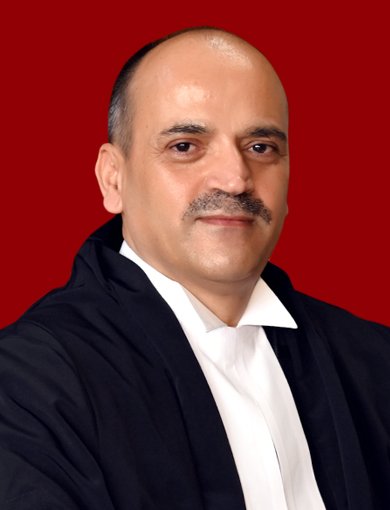
2026:HHC:17933
IN THE HIGH COURT OF HIMACHAL PRADESH, SHIMLA
Cr. Appeal No. 4153 of 2013
Reserved on: 02.04.2026
Date of Decision: 18.05.2026
Ramesh Sharma ...Appellant
Versus
Amina Chauhan ...Respondent
Coram
Hon’ble Mr Justice Rakesh Kainthla, Judge.
Whether approved for reporting?
1
No.
For the Appellant : Mr Ashok Kumar Tyagi, Advocate.
For the Respondent : Mr Rajesh Verma, Advocate.
Rakesh Kainthla, Judge
The present appeal is directed against the judgment
dated 18.07.2013, passed by the learned Judicial Magistrate, First
Class, Nahan, District Sirmour, H.P. (learned Trial Court), vide
which the respondent (accused before the learned Trial Court)
was acquitted of the commission of an offence punishable under
Section 138 of the Negotiable Instruments Act (N I Act). (Parties
shall hereinafter be referred to in the same manner as they were
arrayed before the learned Trial Court for convenience).
1
Whether reporters of Local Papers may be allowed to see the judgment? Yes.
2
2026:HHC:17933
2. Briefly stated, the facts giving rise to the present
appeal are that the complainant filed a complaint before the
learned Trial Court against the accused for the commission of an
offence punishable under section 138 of the NI Act. It was
asserted that the complainant and the accused had cordial
relations. The complainant advanced an amount of ₹57,000/- to
the accused on his request, and the accused promised to return
the amount within 20 days. She issued a cheque of ₹57,000/- in
the complainant’s favour to discharge her liability. The
complainant presented the cheque before the bank , but it was
dishonoured with an endorsement ‘insufficient funds’. The
complainant told the accused about this fact, and she promised
to return the amount, but she failed to do so. The complainant
served a notice upon the accused asking her to repay the amount
within 15 days of the receipt of the notice. The notice was
returned with the endorsement ‘unclaimed’. Hence, the
complaint was filed before the Court for taking action against the
accused as per the law.
3. The learned Trial Court found sufficient reasons to
summon the accused. When the accused appeared, a notice of
accusation was put to her for the commission of an offence
3
2026:HHC:17933
punishable under section 138 of the NI Act, to which she pleaded
not guilty and claimed to be tried.
4. The parties were called upon to produce the evidence,
and the complainant examined himself (CW-1) and Pankaj
Sharma (CW-2).
5. The accused, in her statement recorded under section
313 of the Code of Criminal Procedure (CrPC), admitted that she
had a cordial relationship with the complainant’s family. She
denied the rest of the complainant’s case. She stated that she had
not maintained any account in Punjab National Bank and did not
have any cheque book. She came to know about the present case
after receiving the summons from the C ourt. She had not
received any money from the complainant and is not liable to
repay any amount. She examined Pardeep Sharma (RW-1) in her
defence.
6. The learned Trial Court held that the accused
suggested to the complainant in his cross-examination that she
had lost the cheque and reported the matter to the police, Post
Kala Amb. She failed to establish this defence by examining any
witness or producing any document. She had also not taken any
steps to stop the payment of the cheque. She did not state in her
4
2026:HHC:17933
statement recorded under Section 313 of the Cr.P.C that she had
lost the cheque which was misused by the complainant .
Therefore, the plea taken by the accused was not probable. The
statement of the defence witness proved that the signatures on
the cheque and the specimen signatures in the bank were
different. This statement rebutted the presumption attached to
the cheque. Hence, the learned Trial Court acquitted the accused.
7. Being aggrieved by the judgment passed by the
learned Trial Court, the complainant has filed the present appeal
asserting that the learned trial Court had failed to properly
appreciate the material on record. It was duly proved on record
that the accused had issued a cheque in the complainant’s favour
to discharge her legal liability. The suggestions given to the
complainant regarding the los s of the cheque were not
corroborated by any evidence, and the learned Trial Court had
rightly rejected the defence of the accused. The cheque was
dishonoured with an endorsement ‘funds insufficient’, and the
Learned Trial Court erred in acquitting the accused because of
the difference in the signatures. Therefore, it was prayed that the
present appeal be allowed and the judgment passed by the
learned trial Court be set aside.
5
2026:HHC:17933
8. I have heard Mr Ashok Kumar Tyagi, learned counsel
for the appellant/complainant and Mr Rajesh Verma, learned
counsel for the respondent/accused.
9. Mr Ashok Kumar Tyagi, learned counsel for the
appellant/complainant, submitted that the learned Trial Court
erred in acquitting the accused on the ground of a difference in
signatures. The dishonour of the cheque due to signature
mismatch would attract the provisions of 138 of the NI Act, and
the learned Trial Court did not consider this aspect. The
complainant’s evidence proved that the accused had issued a
cheque in favour of the complainant to discharge her legal
liability. All the ingredients of the commission of an offence
punishable under section 138 of the NI Act were duly satisfied.
Therefore, he prayed that the present appeal be allowed and the
judgment passed by the learned Trial Court be set aside.
10. Mr Rajesh Verma , learned counsel for the
respondent/accused, submitted that the signatures on the
cheque differed from the signatures in the bank , which
supported the defence taken by the accused that she had lost her
cheque book, which was misused by the complainant. Learned
Trial Court had taken a reasonable view, and this court should
6
2026:HHC:17933
not interfere with the reasonable view of the learned Trial Court,
even if another view is possible. Hence, he prayed that the
present appeal be dismissed.
11. I have given considerable thought to the submissions
made at the bar and have gone through the records carefully.
12. The present appeal has been filed against a judgment
of acquittal. It was laid down by the Hon’ble Supreme Court in
Surendra Singh v. State of Uttarakhand, 2025 SCC OnLine SC 176:
(2025) 5 SCC 433 that the Court can interfere with a judgment of
acquittal if it is patently perverse, is based on
misreading/omission to consider the material evidence and
reached at a conclusion which no reasonable person could have
reached. It was observed at page 440:
“12. It could thus be seen that it is a settled legal position
that the interference with the finding of acquittal recorded
by the learned trial judge would be warranted by the High
Court only if the judgment of acquittal suffers from patent
perversity; that the same is based on a
misreading/omission to consider material evidence on
record; and that no two reasonable views are possible and
only the view consistent with the guilt of the accused is
possible from the evidence available on record.”
13. This position was reiterated in P. Somaraju v. State of
A.P., 2025 SCC OnLine SC 2291, wherein it was observed:
7
2026:HHC:17933
“ 12. To summarise, an Appellate Court undoubtedly has
full power to review and reappreciate evidence in an
appeal against acquittal under Sections 378 and 386 of the
Criminal Procedure Code, 1973. However, due to the
reinforced or ‘double’ presumption of innocence after
acquittal, interference must be limited. If two reasonable
views are possible on the basis of the record, the acquittal
should not be disturbed. Judicial intervention is only
warranted where the Trial Court's view is perverse, based
on misreading or ignoring material evidence, or results in
a manifest miscarriage of justice. Moreover, the Appellate
Court must address the reasons given by the Trial Court
for acquittal before reversing it and assigning its own. A
catena of the recent judgments of this Court has more
firmly entrenched this position, including, inter alia,
Mallappa v. State of Karnataka 2024 INSC 104, Ballu @
Balram @ Balmukund v. The State of Madhya Pradesh 2024
INSC 258, Babu Sahebagouda Rudragoudar v. State of
Karnataka 2024 INSC 320, and Constable 907 Surendra
Singh v. State of Uttarakhand 2025 INSC 114.”
14. While dealing with the appeal against the acquittal in
a complaint filed for the commission of an offence punishable
under Section 138 of the NI Act the Hon’ble Supreme Court held
in Rohitbhai Jivanlal Patel v. State of Gujarat (2019) 18 SCC 106 that
the normal rules with same rigour cannot be applied to the cases
under Negotiable Instruments Act because there is a
presumption that the holder had received the cheque for
consideration to discharge the debt/liability. The Appellate Court
is entitled to look into the evidence to determine whether the
accused has discharged the burden or not. It was observed: -
8
2026:HHC:17933
“12…. The principles aforesaid are not of much debate. In
other words, ordinarily, the appellate court will not be
upsetting the judgment of acquittal, if the view taken by
the trial court is one of the possible views of the matter
and unless the appellate court arrives at a clear finding
that the judgment of the trial court is perverse i.e. not
supported by evidence on record or contrary to what is
regarded as normal or reasonable; or is wholly
unsustainable in law. Such general restrictions are
essential to remind the appellate court that an accused is
presumed to be innocent unless proven guilty beyond a
reasonable doubt, and a judgment of acquittal further
strengthens such presumption in favour of the accused.
However, such restrictions need to be visualised in the
context of the particular matter before the appellate court
and the nature of the inquiry therein. The same rule with
the same rigour cannot be applied in a matter relating to
the offence under Section 138 of the NI Act, particularly
where a presumption is drawn that the holder has received
the cheque for the discharge, wholly or in part, of any debt
or liability. Of course, the accused is entitled to bring on
record the relevant material to rebut such presumption
and to show that preponderance of probabilities are in
favour of his defence but while examining if the accused
has brought about a probable defence so as to rebut the
presumption, the appellate court is certainly entitled to
examine the evidence on record in order to find if
preponderance indeed leans in favour of the accused.
13. For determination of the point as to whether the High
Court was justified in reversing the judgment and orders
of the trial court and convicting the appellant for the
offence under Section 138 of the NI Act, the basic
questions to be addressed are twofold: as to whether the
complainant Respondent 2 had established the ingredients
of Sections 118 and 139 of the NI Act, so as to justify
drawing of the presumption envisaged therein; and if so,
as to whether the appellant-accused had been able to
displace such presumption and to establish a probable
defence whereby, the onus would again shift to the
complainant?”
9
2026:HHC:17933
15. The present appeal has to be decided as per the
parameters laid down by the Hon’ble Supreme Court.
16. The ingredients of the offence punishable under
Section 138 of the NI Act were explained by the Hon’ble Supreme
Court in Kaveri Plastics v. Mahdoom Bawa Bahrudeen Noorul, 2025
SCC OnLine SC 2019 as under: -
“5.1.1. In K.R. Indira v. Dr. G. Adinarayana (2003) 8 SCC 300,
this Court enlisted the components, aspects and the acts,
the concatenation of which would make the offence under
Section 138 of the Act complete, to be these (i) drawing of
the cheque by a person on an account maintained by him
with a banker, for payment to another person from out of
that account for discharge in whole/in part of any debt or
liability, (ii) presentation of the cheque by the payee or the
holder in due course to the bank, (iii) returning the cheque
unpaid by the drawee bank for want of sufficient funds to
the credit of the drawer or any arrangement with the
banker to pay the sum covered by the cheque, (iv) giving
notice in writing to the drawer of the cheque within 15
days of the receipt of information by the payee from the
bank regarding the return of the cheque as unpaid,
demanding payment of the cheque amount, and (v) failure
of the drawer to make payment to the payee or the holder
in due course of the cheque, of the amount covered by the
cheque, within 15 days of the receipt of the notice.”
17. The complainant supported the contents of the
complaint in his statement on oath. He stated in his cross -
examination that he has an orchard at Haripur Khol, which is in
his family’s name. He also has a shop of spare parts at Ranital.
He also filed the Income Tax returns, but had not filed the copies
10
2026:HHC:17933
of the income tax returns on record. He denied that the accused
had lost the cheque (Ext.C-1), and she has reported the matter to
the Police Post. He denied that the cheque d id not bear the
signatures of the accused, that he had forged the signatures of
the accused, that he had not paid money to the accused or that he
had filed a false complaint before the Court.
18. The cross-examination of the complainant shows
that the accused had taken a defence of the misuse of the lost
cheque. Learned Trial Court had rightly held that this defence
was not established. The complainant denied suggestions made
to him about the loss of the cheque and denied suggestions do
not amount to any proof. The accused claimed in her statement
recorded under Section 313 of the Cr.P.C. that she did not have
any account in Punjab National Bank, and she did not have any
cheque book with her, so the question of issuance of a cheque did
not arise. This plea was falsified by the statement of Pardeep
Sharma (RW-1). He brought the specimen signatures of the
accused to the Court and exhibited a copy (R-1), which clearly
shows that the accused had a bank account with the bank and a
cheque was issued to her.
11
2026:HHC:17933
19. The complainant stated that he had a cordial
relationship with the family of the accused. The accused admitted
in reply to question No.2 in her statement recorded under Section
313 of Cr.P.C. that she had a cordial relationship with the
complainant’s family. She subsequently stated that she did not
know the complainant, and she knew the complainant by face.
These contradictory statements under Section 313 of the Cr.P.C.
would shake the credibility of the accused.
20. Therefore, the explanation provided by the accused
that she had lost the cheque, or she did not have any account with
the bank or no cheque book was issued to her , was not
established, and the complainant’s version is to be accepted as
correct that the cheque was issued to him by the accused in
discharge of her liability.
21. It was laid down in N. Vijay Kumar v. Vishwanath Rao
N., 2025 SCC OnLine SC 873 , that a cheque carries with it
presumptions that it was issued for consideration to discharge
debt/liability. It was observed:
“6. Section 118 (a) assumes that every negotiable
instrument is made or drawn for consideration, wh ile
Section 139 creates a presumption that the holder of a
cheque has received the cheque in discharge of a debt or
liability. Presumptions under both are rebuttable,
12
2026:HHC:17933
meaning they can be rebutted by the accused by raising a
probable defence.”
22. Thus, the Court has to start with the presumption that
the cheque was issued in discharge of the liability for
consideration, and the burden is upon the accused to rebut this
presumption.
23. Learned Trial Court heavily relied upon the statement
of Pardeep Sharma and the specimen signatures (Ext. R-1)
produced by him to conclude that the signatures on the cheque
and the specimen signatures differed from each other, which was
sufficient to rebut the presumption attached to the cheque. This
conclusion cannot be sustained. It was laid down by the Hon’ble
Supreme Court in Laxmi Dyechem v. State of Gujarat, (2012) 13 SCC
375: (2012) 4 SCC (Cri) 283: 2012 SCC OnLine SC 970, that the
dishonour of a cheque with an endorsement of signature
mismatch attracts the provisions of section 138 of N.I. Act. It was
observed at page 388: -
16. The above line of decisions leaves no room for holding
that the two contingencies envisaged under Section 138 of
the Act must be interpreted strictly or literally. We find
ourselves in respectful agreement with the decision in the
Magma case [(1999) 4 SCC 253: 1999 SCC (Cri) 524] that the
expression “amount of money … is insufficient” appearing
in Section 138 of the Act is a genus and dishonour for
reasons such “as account closed”, “payment stop ped”,
“referred to the drawer” are only species of that genus.
13
2026:HHC:17933
Just as dishonour of a cheque on the ground that the account
has been closed is a dishonour falling in the first contingency
referred to in Section 138, so also dishonour on the ground
that the “signatures do not match” or that the “image is not
found”, which too implies that the specimen signatures do not
match the signatures on the cheque would constitute a
dishonour within the meaning of Section 138 of the Act.”
(Emphasis supplied)
24. Karnataka High Court held in Peeranbi v. Hajimalang,
2013 SCC OnLine Kar 10420: (2013) 2 Kant LJ 569 : (2013) 3 KCCR
2223 : (2014) 1 AIR Kant R 405 : (2013) 3 BC 532 : (2014) 5 RCR (Cri)
757 that the dishonour of the cheque due to signature mismatch
will attract penal liability under Section 138 of the NI Act. It was
observed:
“9. In the facts and circumstances, as rightly contended by
the learned Counsel for the appellant, the cheque, having
been drawn on the account of the respondent, is not in
dispute. However, it is the defence set up that there was a
business relationship between the appellant and the
respondent, and the appellant could have accessed a
cheque leaf belonging to the respondent, which is sought
to be misused. In this regard, there is no positive evidence
put forward by the respondent. In other words, in terms of
Section 139, the presumption is in favour of the holder of
the cheque of the same having been issued by the account
holder in discharge of a legal liability. It is for the person
issuing the cheque to prove otherwise. This, the Apex
Court has held in the case of Rangappa v. Sri Mohan. [AIR
2010 SC 1898 : (2010) 11 SCC 441 : (2011) 1 SCC (Cri) 184: 2010
Cri. L.J. 2871 (SC)] That, not only is it possible for the
accused to establish this by leading positive evidence, but
he could also place reliance on the evidence tendered by
the complainant himself to discharge that burden. Hence,
if it was the contention of the respondent that there were
14
2026:HHC:17933
cheque leaves misplaced by him and which were sought to
be misused by the appellant, it was for the respondent to
have tendered evidence of the approximate date when
there was a dissolution of the partnership business
between the appellant and the respondent, and the
respondent having operated his Bank Account thereafter
using other cheque leaves and that the cheque leaves
which were left behind upon such dissolution having
fallen into disuse over a period of time, sought to be
forged and fabricated at a later date by the appellant, was
clearly on the respondent. There is no such evidence
forthcoming except the self-serving evidence of the
respondent. Further, in the event that any such cheque
leaves were misused, a duty was cast on the respondent to
inform his banker to stop payment, against such cheques
which were lost or misplaced. There is no such evidence
forthcoming. Nor is it the case of the respondent that the
cheques being misplaced, he had reported to the nearest
Police Station of such loss. There was no demand made on
the appellant to return such cheque leaves left behind.
Therefore, the evidence of the respondent was clearly
self-serving, and it was a burden cast on the respondent to
establish the fact that there were cheque leaves which
were left behind, and it was possible for the appellant to
misuse the same. If once it is apparent that the cheque had
been issued on the account held by the respondent, the
presumption under Section 139 is clearly in favour of the
appellant to establish that it was forged by the accused.
The burden is clearly on the respondent, and it is not for
the appellant to establish that the respondent had
deliberately changed his signature in order that it would
be dishonoured by his Bank. This may indeed have been
the intention in changing his signature at the time of
issuing the cheque. As already stated, the burden to
establish that it was lost and that it has been misused by
the appellant was clearly on the respondent. The Court
below has also committed an error in holding that the
liability in respect of which the cheque had been issued
was required to be proved by the appellant. The
proceedings were not in the nature of a suit for recovery of
15
2026:HHC:17933
money but for prosecution of an offence punishable under
Section 138 of the NI Act. The limited scope of those
proceedings is whether there was dishonour of the cheque
issued by the accused. That aspect of the matter has been
established on the face of it. Therefore, the Court below
has clearly committed an error in addressing the case of
the complainant and in dismissing the complain t.
Consequently, the appeal is allowed. The complainant has
established his case beyond a reasonable doubt. The
respondent, therefore, is liable for punishment.
Accordingly, he shall pay a fine of Rs. 3,50,000/- in default
of which, the respondent shall su ffer simple
imprisonment for a period of six months. The fine amount
shall be paid forthwith, in any event, within a period of 15
days. Out of the fine amount, a sum of Rs. 3,40,000/- shall
be paid as compensation to the appellant.”
25. Madras High Court also held in R. Manimehalai v.
Banumathi, 2018 SCC OnLine Mad 13802, that the dishonour of a
cheque due to signature mismatch attracts the provision of
Section 138 of the NI Act. It was observed:
“10…. It is true that the impugned cheque was returned on
two grounds, namely, (a) insufficient funds, and (b) the
signature of the drawer differs. On receipt of the statutory
notice, dated 31.12.2013, [EX-P3] from the complainant,
the accused has sent a belated reply notice, dated
17.3.2014, [EX-P5], in which the accused also did not take
the plea that her signature has been forged in the cheque.
She has taken a plea that the impugned cheque was issued
by her for a different debt. The accused took pains to
examine Ganeshamoorthy, Senior Manager of Syndicate
Bank, in which the accused has an account, to say that the
signature in the cheque differed from the specimen
signature with the Bank. This only shows that the accused
had deliberately put her signature differently in the
impugned cheque with the intention of ch eating the
complainant. However, a charge of cheating has not been
16
2026:HHC:17933
framed against the accused. This conduct of the accused in
giving the cheque by affixing her signature differently is
relevant under Section 8 of the Indian Evidence Act, 1872.
The presumption under. Section 139 of the Negotiable
Instruments Act, 1881, comes into force, when once the
cheque has been issued by the accused for the debt in
question. Of course, this is a rebuttable presumption and
the same can be dislodged by the accused by
preponderance of probabilities and not by proof beyond
reasonable doubt, as held by the Supreme Court
in Rangappa v. Sri Mohan, (2010) 2 BC 693 (SC): II (2010)
CCR 433 (SC) : (2010) 4 SLT 56 : (2010) 2 DLT (Cri) 699 (SC)
: (2010) 11 SCC 441. In this case, the accused has failed to
discharge her burden even by a preponderance of
probabilities. She was trying to take advantage of the
difference in signature in order to wriggle out of the
prosecution…”
26. Therefore, the difference in the signatures will not
result in the acquittal of the accused.
27. It was submitted on behalf of the accused that the
difference in signatures corroborates the plea taken by the
accused that she had lost her cheque book, which was misused by
the complainant by forging her signature. This submission is
only stated to be rejected. It has been held that the plea of the
accused regarding the loss of the cheque is not established, and
the difference in the signatures cannot be used to conclude that
the accused had lost her cheque.
28. The evidence of the accused is not sufficient to rebut
the presumption attached to the cheque. She had taken
17
2026:HHC:17933
contradictory pleas and had not succeeded in establishing them.
Therefore, the learned Trial Court had erred in holding that the
accused had rebutted the presumption attached to the cheque.
29. The complainant asserted that the cheque was
dishonoured with an endorsement ‘insufficient funds’. This is
corroborated by the memo (Ext.C-2), wherein the reason for the
dishonour of the cheque has been me ntioned as ‘funds
insufficient’. It was laid down by the Hon’ble Supreme Court in
Mandvi Cooperative Bank Ltd. v. Nimesh B. Thakore, (2010) 3 SCC
83: (2010) 1 SCC (Civ) 625: (2010) 2 SCC (Cri) 1: 2010 SCC OnLine SC
155 that the memo issued by the Bank is presumed to be correct
and the burden is upon the accused to rebut the presumption. It
was observed at page 95:
24. Section 146, making a major departure from the
principles of the Evidence Act, provides that the bank's
slip or memo with the official mark showing that the
cheque was dishonoured would, by itself, give rise to the
presumption of dishonour of the cheque, unless and until
that fact was disproved. Section 147 makes the offences
punishable under the Act compoundable.
30. In the present case, no evidence was produced to
rebut the presumption, and it is held that the cheque was
dishonoured with an endorsement ‘insufficient funds.’
18
2026:HHC:17933
31. The complainant stated that he had issued a notice to
the accused, which was returned with the endorsement
‘unclaimed’. This is duly corroborated by the envelope (Ext.C7),
which bears an endorsement of unclaimed. It also bears the
endorsements of not met, and out of station. It was laid down by
the Supreme Court in D. Vinod Shivappa v. Nanda Belliappa, (2006)
6 SCC 456 that where a notice is returned with the endorsement
not met or unclaimed, it is deemed to be served. It was observed
at page 462:
“14. If a notice is issued and served upon the drawer of the
cheque, no controversy arises. Similarly, if the notice is
refused by the addressee, it may be presumed to have been
served. This is also not disputed. This leaves us with the
third situation where the notice could not be served on the
addressee for one or the other reason, such as his non-
availability at the time of delivery, or premises remaining
locked on account of his having gone elsewhere, etc. etc. If
in each such case the law is understood to mean that there
has been no service of notice, it would completely defeat
the very purpose of the Act. It would then be very easy for
an unscrupulous and dishonest drawer of a cheque to
make himself scarce for some time after issuing the
cheque so that the requisite statutory notice can never be
served upon him, and consequently, he can never be
prosecuted. There is good authority to support the
proposition that once the complainant, the payee of the
cheque, issues notice to the drawer of the cheque, the
cause of action to file a complaint arises on the expiry of
the period prescribed for payment by the drawer of the
cheque. If he does not file a complaint within one month of
the date on which the cause of action arises under clause
(c) of the proviso to Section 138 of the Act, his complaint
19
2026:HHC:17933
gets barred by time. Thus, a person who can dodge the
postman for about a month or two, or a person who can
get a fake endorsement made regarding his non -
availability, can successfully avoid his prosecution
because the payee is bound to issue notice to him within a
period of 30 days from the date of receipt of information
from the bank regarding the return of the cheque as
unpaid. He is, therefore, bound to issue the legal notice,
which may be returned with an endorsement that the
addressee is not available at the given address.
xxxxx
18. This Court noticed the position well settled in law that
the notice refused to be accepted by the drawer can be
presumed to have been served on him. In that case , the
notice was returned as “unclaimed” and not as refused.
The Court posed the question, “Will there be any
significant difference between the two so far as the
presumption of service is concerned?” Their Lordships
referred to Section 27 of the General Clauses Act and
observed that the principle incorporated therein could
profitably be imported in a case where the sender had
dispatched the notice by post with the correct address
written on it. Then it can be deemed to have been served
on the sendee, unless he proves that it was not really
served and that he was not responsible for such non -
service. This Court dismissed the appeal preferred by the
drawer, holding that where the notice is returned by the
addressee as unclaimed, such date of return to the sender
would be the commencing date in reckoning the period of
15 days contemplated in clause (c) of the proviso to Section
138 of the Act. This would be without prejudice to the right
of the drawer of the cheque to show that he had no
knowledge that the notice was brought to his address.
Since the appellant did not attempt to discharge the
burden to rebut the aforesaid presumption, the appeal was
dismissed by this Court. The aforesaid decision is
significant for two reasons. Firstly, it was held that the
principle incorporated in Section 27 of the General Clauses
Act would apply in a case where the sender dispatched the
20
2026:HHC:17933
notice by post with the correct address written on it, but
that would be without prejudice to the right of the drawer
of the cheque to show that he had no knowledge that the
notice was brought to his address.”
32. It was laid down by the Hon’ble Supreme Court of
India in C.C. Allavi Haji vs. Pala Pelly Mohd. 2007(6) SCC 555, that
when a notice is returned unclaimed, it is deemed to be served. It
was observed:
“8. Since in Bhaskaran's case (supra), the notice issued in
terms of Clause (b) had been returned unclaimed and not
as refused, the Court, posed the question: "Will there be
any significant difference between the two so far as the
presumption of service is concerned?" It was observed
that though Section 138 of the Act does not require that the
notice should be given only by "post", yet in a case where
the sender has dispatched the notice by post with the
correct address written on it, the principle incorporated in
Section 27 of the General Clauses Act, 1897 (for short 'G.C.
Act') could profitably be imported in such a case. It was
held that in this situation service of notice is deemed to
have been effected on the sendee unless he proves that it
was not really served and that he was not responsible for
such non-service.”
33. This position was reiterated in Priyanka Kumari vs.
Shailendra Kumar (13.10.2023- SC Order): MANU/ SCOR/ 133284/
2023, wherein it was observed:
“As it was held by the Hon'ble Supreme Court in K.
Bhaskaran Vs. Sankaran Vaidhyan Balan and Another, (1999)
7 Supreme Court Cases 510, that when notice is returned as
'unclaimed', it shall be deemed to be duly served upon the
addressee, and it is a proper service of notice. In the case
of Ajeet Seeds Limited Vs. K. Gopala Krishnaiah (2014) 12 SCC
685 (2014), the Hon'ble Court, while interpreting Section
21
2026:HHC:17933
27 of the General Clauses Act 1897 and also Section 114 of
the Evidence Act 1872, held as under: -
"Section 114 of the Evidence Act, 1872, enables the
court to presume that in the common course of
natural events, the communication sent by post
would have been delivered at the address of the
addressee. Further, Section 27 of the General
Clauses Act, 1897 gives rise to a presumption that
service of notice has been effected when it is sent to
the correct address by registered post. It is not
necessary to aver in the complaint that, despite the
return of the notice unserved, it is deemed to have
been served or that the addressee is deemed to have
knowledge of the notice. Unless and until the
contrary is proved by the addressee, service of
notice is deemed to have been effected at the time at
which the letter would have been delivered in the
ordinary course of business."
34. A similar view was taken in Krishna Swaroop Agarwal
v. Arvind Kumar, 2025 SCC OnLine SC 1458, wherein it was
observed:
“13. Section 27 of the General Clauses Act, 1887,
deals with service by post:
“27. Meaning of Service by post.-Where any
[Central Act] or Regulation made after the
commencement of this Act authorizes or
requires any document to be served by post,
whether the expression “serve” or either of the
expressions “give” or “send” or any other
expression is used, then, unless a different
intention appears, the service shall be deemed
to be effected by properly addressing, pre -
paying and posting by registered post, a letter
containing the docum ent, and, unless the
contrary is proved, to have been effected at the
time at which the letter would be delivered in
the ordinary course of post”.
22
2026:HHC:17933
14. The concept of deemed service has been discussed
by this Court on various occasions. It shall be useful to
refer to some instances:14.1 In Madan and Co. v. Wazir
Jaivir Chand (1989) 1 SCC 264, which was a case
concerned with the payment of arrears of rent under
the J&K Houses and Shops Rent Control Act, 1966. The
proviso to Section 11, which is titled “Protection of a
Tenant against Eviction”, states that unless the
landlord serves notice upon the rent becoming due,
through the Post Office under a registered cover, no
amount shall be deemed to be in arrears. Regarding
service of notice by post, it was observed that in order
to comply with the proviso, all that is within the
landlord's domain to do is to post a pre -paid
registered letter containing the correct address and
nothing further. It is then presumed to be delivered
under Section 27 of the GC Act. Irrespective of whether
the addressee accepts or rejects, “there is no difficulty,
for the acceptance or refusal can be treated as a service on,
and receipt by the addressee.”
14.2 In the context of Section 138 of the Negotiable
Instruments Act, 1881, it was held that when the payee
dispatches the notice by registered post, the
requirement under Clause (b) of the proviso of Section
138 of the NI Act stands complied with and the cause of
action to file a complaint arises on the expiry of that
period prescribed in Clause (c) thereof. [See: C.C. Alavi
Haji v. Palapetty Mouhammed (2007) 6 SCC 555]
14.3 The findings in C.C. Alavi (supra) were followed in
Vishwabandhu v. Srikrishna (2021) 19 SCC 549. In this case,
the summons issued by the Registered AD post was
received back with endorsement “refusal”. In accordance
with Sub-Rule (5) of Order V Rule 9 of CPC, refusal to
accept delivery of the summons would be deemed to be due
service in accordance with law. To substantiate this view, a
reference was made to the judgment referred to supra.
14.4 A similar position as in C.C. Alavi (supra) stands
adopted by this Court in various judgments of this Court in
Greater Mohali Area Development Authority v. Manju Jain
(2010) 9 SCC 157; Gujarat Electricity Board v. Atmaram
Sungomal Posani (1989) 2 SCC 602; CIT v. V. K. Gururaj (1996)
23
2026:HHC:17933
7 SCC 275; Poonam Verma v. DDA (2007) 13 SCC 154; Sarav
Investment & Financial Consultancy (P) Ltd. v. Lloyds Register
of Shipping Indian Office Staff Provident Fund (2007) 14 SCC
753; Union of India v. S.P. Singh (2008) 5 SCC 438; Municipal
Corpn., Ludhiana v. Inderjit Singh (2008) 13 SCC 506; and V.N.
Bharat v. DDA (2008) 17 SCC 321.
35. In the present case, the accused has not proved that
she was not responsible for the non-service of the notice;
therefore, it is duly proved that the notice was duly served upon
the accused.
36. In any case, it was laid down in C.C. Allavi Haji vs. Pala
Pelly Mohd. 2007(6) SCC 555, that the person who claims that he
had not received the notice has to pay the amount within 15 days
from the date of the receipt of the summons from the Court and
in case of failure to do so, he cannot take the advantage of the
fact that notice was not received by him. It was observed:
“It is also to be borne in mind that the requirement of
giving notice is a clear departure from the rule of Criminal
Law, where there is no stipulation of giving notice before
filing a complaint. Any drawer who claims that he did not
receive the notice sent by post, can, within 15 days of receipt of
summons from the court in respect of the complaint under
Section 138 of the Act, make payment of the cheque amount
and submit to the Court that he had made payment within 15
days of receipt of summons (by receiving a copy of the
complaint with the summons) and, therefore, the complaint is
liable to be rejected. A person who does not pay within 15 days
of receipt of the summons from the Court, along with the copy
of the complaint under Section 138 of the Act, cannot obviously
contend that there was no proper service of notice as required
24
2026:HHC:17933
under Section 138, by ignoring the statutory presumption to
the contrary under Section 27 of the G.C. Act and Section 114 of
the Evidence Act. In our view, any other interpretation of
the proviso would defeat the very object of the legislation.
As observed in Bhaskaran’s case (supra), if the giving of
notice in the context of Clause (b) of the proviso was the
same as the receipt of notice, a trickster cheque drawer
would get the premium to avoid receiving the notice by
adopting different strategies and escape from the legal
consequences of Section 138 of the Act.” (Emphasis
supplied)
37. The accused did not claim that she had repaid the
amount to the complainant; therefore, it was duly proved on
record that the accused had failed to repay the amount despite
the deemed receipt of the notice.
38. Therefore, it was duly proved before the learned Trial
Court that the accused had issued a cheque to discharge her legal
liability, the cheque was dishonoured with an endorsement
‘insufficient funds’, and the accused failed to pay the money
despite the deemed receipt of a notice of demand. Hence, all the
ingredients of the offence punishable under Section 138 of the NI
Act were duly satisfied. Learned Trial Court had failed to
appreciate the significance of the presumption and the manner of
its rebuttal. It was laid down in Rajesh Jain v. Ajay Singh, (2023) 10
SCC 148: 2023 SCC OnLine SC 1275 that when the court failed to
consider the presumption under section 139 of the Negotiable
25
2026:HHC:17933
Instruments Act, its judgment could be interfered with. It was
observed at page 166:
54. As rightly contended by the appellant, there is a
fundamental flaw in the way both the courts below have
proceeded to appreciate the evidence on record. Once the
presumption under Section 139 was given effect to, the
courts ought to have proceeded on the premise that the
cheque was, indeed, issued in discharge of a debt/liability.
The entire focus would then necessarily have to shift to the
case set up by the accused, since the activa tion of the
presumption has the effect of shifting the evidential burden
on the accused. The nature of inquiry would then be to see
whether the accused has discharged his onus of rebutting the
presumption. If he fails to do so, the court can straightaway
proceed to convict him, subject to the satisfaction of the
other ingredients of Section 138. If the court finds that the
evidential burden placed on the accused has been discharged,
the complainant would be expected to prove the said fact
independently, without taking the aid of the presumption.
The court would then take an overall view based on the
evidence on record and decide accordingly.
55. At the stage when the courts concluded that the signature
had been admitted, the court ought to have inquired into
either of the two questions (depending on the method in which
the accused has chosen to rebut the presumption): Has the
accused led any defence evidence to prove and conclusively
establish that there existed no debt/liability at the time of
issuance of the cheque? In the absence of rebuttal evidence
being led, the inquiry would entail: Has the accused proved
the non-existence of debt/liability by a preponderance of
probabilities by referring to the “particular circumstances of
the case”?
56. The perversity in the approach of the trial court is
noticeable from the way it proceeded to frame a question at
trial. According to the trial court, the question to be decided
was “whether a legally valid and enforceable debt existed qua
the complainant and the cheque in question (Ext. CW I/A) was
issued in discharge of said liability/debt”. When the initial
framing of the question itself being erroneous, one cannot
26
2026:HHC:17933
expect the outcome to be right. The onus, instead of being
fixed on the accused, has been fixed on the complainant. A
lack of proper understanding of the nature of the
presumption in Section 139 and its effect has resulted in an
erroneous order being passed.
57. Einstein had famously said:
“If I had an hour to solve a problem, I'd spend 55
minutes thinking about the problem and 5 minutes
thinking about solutions.”
Exaggerated as it may sound, he is believed to have
suggested that the quality of the solution one generates is
directly proportionate to one's ability to identify the
problem. A well-defined problem often contains its own
solution within it.
58. Drawing from Einstein's quote, if the issue had been
properly framed after careful thought and application of
judicial mind, and the onus correctly fixed, perhaps, the
outcome at trial would have been very different, and this
litigation might not have travelled all the way up to this
Court.”
43. Therefore, the judgment of the learned Trial Court
cannot be sustained and is liable to be set aside.
44. In view of the above, the present appeal is allowed,
and the accused is convicted of the commission of an offence
punishable under section 138 of the NI Act. She be produced
before the Court for hearing her on the quantum of sentence on
03.06.2026.
( Rakesh Kainthla)
18
th
May 2026 Judge
(ravinder)

 Login with google
Legal Notes
Add a Note....