
The stand of the accused persons was that the liquor in question was procured from the distillery Chittore Co-operative Sugar Mill (in short the ‘Chiccopse’). It was stated that earlier cases were ...


No Acts & Articles mentioned in this case
REPORTABLE
IN THE SUPREME COURT OF INDIA
CRIMINAL APPELLATE JURISDICTION
CRIMINAL APPEAL NOs. 1263 OF 2001
Raveendran K & Anr, ….Appellants
Versus
Excise Inspector Vadakara & Anr. ….Respondents
With
CRIMINAL APPEAL NOs. 1264-1265 OF 2001
With
CRIMINAL APPEAL NOs. 1266 OF 2001
J U D G M E N T
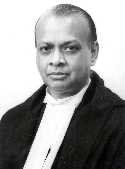
Dr. ARIJIT PASAYAT, J.
1
1.Challenge in these appeals is to the judgment of a learned Single
Judge of the Kerala High Court. Before the High Court Criminal Revision
Petitions were filed questioning correctness of the judgment passed by
learned Sessions Judge Kozhikode upholding the conviction of the revision
petitioners for offence punishable under Section 57A (iii) of the Abkari Act,
1967, described as (Act 1 of 1077) because the same was passed by the then
Maharaja of Cochin on the 5
th
day of August, 1902 corresponding to the 31
st
day of Karkadagom 1077 and was extended to the whole of Kerala as per
Act 10 of 1967. Each was convicted by learned Assistant Sessions Judge,
Vadakara and sentenced to rigorous imprisonment for one year and to pay a
fine of Rs.10,000/- each with default stipulation. Lakshmanan N., the
revisional petitioner No. 2 in two of the revision petitions before the High
Court and the petitioner in one of the petitions was the licensee of arrack
shops bearing Nos. 1 to 16 of Vadakara Range. Preventive officer PW 1
attached to the Vadakara Excise Range along with Excise Guards inspected
the godowns and arrack shops of the licensee on 19.12.1988 and took
samples for chemical examination. The samples were taken from the stocks
of 6520 litres of arrack kept in 65 barrels, in the presence of the appellant
No. 1. One of the samples collected from the godown was given to the
2
licensee on proper acknowledgement. The sample of chemical examination
as per the regional Chemical Examination Laboratory, Kozhikode, revealed
the presence of Methyle alcohol, a noxious substance, the consumption of
which is injurious to health. On the same day at another godown sample
was collected where appellant Mohanan in Criminal Appeal No. 1265 of
2001 was the manager. During the pendency of the appeals before this
Court, the licensee died. The samples were taken in three bottles in each
case. Samples labeled as A & B were taken by the officer while bottle C was
given to the salesman/manager as the case may be. Samples labeled A were
sent for chemical analysis and the report is dated 25.1.1989. The presence
of noxious substance was found. On 19.5.1989 the complaint was filed.
2.The stand of the accused persons was that the liquor in question was
procured from the distillery Chittore Co-operative Sugar Mill (in short the
‘Chiccopse’). It was stated that earlier cases were instituted against
Chiccopse and it was found that the role of Chiccopse in the supply of illicit
liquor cannot be ruled out. Various documents were relied upon for this
purpose. The courts below did not accept the stand and found the accused
persons guilty and sentenced them as aforestated.
3
3.In support of the appeals learned counsel for the appellant submitted
that it is not the case of the prosecution that the licencee had got the liquor
in question from any source other than Chiccopse. It was submitted that the
First Information Report was also lodged on the basis of the Board of
Revenue’s letter dated 13.1.1999 and the charge sheet has also been filed
against officials of Chiccopse.
4.Learned counsel for the State on the other hand submitted that burden
of proof under Section 57(1) or (2) of Section 57A is on the licensee to
prove that he has not mixed or permitted to be mixed or as the case may be
omitted to take a reasonable precaution to prevent the mixing of any
substance referred to in the provision with any liquor or intoxicated drug.
Similar is the provision in relation to possession of liquor or intoxicating
drugs with which some other substance is mixed. Sections 57 and 57A of
the Act read as follows:
“57. For adulteration, etc., by licensed vendor or
manufacturer:- Whoever being the holder of a licence for the
sale or manufacture of liquor or of any intoxicating drug under
this Act,
4
(a) mixes or permits to be mixed with the liquor or
intoxicating drug, sold or manufactured by him, any drug,
other than a noxious drug] or any foreign ingredient likely to
add to its actual or apparent intoxicating quality or strength,
or any article prohibited
3
[other than an article which the
Government shall deem to be noxious] by any rule made
under section 29, clause (k), when such admixture shall not
amount to the offence of adulteration under Section 272 of
the Indian Penal Code(Substituted for the words and figures
”Section 248 of the Cochin Penal Code” by Section 32(a) of
Act 10 of 1967; or
(b) sells or keeps or exposes for sale as foreign liquor, liquor
which he knows or has reason to believe to be country liquor;
or
(c) marks the cork of any bottle, case, package or other
receptacle containing country liquor, or uses any bottle, case,
package or other receptacle containing country liquor with
any mark thereon on the cork thereof with the intention of
causing it to be believed that such bottle, case, package or
other receptacle contains foreign liquor when such act shall
not amount to the offence of '[applying a false trade mark
under section 78 of the Trade and Merchandise Marks Act,
1958]; or
(d) sells or keeps or exposes for sale any country liquor in a
bottle, case, package or other receptacle with any mark
thereon or on the cork thereof with the intention of causing it
to be believed that such bottle, case, package or other
receptacle contains foreign liquor, when such act shall not
amount to the offence of selling goods to which a false trade
mark or false trade description is applied under Section 79 of
the Trade and Merchandise Marks Act, 1958(substituted for
the words and figures “marked with a counterfeit trade mark
under Section 466 of the Cochin Penal Code by Section 32
(c ) of Act 10 of 1967) ;
5
shall on conviction before a competent court, be punished for
each such offence, with imprisonment for a term which may
extend to five years, or with fine which may extend to fifty
thousand rupees, or with both (The words "on conviction
before a Magistrate, be punished for each such offence, [with
imprisonment for a term which may extend to six months, or
with fine which may extend to three thousand rupees, or with
both." substituted by Act 16 of 1997, w.e.f. 3-6-1997).
57A. For adulteration of liquor or intoxicating drug with
noxious substances, etc:- (1) Whoever mixes or permits to be
mixed any noxious substance or any substance which is likely
to endanger human life or to cause grievous hurt to human
beings, with any liquor or intoxicating drug shall, on
conviction, be punishable
(i) if, as a result of such act, grievous hurt is caused to any
person, with imprisonment for a term which shall not be less
than two years but which may extend to imprisonment for
life, and with fine which may extend to fifty thousand rupees;
(ii) if, as a result of such act, death is caused to any person,
with death or imprisonment for a term which shall not be less
than three years but which may extend to imprisonment for
life, and with fine which may extend to fifty thousand rupees;
(iii) in any other case, with imprisonment for a term which
shall not be less than one year, but which may extend to ten
years, and with fine which may extend to twenty-five
thousand rupees.
Explanation:- For the purpose of this section and section 57B,
the expression "grievous hurt" shall have the same meaning as
in section 320 of the Indian Penal Code, 1860 (Central Act 45
of 1860).
(2) Whoever omits to take reasonable precautions to prevent
the mixing of any noxious substance or any substance which is
6
likely to endanger human life or to cause grievous hurt to
human beings, with any liquor or intoxicating drug shall, on
conviction, be punishable,
(i)if as a result of such omission, grievous hurt is caused
to any person, with imprisonment for a term which shall not
be less than two years but which may extend to imprisonment
for life, and with fine which may extend to fifty thousand
rupees;
(ii) if as a result of such omission, death is caused to any
person, with imprisonment for a term which shall not be less
than three years but which may extend to imprisonment for
life, and with fine which may extend to fifty thousand rupees;
(iii) in any other case, with imprisonment for a term which
shall not be less than one year but which may extend to ten
years, and with fine which may extend to twenty-five
thousand rupees.
(3) Whoever possesses any liquor or intoxicating drug in which
any substance referred to in sub-section (1) is mixed, knowing
that such substance is mixed with such liquor or intoxicating
drug shall, on conviction, be punishable with imprisonment for
a term which shall not be less than one year but which may
extend to ten years, and with fine which may extend to twenty-
five thousand rupees.
(4) Notwithstanding anything contained in the Code of
Criminal Procedure, 1973 (Central Act 2 of 1974), no person
accused or convicted of an offence under subsection (1) or sub-
section (3) shall, if in custody, be released on bail or on his
own bond, unless
(a) the prosecution has been given an opportunity to oppose
the application such release, and
(b) where the prosecution opposes the application, the court is
satisfied that there are reasonable grounds for believing that
he is not guilty of such offence.
7
(5) Notwithstanding anything contained in the Indian Evidence
Act, 1872 (1 of 1872)-
(a) where a person is prosecuted for an offence under sub-
section (1) or s section (2), the burden of proving that he has
not mixed or permitted to mixed or, as the case may be,
omitted to take reasonable precautions to prevent the mixing
of, any substance referred to in that sub-section with any
liquor, intoxicating drug shall be on him;
(b) where a person is prosecuted for an offence under sub-
section (3) for being in possession of any liquor or
intoxicating drug in which any substance refers to in sub-
section (1) is mixed, the burden of proving that he did not
know that such substance was mixed with such liquor or
intoxicating drug shall be on him.
5.As rightly submitted by learned counsel for the State, the burden of
proof is on the licensee as is evident from sub Section (5) of Section 57A.
Even if it is accepted for the sake of argument that Chiccopse had any role
to play, that does not absolve the appellants from culpability under the Act.
It is to be noted that while the appellants were selling the liquor in bottle
they got it from Chiccopse admittedly in barrels. Therefore the stand of the
appellants that the liquor was sold in the same form is not correct.
6.In view of the factual position indicated above, the appeal so far as
the appellant No. 1 in each case is concerned, stands dismissed, while
8
appeal stands abated so far as the appellant No. 2 i.e. the licensee in each
case because of his death. The appellant No. 1 in each case who were
released on bail pursuant to order dated 7.12.2001 shall surrender to custody
forthwith to serve remainder of sentence.
……........................................J.
(Dr. ARIJIT PASAYAT)
………………........................J.
(P. SATHASIVAM)
………………........................J.
(AFTAB ALAM)
New Delhi;
October 21, 2008
9

 Login with google
Legal Notes
Add a Note....