
As per case facts, a dispute arose from contractual and financial dealings between the appellant and respondent no. 2 concerning construction work. Respondent no. 2 lodged an FIR, leading to ...
2025 INSC 1384 _____________________________________________________________________________________________
SLP (Crl.) No. 11151 of 2025 Page 1 of 16
NON-REPORTABLE
IN THE SUPREME COURT OF INDIA
(CRIMINAL APPELLATE JURISDICTION)
CRIMINAL APPEAL NO. _____ OF 2025
(@ SPECIAL LEAVE PETITION (CRIMINAL) NO. 11151 OF 2025)
ROCKY … APPELLANT
VERSUS
STATE OF TELANGANA & ANR. … RESPONDENTS
J U D G M E N T
VIPUL M. PANCHOLI, J.
1. Leave granted.
2. This appeal challenges the final order dated 19.02.2025 passed
by the High Court of Telangana at Hyderabad in Criminal
Petition No. 1022 of 2019, whereby the High Court partly
allowed the application of the appellant under Section 482 of
the Code of Criminal Procedure, 1973 (hereinafter referred as
“the CrPC”) by quashing cognizance under Section 406 of the
Indian Penal Code, 1860 (hereinafter referred as “the IPC”),
_____________________________________________________________________________________________
SLP (Crl.) No. 11151 of 2025 Page 2 of 16
while maintaining cognizance under Sections 420, 344 and 506
of the IPC.
3. The dispute arises from contractual and financial dealings
between appellant (accused no. 2) and respondent no. 2
(complainant) relating to construction work undertaken
between 2008-2010. A No Dues Certificate dated 10.06.2010
was issued by respondent no. 2 and acknowledged on
12.06.2010. Subsequent disputes arose, culminating in cross-
allegations.
4. FIR No. 240 of 2015 was lodged by respondent no. 2 against
appellant under Sections 420 and 506 of the IPC. After
investigation, Charge Sheet No. 07 of 2016 was filed against
appellant under Sections 420, 406, 344 and 506 of the IPC and
the matter was registered as C.C. No. 1374 of 2016 before the
learned III Additional Chief Metropolitan Magistrate,
Hyderabad.
5. The appellant filed an application under Section 482 of the CrPC
before the High Court for quashing of the order dated
19.10.2016 passed by the learned Additional Chief Metropolitan
Magistrate, taking cognizance of the offences punishable under
_____________________________________________________________________________________________
SLP (Crl.) No. 11151 of 2025 Page 3 of 16
Sections 420, 506, 344 and 406 of the IPC and issuing
summons to the appellant in C.C. No. 1374 of 2016. The High
Court partly allowed the said application and quashed the order
of taking cognizance of the offence under Section 406 of the IPC
whereas, the High Court declined to quash proceedings under
Sections 420, 344 and 506 of the IPC.
6. Aggrieved by the aforesaid order, the appellant has filed the
present appeal.
7. Learned Senior Counsel for the appellant contended that the
dispute between the parties is entirely civil in nature and has
been improperly given a criminal color. It is submitted that the
No-Dues Certificate dated 10.06.2010, duly acknowledged by
respondent no. 2, unequivocally records that no payments were
outstanding, thereby exposing the falsity of the allegations
subsequently raised. According to the appellant, the criminal
proceedings have been initiated solely to exert pressure and
extract additional amounts under the guise of criminal law.
8. It is further urged that the FIR is a motivated counterblast to
the injunction order secured by the appellant in O.S. No. 98 of
2015. The filing of the FIR within three days of the said order
_____________________________________________________________________________________________
SLP (Crl.) No. 11151 of 2025 Page 4 of 16
demonstrates, according to learned senior counsel, the mala
fide intent of respondent no. 2 to harass and intimidate the
appellant. The FIR, lodged after an unexplained delay of more
than five years from the incident, is stated to suffer from
inherent improbabilities and lacks credibility. Such an
inordinate and unexplained delay, it is submitted, vitiates the
prosecution and renders the allegations unreliable. Moreover,
neither the FIR nor the charge sheet attributes any specific overt
act to the appellant in relation to the incident dated 09.02.2015
and there are no allegations of initial fraudulent intention or
inducement. The entire dispute, it is submitted, pertains to
non-payment of contractual dues and falls squarely within the
realm of civil law.
9. It is also submitted that the outstanding amount of Rs.
43,29,833/- pertains to contractual performance and that
criminal proceedings cannot be invoked for the enforcement of
civil liabilities. Reliance is placed on M/s Shikhar Chemicals
v. State of Uttar Pradesh, 2025 SCC OnLine 1643 , and
Mitesh Kumar J. Sha v. State of Karnataka, (2022) 14 SCC
572, wherein this Court cautioned against the misuse of
_____________________________________________________________________________________________
SLP (Crl.) No. 11151 of 2025 Page 5 of 16
criminal law to settle civil or commercial disputes and held that
such attempts constitute an abuse of process.
10. Additionally, it is argued that the order of the learned Magistrate
taking cognizance under Sections 420, 406, 344 and 506 of the
IPC is mechanical and vitiated by non-application of mind. The
order dated 19.10.2016, according to learned senior counsel,
does not reflect any examination of the statutory ingredients of
the offences, nor does it record satisfaction of the existence of a
prima facie case. Reliance is placed on Anil Kumar v. M.K.
Aiyappa, (2013) 10 SCC 705 , and Shaurabh Kumar
Tripathi v. Vidhi Rawal, 2025 SCC OnLine 1158 , to submit
that the absence of judicial application of mind renders the
entire cognizance order unsustainable.
11. It is further contended that the High Court retains the power to
quash proceedings even after the filing of a charge sheet.
Reference is made to Anand Kumar Mohatta v. State (NCT of
Delhi), (2019) 11 SCC 706, and Abhishek v. State of Madhya
Pradesh, 2023 SCC OnLine SC 1083 , which clarify that the
filing of a charge sheet does not extinguish the jurisdiction of
the High Court under Section 482 of the CrPC.
_____________________________________________________________________________________________
SLP (Crl.) No. 11151 of 2025 Page 6 of 16
12. In light of the fact that the charge sheet was filed in 2016 and
that the proceedings have remained pending for nearly a decade
without any substantive progress, it is submitted that the
continuation of the criminal case would amount to an abuse of
the criminal justice system. Therefore, the appellant prayed that
FIR No. 240 of 2015 and all consequential proceedings be
quashed.
13. Per contra, learned counsel for the State (respondent no. 1)
submitted that although this Court issued notice in the SLP, no
stay was granted. Despite this, learned counsel for the appellant
incorrectly represented before the Trial Court that stay had
been granted, leading to unwarranted adjournments. This
conduct, it is submitted, reflects lack of bona fides and an
attempt to stall proceedings.
14. Learned Amicus Curiae appointed for respondent no. 2
submitted that three bills amounting to approximately Rs. 1.17
crores were raised for the construction work undertaken by
respondent no. 2, whereas the appellant’s company made
payments totaling only about Rs. 52 lakhs. It is contended that
_____________________________________________________________________________________________
SLP (Crl.) No. 11151 of 2025 Page 7 of 16
a substantial balance remains unpaid, in addition to further
construction work completed at the request of the appellant.
15. It is argued that the No-Dues Certificate relied upon by the
appellant is fabricated and does not reflect the true financial
position between the parties. The respondent no. 2 has
consistently disputed its authenticity, and therefore, the
document cannot form the basis for quashing criminal
proceedings at the threshold.
16. It is further submitted that the materials collected during
investigation, including the statements of four witnesses, fully
support the respondent no. 2’s allegations and disclose a prima
facie case against the appellant. It is emphasised that the
veracity of these statements and the defense put forth by the
appellant are matters to be examined during trial and this Court
may not interfere at the pre-trial stage.
17. With respect to the contention of the appellant that the dispute
is purely civil, it is submitted that the mere absence of civil
recovery proceedings by respondent no. 2 does not, by itself,
establish mala fides or demonstrate that the criminal complaint
was lodged to exert undue pressure. It is urged that the nature
_____________________________________________________________________________________________
SLP (Crl.) No. 11151 of 2025 Page 8 of 16
of the allegations and not the choice of civil remedies, must
guide the Court in assessing the maintainability of proceedings.
18. Reliance is placed on State of Haryana v. Bhajan Lal, 1992
Supp (1) SCC 335, to urge that the power to quash criminal
proceedings under Section 482 of the CrPC is to be exercised
sparingly and in exceptional circumstances. Courts must
refrain from entering into the truthfulness or otherwise of the
allegations at this stage and may interfere only where the case
falls within the narrowly recognised categories warranting
quashing.
19. Further reliance is placed on Pradeep Kumar Kesarwani v.
State of Uttar Pradesh & Anr., 2025 SCC OnLine SC 1947 ,
to contend that the appellant has not produced unimpeachable
or incontrovertible material capable of dislodging the case of the
prosecution. In particular, when the No-Dues Certificate is
seriously contested and uncorroborated, it cannot be relied
upon to nullify the proceedings.
20. Reliance is also placed on Muskan v. Ishaan Khan (Sataniya)
and Others, 2025 SCC OnLine SC 2355, wherein this Court
has held that with regard to the power to quash criminal
_____________________________________________________________________________________________
SLP (Crl.) No. 11151 of 2025 Page 9 of 16
proceedings under Section 482 of the CrPC, it is settled that at
the stage of quashing, the court is not required to conduct a
“mini trial”. Thus, the jurisdiction under Section 482 of the
CrPC with respect to quashing is somewhat limited as the court
has to only consider whether any sufficient material is available
to proceed against the accused or not. If sufficient material is
available, the power under Section 482 of the CrPC should not
be exercised.
21. In view of the above, it is submitted that the present appeal
lacks merit and that the High Court committed no error in
refusing to quash the criminal proceedings. It is accordingly
urged that the present appeal be dismissed.
22. We have carefully considered the rival submissions and perused
the material placed on record.
23. The primary issue in this appeal is whether the High Court was
justified in declining to quash the proceedings for offences
under Sections 420, 344 and 506 of the IPC, while exercising
its inherent jurisdiction under Section 482 of the CrPC.
24. The appellant’s core contention, that the dispute is purely civil
in nature, is untenable at this stage. Although courts must
_____________________________________________________________________________________________
SLP (Crl.) No. 11151 of 2025 Page 10 of 16
guard against giving criminal colour to civil disputes, it is
equally well settled that the existence of civil remedies does not
preclude criminal prosecution where the allegations disclose the
essential ingredients of an offence. Civil and criminal
proceedings may validly coexist if the factual matrix supports
both.
25. In the present case, the material on record, including the FIR
and the charge sheet, contains specific allegations that the
appellant induced Respondent No. 2 to undertake substantial
construction work on the assurance of payment, which was
withheld as per the complaint. Four witnesses have
corroborated the complaint’s version during the investigation.
These assertions cannot, at this stage, be regarded as
inherently improbable, absurd or incapable of attracting
criminal liability so as to warrant quashing.
26. The appellant’s reliance on the disputed No-Dues Certificate
does not advance the case for quashing. Respondent No. 2
alleges that the certificate is fabricated. Its authenticity,
evidentiary value and legal effect are matters that can only be
_____________________________________________________________________________________________
SLP (Crl.) No. 11151 of 2025 Page 11 of 16
adjudicated at trial. Quashing cannot be premised on disputed
documents whose validity is itself a matter in issue.
27. In the case of Pradeep Kumar Kesarwani (supra), this Court
outlined a structured four-step test to assess claims for
quashing under Section 482 of the CrPC. The material relied on
by the accused must be (i) of sterling and impeccable quality,
(ii) sufficient to completely negate the allegations,
(iii) uncontested or incapable of legitimate contest by the
prosecution, and (iv) such that continuing the trial would
amount to abuse of process. Unless all four tests are satisfied,
quashing is unwarranted. The relevant paragraph of the said
decision reads as under: -
“20. The following steps should ordinarily determine
the veracity of a prayer for quashing, raised by an
accused by invoking the power vested in the High
Court under Section 482 of the Cr.P.C.:-
(i) Step one, whether the material relied upon by the
accused is sound, reasonable, and indubitable, i.e.,
the materials is of sterling and impeccable quality?
(ii) Step two, whether the material relied upon by the
accused, would rule out the assertions contained in
the charges levelled against the accused, i.e., the
material is sufficient to reject and overrule the factual
assertions contained in the complaint, i.e., the
material is such, as would persuade a reasonable
_____________________________________________________________________________________________
SLP (Crl.) No. 11151 of 2025 Page 12 of 16
person to dismiss and condemn the factual basis of
the accusations as false.
(iii) Step three, whether the material relied upon by the
accused, has not been refuted by the
prosecution/complainant; and/or the material is such,
that it cannot be justifiably refuted by the
prosecution/complainant?
(iv) Step four, whether proceeding with the trial would
result in an abuse of process of the court, and would
not serve the ends of justice?
If the answer to all the steps is in the affirmative,
judicial conscience of the High Court should persuade
it to quash such criminal-proceedings, in exercise of
power vested in it under Section 482 of the Cr. P.C.
Such exercise of power, besides doing justice to the
accused, would save precious court time, which would
otherwise be wasted in holding such a trial (as well
as, proceedings arising therefrom) specially when, it is
clear that the same would not conclude in the
conviction of the accused. [(See: Rajiv Thapar v.
Madan Lal Kapoor (Criminal Appeal No. 174 of 2013)]”
28. However in the present case, the material relied on by the
appellant fails to satisfy the above-mentioned benchmarks.
29. Similarly, the categories enumerated in the case of Bhajan Lal
(supra) provide illustrative circumstances in which quashing
may be justified. The relevant paragraphs read as under:
“102. In the backdrop of the interpretation of the
various relevant provisions of the Code under Chapter
XIV and of the principles of law enunciated by this
Court in a series of decisions relating to the exercise of
the extraordinary power under Article 226 or the
_____________________________________________________________________________________________
SLP (Crl.) No. 11151 of 2025 Page 13 of 16
inherent powers under Section 482 of the Code which
we have extracted and reproduced above, we have
given the following categories of cases by way of
illustration wherein such power could be exercised
either to prevent abuse of the process of any court or
otherwise to secure the ends of justice, though it may
not be possible to lay down any precise, clearly
defined and sufficiently channelised and inflexible
guidelines or rigid formulae and to give an exhaustive
list of myriad kinds of cases wherein such power
should be exercised.
(1) Where the allegations made in the first information
report or the complaint, even if they are taken at their
face value and accepted in their entirety do not prima
facie constitute any offence or make out a case against
the accused.
(2) Where the allegations in the first information report
and other materials, if any, accompanying the FIR do
not disclose a cognizable offence, justifying an
investigation by police officers under Section 156(1) of
the Code except under an order of a Magistrate within
the purview of Section 155(2) of the Code.
(3) Where the uncontroverted allegations made in the
FIR or complaint and the evidence collected in support
of the same do not disclose the commission of any
offence and make out a case against the accused.
(4) Where, the allegations in the FIR do not constitute
a cognizable offence but constitute only a non -
cognizable offence, no investigation is permitted by a
police officer without an order of a Magistrate as
contemplated under Section 155(2) of the Code.
(5) Where the allegations made in the FIR or complaint
are so absurd and inherently improbable on the basis
of which no prudent person can ever reach a just
conclusion that there is sufficient ground for
proceeding against the accused.
_____________________________________________________________________________________________
SLP (Crl.) No. 11151 of 2025 Page 14 of 16
(6) Where there is an express legal bar engrafted in
any of the provisions of the Code or the concerned Act
(under which a criminal proceeding is instituted) to the
institution and continuance of the proceedings and/or
where there is a specific provision in the Code or the
concerned Act, providing efficacious redress for the
grievance of the aggrieved party.
(7) Where a criminal proceeding is manifestly attended
with mala fide and/or where the proceeding is
maliciously instituted with an ulterior motive for
wreaking vengeance on the accused and with a view
to spite him due to private and personal grudge.
103. We also give a note of caution to the effect that
the power of quashing a criminal proceeding should be
exercised very sparingly and with circumspection and
that too in the rarest of rare cases; that the court will
not be justified in embarking upon an enquiry as to the
reliability or genuineness or otherwise of the
allegations made in the FIR or the complaint and that
the extraordinary or inherent powers do not confer an
arbitrary jurisdiction on the court to act according to
its whim or caprice.”
30. On perusal of the above-mentioned judgments, it is clear that
the present case does not fall within any of the narrowly crafted
circumstances in which quashing may be justified, as held in
Bhajan Lal (supra). The allegations are neither absurd nor
patently improbable, nor is there any express legal bar to
prosecution. At this stage, the Court cannot embark upon an
evaluation of the reliability or genuineness of the allegations or
the defence documents.
_____________________________________________________________________________________________
SLP (Crl.) No. 11151 of 2025 Page 15 of 16
31. It is pertinent to note that the High Court, after analysing the
record, correctly concluded that the ingredients of the offence
under Section 406 of the IPC were not made out and, therefore,
quashed the cognizance under that provision. However, the
High Court also found that the allegations prima facie disclose
the elements of offences under Sections 420, 344 and 506 of the
IPC, and thus, rightly refrained from quashing proceedings
relating to those offences.
32. It is trite that the power under Section 482 of the CrPC is to be
exercised sparingly, with circumspection and only in
exceptional situations. Courts must avoid delving into disputed
facts at the pre-trial stage. Interference is warranted only where
the case clearly falls within the recognised parameters for
quashing.
33. In appellate jurisdiction, this Court does not ordinarily
reappreciate evidence or revisit factual findings of the High
Court unless the order suffers from manifest illegality,
perversity or arbitrariness. The appellant has failed to
demonstrate any such infirmity in the impugned decision.
_____________________________________________________________________________________________
SLP (Crl.) No. 11151 of 2025 Page 16 of 16
34. Having regard to the overall facts, materials and allegations, we
are satisfied that the High Court committed no error in refusing
to quash the proceedings for offences under Sections 420, 344
and 506 of the IPC.
35. For the said reasons, the present appeal is dismissed as devoid
of any merit.
36. Pending applications, if any, shall stand disposed of.
…………………………….……….J.
[SANJAY KAROL]
…………………………….……….J.
[VIPUL M. PANCHOLI]
NEW DELHI
DECEMBER 04, 2025

 Login with google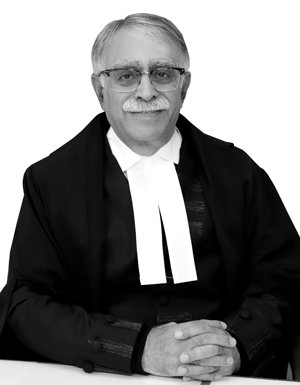

Legal Notes
Add a Note....