Rohit Singh case, State of Bihar, Supreme Court
0  17 Oct, 2006
Listen in 2:00 mins | Read in 22:00 mins
EN
HI

Rohit Singh and Ors. Vs. State of Bihar (Now State of Jharkhand) and Ors.

  Supreme Court Of India Civil Appeal /4517/2006
Link copied!

Case Background

Respondent No. 6 herein as the Plaintiff filed a suit T.S. No. 9 of 1996 for a declaration of his title to the suit property, for confirmation of his possession over it ...
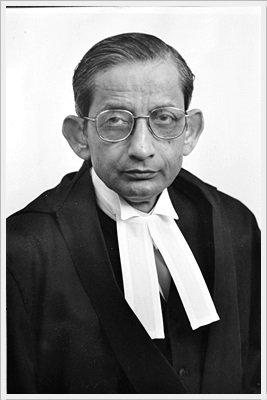
Bench

Applied Acts & Sections

No Acts & Articles mentioned in this case

Hello! How can I help you? 😊
Disclaimer: We do not store your data.
Document Text Version

http://JUDIS.NIC.IN SUPREME COURT OF INDIA Page 1 of 9

CASE NO.:

Appeal (civil) 4517 of 2006

PETITIONER:

ROHIT SINGH & ORS

RESPONDENT:

STATE OF BIHAR (NOW STATE OF JHARKHAND) & ORS

DATE OF JUDGMENT: 17/10/2006

BENCH:

S.B. SINHA & P.K. BALASUBRAMANYAN

JUDGMENT:

J U D G M E N T

(ARISING OUT OF S.L.P. (C) NO.22886 OF 2005

and

CIVIL APPEAL NO.4518 OF 2006

(ARISING OUT OF SLP (C) No.4168 of 2006)

P.K. BALASUBRAMANYAN, J.

1. Leave granted.

2. Respondent No. 6 herein as the Plaintiff filed a suit

T.S. No. 9 of 1996 for a declaration of his title to the suit

property, for confirmation of his possession over it and if it

were to be found that the plaintiff had been dispossessed from

the plaint schedule property during the pendency of the suit,

for the grant of a decree for recovery of possession through the

process of court, for a perpetual injunction restraining the

defendants from interfering with his peaceful possession of the

plaint schedule property and for other incidental reliefs. The

suit was filed against two defendants; the Divisional Forest

Officer and the State of Bihar, who are respondents 1 and 2

herein. Defendants 1 and 2 filed a written statement denying

the claim of title and possession by the plaintiff. They

pleaded that the property was vested forest having been

notified as such under Section 29 of the Forest Act, 1927,

which remained vested in the State; that the plaintiff had no

cause of action and that the suit was not maintainable for

want of notice under Section 80 of the Code of Civil Procedure.

The suit went to trial. Evidence was closed. Arguments

concluded. Judgement was reserved.

2. At that stage, certain third parties who are the

appellants herein, filed an application under Order I Rule

10(2) of the Code of Civil Procedure claiming that they are in

possession of properties including the suit property as owners

and that they have right, title, interest and khas possession

over the suit land. They submitted that their presence before

the court was necessary in order to enable the court to

effectually and completely adjudicate upon and settle all the

questions involved in the suit. It is to be noted that there was

no allegation that the plaintiff was attempting to interfere with

their right or possession. It was only stated that they had

come to know that the plaintiff had filed a suit based on some

illegal and invalid documents and was proceeding with the

http://JUDIS.NIC.IN SUPREME COURT OF INDIA Page 2 of 9

suit speedily without impleading them. The said application

was allowed by the trial court. The impleaded parties were

ranked as defendants 3 to 17 in the suit.

3. A written statement was filed on behalf of

defendants 3 to 12 disputing the claim of the plaintiff and

pleading that the suit properties were held by them as

descendants of one Tikait Maharaj Singh and they were in

khas possession of the land. They pleaded that they were in

peaceful possession of the plaint schedule property by

inheritance that they and their ancestors have acquired raiyati

right over a large extent of land which took in the suit land,

both under law by adverse possession and under the

provisions of the Bihar Land Reforms Act. They reiterated

that they were claiming to be in peaceful possession of the suit

lands ever since the time of their ancestors. The land had not

been demarcated by the forest authorities in the year 1964-65.

4. In the mean time, certain other persons claiming to

be lessees of portions of the land filed applications for getting

themselves impleaded in the suit. They were ranked as

defendants 18 to 20 by the court which, though permitted

their intervention, directed that they can only watch the

proceedings and participate in the trial but they would have

no right to file any written statement.

5. Again, after some delay and after the suit had gone

on, an application was made on behalf of defendants 12 to 17

seeking an amendment of the written statement earlier filed

and adding a sentence at the end of paragraph 16 reiterating

their claim of acquisition of title based on long and

uninterrupted possession. This amendment was allowed by

the trial court. We think that it will be useful to quote

paragraph 16 of the written statement as amended.

"16. That the statements made in paras 9 to

11 are incorrect and concocted and are denied.

These defendants are in peaceful possession of

the suit lands ever since the time of their

ancestors. These defendants have claimed

acquisition of title based on long and

uninterrupted possession so they crave leave

to get their title declared in the suit for which a

declaratory court fee is paid."

It is seen that the trial court permitted them to pay the court

fee as proposed by them. But, it has to be seen that no

prayer for a decree was added in the written statement by way

of amendment, even for the declaration sought for, for which

court fee was paid.

6. The manner in which the trial court went about

trying the suit is baffling. Clearly, the relevant procedural and

other aspects were ignored by the trial court or were not

brought to its notice. Impleading third parties against whom

the plaintiff was making no claim and that too after the issues

are framed, evidence is closed, arguments are concluded and

judgment is reserved was not proper. Thereafter, after again

closing the evidence permitting them to make a vague

amendment to their written statement and permitting them to

pay court fee on a relief which was not even claimed as a

specific relief in the written statement and entertaining the

vague claim not even supported by the necessary pleadings

can only be described as strange.

http://JUDIS.NIC.IN SUPREME COURT OF INDIA Page 3 of 9

7. Ultimately, the trial court held that the suit by the

Plaintiff was not maintainable for want of notice under Section

80 of the Code of Civil Procedure. It further held that the

plaintiff has not established his claim based on a Hukamnama

allegedly granted by one F.F. Christian and that the plaintiff

had failed to prove his possession or right to possession. Thus

the suit was found liable to be dismissed. Thereafter, the trial

court proceeded, as if defendants 3 to 17 have made a

counter-claim in the suit as against defendants 1 and 2, and

defendants 18 to 20 and that it has to adjudicate on such a

counter-claim. It recorded a clear finding:

"Of course, there is no tangible proof of act of

possession on the day of vesting but I find that

his case has not at all been denied by either

plaintiff or defendants 1 and 2."

Then, it proceeded to grant a decree to defendants 3 to 17 on

the ground of non-traverse. This was on the basis that on the

trial court allowing the amendment of the written statement by

defendants 12 to 17 and on their paying court fee, there has

come into existence a counter-claim in terms of Order VIII

Rule 6A of the Code and since the plaintiff, defendants 1 and 2

or defendants 18 to 20 had not filed any answer to the

counter-claim, that must be treated as a default under Order

VIII Rule 6E of the Code and defendants 3 to 17 should be

granted a decree on the basis that the counter-claim had not

been denied. It totally forgot its own order (the correctness of

which itself is doubtful) that though added, defendants 18 to

20 were not entitled to file written statements and were merely

to be observers. Nor did it bear in mind that the suit had

never been posted for the pleadings of the plaintiff or of

defendants 1 and 2 in answer to the alleged counter-claim.

Thus, on the basis of the alleged default in filing an answer to

the counter-claim, the trial court decreed the counter-claim of

defendants 3 to 17. A decree was hence passed dismissing

the suit and decreeing the counter-claim declaring that

defendants 3 to 17 are and have got absolute right, title and

interest in the suit property and they are entitled to recovery of

possession of the same. From whom, it was not clarified. It

was not noticed that there was no prayer for recovery of

possession or for any relief consequential to the declaration

sought for though not by way of a formal prayer.

8. Defendants 1 and 2 challenged the decree of the

trial court in T.A. No. 26 of 2000. Defendants 18 to 20 on

their part challenged the decree of the trial court in T.A. No.

24 of 2000. In both these appeals though the plaintiff was

impleaded as a respondent and he was served, he did not even

appear. Of course, he did not also file an appeal against the

dismissal of his suit. The dismissal of the suit thus became

final.

9. The learned Additional District Judge, who heard

the appeals, rejected the initial prayer of defendants 18 to 20

that the suit be remanded to the trial court and they be given

an opportunity to file a written statement in the suit or an

answer to the alleged counter-claim on the ground that they

had not challenged the order of the trial court initially made,

impleading them and ordering them only to watch the

proceedings. Obviously, the court failed to see that such an

interlocutory order could also be challenged in an appeal from

the decree by invoking Section 105(1) of the Code of Civil

Procedure. Thereafter, disbelieving a notification issued on

8.12.1953 under Section 29 of the Indian Forest Act, 1927 on

http://JUDIS.NIC.IN SUPREME COURT OF INDIA Page 4 of 9

the ground that issues of the vernacular newspapers in which

its translation was published had not been produced by the

State to show that the procedural requirements were complied

with, the court proceeded to dismiss the appeal of defendants

1 and 2 on the same basis as adopted by the trial court, that

defendants 1 and 2 had not filed an answer to the alleged

counter-claim made by defendants 3 to 17. That court did not

properly consider the question whether there was in fact a

counter-claim in law, whether such a counter-claim was

maintainable and whether a counter-claim could be

entertained after closure of evidence, that too at the instance

of some strangers who sought to get themselves impleaded so

as to assert their right, not against the plaintiff, but against

the State, the defendant. It did not also investigate whether

the title claimed by defendants 3 to 17 was established by

them. It did not also scrutinise whether there was adequate

pleading as known to law in support of a case of prescriptive

title, whether such an inconsistent prescriptive title could be

set up after claiming proprietary title in the property and

whether there was any acceptable evidence to establish a title

by adverse possession. The manner in which the Additional

District Judge has disposed of the appeals and the questions

arising therein is more disappointing than the manner in

which the suit was tried and disposed of by the munsiff, who

could at least be assumed to be inexperienced. One would

have expected the Additional District Judge to show a little

more awareness of the procedural and substantive law and his

obligation as a first appellate court. Thus, the first appellate

court ended up by dismissing both the appeals but purported

to modify the decree of the trial court by declaring the title and

interest of defendants 3 to 17 and granting them a decree

permanently restraining defendants 1 and 2 and defendants

18 to 20 from carrying on further mining operations. It did

not even advert to the written statement to see whether there

was any prayer in the so called counter-claim justifying such a

decree. It incidentally noted that the suit of the plaintiff was

liable to be dismissed for want of notice under Section 80 of

the Code.

10. Being dissatisfied with the decision of the first

appellate court, defendants 1 and 2 filed S.A. No. 50 of 2004

in the High Court. Defendants 18 to 20 filed S.A. No. 32 of

2004. Both these appeals were admitted on the substantial

questions of law that were formulated by that court at the time

of admission. The questions related to the jurisdiction to

entertain and decide the counter-claim of a set of defendants

made against another set of defendants, whether the court

had jurisdiction to decide the dispute inter se between the

defendants after dismissing the suit, whether the scope of a

counter-claim in terms of Order VIII Rule 6A of the Code had

not been totally misunderstood and whether on the pleadings

and the evidence in the case, the courts below were justified in

passing the decree on the counter-claim that was challenged

in the Second Appeal. A learned judge of the High Court, on a

consideration of the relevant aspects, held that the courts

below without adverting to the requirements of Order VIII Rule

6A and without following the correct procedure of law had

treated the amendment petition as a counter-claim and had

passed a decree in favour of defendants 3 to 17 which was

unsustainable. It was held that the courts had totally ignored

the correct procedure of law and the rules of evidence while

deciding the issue raised. The judgments, hence could not be

sustained. Thereafter, the second appellate court allowed the

Second Appeals and setting aside the decrees passed by the

trial and the first appellate courts, remanded the suit to the

http://JUDIS.NIC.IN SUPREME COURT OF INDIA Page 5 of 9

trial court for rendering a fresh judgment in accordance with

law on the basis of the evidence adduced by the parties.

Challenging the decision in the two Second Appeals, the

appeal has been filed by defendants 3 to 17 by filing two

separate petitions for special leave to appeal.

11. Learned counsel for the appellants contended that a

counter-claim was maintainable even if the cause of action put

forward by the defendants in the suit did not arise out of the

cause of action put in suit by the Plaintiff and that under such

circumstances, the trial court and the first appellate court

rightly considered the claim put forward by the appellants as a

counter-claim and were justified in adjudicating it in the

manner in which it was done. It was also contended that

Order VIII Rule 6A of the Code did not preclude the filing of a

counter-claim by one defendant against a co-defendant even

though no relief was claimed as against the plaintiff. It was

also contended that in the absence of an answer to the

counter-claim being filed by defendants 1 and 2 or defendants

18 to 20, the trial court was justified in proceeding on the

terms of Order VIII Rule 6E of the Code and in allowing the

counter-claim on the basis that there was no resistance or

answer to the claim made by way of amendment in the written

statement. It is therefore submitted that the High Court was

not justified in interfering with the decision of the first

appellate court. On the scope and content of Order VIII Rule

6A of the Code, he referred to various decisions including

those of this court, culminating in the one in Ramesh Chand

Ardawatiyab vs. Anil Panjwani (2003 (7) SCC 350) and

contended that the conclusion answered by the High Court

was not warranted.

12. On behalf of defendants 1 and 2 in the suit, it is

contended that there was no counter-claim at all made by

defendants 3 to 17 as known to law, that such a counter-claim

as against defendants 1 and 2 was not maintainable; that a

counter-claim at the instance of persons who got themselves

impleaded after the evidence was closed and the trial was over,

could not be entertained, even if maintainable, that the High

Court having found that the counter-claim had been wrongly

entertained by the trial court and the first appellate court

ought to have simply allowed the second appeals and

dismissed the alleged counter-claim of defendants 3 to 17 and

the remand of the suit was not called for especially when the

suit filed by the plaintiff had been dismissed by the trial court

and he had not challenged the said dismissal. It was therefore

submitted that once the counter-claim was found to be not

maintainable, all that was required to be done, was to vacate

the decree passed by the trial court and the first appellate

court on that counter-claim and to simply leave the suit of the

plaintiff as dismissed. On behalf of defendants 18 to 20 it was

submitted that the procedure adopted by the trial court and

the first appellate court was unknown to law and their

interests could not be affected without even permitting them to

file written statements in the suit and the decree that was

granted was even otherwise unsustainable, since there is no

prayer by way of counter-claim that they had to answer and

there is no discussion of the pleadings or the evidence by the

trial court and the first appellate court before upholding the so

called counter-claim of defendants 3 to 17. It is also pointed

out that inconsistent cases have been set up by defendants 3

to17 and even if it was permissible, there was no pleading as

known to law in support of a case of adverse possession or

prescriptive title set up in the written statement and under

those circumstances there was absolutely no necessity for

http://JUDIS.NIC.IN SUPREME COURT OF INDIA Page 6 of 9

remanding the suit to the trial court. The plaintiff's suit

having been dismissed and that dismissal having become

final, the High Court should have simply vacated the decree on

the counter-claim and closed the litigation.

13. In reply, it is reiterated that in view of the

amendments to the Code brought about by Act 104 of 1976,

the scope for entertaining a counter-claim was enlarged and

the counter-claim made by the appellants falls well within the

ambit of Order VIII Rule 6A of the Code.

14. We shall first consider whether there was a counter

claim in the suit in terms of Order VIII Rule 6A of the Code in

this case. The suit was filed against the Divisional Forest

Officer and the State of Bihar as defendants 1 and 2 on

26.2.1996 by respondent No.6 herein. After the written

statement was filed by the defendants issues were framed and

the suit went to trial. On 3.6.1996 and 6.6.1996 the evidence

on the side of the plaintiff was concluded. On 14.6.1996 the

evidence on the side of the defendants was completed. On

24.6.1996 arguments were concluded. Judgment was

reserved. 25.6.1996 was fixed as the date for pronouncing the

judgment. The judgment was not pronounced and it appears

that the judge was subsequently transferred. Therefore, on

20.8.1996 arguments were again heard by the successor judge

and judgment was reserved. 27.8.1996 was fixed as the date

for judgment. Apparently, it was not pronounced. It is

thereafter that defendants 3 to 17 filed an application on

11.9.1996 for intervention in the suit. We have already

referred to the allegations in that application for impleading

filed. We only notice again that they claimed to be in

possession of the property and that their presence before the

court was necessary in order to enable the court to effectually

and completely adjudicate upon and settle all the questions

involved in the suit. On 19.9.1996 the application for

intervention was allowed. On 30.9.1996 a written statement

was filed by defendant Nos.3 to 12. We have already

summarised the pleas raised therein.

15. After this, the witnesses of the plaintiff were recalled

and permitted to be cross-examined by these defendants.

That was on 5.10.1996. Again the witnesses for defendants 1

and 2, were recalled and they were permitted to be cross-

examined on behalf of these defendants. The evidence on the

side of defendants 3 to 17 was let in. It commenced on

24.2.1997 and was closed on 30.1.1997. Thereafter

arguments were heard again and the arguments on the side of

the defendants including that of defendants 3 to 17 were

concluded on 4.3.1997. The suit was adjourned for

arguments on the side of the plaintiff. On 5.3.1997, the suit

was dismissed for default of the plaintiff. It was then restored

on 29.5.1998. It was thereafter on 5.6.1998, that defendants

3 to 17 filed an application for amending the written

statement. The amendment was allowed on 20.7.1998.

There was no order treating the amended written statement as

a counter-claim or directing either the plaintiff or defendants 1

and 2 to file a written statement or an answer thereto.

Defendants 3 to 17 had questioned the pecuniary jurisdiction

of the trial court in their written statement. That plea was

permitted to be withdrawn on 4.2.1999. It is clear that after

the evidence was closed, there was no occasion for impleading

the interveners. Even assuming that they were properly

impleaded, after they had filed their written statement, the

suit had gone for further trial and further evidence including

http://JUDIS.NIC.IN SUPREME COURT OF INDIA Page 7 of 9

that of the interveners had been taken, the evidence again

closed and even arguments on the side of the interveners had

been concluded. The suit itself was dismissed for default only

because on behalf of the plaintiff there was a failure to address

arguments. But the suit was subsequently restored. At that

stage no counter-claim could be entertained at the instance of

the interveners. A counter-claim, no doubt, could be filed

even after the written statement is filed, but that does not

mean that a counter-claim can be raised after issues are

framed and the evidence is closed. Therefore, the entertaining

of the so called counter-claim of defendants 3 to 17 by the trial

court, after the framing of issues for trial, was clearly illegal

and without jurisdiction. On that short ground the counter-

claim so called, filed by defendants 3 to 17 has to be held to be

not maintainable.

16. As can be seen, what defendants 3 to 17 did, was to

merely amend their written statement by adding a sentence to

paragraph 16 of the written statement they originally filed. In

paragraph 16 it was only pleaded that those defendants were

claiming to be in peaceful possession of the suit lands ever

since the time of their predecessors. They wanted to add that

they had claimed acquisition of title based on long and

uninterrupted possession and they crave leave to get their title

declared in the suit for which a declaratory court fee is paid.

It may be noted that not even a prayer was sought to be added

seeking a declaration of their title as is the normal practice. It

is, therefore, clear that on going through the original written

statement and the amendment introduced, that there was no

counter-claim in terms of Order VIII Rule 6A of the Code in the

case on hand, which justifies a trial of that counter-claim even

assuming that such a counter-claim was maintainable even if

no relief was claimed against the plaintiff in the suit but it was

directed only against the co-defendants in the suit. The

counter-claim so called is liable to be rejected on that ground

as well.

17. Thirdly, it is seen that the trial court never formally

treated the written statement as a counter-claim and give an

opportunity to defendants 1 and 2 or defendants 18 to 20 to

file their pleas in answer. It was not open to the trial court to

proceed on the basis that no answer has been filed to the

counter-claim and a decree thereon can be granted in terms of

Order VIII Rule 6E of the Code. The trial court clearly found

that there was no evidence on the side of defendants 3 to 17 in

support their claim of possession but still granted a decree to

defendants 3 to 17 only on the ground of the alleged default of

defendants 1 and 2 and defendants 18 to 20 in filing an

answer to the counter-claim made by defendants 3 to 17.

Strangely, the court failed to keep in mind its earlier order that

defendants 18 to 20, could not file a written statement and

they could only watch the proceedings and participate in the

trial. The whole procedure adopted was unsustainable and

the decree granted on the so called failure of defendants 1 and

2 on the one hand and defendants 18 to 20 on the other, to

file an answer to the counter-claim, is clearly unsustainable in

law.

18. Normally, a counter-claim, though based on a

different cause of action than the one put in suit by the

plaintiff could be made. But, it appears to us that a counter-

claim has necessarily to be directed against the plaintiff in the

suit, though incidentally or along with it, it may also claim

relief against co-defendants in the suit. But a counter-claim

directed solely against the co-defendants cannot be

http://JUDIS.NIC.IN SUPREME COURT OF INDIA Page 8 of 9

maintained. By filing a counter-claim the litigation cannot be

converted into some sort of an inter-pleader suit. Here,

defendants 3 to 17 had no claim as against the plaintiff except

that they were denying the right put forward by the plaintiff

and the validity of the document relied on by the plaintiff and

were asserting a right in themselves. They had no case even

that the plaintiff was trying to interfere with their claimed

possession. Their whole case was directed against defendants

1 and 2 in the suit and they were trying to put forward a claim

as against the State and were challenging the claim of the

State that the land involved was a notified forest in the

possession of the State. Such a counter-claim, in our view,

should not have been entertained by the trial court.

19. The observations of this Court in Ramesh Chand

Ardawatiya (Supra) that:

"Looking to the scheme of Order 8 as amended

by Act 104 of 1976, we are of the opinion, that

there are three modes of pleading or setting up

a counter-claim in a civil suit. Firstly, the

written statement filed under Rule 1 may itself

contain a counter-claim which in the light of

Rule 1 read with Rule 6-A would be a counter-

claim against the claim of the plaintiff

preferred in exercise of legal right conferred by

Rule 6-A. Secondly, a counter-claim may be

preferred by way of amendment incorporated

subject to the leave of the court in a written

statement already filed. Thirdly, a counter-

claim may be filed by way of a subsequent

pleading under Rule 9."

are of no avail to defendants 3 to 17 on the facts and in the

circumstances of this case. In the reported decision, this

Court did not have to consider whether a counter-claim can be

filed after the trial is concluded and whether it could be solely

directed against a co-defendant. The Court was also not

dealing with an inchoate counter-claim in that case.

20. We also find that there was no prayer as such by

way of counter-claim. A mere plea that prescriptive title may

be declared and payment of court fee for a declaratory relief

would not suffice. Even assuming that this could be treated

as a prayer for declaration of title by defendants 3 to 17, there

was no warrant for granting a decree to defendants 3 to 17 for

recovery of possession as was done by the trial court by way of

counter-claim or a decree for permanent injunction as was

granted by the first appellate court. Even the requisite court

fees were not paid. Since the reliefs granted by those courts

are not reliefs prayed for, that part of the decree, in any event,

could not be sustained.

21. As regards the finding that the notification under

Section 29 of the Forest Act has not been proved, the same

has also to be held to be unsustainable. The Gazette

notification issued 32 years prior to the suit was produced and

marked in evidence and no circumstance proved, justified an

inference that it might not have been published as enjoined by

law. The regularity of issue of such a notification should have

been presumed leaving it to defendants 3 to 17 to rebut that

presumption. For the present, all that is required is to vacate

the finding in that regard entered by the lower appellate court.

22. Having thus found that the counter-claim made by

defendants 3 to 17 could not have been entertained as a

http://JUDIS.NIC.IN SUPREME COURT OF INDIA Page 9 of 9

counter-claim in the case on hand, we find that the High

Court has committed an error in remanding the suit to the

trial court for proceeding with it afresh. The suit filed by the

plaintiff had been dismissed by the trial court. The plaintiff

had not appealed against the decree. The dismissal of the

suit has thus become final. Since the counter-claim sought

to be made is found to be not entertainable, obviously there is

no question of the counter-claim being tried as a counter-

claim or being treated as a fresh plaint. It is, therefore,

necessary, though defendants 1 and 2 and defendants 18 to

20 have not appealed to this Court against the decision of the

High Court, to modify the decision of the High Court by setting

aside the order of remand made by that court and simply

leaving it as a case where the suit would stand dismissed and

in which no counter-claim had been made.

23. In this view, even while dismissing the appeal filed

by defendants 3 to 17, and upholding the decision vacating

the decree on the counter-claim, we set aside the order of

remand passed by the High Court and pass a decree

confirming the dismissal of the suit filed by the plaintiff and

holding that there was no valid or tenable counter-claim which

could be entertained in the present suit. Defendants 1 and 2

would be entitled to their costs in the courts below from

defendants 3 to 17 and the parties are left to bear their

respective costs in this Court.

Reference cases

Description

Legal Notes

Add a Note....

Advance Search Tool

💡 How to Get the Best Legal Answers:

1. Keep it simple: Frame your question in plain language.

2. Add scope: Tag @ a court, judge, year, or act section for accurate results.

3. Attach files: Upload a PDF only if you are using a private document.

🌍 Ask in your language: English • Hindi • Assamese • Bangla • Gujarati • Kannada • Malayalam • Marathi • Odia • Punjabi • Tamil • Telugu • Urdu


💡 New Advocate? Don’t worry! Working without senior support today? Turn on Client Advisory to get instant legal strategies, practical angles, and precedent-backed options for your client.

Add research context Type to filter