
In 1994, two Maldivian individuals were detained under the Foreigners Act amid allegations of espionage related to ISRO scientists, including Dr. Narayanan, who faced accusations of divulging confidential space research ...


No Acts & Articles mentioned in this case
1
REPORTABLE
IN THE SUPREME COURT OF INDIA
CIVIL APPELLATE JURISDICTION
CIVIL APPEAL NOS. 6637-6638 of 2018
S. Nambi Narayanan …Appellant(s)
VERSUS
Siby Mathews & Others Etc. …Respondent(s)
J U D G M E N T
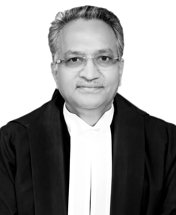
Dipak Misra, CJI
The appellant, a septuagenarian, a former Scientist of the Indian
Space Research Organisation (ISRO), has assailed the judgment and
order passed by the Division Bench of the High Court of Kerala whereby
it has overturned the decision of the learned single Judge who had
lancinated the order of the State Government declining to take
appropriate action against the police officers on the grounds of delay and
further remitted the matter to the Government. To say the least, the
delineation by the Division Bench is too simplistic.
2.The exposé of facts very succinctly put is that on 20.01.1994,
Crime No.225/94 was registered at Vanchiyoor Police Station against
2
one Mariam Rasheeda, a Maldivian National, under Section 14 of the
Foreigners Act, 1946 and paragraph 7 of the Foreigners Order. The
investigation of the case was conducted by one S. Vijayan, the
respondent no. 6 herein, who was the then Inspector, Special Branch,
Thiruvananthapuram.
3.Mariam Rasheeda was arrested and sent to judicial custody on
21.10.1994. Her custody was obtained by the Police on 03.11.1994 and
she was interrogated by Kerala Police and Intelligence Bureau (IB)
officials. Allegedly, during interrogation, she made certain ‘confessions’
which led to the registration of Crime No. 246/1994, Vanchiyoor Police
Station on 13.11.1994 under Sections 3 and 4 of the Indian Official
Secrets Acts, 1923, alleging that certain official secrets and documents
of Indian Space Research Organisation (ISRO) had been leaked out by
scientists of ISRO.
4.Another Maldivian National Fousiya Hasan along with Mariam
Rasheeda was arrested in Crime No. 246/1994. On 15.11.1994,
investigation of both the cases was taken over by the Special
Investigation Team (SIT) headed by one Mr. Siby Mathews, respondent
no. 1 herein, who was the then D.I.G. Crime of Kerala Police. On
21.11.1994, Sri D. Sasikumaran, a scientist at ISRO, was arrested and
on 30.11.1994, S. Nambi Narayanan, the appellant herein, was arrested
3
along with two other persons. Later, on 04.12.1994, consequent to the
request of the Government of Kerala and the decision of the
Government of India, the investigation was transferred to the Central
Bureau of Investigation (CBI), the respondent no. 4 herein.
5.After the investigation, the CBI submitted a report before the Chief
Judicial Magistrate (CJM), Ernakulam, under Section 173(2) of Cr.P.C.
stating that the evidence collected indicated that the allegations of
espionage against the scientists at ISRO, including the appellant herein,
were not proved and were found to be false. This report was accepted
vide court’s order dated 02.05.1996 and all the accused were
discharged.
6.That apart, in the said report, addressed to the Chief Secretary,
Government of Kerala, the CBI, the respondent no. 4 herein, had
categorically mentioned:-
“Notwithstanding the denial of the accused persons
of their complicity, meticulous, sustain and
painstaking investigations were launched by the CBI
and every bit of information allegedly given by the
accused in their earlier statement to Kerala
Police/IB about the places of meetings for purposes
of espionage activities, the possibility of passing on
the drawing/documents of various technologies,
receipt of money as a consideration thereof etc.,
were gone into, but none of the information could be
substantiated.”
4
7.The CBI in its report, as regards the role of the respondent no.1
herein, went on to state:-
“I, Sh. Siby Mathew was heading the Special
Investigation Team and was, therefore, fully responsible
for the conduct of investigation in the aforesaid two
cases. Investigation conducted by the CBI has revealed
that he did not take adequate steps either in regard to
the thorough interrogations of the accused persons by
Kerala Police or the verification of the so called
disclosure made by the accused persons. In fact, he left
the entire investigation to IB surrendering his duties. He
ordered indiscriminate arrest of the ISRO scientist and
others without adequate evidence being on record. It
stressed that neither Sh. Siby Mathew and his team
recovered any incriminating ISRO documents from the
accused persons nor any monies alleged to have been
paid to the accused persons by their foreign masters. It
was unprofessional on his part to have ordered
indiscriminate arrest to top ISRO scientists who played a
key role in successful launching of satellite in the space
and thereby caused avoidable mental and physical
agony to them. It is surprising that he did not take any
steps at his own level to conduct investigation on the
points suggested by him. Since Sh. Mathew was based
at Trivandrum, there was no justification for not having
the searches conducted in the officials’ residential
premises of the accused Nambi Narayanan was arrested
by the Kerala Police on 30.11.1994.
Vi. Shri Siby Mathew and his team miserably failed
even in conducting verification of the records of Hotels
viz., Hotel foret Manor, Hotel Pankaj, Hotel Luciya, etc.,
which were located at Trivandrum to ascertain the
veracity of the statement of accused persons….
The above facts are being brought to the notice of
the competent authority for their kind consideration and
for such action as deemed fit.
[Emphasis added]
5
8.On 27.06.1996, the State Government of Kerala, being dissatisfied
with the CBI report, issued a notification withdrawing the earlier
notification issued to entrust the matter to CBI and decided to conduct
re-investigation of the case by the State Police. This notification for
re-investigation was challenged by the appellant herein, before the High
Court of Kerala, in O.P. No. 14248/1996-U but the notification was
upheld by the High Court of Kerala vide order dated 27.11.1996.
9.Aggrieved by the aforesaid order of the Kerala High Court, the
appellant herein, moved this Court by filing a special leave petition. This
Court in K. Chandrasekhar v. State of Kerala and others
1
quashed the
notification of the State of Kerala for re-investigation holding that the said
notification was against good governance and consequently, all accused
were freed of charges. The observations of this Court read thus:-
“Even if we were to hold that State Government had the
requisite power and authority to issue the impugned
notification, still the same would be liable to be quashed
on the ground of malafide exercise of power. Eloquent
proof thereof is furnished by the following facts and
circumstances as appearing on the record….”
[Emphasis added]
10.Even after disposal of the case by this Court, the State of Kerala
did not take any action against the erring police officers. In the year
1 (1998) 5 SCC 223
6
2001, the National Human Rights Commission ordered a compensation
of Rs.10,00,000/- (Rupees ten lakhs only) as interim relief to the
appellant, who had sought Rs.1,00,00,000/- (Rupees one crore only) as
damages. A division bench of the Kerala High Court, vide order dated
07.09.2012, asked the Government to pay the interim relief of Rs.
10,00,000/- (Rupees ten lakhs only) within three weeks of the said order.
11.Thereafter, one Rajasekharan Nair filed a writ petition, being W.P.
(C) No. 8080 of 2010, before the Kerala High Court on the basis of the
report filed by the CBI seeking directions for the State of Kerala to pass
appropriate orders and take necessary action against the erring police
officers for conducting a malicious investigation. In the meantime, the
Government, by order dated 29.06.2011, decided not to take any
disciplinary action against the members of the SIT (erring police
officers). The relevant portion of the order of the State of Kerala dated
29.06.2011 reads as follows:-
“5) Both the CBI and the accused-discharged persons
approached the Hon’ble High Court against the action of
Government of Kerala. However, the High Court upheld
the action of the Government. Against this the CBI and the
accused – discharged persons approached the Supreme
Court through SLPs against the action of Government of
Kerala.
6) In the meantime Government examined the case with
reference to the views obtained form the State Police Chief
on the observation of the CBI along with the explanation of
the officers concerned. After examination it was decided to
7
await the decision of the Hon’ble Supreme Court. The
Hon’ble Supreme Court allowed the prayer of the CBI and
the accused discharged persons questioning the
notification issued by the Government withdrawing the
consent given to the CBI to investigate into the espionage
case and also to “further investigate” the ISRO espionage
case and also directed to give Rs. 1 Lakh each to the
accused appellants as cost.
7) Government examined the matter with reference to the
entire records of the case and in proper application of
mind. It has been found that neither the Hon’ble Chief
Judicial Magistrate Court who accepted the Final Report
nor the Hon’ble Supreme Court had issued any direction to
take action against the investigating officers viz :- Shri S.
Vijayan, the then Inspector, Special Branch,
Thiruvananthapuram City, Shri K.K. Joshwa, the then Dy.
SP, CB CID, Thiruvananthapuram, Shri Siby Methews, the
then DIG (Crimes) of the Special Investigation Team who
investigated in to the ISRO Espionage case.
8) In the circumstances, Government are of the view that
it is not proper or legal to take disciplinary action against
the officials for the alleged lapses pointed out in the
investigation report of the CBI at this juncture, after the
lapse of 15 years and therefore Government decide that
no disciplinary action need be taken against the above
officials for their alleged lapses in the investigation of the
ISRO Espionage case and it is ordered accordingly.”
12.W.P. (C) No. 8080 of 2010 was disposed of by the High Court
having been rendered infructuous as the petitioner therein,
Rajesekharan Nair, wanted to reserve his right to challenge the order
issued by the Government. Despite insurmountable difficulties, the
indomitable spirit of the appellant impelled him to file another writ
petition, W.P. (C) No. 30918 of 2012, before the Kerala High Court. The
learned Judge of the High Court of Kerala, considering the pleadings of
8
the parties and thereafter elaborately considering the matter, allowed the
writ petition and quashed the order dated 29.06.2011 passed by the
State of Kerala whereby the Kerala Government had decided not to take
any disciplinary action against the members of the SIT (erring police
officers) and consequently remitted the matter to the State of Kerala, the
respondent no. 2 herein, for reconsideration and passing further orders
within three months. Though the learned single Judge left it open to the
State of Kerala to decide on the course of action to be taken in the
matter, yet it was categorically mentioned that the reconsideration of the
matter should not just be a namesake which will make the administration
of justice a mockery.
13.Though the said decision of the learned single Judge was not
challenged by the State of Kerala, yet two private persons, being the
respondent nos. 1 and 5 herein, assailed the judgment before the
Division Bench in WA Nos. 1863 and 1959 of 2014. The Division Bench
of the High Court, vide impugned judgment and order dated 04.03.2015,
observed that the only question before the Government was whether any
disciplinary action was to be initiated against the officers who were
members of the SIT which conducted investigation for some days and
thereafter reported that the matter required to be investigated by the
CBI. The Division Bench opined that the factual finding or report
9
submitted by the CBI on 03.06.1996 in the matter could only be treated
as an opinion expressed by the CBI which may be considered by the
Government. Further, the Division Bench left it to the Government to
consider or not to consider the opinion expressed by the CBI in its
aforesaid report for the purpose of taking disciplinary action.
14.The Division Bench also held that the Kerala Government’s
decision of not taking action against the erring police officers of the SIT
was based on three specific findings, namely (i) the Government’s
examination of the case with reference to the views obtained from the
State Police Chief with respect to the observations of the CBI alongwith
the explanation of the erring police officers concerned, (ii) the absence
of any direction by the Chief Judicial Magistrate who had accepted the
final report, and (iii) absence of any direction from the Supreme Court to
take action against the investigating officers. That apart, the Government
opined that it is not proper or legal to take disciplinary action against the
officers on the basis of CBI report after a lapse of fifteen years.
15.Be it noted, the Division Bench concluded by observing thus:
“Therefore the three reasons mentioned in Ext.P2 clearly
indicate that the Government has examined the relevant
matters for arriving at the said decision. When a decision
has been taken not to proceed further with any
disciplinary action, after considering such relevant
matters, the decision cannot be considered as
unreasonable, unfair or arbitrary.”
10
And again:-
“In fact, whether the accused were tortured or not is a
disputed question of fact. Further no such complaint was
raised by the accused. When the fact being so and since
the petitioner having already approached the National
Human Rights Commission and the Civil Court, it is for
the said agencies to arrive at a proper finding regarding
such disputed facts.”
The said order is the subject matter of assail before this Court in
these appeals.
16.It is urged by the appellant that the prosecution launched against
him by the Kerala police was malicious on account of two reasons, the
first being that the said prosecution had a catastrophic effect on his
service career as a leading and renowned scientist at ISRO thereby
smothering his career, life span, savings, honour, academic work as well
as self-esteem and consequently resulting in total devastation of the
peace of his entire family which is an ineffaceable individual loss, and
the second, the irreparable and irremediable loss and setback caused to
the technological advancement in Space Research in India.
17.It has also been contended that the CBI, to whom the investigation
of the case against the appellant was transferred, after a thorough
investigation for about eighteen months, filed a comprehensive and
exhaustive report wherein it had recommended that the case against the
11
appellant be closed as the allegations against the appellant are totally
unsubstantiated.
18.The appellant has also drawn the attention of this Court to the fact
that the CBI in the said report had also highlighted several omissions
and commissions on the part of the Kerala Police Officers while
investigating the case against the appellant. That apart, the CBI, in its
report submitted to the Kerala Government, had recommended that
action be taken against the erring police officers for serious lapses in the
discharge of their duties. The appellant has, in his submissions,
expressed his agony over the fact that the State Government, instead of
acting upon the recommendations made by the CBI and taking
appropriate action against the erring police officers, focused its entire
attention on taking further action on the investigation against the
appellant and hastened to constitute a Special Investigation Team (SIT)
through a notification which was challenged before the High Court.
19.The appellant has further highlighted that this Court had earlier
opined about the malicious prosecution launched against him. Reliance
has been placed on the criticism advanced by the NHRC against the
State Government. Learned senior counsel has urged with anguish that
the High Court has fallen into grave error by sustaining the order of the
Government and remaining oblivious to the plight of the appellant. It is
12
his further submission that the appellant should be granted
compensation by taking recourse to the principle of constitutional tort
and a committee be constituted to take appropriate action against the
officers who had played with the life and liberty of a man of great
reputation.
20.Learned counsel for the respondent no. 1 has submitted that the
contention of the appellant that if he had not been falsely implicated, he
would have made a huge difference in the cryogenic technology and
thereby contributed immensely to the Nation is untenable as it is an
admitted fact that he had submitted his VRS on 01.11.1994 immediately
after the arrest of Mariam Rasheeda, and on the very same day, his
resignation was accepted by the Superior Officer. It is pointed out that
the claim of significant contribution to the Nation is being put forth by
appellant only to gain the sympathy of the Court.
21.It is further canvassed that the entire investigation of the case
against the appellant was carried out under close supervision of the then
Director General of Police (Intelligence) & Director General of Police
(Law and Order) and daily reports were sent to them during the course
of the investigation. It has also been highlighted that on the day of arrest
of the appellant, the respondent no. 1 had submitted a report to the DGP
requesting entrusting of the matter to the CBI which is a clear indication
13
of the fact that there was no mala fide on the part of the said respondent
no. 1 and other officials of the Kerala Police. The respondent no. 1 has
contended that the entire gamut of facts reveals that he and other
officials had performed their duties with full responsibility and the
evidence on record and the statements of other accused had clearly
shown the involvement of the accused persons in the activities of
espionage.
22.The respondent no. 1, in order to substantiate his claim that the
appellant and the other accused persons were never subjected to any
torture by the respondent no. 1 or other police officers, seeks to draw the
attention of the Court to the findings of a Division Bench of the High
Court which had dealt with a writ petition filed when the investigation was
pending before the CBI. It is put forth on behalf of the respondent no. 1
that he himself did not take any steps for thorough interrogation of the
accused and sent the same to the CBI and, hence, the argument that he
was tortured by the State police was far from the truth. As per the
notification dated 20.01.1987 issued by the Government of India,
Ministry of Home Affairs, the Central Government conferred the powers
of Superintendent of Police on officers of the rank of Assistant Director of
the Intelligence Bureau and in the instant case, the IB had come into the
14
picture long before the constitution of a Special Investigation Team (SIT)
by the State Government.
23.It is highlighted by the respondent no. 1 that there was sufficient
evidence indicating the involvement of the appellant and it had also
come to the notice of the respondent no. 1 that the appellant, who had
submitted his VRS, was intending to leave the country and in the light of
the said facts, the arrest of the appellant and other accused persons had
become necessary. Learned counsel would contend that the stand of the
CBI that no incriminating records had been recovered is unacceptable
inasmuch as the final report reveals that 235 documents were recovered
from the house of the accused persons and the reason for the same was
an issue which required investigation.
24.Further, it is contended that the case had been investigated by the
respondent no. 1 only for 17 days and thereafter, it was the CBI that
carried out the investigation and, hence, the responsibility to apprise the
media fell on the CBI and not on the respondent no. 1. Various other
aspects have been controverted to show the non-involvement of the said
respondent and the bona fide act on his part to transfer the case to the
CBI. To make allegations against the SIT after transfer of the case to the
CBI is unwarranted.
15
25.Learned counsel for the respondent no. 1 submits that the whole
thrust of the argument of the appellant that he was subjected to torture
falls to the ground as the IB officials against whom the major charges of
torture had been levelled had not been made accountable for the said
action and, therefore, it would be discriminatory to hold the respondent
no. 1 and other police officers of Kerala accountable for the alleged
torture. That apart, it is urged that the learned single Judge of the High
Court had only remanded the matter to the State Government for fresh
consideration and had not given any finding on the allegation of torture
and the respondent no. 1 had also contended that the appellant never
raised any allegations of torture before the CJM Court. Further, it is
argued that the appellant was in custody of Kerala police only for 5 days,
while the CBI had taken remand of the accused on three occasions and
had kept in custody for forty five days.
26.On behalf of the CBI, the fourth respondent, it is submitted that
inspite of highlighting several lapses and faults on the part of the police
officials while carrying out investigation against the appellant and other
accused persons, the Kerala Government has failed to take any action
against the erring officials. It has been submitted that the reasons given
by the Kerala Government for not initiating any action against the erring
police officers, who had not only inflicted inhuman custodial torture to the
16
scientists of ISRO but also arrested them while they were working on a
crucial space programme, was an unpardonable lapse. It is pointed out
that if the action of the Government of Kerala is not interfered with on the
ground of delay, it would tantamount to taking advantage of one’s own
wrong doing and further adding a premium to an unpardonable fault.
27.Learned counsel for the respondent no. 4 has submitted that the
conduct of the police officials is criminal in nature as per the investigation
and report submitted by the CBI and the investigation of the CBI had
clearly established that the investigation carried out by the State police
was full of lapses and also involved employment of illegal means such
as criminal torture. The stand of the respondents is that the report is
recommendatory but it was incumbent upon the State of Kerala to act
upon the same as that would have reflected an apposite facet of
constitutional governance and respect for individual liberty and dignity.
Relying upon the judgment of this Court in Japani Sahoo v. Chandra
Sekhar Mohanty
2
, it is submitted that the State of Kerala could not take
shelter of the doctrine of delay and laches. The erring conduct of the
police officers is of criminal nature and justice can be meted out to the
appellant only by taking appropriate action against the said officers along
with payment of compensation for the humiliation and disgrace suffered
by the victim.
2 (2007) 7 SCC 394
17
28.It is further contended by the learned counsel for the respondent
no. 4 that investigation can be initiated to instill confidence in the public
mind. To buttress his stand, the decision in Punjab and Haryana High
Court Bar Association v. State of Punjab and others
3
has been
pressed into service.
29.First, we shall advert to the aspect of grant of compensation. From
the analysis above, we are of the view that the appellant was arrested
and he has suffered custody for almost fifty days. His arrest has been
seriously criticized in the closure report of the CBI. The comments
contained in the report read as follows:-
“2. Consequent upon the request of Govt. of Kerala, the
investigation of Crime No 225/95 and No. 246/94 was
entrusted to the .CHI for investigation vide DP&T
Notification No. 228/59/94-AVD.II (i) & (ii) dated 2/12/94.
Accordingly, case RC. 10(S) 94 lis. 14 of Foreigners Act
and Para 7 of Foreigners Act, 1948 (corresponding to
Crime No. 225/95) and case RC 11 (S)/94 U/s. I20-B r/w
See. 3, 4 & 5 of official Secrets Act r/w Sec. 34 IPC
(corresponding to Crime No. 246/94). were registered on
3/12/94 in SIU. V Branch of CBl/SIC.II/New Delhi.
3. Immediately after the registration of the case, the
investigation was taken upon 4/12/94 and the police case
files of both the cases were taken over. After
investigation, a Chargesheet in Case Crime no. 225.94
was filed on 17/12/94 against Mariam Fasheeda. This
case has ended in acquittal of accused Mariyam
Rasheeda vide Judgment dated 14.11.1995, passed by
the Hon’ble Chief Judicial Magistrate, Cochin.
3 (1994) 1 SCC 616
18
4.The local police during the course of
investigation of case crime No. 225/94 had seized a Diary
written in Dwivegi script from accused Mariyam
Rasheeda, the contents of which indicated that she was
collecting informations about certain Maldivian nationals
based in Bangalore who were allegedly planning a coup
against the Govt. of Maldives. It was further revealed that
accused Mariyam Rasheeda along with Fauziya Hassan
had stayed in Room No. 205 of Hotel Smart, Trivandrum
from 17/9/94 to 20/10/94 and during this period a number
of telephone calls were found to have been made from
Room No. 205 to Tel. No. of D. Sasikumaran, a senior
Scientist of Indian Space Research Organisation,
Valiamala. Accused Mariyam Rasheeda while in Kerala
Police custody in this case was interrogated by Kerala
Police and officials of Intelligence Bureau. Accused
Mariyam Rasheeda allegedly made a statement revealing
the contacts of Fauziya Hassan and of one Zuheira, a
Maldivian national settled in Colombo with Mohiyuddin
state to be Pakistani national working as Assistant
Manager, Habib Bank in Male and Mazhar Khan, another
Pak National. She also allegedly disclosed that according
to Fauziya Hassan, D. Sasikumaran was friend of
Zuheria. Based on the disclosures allegedly made by
accused Mariyam Rasheeda coupled with the contents of
her diary and the telephone contacts with D.
Sasikumaran, the instant case was registered on the
suspicion that she and Fauziya Hassan along with others
were taking part in activities prejudicial to the sovereignty
and integrity of India.
5. The investigation of crime No. 246/94 remained
with Special Branch only for two days and on 15.11.94,
the investigation was taken over by Special Investigation
was taken over by Special Investigation Team headed by
Shri Siby Mathews, DIG (Crime), Trivandrum. During the
course of investigation, the Kerala Police/Crime branch
arrested 6 accused persons on the dates as shown
below:-
i. Fauziya Hassan- 13.11:94
ii. Mariyam Fasheeda-14.11.94
iii.D. Sasikumaran - 21.11.94
19
iv.K. Chandrasekhar -23.11.94
v.Nambi Narayanan -30.11.94
vi.Sudhir Kumar Sharma - 01.12.94
5.The search of the office room as well as residence
of D. Sasikumaran at Space Application Centre,
Ahemedabad, was conducted on 21.11.94 and that of his
office and residence at Trivandrum on 30.11.94. The
search of office as well as residence of accused
Chandrasekhar and S.K. Sharma, were conducted on
21.11.94 at Bangalore. The house search of Ms Sara
Palani of Bangalore where accused Fauziya Hassan was
residing, was also conducted on 21.11.94. In addition, the
house seach of Shri. M.K. Govinadan Nair and Shri
Mohana Prasad, both senior Scientists of LPSC
Valiamala, was also conducted but nothing incriminating
was recovered. The Crime Branch also exdamined 27
witnesses but none of the witnesses stated anything
which could throw any light about the alleged espionage
activities of the accused persons. The 7 witnesses of
Hotel Samrat, Tridandrum, proved the stay of accused
Mariyam Rahseeda and Fauziya Hassan in Room No.
205 in Hotel Samrat from 19.9.94 to 20.10.94 and the visit
of Sasikumaran to Hotel Samarat to meet Mariyam
Rasheeda. The witnesses of Hotel Geeth, Trivandrum
and that of Hotel Rock Holm, Trivandrum, proved the visit
of accused Sasikumaran alongwith Mariyam Rasheeda to
the said hotel on 10.10.94 and witjiMariyam Rasheeda to
the said hotel on 10.10.94 and 28.9.94, respectively.”
And again:-
“10. Though no independent evidence has come on
record during the course of local Police/Crime branch
investigation about the alleged espionage activities of the
accused persons, yet based on the revelations allegedly
made by the accused, the module that emerged regarding
the espionage activities was that accused Nambi
Narayanan and Sasikumaran used to pass on documents
drawings of ISRO relating to Viking/Vikas Engine
technology, Cryogenic Engine technology and PSLV
Flight Data/Drawings and accused Chandersekhar, S.K.
Sharma and Raman Srivastava, the then IGP South
20
Zone, Kerala passed on secrets of Aeronautical Defence
Establishments, Bangalore. The documents/drawings
were allegedly passed on to Mohd. Aslam, a Pak nuclear
scientist and Mohd. Pasha/ahmed Pasha for monetory
considerations and that the amount running into lacs of
US dollars was received andshared by accused
Sasikumaran, Chandrasekhar, Nambi Narayanan and
Shri Raman Srivastava and that Mohiyuddin, Asstt.
Manager of Habib Bank, Male, was one of the persons
who was financing the accused. Accused Fauziya
Hassan, zuheria, a Maldivian national settled in
Colomobo, Mr. Alexi Vassive of Glovkosmos, Russia, and
Shri Raman srivastava, worked as conduits. Some of the
important meetings which were held for espionage
activities and in which the documents were allegedly
passed on for a consideration, were held at International
Hotel Madras on 24.5.1994, m Bangalore in the mid
September and on 23.9.94 at Hotel Luciya, Trivandrum, in
which some of the accused as well as said Zuheira and
Shri Raman Srivastava, IGP, took part.
11.Immediately after taking over the investigation
, by CBI, all the 6 accused persons are thoroughly
interrogated, taking the statements purported to have
been made by the accused before the Kerala Police/IB, to
be true, but all of them denied having indulged in any
espionage activity. On being confronted with the
statements made by them before Kerala Police as well as
IB officials, the accused took the plea that the statements
were made on the suggested lines under duress. Though
there was no complaint either from ISRO or fromDE
Bangalore about the loss of any documents, the alleged
revelations of the accused made before local
Police/Intelligence officials were taken at their face value
and focused investigation was carried out to find out the
details and purposes of various visits of accused Mariyam
Rasheeda and Fauziya Hassan to India, their places of
stay were verified, the persons, including accused,, with
whom they came in contact were examined and efforts
are made to gather oral as well as documentary evidence
to find out whether the accused have committed any acts
which were prejudicial to the sovereignty, integrity and
security of the State and violative of the Official Secrets
Act, 1923
21
x x x x x
“Accused Nambi Narayanan jointed Thumba Equotarial
Launching System on 12.9.1996 as Technical Assistant
(Design) and then from time to time he was promoted and
was working as Scientist-II since January 93. In system
Project, Associates Project Director GSLV and Project
Director PS-II and PS-LV and was responsible for the
organization and management of launch vehicle system
projects in LPSC.
x x x x x
32. During the investigation neither any evidence came
on record indicating that the accused indulged in
espionage activities by way of passing on of secret
documents of ISRO of any Defence establishments nor
any incriminating documents could be recovered.
Accused Mariyam Rasheeda has taken the stand that she
was to return to Male on 29.9.94 but could reach
Trivandrum Airport as she did not get any transport on
account of the 'bandh'. Subsequently, the Indian Airlines
(lights were suspended on account of plague scare and
thus, she could not go. Since she was going to complete
stay of 90 days on 14.10.94, and to enable her to stay
beyond 90 days she required the permission of the police
authorities, she alongwith Fauziya Hassan visited office of
the Commissioner of Police and contacted Inspector
Vijayan. She was advised by Inspector Vijayan to first
obtain a confirmed ticket for her return and then to
approach for the extension of her stay. Accordingly, she
got one Indian Airlines ticket and one Air Lanka ticket
confirmed for her departure of 17.10.94 and approached
Inspector Vijayan. However, Inspector vijayan took ticket
as well as her Passport and ultimately she was arrested
on 20.10.94.
x x x x
38. As per the statement of accused Nambi Narayanan
allegedly made before Kerala Police, a deal for sale
Viking/Vikas Engine drawings was struck with Habibullah
Khan for Rs. 1.5 crores. Two installments of the drawings
were given to Rauziya at Thampanoor 'Bus Stand and
22
Luciya Hotel and the third installment was scheduled to
be given on 5,12.94. Another deal for transfer for Rocket
Launch details of LPSC was finalized with Fauziya
Hassan and Ahemd Pash at hotel Fort Manor during
February, 1993 for a consideration of USS 1.00 lakh and
that on 11.10.94 he and Sasikumaran took Fauziya from
Hotel Samrat to a nearby dam and engaged in transfer of
packets containing Cryogenic technology.
The investigation revealed:-
(xiv) Investigation has established that the accused
persons including Rasheeda, Nambi Narayanan and
Chandrasekhar were harassed and physically abused. It
is curious that while the IB had all the six accused
persons in their custody, they recorded the statements of
only Sasikumaran, Chandrashekar, Fauziya and
Rasheeda and not of Nambi Narayanan and S.K..
Shanna. There is reason to believe that the interrogators
forced the accused persons to make statements on
suggested lines. The CBI seized the personal diary of
Chandrasekhar on 9.12.94. which contained the details of
his activities almost on day to day basis. If
Chandrasekhar had made truthful disclosures to the
Kerala Police/IB interrogators, certainly they would have
also discovered the existence of his diary which did not
support case against him. He made disclosures before
the CBI regarding the existence of his diary which on
analysis corroborates his version regarding his
movements ex. Bangalore.
(xv) On the request of CBI, Director, LPSC had
constituted a Committee of experts of determine whether
any documents were found to be missing. The Committee
gave a report to say that only 254 documents were found
to be missing which were random in nature and did not
pertain to a particular system or sub system. The
Committee also noted that Vikas Engine was released on
the basis of the in-house drawings which were prepared
after modifying the SEP drawings and all the in-house
drawings were available and there was likely to be no
impact of some small number of missing documents.
Similarly, all the 16.800 sheets in the Fabrication Divn.
where Sasikumaran was working were found to be intact.
23
(xvi) Neither any incriminating documents of any money-
Indian or foreign have been recovered form the accused
persons during searches conducted by the Kerala Police
and later by the CBI. The scrutiny of bank accounts also
do not indicate anything suspicious in this regard.
(xvii) It is reasonable to believe that if Rasheeda was
involved in any espionage activity regarding ISRO, she
should have made a mention thereof in her diary which is
not the case.
114.During course of investigation, certain lapses were
found on the part of earlier investigations/interrogators.
The report is being submitted that Government of
Kerala/Govt. of India, separately on these aspects.
115. So sum up, in view of the evidence on record, oral
as well as documentary, as discussed above, the
allegations of espionage are not proved and have been
found to be false. It is, therefore, prayed that the report
may kindly be accepted and the accused discharged and
permission be accorded to return the seized documents
to the concerned.”
From the aforesaid report, the harassment and mental torture
faced by the appellant is obvious.
30.The report submitted by the CBI has been accepted by this Court
in K. Chandrasekhar (supra). Dealing with the conclusion of the report,
this Court stated:-
“(iii) Though the investigation of the case centered round
espionage activities in ISRO no complaint was made by
it to that effect nor did it raise any grievance on that
score. On the contrary, from the police report submitted
by the CBI we find that several scientists of this
organisation were examined and from the statements
made by those officers the CBI drew the following
conclusion:
24
“The sum and substance of the aforesaid
statements is that ISRO does not have a system of
classifying drawings/documents. In other words, the
documents/drawings are not marked as Top Secret,
Secret, Confidential or Classified etc. Further, ISRO
follows an open-door policy in regard to the issue of
documents to the scientists. Since ISRO is a
research-oriented organisation, any scientist
wanting to study any document is free to go to the
Documentation Cell/Library and study the
documents. As regards the issue of documents to
various Divisions, the procedure was that only the
copies used to be issued to the various divisions on
indent after duly entering the same in the
Documentation Issue Registers. During
investigation, it has been revealed that various
drawings running into 16,800 sheets were issued to
the Fabrication Division where accused Sasi
Kumaran was working, and after his transfer to SAP,
Ahmedabad on 7-11-1994, all the copies of the
drawings were found to be intact. Nambi Narayanan
being a senior scientist, though had access to the
drawings, but at no stage any drawings/documents
were found to have been issued to him. They have
also stated that it was usual for scientists to take the
documents/drawings required for any
meetings/discussions to their houses for study
purposes. In these circumstances, the allegation
that Nambi Narayanan and Sasi Kumaran might
have passed on the documents to a third party, is
found to be false.”
It further appears that at the instance of CBI, a
Committee of senior scientists was constituted to
ascertain whether any classified documents of the
organisation were stolen or found missing and their
report shows that there were no such missing
documents. There cannot, therefore, be any scope for
further investigation in respect of purported espionage
activities in that organisation in respect of which only the
Kerala Police would have jurisdiction to investigate;
25
31.As stated earlier, the entire prosecution initiated by the State police
was malicious and it has caused tremendous harassment and
immeasurable anguish to the appellant. It is not a case where the
accused is kept under custody and, eventually, after trial, he is found not
guilty. The State police was dealing with an extremely sensitive case and
after arresting the appellant and some others, the State, on its own,
transferred the case to the Central Bureau of Investigation. After
comprehensive enquiry, the closure report was filed. An argument has
been advanced by the learned counsel for the State of Kerala as well as
by the other respondents that the fault should be found with the CBI but
not with the State police, for it had transferred the case to the CBI. The
said submission is to be noted only to be rejected. The criminal law was
set in motion without any basis. It was initiated, if one is allowed to say,
on some kind of fancy or notion. The liberty and dignity of the appellant
which are basic to his human rights were jeopardized as he was taken
into custody and, eventually, despite all the glory of the past, he was
compelled to face cynical abhorrence. This situation invites the public
law remedy for grant of compensation for violation of the fundamental
right envisaged under Article 21 of the Constitution. In such a situation,
it springs to life with immediacy. It is because life commands self-respect
and dignity.
26
32.There has been some argument that there has been no complaint
with regard to custodial torture. When such an argument is advanced,
the concept of torture is viewed from a narrow perspective. What really
matters is what has been stated in D.K. Basu v. State of W.B.
4
. The
Court in the said case, while dealing with the aspect of torture, held:-
“10. ‘Torture’ has not been defined in the Constitution or
in other penal laws. ‘Torture’ of a human being by
another human being is essentially an instrument to
impose the will of the ‘strong’ over the ‘weak’ by
suffering. The word torture today has become
synonymous with the darker side of human civilisation.
‘Torture is a wound in the soul so painful that
sometimes you can almost touch it, but it is also so
intangible that there is no way to heal it. Torture is
anguish squeezing in your chest, cold as ice and
heavy as a stone, paralysing as sleep and dark as
the abyss. Torture is despair and fear and rage and
hate. It is a desire to kill and destroy including
yourself.’
— Adriana P. Bartow
11. No violation of any one of the human rights has been
the subject of so many conventions and declarations as
‘torture’ — all aiming at total banning of it in all forms, but
in spite of the commitments made to eliminate torture,
the fact remains that torture is more widespread now
than ever before. ‘Custodial torture’ is a naked violation
of human dignity and degradation which destroys, to a
very large extent, the individual personality. It is a
calculated assault on human dignity and whenever
human dignity is wounded, civilisation takes a step
backward — flag of humanity must on each such
occasion fly half-mast.
4 (1997) 1 SCC 416
27
12. In all custodial crimes what is of real concern is not
only infliction of body pain but the mental agony which a
person undergoes within the four walls of police station
or lock-up. Whether it is physical assault or rape in
police custody, the extent of trauma, a person
experiences is beyond the purview of law.”
33.From the aforesaid, it is quite vivid that emphasis has been laid on
mental agony when a person is confined within the four walls of a police
station or lock up. There may not be infliction of physical pain but
definitely there is mental torment. In Joginder Kumar v. State of U.P.
and others
5
, the Court ruled:-
“8. The horizon of human rights is expanding. At the
same time, the crime rate is also increasing. Of late, this
Court has been receiving complaints about violation of
human rights because of indiscriminate arrests. How are
we to strike a balance between the two?
9. A realistic approach should be made in this direction.
The law of arrest is one of balancing individual rights,
liberties and privileges, on the one hand, and individual
duties, obligations and responsibilities on the other; of
weighing and balancing the rights, liberties and
privileges of the single individual and those of individuals
collectively; of simply deciding what is wanted and
where to put the weight and the emphasis; of deciding
which comes first — the criminal or society, the law
violator or the law abider….”
34.In Kiran Bedi v. Committee of Inquiry and another
6
, this Court
reproduced an observation from the decision in D.F. Marion v. Davis
7
:-
5 (1994) 4 SCC 260
6 (1989) 1 SCC 494
7 217 Ala. 16 (Ala. 1927)
28
“25. … ‘The right to the enjoyment of a private
reputation, unassailed by malicious slander is of ancient
origin, and is necessary to human society. A good
reputation is an element of personal security, and is
protected by the Constitution equally with the right to the
enjoyment of life, liberty, and property.’”
35.Reputation of an individual is an insegregable facet of his right to
life with dignity. In a different context, a two Judge Bench of this Court in
Vishwanath Agrawal v. Sarla Vishwanath Agrawal
8
has observed:-
“55. … reputation which is not only the salt of life, but
also the purest treasure and the most precious perfume
of life. It is extremely delicate and a cherished value this
side of the grave. It is a revenue generator for the
present as well as for the posterity.”
36.From the aforesaid analysis, it can be stated with certitude that the
fundamental right of the appellant under Article 21 has been gravely
affected. In this context, we may refer with profit how this Court had
condemned the excessive use of force by the police. In Delhi Judicial
Service Association v. State of Gujarat and others
9
, it said:-
“39. The main objective of police is to apprehend
offenders, to investigate crimes and to prosecute them
before the courts and also to prevent commission of
crime and above all to ensure law and order to protect
the citizens’ life and property. The law enjoins the police
to be scrupulously fair to the offender and the Magistracy
is to ensure fair investigation and fair trial to an offender.
The purpose and object of Magistracy and police are
complementary to each other. It is unfortunate that
these objectives have remained unfulfilled even after 40
years of our Constitution. Aberrations of police
8 (2012) 7 SCC 288
9 (1991) 4 SCC 406
29
officers and police excesses in dealing with the law and
order situation have been subject of adverse comments
from this Court as well as from other courts but it has
failed to have any corrective effect on it. The police has
power to arrest a person even without obtaining a
warrant of arrest from a court. The amplitude of this
power casts an obligation on the police … [and it] must
bear in mind, as held by this Court that if a person is
arrested for a crime, his constitutional and fundamental
rights must not be violated.”
37.If the obtaining factual matrix is adjudged on the aforesaid
principles and parameters, there can be no scintilla of doubt that the
appellant, a successful scientist having national reputation, has been
compelled to undergo immense humiliation. The lackadaisical attitude of
the State police to arrest anyone and put him in police custody has
made the appellant to suffer the ignominy. The dignity of a person gets
shocked when psycho-pathological treatment is meted out to him. A
human being cries for justice when he feels that the insensible act has
crucified his self-respect. That warrants grant of compensation under the
public law remedy. We are absolutely conscious that a civil suit has been
filed for grant of compensation. That will not debar the constitutional
court to grant compensation taking recourse to public law. The Court
cannot lose sight of the wrongful imprisonment, malicious prosecution,
the humiliation and the defamation faced by the appellant. In Sube
30
Singh v. State of Haryana and others
10
, the three-Judge Bench, after
referring to the earlier decisions, has opined:-
“38. It is thus now well settled that the award of
compensation against the State is an appropriate and
effective remedy for redress of an established infringement
of a fundamental right under Article 21, by a public servant.
The quantum of compensation will, however, depend upon
the facts and circumstances of each case. Award of such
compensation (by way of public law remedy) will not come in
the way of the aggrieved person claiming additional
compensation in a civil court, in the enforcement of the
private law remedy in tort, nor come in the way of the
criminal court ordering compensation under Section 357 of
the Code of Criminal Procedure.”
38.In Hardeep Singh v. State of Madhya Pradesh
11
, the Court was
dealing with the issue of delayed trial and the humiliation faced by the
appellant therein. A Division Bench of the High Court in intra-court
appeal had granted compensation of Rs. 70,000/-. This Court, while
dealing with the quantum of compensation, highlighted the suffering and
humiliation caused to the appellant and enhanced the compensation.
39.In the instant case, keeping in view the report of the CBI and the
judgment rendered by this Court in K. Chandrasekhar (supra), suitable
compensation has to be awarded, without any trace of doubt, to
compensate the suffering, anxiety and the treatment by which the
quintessence of life and liberty under Article 21 of the Constitution
withers away. We think it appropriate to direct the State of Kerala to pay
10 (2006) 3 SCC 178
11 (2012) 1 SCC 748
31
a sum of Rs. 50 lakhs towards compensation to the appellant and,
accordingly, it is so ordered. The said amount shall be paid within eight
weeks by the State. We hasten to clarify that the appellant, if so advised,
may proceed with the civil suit wherein he has claimed more
compensation. We have not expressed any opinion on the merits of the
suit.
40.Mr. Giri, learned senior counsel for the appellant and the appellant
who also appeared in person on certain occasions have submitted that
the grant of compensation is not the solution in a case of the present
nature. It is urged by them that the authorities who have been
responsible to cause such kind of harrowing effect on the mind of the
appellant should face the legal consequences. It is suggested that a
Committee should be constituted to take appropriate steps against the
erring officials. Though the suggestion has been strenuously opposed,
yet we really remain unimpressed by the said oppugnation. We think that
the obtaining factual scenario calls for constitution of a Committee to find
out ways and means to take appropriate steps against the erring
officials. For the said purpose, we constitute a Committee which shall be
headed by Justice D.K. Jain, a former Judge of this Court. The Central
Government and the State Government are directed to nominate one
officer each so that apposite action can be taken. The Committee shall
meet at Delhi and function from Delhi. However, it has option to hold
32
meetings at appropriate place in the State of Kerala. Justice D.K. Jain
shall be the Chairman of the Committee and the Central Government is
directed to bear the costs and provide perquisites as provided to a
retired Judge when he heads a committee. The Committee shall be
provided with all logistical facilities for the conduct of its business
including the secretarial staff by the Central Government.
41.Resultantly, the appeals stand allowed to the extent indicated
hereinabove. There shall be no order as to costs.
..………………………….CJI.
(Dipak Misra)
..…………………………….J.
(A. M. Khanwilkar)
..…..……………….………..J.
(Dr. D.Y. Chandrachud)
New Delhi;
September 14, 2018

 Login with google
Legal Notes
Add a Note....