
As per case facts, the Appellant, selected and recommended by the Chhattisgarh Public Service Commission for the post of Registrar, was declared ineligible by the State Government after an inquiry ...
2026 INSC 902 Page 1 of 65
REPORTABLE
IN THE SUPREME COURT OF INDIA
CIVIL APPELLATE JURISDICTION
CIVIL APPEAL NO(s). 238 OF 2026
(@ SPECIAL LEAVE PETITION (CIVIL) NO. 23061 of 2025)
SHAILENDRA KUMAR PATEL ...APPELLANT(S)
VERSUS
STATE OF CHHATTISGARH & ORS. …RESPONDENT (S)
WITH
CONMT. PET. (C) NO. 765/2025
IN
SLP (C) NO. 22648/2025
SHAILENDRA KUMAR PATEL ...CONTEMPT PETITIONER
VERSUS
DR. S. BHARATHI DASAN . …CONTEMNORS /
RESPONDENT (S)
J U D G M E N T
Page 2 of 65
NONGMEIKAPAM KOTISWAR SINGH , J.
INTRODUCTION
1. Leave granted. The present appeal raises important
questions concerning the interplay between the constitutional
exercise of power by Public Service Commissions and the
ultimate discretion of appointing authorities to appoint an
individual. This appeal thus invites this Court to delineate the
contours of their respective powers within the constitutional
architecture governing public employment.
2. In this case, this Court is called upon to determine
whether a candidate selected and recommended by the
Chhattisgarh Public Service Commission (for short,
“Commission”) acquires an indefeasible right to appointment
and whether the State Government, prior to the issuance of a
final appointment order, retains the authority to verify and
reassess the candidate's eligibility after being found eligible
and recommended by the Commission. Equally, this Court
must examine whether the inquiry committee constituted by
the State to reassess the eligibility of a recommended
Page 3 of 65
candidate acted within the confines of the governing statutory
framework and whether the conclusions arrived at by it can
withstand judicial scrutiny.
3. The present proceedings arise from the judgment and
order dated 17.06.2025 passed by the Division Bench of the
High Court of Chhattisgarh at Bilaspur in Writ Appeal No. 360
of 2025, affirming the common judgment and order dated
22.05.2025 rendered by the learned Single Judge in WPS No.
8005 of 2022 and WPS No. 7350 of 2023. The writ petitions
were instituted by the Appellant challenging, firstly, the order
dated 31.10.2022 issued by the State Government that
declared him ineligible for appointment to the post of Registrar
despite his selection and recommendation by the
Commission, and secondly, the order dated 31.08.2023
posting him to the office of the Commissioner, Higher
Education Department, instead of appointing him as a
Registrar in a State University.
4. The Division Bench, concurring with the view taken by
the learned Single Judge, upheld the authority of the State
Page 4 of 65
Government to reassess the Appellant's eligibility prior to the
issuance of the final appointment order and declined to
interfere with the conclusions recorded by the inquiry
committee constituted by the State Government for that
purpose. Aggrieved by the concurrent findings of the High
Court and contending that the State lacked jurisdiction to
revisit the issue of eligibility after he was found eligible and
selected by the Commission, the Appellant has approached
this Court by way of the present appeal.
5. The Appellant participated in a recruitment process
conducted by the Commission pursuant to a public
advertisement dated 09.02.2021 for appointment to the posts
of Registrar in the State Universities of Chhattisgarh. The
Commission, with the help of subject experts, scrutinised his
qualifications and experience, and, finding him eligible and
meritorious, selected and recommended him for appointment
to the post of Registrar under the OBC category.
6. According to the Appellant, having been declared eligible
by the constitutional selection body and having subsequently
Page 5 of 65
also been found suitable by the Departmental Promotion
Committee for promotion to the same post, the State
Government lacked the authority to reopen and redetermine
the issue of his eligibility. The Appellant further contends that
the State's inquiry into his eligibility exceeded the limited
scope of document verification contemplated by the applicable
rules and earlier orders of the High Court, and that the
subsequent decision declaring him ineligible and posting him
outside the State university administration was arbitrary,
contrary to the statutory scheme governing the post of
Registrar, and violative of Articles 14 and 16 of the
Constitution.
7. Per contra, the Respondents contend that the mere
inclusion of a candidate's name in the select list or
recommendation by the Commission does not confer an
indefeasible right to appointment. They contend that the
Appointing Authority remains duty-bound to satisfy itself
regarding a selected candidate's eligibility before issuing the
final appointment order, particularly where the Commission's
Page 6 of 65
recommendation is expressly made subject to verification of
original documents and sa tisfaction regarding eligibility.
According to the Respondents, upon scrutiny of the materials
placed on record and the report submitted by the committee
constituted for that purpose, it was found that the Appellant
did not fulfil the prescribed experience requirement under the
advertisement and the applicable service rules.
8. Thus, the resolution of this controversy necessitates a
careful assessment of two equally significant considerations:
on the one hand, the autonomy and institutional primacy
accorded to the Public Service Commission in matters of
selection and on the other, the responsibility of the appointing
authority to ensure that appointments to public posts are
made strictly in conformity with the governing statutory
framework and only eligible persons are appointed to public
posts.
9. Before examining the rival submissions advanced on
behalf of the parties, it would be apposite to recapitulate, in
Page 7 of 65
some detail, the factual background out of which the present
proceedings have arisen.
FACTUAL BACKGROUND
10. The present controversy started with the process for
filling the post of Registrar in the State Universities of
Chhattisgarh. The Appellant, Dr. Shailendra Kumar Patel, has
been serving under the Chhattisgarh State Universities
Service and was appointed as a Deputy Registrar on
26.02.2016. Before joining the University Service, the
Appellant gained teaching and academic administrative
experience in higher educational institutions. According to the
Appellant, he had worked as an Assistant Professor in various
colleges between 2013-2016.
11. On 09.02.2021, the Commission issued an
advertisement inviting applications for direct recruitment to
three posts of Registrar in the State Universities of
Chhattisgarh, comprising one post each for the Unreserved,
Scheduled Caste and Other Backward Classes categories. The
Page 8 of 65
advertisement stipulated the essential qualifications and
experience requirements under Schedule II of the
Chhattisgarh State Universities Service Rules, 1983 (for short,
“Service Rules, 1983” ). The Appellant submitted his
candidature under the OBC category, asserting that he
satisfied the prescribed eligibility conditions.
12. After the Commission and the subject experts
associated with the selection process scrutinised the
applications and verified eligibility, and being satisfied with
his eligibility, the Appellant was permitted to participate in the
recruitment process, which included a written exam and
interviews. Upon completion of the selection process, the
Appellant was declared successful and secured the first
position in the OBC category in the final select list published
by the Commission on 30.09.2021. Thereafter, by
communication dated 07.10.2021, the Commission forwarded
its recommendation to the State Government for issuance of
appointment orders. The recommendation stipulated that
before issuing the appointment letter, the appointing
Page 9 of 65
authority was required to verify original documents and
satisfy itself regarding eligibility for the post.
13. Despite the Appellant's selection and
recommendation by the Commission, no appointment order
was issued in his favour. The Appellant submitted
representations to the competent authorities seeking issuance
of the appointment order.
14. In the meantime, a Departmental Promotion
Committee was convened on 10.03.2022 for considering
promotion of persons from the post of Deputy Registrar to that
of Registrar, wherein the Appellant was also found suitable for
promotion. However, owing to alleged non-availability of
vacancies, no recommendation for his promotion was made.
Pending regular appointment, the Appellant was entrusted
with the additional charge of Registrar, Pt. Ravishankar
Shukla University, Raipur, by order dated 25.05.2022, and he
began to discharge the functions attached to the said office.
15. Aggrieved by the inaction of the State Government in
issuing the appointment order despite his selection and
Page 10 of 65
recommendation by the Commission, the Appellant
approached the High Court of Chhattisgarh by filing WPS No.
780 of 2022. By order dated 29.08.2022, the learned Single
Judge directed the State Government to is sue the
appointment order in favour of the Appellant within a period
of four weeks.
16. Instead of issuing the appointment order in
compliance with the aforesaid direction, the State Government
undertook an exercise to verify the Appellant's eligibility and
constituted a committee for examining the issue. Relying upon
the report submitted by the said committee, the State
Government, by order dated 31.10.2022, declared the
Appellant ineligible for appointment to the post of Registrar on
the ground that he did not possess the requisite experience
prescribed under the advertisement and governing rules.
17. Challenging the order dated 31.10.2022 declaring
him ineligible, the Appellant instituted another writ petition,
WPS No. 8005 of 2022, before the High Court. The High Court,
by order dated 17.11.2022, directed that any appointment
Page 11 of 65
made to the post of Registrar during the pendency of the
proceedings shall abide by the final outcome of the writ
petition.
18. In the meantime, the Respondent-State instituted
Review Petition No. 11 of 2023, while the Appellant initiated
Contempt Case No. 1 of 2023 alleging non-compliance with
the direction issued by the High Court for issuance of the
appointment order. By a common order dated 31.03.2023
passed in the aforementioned review and contempt
proceedings, the High Court, without expressing any opinion
on the maintainability of the writ petition, directed the
Respondents to issue a provisional appointment order in
favour of the Appellant within a period of ten days. The High
Court further granted liberty to the Respondent-State to
conduct an inquiry, if considered necessary, for verification of
the documents submitted by the Appellant while participating
in the selection process for appointment to the post of
Registrar. The matters were thereafter directed to be listed on
17.04.2023.
Page 12 of 65
19. Pursuant thereto, the State Government issued a
provisional appointment order dated 10.04.2023 appointing
the Appellant to the post of Registrar. Significantly, however,
the order did not specify any place of posting, thereby
preventing the Appellant from assuming charge as a Registrar
in any State University. The review petition and contempt
proceedings were subsequently disposed of on 17.04.2023
after noting the issuance of the provisional appointment order.
20. Despite repeated representations seeking a posting
order in a State University so as to enable him to assume
charge as Registrar, no such posting order was issued by the
Respondent-State. Consequently, the Appellant moved an
application in the pending writ proceedings WPS No.
8005/2022, seeking appropriate directions for his posting in
accordance with law. The High Court, by order dated
01.09.2023, expressed concern over the continued failure of
the Respondents to assign a place of posting to the Appellant
despite issuance of the provisional appointment order.
Page 13 of 65
21. Thereafter, instead of posting the Appellant against
any available vacancy in the cadre of Registrar in the State
Universities, the Respondent-State, by order dated
31.08.2023, posted him on a temporary basis (till further
orders) in the office of the Commissioner, Higher Education
Department.
22. The Appellant, by representation dated 04.09.2023,
informed the Respondent-State that vacancies to the post of
Registrar continued to exist in various State Universities,
including those at Raigarh, Bilaspur, Bastar and Raipur. He
reiterated his request for posting against a regular vacancy of
Registrar in accordance with the provisions of the
Chhattisgarh Vishwavidyalaya Adhiniyam, 1973 (for short
“1973 Adhiniyam”) and the Service Rules, 1983.
23. Aggrieved by the order dated 31.08.2023 posting him
to the office of the Commissioner, Higher Education
Department, and the continued failure of the Respondent-
State to assign him a place of posting as Registrar in any State
University, the Appellant instituted a fresh writ proceeding by
Page 14 of 65
filing WPS No. 7350 of 2023 before the High Court. The
Appellant sought quashing of the order dated 31.08.2023 and
a direction for his posting against a regular vacancy of
Registrar in a State University established under the 1973
Adhiniyam. The Appellant also challenged the inquiry report
and subsequent orders that declared him ineligible for
appointment. During the pendency of the writ petition, the
High Court, by interim order dated 19.09.2023, directed the
parties to maintain status quo and further called upon the
State to explain the source of power under which a person
appointed as Registrar could be attached to the Secretariat or
the office of the Commissioner, particularly when the
Registrar is an officer of the University under the 1973
Adhiniyam.
24. The Respondents placed reliance upon the
recommendation letter dated 07.10.2021, forwarded by the
Commission, contending that the recommendation was
expressly made subject to verification of original documents
and satisfaction regarding the eligibility of the selected
Page 15 of 65
candidates before issuance of the appointment order. The
Respondents referred to the report dated 28.06.2023
submitted by a committee constituted by the Higher
Education Department pursuant to the liberty granted by the
High Court in the review and contempt proceedings. The
committee, comprising of three senior postgraduate principals
of government colleges, had examined the Appellant's service
particulars, Academic Grade Pay progression and teaching
experience and ultimately concluded that he did not possess
the requisite period of experience in the prescribed Academic
Grade Pay scales to qualify for appointment as Registrar.
Proceeding on the basis of the said report, the Respondents
maintained that the Appellant's candidature had rightly been
treated as invalid and that no enforceable right to
appointment accrued in his favour. It was further asserted
that the order dated 10.04.2023 was merely a provisional
appointment order issued in compliance with the directions of
the High Court and that the posting of the Appellant to the
office of the Commissioner, Higher Education Department was
Page 16 of 65
only a temporary arrangement pending completion of the
scrutiny process. It was also brought on record that a separate
writ petition, being WPS No. 2874 of 2023, had been instituted
by one Dr. Naresh Kant Chandan challenging the provisional
appointment order issued in favour of the Appellant and that
the said proceedings were pending consideration before the
High Court.
25. The materials placed on record further disclose that
following submission of the committee report dated
28.06.2023, the Appellant sought a detailed clarification vide
letter dated 04.03.2024, thereby disputing the conclusions
recorded in the said report. The Appellant asserted, inter alia,
that while computing his experience, the committee had failed
to take into account the period of service rendered by him as
Deputy Registrar after his appointment through direct
recruitment in March 2016.
26. Significantly, during the pendency of the proceedings,
the Respondent-State sought clarification from the
Commission regarding the Appellant's eligibility. In response,
Page 17 of 65
the Commission, by communication dated 28.03.2024, stated
that prior to the interview, the educational qualifications and
experience of the candidates had been scrutinized by subject
experts and only those found eligible were permitted to
participate in the interview process and that, upon completion
of the selection process, the names of the selected candidates,
including that of the Appellant, had been recommended to the
Higher Education Department by communication dated
07.10.2021 for further action regarding appointment. The
Commission noted that no action remained pending at its level
and that matters relating to issuance of appointment orders
fell within the domain of the Department. The Commission
accordingly reaffirmed the determination of eligibility made
during the recruitment process.
27. By a common judgment and order dated 22.05.2025,
the learned Single Judge dismissed WPS No. 8005 of 2022 and
WPS No. 7350 of 2023, thereby upholding the authority of the
Respondent-State to verify the Appellant's eligibility before
issuance of the final appointment order and concluded that
Page 18 of 65
the Appellant did not possess the requisite experience
prescribed for appointment to the post of Registrar under the
applicable statutory framework. Relying upon the decisions of
this Court in Commissioner of Police v. Umesh Kumar ,
(2020) 10 SCC 448 and Tej Prakash Pathak v. Rajasthan
High Court, (2025) 2 SCC 1, the learned Single Judge held
that mere selection does not confer an indefeasible right to
appointment and that a selected candidate may be denied
appointment if found ineligible upon verification.
Consequently, the challenge to the order declaring the
Appellant ineligible as well as to the order posting him to the
office of the Commissioner, Higher Education Department
came to be rejected.
28. Following the dismissal of the writ petitions, the
Respondent-State, by order dated 28.05.2025, relieved the
Appellant from the post of Deputy Registrar and directed him
to report to the Directorate of Higher Education, Indravati
Bhawan, Nava Raipur. It was also indicated that departmental
proceedings were proposed to be initiated against him.
Page 19 of 65
29. Aggrieved by the judgment of the learned Single
Judge, the Appellant preferred Writ Appeal No. 360 of 2025
before the Division Bench of the High Court on 29.05.2025.
The Division Bench admitted the appeal on 03.06.2025 and,
as an interim measure, directed the parties to maintain status
quo in respect of one post of Registrar in the State Universities
pending adjudication of the appeal.
30. However, by judgment and order dated 17.06.2025,
the Division Bench dismissed Writ Appeal No. 360 of 2025 and
affirmed the findings recorded by the learned Single Judge.
The Division Bench held that the Respondent-State was
competent to scrutinise the Appellant's eligibility after his
selection by the Commission. Taking note of the report of the
committee constituted after the orders passed in the review
and contempt proceedings, the Division Bench accepted the
conclusion that the Appellant did not possess the requisite
eligibility for appointment as Registrar under the Service
Rules, 1983. Thus, the Division Bench held that no illegality
had been committed in declining to post the Appellant as
Page 20 of 65
Registrar and in assigning him duties in the office of the
Commissioner, Higher Education Department. Reiterating the
settled principle that selection by itself does not confer an
indefeasible right to appointment, the Division Bench found
no ground warranting interference with the judgment of the
learned Single Judge.
31. Aggrieved by the concurrent judgments of the High
Court, the Appellant has approached this Court by way of the
present appeal, raising questions concerning the extent of
finality attaching to the determination of eligibility by the
Public Service Co mmission, scope of post -selection
verification by the Appointing Authority, legality of the inquiry
committee's report, and permissibility of posting a selected
candidate to a post other than the one for which recruitment
was conducted.
32. While issuing notice on 25.08.2025, this Court
directed that the status of the parties as existing prior to the
passing of the impugned judgment shall continue during the
pendency of the present proceedings.
Page 21 of 65
33. It is further brought on record that during the
pendency of the present appeal, the Appellant instituted
Contempt Petition (C) No. 765 of 2025 alleging wilful
disobedience of the order dated 25.08.2025 passed by this
Court. According to the Appellant, despite the direction
requiring maintenance of the status prevailing prior to the
impugned judgment, he was not permitted to resume his
duties in the capacity of Deputy Registrar in which he had
been functioning before the impugned judgment came to be
passed. The said contempt proceedings remain pending
consideration and are taken up along with the present Appeal.
SUBMISSIONS ON BEHALF OF THE APPELLANT
34. It has been submitted on behalf of the Appellant that:
i. That the Respondent-State acted wholly without
jurisdiction in reopening and re-examining the issue
of the Appellant's eligibility after he had been
declared eligible and selected by the Commission. It
is contended that Rule 10 of the Service Rules, 1983
accords finality to the determination of eligibility
made by the Commission and, therefore, once the
Page 22 of 65
Commission found the Appellant eligible and
recommended him for appointment, it was not open
to the Respondent-State to undertake a fresh inquiry
into the very same issue. Reliance is placed on the
principle that where a statute prescribes a particular
manner for doing an act, it must be done in that
manner alone and in no other manner [Patna
Improvement Trust v. Smt. Lakshmi Devi, AIR
1963 SC 1077; Tata Chemicals Ltd. v.
Commissioner of Customs (Preventive),
Jamnagar, (2015) 11 SCC 628].
ii. That the Appellant's eligibility had repeatedly
been affirmed by competent expert bodies, including
the Commission at the stage of direct recruitment
and the Departmental Promotion Committee while
considering his promotion. Reliance was also placed
upon the communication dated 28.03.2024 issued
by the Commission reiterating that the Appellant's
qualifications and experience had bee n duly
scrutinized by subject experts and found to be in
conformity with the prescribed eligibility criteria.
According to the Appellant, such consistent expert
determination could not have been displaced by a
committee constituted by the Respondent-State.
Page 23 of 65
iii. That the liberty granted by the High Court in the
review and contempt proceedings was confined only
to verification of the authenticity and correctness of
the documents submitted by the Appellant and did
not authorize a de-novo examination of his eligibility.
It is contended that the order dated 31.03.2023
permitting verification of documents was
subsequently merged in the final order dated
17.04.2023 whereby the review petition was
dismissed and the earlier direction requiring
issuance of the appointment order was effectively
affirmed. According to the Appellant, the
Respondent-State could not rely upon the said order
to constitute a committee for reassessing an issue
that had already attained finality.
iv. That the Respondent-State is precluded from
reopening the issue of eligibility in view of the earlier
writ proceedings in WPS No. 780/2022 culminating
in the order dated 29.08.2022 directing issuance of
the appointment order and the subsequent
withdrawal of Writ Appeal No. 613 of 2022 preferred
against the said order. Thus, the impugned action is
contrary to settled principles of judicial discipline
and finality of litigation.
Page 24 of 65
v. That the finding regarding the Appellant's
ineligibility is factually unsustainable and contrary
to the material on record. The committee constituted
by the Respondent-State arbitrarily excluded
substantial portions of the Appellant's teaching and
administrative experience, including his service as
Deputy Registrar, while reassessing his eligibility
and upon a proper application of the Government
Notification dated 30.03.2010 revising pay scales
and corresponding Academic Grade Pay (AGP)
structures, the Appellant's pre-revised pay scale of
₹12,000–18,300 which clearly corresponded to AGP
₹8,000, thereby giving him more than the minimum
eight years' experience prescribed under the
advertisement. It was submitted that the State's
assertion that the Appellant did not possess the
requisite AGP of ₹6,000/₹8,000 is contrary to the
applicable pay revision notification, service records
and experience certificates.
vi. That the Respondent-State adopted inconsistent
standards while assessing eligibility, inasmuch as
similarly situated candidates were found eligible and
appointed as Registrars whereas the Appellant alone
was denied appointment. Particular reliance was
placed on the appointment of one Rajesh Lalwani,
Page 25 of 65
whose experience in a lower pay scale was treated as
equivalent to AGP ₹7,000, while the Appellant's
higher pay scale corresponding to AGP ₹8,000 was
disregarded. It was contended that such unequal
treatment is arbitrary and violative of Articles 14 and
16 of the Constitution. Reliance was placed upon the
decisions of the High Court in Anoop Mishra v.
State of Chhattisgarh, 2015 SCC OnLine Chh
1707, and of this Court in Shankarsan Dash v.
Union of India, (1991) 3 SCC 47 and Manoj Manu
v. Union of India, (2013) 12 SCC 171, to contend
that while a selected candidate may not possess an
indefeasible right to appointment, appointment
cannot be denied on arbitrary, discriminatory or
irrational grounds, particularly when the Appellant
had already been issued a provisional appointment
order pursuant to judicial directions.
vii. That once a candidate has been duly selected
through a lawful recruitment process, any decision
denying appointment must be justified by the State
on the basis of cogent, rational and legally
sustainable reasons. According to learned counsel,
the burden lay upon the Respondent-State to justify
its decision not to appoint the Appellant despite his
selection and the issuance of a provisional
Page 26 of 65
appointment order. It was argued that the
Respondent-State has failed to discharge this
burden.
viii. It is thus submitted that the Respondent-State
has, through successive administrative actions,
frustrated the implementation of judicial directions
issued in favour of the Appellant and denied him the
benefits of appointment despite his selection by the
Commission and the issuance of a provision al
appointment order.
ix. It is accordingly urged that the impugned
judgments of the learned Single Judge and the
Division Bench be set aside and appropriate
directions be issued for posting the Appellant as
Registrar in a State University.
SUBMISSIONS ON BE HALF OF RESPONDENT NOS. 1 TO 3
35. Per contra, following submissions were made on behalf
of the Respondents:
i. That the Appellant did not fulfil the eligibility
criteria prescribed for appointment to the post of
Registrar under the advertisement dated 09.02.2021
and the applicable statutory framework. Upon
verification of the Appellant's credentials, it was
Page 27 of 65
revealed that he lacked the requisite teaching and
administrative experience prescribed for the post, as
also concluded in the report dated 28.06.2023
submitted by the inquiry committee constituted by the
Higher Education Department.
ii. That the recommend ation made by the
Commission did not confer any vested right to
appointment upon the Appellant. Reliance is placed on
the communication dated 07.10.2021, whereby the
Commission expressly stipulated that appointment
could be made only after verification of documents and
satisfaction regarding eligibility. It is therefore
submitted that the Appointing Authority was competent
to independently verify the Appellant's eligibility before
issuance of the final appointment order.
iii. That neither the order dated 29.08.2022 passed
in WPS No. 780 of 2022 nor the subsequent withdrawal
of Writ Appeal No. 613 of 2022 foreclosed the
Respondent-State from examining the Appellant's
eligibility. The order dated 31.03.2023 passed in Review
Petition No. 11 of 2023 and Contempt Case No. 1 of
2023 expressly permitted the State to conduct an
inquiry and verify the documents the Appellant
submitted while participating in the selection process.
The inquiry subsequently undertaken by the State is
Page 28 of 65
therefore stated to be within the scope of the liberty
granted by the High Court.
iv. That it is a settled principle of service
jurisprudence that mere inclusion of a candidate's
name in a select list does not confer an indefeasible
right to appointment. Even after selection, appointment
may legitimately be denied if the selected candidate is
found not to fulfil the prescribed eligibility conditions.
Reliance is placed upon the decisions of this Court in
Punjab State Electricity Board v. Malkiat Singh ,
(2005) 9 SCC 22 and Tej Prakash Pathak (supra).
v. Defending the posting order dated 31.08.2023,
learned counsel submits that the Appellant's placement
in the office of the Commissioner, Higher Education
Department was an administrative arrangement made
in exercise of the executive powers of the State under
Article 162 of the Constitution.
vi. That the Appellant cannot claim parity with
other candidates, including Rajesh Lalwani, since each
candidature was assessed independently on its own
merits. It is therefore submitted that no case of
discrimination is made out.
vii. On the aforesaid grounds, it is submitted that
the learned Single Judge and the Division Bench rightly
Page 29 of 65
upheld the action of the Respondent-State and that the
present appeal deserves to be dismissed.
36. Before proceeding further, it may be noticed that
vide order dated 08.01.2026, this Court allowed I.A. No.
285031 of 2025 filed by Shri Naresh Kant Chandan seeking
intervention in the present proceedings. The intervenor claims
to be a candidate placed in the supplementary/waiting list
prepared pursuant to the recruitment process for the post of
Registrar and asserts a consequential interest in the event the
Appellant's candidature is held to be invalid. Learned counsel
appearing for the intervenor was accordingly heard, who
supported the impugned judgment as well as the stand taken
by the Respondent-State.
ISSUES FOR CONSIDERATION
37. In the backdrop of the above, the following questions
arise for consideration before this Court:
i. Whether a candidate selected and recommended
by the Commission acquires an indefeasible right to
Page 30 of 65
appointment merely by virtue of such selection and
recommendation?
ii. Whether, notwithstanding the recommendation
made by the Commission, the Respondent-State, as
the Appointing Authority, was competent to verify
and reassess the Appellant's eligibility prior to
issuance of the final appointment order, particularly
in view of the stipulation contained in the
Commission's communication dated 07.10.2021?
iii. Whether the Appellant fulfils the teaching
criteria and whether the findings of the committee as
to the eligibility of the Appellant are otherwise legally
sustainable?
ANALYSIS & FINDINGS
ISSUE NO. I: Whether selection by the Chhattisgarh Public
Service Commission conferred an indefeasible right to
appointment upon the Appellant?
PROCESS OF RECOMMENDATION MADE BY A PUBLIC
SERVICE COMMISSION:
38. This issue requires an examination of the
Commission's constitutional and legal position vis-à-vis the
Page 31 of 65
Appointing Authority. Ordinarily, the Appointing Authority is
vested with the right and authority to decide on appointment
at all stages of any appointment, be it the advertisement, the
selection process or the final appointment, as it is involved
directly or indirectly in all these stages of appointment.
39. In our country, the Founding Fathers of the Indian
Constitution, relying on the experience of other countries with
democratic institutions, intended to secure an efficient civil
service based on the rule of law. This is the genesis for setting
up autonomous and independent bodies like the Public
Service Commission at the Centre and in the States under
Article 315 of the Constitution. The values of independence,
impartiality and integrity are the basic determinants of the
constitutional conception of Public Service Commissions and
their role and functions. It was felt that for the efficient
functioning of a democracy, it is imperative that the Public
Service Commissions are manned by people of the highest
skill and irreproachable integrity, so that the selections to
various public posts can be immunised from all sorts of
Page 32 of 65
extraneous factors like political pressure or personal
favouritism and are made solely on considerations of merit.
[See Ram Ashray Yadav (Dr), Chairman, Bihar Public
Service Commission, In Re, (2000) 4 SCC 309; Ram Kumar
Kashyap v. Union of India, (2009) 9 SCC 378.]
40. The mandate of the Public Service Commissions has
been extended to most civil posts of significance and is not
confined only to organised central or state civil services. The
Public Service Commissions are expected to adopt a fair and
judicious selection process to ensure that the most deserving
and meritorious candidates are inducted into the services of
the State. Thus, under our constitutional scheme, the
absolute right of the state employers has been circumscribed
by the constitution of Public Service Commissions, not only to
assist the State but also to bring transparency in the selection
process.
41. However, the Commission's role is essentially
advisory/recommendatory, and the Appointing Authority has
the ultimate discretion to accept or not accept such
Page 33 of 65
recommendations for appointment. This discretion whether to
accept or not to accept the recommendation of the
Commission and whether to appoint the recommended
candidates, is, however, not absolute but is circumscribed by
the relevant rules and must not be vitiated by arbitrariness.
In H. Mukherjee (Dr) v. Union of India, 1994 Supp
(1) SCC 250, it was held as follows:
“8. It is obvious from what we have stated
above that this Court clearly observed
in Jatinder Kumar case that the selection
made by the Commission was only
recommendatory in nature and it was open
to the Government to either accept the
recommendation or to depart therefrom.
Observations on which the Tribunal relies
merely convey that if the Government does
not depart from the recommendation of the
Commission the Government must make
the appointments strictly adhering to the
order of merit as recommended by the
Commission. It cannot disturb the order of
merit according to its own sweet will except
for good reasons, namely, bad conduct or
character but that does not mean that the
Government cannot depart from the
recommendation of the Commission. If it
departs from the recommendation it must
ultimately comply with the requirement of
Article 323 of the Constitution. There is
nothing in that article or in the rules to
suggest that the Government cannot take
Page 34 of 65
into consideration the developments
subsequent to the selection made by the
UPSC. Such a view would not be in public
interest and may lead to serious
complications if the Government is enjoined
to make the appointment notwithstanding
certain serious matters having come to its
notice subsequent to the recommendation
made by the Commission………..”
42. Keeping the aforesaid constitutional architecture in
mind, we will proceed to examine the matter further.
We shall now briefly explain what occurs before the
Commission makes a recommendation. The Commission
invites persons to apply for specific posts through a public
notification/advertisement, which contains the necessary
information about the number of vacancies/posts,
reservation, eligibility criteria, mode of selection, etc. After
receiving the applications, the Commission examines the
candidates' eligibility with the help of experts as per the
relevant service rules.
Thereafter, the Commission assesses the candidates'
suitability by examining their knowledge in the concerned and
relevant subjects, their aptitude, personality, etc., with the
Page 35 of 65
help of domain experts. To evaluate suitability, it may adopt
various tests, written exams, and/or interviews, as per the
relevant service rules and the norms set by the Commission,
and thus determine the candidates' merit.
After evaluating the candidates' merits, the
Commission prepares the select list based on inter se merit,
which is then declared publicly. The Commission then
forwards this select list to the Appointing Authority/State for
appointment. Upon receiving the Commission's
recommendation, the Appointing Authority takes necessary
steps to appoint the selected candidates in terms of merit and
as per the posts/vacancies advertised.
NO INDEFEASIBLE RIGHT TO APPOINTMENT:
43. It is settled law that a recommended candidate does
not have an indefeasible right to appointment and the
Appointing Authority retains certain discretion in the matter
of appointments. The mere inclusion of a candidate's name in
a select list or in a recommendation by the selection
body/Commission does not create a vested right to
Page 36 of 65
appointment. Selection undoubtedly confers upon the
candidate a right to fair, non -arbitrary and equitable
consideration for appointment, but it does not by itself
crystallise into an absolute right to be appointed to the post.
44. The Constitution Bench of this Court in
Shankarsan Dash (supra), while considering the rights of
candidates whose names had been included in a select list,
authoritatively held as follows:
“7. It is not correct to say that if a number of
vacancies are notified for appointment and
adequate number of candidates are found fit, the
successful candidates acquire an indefeasible right
to be appointed which cannot be legitimately denied.
Ordinarily the notification merely amounts to an
invitation to qualified candidates to apply for
recruitment and on their selection they do not
acquire any right to the post. Unless the relevant
recruitment rules so indicate, the State is under no
legal duty to fill up all or any of the vacancies.
However, it does not mean that the State has the
licence of acting in an arbitrary manner. The
decision not to fill up the vacancies has to be taken
bona fide for appropriate reasons. And if the
vacancies or any of them are filled up, the State is
bound to respect the comparative merit of the
candidates, as reflected at the recruitment test, and
no discrimination can be permitted. This correct
position has been consistently followed by this
Court, and we do not find any discordant note in the
decisions in State of Haryana v. Subash Chander
Page 37 of 65
Marwaha [(1974) 3 SCC 220 : 1973 SCC (L&S) 488
: (1974) 1 SCR 165] , Neelima Shangla v. State of
Haryana [(1986) 4 SCC 268 : 1986 SCC (L&S) 759] ,
or Jatinder Kumar v. State of Punjab [(1985) 1 SCC
122 : 1985 SCC (L&S) 174 : (1985) 1 SCR 899] .”
The principle enunciated in Shankarsan Dash (supra)
that the State is not bound to fill up any or all vacancies, has
consistently been reiterated in subsequent decisions of this
Court. In Commissioner of Police v. Umesh Kumar (supra)
this Court reaffirmed that inclusion in a select list does not
confer a vested right to appointment. More recently, the
Constitution Bench in Tej Prakash Pathak (supra),
observed:
“64. Thus, in light of the decision in Shankarsan Das
(supra), a candidate placed in the select list gets no
indefeasible right to be appointed even if vacancies
are available. Similar was the view taken by this
Court in Subash Chander Marwaha (supra) wher e
against 15 vacancies only top 7 from the select list
were appointed. But there is a caveat. The State or
its instrumentality cannot arbitrarily deny
appointment to a selected candidate. Therefore,
when a challenge is laid to State's action in respect
of denying appointment to a selected candidate, the
burden is on the State to justify its decision for not
making appointment from the Select List.”
Page 38 of 65
45. Therefore, from the above discussion it becomes clear
that while appointment pursuant to the Commission's
selection would be the norm, the Appointing Authority retains
ultimate discretion as to whether to make an appointment,
even if the selection process is entirely lawful. The
Commission's recommendation does not create any vested
right in the recommended candidates to claim appointment.
However, in a society based on the rule of law, discretion of
the Appointing Authority cannot be absolute or arbitrary; it
must be informed by valid and germane reasons and based on
the relevant statutory rules.
REASONS FOR REJECTION TO BE JUSTIFIABLE, HENCE
REASONS MUST EXIST ON RECORD :
46. This right to reject the recommendation of the
Commission can pertain to all stages of the recruitment
process, as below:
(i) Even if the selection process is lawful and the
select list is valid, the Appointing Authority can still
decline to make an appointment under the select list
Page 39 of 65
because of a change in government policy insisting on
higher standards of competence. [See State of
Haryana v. Subash Chander Marwaha , (1974) 3
SCC 220, wherein it was held that where
appointments are made by selection from a number
of eligible candidates, it is open to the Government to
fix a score which is much higher than the one
required for more eligibility, with a view to maintain
high standards of competence, as it essentially a
matter of administrative policy, and if the State
Government thinks that in the interest of judicial
competence, persons securing less than 55% of
marks in the competitive examination should not be
selected for appointment, those who got less than
55% have no right to claim that the selections be
made of also those candidates who obtained less than
the minimum fixed by the State Government].
(ii) The Appointing Authority can also refuse to
make an appointment if the selection process is
Page 40 of 65
vitiated by illegalities such as fraud, manipulation,
nepotism, leakage of exam papers, rigging of exam
results, corruption, adoption of unfair means, etc.,
the facts of which must be well established.
(iii) The Appointing Authority may decline to appoint
any recommended candidate if, on necessary
verification of documents, it finds that the candidate
is not eligible. We will deal with this issue in detail
hereinafter, as this is the principal issue involved in
this proceeding.
47. It is thus clear that the Appointing Authority thus
may reject the recommendation on various grounds and
keeping in mind the observations made in Tej Prakash
Pathak (supra), we can only emphasise that if the Appointing
Authority declines to act on the recommendation of the
Commission, the burden lies on the Appointing Authority to
show that there were proper reasons to reject the
recommendation, as we shall also elaborate herein as below.
Page 41 of 65
48. In this regard, we may also recall the decision in Asha
Kaul (Mrs.) & Anr. Vs. State of Jammu and Kashmir &
Ors. (1993) 2 SCC 573 wherein it was held as follows:
6. It is true that the government is the appointing
authority for the Munsifs but it is misleading to
assert that in the matter of selection and
appointment the government has an absolute
power. Such an argument does violence to the
constitutional scheme. The Constitution has
created a Public Service Commission and
assigned it the function of conducting
examinations for appointments to the services of
the Union or to the services of the State, as the
case may be. According to Article 320 clause (1)
this is the primary function of the Commission.
The Government is directed to consult the Public
Service Commission on all matters relating to
methods of recruitment to civil services and to
civil posts and on the principles to be followed in
making appointment to civil services and posts
and on the suitability of candidates for such
appointment, among other matters. An
examination of Articles 317 to 320 makes it
evident that the Constitution contemplates the
Commission to be an independent and effective
body outside the Governmental control. This is
an instance of application of the basic tenet of
democratic form of government viz., diffusion of
governing power, The idea is not to allow the
concentration of governing power in the hands
of one person, authority or organ. It is in the light
of this constitutional scheme that one has to
Page 42 of 65
construe Rules 39 and 41 of the 1967 Rules.
They read as follows:
"39.Final List.-- The list of selected
candidates after it is approved shall be
published by the Government Gazette and
a copy thereof shall be sent to the court
along with the waiting list, if any, furnished
by the commission for record in their office.”
“41. Security to the list.-- The list and the
waiting list of the selected candidates shall
remain in operation for a period of one year
from the date of its publication in the
Government Gazette or till it is exhausted
by appointment of the candidates
whichever is earlier, provided that nothing
in this rule shall apply to the list and the
waiting list prepared as a result of the
examination held in 1981 which will be in
operation till the list or the waiting list is
exhausted."
7. Construed in the above light, Rule 39, in our
opinion, does not confer an absolute power upon
the government to disapprove or cancel the
select list sent by the Public Service Commission.
Where, however, the government is satisfied,
after due enquiry that the selection has been
vitiated either on account of violation of a
fundamental procedural requirement or is
vitiated by consideration of
corruption, favourtism or nepotism, it can refuse
to approve the select list. In such a case, the
government is bound to record the reasons for
its action, and produce the same before a Court,
Page 43 of 65
if and when summoned to do so, apart from
placing the same before the legislature as
required by clause (2) of Article 323. Indeed,
clause (2) of Article 323 obliges the Governor of
a State to ray a copy of the annual report
received from the commission before the
legislature "together with a memorandum
explaining, as respect the cases, if any, where
the advice of the commission was not accepted
(and) the reasons for such non-acceptance."
Evidently, this is meant as a check upon the
power of the government. This provision too
militates against the theory of absolute power in
the Government to disapprove or reject the
recommendations of the Commission. For the
same reason, it must be held that the
Government cannot pick and choose candidates
out of the list. Of course, where in respect of any
particular candidate any material is discovered
disclosing his involvement in any criminal
activity, the government can always refuse to
appoint such person but this would not be a case
touching the select list prepared and
recommended by the Commission. It is equally
not open to the government to approve a part of
the list and disapprove the balance. In this case,
it may be remembered that the government itself
had asked for a list of twenty and the
commission had sent a list of twenty. (We are
not concerned with the waiting list sent by the
Commission, at this stage). It could not have
been approved in part and rejected in part. The
number of vacancies available on the date of
approval and publication of the list is not
material. By merely approving the list of twenty,
there was no obligation upon the government to
Page 44 of 65
appoint them forthwith. Their appointment
depended upon the availability of vacancies. A
reading of Rule 41 makes this aspect clear. The
list remains valid for one year from the date of
its approval and publication. If within such one
year, any of the candidates therein is not
appointed, the list lapses and a fresh list has to
be prepared. In this case, no doubt, a number of
complaints appears to have been received by the
government about the selection process. We
have seen the note file placed before us. It refers
to certain facts and complaints. But if the
Government wanted to disapprove or reject the
list, it ought to have done so within a reasonable
time of the receipt of the select list and for
reasons to be recorded. Not having done that
and having approved the list partly (thirteen out
of twenty names) they cannot put forward any
ground for not approving the remaining list.
Indeed, when it approved the list to the extent of
thirteen, it ought to have approved the entire list
of twenty or have disapproved the entire list of
twenty. The objections the Government have
pertain to the very process of selection i.e., to the
entire list, and not individually to any of the
remaining seven candidates.
49. From the above discussion, it can be indubitably said
that while the State is not bound to act mechanically on the
recommendation of the Commission and issue appointment
orders solely on the basis of such recommendation, any
Page 45 of 65
decision to withhold or deny appointment is required to be
supported by lawful, rational and non-arbitrary reasons and
must be done in accordance with the applicable statutory
framework and rules. Therefore, for the Appointing Authority
to reject a recommendation by the Commission, it must
provide lawful, clear, and cogent reasons and account for
them before the Court of law when questioned.
APPLICABILITY IN THE PRESENT CASE:
50. In the present case, we are dealing primarily with the
issue of refusal of the Respondent-State to appoint the
Appellant on the ground that he is not eligible for the post of
Registrar.
51. The Respondent-State independently constituted a
committee of experts to examine the eligibility of the Appellant
and rejected the Appellant’s candidature on the ground that
in their independent assessment, they found that he did not
fulfil the requisite teaching experience. The finding of the
Respondent-State in holding/declaring that the Appellant is
not eligible is based on a detailed examination of the teaching
Page 46 of 65
experience of the Appellant in various institutions drawing
varying salaries. The committee of experts examined the
Appellant's teaching experience, taking into account the
various Academic Grade Pays in different institutions and
comparing these pay grades with what the members of the
committee considered appropriate or equivalent. No
indisputable official criterion or parameter formed the basis of
their finding. Thus, the exercise involved an element of
subjectivity. It was not based on any finding that there were
materials which clearly demonstrated that the Appellant did
not fulfil the eligibility criteria, nor was it based on any finding
that the process of evaluation of eligibility of the Appellant by
the Commission was fundamentally flawed, corrupt, or
vitiated by mala fides, fraud, illegality, etc. It is also not the
case of the Respondent-State that there was any new material
that had been brought to the notice of the authorities which
would clearly demonstrate that the appellant was not eligible.
The expert committee's finding was based on materials
already examined by the Commission. In fact, the committee
Page 47 of 65
of experts had to resort to a detailed fact-finding exercise on
the materials already examined by the Commission before
coming to their conclusion.
52. The Appointing Authority did not place on record any
material to show that the Commission’s examination of the
eligibility of the Appellant was palpably and demonstrably
incorrect or flawed or that there existed some new materials
that warranted the re-examination of the question of the
Appellant’s eligibility. In our view, the Respondent-State could
not have embarked upon an exhaustive exercise to find out
that the Appellant was not eligible. This leads us to the next
connected issue.
ISSUE NO. II: Whether the Respondent-State was competent
to verify and reassess the Appellant's eligibility prior to
issuance of the final appointment order?
53. The Appellant's principal submission is that once the
Commission declared him eligible, permitted him to
participate in the interview process , and ultimately
recommended his name for appointment to the post of
Page 48 of 65
Registrar, the issue of eligibility stood conclusively determined
by virtue of Rule 10 of the Service Rules, 1983 and could not
thereafter be reopened by the Respondent-State.
Rule 10 of the Service Rules, 1983, provides as follows:
“10. Commission's decision about the eligibility
of candidates Final. — The decision of the
Commission as to the eligibility or otherwise of a
candidate for selection shall be final and no
candidate to whom a certificate of admission has not
been issued by the Commission shall be interviewed
by them.”
54. As discussed above, the Commission’s role in the
selection process is twofold. First, it examines candidates'
eligibility and then their suitability.
When the Commission examines a candidate’s
eligibility as per the statutory provisions, it involves an
objective assessment with the help of experts as to whether
the candidate fulfils eligibility criteria or not. Once the
Commission is satisfied that the candidate is eligible, it will
assess her on merit to determine whether she is suitable for
the post advertised.
Page 49 of 65
At the time of assessing the merit/suitability of the
candidate, the Commission undertakes an exercise by proper
application of mind with the help of subject experts,
subjecting the candidates to written and/or oral examinations
and sometimes to personality tests, etc as per requirements of
the statutory rules or as per the well-laid-down norms of the
Commission.
55. Regarding the candidate’s eligibility, the Commission
reaches a conclusion by careful application of mind based on
the material available before it. In the present case, the
Commission's determination as to the candidate's eligibility,
which was done with the help of experts, is final and binding,
as mandated by Rule 10, which categorically provides that the
Commission’s decision on a candidate's eligibility for selection
is final. In the light of the statutory provision attaching finality
to the view of the Commission, we hold that it was not open
for the Government to independently re-examine the issue of
eligibility and arrive at a different conclusion, based on the
detailed re-examination that the candidate is not eligible, that
Page 50 of 65
area of consideration having been taken away statutorily from
the Appointing Authority and specifically assigned to the
Commission.
56. Consequently, in the light of Rule 10, if the
Respondent-State had any reservations about the eligibility of
the candidate, the Appointing Authority could have returned
the recommendation the Commission with reasons for its
view. If the Commission concurred with the view, the
Appointing Authority would then be within its right to refuse
appointment to the recommended candidate who was found
subsequently ineligible by the Appointing Authority.
57. This, of course, does not mean that the Appointing
Authority would be entitled to undertake a detailed and
exhaustive reassessment of the candidate's eligibility, as the
Commission had already undertaken such an exercise with
the help of experts, as per the constitutional scheme. At best,
the Appointing Authority could examine the cand idate's
eligibility from a limited perspective, as discussed above. If the
Appointing Authority detects a fundamental error which is
Page 51 of 65
apparent and easily discoverable without undertaking an
exhaustive enquiry which goes to the root of the eligibility, or
on the basis of new materials brought to their notice, comes
to the conclusion that the candidate is not eligible, the
Appointing Authority would be within its right to defer
appointment and seek the view of the Commission as regards
the eligibility in view of the statutory provision under Rule 10.
58. In the present case, the Commission had already
undertaken a detailed examination of the Appellant’s
eligibility with the help of experts. The Commission reiterated
the Appellant's eligibility when the State Government sought
the Commission's view again during the pendency of the
proceedings before the High Court. Under the circumstances,
in this case, if we approve the State Government’s action to
embark on a detailed de novo examination of a candidate’s
eligibility, it will be encroaching upon the domain of the
Commission, which is specifically tasked with such an
exercise. Such action would supplant the Commission's role
and function in assessing eligibility, and not only the
Page 52 of 65
suitability of the candidate, a role specifically assigned to the
Commission under the constitutional scheme and, in the
present case, is made conclusive as Rule 10 attaches finality
to the view of the Commission as regards eligibility.
59. The Respondent-State sought to overcome this legal
hurdle by contending that the recommendation letter dated
07.10.2021 issued by the Commission contained a stipulation
that granted them the authority to re-examine the Appellant’s
eligibility, which in our view appears to be without any
substance. The relevant portion of the communication dated
07.10.2021 of the Commission reads as follows:
“Before issuing the appointment letter, verification of
all original educational certificates and other
documents of the candidates and, i n case of
candidates belonging to the physically handicapped
category, their disability certificates, shall
compulsorily be undertaken. Further action
regarding appointment shall be taken only after
verification and satisfaction regarding the eligibility
of the candidate for the post.”
(emphasis added)
This communication, in our view, has to be read in
the light of Rule 10. The words ‘verification’ and ‘satisfaction’
in the communication must be understood within the scope of
Page 53 of 65
the constitutional scheme and the statutory rules and cannot
render Rule 10 redundant or otiose. The executive order
cannot have the effect of diluting a statutory provision. We
have already held that the Appointing Authority, having final
discretion to appoint a recommended candidate, must also be
satisfied that the candidate is eligible, as only someone who is
eligible can hold a public post.
But as discussed above, such discretion of the
Appointing Authority is circumscribed by the constitutional
scheme and the relevant statutory provisions. Thus,
verification as contemplated under the aforesaid
communication could have been undertaken only to verify the
genuineness of the documents, or if the Commission had
made a patently wrong determination, or if new materials were
brought on record clearly showing that the candidate is not
eligible.
Thus, if, at the time of verification, it is found that the
documents were fraudulently acquired or forged, that there
was patent illegality in the determination by the Commission,
Page 54 of 65
or that new documents or materials emerged that clearly show
the candidate is not eligible, the Appointing Authority may
decline to accept the Commission's recommendation. But in
light of Rule 10, it is not open to them to conduct a de novo
examination of the question of eligibility of the Appellant but
to refer it back to the Commission . We, therefore, find
substance in the Appellant’s contention that the Respondent-
State lacked the ability to independently reopen the question
of eligibility after the same had been verified by the
Commission in the light of Rule 10 of the Service Rules, 1983.
We must also note that in respect of other
recommended candidates, appointments have been made,
thus showing that there were no issues with the selection
process. But the appointment of the Appellant was held up,
as the Appointing Authority treated him as ineligible. In our
view, the Appointing Authority could not have re-determined
this aspect at this stage and reject the recommendation for
the reasons discussed above.
Page 55 of 65
60. For the reasons discussed above, in the present case
we are unable to approve the step taken by the Government
in constituting an expert committee to examine the
Appellant's eligibility. We are satisfied that the course of action
adopted by the State Government is contrary to the
constitutional arrangement and is not supported by the
governing statutory rules.
61. We are, therefore, of the considered view that the
finality attached to the Commission's determination under
Rule 10 prevents the Appointing Authority from examining the
substantive question of eligibility in the manner so done in the
present case. The verification could be only of the genuineness
of the documents or to find out any patent demonstrative
deficiency in the eligibility of the Appellant, which is not the
case herein. Accordingly, the report dated 28.06.2023 cannot
form the basis for redetermining the Appellant's eligibility, as
it has no force of law and is liable to be ignored.
Page 56 of 65
ISSUE NO. III: Whether the Appellant fulfils the teaching
criteria and whether the findings of the committee as to the
eligibility of the Appellant are otherwise legally sustainable?
62. Even though we have already held that the report of
the committee cannot be acted upon, yet what it provides is
another expert view at the instance of the Respondent-State.
Thus, we find that there are two views of experts giving
contradictory opinions on the eligibility of the Appellant. One
view is that of the Commission, which found the Appellant
eligible, and the contrary view is that of the committee of
experts constituted by the Respondent-State, which found the
Appellant ineligible. Since there are two contradictory views
that exist as to the Appellant’s eligibility, one view must
prevail over the other. Ordinarily, the Courts do not examine
the correctness of expert views, especially when it pertains to
the domain of subject-experts, unless there are clear patent
illegalities based on certain undisputed facts. Yet, if a choice
had to be made by the Court, obviously the Court must favour
the expert view that is more reasonable. However, in the
Page 57 of 65
present case, in the light of the specific provision of Rule 10,
this Court may not have to take recourse to this option but
give primacy to the view of the Commission unless it is shown
to be wholly incorrect and unsustainable in law, which has
not been demonstrated before this Court.
63. We are, however, also not inclined to refer the matter
to the Commission again. When the Respondent-State wrote
to the Commission on 28.02.2024 pertaining to the eligibility
of the Appellant, the Respondent-State had within their
knowledge the report of the committee of experts dated
28.06.2023, which had allegedly found that the Appellant was
not eligible. In response to the said letter, the Commission
clarified on 28.03.2024 that the necessary verifications of the
documents had been conducted by subject experts who had
checked the experience and educational qualification of the
candidates and only after such verification was the Appellant
was allowed to appear for the interview.
The only inference we can draw from the above
correspondence is that the Commission was not inclined to re-
Page 58 of 65
examine the eligibility of the Appellant and instead reiterated
its view that the necessary subject experts had already
examined the documents, educational qualification, and
experience qua the Appellant, which found him eligible and he
was thus called for the interview. Thus, in view of the post-
inquiry communication between the Respondent-State and
the Commission, and Rule 10, we are not inclined to refer the
matter back to the Commission.
64. We are also conscious of the fact that the view of the
state-constituted committee may be a possible one, but in
light of the legal provision conferring finality to the decision of
the Commission under Rule 10, and the reiteration by the
Commission during the writ proceedings about his eligibility,
as also noted in the impugned judgment, we are disinclined to
engage further on the question of eligibility. Under the
circumstances, in the absence of any patent and
demonstrable deficiency in the eligibility of the Appellant, we
are not inclined to disturb the view of the Commission, and it
should be allowed to prevail.
Page 59 of 65
65. Hence, the issue as to whether the Appellant is
eligible or not is not being examined by this Court in the
absence of any material which would prima facie demonstrate
that the Appellant is not eligible or that the view of the
Commission was wholly incorrect. We would accordingly
accept the view of the Commission as regards the eligibility of
the Appellant in terms of Rule 10 and accordingly hold him to
be eligible by rejecting the view of the Respondent-State.
66. However, while holding so, we clarify that the
eligibility of the Appellant cannot be determined with reference
to the Rules as applicable for appointment by way of
promotion to the post of Registrar, as contended by the
Appellant, as the eligibility criteria can be different for direct
recruitment and promotion.
67. Thus, having regard to (a) the Appellant's selection
and recommendation by the Commission; (b) the subsequent
opinion rendered by the Commission reaffirming his eligibility;
(c) the statutory provision attaching finality to the opinion of
the Commission as regards eligibility under Rule 10, (d) the
Page 60 of 65
unsustainability of the inquiry committee report; and (e) the
prolonged pendency of the dispute since the year 2021, we are
satisfied that the interests of justice would be best served by
directing the State Government to identify an appropriate
vacancy in the cadre of Registrar and appoint the Appellant
against such vacancy.
CONCLUSION S
68. In view of the foregoing discussion, we hold as
follows:
(i) Selection and recommendation by the
Chhattisgarh Public Service Commission did not
confer upon the Appellant an indefeasible right to
appointment to the post of Registrar;
(ii) Rule 10 of the Chhattisgarh State
Universities Service Rules, 1983 accords finality to
the Commission’s decision on a candidate's
eligibility;
(iii) Rule 10, however, does not exclude or curtail
the authority of the Appointing Authority to
undertake verification as regards eligibility, but
any such decision by the Appointing Authority on
Page 61 of 65
eligibility must be based on a patent and
demonstrable deficiency in eligibility;
(iv) In view of the specific provision under Rule
10, if the Appointing Authority had any doubt
about the eligibility of any candidate, the
Appointing Authority ought to have referred the
matter back to the Commission for their decision.
The Appointing Authority cannot, on its own, make
an independent assessment of eligibility and
declare any candidate ineligible based on a detailed
enquiry. In the present case, instead of adopting
the aforesaid course of action, the Appointing
Authority proceeded to make its own assessment
by undertaking a detailed enquiry without referring
to the Commission, which is not permissible;
(v) While the Respondent-State was competent
to verify the Appellant’s eligibility, it would be
limited only to the verification of his documents for
its satisfaction, prior to issuance of the final
appointment order, and could not mean
authorising it to undertake an exhaustive enquiry
into the eligibility, which exercise is within the
domain of the Commission;
(vi) The leave granted by the High Court during
the proceedings before it to verify the eligibility of
Page 62 of 65
the candidate must be understood with in the
aforesaid contours of the law and cannot be
understood to confer the State with the
untrammelled authority to independently and
subjectively reassess a candidate’s eligibility by
undertaking a detailed enquiry;
(vii) The inquiry undertaken pursuant to the
orders dated 25.04.2023 and the report dated
28.06.2023 submitted by the committee of experts
constituted by the Higher Education Department,
thus accordingly, cannot be sustained in law.
(viii) Having held that the Appellant is eligible for
the post of Registrar as advertised on 09.02.2021,
and having been recommended by the
Commission, he would be entitled to be appointed
as a Registrar. It has been brought on record that
the Appellant had earlier approached the High
Court of Chhattisgarh by filing a Writ Petition, WPS
No. 780 of 2022 seeking a direction to the State
Government for issuing of appointment order in his
favour and the High Court passed an order on
29.08.2022 to issue the appointment order within
four weeks and hence, the Appellant could not be
faulted for the delay in the appointment as
Registrar and the State-Respondent is responsible
Page 63 of 65
for the delay. The Appellant was given provisional
appointment as Registrar only on 10.04.2023.
DIRECTIONS
69. Consequently, while affirming the authority of the
Respondent-State to verify the eligibility of a selected
candidate before issuance of a final appointment order
within the parameters as discerned above, we issue the
following orders and directions:
(i) The inquiry report dated 28.06.2023
submitted by the committee of experts constituted
by the Higher Education Department shall not be
given effect to qua the Appellant.
(ii) The Appellant is declared eligible for the post
of Registrar, in terms of the Advertisement dated
09.02.2021. Consequently, the order dated
31.10.2022 passed by the State Government
declaring the Appellant as ineligible is set aside.
(iii) The State Department shall issue the
necessary appointment order in favour of the
Appellant to the post of Registrar in any State
University of Chhattisgarh in terms of the public
Page 64 of 65
advertisement dated 09.02.2021 within a period of
three weeks from the date of this judgment.
(iv) As we have already held that the Appellant is
eligible, he is entitled to be appointed to the post of
Registrar from the date on which others who were
selected and recommended along with him were
given appointment to the post of Registrar, and the
Appellant shall be entitled to all the service benefits
from that date. However, as the Appellant was
given provisional appointment to the post of
Registrar on 10.04.2023, the Appellant shall not be
entitled to arrears of pay with effect from the said
appointed date till 10.04.2023, and his seniority
shall also be determined in accordance with the
statutory Rules;
70. The appeal is, accordingly, allowed and disposed of
in the aforesaid terms. The impugned judgment and order
dated 17.06.2025 passed by the Division Bench of the High
Court of Chhattisgarh in Writ Appeal No. 360 of 2025 is set
aside. Consequently, the Writ Petitions, WPS No. 8005 of
2022 and WPS No. 7350 of 2023, are allowed.
Page 65 of 65
71. In view of the directions issued herein, Contempt
Petition (C) No. 765 of 2025, in SLP (C) No. 22648 of 2025,
also stands disposed of.
Parties to bear their own cost.
Application(s), if any, pending shall stand disposed
of in terms of the above directions and order.
……………………………J.
(SANJAY KAROL )
………………………………………………J.
(NONGMEIKAPAM KOTISWAR SINGH)
NEW DELHI;
August 20, 2026.

 Login with google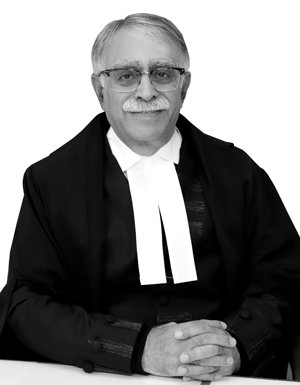

Legal Notes
Add a Note....