
No Acts & Articles mentioned in this case
Chief Justice's Court
e-Court Fresh List
Serial No.3
IN THE HIGH COURT OF JUDICATURE AT ALLAHABAD
***
SPECIAL APPEAL DEFECTIVE No. - 647 of 2021
(In Writ A No. 5302 of 2021)
Shimla Devi ... Appellant
Through :-Mr. Lal Chandra Srivastava, Advocate
Vs.
State of U.P. through Principal Secretary Home Department
and others
... Respondents
Through :- Mr. Ankit Gaur, State Law Officer
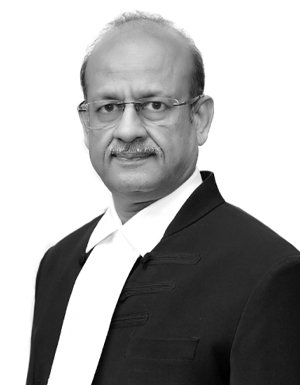
Coram : Hon'ble Rajesh Bindal, Chief Justice
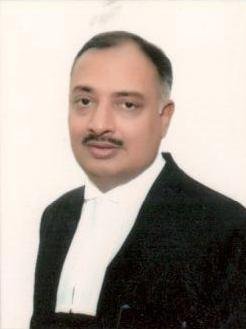
Hon'ble Piyush Agrawal, Judge
ORDER
Rajesh Bindal, CJ
1. The present intra-court appeal has been filed against the
order dated July 7, 2021 passed by the learned Single Judge whereby
the writ petition filed by the appellant was dismissed. The appellant
had approached this Court by filing the writ petition seeking a
direction to the respondents to consider and decide the appeal dated
December 30, 1995 filed by her late husband, who was dismissed
from service. The writ petition was dismissed on account of delay and
laches.
2. The learned counsel for the appellant submitted that
appellant is an illiterate lady. Late husband of the appellant was
dismissed from service illegally merely on account of unauthorised
absence. The family is practically starving. The only prayer made
before the learned Single Judge was for disposal of statutory appeal
filed by her late husband. The prayer being innocuous, interference of
Special Appeal Defective No. - 647 of 2021
2
this Court was required as the appellate authority had failed to
discharge its duty.
3. After hearing the learned counsel for the appellant, we do
not find any error in the order passed by the learned Single Judge. A
perusal of the impugned order passed by the learned Single Judge
shows that the late husband of the appellant was dismissed from
service on account of his unauthorised absence of over 678 days, vide
order dated December 21, 1990. The appeal was stated to have been
filed against the order of dismissal more than 5 years thereafter on
December 30, 1995 in case the same was filed at that time. There is
nothing on record to show that the appeal was ever pursued by the late
husband of the appellant till such time he was alive. The case of the
appellant is that her husband died in the year 1999. It is also apparent
from the record that the representation dated December 05, 1999 was
filed by the appellant to the then Chief Minister of the State which
was followed by another representation dated August 08, 2018. The
aforesaid facts also, even if taken on their face value, show that late
husband of the appellant and the appellant herself were moving at
their own sweet will and not pursuing the remedy available to them at
the relevant time. Firstly, there was huge delay in filing of appeal in
case it was filed and secondly keeping mum for a period of about 25
years before this Court was approached.
4. The learned Single Judge has dismissed the writ petition
on account of delay and laches.
5. Different facets of issue regarding delay and laches in
filing the petition had been subject matter of consideration before
Hon'ble the Supreme Court on number of occasions, wherein it has
been consistently opined that the party can be denied relief if he sleeps
over the matter.
Special Appeal Defective No. - 647 of 2021
3
6. In State of Uttaranchal and another v. Sri Shiv
Charan Singh Bhandari and others
1
, Hon'ble the Supreme Court,
while considering the issue regarding delay and laches and referring to
earlier judgments on the issue, opined that repeated representations
made will not keep the issues alive. A stale or a dead issue/dispute
cannot be got revived even if such a representation has either been
decided by the authority or got decided by getting a direction from the
court as the issue regarding delay and laches is to be decided with
reference to original cause of action and not with reference to any
such order passed. Delay and laches on the part of a government
servant may even deprive him of the benefit which had been given to
others. Article 14 of the Constitution of India, in a situation of that
nature, will not be attracted as it is well known that law leans in
favour of those who are alert and vigilant. Even equality has to be
claimed at the right juncture and not on expiry of reasonable time.
Even if there is no period prescribed for filing the writ petition under
Article 226 of the Constitution of India, yet it should be filed within a
reasonable time. Such an order promoting a junior should normally be
challenged within a period of six months or at the most in a year of
such promotion. Though it is not a strict rule, the courts can always
interfere even subsequent thereto, but relief to a person, who allows
things to happen and then approach the court and puts forward a stale
claim and try to unsettle settled matters, can certainly be refused relief
on account of delay and laches. Anyone who sleeps over his rights is
bound to suffer. An employee who sleeps like Rip Van Winkle and got
up from slumber at his own leisure, deserves to be denied the relief on
account of delay and laches. Relevant paragraphs from the aforesaid
judgment are extracted below:-
"13.We have no trace of doubt that the respondents
could have challenged the ad hoc promotion conferred on
12013 (6) SLR 629
Special Appeal Defective No. - 647 of 2021
4
the junior employee at the relevant time. They chose not
to do so for six years and the junior employee held the
promotional post for six years till regular promotion took
place. The submission of the learned counsel for the
respondents is that they had given representations at the
relevant time but the same fell in deaf ears. It is
interesting to note that when the regular selection took
place, they accepted the position solely because the
seniority was maintained and, thereafter, they knocked at
the doors of the tribunal only in 2003. It is clear as noon
day that the cause of action had arisen for assailing the
order when the junior employee was promoted on ad hoc
basis on 15.11.1983. In C. Jacob v. Director of Geology
and Mining and another, (2008) 10 SCC 115, a two-Judge
Bench was dealing with the concept of representations
and the directions issued by the court or tribunal to
consider the representations and the challenge to the said
rejection thereafter. In that context, the court has
expressed thus:-
"Every representation to the Government for relief,
may not be replied on merits.
Representations relating to matters which have
become stale or barred by limitation, can be
rejected on that ground alone, without examining
the merits of the claim. In regard to representations
unrelated to the Department, the reply may be only
to inform that the matter did not concern the
Department or to inform the appropriate
Department. Representations with incomplete
particulars may be replied by seeking relevant
Special Appeal Defective No. - 647 of 2021
5
particulars. The replies to such representations,
cannot furnish a fresh cause of action or revive a
stale or dead claim."
14.In Union of India and others v. M. K. Sarkar,
(2010) 2 SCC 59, this Court, after referring to C. Jacob
(supra) has ruled that when a belated representation in
regard to a "stale" or "dead" issue/dispute is considered
and decided, in compliance with a direction by the
court/tribunal to do so, the date of such decision cannot
be considered as furnishing a fresh cause of action for
reviving the "dead" issue or time- barred dispute. The
issue of limitation or delay and laches should be
considered with reference to the original cause of action
and not with reference to the date on which an order is
passed in compliance with a Court's direction. Neither a
court's direction to consider a representation issued
without examining the merits, nor a decision given in
compliance with such direction, will extend the
limitation, or erase the delay and laches.
15.From the aforesaid authorities it is clear as crystal
that even if the court or tribunal directs for consideration
of representations relating to a stale claim or dead
grievance it does not give rise to a fresh cause of action.
The dead cause of action cannot rise like a phoenix.
Similarly, a mere submission of representation to the
competent authority does not arrest time. In Karnataka
Power Corpn. Ltd. through its Chairman & Managing
Director v. K. Thangappan and another, (2006) 4 SCC
322, the Court took note of the factual position and laid
down that when nearly for two decades the respondent-
Special Appeal Defective No. - 647 of 2021
6
workmen therein had remained silent mere making of
representations could not justify a belated approach.
16.In State of Orissa v. Pyarimohan Samantaray,
(1977) 3 SCC 396, it has been opined that making of
repeated representations is not a satisfactory explanation
of delay. The said principle was reiterated in State of
Orissa v. Arun Kumar Patnaik, (1976) 3 SCC 579.
17.In Bharat Sanchar Nigam Limited v. Ghanshyam
Dass (2) and others, (2011) 4 SCC 374, a three-Judge
Bench of this Court reiterated the principle stated
in Jagdish Lal v. State of Haryana, (1977) 6 SCC 538 and
proceeded to observe that as the respondents therein
preferred to sleep over their rights and approached the
tribunal in 1997, they would not get the benefit of the
order dated 7.7.1992.
18.In State of T. N. v. Seshachalam, (2007) 10 SCC
137, this Court, testing the equality clause on the bedrock
of delay and laches pertaining to grant of service benefit,
has ruled thus:-
"... filing of representations alone would not save
the period of limitation. Delay or laches is a
relevant factor for a court of law to determine the
question as to whether the claim made by an
applicant deserves consideration. Delay and/or
laches on the part of a government servant may
deprive him of the benefit which had been given to
others. Article 14 of the Constitution of India
would not, in a situation of that nature, be attracted
as it is well known that law leans in favour of those
who are alert and vigilant."
Special Appeal Defective No. - 647 of 2021
7
19.There can be no cavil over the fact that the claim of
promotion is based on the concept of equality and
equitability, but the said relief has to be claimed within a
reasonable time. The said principle has been stated
in Ghulam Rasool Lone v.State of Jammu and Kashmir
and another, (2009) 15 SCC 321.
20.In New Delhi Municipal Council v. Pan Singh and
others, (2007) 9 SCC 278, the Court has opined that
though there is no period of limitation provided for filing
a writ petition under Article 226 of the Constitution of
India, yet ordinarily a writ petition should be filed within
a reasonable time. In the said case the respondents had
filed the writ petition after seventeen years and the court,
as stated earlier, took note of the delay and laches as
relevant factors and set aside the order passed by the
High Court which had exercised the discretionary
jurisdiction.
21.Presently, sitting in a time machine, we may refer
to a two Judge Bench decision in P. S. Sadasivasway v.
State of Tamil Nadu, (1975) 1 SCC 152, wherein it has
been laid down that a person aggrieved by an order of
promoting a junior over his head should approach the
court at least within six months or at the most a year of
such promotion. It is not that there is any period of
limitation for the Courts to exercise their powers
under Article 226 nor is it that there can never be a case
where the Courts cannot interfere in a matter after the
passage of a certain length of time, but it would be a
sound and wise exercise of discretion for the Courts to
refuse to exercise their extraordinary powers
Special Appeal Defective No. - 647 of 2021
8
under Article 226 in the case of persons who do not
approach it expeditiously for the relief and who stand by
and allow things to happen and then approach the court to
put forward stale claims and try to unsettle settled
matters.
22.We are absolutely conscious that in the case at
hand the seniority has not been disturbed in the
promotional cadre and no promotions may be unsettled.
There may not be unsettlement of the settled position but,
a pregnant one, the respondents chose to sleep like Rip
Van Winkle and got up from their slumber at their own
leisure, for some reason which is fathomable to them
only. But such fathoming of reasons by oneself is not
countenanced in law. Anyone who sleeps over his right is
bound to suffer. As we perceive neither the tribunal nor
the High Court has appreciated these aspects in proper
perspective and proceeded on the base that a junior was
promoted and, therefore, the seniors cannot be denied the
promotion. Remaining oblivious to the factum of delay
and laches and granting relief is contrary to all settled
principles and even would not remotely attract the
concept of discretion. We may hasten to add that the
same may not be applicable in all circumstances where
certain categories of fundamental rights are infringed.
But, a stale claim of getting promotional benefits
definitely should not have been entertained by the
tribunal and accepted by the High Court. True it is,
notional promotional benefits have been granted but the
same is likely to affect the State exchequer regard being
had to the fixation of pay and the pension. These aspects
have not been taken into consideration. What is urged
Special Appeal Defective No. - 647 of 2021
9
before us by the learned counsel for the respondents is
that they should have been equally treated with Madhav
Singh Tadagi. But equality has to be claimed at the right
juncture and not after expiry of two decades. Not for
nothing, it has been said that everything may stop but not
the time, for all are in a way slaves of time. There may
not be any provision providing for limitation but a
grievance relating to promotion cannot be given a new
lease of life at any point of time."
7. The aforesaid view was followed by Hon'ble the Supreme
Court in Union of India and others vs Chaman Rana
2
and Union of
India and others vs. C. Girija and others
3
.
8. In Chennai Metropolitan Water Supply and Sewerage
Board and others v. T. T. Murali Babu
4
, Hon'ble the Supreme Court
opined as under:-
"13.First, we shall deal with the facet of delay. In
Maharashtra State Road Transport Corporation v.
Balwant Regular Motor Service, Amravati and others,
AIR 1969 SC 329, the Court referred to the principle that
has been stated by Sir Barnes Peacock in Lindsay
Petroleum Co. v. Prosper Armstrong Hurd, Abram
Farewall, and John Kemp, (1874) 5 PC 221, which is as
follows:-
"Now the doctrine of laches in Courts of Equity is
not an arbitrary or a technical doctrine. Where it
would be practically unjust to give a remedy, either
because the party has, by his conduct, done that
2 2018(5) SCC 798
3 2019 (3) SCALE 527
4 2014 (4) SCC 108
Special Appeal Defective No. - 647 of 2021
10
which might fairly be regarded as equivalent to a
waiver of it, or where by his conduct and neglect
he has, though perhaps not waiving that remedy,
yet put the other party in a situation in which it
would not be reasonable to place him if the remedy
were afterwards to be asserted in either of these
cases, lapse of time and delay are most material.
But in every case, if an argument against relief,
which otherwise would be just, is founded upon
mere delay, that delay of course not amounting to a
bar by any statute of limitations, the validity of that
defence must be tried upon principles substantially
equitable. Two circumstances, always important in
such cases, are, the length of the delay and the
nature of the acts done during the interval, which
might affect either party and cause a balance of
justice or injustice in taking the one course or the
other, so far as relates to the remedy."
14.In State of Mahrashtra v. Digambar, (1995) 4 SCC
683, while dealing with exercise of power of the High
Court under Article 226 of the Constitution, the Court
observed that power of the High Court to be exercised
under Article 226 of the Constitution, if is discretionary,
its exercise must be judicious and reasonable, admits of
no controversy. It is for that reason, a person's entitlement
for relief from a High Court under Article 226 of the
Constitution, be it against the State or anybody else, even
if is founded on the allegation of infringement of his legal
right, has to necessarily depend upon unblameworthy
conduct of the person seeking relief, and the court refuses
to grant the discretionary relief to such person in exercise
Special Appeal Defective No. - 647 of 2021
11
of such power, when he approaches it with unclean hands
or blameworthy conduct.
15.In State of M. P. and others etc. etc. vs. Nandlal
Jaiswal and others etc. etc., AIR 1987 SC 251, the Court
observed that it is well settled that power of the High
Court to issue an appropriate writ underArticle 226 of the
Constitution is discretionary and the High Court in
exercise of its discretion does not ordinarily assist the
tardy and the indolent or the acquiescent and the
lethargic. It has been further stated therein that if there is
inordinate delay on the part of the petitioner in filing a
petition and such delay is not satisfactorily explained, the
High Court may decline to intervene and grant relief in
the exercise of its writ jurisdiction. Emphasis was laid on
the principle of delay and laches stating that resort to the
extraordinary remedy under the writ jurisdiction at a
belated stage is likely to cause confusion and public
inconvenience and bring in injustice.
16.Thus, the doctrine of delay and laches should not
be lightly brushed aside. A writ court is required to weigh
the explanation offered and the acceptability of the same.
The court should bear in mind that it is exercising an
extraordinary and equitable jurisdiction. As a
constitutional court it has a duty to protect the rights of
the citizens but simultaneously it is to keep itself alive to
the primary principle that when an aggrieved person,
without adequate reason, approaches the court at his own
leisure or pleasure, the court would be under legal
obligation to scrutinize whether the lis at a belated stage
should be entertained or not. Be it noted, delay comes in
the way of equity. In certain circumstances delay and
Special Appeal Defective No. - 647 of 2021
12
laches may not be fatal but in most circumstances
inordinate delay would only invite disaster for the litigant
who knocks at the doors of the court. Delay reflects
inactivity and inaction on the part of a litigant “a litigant
who has forgotten the basic norms, namely,
"procrastination is the greatest thief of time" and second,
law does not permit one to sleep and rise like a phoenix.
Delay does bring in hazard and causes injury to the lis. In
the case at hand, though there has been four years' delay
in approaching the court, yet the writ court chose not to
address the same. It is the duty of the court to scrutinize
whether such enormous delay is to be ignored without
any justification. That apart, in the present case, such
belated approach gains more significance as the
respondent employee being absolutely careless to his
duty and nurturing a lackadaisical attitude to the
responsibility had remained unauthorisedly absent on the
pretext of some kind of ill health. We repeat at the cost of
repetition that remaining innocuously oblivious to such
delay does not foster the cause of justice. On the contrary,
it brings in injustice, for it is likely to affect others. Such
delay may have impact on others' ripened rights and may
unnecessarily drag others into litigation which in
acceptable realm of probability, may have been treated to
have attained finality. A court is not expected to give
indulgence to such indolent persons- who compete with
`Kumbhakarna' or for that matter 'Rip Van Winkle'. In our
considered opinion, such delay does not deserve any
indulgence and on the said ground alone the writ court
should have thrown the petition overboard at the very
threshold."
Special Appeal Defective No. - 647 of 2021
13
9. In Bal Krishan vs. State of Punjab and others
5
,
wherein the petitioner, after rendering about 34 years of service,
sought refixation of his pay from the date he joined service by filing a
petition more than three years after his retirement, the court dismissed
the writ petition on account of delay and laches only.
10. The issue regarding decision of a claim on a direction by
the Court on the representation filed by a writ petitioner was also
considered in Union of India and others vs. M.K. Sarkar
6
, wherein
it was held that the issue of limitation or delay and laches is to be
considered with reference to original cause of action and not with
reference to an order passed in compliance to Court's direction. The
Court's direction to consider representation or a decision given in
compliance thereof, will not extend the limitation or erase the delay
and laches.
11. In Vijay Kumar Kaul and others vs. Union of India
and others
7
, Hon'ble the Supreme Court declined relief to the
petitioners who were fence sitters as they had approached the Court
after the issues raised by other employees were decided. Relief was
declined on account of delay and laches.
12. The issue was further examined in Prabhakar vs. Joint
Director Sericulture Department and another
8
. It was a case under
the Industrial Disputes Act. In the aforesaid case the matter in dispute
was regarding delay in raising the industrial dispute. The opinion
expressed by the Court was that right not exercised for a long time is
non-existent even if there is no limitation period prescribed. The
litigant was non-suited on the doctrine of delay and laches as well as
doctrine of acquiescence. Paragraph 38 of the judgment is extracted
below:-
52013(2) RSJ 18, (P&H)
62010(2) SCC 59
7 2012 (7) SCC 610
8 (2015) 15 SCC 1
Special Appeal Defective No. - 647 of 2021
14
"38.Likewise, if a party having a right stands by and
sees another acting in a manner inconsistent with that
right and makes no objection while the act is in progress
he cannot afterwards complain. This principle is based on
the doctrine of acquiescence implying that in such a case
party who did not make any objection acquiesced into the
alleged wrongful act of the other party and, therefore, has
no right to complain against that alleged wrong."
13. The Halsbury's Laws of England explains delay, latches
and acquiescence as under:
"In determining whether there has been such delay as to
amount to laches, the chief points to be considered are:
(i) acquiescence on the claimant's part; and
(ii) any change of position that has occurred on the
defendant's part.
Acquiescence in this sense does not mean standing by
while the violation of a right is in progress, but assent
after the violation has been completed and the claimant
has become aware of it. It is unjust to give the claimant a
remedy where, by his conduct, he has done that which
might fairly be regarded as equivalent to a waiver of it; or
where by his conduct and neglect, though not waiving the
remedy, he has put the other party in a position in which
it would not be reasonable to place him if the remedy
were afterwards to be asserted. In such cases lapse of
time and delay are most material. Upon these
considerations rests the doctrine of laches."
Special Appeal Defective No. - 647 of 2021
15
14. In State of Jammu & Kashmir vs. R. K. Zalpuri and
others
9
, Hon'ble the Supreme Court considered the issue regarding
delay and laches in raising the dispute before the Court. It was opined
that the issue sought to be raised by the petitioners therein was not
required to be addressed on merits on account of delay and laches.
The relevant paras thereof are extracted below:-
"27. The grievance agitated by the respondent did not
deserve to be addressed on merits, for doctrine of delay
and laches had already visited his claim like the chill of
death which does not spare anyone even the one who
fosters the idea and nurtures the attitude that he can sleep
to avoid death and eventually proclaim "Deo gratias -
thanks to God”.
28.Another aspect needs to be stated. A writ court
while deciding a writ petition is required to remain alive
to the nature of the claim and the unexplained delay on
the part of the writ petitioner. Stale claims are not to be
adjudicated unless non-interference would cause grave
injustice. The present case, need less to emphasise, did
not justify adjudication. It deserves to be thrown
overboard at the very threshold, for the writ petitioner
had accepted the order of dismissal for half a decade and
cultivated the feeling that he could freeze time and
forever remain in the realm of constant present."
15. The aforesaid view was followed by Hon'ble the Supreme
Court in Union of India and others v. Chaman Rana
10
.
16. Subsequently, a Constitution Benchy of Hon'ble the
Supreme Court in Senior Divisional Manager, Life Insurance
9 2015 (15) SCC 602
10(2018(5) SCC 798
Special Appeal Defective No. - 647 of 2021
16
Corporation v. Shree Lal Meena
11
, considering the principle of delay
and laches, opined as under:-
“36.We may also find that the appellant remained silent
for years together and that this Court, taking a particular
view subsequently, in Sheel Kumar Jain v. New India
Assurance Company Limited, (2011)12 SCC 197 would
not entitle stale claims to be raised on this behalf, like
that of the appellant. In fact the appellant slept over the
matter for almost a little over two years even after the
pronouncemtn of the judgment.
37.Thus, the endeavour of the appellant, to approach
this Copurt seeking the relief, as prayed for, is clearly a
misadventure, which is liable to be rejected, and the
appeal is dismissed.”
17. Recently, in Bharat Coking Coal Ltd. And othyers v.
Shyam Kishore Singh
12
, the issue regarding the delay and laches, was
considered by Hon'ble the Supreme Court and a petition filed
belatedly, seeking change in the date of birth in the service record,
was dismissed.
18. Reference can also be made to the Division Bench
judgments of the Jammu and Kashmir High Court in State of J&K
and others v. S. Bhupinder Singh
13
and in Farooq Ahmad v. State
of J&K and others
14
.
19. Keeping in view the authoritative enunciation of law, as
referred to above, the present Special Appeal challenging the
judgment and order passed by the learned Single Judge dated July 07,
11 (2019)4 SCC 479
12 Civil Appeal No.1009 of 2020, decided on 5.2.2020
13 LPASW No.192 of 2017, decided on 30.12.2017
14 LPA No.210 of 2019, decided on 21.8.2019
Special Appeal Defective No. - 647 of 2021
17
2021 whereby the writ petition seeking a direction to the respondents
to consider and decide the appeal dated December 30, 1995 filed by
her late husband, who was dismissed from service way back in the
year 1990, was dismissed on the ground of delay and laches, deserves
to be dismissed.
20. Ordered accordingly.
Allahabad
18.10.2021
Rakesh/Kuldeep
(Piyush Agrawal, J.) (Rajesh Bindal, C.J.)
Whether the order is speaking :Yes/No
Whether the order is reportable :Yes/No

 Login with google
Legal Notes
Add a Note....