
As per the case facts, the appeal arose from a High Court judgment related to a criminal appeal. The appellant was a member of the Legislative Assembly and was accused ...
2023INSC856
REPORTABLE
IN THE SUPREME COURT OF INDIA
CRIMINAL APPELLATE JURISDICTION
CRIMINAL APPEAL NO 451 OF 2019
Sita Soren … Appellant
Versus
Union of India … Respondent
O R D E R
1
The Criminal Appeal arises from a judgment and order dated 17 February 2014 of
the High Court of Jharkhand in Writ Petition (Criminal) No 128 of 2013.
2 An election was held on 30 March 2012 for two members of the Rajya Sabha
representing the State of Jharkhand. The appellant was a member of the
Legislative Assembly belonging to the Jharkhand Mukti Morcha. The allegation
against the appellant is that she accepted a bribe from an independent
candidate for casting her vote in his favour. However, as borne out from the open
balloting for the Rajya Sabha seat, she did not cast her vote in favour of the
alleged bribe giver and instead cast her vote in favour of a candidate belonging
to her own party. The round of election in question was rescinded and a fresh
election was held at which the appellant voted in favour of the candidate
2
belonging to her own party.
3 The appellant moved the High Court for quashing the charge -sheet and the
criminal proceedings instituted against her. The appellant rel ied on the provisions
of Article 194(2) of the Constitution. The High Court by the impugned judgement
declined to quash the criminal proceedings on the ground that the appellant had
not cast her vote in favour of the alleged bribe giver and thus, is not entitled to the
protection under Article 194(2).
4 The judgment of the High Court has given rise to the present appeal.
5 On 23 September 2014, when the proceedings were placed before a bench of
two judges of this Court, the Court was of the view that since the issue arising for
consideration is “substantial and of general public importance”, it should be
placed before a larger bench of three judges of this Court.
6 On 7 March 2019, when a Bench of three judges of this Court took up the appeal,
it noted that the gravamen of the charge against the appellant is that she had
accepted a bribe to vote in favour of a particular candidate in the Rajya Sabha
election for a member representing Jharkhand. The precise question, as the three
Judge Bench observed, was dealt with in a judgment of a Bench of five judges in
PV Narasimha Rao Vs State (CBI/SPE)
1
. Two judges on the Bench, Justice S.C.
1
(1998) 4 SCC 626
3
Agarwal and Justice A.S. Anand, took the view that the immunity granted under
Article 105(2) and correspondingly, under Article 194(2) of the Constitution would
not extend to cases where bribery for making a speech or voting in a particular
manner in the House is alleged. However, the view of the majority was to the
contrary.
7 The three-judge Bench hearing the present appeal was of the view that “having
regard to the wide ramification of the question that has arisen, the doubts raised
and the issue being a matter of public importance”, it required to be referred to a
larger Bench, as may be considered appropriate. Accordingly, the matter has
been placed, pursuant to the administrative directions of the Chief Justice of India,
before this Bench of five judges.
8 Before proceeding further, it would be appropriate to note that prior attempts to
challenge the correctness of the constitutional position in PV Narsimha Rao have
not borne fruit. Review petitions (Review Petition Nos. 2210- 27/1998) were instituted
before a Bench of five judges of this Court questioning the correctness of the
decision in PV Narsimha Rao . The petitions for review were dismissed on 18 July
2002 on the ground of a delay of 179 days in filing the review petitions, reported
as State (CBI/SPE) Vs PV Narasimha Rao
2
.
9 In addition to the above, a petition under Article 32 of the Constitution (Writ
2 (2001) 9 SCC 249
4
Petition (Civil) diary No 7490/99) seeking a declaration on the correctness of the
position in PV Narsimha Rao was instituted before this Court. By an order dated 1
May 2000 in Centre for PIL & Anr Vs Union of India
3
, a Bench of three judges of this
Court referred the petition to a Bench of five judges while noting a submission
regarding the maintainability of the petition. Eventually, by an order dated 18 July
2002, the petition was dismissed on the ground of maintainability in view of the
judgment in Rupa Ashok Hurra Vs. Ashok Hurra & Anr
4
.
10 Mr. Raju Ramachandran, senior counsel appearing on behalf of the appellant
submitted that a reference of the correctness of the decision in PV Narsimha Rao
(supra) may not strictly speaking be necessary in the facts of the present case. Mr.
Ramachandran, in his written submissions dated 17 September 2023, as well as in
the course of the oral arguments, submitted that none of the contesting parties
has challenged the ratio in PV Narsimha Rao (supra). On the contrary, it is urged
that the contesting parties are ad idem on the ratio and what is sought to be
contested is the applicability of the judgment. The appellant is of the view that the
Judgement in PV Narsimha Rao applies squarely to the instance case. However,
the respondent has contended that the judgment does not apply as polling for
the Rajya Sabha election was held outside the precincts of the House and cannot
be considered as a proceeding of the House in a manner similar to a No -
Confidence Motion. On this basis, Mr. Ramachandran has submitted that the
3 (2000) 9 SCC 393
4
(2002) 4 SCC 388
5
reference would not be warranted.
11 Mr. R Venkataramani, Attorney General for India agrees with Mr. Raju
Ramachandran that a reference is not warranted, though they disagree on the
applicability of the judgement in PV Narsimha Rao to the present case . According
to Mr. Venkataramani, the correctness of PV Narsimha Rao does not arise as an
election to the Rajya Sabha cannot be considered as a “proceeding of the
House”. Mr. Venkataramani primarily relies on the decisions of this Court in:
(i) Pashupati Nath Sukul Vs Nem Chandra Jain & Ors;
5
(ii) Madhukar Jetly Vs Union of India & Ors
6
; and
(iii) Kuldip Nayar & Ors Vs Union of India & Ors.
7
12 Apart from the significance of the issues raised, which shall be explained in brief a
little later in the course of this order, we are not inclined to accept the plea that
the correctness of the decision in PV Narasimha Rao (supra) does not arise in this
case. Firstly, it is common ground that the impugned judgment of the High Court
relied on the judgment of the majority in PV Narasimha Rao. Secondly, it is beyond
doubt that the defence itself relies on the decision of the majority. The correctness
of the view which has been propounded in the judgment of the majority in PV
Narasimha Rao would, therefore, have to be enquired into during the course of
5
(1984) 2 SCC 404
6
(1997) 11 SCC 111
7
(2006) 7 SCC 1
6
the hearing of the present case.
13 It is a settled position of judicial discipline that only a bench of coequal strength
may express an opinion doubting the correctness of a view taken by an earlier
Bench of coequal strength. If such a doubt is expressed, the matter may be
placed before a Bench consisting of a quorum larger than the one which the
pronounced the decision in challenge.
8
Having determined that the correctness
of the decision in PV Narasmiha Rao does arise in the present case, it becomes
necessary for us to determine as to whether prima facie reconsideration of the
judgment in PV Narasimha Rao is warranted, and if the matter should be placed
before a larger bench.
14 The controversy in PV Narasimha Rao and the present case, turns on the
interpretation of the provisions of Article 105(2) of the Constitution and the
equivalent provision, Article 194(2) of the Constitution. The former deals with the
powers, privileges and immunities of the members of the Houses of Parliament,
while the latter confers a similar immunity to members of the State Legislatures.
15 Article 105(2) of the Constitution provides as follows:
“105(2) No member of Parliament shall be liable to
any proceedings in any court in respect of
anything said or any vote given by him in
Parliament or any committee thereof, and no
person shall be so liable in respect of the
publication by or under the authority of either
House of Parliament of any report, paper, votes or
8
(2019) 3 SCC 39, paragraph 10 at page 79.
7
proceedings.”
16
The language of Article 105(2) indicates that the immunity attaches to a Member
of Parliament “in respect of anything said or any vote given by him” in Parliament
or any committee thereof. The expression “anything said, or any vote given”
would postulate that the immunity is attached with respect to conduct, namely,
a vote which has been given or a speech which has been made in Parliament or
any committee of Parliament. The expression “in respect of anything said or any
vote given” arose for consideration before the Constitution Bench in PV Narasimha
Rao. The charge in that case was that the bribe takers had taken a bribe to secure
the defeat of a No Confidence Motion on the floor of the House. In analysing the
above expression, Justice SP Bharucha, took the view that Article 105(2) would
have to be interpreted broadly so as to protect Members of Parliament against
proceedings in Court that relate to or are concerned with or have connection or
nexus with anything said or vote given by them in Parliament (Paragraph 133 at
page 729). Justice Bharucha was of the view that the nexus between the alleged
conspiracy/bribe and the No Confidence Motion was explicit, the charge being
that the alleged bribe takers had received bribes to secure the defeat of the No
Confidence Motion in Parliament.
17 The Attorney General for India, in that case, had urged before the Constitution
Bench that though the words “in respect of” must receive a broad meaning, the
protection under Article 105(2) of the Constitution is limited to court proceedings
that impugn the speech that is given or the vote that is cast or anything that arises
8
therefrom. Noting that the object of the protection was to enable Members of
Parliament to speak their minds in Parliament and vote in the same way without
the fear of being made answerable, the judgment of Justice S.P. Bharucha
contains the following observations (Paragraph 136 at pg. 730):
“… It is not enough that Members should be
protected against civil action and criminal
proceedings, the cause of action of which is their
speech or their vote. To enable Members to
participate fearlessly in parliamentary debates,
Members need the wider protection of immunity
against all civil and criminal proceedings that bear
a nexus to their speech or vote. It is for that reason
that a Member is not “liable to any proceedings in
any court in respect of anything said or any vote
given by him”. Article 105(2) does not say, which it
would have if the learned Attorney General were
right, that a Member is not liable for what he has
said or how he has voted. While imputing no such
motive to the present prosecution, it is not difficult
to envisage a Member who has made a speech or
cast a vote that is not to the liking of the powers
that be being troubled by a prosecution alleging
that he had been party to an agreement and
conspiracy to achieve a certain result in Parliament
and had been paid a bribe.”
18
The learned Judge observed that he was conscious of the seriousness of the
offence which the alleged bribe takers were said to have committed and that by
reason of the lucre that they have received, they enabled the Government to
survive. But the judgment opined, “our sense of indignation should not lead us to
construe the Constitution narrowing, impairing the guarantee to effective
parliamentary participation and debate.” However, it is significant to note that
despite the above observations, the majority was of the view that the immunity
9
which covers bribe takers did not protect a particular Member of Parliament (Mr
Ajit Singh) in the case, as ultimately, he did not cast his vote in the No Confidence
Motion.
19 The contrary view of two judges in PV Narasimha Rao was elucidated in the
judgment of Justice S.C. Agarwal. The learned Judge observed that the expression
“in respect of” would have to be construed in its true perspective. The minority
recognized that while the object and purpose of Article 105(2) of the Constitution
is to enable Members of Parliament to speak freely or to cast their votes without
fear of consequences an interpretation that places Members of Parliament above
the law would be repugnant to the healthy functioning of a parliamentary
democracy. In this context, the divergence in the views of Justice S C Agarwal
(speaking for two judges) with that of Justice S.P Bharucha (speaking for two
judges) emerges from the following extract (paragraph 47 at page 673):
“47. As mentioned earlier, the object of the
immunity conferred under Article 105(2) is to ensure
the independence of the individual legislators.
Such independence is necessary for healthy
functioning of the system of parliamentary
democracy adopted in the Constitution.
Parliamentary democracy is a part of the basic
structure of the Constitution. An interpretation of
the provisions of Article 105(2) which would enable
a Member of Parliament to claim immunity from
prosecution in a criminal court for an offence of
bribery in connection with anything said by him or
a vote given by him in Parliament or any
committee thereof and thereby place such
Members above the law would not only be
repugnant to healthy functioning of parliamentary
democracy but would also be subversive of the
rule of law which is also an essential part of the
basic structure of the Constitution. It is settled law
10
that in interpreting the constitutional provisions the
court should adopt a construction which
strengthens the foundational features and the
basic structure of the Constitution. (See: Sub-
Committee on Judicial Accountability v. Union of
India [(1991) 4 SCC 699] SCC at p. 719.) The
expression “in respect of” precedes the words
“anything said or any vote given” in Article 105(2).
The words “anything said or any vote given” can
only mean speech that has already been made or
a vote that has already been given. The immunity
from liability, therefore, comes into play only if a
speech has been made or vote has been given.
The immunity would not be available in a case
where a speech has not been made or a vote has
not been given. When there is a prior agreement
whereunder a Member of Parliament has received
an illegal consideration in order to exercise his right
to speak or to give his vote in a particular manner
on a matter coming up for consideration before
the House, there can be two possible situations.
There may be an agreement whereunder a
Member accepts illegal gratification and agrees
not to speak in Parliament or not to give his vote in
Parliament. The immunity granted under Article
105(2) would not be available to such a Member
and he would be liable to be prosecuted on the
charge of bribery in a criminal court. What would
be the position if the agreement is that in lieu of the
illegal gratification paid or promised the Member
would speak or give his vote in Parliament in a
particular manner and he speaks and gives his vote
in that manner? As per the wide meaning
suggested by Shri Rao for the expression “in respect
of”, the immunity for prosecution would be
available to the Member who has received illegal
gratification under such an agreement for
speaking or giving his vote and who has spoken or
given his vote in Parliament as per the said
agreement because such acceptance of illegal
gratification has a nexus or connection with such
speaking or giving of vote by that Member. If the
construction placed by Shri Rao on the expression
“in respect of” is adopted, a Member would be
liable to be prosecuted on a charge of bribery if he
accepts bribe for not speaking or for not giving his
vote on a matter under consideration before the
House but he would enjoy immunity from
11
prosecution for such a charge if he accepts bribe
for speaking or giving his vote in Parliament in a
particular manner and he speaks or gives his vote
in Parliament in that manner. It is difficult to
conceive that the framers of the Constitution
intended to make such a distinction in the matter
of grant of immunity between a Member of
Parliament who receives bribe for speaking or
giving his vote in Parliament in a particular manner
and speaks or gives his vote in that manner and a
Member of Parliament who receives bribe for not
speaking or not giving his vote on a particular
matter coming up before the House and does not
speak or give his vote as per the agreement so as
to confer an immunity from prosecution on charge
of bribery on the former but denying such immunity
to the latter. Such an anomalous situation would be
avoided if the words “in respect of” in Article 105(2)
are construed to mean “arising out of”. If the
expression “in respect of” is thus construed, the
immunity conferred under Article 105(2) would be
confined to liability that arises out of or is
attributable to something that has been said or to
a vote that has been given by a Member in
Parliament or any committee thereof. The immunity
would be available only if the speech that has
been made or the vote that has been given is an
essential and integral part of the cause of action
for the proceedings giving rise to the liability. The
immunity would not be available to give protection
against liability for an act that precedes the
making of the speech or giving of vote by a
Member in Parliament even though it may have a
connection with the speech made or the vote
given by the Member if such an act gives rise to a
liability which arises independently and does not
depend on the making of the speech or the giving
of vote in Parliament by the Member. Such an
independent liability cannot be regarded as
liability in respect of anything said or vote given by
the Member in Parliament. The liability for which
immunity can be claimed under Article 105(2) is the
liability that has arisen as a consequence of the
speech that has been made or the vote that has
been given in Parliament.”
12
20 Significantly, Justice Agarwal, in the course of his judgment also dwelt on the issue
as to when the offence of bribery is complete. According to the view of the
learned Judge, the offence of bribery is complete against the receiver of a bribe,
if he takes or agrees to take money for a promise to act in a certain way. The
offence would be complete with the acceptance of the money or on the
agreement to accept the money being concluded and is not dependent on the
performance of the illegal promise by the receiver. The receiver of the money will
be treated to have committed the offence even if he were to default in the
performance of the bargain. Hence, it was Justice Agarwal’s view that for proving
the offence of bribery, all that is required to be established is that the offender had
received or agreed to receive money for a promise to act in a certain way and it
was not necessary to prove further that he had actually acted in the way as
promised.
21 The third judgment in the case was delivered by Justice G.N. Ray. A reading of the
judgment of Justice GN Ray indicates that the learned Judge concurred with
Justice S.C. Agarwal in concluding that:
(i) A Member of Parliament is a public servant under Section 2(c) of the Prevention
of Corruption Act 1988; and
(ii) Since there is no authority competent to grant sanction for the prosecution of a
Member of P arliament under Section 19(1) of the Prevention of Corruption Act
1988, the Court can take cognizance of the offences mentioned in the provision
13
but the prosecuting agency must obtain the permission of the Chairperson of the
Rajya Sabha or, as the case may be, the Speaker of the Lok Sabha before filing
a charge-sheet against the Member of Parliament in a criminal court.
22 On the above two issues, Justice G.N. Ray concurred with the judgment of Justice
SC Agarwal. However, on the interpretation of Article 105(2), Justice G.N. Ray
concurred with the judgment of Justice S.P Bharucha speaking for two judges.
Hence, the judgment of Justice S.P. Bharucha, on the interpretation of Article
105(2) represents the view of the majority of three learned judges.
23 We may note, at this stage, that besides Mr. Raju Ramachandran, senior counsel
and Mr. R Venkataramani, Attorney General for India, we have also heard Mr. P.S.
Patwalia, senior counsel who has been appointed as Amicus Curiae to assist the
Court, Mr. Gopal Sankarnarayanam, senior counsel, appearing on behalf of the
intervener and Dr. Vivek Sharma, counsel appearing on behalf of the intervener.
24 We are inclined to agree with the submission of the Amicus Curiae and Mr Gopal
Sankarnarayan, senior counsel that the view which has been expressed in the
decision of the majority in PV Narasmiha Rao requires to be reconsidered by a
larger Bench. Our reasons prima facie for doing so are formulated below:
(i) Firstly, the interpretation of Article 105(2) and the corresponding provisions of
Article 194(2) of the Constitution must be guided by the text, context and the
object and purpose underlying the provision. The fundamental purpose and
object underlying Article 105(2) of the Constitution is that Members of
Parliament, or as the case may be of the State Legislatures must be free to
14
express their views on the floor of the House or to cast their votes either in the
House or as members of the Committees of the House without fear of
consequences. While Article 19(1)(a) of the Constitution recognises the
individual right to the freedom of speech and expression, Article 105(2)
institutionalises that right by recognising the importance of the Members of
the Legislature having the freedom to express themselves and to cast their
ballots without fear of reprisal or consequences. In other words, the object of
Article 105(2) or Article 194(2) does not prima facie appear to be to render
immunity from the launch of criminal proceedings for a violation of the
criminal law which may arise independently of the exercise of the rights and
duties as a Member of Parliament or of the legislature of a state;
(ii) Secondly, in the course of judgment in PV Narasmiha Rao, Justice S.C.
Agarwal noted a serious anomaly if the construction in support of the
immunity under Article 105(2) for a bribe taker were to be accepted: a
member would enjoy immunity from prosecution for such a charge, if t he
member accepts the bribe for speaking or giving their vote in Parliament in
a particular manner and in fact speaks or gives a vote in Parliament in that
manner. On the other hand, no immunity would attach, and the member of
the legislature would be liable to be prosecuted on a charge of bribery, if
they accept the bribe for not speaking or for not giving their vote on a matter
under consideration before the House but they act to the contrary. This
anomaly, Justice Agarwal observed, would be avoided if the words “in
15
respect of” in Article 105(2) are construed to mean ‘ arising out of’ . In other
words, in such a case, the immunity would be available only if the speech
that has been made or the vote that has been given is an essential and
integral part for the cause of action for the proceedings giving rise to the
law; and
(iii) Thirdly, the judgment of Justice SC Agarwal has specifically dwelt on the
question as to when the offence of bribery would be complete. The
judgment notes that the offence is complete with the acceptance of the
money or on the agreement to accept the money being concluded and is
not dependent on the performance of the illegal promise by the receiver.
The receiver of the bribe would be treated to have committed the offence
even when he fails to perform the bargain underlying the tender and
acceptance of the bribe. This aspect bearing on the constituent elements
of the offence of a bribe finds elaboration in the judgment of Justice Agarwal
but is not dealt with in the judgment of the majority.
25 We have already noted above that efforts in seeking a review of the judgment in
PV Narasmiha Rao and later in proceedings under Article 32 of the Constitution
were not successful. One of us (Justice Dr. D.Y. Chandrachud), while delivering a
concurrent opinion for a Bench of five judges in Kalpana Mehta Vs Union of India
9
(para 221) had occasion to observe that should the correctness of the view in PV
9
(2018) 7 SCC 1
16
Narasmiha Rao fall for reconsideration in an appropriate case, a larger bench
may have to consider the issue. The view of the majority has serious ramifications
for the polity and the preservation of probity in public life.
26 For the above reasons, prima facie at this stage, we are of the considered view
that the correctness of the view of the majority in PV Narasmiha Rao should be
reconsidered by a larger Bench of seven judges.
27 We accordingly request the Registry to place the papers before the Chief Justice
for constituting a larger Bench of seven judges.
...........…...….......………………....…C JI.
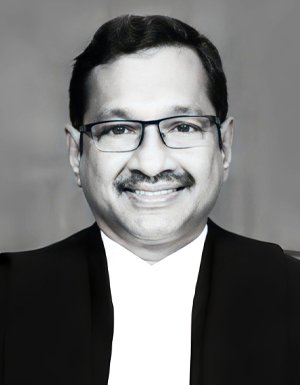
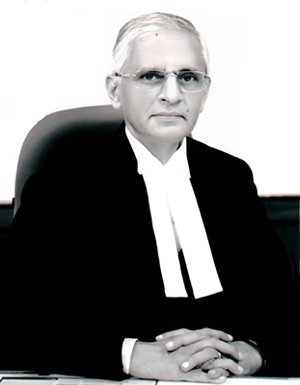
[Dr Dhananjaya Y Chandrachud]
..............…...….......………………....…J.
[A S Bopanna]
.............…...….......………………....…J.
[M M Sundresh]
.............…...….......………………....…J.
[J B Pardiwala]
.............…...….......………………....…J.
[Manoj Misra]
New Delhi;
September 20, 2023
GKA

 Login with google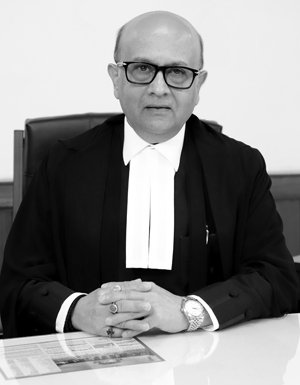


Legal Notes
Add a Note....