
1
2026:CGHC:416-DB
The date when
the judgment
is reserved
The date when
the judgment is
pronounced
The date when the
judgment is uploaded on
the website
Operative Full
- - -- 07.01.2026
NAFR
HIGH COURT OF CHHATTISGARH AT BILASPUR
ACQA No. 139 of 2018
1 – State of Chhattisgarh Through- Police Station Baradwar, District
Janjgir Champa, Chhattisgarh.
... Appellant
versus
1 - Trilochan S/o Ganesh Ram Aged About 35 Years Occupation-
Labour, Resident of Village Sakreli, Police Station Baradwar, District-
Janjgir Champa, Chhattisgarh.
... Respondent(s)
For Appellant/ State: Ms. Sunita Sahu, P.L.
For Respondent(s) : Ms. Pragati Pandey on behalf of Mr. Hari
Agrawal, Advocate
2
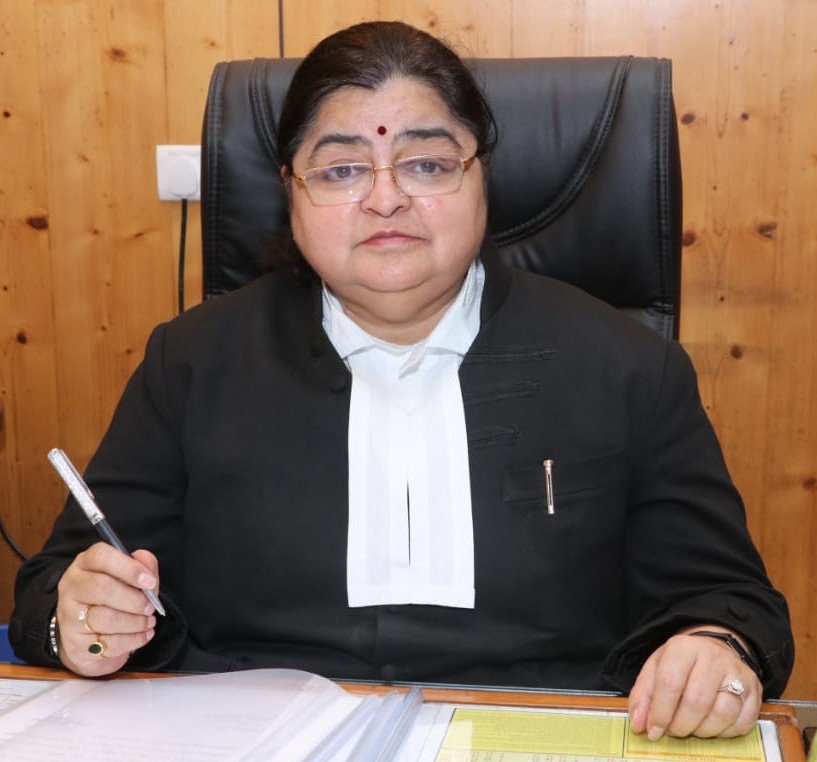
Hon'ble Smt. Justice Rajani Dubey
Hon’ble Shri Justice Radhakishan Agrawal
Judgment on Board
Per Rajani Dubey, J.
05/01/2026
1.The present appeal has been preferred by the appellant assailing
the judgment dated 08.12.2017 passed by the learned Second
Additional Sessions Judge, Sakti, District- Janjgir-Champa (C.G.)
in Sessions Case No. 07/2016 whereby the learned trial Court
acquitted the respondent/accused of the offences punishable
under Sections 498-A, 304-B and in alternative Section 302 of the
Indian Penal Code, 1860.
2.Earlier, the bailable warrant issued against the
respondent/accused was received unexecuted with an
endorsement that he was not residing at the address mentioned
therein.
3.The prosecution case, in brief, is that the deceased, Akkabai alias
Meenabai, was initially married to Sakunram, resident of village
Sundareli (Jarwe). As she remained issueless for about 15–16
years, her husband Sakunram contracted a second marriage and
brought another woman to the matrimonial home. Thereafter,
Akkabai alias Meenabai left her matrimonial house and started
residing with her parents. After about four years, the accused
Trilochan Kumar married the deceased by putting bangles on her
hands, in accordance with customary practices and kept her as
3
his wife. In this regard, a written agreement was also executed on
stamped paper.
However, within a few days of the marriage, the accused
Trilochan Kumar allegedly started subjecting the deceased to
physical and mental cruelty by beating and harassing her with a
demand to bring money and stamp paper from her parental home
and from his brother. Due to such continuous cruelty and
harassment, the deceased Akkabai alias Meenabai suffered
severe physical and mental trauma.
On 30.07.2015, the deceased Akkabai alias Meenabai
sustained burn injuries under suspicious circumstances. She was
initially admitted to the Government Hospital, Champa, and
thereafter referred to SIMS Hospital, Bilaspur for further treatment.
Information regarding her hospitalization was sent to Police
Station City Kotwali, Bilaspur by SIMS Hospital through intimation
letters Ex.P-22 and Ex.P-23. During the course of treatment, the
deceased succumbed to her injuries on 31.07.2015 at SIMS
Hospital, Bilaspur.
On 31.07.2015, upon receipt of the hospital memo, an
unnumbered merg intimation No. 0/388/15 (Ex.P-24) was
registered at Police Station City Kotwali, Bilaspur. After issuing
notice (Ex.P-4) to the witnesses, an inquest was conducted and
the dead body of the deceased Akkabai alias Meenabai was sent
for post-mortem examination. The post-mortem report (Ex.P-5)
4
was prepared in the presence of witnesses. As per the post-
mortem examination conducted at SIMS Hospital, Bilaspur, Dr.
Rizwan Siddiqui, vide his report (Ex.P-15), opined that the cause
of death was respiratory and cardiac failure due to burn injuries.
The fact of proceeding to the hospital has been corroborated by
Santosh Kumar (PW-3) and Dilip Kumar Jangde (PW-12).
On receipt of the unnumbered inquest report No. 0/388/2015
from Police Station City Kotwali, Bilaspur, a numbered inquest
report No. K-45/15 (Ex.P-27) was registered at Police Station
Baradwar and investigation in the matter commenced. During the
course of inquiry, prima facie material was found against the
accused, whereupon a First Information Report (Ex.P-28) was
registered against him under Section 304-B of the Indian Penal
Code on 16.12.2015 at Police Station Baradwar. Statements of
witnesses were recorded, the spot map (Ex.P-34) was prepared in
presence of witnesses and the Patwari also prepared a site plan
(Ex.P-31). The accused was arrested and his arrest memo (Ex.P-
35) was prepared and due intimation of his arrest was given to his
family members.
After completion of the investigation, a charge-sheet under
Section 304-B of the Indian Penal Code was filed against the
accused before the Court of Judicial Magistrate First Class, Sakti.
Thereafter, in Criminal Case No. 173/2016, by order dated
09.03.2016, the case was committed to the Court of the learned
District and Sessions Judge, Janjgir-Champa, who subsequently,
5
on 18.03.2016, transferred the case to the Court of the learned
First Additional Sessions Judge for trial and disposal.
4.The Trial Court framed charges against the accused under
Sections 498-A and 304-B of the Indian Penal Code and, in the
alternative, under Section 302 IPC. The accused denied the
charges and claimed trial. His plea was recorded accordingly.
Subsequently, in pursuance of the distribution of work order dated
26.08.2016 passed by the learned Sessions Judge, the case was
transferred to the present Court by the learned First Additional
Sessions Judge for adjudication.
5.In order to bring home the guilt of the accused/respondent, the
prosecution examined as many as 22 witnesses. The statement of
the accused/respondent was also recorded under Section 313 of
the Code of Criminal Procedure, wherein he denied all the
incriminating circumstances appearing against him and pleaded
innocence alleging false implication in the case. The
accused/respondent did not lead any evidence in defence.
6.Upon due appreciation of the oral as well as documentary
evidence available on record, the learned Trial Court acquitted the
respondent/accused of the offences punishable under Sections
498-A and 304-B of the Indian Penal Code and in the alternative,
under Section 302 IPC. Hence, this acquittal appeal.
7.Learned counsel for the appellant submits that although the scope
of interference with an order of acquittal is limited, the appellate
6
Court is nonetheless empowered to re-appreciate the entire
evidence on record. It is a settled principle of law that where the
findings recorded by the Trial Court are perverse, unreasonable,
or contrary to the evidence available on record, the appellate
Court is fully justified in setting aside such acquittal and recording
an order of conviction in accordance with law.
In the present case, the learned Trial Court has gravely
erred in acquitting the respondent/accused despite overwhelming
oral and documentary evidence establishing his guilt. The
evidence of the complainant and other prosecution witnesses has
not been appreciated in its proper perspective, and material
evidence, including the post-mortem report and medical opinion,
has been misread and misconstrued. The learned Trial Court has
proceeded on conjectures and surmises, leading to findings which
are manifestly erroneous and unsustainable in law.
It is further submitted that the prosecution evidence is
consistent, cogent, and trustworthy, clearly proving that the
respondent/accused subjected the deceased to cruelty and that
the death occurred in circumstances squarely attracting the
offences alleged. The learned Trial Judge failed to draw the
necessary legal inferences arising from the proved facts and
thereby committed a serious error of law in acquitting the
respondent/accused.
Upon a careful and holistic scrutiny of the entire record, it is
evident that the prosecution has successfully proved its case
7
beyond reasonable doubt. The learned Court below ought to have
convicted the respondent/accused for the offences punishable
under the relevant provisions of the Indian Penal Code. The Trial
Court also failed to consider the gravity of the offence and the
conduct of the respondent/accused, which were material
considerations in the facts of the present case. It is also submitted
that the investigation was conducted strictly in accordance with
the mandatory provisions of the Code of Criminal Procedure, and
no illegality or procedural infirmity exists so as to discredit the
prosecution case. For the foregoing reasons, it is respectfully
submitted that the judgment of acquittal passed by the learned
Trial Court is unjust, improper, perverse and contrary to law and
the evidence on record and therefore deserves to be set aside.
8.On the other hand, learned counsel for the respondent submits
that the scope of interference in an appeal against acquittal is
extremely limited and the presumption of innocence in favour of
the respondent stands further strengthened by the judgment of
acquittal. The prosecution has failed to prove its case beyond
reasonable doubt. The evidence relied upon by the prosecution
suffers from material contradictions and infirmities and the learned
Trial Court has rightly disbelieved the same. The findings recorded
are based on a plausible view of the evidence and do not warrant
interference by the appellate Court merely because another view
is possible. Therefore, the present appeal deserves to be
8
dismissed and the judgment of acquittal passed by the learned
Trial Court deserves to be affirmed.
9.Heard counsel for the parties and perused the material placed on
record including the impugned judgment.
10.It is evident from the record of the learned Trial Court that
charges were framed against the accused/respondent under
Sections 498-A and 304-B and alternatively under Section 302 of
the Indian Penal Code. However, upon due appreciation of the
oral as well as documentary evidence on record, the learned Trial
Court acquitted the accused/respondent of all the charges so
framed.
11.It is not disputed before the learned trial Court that the deceased
Akkabai @ Meenabai was first married to Sakunram of village
Sundareli (Jarve). Having no issue for about 15–16 years,
Sakunram contracted a second marriage, whereafter Akkabai left
the matrimonial home and resided with her parents. After about
four years, accused Trilochan Kumar took Akkabai as his wife by
performing customary rites of bangles, supported by a written
document on stamp paper. On 30.07.2015, Akkabai sustained
burn injuries and succumbed to them on 31.07.2015 during
treatment at SIMS Hospital.
12.The prosecution examined several witnesses, namely, Faguna
Ram Jangde (P.W.-1), brother of the deceased; Smt. Devki
Jangde (P.W.-2), sister-in-law of the deceased; Santosh Kumar
(P.W.-3), a relative of the deceased; Bhagwan Das (P.W.-4), a
9
relative of the deceased; Itwari (P.W.-5), a villager of Dumarpara;
Natthuram (P.W.-6), a villager of Dumarpara; Jagatram Jangde
(P.W.-7), a relative of the deceased; Chaitam (P.W.-8), a relative of
the deceased; Ganpat (P.W.-9), brother-in-law of the deceased;
Tiharin Bai (P.W.-10), sister of the deceased; Jawahar Lal (P.W.-
11), a relative of the deceased; and Dilip Kumar Jangde (P.W.-12),
a relative of the deceased. All these witnesses stated that the
deceased, Meenabai @ Akkabai was married to the respondent-
accused Trilochan by way of customary Chudi marriage and that
an agreement was executed in the presence of elderly persons of
the village. They further deposed that after the marriage, the
deceased resided peacefully with the accused for about four to
five years and thereafter the accused allegedly subjected her to
physical assault after consuming alcohol and demanded money
from her. However, in their respective cross-examinations, these
witnesses admitted the defence suggestion that the marriage
between the deceased and Trilochan was performed in
accordance with the customary Chudi form and that a written
agreement was executed on a stamp paper of Rs.60/- /Rs.100/-
stipulating that in the event of any harassment or ill-treatment by
Trilochan, 50 decimals of land would be transferred in favour of
the deceased.
13.Some of the prosecution witnesses alleged that the accused
had caused the death of Meenabai. However, Dr. Rizwan Siddiqui
(P.W.-13), who conducted the post-mortem examination of the
10
deceased, categorically admitted that the nature of death was not
mentioned in the post-mortem report.
14.None of the relatives of the deceased alleged that the deceased
was subjected to cruelty or harassment in connection with any
demand for dowry soon before her death.
15.Hon’ble Apex Court in the matter of Charan Singh @ Charanjit
Singh Vs. the State of Uttarakhand reported in 2023 LiveLaw
SC 341 held in paras 4, 5, 10 and 11 as under:-
“4……...The presumption in regard to dowry death can be
raised in terms of Section 113B of the Indian Evidence Act,
1872 (for short, ‘IEA’) only if it is shown that soon before
death, such woman had been subjected to cruelty or
harassment for, or in connection with the demand of dowry.
5. If the evidence led by the prosecution is examined, no
case for conviction under Section 304B or 498A IPC can
possibly be made out as none of the witnesses have stated
that there was any harassment or cruelty to the deceased or
demand of dowry immediately before her death. The
marriage took place in the year 1993, the deceased died on
22.6.1995. None of the family members of the deceased
including her father, maternal grandmother or the maternal
uncle have stated anything about the harassment of the
deceased immediately before her death in connection with
demand of dowry. In fact, the maternal grandmother and two
maternal uncles who were living at distance of about one
farlang from the village of the deceased were even present at
the time of her cremation. They did not raise any issue either
by lodging a complaint to the police or otherwise. In fact, it
was admitted by the maternal grandmother and the uncles of
the deceased that after the cremation, with the intervention of
the panchayat, they had collected all the dowry articles. It
11
was further submitted that intimation was also given to the
father of the deceased who in fact was living at a distance of
about 290 kms. However, the cremation could not be delayed
on account of waiting for the arrival of the father of the
deceased.
10. The conviction of the appellant is under Sections 3048
and 498A IPC raising presumption regarding dowry death
within seven years of marriage. To appreciate the arguments
raised by the learned counsel for the parties, a perusal of
Section 304B and 498A IPC and Section 113B of the Indian
Evidence Act would be required. The same are extracted
hereinbelow:-
"304B. Dowry death- (1) Where the death of a woman is
caused by any burns or bodily injury or occurs otherwise
than under normal circumstances within seven years of her
marriage and it is shown that soon before her death she
was subjected to cruelty or harassment by her husband or
any relative of her husband for, or in connection with, any
demand for dowry, such death shall be called "dowry
death", and such husband or relative shall be deemed to
have caused her death.
Explanation. For the purpose of this sub-section, "dowry"
shall have the same meaning as in Section 2 of the Dowry
Prohibition Act, 1961 (28 of 1961).
(2) Whoever commits dowry death shall be punished with
imprisonment for a term which shall not be less than seven
years but which may extend to imprisonment for life.
498-A. Husband or relative of husband of a woman
subjecting her to cruelty - Whoever, being the husband or
the relative of the husband of a woman, subjects such
woman to cruelty shall be punished with imprisonment for a
term which may extend to three years and shall also be liable
to fine.
12
Explanation. For the purposes of this section,
"cruelty" means-
(a) any wilful conduct which is of such a nature as is likely to
drive the woman to commit suicide or to cause grave injury or
danger to life, limb or health (whether mental or physical) of
the woman: or
(b) harassment of the woman where such harassment is with
a view to coercing her or any person related to her to meet
any unlawful demand for any property or valuable security or
is on account of failure by her or any person related to her to
meet such demand.
113B. Presumption as to dowry death.- When the question
is whether a person has committed the dowry death of a
woman and it is shown that soon before her death such
woman had been subjected by such person to cruelty or
harassment for, or in connection with, any demand for dowry,
the Court shall presume that such person had caused the
dowry death.
Explanation. -For the purposes of this section, "dowry death"
shall have the same meaning as in Section 304-B of Indian
Penal Code (45 of 1860)"
11. The interpretation of Sections 304B and 498A IPC came
up for consideration in Baijnath's case (supra). The opinion
was summed up in paras 25 to 27 thereof, which are
extracted below:-
"25. Whereas in the offence of dowry death defined by
Section 304-B of the Code, the ingredients thereof are:
(i) death of the woman concerned is by any burns or bodily
injury or by any cause other than in normal circumstances,
and
(ii) is within seven years of her marriage, and
(iii) that soon before her death, she was subjected to cruelty
13
or harassment by her husband or any relative of the husband
for, or in connection with, any demand for dowry.
The offence under Section 498-A of the Code is attracted
qua the husband or his relative if she is subjected to cruelty.
The Explanation to this Section exposits "cruelty" as:
(i) any wilful conduct which is of such a nature as is likely to
drive the woman to commit suicide or to cause grave injury
or danger to life, limb or health (whether mental or physical),
or
(ii) harassment of the woman, where such harassment is
with a view to coercing her or any person related to her to
meet any unlawful demand for any property or valuable
security or is on account of failure by her or any person
related to her to meet such demand.
26. Patently thus, cruelty or harassment of the lady by her
husband or his relative for or in connection with any demand
for any property or valuable security as a demand for dowry
or connection therewith is the common constituent of both
the offences.
27. The expression "dowry" is ordained to have the same
meaning as in Section 2 of the Dowry Prohibition Act, 1961.
The expression "cruelty", as explained, contains in its
expanse, apart from the conduct of the tormentor, the
consequences precipitated thereby qua the lady subjected
thereto. Be that as it may, cruelty or harassment by the
husband or any relative of his for or in connection with any
demand of dowry, to reiterate, is the gravamen of the two
offences.”
16.The Hon’ble Apex Court in its latest judgment dated 12.02.2024
(Criminal Appeal No 1162 of 2011) passed in Mallappa and Ors.
Versus State of Karnataka, has held in para 36 as under:-
14
36. Our criminal jurisprudence is essentially
based on the promise that no innocent shall be
condemned as guilty. All the safeguards and
the jurisprudential values of criminal law, are
intended to prevent any failure of justice. The
principles which come into play while deciding
an appeal from acquittal could be summarized
as:-
“(i) Appreciation of evidence
is the core element of a
criminal trial and such
appreciation must be
comprehensive--inclusive of
all evidence, oral and
documentary;
(ii Partial or selective
appreciation of evidence
may result in a miscarriage
of justice and is in itself a
ground of challenge;
(iii If the Court, after
appreciation of evidence,
finds that two views are
possible, the one in favour
of the accused shall
ordinarily be followed;
(iv) If the view of the Trial
Court is a legally plausible
view, mere possibility of a
contrary view shall not justify
the reversal of acquittal;
15
(v) If the appellate Court is
inclined to reverse the
acquittal in appeal on a re-
appreciation of evidence, it
must specifically address all
the reasons given by the Trial
Court for acquittal and must
cover all the facts;
(vi) In a case of reversal from
acquittal to conviction, the
appellate Court must
demonstrate an illegality,
perversity or error of law or
fact in the decision of the Trial
Court.”
17.Upon a cumulative appreciation of the entire oral and documentary
evidence on record, this Court finds that the findings recorded by
the learned Trial Court are neither perverse nor illegal. The
prosecution has failed to prove beyond reasonable doubt the
essential ingredients of the offences punishable under Sections
498-A and 304-B or alternatively under Section 302 of the Indian
Penal Code.
18.The testimonies of the prosecution witnesses, most of whom are
close relatives of the deceased, unequivocally establish that the
marriage between the deceased Akkabai @ Meenabai and the
accused Trilochan was a customary Chudi marriage, duly
evidenced by a written agreement executed on stamp paper in the
presence of village elders. Their own depositions further reveal
16
that the deceased resided peacefully with the accused for a
period of about four to five years after the marriage, which
significantly weakens the allegation of persistent cruelty or
harassment.
19.Though certain witnesses made vague and omnibus allegations
regarding assault and demand for money, none of them deposed
that the deceased was subjected to cruelty or harassment in
connection with any demand for dowry soon before her death. In
the absence of such cogent and proximate evidence, the
mandatory presumption under Section 113-B of the Indian
Evidence Act is not attracted, thereby rendering the charge under
Section 304-B IPC unsustainable.
20.The medical evidence also does not lend support to the
prosecution case of homicidal death. Dr. Rizwan Siddiqui (P.W.-
13), who conducted the post-mortem examination, categorically
admitted that the nature of death was not specified in the post-
mortem report. In the absence of a clear and definite medical
opinion regarding the cause and nature of death, the charge
under Section 302 IPC cannot be sustained.
21.It is a settled principle of criminal jurisprudence that suspicion,
howsoever strong, cannot take the place of legal proof. The
evidence led by the prosecution suffers from material
inconsistencies and lacks substantive corroboration. At best, the
evidence gives rise to one plausible view favouring the accused
17
and in such circumstances, the accused is entitled to the benefit
of doubt.
22.In view of the aforesaid discussion, this Court is of the considered
opinion that the learned Trial Court has rightly appreciated the
evidence on record and has taken a plausible and reasonable
view in acquitting the accused. The judgment of acquittal,
therefore, does not warrant interference by this Court.
23.Consequently, the appeal fails and is hereby dismissed.
Sd/- Sd/-
(Rajani Dubey) (Radhakishan Agrawal)
JUDGE JUDGE
Ruchi

 Login with google
Legal Notes
Add a Note....