
As per case facts, the police received secret information about Khair wood being illegally transported in a truck. They intercepted the truck, found Khair logs, and the accused could not ...
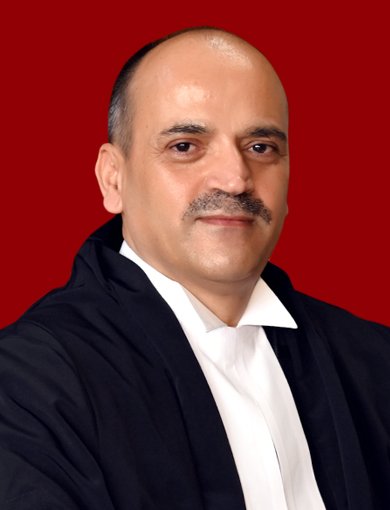
2026:HHC:17932
IN THE HIGH COURT OF HIMACHAL PRADESH, SHIMLA
Cr. Appeal No. 269 of 2013
Reserved on: 31.03.2026
Date of Decision: 18.05.2026
State of H.P. ...Appellant
Versus
Chain Singh & another ...Respondents
Coram
Hon’ble Mr Justice Rakesh Kainthla, Judge.
Whether approved for reporting?
1
No.
For the Appellant : Mr Ajit Sharma, Deputy Advocate
General.
For the Respondent : Mr N.S. Chandel, Senior Advocate
with M/s Sidharth and Shwetima
Dogra, Advocates.
Rakesh Kainthla, Judge
The present appeal is directed against the judgment
dated 04.03.2013, passed by the learned Judicial Magistrate, First
Class, Jawali, District Kangra, H.P. (learned Trial Court), vide
which the respondents (accused before the learned Trial Court)
were acquitted of the commission of offences punishable under
Sections 41 and 42 of the Indian Forests Act. (Parties shall
1
Whether reporters of Local Papers may be allowed to see the judgment? Yes.
2
2026:HHC:17932
hereinafter be referred to in the same manner as they were arrayed
before the learned Trial Court for convenience.
2. Briefly stated, the facts giving rise to the present
appeal are that the police presented a challan before the learned
Trial Court against the accused for the commission of offences
punishable under Sections 41 and 42 of the Indian Forest Act and
Section 181 of the Motor Vehicles Act (M.V. Act). It was asserted
that the police received secret information on 13.02.2005 that a
truck bearing registration No. HP-54-2257 was transporting
Khair wood from Bhadukhar Hatli. An entry No. 6
(Ext.PW-15/A) was recorded in the Police Station, ASI Prem
Chand (PW-15), ASI Amreek Singh (PW-10), and Constable Bir
Chand were sent towards Hatli in a vehicle bearing registration
No. HP-7A-2353 being driven by Onkar Chand. A truck bearing
registration No. HP-54-2257 reached the spot after some time.
The police signalled the driver to stop the truck. The driver
identified himself as Chain Singh (accused No.1), and the person
sitting beside the driver identified himself as Balbir Singh
(accused No.2). The police checked the truck and found Khair
logs of different sizes in it. The police asked them for a permit to
transport the Khair logs, but they could not produce any permit.
3
2026:HHC:17932
The police seized the truck vide memo (Ext.PW-10/A). Prem
Singh prepared a Rukka (Ext.PW-15/B) and handed it over to LHC
Bir Singh with a direction to take it to the Police Station for the
registration of the F.I.R. An F.I.R. (Ext.PW-15/C) was registered in
the Police Station. Prem Singh investigated the matter. He
prepared the site plan (Ext.PW-15/D). Punjab Singh (PW-1)
measured the Khair wood and found its volume to be 1.74 cubic
meters. He prepared the details (Ext.PW-1/A). The Khair wood
was handed over on Sapurdari to the forest officials vide memo
(Ext.PW-1/B). Another list (Ext.PW-5/A) of the Khair wood was
prepared. The documents of the vehicles were seized vide memo
(Ext.PW-10/B). Shashi Pal (PW-9) took the photographs
(Ext.PW-9/A-1 to Ext.PW-9/A-5) whose negatives are Ext.PW-
9/A-6 to Ext.PW-9/A-7. Accused Chain Singh could not produce
his driving license. The statements of witnesses were recorded as
per their version. It was found during the investigation that
Kashmir Singh had taken the contract of removing the Khair
wood in Jungle Ghandra vide Lot No. 103/04-05, and this Khair
wood was being transported without any documents. Hence, the
charge-sheet was prepared and presented before the learned
Trial Court after the completion of the investigation.
4
2026:HHC:17932
3. Learned Trial Court found sufficient reasons to
summon the accused. When the accused appeared, they we re
charged with the commission of offences punishable under
Sections 41 and 42 of the Indian Forests Act, to which they
pleaded not guilty and claimed to be tried.
4. The prosecution examined 15 witnesses to prove its
case. Punjab Singh (PW-1) and Balwant Singh (PW-5) were
present during the measurement of the timber. Sushil Kalia (PW-
2) witnessed the recovery. Karnail Singh (PW-3) and Hansraj
(PW-4) had sold the Khair trees to Kashmir Singh. Surinder
Kumar Sharma (PW-6) proved the procedure for the disposal of
the dry Khair trees. Gorakh Singh (PW-7) deposed about the logs
and wood of the Khair tree. Raghubir Dass (PW-8) proved that
the work was allotted to Laxman Singh and no illicit felling was
detected. Shashi Pal (PW-9) took the photographs. ASI Amreek
Singh (PW-10) was a member of the police party who had
effected the recovery. Dy.S.P. Partap Singh (PW-11) had prepared
the challan. S.I. Tara Singh (PW-12) recorded the statements of
the witnesses. Sandeep Kumar (PW-13) witnessed the recovery.
Amar Singh (PW-14) produced the record. Inspector Prem Singh
(PW-15) investigated the matter.
5
2026:HHC:17932
5. The accused, in their statements recorded under
Section 313 of the Code of Criminal Procedure (Cr.P.C), denied the
prosecution's case in its entirety. They claimed that a false case
was made against them due to suspicion. They did not produce
any evidence in defence.
6. Learned Trial Court held that the police had failed to
join any independent witnesses. The memo of recovery was not
signed by the accused, which mad e the recovery doubtful;
therefore, the learned Trial Court acquitted the accused of the
commission of offences punishable under Sections 41 and 42 of
the Indian Forest Act.
7. Being aggrieved by the judgment passed by the
learned Trial Court, the State has filed the present appeal
asserting that the learned Trial Court had failed to appreciate the
evidence in proper perspective. The statements of prosecution
witnesses were rejected without any cogent reason. Khair wood
was released to Kashmir Singh, which proved the recovery of the
Khair wood. Learned Trial Court erred in drawing an adverse
inference for non-examination of the independent witnesses.
The recovery was effected from a lonely place in the middle of the
night, and it was not possible to join any independent witness.
6
2026:HHC:17932
The recovery was effected on the spot, and mere failure to obtain
the signatures of the accused was not sufficient to doubt the
prosecution's case. Hence, it was prayed that the present appeal
be allowed and the judgment of the learned Trial Court be set
aside.
8. I have heard Mr Ajit Sharma, learned Deputy Advocate
General for the appellant/State and Mr N.S. Chandel, learned
Senior Advocate, assisted by M/s Sidharth and Shwetima Dogra,
learned counsel for the accused/respondents.
9. Mr Ajit Sharma, learned counsel for the
appellant/State, submitted that the learned Trial Court erred in
acquitting the accused. The statements of police officials
corroborated each other. No reason was assigned in their cross-
examination to falsely implicate the accused. The recovery could
not have been held to be doubtful because the signatures of the
accused were not obtained on the memo. The incident had taken
place at a lonely place in the middle of the night, and it was not
possible to join any independent person. Therefore, he prayed
that the present appeal be allowed and the judgment passed by
the learned Trial Court be set aside.
7
2026:HHC:17932
10. Mr N.S. Chandel, learned Senior Advocate for the
respondent/accused, submitted that the learned Trial Court has
assigned cogent reasons while acquitting the accused. The
learned Trial Court had taken a reasonable view, and this Court
should not interfere with the reasonable view of the learned Trial
Court, even if another view is possible. Hence, he prayed that the
present appeal be dismissed.
11. I have given a considerable thought to the
submissions made at the bar and have gone through the records
carefully.
12. The present appeal has been filed against a judgment
of acquittal. It was laid down by the Hon’ble Supreme Court in
Surendra Singh v. State of Uttarakhand, 2025 SCC OnLine SC 176:
(2025) 5 SCC 433 that the Court can interfere with a judgment of
acquittal if it is patently perverse, is based on
misreading/omission to consider the material evidence and
reached at a conclusion which no reasonable person could have
reached. It was observed at page 440:
“12. It could thus be seen that it is a settled legal position
that the interference with the finding of acquittal recorded
by the learned trial judge would be warranted by the High
Court only if the judgment of acquittal suffers from patent
perversity; that the same is based on a
8
2026:HHC:17932
misreading/omission to consider material evidence on
record; and that no two reasonable views are possible and
only the view consistent with the guilt of the accused is
possible from the evidence available on record.”
13. This position was reiterated in P. Somaraju v. State of
A.P., 2025 SCC OnLine SC 2291, wherein it was observed:
“ 12. To summarise, an Appellate Court undoubtedly has
full power to review and reappreciate evidence in an
appeal against acquittal under Sections 378 and 386 of the
Criminal Procedure Code, 1973. However, due to the
reinforced or ‘double’ presumption of innocence after
acquittal, interference must be limited. If two reasonable
views are possible on the basis of the record, the acquittal
should not be disturbed. Judicial intervention is only
warranted where the Trial Court's view is perverse, based
on misreading or ignoring material evidence, or results in
a manifest miscarriage of justice. Moreover, the Appellate
Court must address the reasons given by the Trial Court
for acquittal before reversing it and assigning its own. A
catena of the recent judgments of this Court has more
firmly entrenched this position, including, inter alia,
Mallappa v. State of Karnataka 2024 INSC 104, Ballu @
Balram @ Balmukund v. The State of Madhya Pradesh 2024
INSC 258, Babu Sahebagouda Rudragoudar v. State of
Karnataka 2024 INSC 320, and Constable 907 Surendra
Singh v. State of Uttarakhand 2025 INSC 114.”
14. The present appeal has to be decided as per the
parameters laid down by the Hon’ble Supreme Court.
15. Karnail Singh (PW-3) and Hans Raj (PW-4) stated in
their cross-examination that Kashmir Singh, Contractor , had
stacked the Khair wood at Khatrehar Ghangri da Pul. The police
had seized the Khair wood from that place. Neither of these
9
2026:HHC:17932
witnesses was re-examined to clarify this part of their
testimonies. They were put forward as witnesses of truth by the
prosecution, and the statements made by them would be binding
upon the prosecution. In similar circumstances, when a witness
had supported the case of the defence, but was not re-examined
by the prosecution to clarify his testimony, it was held in
Ramsewak v. State of M.P., (2004) 11 SCC 259: 2004 SCC OnLine SC
477 that the benefit of the discrepancy would go to the defence. It
was observed at page 265:
“14…. Even assuming that there is some doubt as to the
interpretation of this part of his evidence since the same is
not clarified by the prosecution by way of re-examination,
the benefit of doubt should go to the defence which has, in
specific terms, taken a stand that the FIR came into being
only after the dead body was recovered….”
16. It was held in Javed Masood v. State of Rajasthan,
(2010) 3 SCC 538: (2010) 2 SCC (Cri) 1176: 2010 SCC OnLine SC 347
that the defence can take advantage of any statement made in the
cross-examination. It was observed at page 543:
“20. In the present case, the prosecution never declared
PWs 6, 18, 29 and 30 “hostile”. Their evidence did not
support the prosecution. Instead, it supported the defence.
There is nothing in law that precludes the defence from
relying on their evidence.
21. This Court in Mukhtiar Ahmed Ansari v. State (NCT of
Delhi) [(2005) 5 SCC 258: 2005 SCC (Cri) 1037] observed:
(SCC pp. 270-71, paras 30-31)
10
2026:HHC:17932
“30. A similar question came up for consideration
before this Court in Raja Ram v. State of Rajasthan
[(2005) 5 SCC 272: 2005 SCC (Cri) 1050]. In that case,
the evidence of the doctor who was examined as a
prosecution witness showed that the deceased was
being told by one K that she should implicate the
accused or else she might have to face prosecution.
The doctor was not declared ‘hostile’. The High
Court, however, convicted the accused. This Court
held that it was open to the defence to rely on the
evidence of the doctor, and it was binding on the
prosecution.
31. In the present case, evidence of PW 1 Ved Prakash
Goel destroyed the genesis of the prosecution that
he had given his Maruti car to the police, in which
the police had gone to the Bahai Temple and
apprehended the accused. When Goel did not
support that case, the accused could rely on that
evidence.”
The proposition of law stated in the said judgment is
equally applicable to the facts in hand.”
17. Therefore, the statements of these witnesses made
the prosecution's case highly suspect that recovery was effected
from the truck by the police. It was laid down by the Hon’ble
Supreme Court in Ghurey Lal v. State of U.P., (2008) 10 SCC 450:
2008 SCC OnLine SC 1154 that when two versions are appearing on
the record, the version in favour of the accused has to be
preferred to the version which is in favour of the prosecution. It
was observed at page 471:
58. In K. Gopal Reddy v. State of A.P. [(1979) 1 SCC 355: 1979
SCC (Cri) 305] the Court observed thus: (SCC p. 360, para 9)
11
2026:HHC:17932
“9. … It stems out of the fundamental principle of our
criminal jurisprudence that the accused is entitled to
the benefit of any reasonable doubt. If two reasonably
probable and evenly balanced views of the evidence are
possible, one must necessarily concede the existence of a
reasonable doubt. But, fanciful and remote possibilities
must be left out of account. To entitle an accused
person to the benefit of a doubt arising from the
possibility of a duality of views, the possible view in
favour of the accused must be as nearly reasonably
probable as that against him. If the preponderance of
probability is all one way, a bare possibility of another
view will not entitle the accused to claim the benefit of
any doubt. It is, therefore, essential that any view of the
evidence in favour of the accused must be reasonable,
even as any doubt, the benefit of which an accused
person may claim, must be reasonable. ‘A reasonable
doubt, it has been remarked, ‘does not mean some
light, airy, insubstantial doubt that may flit through
the minds of any of us about almost anything at some
time or other; it does not mean a doubt begotten by
sympathy out of reluctance to convict; it means a real
doubt, a doubt founded upon reasons.” [Salmond, J. in
his charge to the jury in R. v. Fantle [1959 Cri L Review
584] .] (emphasis supplied)
*****
63. In Bhagwan Singh v. State of M.P. [(2002) 4 SCC 85: 2002
SCC (Cri) 736] the Court repeated one of the fundamental
principles of criminal jurisprudence that if two views are
possible on the evidence adduced in the case, one pointing
to the guilt of the accused and the other to his innocence,
the view which is favourable to the accused should be
adopted. The Court observed as under: (SCC p. 89, para 7)
“7. … The golden thread that runs through the web of
administration of justice in criminal cases is that if two
views are possible on the evidence adduced in the case,
one pointing to the guilt of the accused and the other to
his innocence, the view which is favourable to the
accused should be adopted. Such is not a jurisdiction
12
2026:HHC:17932
limitation on the appellate court, but Judge-made
guidelines for circumspection. The paramount
consideration of the court is to ensure that miscarriage
of justice is avoided.”
****
66. In State of Karnataka v. K. Gopalakrishna [(2005) 9 SCC
291: 2005 SCC (Cri) 1237], while dealing with an appeal
against acquittal, the Court observed: (SCC p. 299, para 17)
“17. … In such an appeal, the appellate court does not
lightly disturb the findings of fact recorded by the court
below. If, on the basis of the same evidence, two views
are reasonably possible, and the view favouring the
accused is accepted by the court below, that is
sufficient for upholding the order of acquittal.
However, if the appellate court comes to the conclusion
that the findings of the court below are wholly
unreasonable or perverse and not based on the
evidence on record, or suffer from serious illegality,
including ignorance or misreading of evidence on
record, the appellate court will be justified in setting
aside such an order of acquittal.”
67. In State of Goa v. Sanjay Thakran [(2007) 3 SCC 755 :
(2007) 2 SCC (Cri) 162] this Court relied on State of
Rajasthan v. Raja Ram [(2003) 8 SCC 180: 2003 SCC (Cri)
1965] (SCC pp. 186-87, para 7) and observed as under:
(Sanjay Thakran case [(2007) 3 SCC 755 : (2007) 2 SCC (Cri)
162], SCC pp. 767-68, para 15)
“15. … ‘7. Generally, the order of acquittal shall not be
interfered with because the presumption of innocence
of the accused is further strengthened by an acquittal.
The golden thread that runs through the web of
administration of justice in criminal cases is that if two
views are possible on the evidence adduced in the case,
one pointing to the guilt of the accused and the other to
his innocence, the view which is favourable to the
accused should be adopted. … The principle to be
followed by the appellate court considering the appeal
against the judgment of acquittal is to interfere only
13
2026:HHC:17932
when there are compelling and substantial reasons for
doing so. If the impugned judgment is clearly
unreasonable, it is a compelling reason for
interference.”
The Court further held as follows: (SCC p. 768, para 16)
“16. … it is apparent that while exercising the powers in
appeal against the order of acquittal, the court of
appeal would not ordinarily interfere with the order of
acquittal unless the approach of the lower court is
vitiated by some manifest illegality and the conclusion
arrived at would not be arrived at by any reasonable
person, and therefore, the decision is to be
characterised as perverse. Merely because two views
are possible, the court of appeal would not take the
view which would upset the judgment delivered by the
court below.”
18. In the present case, the statements of these witnesses
established that the police had taken the Khair wood from the
bridge where they were stacked by the Contractor, and this
version has to be preferred to the version propounded by the
prosecution that the Khair wood was found in the truck bearing
registration No. HP-54-2257.
19. Learned Trial Court had rightly pointed out that the
seizure memos (Ext.PW-10/A) of the truck and Khair wood, and
the seizure memo (Ext.PW-10/B) of the documents prepared on
the spot did not contain the signatures of the accused.
20. ASI Amreek Singh (PW-10) stated that the signatures
of the accused were not obtained on the memos (Ext.PW -10/A
14
2026:HHC:17932
and Ext.PW-10/B). He admitted that, usually, the signatures of
the person producing the articles before the police are obtained
on the seizure memo. No explanation has been provided for not
obtaining the signatures of the accused on the seizure memos.
The absence of the signatures of the accused on seizure memos
supports the statements of Karnail Singh (PW-3) and Hansraj
(PW-4) that the recovery was made from the bridge and not from
the truck.
21. The learned Trial Court had drawn an adverse
inference for non-examination of independent witnesses. It was
submitted that the recovery was effected at a lonely place in the
middle of the night, and it was not possible to join any
independent person. This explanation is stated to be rejected.
22. The police had received prior information at 7:30 p.m
that a truck was transporting timber, which could be recovered
by setting up a Nakka. The recovery was effected at 12:30 a.m.
Therefore, the police had five hours between the information and
the recovery. The police proceeded from the Police Station to the
spot and could have joined any person on the way. The police had
definite information and were not going merely on the patrolling
duty. Therefore, in these circumstances, the absence of
15
2026:HHC:17932
independent witnesses would assume significance , and the
learned Trial Court was justified in drawing an adverse inference
against the prosecution for non-examination of independent
witnesses.
23. Therefore, the learned Trial Court had taken a
reasonable view while acquitting the accused, and this Court will
not interfere with the reasonable view of the learned Trial Court
even if another view is possible.
24. No other point was urged.
25. In view of the above, the present appeal fails and is
dismissed. Pending applications, if any, also stand disposed of
26. In view of the provisions of Section 437-A of the Code
of Criminal Procedure (Section 481 of Bhartiya Nagarik Suraksha
Sanhita, 2023) the respondents are directed to furnish bail bonds
in the sum of ₹50,000/- each with one surety each of the like
amount to the satisfaction of the learned Registrar (Judicial) of
this Court/learned Trial Court, which shall be effective for six
months with a stipulation that in the event of a Special Leave
Petition being filed against this judgment or on grant of the
leave, the respondents on receipt of notice thereof shall appear
before the Hon'ble Supreme Court
16
2026:HHC:17932
27. A copy of the judgment, along with the record of the
learned Trial Court, be sent back forthwith.
(Rakesh Kainthla)
18
th
May 2026 Judge
(ravinder)

 Login with google
Legal Notes
Add a Note....