
As per the case facts, a writ petition was filed challenging the validity of certain sections of Madhya Pradesh municipal and panchayat acts, arguing they are arbitrary and undermine the ...


No Acts & Articles mentioned in this case
1
REPORTABLE
IN THE SUPREME COURT OF INDIA
CIVIL ORIGINAL JURISDICTION
WRIT PETITION (CIVIL) NO. 278 OF 2022
SURESH MAHAJAN …PETITIONERS
VERSUS
STATE OF MADHYA PRADESH & ANR. …RESPONDENTS
J U D G M E N T
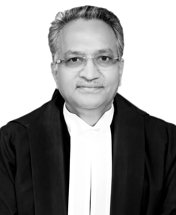
A.M. KHANWILKAR, J.
1. This writ petition assails the validity of Section 10(1) of the
Madhya Pradesh Municipal Act, 1956, Sections 12, 23 and 30 of
the Madhya Pradesh Panchayat Raj Avam Gram Swaraj
Adhiniyam, 1993 and Section 29 of the Madhya Pradesh
Municipalities Act, 1961 as being arbitrary and usurping the
powers and independence of the State Election Commission.
2. By stated amendments, the State Government has been
authorized to issue notification from time to time determining the
number and extent of wards to be constituted in the concerned
local bodies. More or less, similar situation obtains in the
2
dispensation provided for in the State of Maharashtra, after the
amendment of relevant enactments as noted in our order dated
04.05.2022 passed in SLP(C) No. 19756 of 2021 an d connected
cases.
3. The grounds urged in the present writ petition are similar to
the issues raised and involved in the aforementioned matters
pertaining to State of Maharashtra. This Court vide order dated
04.05.2022 has already noted that deeper exami nation of the
questions raised by the parties will be necessary; and, therefore,
the matters have been ordered to be posted for further hearing. It
is appropriate that even this matter is heard along with the said
group of cases. We order accordingly.
4. Reverting to the issue of non-conduct of elections in respect
of large number of local bodies in the State of Madhya Pradesh,
even that is no different. As a matter of fact, the number in this
State is quite staggering. The chart handed over to the Court by
the learned counsel for the Madhya Pradesh State Election
Commission, indicates that there are about 321 urban local
bodies, where elections have not been held from 2019 -2020.
Further, the local bodies at the grassroot level (rural local bodies)
where elections have not been held in the same manner are
3
around 23,073, as of now.
5. The elections have not been held assumedly for the same
reason as in the case of State of Maharashtra, namely, the State
has still not been able to complete the triple test formalities as
predicated in the decision of this Court in Vikas Kishanrao
Gawali Vs. State of Maharashtra
1. As a result of which,
reservation for Other Backward Classes (OBC) category cannot be
provisioned by the State Election Commission. This has
happened despite the peremptory directions given by this Court
vide successive orders, including dated 03.03.2022. This Court
had made it amply clear that conduct of elections to install the
newly elected body in the concerned local self-government cannot
brook delay, owing to the Constitutional mandate exposited in
Article 243-E and 243-U including the provisions in the
concerned State Legislation in that regard.
6. A somewhat hiatus situation occurs and is permitted only
when the dissolution of a local body is necessitated before the
expiry of the term of that local body. Else, the term of the local
self-government has been specified as 5 (five) years from its first
meeting, “and no longer”, in Article 243-E as well as in Article
1 (2021) 6 SCC 73
4
243-U. This has been restated by the Constitution Bench of this
Court in Kishansing Tomar Vs. Municipal Corporation of the
City of Ahmedabad & Ors .
2.
7. Thus, all concerned are obliged to ensure that the newly
elected body is installed in every local body before the expiry of 5
(five) years term of the outgoing elected body. Even in case of
dissolution before the expiry of five years period, where an
Administrator is required to be appointed by the State, that
regime cannot be continued beyond 6 (six) months by virtue of
relevant provisions in the respective State Legislation(s).
8. This constitutional mandate is inviolable. Neither the State
Election Commission nor the State Government or for that matter
the State Legislature, including this Court in exercise of powers
under Article 142 of the Constitution of India can countenance
dispensation to the contrary.
9. Despite such constitutional mandate, the reality in the State
of Madhya Pradesh as of now, is that, more than 23,263 local
bodies are functioning without the elected representatives for last
over two years and more. This is bordering on break down of rule
2 (2006) 8 SCC 352
(paras 12 to 14 and 22 to 28, in particular)
5
of law and more so, palpable infraction of the constitutional
mandate qua the existence and functioning of such local self-
government, which cannot be countenanced.
10. The fact that the State legislature has effected amendments
in the concerned enactment(s) authorizing the State Government
to determine the number and extent of wards to be constituted in
the local bodies within the State also cannot be a tangible or
legitimate ground to not notify the election programme within the
time-frame specified by the Constitution and the law made by the
Legislature in that regard.
11. In any case, the ongoing activity of delimitation or formation
of ward cannot be a legitimate ground to be set forth by any
authority much less the State Election Commission - to not
discharge its constitutional obligation in notifying the election
programme at the opportune time and to ensure that the elected
body is installed before the expiry of 5 (five) years term of the
outgoing elected body. If there is need to undertake delimitation -
which indeed is a continuous exercise to be undertaken by the
concerned authority - it ought to be commenced well-in-advance
to ensure that the elections of the concerned local body are
notified in time so that the elected body would be able to take
6
over the reigns of its administration without any disruption and
continuity of governance (thereby upholding the tenet of
Government of the people, by the people and for the people). In
other words, the amendment effected to the stated enactments
cannot be reckoned as a legitimate ground for protracting the
issue of election programme of the concerned local bodies.
12. Therefore, we direct the State Election Commission by way
of interim order, to issue election programme without any further
delay on the basis of the wards as per the delimitation done in
the concerned local bodies when the elections had become due
consequent to expiry of 5 (five) years term of the outgoing elected
body or before coming into force of the impugned Amendment
Act(s) whichever is later. On that notional basis, the State
Election Commission ought to proceed without any exception in
respect of concerned local bodies where elections are due or likely
to be due in the near future without waiting even for the
compliance of triple test by the State Government for providing
reservation to Other Backward Classes. We have no manner of
doubt that only such direction would meet the ends of justice
and larger public interests consistent with the constitutional
mandate that the local self-government must be governed by the
7
duly elected representatives uninterrupted except in case of its
dissolution before expiry of the term on permissible grounds.
13. For, until the triple test formality is completed “in all
respects” by the State Government, no res ervation for Other
Backward Classes can be provisioned; and if that exercise cannot
be completed before the issue of election programme by the State
Election Commission, the seats (except reserved for the
Scheduled Castes and Scheduled Tribes which is a constitutional
requirement), the rest of the seats must be notified as for the
General Category.
14. It was urged that population of OBC in some of the local
bodies is more than 50% and for that reason, percentage
indicated in the report submitted by the C ommission is a
conservative approach and needs to be taken forward. That
cannot be the basis to disregard the constitutional mandate and
need to observe triple test procedure indicated by this Court. The
political parties who claim to be the protagonist of participation
of OBC in the governance of local bodies, are free to nominate
candidates belonging to OBC category in the concerned
constituencies and even against all the General seats available
after reserving for Schedule Castes and Schedule Tribes. We do
8
not wish to dilate any further on the plea under consideration.
15. We once again reiterate that the process of delimitation
work and/or triple test compliance is a continuous, complex,
time consuming and more so without any timeline (directly linked
to the expiry of the term of the outgoing elected body). Whereas,
the conduct of elections for installing newly elected body to take
over the reins from the outgoing elected representative whose
term had expired, is explicitly provided for by the Constitution
and the relevant enactments. Therefore, the former need not
detain the issue of election programme by the State Election
Commission, in respect of local bodies as and when it becomes
due much less overdue, including where the same is likely to
become due in the near future.
16. Be it noted that as and when the delimitation exercise or
triple test formality, as the case may be, is completed, the
elections conducted thereafter may have to abide by such
dispensation.
17. If the grounds pressed into service by the State authorities
were to be accepted, it would be infeasible for any Election
Commission - be it Madhya Pradesh State Election Commission -
to notify the election programme well-in-time and to ensure that
newly elected body is installed before the expiry of 5 (five) years
9
tenure of the outgoing elected body. That would defeat the
constitutional mandate and go against the tenet of local self-
government by democratically elected representative s,
uninterrupted.
18. To put it differently, completion of delimitation exercise or
be it triple test formality, as the case may be, can wait if not
completed well before the expiry of five years term of the outgoing
elected body, including giving enough time to the Election
Commission to complete the election process within such time.
Thus, the declaration of election programme cannot be delayed
by the Election Commission on that account . For, it would
inevitably result in creating hiatus situation upon expiry of 5
(five) years term of outgoing elected body. Such an eventuality
needs to be eschewed by all the duty holders. A priori, it is not
only a constitutional obligation of the State Election Commission
but also of the State Government including of the constitutional
Courts.
19. In view of the above, we have no hesitation in directing the
Madhya Pradesh St ate Election Commission to proceed on
notional basis and issue election programme in respect of
concerned local body by reckoning the delimitation/formation of
10
wards thereof as on the date when the election of the concerned
local body had “in fact” become due or before coming into force of
the (impugned) Amendment Act, which is under-challenge before
this Court in the present proceedings, whichever is later.
20. The State election Commission must do so not later than
two weeks from today. The State Government shall extend
adequate logistical support to the State Election Commission for
accomplishing the task in terms of this order.
21. During the course of the argument, our attention was drawn
to the First Report dated 05.05.2022 prepared by the Backward
Classes Commission constituted by the State Government, as the
first step towards the triple test obligation as per the decision of
this Court. However, we do not intend to examine the said report
or comment upon it in the present proceedings.
22. Suffice it to note that mere preparation of the First Report
by the stated Commission cannot be regarded as complete
compliance of triple test requirement. In one sense, it is an
inchoate situation and only a step towards final declaration by
the State Government to provide specified just percentage of
reservation for OBC category local body wise.
23. Mr. Tushar Mehta, learned Solicitor General was at pains to
11
impress upon us that the First Report having been prepared by
the Backward Classes Commission appointed by the State dated
05.05.2022, the State Government would now move into action
and undertake the remaining steps to notify the seats to be
reserved for Other Backward Classes in the concerned local
bodies. Prima facie, going by the spirit of the judgment of this
Court in Vikas Kishanrao Gawali (supra), even that exercise
needs to be undertaken by the especially appointed Commission
(dedicated) for that purpose. The report as presented to us has
not engaged itself in that exercise which it ought to have done
local body wise. Hence, this report in the present form will be of
no avail.
24. In other words, the exercise of collation of empirical data
and after analysis thereof, the Commission is expected to make
recommendation regarding the number of seats to be reserved for
Other Backward Classes “local body wise”. Apparently, that
exercise has not been undertaken by the Commission. The State
Government can act upon only thereafter and as per the
recommendations of the Commission - which is an independent
body created to ensure that there is no over-breadth of such
reservation in the “concerned local body”.
12
25. Be it noted by all concerned that the nature and purpose of
reservation in the context of local self-government is markedly
different from that for higher education and public employment,
as expounded by the Constitution Bench
3 of this Court.
26. As aforesaid, the State Election Commission need not wait
any further, but shall notify the election programme without any
further delay in respect of local self-government whose election(s)
had become due; and in the present case, as aforesaid, overdue
in respect of 23,263 local bodies across the State of Madhya
Pradesh, as of now.
27. Acceding to the argument set forth on behalf of the State of
Madhya Pradesh would be over -looking and in fact a case of
violation of the successive directions given by this Court to the
State Election Commission to speed up the election process in
respect of local bodies where elections are due/overdue and to
proceed without providing reservation for Other Backward
Classes (but limited to the constitutional reservation for
Scheduled Castes and Scheduled Tribes) until the completion of
triple test formality by the State “in all respects”. As and when,
the formalities of triple test are completed, that can be reckoned
3 K. Krishna Murthy (Dr.) & Ors. vs. Union of India & Anr., (2010) 7 SCC 202 [para
82(i)]
13
for future elections to be held thereafter. However, elections
which are already due need not and cannot be delayed on that
count in view of the constitutional mandate.
28. We were also informed by the learned counsel appearing for
the Madhya Pradesh State Election Commission during the
course of arguments that some writ petitions are pending before
the High Court in which interim orders have been passed and
that may come in the way of the State Election Commission to
notify the election programme. In that regard, we make it clear
and also direct that the State Election Commission must abide by
the directions and observations in this order uninfluenced by any
order of the High Court or the Civil Court on the subject of
elections of the concerned local self-government, as the case may
be. If any order passed or to be passed hereafter by the High
Court or the Civil Court in the State of Madhya Pradesh, is in
conflict with the directions given by this Court, the same shall be
deemed to have been superseded in terms of this order and not to
be acted upon without the prior permission of this Court.
29. As requested by Mr. Tushar Mehta, learned Solicitor
General, we place on record that all steps taken by the State
Election Commission and we may add even the State
14
Government, on the basis of the directions given in terms of this
order will be subject to the outcome of these proceedings.
30. We once again make it clear that if delimitation is not done
by the State Government in terms of Amendment Act(s) of 2022
or the triple test requirement is completed “in all respects” for
providing reservation to OBC category , the State Election
Commission shall give effect to this order also in respect of
upcoming elections of local bodies which would/had become due
by efflux of time.
31. We also make it clear that this order and directions given
are not limited to the Madhya Pradesh State Election
Commission/State of Madhya Pradesh; and Maharashtra State
Election Commission/State of Maharashtra in terms of a similar
order passed on 04.05.2022, but to all the States/Union
Territories and the respective Election Commission to abide by
the same without fail to uphold the constitutional mandate.
32. List this matter on 12.07.2022, to be heard along with
SLP(C) No. 19756 of 2021.
33. The Madhya Pradesh State Election Commission to file
compliance report in due course.
15
34. In case of any difficulty, liberty is granted to the Madhya
Pradesh State Election Commission to apply before the
returnable date so as to ensure that the election programme in
respect of concerned local body is taken forward without any
interruption.
...……………………………J.
(A.M. Khanwilkar)
………………………………J.
(Abhay S. Oka)
………………………………J.
(C.T. Ravikumar)
New Delhi;
May 10, 2022.

 Login with google
Legal Notes
Add a Note....