
As per case facts, petitioners filed a Writ Petition challenging orders granting selection grade and super-time scale to respondent 3 and others, alleging arbitrary and unconstitutional criteria violating Article 16. ...

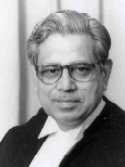
http://JUDIS.NIC.IN SUPREME COURT OF INDIA Page 1 of 7
CASE NO.:
Writ Petition (civil) 354 of 2002
PETITIONER:
Syed T.A. Naqshbandi & Ors.
RESPONDENT:
State of Jammu & Kashmir & Ors.
DATE OF JUDGMENT: 09/05/2003
BENCH:
Doraiswamy Raju & D.M. Dharmadhikari.
JUDGMENT:
J U D G M E N T
D. RAJU, J.
The above Writ Petition has been filed under Article 32 of the Constitution
of India seeking for a writ in the nature of Certiorari to quash the order bearing
No.283 dated 4.7.2002 and order Nos.142-143 dated 27.4.2002 and also to
quash the grant of selection grade and super-time scale to the third respondent
herein, including the recommendations said to have been made for consideration
of the name of R-3 for further elevation. In addition thereto, relief of Certiorari
was sought even to quash the grant of selection grade to respondents 4 to 8 on
the ground that the criteria on which it was accorded to them was wholly
arbitrary, illegal and unconstitutional and violative of Article 16 of the Constitution
of India. As a consequence to the above, relief in the nature of Mandamus was
also sought to direct the second respondent to grant selection grade to the
petitioners 1 to 3 with effect from 28.6.2001and further grant to the petitioners 1
to 3 super-time scale with effect from 27.4.2002, the date on which it was said to
have been given to R-3, in addition to seeking for such relief for Mandamus to
give selection grade to petitioners 4 and 5 with effect from 27.4.2002, the date
from which it was given to respondents 4 to 8, with all consequential benefits
including the seniority and arrears of pay. Certain other reliefs, a detailed
reference to which is wholly unnecessary, have also been claimed.
The petitioners and respondents 3 and 7 were said to have been selected
as Munsiffs after passing the Kashmir Civil Services (Judicial) Examination on
28.8.1974 and respondents 4 to 6 and 8 were selected for appointment during
the period between 1978 and 1982. The first petitioner was said to have been
promoted on 30.8.1995, whereas petitioners 2 to 4 and respondent 3 promoted
as District & Sessions Judges in November 1995. Petitioners 1 to 4 and
respondent 3 were confirmed as District & Sessions Judges on 22.1.1998 with
effect from 1997 while the other private parties-respondents are said to be
continued as temporary/officiating District & Sessions Judges. In the Gradation
List published by the High Court on 1.1.2001, petitioners 1 to 4 were said to have
been shown at Serial Nos.15, 16, 17 and 19, whereas respondents 3 to 8 were
shown at Serial Nos.18, 31, 32, 36, 23 and 37 respectively. On 4.7.2001, the
third respondent was placed in the selection grade w.e.f. 28.6.2001, according to
the writ petitioners, over the head of six District Judges senior to him. The
grievance of the petitioners, among other things, is that the third respondent had
never worked as District and Sessions Judge for any period and he was not even
entitled to be considered for according such selection grade. On coming to know
of the same, the petitioners 1 and 3 sought for copies of the proceedings and as
soon as they were given in September 2001, the petitioners 1 to 3 also seem to
have made Representations/Review Petitions against the order No.283 dated
4.7.2001. The second petitioner was said to have been granted selection grade
by order No.810 dated 24.12.2001 w.e.f. 22.12.2001 without restoring his original
seniority, while at the same time bypassing the claims of petitioner No.1. On
http://JUDIS.NIC.IN SUPREME COURT OF INDIA Page 2 of 7
16.4.2002, the petitioners 1 and 2 seem to have made representations to the
President of India.
It may be stated at this stage that the High Court of Jammu and Kashmir
held a Full Court Meeting on 27.4.2002 to consider the issue relating to the grant
of super-time scale/selection grade in Higher Judicial Services and the Full Court
formulated the criteria/guidelines for grant of super-time scale and selection
grade for members of the Higher Judicial Services. The said guidelines were
also impugned as being irrational and inconsistent with what is known as
recommendations of Justice K. Jagannatha Shetty Commission accepted,
subject to certain modifications, by this Court in the decision reported in All India
Judges Association Vs. Union of India [(2002) 4 SCC 247]. On the same day
by yet another proceedings on 27.4.2002 in order No. 142, the third respondent
was placed in the super-time scale applying the norms formulated by the High
Court, which are also the subject matter of challenge in these proceedings. The
third respondent was said to have been given the super-time scale superseding
eight District Judges senior to him. A grievance is also made that respondents 4
to 6 and 8 were not even confirmed District & Sessions Judges putting hardly
three years of service and as such they were not eligible for consideration for the
grant of selection grade. The said orders are also challenged as being in
violation of the Justice K. Jagannatha Shetty Commission's report. The further
grievance of the writ petitioners is that the High Court did not consider the
representations made by petitioners 1 to 3 against the grant of selection grade to
the third respondent by giving detailed reasons and instead rejected the same by
disposing it in the light of the decision taken by the Full Court to accord super-
time scale to the third respondent rendering thereby the representations made
infructuous.
Heard Shri L.Nageswara Rao, learned Senior Advocate for the petitioners,
Shri H.N. Salve, Learned Senior Advocate for the official respondents, and Shri
B. Dutta, learned Senior counsel for the non-official respondents.
The grievance on behalf of the petitioners is that the criteria fixed for
according the selection grade and super-time scale are not valid in view of the
recommendations of Justice Jagannatha Shetty Commission as modified and
accepted by this Court in the decision reported in All India Judges' Association
& Others vs. Union of India & Others (Supra). The further grievance
espoused is on the ground that the ACRs prepared or taken into consideration
are not reliable and consequently the selections made, which are under
challenge, stood vitiated. Apart from highlighting certain alleged infirmities
assumed by the petitioners to vitiate the ACRs considered, grievance is also
made against the comparative overall assessment made in the ACRs and
particularly the one accorded to R-3 alone as 'Outstanding' throughout, who,
according to the petitioners, had no experience as District Judge in the field. It is
further contended that no uniform principles or norms were adopted in adjudging
the claims of those whose ACRs were not available for one or more period. The
ACRs prepared by the Justice A.M. Mir Committee was said to have been
rejected without justification. The further grievance was about the rejection of the
representations without giving or disclosing reasons.
Per contra, the stand on behalf of the respondents, particularly the official
respondents, which has been adopted by the non-official respondents too, is that
the alleged infirmities or illegalities as to the manner and method of preparation
of ACRs, the overall assessment made by the High Court and their reliance for
according from time to time the various respondents either selection grade or
super-time scale are quite in accordance with law and the grievance espoused
on behalf of the petitioners are merely borne out of assumptions of facts which
had no basis and purely based upon surmises and incorrect assertions, having
no merit whatsoever either in law or on facts, as disclosed from the records. The
reliance sought to be placed upon the recommendations of Justice Jagannatha
Shetty Commission is said to be inappropriate and misconceived and till the
recommendations are actually implemented by appropriate amendments carried
out in the relevant Service Rules, it is only the subsisting Service Rules that
govern the matter relating to service conditions and that the existing rules cannot
be thrown to winds. Very strong exception is taken to some of the baseless,
http://JUDIS.NIC.IN SUPREME COURT OF INDIA Page 3 of 7
unwarranted, incorrect as well as insinuating and indecorous accusations, as
they are stated to be against constitutional functionaries and superiors in the
hierarchy of administration by persons holding responsible judicial offices
unmindful of official discipline and restraint obliged to be adhered to or the bad
taste inherent in such attempts and it has been specifically prayed that they
should be expunged from record. The learned senior counsel for the petitioners,
in his usual fairness and apparently on instructions too, stated at the hearing that
not only it was not intended to offend anyone but the petitioners also withdraw
them. According to the learned senior counsel for the respondents, the correct
provisions of law governing the matter relating to according of selection
grade/super-time scale have been assiduously observed, meticulously followed
and the norms fixed to regulate the exercise thereof are neither arbitrary nor
irrational and illegal or unconstitutional and no exception could be legitimately
taken to the exercise undertaken by the High Court or the final orders passed
thereon, on the indisputable facts on record, so as to warrant any interference in
these proceedings under Article 32 of the Constitution of India. Learned senior
counsel on either side invited our attentions to the relevant rules, the ACRs,
assessment records and resolutions passed in the matter in their endeavour to
justify their respective claims.
We have carefully considered the submissions of the learned counsel
appearing on either side, in the light of the governing position of law and the
material facts placed on record. Much of the grievance sought to be vindicated
seem to be merely borne out of certain baseless assumptions and incorrect
understanding of events, which took place with their own personal perception of
the same, carried away also more by the grievance in not being favoured with
due recognition of their so-called entitlements. The grievance in this regard is
sought to be further justified by adopting one or the other circumstances in a
manner to suit their own stand rather than viewing the relevant facts in their
proper perspective or on an objective process of understanding. Assumed
grievances apart, it must be sufficiently substantiated to have firm or concrete
basis on properly established facts and further proved to be well justified in law,
for being countenanced by court in exercise of its powers of judicial review. As
has often been reiterated by this Court, judicial review is permissible only to the
extent of finding whether the process in reaching the decision has been observed
correctly and not the decision itself, as such. Critical or independent analysis or
appraisal of the materials by the Courts exercising powers of judicial review
unlike the case of an appellate court, would neither be permissible nor conducive
to the interests of either the officers concerned or the system and institutions of
administration of justice with which we are concerned in this case, by going into
the correctness as such of the ACRs or the assessment made by the Committee
and approval accorded by the Full Court of the High Court.
Reliance placed upon the recommendations of Justice Jagannatha
Shetty Commission or the decision reported in All India Judges' Association &
Others vs. Union of India & Others (supra) or even the resolution of the Full
Court of the High Court dated 27.4.2002 is not only inappropriate but a misplaced
one and the grievances espoused based on this assumption deserve a mere
mention only to be rejected. The conditions of service of members of any service
for that matter is governed by statutory rules and orders, lawfully made in the
absence of rules to cover the area which has not been specifically covered by
such rules, and so long they are not replaced or amended in the manner known
to law, it would be futile for anyone to claim for those existing rules/orders being
ignored yielding place to certain policy decisions taken even to alter, amend or
modify them. Alive to this indisputable position of law only, this Court observed
at Para 38, that " we are aware that it will become necessary for service and
other rules to be amended so as to implement this judgment". Consequently, the
High Court could not be found fault with for considering the matters in question in
the light of the Jammu and Kashmir Higher Judicial Service Rules, 1983 and the
Jammu and Kashmir District and Sessions Judges (Selection Grade Post) Rules,
1968 as well as the criteria formulated by the High Court. Equally, the guidelines
laid down by the High Court for the purpose of adjudging the efficiency, merit and
integrity of the respective candidates cannot be said to be either arbitrary or
irrational or illegal in any manner to warrant the interference of this Court with the
same. Even dehors any provision of law specifically enabling the High Courts
http://JUDIS.NIC.IN SUPREME COURT OF INDIA Page 4 of 7
with such powers in view of Article 235 of the Constitution of India unless the
exercise of power in this regard is shown to violate any other provision of the
Constitution of India or any of the existing statutory rules, the same cannot be
challenged by making it a justiciable issue before courts. The grievance of the
petitioners, in this regard, has no merit of acceptance.
So far as the preparation of ACRs in this case are concerned and the
assessment made by the Committee constituted as well as the approval
accorded by the Full Court therefor, we see no merit in the challenge made to the
same. The claim that only such a District and Sessions Judge who actively serve
and discharge duties holding such office in the field alone can be considered for
according selection grade or super-time scale proceed upon not only a total
misreading of the relevant rules but is also opposed to the well settled position in
law in this regard, besides, if accepted, rendering it completely unworkable,
impracticable and opposed to realities. Appointment to the selection grade posts
in the service envisaged from amongst the members of the service 'holding the
post of District and Sessions Judge' should, in the context, mean only of any
person borne on the cadre of District and Sessions Judge and who is a member
of the Jammu and Kashmir Higher Judicial Service and it is not necessary that to
be one such, he should be only functioning and discharging duties in the districts
in the regular Courts doing conventional court work. Such of those District and
Sessions Judges who are on deputation to other departments and that too to the
High Court in this case to serve as Registrar, etc. cannot by such deputation be
considered to suffer any disability or viewed to have lost their right and
entitlement in their usual turn to be considered along with others for being
granted selection grade or super-time scale according to the relevant guidelines
therefor. That apart, much of the grievance in this regard also seem to proceed
upon a misconception of the real purport of selection grade/super-time scale and
the scheme underlying the grant thereof. As rightly contended for the
respondents not only the Jammu and Kashmir Higher Judicial Service consist of
posts of District and Sessions Judges and Additional District and Sessions
Judges but they consist of a 'Single Cadre' only. There are no specially
earmarked or classified posts to be manned only by such District and Sessions
Judges, who were accorded with selection grade or super-time scale. Though
loosely called selection grade posts, unless any post itself is separately and
distinctly created for that purpose and specifically identified to be filled up with
such persons only, usually it involves only grant of higher scales of pay in the
same category of posts. The same is the position in regard to super-time scale
also. It is also not the case of the petitioners that out of the total strength
constituting the J & K Higher Judicial Service, anyone or the other of such posts
are identified to be exclusively earmarked for one holding a selection
grade/super-time scale. Having regard to the rules in force the staff pattern in
vogue and the guidelines further formulated by the High Court, it is futile for the
petitioners to contend that it should be accorded on the basis of seniority only. In
any event, even in this regard the difference in seniority could not be said to be
so substantial or vast as to lend room for any legitimate plea that it is so arbitrary
or unreasonable as to call for interference. Viewed in the context of the basis or
criteria for according selection grade, as envisaged in the Statutory Rules, it
involves process of selection and seniority, if at all will be to reckon the zone of
consideration or when the merit ranking is equal and not for the grant itself.
Therefore, there is no merit in the plea on behalf of the petitioners that the third
respondent could not have been even considered for the grant of selection
grade/super-time scale, at the relevant and respective points of time.
So far as the actual consideration, the preparation of ACRs, the method
and manner adopted therefor and the actual assessment ultimately made by the
Committee and the High Court in this case is concerned, much is sought to be
made out for the petitioners more on the treatment meted out to the third
respondent, than on the merits of their own claims or realities of the situation
based on facts. If on an assessment of the materials on record, some one has
been adjudged to be more meritorious and preferred to others it could not even
be said to be supersession of senior by the junior, unlike in cases relating to
promotion to a higher post with higher scales of pay by virtue of seniority. As
for the grievance made on the supersession of report said to have been
submitted by the Committee headed by Justice A.M. Mir, least said is better. It is
http://JUDIS.NIC.IN SUPREME COURT OF INDIA Page 5 of 7
seen that after the constitution of the said Committee, the Committee in its
meeting on 1.4.2000 resolved to call for judgments of judicial officers, whose
ACRs have not been so far written for such periods and such officers, including
petitioners, were said to have been even asked to send copies of judgments. In
the meeting on 23.6.2000, the Committee again seems to have resolved to have
the judgments received circulated for assessment in different lots and the
Committee resolved to meet after four weeks. It seems that even before the
judgments could be so circulated, the Private Secretary to Justice A.M. Mir
forwarded ACRs of the officers with a cryptic one word assessment without filling
up the prescribed format by making any proper assessment as envisaged with a
covering letter and, therefore, it is not only necessary but inevitable for the Chief
Justice to ignore such unilateral and perfunctory remark which by no means
could be called even a report and which cannot, in our view, also be given any
credence whatsoever. Therefore, the subsequent steps taken in this regard by
the Chief Justice with the newly constituted Committee are well justified and in
accordance with law and they do not suffer from any infirmity. The fact that
subsequently it was got meticulously prepared by the Committee and the
assessment came thereafter to be duly made and further was got unanimously
approved by the Full Court will belie the bald and self-serving claims of the
petitioners, to the contrary. Neither the High Court nor this Court, in exercise of
its powers of judicial review, could or would at any rate substitute themselves in
the place of the Committee/Full Court of the High Court concerned, to make an
independent reassessment of the same, as if sitting on an appeal. On a careful
consideration of the entire materials brought to our notice by learned counsel on
either side, we are satisfied that the evaluation made by the Committee/Full
Court forming their unanimous opinions is neither so arbitrary or capricious nor
can be said to be so irrational as to shock the conscience of the Court to warrant
or justify any interference. In cases of such assessment, evaluation and
formulation of opinions a vast range of multiple factors play a vital and important
role and no one factor should be allowed to be overblown out of proportion either
to decry or deify an issue to be resolved or claims sought to be considered or
asserted. In the very nature of things it would be difficult, nearing almost an
impossibility to subject such exercise undertaken by the Full Court, to judicial
review except in an extraordinary case when the Court is convinced that some
monstrous thing which ought not to have taken place has really happened and
not merely because there could be another possible view or someone has some
grievance about the exercise undertaken by the Committee/Full Court. Viewed
thus, and considered in the background of the factual details and materials on
record, there is absolutely no need or justification for this Court to interfere in the
matter, with the impugned proceedings.
It is not anybody's case that the delay, if any, in preparing ACRs of some
or the other of the officers for all previous years or during any particular period
was deliberate and with any ulterior motive. On the other hand, dehors the plea
based upon disturbances in the area it is also highlighted for the respondent that
for want of self-assessment also the same could not be prepared and kept ready
then and there which necessitated the calling for copies of judgments rendered
by such persons for the relevant period. The grievance about alleged lack of
uniform principles or criteria in the matter of preparing ACRs for the missing
period attempted to be made by citing two instances has been properly explained
by the respondents in the Counter as well as at the time of hearing and we could
not find any infirmity in the same. That apart merely from the fact that uniformly
the third respondent has been assessed with `outstanding' gradation unlike
others, which, according to the petitioners, themselves amount to fluctuating
fortunes, it cannot be readily assumed that their claims suffered any vice of
arbitrariness or lack of rationality or uniformity. The job requirements of a
Registrar or Registrar General of the High Court, the studiousness expected of
him and the legal acumen necessary therefor cannot be so said to be of any less
importance than that required for a District & Sessions Judge trying regular cases
in the conventional courts at Districts. The plea that a new incumbent in the
office of Chief Justice or Judge of the High Court, could not be that efficacious for
assessing the merit, with reference to their past period under review, of the
candidates constituting the members of judicial service proceed upon a wrong
perception altogether and do not merit acceptance. The grievance against
alleged non-consideration of the claims of the first petitioner merely because it
http://JUDIS.NIC.IN SUPREME COURT OF INDIA Page 6 of 7
was passed over on earlier occasions, also does not merit our acceptance with
reference to the challenge now made in respect of the latest consideration. The
further grievance that the impugned proceedings according selection
grade/super-time scale do not give specific reasons or the details of what are all
the records, which have been perused, is devoid of merit. The expression
'service record' is so comprehensive and has a well-accepted meaning in service
law parlance, to leave anything for being guessed or to admit of any doubts
about the records that would have been actually considered. The grievance
made about the provisions in the guidelines for taking into account even records
for some years spread over to the service as Subordinate Judge in a given case
pales into insignificance when it is considered in the light of the object of such
consideration. The consideration in question was not for purpose of determining
the inter se seniority among the members of service in the cadre of District &
Sessions Judges, but, on the other hand, for the purpose of adjudging the
efficiency, aptitude, capability and general reputation and integrity for according
selection grade. This Court, adverting to the relevant provisions contained in the
Constitution of India in the decision reported in Shri Kumar Padma Prasad Vs.
Union of India & Ors. [(1992) 3 SCC 428), even observed that "judicial office"
would take within its fold even members of the Judiciary other than those
belonging to higher Judiciary in the State service and that though normally the
High Court Judges are appointed from members of the Bar and from among the
persons, who have held judicial posts, there is no impediment in construing the
expression "judicial service" as inclusive of wide variety of offices connected with
the administration of Justice in one way or the other. Therefore, while looking
into the performance of a District & Sessions Judge considering to some extent,
when necessitated, even performance in the post of Subordinate Judge cannot
be said to be altogether an irrelevant or impermissible consideration or exercise
and the guidelines cannot be said to be vitiated on that account alone. The
challenge to the grant of super-time scale to the third respondent on the ground
that he had put in only about nine months service as selection grade District &
Sessions Judge has no merit inasmuch as there is no minimum stipulated period
of service required, to accord such super-time scale in the rules in force and as a
matter of fact, the conspicuous omission to stipulate any such requirement would
go to show that no such criteria is a must and all or any of the selection grade
District and Sessions Judges available could become eligible for consideration.
The recommendations of Justice K. Jaganatha Shetty Commission having not
been duly implemented by any amendment of rules so far, the same cannot be
insisted upon as a binding criteria. That apart, in a given situation, there may be
no one satisfying such required service and that insisting upon any such
minimum service as selection grade District & Sessions Judge may have counter
productive result in that it may even lead to a situation where no one could be
given the super-time scale at all dehors their intrinsic merit. The absence of
reasons in the order rejecting the representations or the original resolution
granting selection grade/super-time scale, in the nature of proceedings
themselves cannot be said to be an infirmity. The noting in the files dealing with
those aspects would be sufficient record and the proceedings in the form of
resolutions cannot be expected to be in the format of a judicial order dealing with
each and every claim. As noticed supra, on going through the materials on
record and on a careful consideration of the procedure and the mechanism
followed by the Committee constituted as well as the Full Court of the High Court,
we are unable to persuade ourselves to agree to or sustain the stand of
petitioners in respect of their challenge to the impugned proceedings. We
specifically desist from making any further observations on the assertions made
relating to their entitlement based on the credentials claimed for the petitioners,
lest it may affect their future prospects of consideration in one way or the other,
when such an exercise is taken up subsequently, also. Suffice it to place on
record that the proceedings relating to the grant of selection grade/super-time
scale, which are assailed in these proceedings, are not shown to be vitiated in
such a manner as to warrant or justify the interference of this Court in these
proceedings. The challenge projected on behalf of the petitioners, therefore, fails
and shall stand rejected.
As for the grievance made by the learned senior counsel for the official-
respondents on some of the unwarranted, unjustified as well as unpleasant
remarks, allegations which tend to cast certain aspersions upon some of the
http://JUDIS.NIC.IN SUPREME COURT OF INDIA Page 7 of 7
constitutional functionaries bordering on insinuations, we are of the view that they
could have been well avoided, without even sacrificing in any manner their right
to challenge the impugned proceedings. The language used as well as the
purport of such allegations seem to be of not good taste, befitting the status of
judicial officers even when they are litigants before the Court and may consider
to have any real or genuine grievance about anything done or not done by the
authorities. Without elaborating on this aspect further, we expunge such
unwarranted remarks and observations made in Para 8 and further order deletion
of Paras 10, 15 and portions in Para (XII) of the grounds commencing from
"Naturally, therefore, respondent No.3.till the end of the said Para", in
entirety, from the record. That apart, we find that the petitioners could have
equally avoided making allegations of the nature made, in this case, to justify
their action to directly approach this Court under Article 32 of the Constitution of
India. We make it clear that we intend no damage or injury to the petitioners on
the above account, at the same time we feel constrained to and it has been
rendered necessary to say that much at least, to avoid repetition of such things in
future either by the petitioners or any such persons holding responsible positions
in the system of administration of justice, even for vindicating any of their
legitimate rights.
For all the reasons stated above, the Writ Petition fails as of no merits and
shall stand dismissed without any costs.

 Login with google
Legal Notes
Add a Note....