
As per case facts, the respondents, initially appointed in the District Rural Development Authority and later absorbed into Jila Panchayat Khargone, sought the benefits of the 6th Pay Commission from ...
IN THE HIGH COURT OF MADHYA PRADESH
<>
AT INDORE
<>
BEFORE
<>
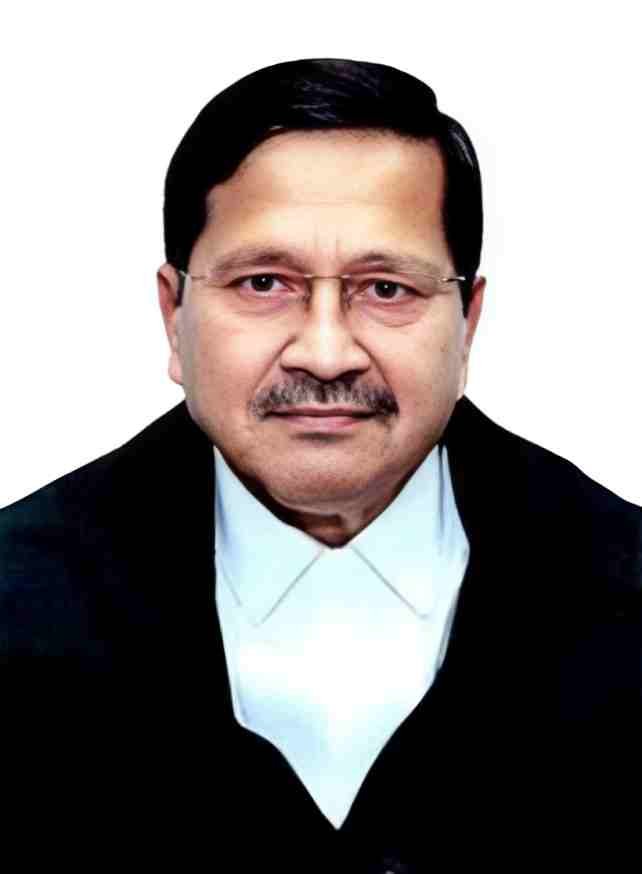
HON'BLE SHRI JUSTICE VIJAY KUMAR SHUKLA
<>
&
<>
HON'BLE SHRI JUSTICE ALOK AWASTHI
<>
ON THE 15
<>
th
<>
OF JANUARY, 2026
<>
WRIT APPEAL No. 2182 of 2023
<>
THE STATE OF MADHYA PRADESH AND OTHERS
<>
Versus
SANTOSH AND OTHERS
<>
Appearance:
<>
Shri Sudeep Bhargava - Dy.A.G for the appellant/State.
Shri Ravindra Singh Chhabra, Senior Advocate with Shri Vikas
Jaiswal and Ms.Praneesha Nayyar - Advocate for the respondents.
ORDER
<>
Per
<>
: Justice Vijay Kumar Shukla
<>
The present appeal is being filed under Section 2(1) of Madhya
Pradesh Uchha Nyayalaya (Khand Nyaypith ko Appeal) Adhiniyam 2005
being aggrieved by the order dated 3/10/2023 passed by the Writ Court in
W.P No.2634/2020, whereby the writ petition preferred by the present
respondents was allowed and the appellants were directed to grant the benefit
of 6th pay commission w.e.f 1.1.2006 to the employees of Janpad Panchayat
and Zila Panchayat.
2. Facts of the case draped in brevity are that the respondents were
appointed in the District Rural Development Authority and that thereafter the
respondents were absorbed in the Jila Panchayat Khargone. The respondents
1 WA-2182-2023NEUTRAL CITATION NO. 2026:MPHC-IND:1275
had filed a Writ Petition no.186/2015 for grant of benefits of 6th Pay
Commission before this Court, in which the Court vide order dated
26.10.2016 had directed the appellants to consider the case of the
respondents and decide the representation filed by the respondents. In
compliance to the said order, the representation filed by the respondents was
considered and after consideration the same was rejected. Being aggrieved
by the rejection of representation by the appellants, the respondents had filed
the said writ petition bearing W.P. No. 2634/2020 before this Court which
was allowed by the Writ Court vide dated 03.10.2023.
3. The petitioners were appointed to the District Rural Development
Authority and thereafter their services were absorbed into the Jila Panchayat
Khargone. Respondent No.1 was promoted to Accountant and Respondent
No.2 was promoted to the post of Assistant Grade II. They approached
before this Court by way of Writ Petition No.2494/2001 for the grant of
benefit of the 5th Pay Commission. Vide order dated 20.06.2001, the Writ
Petition was allowed with a direction to the appellants to grant the
benefit. Vide order dated 21.07.2010, the Panchayat and Rural Development
Department directed all Chief Executive Officers of Jila Panchayat to grant
the benefit of the 6th Pay Commission to the employees of DRDA as well as
employees of Panchayat. Vide order dated 10.05.2018, the benefit of 7% Pay
Commission, dearness allowance was given to the employees working in the
Jila Panchayat and Janpad Panchayat. In compliance of the aforesaid order,
the pay fixation of the respondents was done on 16.08.2018. The respondents
submitted a representation to the appellants for extending the benefit of the
2 WA-2182-2023NEUTRAL CITATION NO. 2026:MPHC-IND:1275
6th Pay Commission w.e.f. 01.01.2006 i.e at par with the State Government
employees, who had already been given the said benefit from 01.01.2006.
Respondents approached before this Court by way of Writ Petition
No.186/2015 for grant of 6th Pay Commission which was disposed of vide
order dated 26.10.2016 with direction to consider the representation. Vide
annexure P/1 the appellants rejected the representation on the ground that the
State Government vide order dated 08.08.2013 directed to give the 6th Pay
Commission 01.04.2013 to the employees of Jila Panchayat and Janpad
Panchayat and Jila Panchayat is not having any additional source of income,
hence claim of benefit from 01.01.2006 cannot be allowed.
5. Initially, the appellants filed a very brief reply by submitting that
vide order dated 08.09.2008, the State Government directed all the Chief
Executive Officers of Jila Panchayat and Janpad Panchayat to grant the
benefit of 5th Pay Commission to the employees of Jila Panchayat and
Janpad Panchayat from 01.01.2006 and thereafter vide order dated
08.08.2013 further directed to grant the 6th Pay Commission w.e.f.
01.04.2013 with the rider that the State Government would not provide any
separate funds in respect of such grant. The services of the respondents are
governed by Madhya Pradesh Panchayat Services (Recruitment and General
Condition of Service) Rules, 1999 (henceforth "Rules, 1999"), they cannot
claim their eligibility for 6th Pay Commission like their counter part in State
Government. Petitioners filed a rejoinder that Jila Panchayat Khargone has
decided to give the 6th Pay Commission to its employees like State
Government employees and the said resolution has been implemented.
3 WA-2182-2023NEUTRAL CITATION NO. 2026:MPHC-IND:1275
6. In the writ petition, this court vide order dated 20.04.2023, had
directed the State Government to seek instruction as to what is the position
about the implementation of the 6th Pay Commission in other Gram
Panchayats, Janpad Panchayats and Jila Panchayats of M.P. to examine
disparity in the date of grant of benefit of 6th Pay Commission amongst the
employees of Panchayats. The Additional Chief Secretary, Panchayat and
Rural Development Department, Bhopal filed an affidavit to the effect that
the Finance Department had granted approval for grant of benefit of revision
of pay by accepting the recommendation of 5th and 6th Pay Commission
w.e.f. 06.07.2013. The Deputy Advocate General was directed to seek
instructions that under which provision of law, the State Government gets
authority to decide the date of implementation of 6th Pay Commission for
the Panchayat employees. Vide notification dated 28.02.2009 whereby M.P.
Revision Rules, 2009 were notified by the Finance Department, Government
of Madhya Pradesh w.e.f. 01.01.2006 under the power conferred under
Article 309 of the Constitution of India hence under which authority,
Government decided that date of implementation for panchayat's employees.
7. The learned single Judge framed two issues:-
A) The core issue in the Writ Petition which required consideration by
this Court was “whether employees of Gram Panchayat, Janpad Panchayat
and Jila Panchayat are to be treated at par with State Government employees
in respect of date of implementation of recommendation of the 6th pay
commission?”
B) Another issue which was to be examined was that “under which
4 WA-2182-2023NEUTRAL CITATION NO. 2026:MPHC-IND:1275
authority the State Government is competent to fix the date of
implementation for the members of Panchayat services ?”
8. Chapter 9 of the Constitution of India mandates the establishment of
the Gram Panchayat, Janpad Panchayat and Jila Panchayat in each State. As
per definition Article 243 (d) “Panchayat” means an institution by whatever
name called of self-government constituted under Article 243B, for the rural
areas. Art. 243B says that "there shall be constituted in every State,
Panchayats at the village, intermediate and district levels in accordance with
the provisions of this Part". Art. 243C provides the composition of
Panchayat for which "the legislature of a State may, by law, make provisions
with respect to the composition of Panchayats". Art. 243 C (2) says that "all
the seats in a Panchayat shall be filled by persons chosen by direct election
from territorial constituencies in the Panchayat area". As per Art. 243E,
"every Panchayat, unless sooner dissolved under any law for the time being
in force, shall continue for five years from the date appointed for its first
meeting and no longer". Art. 243G defines the power, authority and
responsibility of Panchayat and says that "subject to the provisions of this
Constitution, the Legislature of a State may, by law, endow the Panchayats
with such powers and authority as may be necessary to enable them to
function as institutions of self-government". Article 243 I provides that the
Legislature of a State may, by law, authorise a Panchayat to levy, collect and
appropriate such taxes, duties, tolls and fees in accordance with such
procedure and further provides for making such grants-in-aid to the
Panchayats from the Consolidated Fund of the State. Art. 243(J) provides an
5 WA-2182-2023NEUTRAL CITATION NO. 2026:MPHC-IND:1275
audit of accounts of Panchayat that too by making the law by legislature.
Art. 243(K) deals with the election.
9. It is clear from above that each and every Panchayat is an
independent self Government, enabled to take its own decision in respect of
the law made by the legislature of the State. Article 309 of the Constitution
of India says that subject to the provisions of this Constitution, the act of the
appropriate Legislature may regulate the recruitment, and conditions of
service of persons appointed, to public services and posts in connection with
the affairs of the Union or of any State, therefore the State Legislature may
regulate the recruitment and conditions of service of persons appointed to
public services and posts in connection with the affair of State meaning
thereby the State Government is not competent to decide the recruitment
conditions of the employees of Panchayat. The Government of M.P. in
exercise of power conferred under Article 309 of the Constitution of India
framed the Madhya Pradesh Vetan Punrikshan Niyam, 2009 and made it
applicable w.e.f. 01.01.2006 for its government employee but in an order
dated 08.08.2013, the Panchayat and Rural Department of State
Government.has not disclosed any power by which the date of grant of
benefit of 6th Pay Commission has been fixed from 01.04.2013 after
approval of the Finance Department.
10. Learned counsel for the appellant argued that the State
Government had taken a consensus decision on account of financial
condition to grant the benefit of 6th pay to the employees of the Janpad
Panchayat and Gram Panchayat w.e.f 2013 and not from 1/1/2006. He
6 WA-2182-2023NEUTRAL CITATION NO. 2026:MPHC-IND:1275
argued that the said decision was taken by the State Government by order
dated 6/8/2013 and the same was not challenged and, therefore, the learned
Single Judge erred while allowing the writ petition.
11. Per contra, counsel for the respondents submitted that the learned
Single Judge after taking into consideration the submission of both the
parties held that the decision of the appellant to grant the benefit of 6th pay
commission w.e.f 1/4/2013 instead of 1/1/2006 was arbitrary, discriminatory
and unreasonable. It was further argued that the respondents are the
employees of the Panchayat and Panchayat is an autonomous body and once
the employer had taken a decision to grant the benefit of the 6th pay
commission at par with the State Government employees then the State
Government could not have taken an arbitrary decision to not to grant the
same from the same date from which the State Government employees were
granted.
12. We have heard learned counsel for the parties and find that the
learned Single Judge after framing aforesaid two issues and taking into
consideration the constitution of provision as well as various judgments held
that the employees of the Jila Panchayat and Gram Panchayat could not have
been discriminated. Further we find that no such submission was made
before the learned Single Judge regarding the decision of the State
Government dated 6/8/2013. Even otherwise, the same cannot be a ground
for denying the benefits to the writ petitioners and on the said ground, the
order of the learned Single Judge cannot be found to be falted. It is relevant
to mention here that it is not the case of the State Government where the
7 WA-2182-2023NEUTRAL CITATION NO. 2026:MPHC-IND:1275
State Government had not approved the decision of the Panchayats to grant
the benefit of 6th pay commission to its employees. They approved the said
decision but only directed to implement it from a subsequent date after the
date from which the State Government employees were granted. No
reasonable ground has been ascribed in the reply for not granting the said
benefit from the same date. The said decision is arbitrary and discriminatory
and also violative of the doctrine of "Equal Pay for Equal Work". In the case
of Surinder Singh and Anr. vs. Engineer-in-chief CPWD and Ors.
<>
reported in
(1986) 1 SCC 639
<>
, the Court held that the daily wage worker of CPWD are
entitled to the wages equal to regular and permanent employees as they are
discharging identical duties. In the case of Randhir Singh vs. Union of India
<>
and Ors.
<>
reported in (1982) SCC 618
<>
, the Court held that the grant of lower
scale pay to the Delhi Police Force then those in Delhi administration is
unreasonable classification and not in consonance with the principle of
"Equal Pay for Equal Work". The similar view was reiterated by the Apex
Court in the case of State of Punjab & Ors. vs. Jagjit Singh and Ors.
<>
reported
in (2017) 1 SCC 148
<>
that the principle of "Equal Pay for Equal Work"
applies to the temporary employees and they cannot be discriminated in
respect of the entitlement to minimum regular pay as they are discharging the
same duties as discharged by regular employees against sanctioned post.
13. Thus, in view of the aforesaid, the decision of the appellant to
grant the said pay from the different date from which the State Government
employees have been granted is arbitrary and violative of Article 14 of the
Constitution and principle of "Equal Pay for Equal Work" and, therefore, we
8 WA-2182-2023NEUTRAL CITATION NO. 2026:MPHC-IND:1275
(VIJAY KUMAR SHUKLA)
<>
JUDGE
<>
(ALOK AWASTHI)
<>
JUDGE
<>
do not find any error in the order passed by the learned Single Judge.
14. Accordingly, present Writ Appeal stands dismissed
<>
.
No order as to cost.
PK
9 WA-2182-2023NEUTRAL CITATION NO. 2026:MPHC-IND:1275

 Login with google
Legal Notes
Add a Note....