
By the way of the appeal, the appellant responded with that it is not permissible to relax standards of evaluation in matters of reservation in promotion.
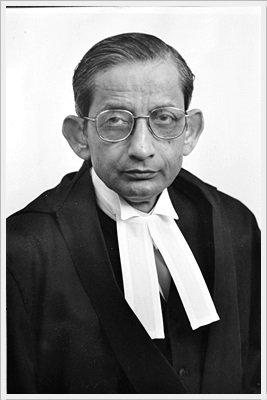
No Acts & Articles mentioned in this case
http://JUDIS.NIC.IN SUPREME COURT OF INDIA Page 1 of 5
CASE NO.:
Appeal (civil) 4347 of 2007
PETITIONER:
Union of India & Others
RESPONDENT:
S. Vinodh Kumar & Others
DATE OF JUDGMENT: 18/09/2007
BENCH:
S.B. Sinha & Harjit Singh Bedi
JUDGMENT:
J U D G M E N T
CIVIL APPEAL NO. 4347 OF 2007
[Arising out of S.L.P. (Civil) No. 23403 of 2005]
S.B. SINHA, J :
1. Leave granted.
2. On or about 09.05.1998, 382 vacancies were advertised for the post of
'Gangman' by the Waltair Division of the then South Eastern Railways (now
known as East Coast Railways). By a corrigendum issued, the right of the
authority to increate or decrease the number of posts projected for
recruitment was reserved. The educational qualification for the candidates
was prescribed at 8th class pass. Applicants were required to be physically
strong to carry out the job. They were to pass the requisite physical test.
Reservation was provided for the candidates belonging to Scheduled Castes,
Scheduled Tribes and Other Backward Classes. The number of vacancies
was, however, enhanced to 792 posts. The appropriate authority, however,
gave a final clearance for filling up 480 posts pursuant to the notification
dated 09.06.1998. The category-wise vacancies were as under :
General : 240
Other Backward Classes : 115
Scheduled Castes : 72
Scheduled Tribes : 53
3. Out of 480 vacancies, 240 posts were meant for general category
candidates. The cut-off marks were provided for different categories of
candidates in the following terms :
General : 71
Other Backward Classes : 56
Scheduled Castes : 20
Scheduled Tribes : 20
4. Indisputably, 426 posts were filled up which were earmarked for
candidates belonging to General Category, Other Backward Classes,
Scheduled Castes and Scheduled Tribes. 12 posts reserved for Scheduled
Castes and 42 posts reserved for Scheduled Tribes, however, could not be
filled up owing to non-availability of the qualified eligible candidates.
Respondents herein had not been appointed although they had obtained the
qualifying marks specified in terms of the notification dated 09.06.1998. 39
unsuccessful candidates filed an application before the Central
Administrative Tribunal. The said application was disposed of directing the
http://JUDIS.NIC.IN SUPREME COURT OF INDIA Page 2 of 5
Railway Administration to consider the question in regard to lowering of
cut-off marks.
5. The competent authority of the Railways, however, took a decision
that it would not be conducive to general merit of the candidates if the cut-
off marks were further lowered, whereafter another application was filed
before the Tribunal. The said application was marked as OA No. 1750 of
2000. By an order dated 02.05.2001, the said application was dismissed by
the Tribunal, inter alia, opining that the appellants could not be directed to
lower down the cut-off marks. A writ petition filed thereagainst by the
respondents herein, however, by reason of the impugned judgment has been
allowed, directing the appellants to appoint them by lowering the cut-off
marks against the posts reserved for candidates belonging to Scheduled
Caste and Scheduled Tribe candidates, stating :
"According to Railways, the following is the break
up of vacancies. Out of 480 vacancies, 240 posts are
meant for OC category, 72 for SC category, 53 for ST
category and 115 for OBC category. As far as OC and
OBC categories are concerned, all the posts were filled,
and for want of eligible candidates the posts meant for
SC category were not filled up. In such a situation, the
only way to salvage the issue is to direct the authorities to
appoint the petitioners in the posts of Gangmen in the
unfilled vacancies of SC/ST duly protecting the interests
of SC/ST reservation in future selections. Out of 30
petitioners, 1 belongs to SC, 7 OC and 22 OBC.
Inasmuch as the vacancy meant for SC candidate, there is
no difficulty for him to be appointed as the are vacancies
in SC category. But as far as OC candidates and OBC
candidates are concerned, since their quota had already
been filled up, they should be appointed in the quota
meant for SC and ST vacancies. In the future vacancies,
the quota meant for OC and OBC categories the
vacancies unfilled shall be reduced and the same could be
allotted to SC and ST categories, as in this case the
petitioners are directed to be appointed from out of the
quota meant for SC and ST categories. By this process
the ratio between the reserved categories will be
maintained. Since the petitioners have been languishing
for the last more than seven years, this Court has to pass
this order in the interest of justice."
6. Appellants are, thus, before us.
7. Mr. Amarendra Sharan, learned Additional Solicitor General of India
appearing on behalf of the appellants, submitted :
(i) The vacancies reserved for Scheduled Castes and Scheduled Tribes
should not have been directed to be filled up by general candidates.
(ii) Having appeared at the competitive examination for public posts, the
respondents had no vested legal right and, thus, the writ of mandamus
issued by the High Court directing the appellants to fill up the
vacancies is illegal.
(iii) Respondents, in any event, having participated in the selection process
knowing fully well to the procedure laid down therefor and having
become unsuccessful therein, the writ application filed by them before
the Tribunal was not maintainable.
(iv) The High Court had no jurisdiction to lower the cut-off marks as it
was the sole prerogative of the employer.
8. Mr. A.K. Ganguly, learned Senior Counsel appearing on behalf of the
respondents, on the other hand, contended :
http://JUDIS.NIC.IN SUPREME COURT OF INDIA Page 3 of 5
(i) The cut-off mark for the general candidates was specified in an
arbitrary manner inasmuch as the marks obtained by the 240th
candidate was made the basis thereof.
(ii) The Railway Board itself having directed to fill up the unfilled
reserved vacancies by general candidates in terms of their circular
letter dated 12.03.1976, the impugned judgment of the High Court
should not be interfered with.
(iii) Despite the fact that the respondents did not have any legal right to be
appointed but as they have been deprived of a valuable right by reason
of a mala fide action on the part of the appellant in soar as they had
not followed the aforementioned circular dated 12.03.1976 issued by
the Railway Board, the High Court must be held to have acted in
accordance with law.
9. The fact that the posts of Gangmen were required to be filled up by
persons being physically strong and healthy is not denied or disputed. That
would not, however, mean that the Railway Administration could not have
fixed the other criteria therefor. As indicated hereinbefore, even the
educational qualification was prescribed. The mode and manner of
selection, as noticed hereinbefore, was laid down in the aforementioned
notification dated 09.05.1998. It was also laid down that the candidates
concerned would not only must procure the requisite educational
qualification but must also pass the written test followed by an interview as
also the physical test.
10. It may be true that the cut-off marks at 71 had been fixed for
unreserved candidates on the basis that marks obtained by the last candidate,
i.e. 240th candidate, calculated at 50% of the 480 candidates, but concededly
56 marks were fixed for Other Backward Classes candidates and 20 marks
were fixed for Scheduled Caste and Scheduled Tribe candidates. Only
because the cut-off marks at 71 had been fixed on the basis of the
aforementioned criteria, the same by itself, in our opinion, would not mean
that no cut-off mark had been fixed. The fact that the Railway
Administration intended to fix the cut-off mark for the purpose of filling up
the vacancies in respect of the general category as also reserved category
candidates is evident from the fact that different cut-off marks were fixed for
different categories of candidates. We are, therefore, unable to accept the
submission of the learned counsel that the cut-off marks fixed was wholly
arbitrary so as to offend the principles of equality enshrined under Article 14
of the Constitution of India. The power of the employer to fix the cut-off
marks is neither denied nor disputed. If the cut-off mark was fixed on a
rational basis, no exception thereto can be taken.
11. Respondents herein had approached the Tribunal in the year 2000.
The Tribunal directed the appellants to consider this case of lowering of the
cut-off marks. An inference, therefore, can be drawn from the
aforementioned fact that the main prayer of the respondents was that the cut-
off marks should be lowered. Appellants admittedly did not agree to the
said proposal. The action of the appellants impugned before the Tribunal
must, therefore, be considered from the view point as to whether it had the
requisite jurisdiction to do so. The Tribunal upheld the contention of the
appellant. Once it is held that the appellants had the requisite jurisdiction to
fix the cut-off marks, the necessary corollary thereof would be that it could
not be directed to lower the same. It is trite that it is for the employer or the
expert body to determine the cut-off marks. The court while exercising its
power of judicial review would not ordinarily intermeddle therewith. The
jurisdiction of the court, in this behalf, is limited. The cut-off marks fixed
will depend upon the importance of the subject for the post in question. It is
permissible to fix different cut-off marks for different categories of
candidates. [See Banking Service Recruitment Board, Madras v. V.
Ramalingam and Others (1998) 8 SCC 523].
12. So far as the submission of the learned senior counsel in regard to the
Railway Board's circular letter dated 12.03.1976 is concerned, we may at
the outset notice that such a contention had not been raised before the
Tribunal. Respondents herein did not have any occasion to meet the said
http://JUDIS.NIC.IN SUPREME COURT OF INDIA Page 4 of 5
contention. In any event, only because in a case of this nature, the said
circular had not been complied with, the same, in our opinion would not lead
to a conclusion that action on the part of the appellants in its entirety was
unwarranted or mala fide in nature.
13. Even assuming that the appellants should have filled up the unfilled
vacancies meant for the reserved category candidates by the general
candidates, but then for the said purpose, the general candidates were
required to fulfill the eligibility clause including the cut-off marks fixed
therefor. Respondents admittedly did not do so. The High Court, in our
opinion, committed a serious error in directing the appellants to lower the
cut-off marks. The cut-off mark 20 was fixed for the Scheduled Caste and
Schedule Tribe candidates. The same was not meant to be applied to the
general category candidates. The jurisdiction of the appellants to fix
different cut-off marks for different category of candidates has never been
questioned and in that view of the matter only because the Railway Board
had issued a circular as far back as in the year 1976 to fill up the vacancies
by unreserved candidates in the event the reserved category of candidates
was not available therefor, in our opinion, the same would not mean that
irrespective of the qualification and performance of general category
candidates they were entitled to be appointed.
14. It is now a well-settled principle of law that even wait-listed
candidates have no legal right to be appointed. [See Ashwani Kumar Singh
v. U.P. Public Service Commission and Others (2003) 11 SCC 584 and State
of Rajasthan & Ors. V. Jagdish Chopra, [2007 (10) SCALE 470].
15. It was for the appellant to decide as to whether the posts were to be
dereserved or carried forwarded. [See Rajasthan Public Service Commission
and Another etc. v. Harish Kumar Purohit and Others etc. (2003) 5 SCC
480].
16. In any view of the matter, the respondents appeared in a competitive
examination. The posts advertised were public posts. They did not have any
vested right for appointment. It is well-known that even selected candidates
do not have legal right in this behalf. [See Shankarasan Dash v. Union of
India - 1991 (2) SCR 567 : (1991) 3 SCC 47], Asha Kaul (Mrs.) and
Another v. State of Jammu and Kashmir and Others (1993) 2 SCC 573, All
India SC & ST Employees' Association and Another v. A. Arthur Jeen and
Others (2001) 6 SCC 380, Food Corporation of India and Others v. Bhanu
Lodh and Others (2005) 3 SCC 618].
17. In Pitta Naveen Kumar and Others v. Raja Narasaiah Zangiti and
Others (2006) 10 SCC 261], this Court observed :
"The legal position obtaining in this behalf is not
in dispute. A candidate does not have any legal right to
be appointed. He in terms of Article 16 of the
Constitution of India has only a right to be considered
therefor. Consideration of the case of an individual
candidate although ordinarily is required to be made in
terms of the extant rules but strict adherence thereto
would be necessary in a case where the rules operate only
to the disadvantage of the candidates concerned and not
otherwise\005"
18. It is also well-settled that those candidates who had taken part in the
selection process knowing fully well the procedure laid down therein were
not entitled to question the same. [See Munindra Kumar and Others v. Rajiv
Govil and Others - AIR 1991 SC 1607]. [See also Rashmi Mishra v. Madhya
Pradesh Public Service Commission and Others \026 2006 (11) SCALE 5]
19. In Chandra Prakash Tiwari and Others v. Shakuntala Shukla and
Others [(2002) 6 SCC 127], it was held :
"32. In conclusion, this Court recorded that the
http://JUDIS.NIC.IN SUPREME COURT OF INDIA Page 5 of 5
issue of estoppel by conduct can only be said to be
available in the event of there being a precise and
unambiguous representation and it is on that score a
further question arises as to whether there was any
unequivocal assurance prompting the assured to alter his
position or status - the situation, however, presently does
not warrant such a conclusion and we are thus not in a
position to lend concurrence to the contention of Dr.
Dhawan pertaining the doctrine of Estoppel by conduct.
It is to be noticed at this juncture that while the doctrine
of estoppel by conduct may not have any application but
that does not bar a contention as regards the right to
challenge an appointment upon due participation at the
interview/selection. It is a remedy which stands barred
and it is in this perspective in Om Prakash Shukla (Om
Prakash Shukla v. Akhilesh Kumar Shukla and Ors. , a
three Judge Bench of this Court laid down in no
uncertain terms that when a candidate appears at the
examination without protest and subsequently found to
be not successful in the examination, question of
entertaining a petition challenging the said examination
would not arise."
It was further observed :
"34. There is thus no doubt that while question of
any estoppel by conduct would not arise in the contextual
facts but the law seem to be well settled that in the event
a candidate appears at the interview and participates
therein, only because the result of the interview is not
'palatable' to him, he cannot turn round and subsequently
contend that the process of interview was unfair or there
was some lacuna in the process."
20. We are, however, not oblivious that there are certain exceptions to the
aforementioned rules but we are not concerned therewith in the present case.
21. For the reasons aforementioned, the impugned judgment cannot be
sustained, which is set aside accordingly. The appeal is allowed. However,
in the facts and circumstances of the case, there shall be no order as to costs.

 Login with google
Legal Notes
Add a Note....