
Wahi argued that his disabilities were aggravated by military service and sought disability pension. The Rajasthan High Court initially denied his claim, citing Regulation 50, which excludes voluntary retirees from ...

No Acts & Articles mentioned in this case
REPORTABLE
IN THE SUPREME COURT OF INDIA
CIVIL APPELLATE JURISDICTON
CIVIL APPEAL NO. 1002 OF 2006
UNION OF INDIA & OTHERS …APPELLANTS
VERSUS
AJAY WAHI …RESPONDENT
J U D G M E N T
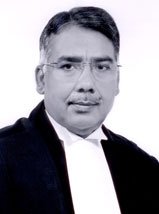
C.K. PRASAD, J.
1. Union of India and its functionaries, aggrieved by the
order dated 28
th
November, 2003 passed by the Division Bench
of the Rajasthan High Court (Jaipur Bench) in DB Civil Special
Appeal No.1461 of 1997, have preferred this appeal by special
leave of the Court.
2.Shorn of unnecessary details, facts giving rise to this
appeal are that the writ petitioner-respondent, Lt.Col.Ajay
Wahi (hereinafter referred to as the ‘writ petitioner’) was
commissioned in the Army Medical Corps on 27
th
February,
1977. While in service and holding the rank of Major he was
admitted to Command Hospital on 3
rd
October, 1988 for
management and treatment of Bronchial Asthma and low back
ache. Medical Board proceeding dated 6
th
October, 1988 does
not indicate that the disability i.e. Bronchial Asthma or low
back ache was directly attributable to military service.
However, the Medical Board certified that it is aggravated by
stress and strain of exposure to hostile terrain and weather.
The writ petitioner was later on examined on 9
th
June, 1990 by
Col. T.R.S. Bedi, Senior Adviser of Base Hospital who
recommended for his posting at dry temperate climate area
and not at high altitude. While writ petitioner was holding the
rank of Lieutenant Colonel, by letter dated 27
th
December,
1993, he sought premature retirement, inter alia, stating that
his “falling health is affecting” his performance. On his
prayer for premature retirement the Commanding Officer
recommended for consideration of his case for
“invalidment/premature retirement after obtaining the opinion
of a Senior Adviser”. He was neither called upon to appear
2
before the Medical Board nor invalided on medical ground.
However, by order dated 26
th
July, 1994, writ petitioner’s
prayer for premature retirement was approved and he was
allowed to leave the unit on 20
th
October, 1994. Writ petitioner
made claim for grant of disability pension. His prayer was
considered and by letter dated 30
th
March, 1995, he was
informed that he is neither entitled for service pension nor
disability pension. Writ petitioner wrote to the Director
General of Medical Services(Army) to make him available the
copy of the Medical Board proceedings, inter alia, alleging that
he underwent a Release Medical Board prior to retirement. It
is assertion of the writ petitioner that he ought to have been
granted premature retirement on medical ground and sought
voluntary retirement under pressure and, therefore, entitled to
disability pension.
3.Aggrieved by the denial of disability pension he filed writ
petition before the Rajasthan High Court, inter alia,
contending that Regulation 50 of the Pension Regulations
providing that an officer who retires voluntarily shall not be
3
eligible for disability pension is discriminatory and violative of
Article 14 of the Constitution of India. It was emphasized that
when an officer is invalided out of service on account of
disability attributable to the military service is granted
disability pension, there is no rationale basis to deny the same
to an officer who has been granted voluntary retirement on
medical ground. The aforesaid submission did not find favour
with the learned Single Judge and he dismissed the writ
petition by order dated 15
th
May, 1997 inter alia observing as
follows :
“Regulations 48 and 50 are contained in Section III
which deals with the disability pensionary award. Regulation
50 clearly provides that an officer who retires voluntarily shall
not be eligible for any disability pensionary award on account
of any disability. Since the petitioner has sought voluntary
retirement, he is not entitled to any disability pension award.
Regulation 48 is not applicable to the case of the petitioner
because the Regulation 48 applies only when an officer is
retired from military service on account of the disability or
attaining the superannuation age. The petitioner was
voluntarily retired and, therefore, under Regulation 50, he is
not entitled to any pensionary award.
I do not think that the Regulation 50 is violative of
Article 14 of the Constitution of India. The class of officers
who retire voluntarily is quite distinguishable from the class of
officers who are retired on account of disability or attaining
the superannuation age. The classification of both the said
classes of officers is obviously founded on an intelligible
differentia which distinguishes persons of one class from
another class and the differentia does have a rational relation
to the object sought to be achieved by regulations 48 and 50
4
in relation to the disability pensionary awards. In my
opinion, the regulation 50 cannot be said to be ultra vires.”
4.On appeal, the Division Bench of the High Court set
aside the order of the learned Single Judge and directed for
payment of disability pension and while doing so it relied on a
Judgment of the Delhi High Court in the case of Lt. Col. B.R.
Malhotra vs. U.O.I. & Ors. [71(1998) Delhi Law Times 498]
relevant portion whereof reads as follows:
“I find no justification to deprive an officer his disability
pension simply on the ground that he sought voluntary
retirement. If on account of disability Army can invalidate an
Officer and thrown him out of the service then why an Officer
is denied disability pension when he seeks voluntary
retirement. I find no reason for this discrimination. People
who become disable due to Military service are a class apart,
they cannot be discriminated nor denied disability pension on
the ground of voluntary retirement. I see no justification nor
any nexus in depriving this class of Officers the disability
pension merely because they sought voluntary retirement, the
disability does not cease on voluntary retirement. Hence, to
my mind, Rule 50 of the Pension Regulation is discriminatory.
It cannot stands the test being arbitrary and bad in law.”
5.Ultimately, the Division Bench directed for grant of
disability pension to the writ petitioner and while doing so
observed as follows :
“Considering the view and object behind the provision
for allowing the disability pension, when admittedly the
officer has become disabled and cannot remain in service,
whether he has been voluntary retired or compulsorily retired
5
that is immaterial for the purpose of pension to the person
who become disabled during service.”
6.Union of India and its officers, aggrieved by the aforesaid
order, are before us by grant of special leave to appeal.
7.Mr. P.P. Malhotra, learned Additional Solicitor General
contends that writ petitioner sought voluntary retirement on
medical ground and, therefore, cannot be said to be invalided
out of service on account of disability attributable to or
aggravated by military service. He points out that a
comprehensive procedure is prescribed in Appendix II of
Pension Regulations to determine as to whether a disability is
attributable to or aggravated by military service. He points out
that disability of the petitioner was not determined under the
Rules in Appendix II and the writ petitioner sought voluntary
retirement claiming ill health, hence, it cannot be said that he
was invalided out of service on account of disability
attributable to or aggravated by military service. He submits
that in view of Regulation 50 of Pension Regulations, writ
6
petitioner having retired voluntarily shall not be eligible for
award of pension on account of any disability.
8.Mrs. Amita Duggal, however, appearing on behalf of the
writ petitioner-respondent submits that the writ petitioner
sought voluntary retirement on medical ground and though he
was not invalided out of service on account of disability, no
distinction can be made between officer who has been
invalided on account of a disability attributable or aggravated
by military service and an officer who retired voluntarily and,
therefore, the action of the respondent in denying the
disability pension is illegal. She points out that Regulation 50
which provides that an officer retiring voluntarily shall not be
eligible for award of disability pension is discriminatory and,
therefore, violative of Article 14 of the Constitution of India.
She referred to the decision of the Delhi High Court in the case
of Lt.Col.B.R. Malhotra (supra) relied on in the impugned
order. She points out that the Union of India having not
challenged the aforesaid judgment of the Delhi High Court, it
has attained finality and, therefore, action of the Union of
7
India in denying the writ petitioner disability pension is
discriminatory.
9.Mrs. Duggal has also placed reliance on a Division Bench
Judgment of the Delhi High Court in the case of Mahavir
Singh Narwal vs. Union of India and another [111(2004]
Delhi Law Times 550] and she had drawn our attention to the
following passage from paragraph 7 of the judgment, which
reads as follows :
“Merely because a person has attained discharge on
compassionate ground although his disability has been
acquired on account of stress and strain of military service
will not be a ground to reject the claim of disability pension, it
has been invalidated act in terms of Appendix II of Rule 173.
We allow the writ petition and direct the respondent to grant
disability pension to the petitioner on the basis of assessment
of 30% disability as opined by the Release Medical Board in
the year 1979 upto date. For future disability pension the
respondent may conduct another medical board to assess the
percentage of disability of the petitioner. Arrears of disability
pension be paid to the petitioner within a period of 8 weeks.
If the same are not paid within 8 weeks the petitioner shall be
entitled to the interest at the rate of 9% on the amount of
arrears. With these directions the writ petition is allowed.”
10.Rival submission necessitates examination of the scheme
of the Pension Regulation. Section III of the Pension
Regulations (hereinafter referred to as the “Regulations”)
8
applies to all commissioned officers of the Army. Regulation 48
of the Regulations which forms part of Section-III, provides for
grant of disability pension to an officer who is invalided out of
service on account of disability attributable to or aggravated
by military service and Appendix II provides for the procedure
for determination of the disability, the same reads as follows:
“48(a) Unless otherwise specifically provided a disability
pension consisting of service element and disability element
may be granted to an officer who is invalided out of service on
account of a disability which is attributable to or aggravated
by military service in non-battle casuality cases and is
assessed at 30 percent or more.
(b)The question whether a disability is attributable to or
aggravated by military service shall be determined under the
rules in Appendix II.”
11.Regulation 50 of the Regulations provides that an officer
who retires voluntarily shall not be eligible for any award of
disability pension, same reads as follows:
“50. An officer who retires voluntarily shall not be eligible for
any award on account of any disability.
Provided that officer who is due for retirement on
completion of tenure, or on completion of service limits or on
completion of the terms of engagement or on attaining the
prescribed age of retirement, and who seeks pre-mature
retirement for the purpose of getting higher commutation value
of pension, shall remain eligible for disability element.”
9
12.From a plain reading of Regulation 48 of the Regulations
it is evident that unless otherwise specifically provided a
disability pension shall be granted to an officer who is
invalided out of service on account of disability attributable to
or aggravated by military service, whereas Regulation 50 in no
uncertain terms provides that an officer who retires voluntarily
shall not be eligible for any award on account of any disability.
Undisputedly, writ petitioner has not been invalided out of
service on account of any disability attributable or aggravated
by military service and further his disability has not been
determined under the Rules in Appendix II. Writ petitioner
had sought voluntary retirement on medical ground which was
granted. In face of the language of Regulation 50 there is no
escape from the conclusion that an officer retiring voluntarily
shall not be eligible for disability pension.
13.Faced with this situation, writ petitioner contends that
Regulation 50 of the Regulations is discriminatory and thus
violative of Article 14 of the Constitution of India.
10
14.Regulation 48 of the Regulations provides for disability
pension to officers who are invalided out of service on account
of disability attributable to the military service and, therefore,
such officers constitute a class in itself. Officers who retire
voluntarily constitute a different class altogether and,
therefore, the plea that when an officer is invalided on the
ground of disability attributable to the military service, there is
no reason to deny such disability pension to an officer who
seeks voluntary retirement does not appeal to us as in our
opinion both constitute different and distinct classes. Article
14 of the Constitution frowns on discrimination but it permits
reasonable classification. An officer who retires voluntarily and
another who is invalided out of service on account of disability
attributable to military service constitute different and distinct
classes. Undisputedly, writ petition has not been invalided
out of service on account of disability which is attributable to
military service but retired voluntarily. Voluntary retirement
can be sought and granted on many grounds, whereas an
officer under Regulation 48 of the Regulations can be invalided
out of service on account of disability attributable to military
11
service. It is to be borne in mind that if employer despite
disability attributable to Military Service does not invalided an
officer out of service, he continues in service with all the
benefits and nobody can make issue of that. It is not the case
of the writ petitioner that he was asked to seek voluntary
retirement on the threat of being invalided out of service. In
fact, he had chosen to seek voluntary retirement on health
ground which was granted and it was not the act of the
employer to invalided him out of service. We are of the opinion
that the observation of the High Court that an officer cannot
be denied disability pension on the ground of voluntary
retirement suffers from fundamental error. Officers invalided
out of service and seeking voluntary retirement, which can be
on umpteen grounds, constitute different and distinct class
than invalidation from service on the ground of disability
attributable or aggravated by Military Service. It needs no
discussion that a provision of the Statute can be declared
ultravires only when it patently violates some provision of the
Constitution. Regulation under challenge, in our opinion,
does not suffer from any such error.
12
15.We would like here to add that sufficient internal
safeguard and remedy have been provided under Appendix II
of the Regulation. We hasten to add that in case an officer is
denied invalidation from service despite disability attributable
to military service, the same shall be subject to judicial review.
There may be a case in which an officer had suffered disability
attributable to or aggravated by military service and he has
not been invalided out of service only to deny him the
disability pension, his remedy is to challenge the order by
which prayer for invalidating out of service is denied. In case
it is found that an officer is entitled for invalidation out of
service has wrongly been denied the same, he shall be entitled
for disability pension. Here no such challenge is made and the
only plea of the writ petitioner is that Regulation 50 of the
Regulations providing that an officer retiring voluntarily shall
not be eligible for disability pension is discriminatory and thus
ultra vires of the Article 14 of the Constitution of India.
16.True it is that the judgment of the Delhi High Court in
the case of Lt.Col.B.R. Malhotra (Supra) supports the
13
contention of the writ petitioner but from what we have
pointed above, its observation that “people who become
disable due to military service are a class apart, they cannot
be discriminated nor denied disability pension on the ground
of voluntary retirement” is patently fallacious.
17. In the present case it has not been determined in
accordance with Appendix II of the Regulations that writ
petitioner’s voluntary retirement was accepted on the ground
of disability attributable to or aggravated by military service
and, therefore, he shall not be entitled for disability pension.
In view of the aforesaid the judgment of the Delhi High Court
in the case of Mahavir Singh Narwal (Supra) has no bearing
at all.
18. We are of the opinion that an officer is entitled for
disability pension only when he is invalided out of service on
account of disability attributable to military service or
aggravated thereby and shall not be entitled for disability
pension in case of voluntary retirement, unless it is found and
14
held that the officer deserved to be invalided out of service on
account of disability attributable to military service but the
same was not granted to him for unjustified reasons and
forced to seek voluntary retirement.
19.In the result, the appeal is allowed, the impugned
judgment of the Division Bench of the High Court is set aside
and that of the learned Single Judge is restored. No costs.
………………………………….J.
( G.S. SINGHVI )
………………………………….J.
( C.K. PRASAD )
New Delhi,
July 6, 2010.
15

 Login with google
Legal Notes
Add a Note....