
As per case facts, a matrimonial dispute arose between the husband and wife, who were married in 2015. The wife primarily resided at her parental home for education and later ...
1
2026:CGHC:16073-DB
NAFR
HIGH COURT OF CHHATTISGARH AT BILASPUR
CRMP No. 376 of 2026
1 - Vinay Kumar Yadav S/o Jayprakash Yadav Aged About 34 Years R/o
Behind Tahrauli Vegetable Market, Near Jio Tower, P.S. Tahrauli, District
Jhansi (Uttar Pradesh)
2 - Devendra Kumari Yadav W/o Jayprakash Yadav Aged About 55
Years R/o Behind Tahrauli Vegetable Market, Near Jio Tower, P.S.
Tahrauli, District Jhansi (Uttar Pradesh)
3 - Jayprakash Yadav S/o Late Raghuveer Yadav Aged About 60 Years
R/o Behind Tahrauli Vegetable Market, Near Jio Tower, P.S. Tahrauli,
District Jhansi (Uttar Pradesh)
... Petitioner(s)
versus
1 - State Of Chhattisgarh Through Station House Officer Police Station
Mahila Thana, Durg District- Durg (C.G.)
2 - Smt. Deepika Yadav W/o Vinay Kumar Yadav Aged About 31 Years
R/o Behind Tpp School, Jai Stambh Chowk, Purena Bhilai 3, Police
Station Purani Bhilai, District Durg (C.G.)
... Respondent(s)
For Petitioner : Dr. Arham Siddiqui, Advocate
For Respondent No. 2 : Ms. Shubhangi Varshney, Advocate
2
Division Bench:
Hon'ble Shri Ramesh Sinha, Chief Justice
Hon’ble Ravindra Kumar Agrawal, Judge
Order on Board
Per Ramesh Sinha, Chief Justice
08 .04.2026
1.Heard Dr. Arham Siddiqui, learned counsel for the petitioners as
well as Ms. Shubhangi Varshney, learned counsel for
Respondent No. 2 / complainant.
2.The present petition under Section 528 of B.N.S.S. has been filed
by the petitioners with the following prayer :-
“(i). To kindly be pleased to quash the FIR dated 15-09-
2025 bearing Crime No. 59/2025 registered at P.S. Mahila
Thana, District Durg (C.G) against the petitioners, for the
offences under section 498-A, 34 of the IPC
(ii). To kindly be pleased to quash the impugned final
report bearing no. 66/2025 dated 30-10-2025 filed against
the petitioners under sections 498-A, 34 of the IPC in
Crime No. 59/2025 (Annexure P-1)
(iii)To kindly be pleased to quash the impugned order
dated 31-10-2025 (Annexure P-2) whereby the learned
Judicial Magistrate First Class, Durg (C.G) has taken
cognizance of the impugned chargesheet and registered
the impugned criminal proceedings as Criminal Case No.
RCC/34782/2025
(iv). of To kindly be pleased to quash the entire criminal
the Criminal Case No. proceedings RCC/34782/2025
pending before the learned Judicial Magistrate First Class,
Durg (C.G)
3
(v). And to kindly grant any other relief to the petitioners as
this Hon'ble court may deem fit in the facts and
circumstances of the present case”
3.The present case arises out of matrimonial dispute between
Petitioner No.1 (husband) and Respondent No.2 (wife), who were
married on 22.02.2015 as per Hindu rites. As per the prosecution
case, the respondent No.2 stayed at the matrimonial home only
for a short period and thereafter resided mostly at her parental
home to complete her education from 2015 to 2019, visiting
occasionally. She later took up employment as a Guest Teacher at
Chhatarpur and subsequently shifted to Datia, where she resided
separately, while the petitioner could only stay with her
intermittently due to his family obligations. Differences arose
between the parties on account of living arrangements, and it is
alleged that in April 2022, she left the matrimonial home with
jewellery and valuables and refused to return despite
reconciliation efforts. Subsequently, the petitioner No.1 filed a
divorce petition on 16.05.2025, which is pending, and thereafter
the respondent No.2 lodged a complaint on 23.07.2025, leading to
registration of FIR dated 15.09.2025 under Sections 498-A and 34
IPC and filing of the impugned charge-sheet.
4.Learned counsel for the petitioners submits that the impugned FIR
and consequential proceedings are nothing but a gross abuse of
the process of law, as the same have been initiated with mala fide
intent after the petitioner No.1 filed a petition under Section 13 of
the Hindu Marriage Act seeking dissolution of marriage. A bare
4
perusal of the FIR would reveal that the respondent No.2 never
resided at her matrimonial home for any substantial period and
lived separately for most of the marriage due to her educational
and professional pursuits, thereby rendering the allegations of
cruelty inherently improbable. The FIR is conspicuously silent on
any specific instances of physical or mental harassment and
contains only vague, omnibus allegations, particularly against the
aged parents (petitioner Nos.2 and 3), without attributing any
specific role to them. It is further submitted that the allegations are
concocted, contradictory to admitted facts, and have been levelled
only to harass and pressurize the petitioners.
5. He further submitted that in compliance of the Court’s order dated
05.02.2026 the present case is referred to the mediation centre,
but the mediation is failed between them.
6.He would rely upon the judgments of the Supreme Court in the
matters of Geeta Mehrotra and another v. State of Uttar
Pradesh and another
1
, Preeti Gupta and another v. State of
Jharkhand and another
2
, Swapnil v. State of Madhya
Pradesh
3
, Rashmi Chopra v. State of Uttar Pradesh and
Another
4
(Para-24), Rajesh Sharma and others v. State of
Uttar Pradesh and Another
5
, Kahkashan Kausar alias Sonam
1(2012) 10 SCC 741
2(2010) 7 SCC 667
3(2014) 13 SCC 567
42019 SCC OnLine SC 620
5(2018) 10 SCC 472
5
and others v. State of Bihar and others
6
and Abhishek v. State
of Madhya Pradesh
7
.
7.Learned counsel for respondent No.2/complainant, would submit
that That, it is most respectfully submitted on behalf of the
complainant that the present FIR clearly discloses the commission
of cognizable offences, particularly under Section 498-A of the
Indian Penal Code, as the complainant has specifically narrated
continuous acts of cruelty, harassment, and physical as well as
mental torture inflicted upon her by the husband and his family
members. It is submitted that despite sufficient dowry being given
at the time of marriage, the complainant was subjected to
persistent taunts, demands for additional money, physical assault,
and humiliation on trivial domestic issues, including being called
infertile and being deprived of basic necessities. The complainant
was also wrongfully confined, financially neglected, and
repeatedly pressured to bring money from her parental home,
which clearly establishes a pattern of cruelty. It is further
submitted that all attempts at reconciliation failed due to the non-
cooperative attitude of the accused persons, and only thereafter
the complainant was constrained to approach the authorities. At
this stage, the allegations made in the FIR are detailed, specific,
and prima facie sufficient to proceed against the accused
persons, and therefore, the present proceedings do not warrant
any interference or quashing.
6(2022) 6 SCC 599
72023 SCC OnLine SC 1083
6
8.We have heard learned counsel for the parties and considered
their rival submissions made hereinabove and also went through
the records with utmost circumspection.
9.At the outset, it would be appropriate to consider the scope of
interference in charge-sheet filed by the police against accused in
extraordinary jurisdiction under Section 528 of BNSS.
10.In the matter of Pepsi Foods Ltd. and another v. Special
Judicial Magistrate and others
8
, the Hon’ble Supreme Court has
held that the accused can approach the High Court either under
Section 528 of BNSS or under Article 227 of the Constitution of
India to have the proceeding quashed against him when the
complaint does not make out any case against him.
11.The Hon’ble Supreme Court in the matter of State of Haryana
and others v. Bhajan Lal and others
9
laid down the principles of
law relating to the exercise of extraordinary power under Article
226 of the Constitution of India to quash the first information
report and it has been held that such power can be exercised
either to prevent abuse of the process of any court or otherwise to
secure the ends of justice. In paragraph 102 of the report, their
Lordships laid down the broad principles where such power under
Article 226 of the Constitution/Section 482 of the CrPC/ 528 of
B.N.S.S should be exercised, which are as under: -
"102. In the backdrop of the interpretation of the
various relevant provisions of the Code under
8(1998) 5 SCC 749
91992 Supp (1) SCC 335
7
Chapter XIV and of the principles of law enunciated
by this Court in a series of decisions relating to the
exercise of the extraordinary power under Article
226 or the inherent powers under Section 482 of the
Code which we have extracted and reproduced
above, we give the following categories of cases by
way of illustration wherein such power could be
exercised either to prevent abuse of the process of
any court or otherwise to secure the ends of justice,
though it may not be possible to lay down any
precise, clearly defined and sufficiently channelised
and inflexible guidelines or rigid formulae and to
give an exhaustive list of myriad kinds of cases
wherein such power should be exercised.
(1)Where the allegations made in the first
information report or the complaint, even if
they are taken at their face value and
accepted in their entirety do not prima facie
constitute any offence or make out a case
against the accused.
(2)Where the allegations in the first
information report and other materials, if any,
accompanying the FIR do not disclose a
cognizable offence, justifying an investigation
by police officers under Section 156(1) of the
Code except under an order of a Magistrate
within the purview of Section 155(2) of the
Code.
(3)Where the uncontroverted allegations
made in the FIR or complaint and the
evidence collected in support of the same do
not disclose the commission of any offence
and make out a case against the accused.
(4)Where, the allegations in the FIR do not
constitute a cognizable offence but constitute
only a non-cognizable offence, no
investigation is permitted by a police officer
without an order of a Magistrate as
contemplated under Section 155(2) of the
Code.
(5)Where the allegations made in the FIR or
complaint are so absurd and inherently
improbable on the basis of which no prudent
8
person can ever reach a just conclusion that
there is sufficient ground for proceeding
against the accused.
(6)Where there is an express legal bar
engrafted in any of the provisions of the
Code or the concerned Act (under which
criminal proceeding is a instituted) to the
institution and continuance of the
proceedings and/or where there is a specific
provision in the Code or the concerned Act,
providing efficacious redress for the
grievance of the aggrieved party.
(7)Where a criminal proceeding is manifestly
attended with mala fide and/or where the
proceeding is maliciously instituted with an
ulterior motive for wreaking vengeance on
the accused and with a view to spite him due
to private and personal grudge.
103. We also give a note of caution to the effect that
the power of quashing a criminal proceeding should
be exercised very sparingly and with circumspection
and that too in the rarest of rare cases; that the
court will not be justified in embarking upon an
enquiry as to the reliability or genuineness or
otherwise of the allegations made in the FIR or the
complaint and that the extraordinary or inherent
powers do not confer an arbitrary jurisdiction on the
court to act according to its whim or caprice."
12.The principle of law laid down in Bhajan Lal's case (supra) has
been followed recently by the Supreme Court in the matters of
Google India Private Limited v. Visaka Industries
10
, Ahmad Ali
Quraishi and another v. State of Uttar Pradesh and another
11
and Dr Dhruvaram Murlidhar Sonar. v. State of Maharashtra
and others
12
". The Supreme Court in Google India Private
Limited (supra), explained the scope of dictum of Bhajan Lal's
10(2020) 4 SCC 162
11(2020) 13 SCC 435
12(2019) 18 SCC 191
9
case (supra) that the power of quashing a criminal proceeding be
exercised very sparingly and with circumspection and "that too in
the rarest of rare cases" as indicated in paragraph 103 therein of
the report.
13.Having noticed the scope of interference by this Court in the
petition relating to quashment of FIR/charge-sheet, reverting to
the facts of the present case, it is quite vivid that in the impugned
charge-sheet, four petitioners have been charged for offences
under Sections 498-A/34 of the IPC.
14.Chapter XXA of the IPC deals with offence of cruelty by husband
or relatives of husband. Section 498A of the IPC defines the
offence of cruelty as under:-
"498A. Husband or relative of husband of a woman
subjecting her to cruelty - Whoever, being the
husband or the relative of the husband of a woman,
subjects such woman to cruelty shall be punished with
imprisonment for a term which may extend to three
years and shall also be liable to fine.
Explanation.- For the purpose of this section, "cruelty"
means-
(a) any wilful conduct which is of such a nature as is
likely to drive the woman to commit suicide or to cause
grave injury or danger to life, limb or health (whether
mental or physical) of the woman; or
(b) harassment of the woman where such harassment is
with a view to coercing her or any person related to her
to meet any unlawful demand for any property or
valuable security or is on account of failure by her or
any person related to her to meet such demand."
10
15.A careful perusal of the aforesaid provision would show that in
order to establish offence under Section 498A of the IPC, the
prosecution must establish,
(i) That, woman must be married:
(ii) She has been subjected to cruelty or harassment
and
(iii) Such cruelty or harassment must have been
shown either by husband of the woman or by relative
of her husband.
16.The word 'cruelty' within the meaning of Section 498A of the IPC
has been explained in Explanation appended to Section 498A of
the IPC. It consists of two clauses namely clause (a) and clause
(b). To attract Section 498A of the IPC, it must be established that
cruelty or harassment to the wife to coerce her or cause bodily
injury to herself or to commit suicide or the harassment was to
compel her to fulfill illegal demand for dowry. It is not every type of
harassment or cruelty that would attract Section 498A of the IPC.
Explanation (b) to Section 498A of the IPC contemplates
harassment of woman to coerce or any relation of her to meet any
unlawful demand for any property or valuable security. The
complainant if wants to come within the ambit of Explanation (b)
to Section 498A of the IPC, she can succeed if it is proved that
there was an unlawful demand by the husband or any of his
relatives with respect to money or of some valuable security.
11
17.The Hon’ble Supreme Court in the matter of Priya Vrat Singh
and others v. Shyam Ji Sahai
13
considered the issue of delay in
lodging the complaint as well as role that has been ascribed to the
accused therein and quashed the complaint holding the delay of
two years in lodging FIR to be fatal and further held that no role
has been ascribed to the petitioner/accused therein. It was
observed as under:-
"8. Further it is pointed out that the allegation of alleged
demand for dowry was made for the first time in
December, 1994. In the complaint filed, the allegation is
that the dowry torture was made some times in 1992. It
has not been explained as to why for more than two
years no action was taken.
9. Further, it appears that in the complaint petition. apart
from the husband, the mother of the husband, the
subsequently married wife, husband's mother's sister,
husband's brother in law and Sunita's father were
impleaded as party. No role has been specifically
ascribed to anybody except the husband and that too of
a dowry demand in February 1993 when the complaint
was filed on 6.12.1994 i.e. nearly after 22 months. It is
to be noted that in spite of service of notice, none has
appeared on behalf of Respondent No.1."
18.Similarly, in the matter of Sunder Babu and others v. State of
Tamil Nadu
14
delay in filing complaint against accused therein
was taken note of by their Lordships of the Supreme Court
holding the case to be covered by Category Seven of para-102
highlighted in Bhajan Lal's case (supra), the prosecution for
13(2008) 8 SCC 232
14(2009) 14 SCC 244
12
offence under Section 498A of the IPC and Section 4 of the Dowry
Prohibition Act was quashed.
19.Similarly, in the matter of Geeta Mehrotra (supra), the Hon’ble
Supreme Court held that casual reference to the family member of
the husband in FIR as co-accused particularly when there is no
specific allegation and complaint did not disclose their active
involvement. It was held that cognizance of matter against them
for offence under Sections 498-A, 323, 504, 506 and 304- B of the
IPC would not be justified as cognizance would result in abuse of
judicial process.
20.In the matter of K. Subba Rao and others v. State of Telangana
represented by its Secretary, Department of Home and
others
15
their Lordships of the Supreme Court delineated the duty
of the criminal Courts while proceeding against relatives of
victim's husband and held that the Court should be careful in
proceeding against distant relatives in crime pertaining to
matrimonial disputes and dowry deaths and further held that
relatives of husband should not be roped in on the basis of
omnibus allegations, unless specific instances of their
involvement in offences are made out.
21.Recently, in the matter of Rashmi Chopra (supra) it has been
held by their Lordships of the Hon’ble Supreme Court relying upon
the principle of law laid down in Bhajan Lal's case (supra) that
15(2018) 14 SCC 452
13
criminal proceedings can be allowed to proceed only when a
prima facie offence is disclosed and further held that judicial
process is a solemn proceeding which cannot be allowed to be
converted into an instrument of oppression or harassment and the
High Court should not hesitate in exercising the jurisdiction to
quash the proceedings if the proceedings deserve to be quashed
in line of parameters laid down by the Hon’ble Supreme Court in
Bhajan Lal's case (supra) and further held that in absence of
specific allegation regarding anyone of the accused except
common and general allegations against everyone, no offence
under Section 498A IPC is made out and quashed the charges for
offence under Section 498A of the IPC being covered by category
seven as enumerated in Bhajan Lal's case (supra) by holding as
under:-
"24. Coming back to the allegations in the complaint
pertaining to Section 498A and Section 3/4 of D.P. Act. A
perusal of the complaint indicates that the allegations
against the appellants for offence under Section 498A
and Section 3/4 of D.P. Act are general and sweeping.
No specific incident dates or details of any incident has
been mentioned in the complaint. The complaint having
been filed after proceeding for divorce was initiated by
Nayan Chopra in State of Michigan, where Vanshika
participated and divorce was ultimately granted. A few
months after filing of the divorce petition, the complaint
has been filed in the Court of C.J.M., Gautam Budh
Nagar with the allegations as noticed above. The
sequence of the events and facts and circumstances of
the case leads us to conclude that the complaint under
Section 498A and Section 3/4 of D.P. Act have been filed
as counter blast to divorce petition proceeding in State
of Michigan by Nayan Chopra.
14
25. There being no specific allegation regarding any one
of the applicants except common general allegation
against everyone i.e. "they started harassing the
daughter of the applicant demanding additional dowry of
one crore" and the fact that all relatives of the husband,
namely, father, mother, brother, mother's sister and
husband of mother's sister have been roped in clearly
indicate that application under Section 156(3) Cr.P.C.
was filed with a view to harass the applicants....."
22.Having noticed the legal position qua quashing the FIR and
charge-sheet, the question would be whether taking the contents
of the FIR and charge-sheet as it is, offence under Section 498-
A/34 of the IPC is made out against the petitioners?
23.In the matter of Kahkashan Kausar alias Sonam and Others
Vs. State of Bihar and Others, 2022(6) SCC 599, the Hon'ble
Supreme Court has stated as under:-
"10. Having perused the relevant facts and
contentions made by the appellants and
respondents, in our considered opinion, the
foremost issue which requires determination
in the instant case is whether allegations
made against the appellants in-laws are in
the nature of general omnibus allegations
and therefore liable to be quashed.?
11. Before we delve into greater detail on
the nature and content of allegations made,
it becomes pertinent to mention that
incorporation of section 498-A of IPC was
aimed at preventing cruelty committed upon
a woman by her husband and her in-laws,
by facilitating rapid State intervention.
However, it is equally true, that in recent
times, matrimonial litigation in the country
has also increased significantly and there is
a greater disaffection and friction
15
surrounding the institution of marriage, now,
more than ever. This has resulted in an
increased tendency to employ provisions
such as 498-A IPC as instruments to settle
personal scores against the husband and
his relatives.
12. This Court in its judgment in Rajesh
Sharma Vs. State of U.P. , has observed:-
“14. Section 498-A was inserted in the
statute with the laudable object of
punishing cruelty at the hands of husband
or his relatives against a wife particularly
when such cruelty had potential to result
in suicide or murder of a woman as
mentioned in the statement of Objects
and Reasons of the Act 46 of 1983. The
expression 'cruelty' in Section 498-A
covers conduct which may drive the
woman to commit suicide or cause grave
injury (mental or physical) or danger to life
or harassment with a view to coerce her
to meet unlawful demand. It is a matter of
serious concern that large number of
cases continue to be filed under Section
498-A alleging harassment of married
women. We have already referred to
some of the statistics from the Crime
Records Bureau. This Court had earlier
noticed the fact that most of such
complaints are filed in the heat of the
moment over trivial issues. Many of such
complaints are not bona fide. At the time
of filing of the complaint, implications and
consequences are not visualized. At times
such complaints lead to uncalled for
harassment not only to the accused but
also to the complainant. Uncalled for
arrest may ruin the chances of
settlement."
16
13. Previously, in the landmark judgment of
this court in Arnesh Kumar Vs. State of
Bihar, it was also observed;
“4. There is a phenomenal increase in
matrimonial disputes in recent years. The
institution of marriage is greatly revered in
this country. Section 498-A IPC was
introduced with avowed object to combat
the menace of harassment to a woman at
the hands of her husband and his
relatives. The fact that Section 498-A IPC
is a cognizable and non- bailable offence
has lent it a dubious place of pride
amongst the provisions that are used as
weapons rather than shield by disgruntled
wives. The simplest way to harass is to
get the husband and his relatives arrested
under this provision. In a quite number of
cases, bed- ridden grand- fathers and
grand-mothers of the husbands, their
sisters living abroad for decades are
arrested.”
14.Further in Preeti Gupta & Anr. Vs. State
of Jharkhand, it has also been observed:-
“32. It is a matter of common experience
that most of these complaints under
section 498A IPC are filed in the heat of
the moment over trivial issues without
proper deliberations. We come across a
large number of such complaints which
are not even bona fide and are filed with
oblique motive. At the same time, rapid
increase in the number of genuine cases
of dowry harassment are also a matter of
serious concern.
33. The learned members of the Bar have
enormous social responsibility and
obligation to ensure that the social fiber of
family life is not ruined or demolished.
They must ensure that exaggerated
versions of small incidents should not be
17
reflected in the criminal complaints.
Majority of the complaints are filed either
on their advice or with their concurrence.
The learned members of the Bar who
belong to a noble profession must
maintain its noble traditions and should
treat every complaint under section 498-A
as a basic human problem and must
make serious endeavour to help the
parties in arriving at an amicable
resolution of that human problem. They
must discharge their duties to the best of
their abilities to ensure that social fiber,
peace and tranquility of the society
remains intact. The members of the Bar
should also ensure that one complaint
should not lead to multiple cases.
34. Unfortunately, at the time of filing of
the complaint the implications and
consequences are not properly visualized
by the complainant that such complaint
can lead to insurmountable harassment,
agony and pain to the complainant,
accused and his close relations.
35. The ultimate object of justice is to find
out the truth and punish the guilty and
protect the innocent. To find out the truth
is a herculean task in majority of these
complaints. The tendency of implicating
husband and all his immediate relations is
also not uncommon. At times, even after
the conclusion of criminal trial, it is difficult
to ascertain the real truth. The courts have
to be extremely careful and cautious in
dealing with these complaints and must
take pragmatic realities into consideration
while dealing with matrimonial cases. The
allegations of harassment of husband's
close relations who had been living in
different cities and never visited or rarely
visited the place where the complainant
resided would have an entirely different
18
complexion. The allegations of the
complaint are required to be scrutinized
with great care and circumspection.
36. Experience reveals that long and
protracted criminal trials lead to rancour,
acrimony and bitterness in the relationship
amongst the parties. It is also a matter of
common knowledge that in cases filed by
the complainant if the husband or the
husband's relations had to remain in jail
even for a few days, it would ruin the
chances of amicable settlement
altogether. The process of suffering is
extremely long and painful.”
15. In Geeta Mehrotra & Anr. Vs. State of
UP, it was observed:-
“21. It would be relevant at this stage to
take note of an apt observation of this
Court recorded in the matter of G.V. Rao
vs. L.H.V. Prasad wherein also in a
matrimonial dispute, this Court had held
that the High Court should have quashed
the complaint arising out of a matrimonial
dispute wherein all family members had
been roped into the matrimonial litigation
which was quashed and set aside. Their
Lordships observed therein with which we
entirely agree that:
"12..... “there has been an outburst of
matrimonial dispute in recent times.
Marriage is a sacred ceremony, main
purpose of which is to enable the
young couple to settle down in life and
live peacefully. But little matrimonial
skirmishes suddenly erupt which often
assume serious proportions resulting in
heinous crimes in which elders of the
family are also involved with the result
that those who could have counselled
and brought about rapprochement are
rendered helpless on their being
19
arrayed as accused in the criminal
case. There are many reasons which
need not be mentioned here for not
encouraging matrimonial litigation so
that the parties may ponder over their
defaults and terminate the disputes
amicably by mutual agreement instead
of fighting it out in a court of law where
it takes years and years to conclude
and in that process the parties lose
their “young” days in chasing their
cases in different courts.”
The view taken by the judges in this
matter was that the courts would not
encourage such disputes.”
16. Recently, in K. Subba Rao v. The State
of Telangana, it was also observed that:-
"6......The Courts should be careful in
proceeding against the distant relatives in
crimes pertaining to matrimonial disputes
and dowry deaths. The relatives of the
husband should not be roped in on the
basis of omnibus allegations unless
specific instances of their involvement in
the crime are made out.”
17. The above-mentioned decisions clearly
demonstrate that this court has at numerous
instances expressed concern over the
misuse of section 498-A IPC and the
increased tendency of implicating relatives
of the husband in matrimonial disputes,
without analysing the long term ramifications
of a trial on the complainant as well as the
accused. It is further manifest from the said
judgments that false implication by way of
general omnibus allegations made in the
course of matrimonial dispute, if left
unchecked would result in misuse of the
process of law. Therefore, this court by way
of its judgments has warned the courts from
proceeding against the relatives and in-laws
20
of the husband when no prima facie case is
made out against them.
18. Coming to the facts of this case, upon a
perusal of the contents of the FIR dated
01.04.19, it is revealed that general
allegations are levelled against the
appellants. The complainant alleged that "all
accused harassed herm mentally and
threatened her of terminating her
pregnancy". Furthermore, no specific and
distinct allegations have been made against
either of the appellants herein, i.e., none of
the appellants have been attributed any
specific role in furtherance of the general
allegations made against them. This simply
leads to a situation wherein one fails to
ascertain the role played by10 each accused
in furtherance of the offence. The allegations
are therefore, general and omnibus and can
at best be said to have been made out on
account of small skirmishes. Insofar as
husband is concerned, since he has not
appealed against the order of the High court,
we have not examined the veracity of
allegations made against him. However, as
far as the Appellants are concerned, the
allegations made against them being
general and omnibus, do not warrant
prosecution."
24.Recently, the Hon’ble Supreme Court has held in the case of
“Charul Shukla V. State of UP and others” reported in 2026
SCC OnLine SC 476” that:-
22. Furthermore, with respect to the allegations against
the sister-in -law regarding the incitement of the
complainant's husband in relation to the alleged extra-
marital affair, the prosecution has failed to provide any
specific detail and has not been able to elaborate upon
21
the nature of the relationship or how those accusations
purportedly affected complainant's relationship with her
husband. It is apposite to note that upon the perusal of the
records of the case, nothing material has been put forth to
advance or substantiate the said allegations. Time and
again, this Court has observed that merely stating certain
vague and omnibus allegations without any cogent
material evidence to support the same should not become
a fillip to jump-start the criminal machinery of the State. At
this juncture, we find it appropriate to quote the
observations of this Court in Dara Lakshmi Narayana v.
State of Telangana, (2025) 3 SCC 735 which is extracted
as under:
"27. A mere reference to the names of family
members in a criminal case arising out of a
matrimonial dispute, without specific allegations in
the bud. It is a well-recognised fact, borne out of
judicial experiencee that there is often a tendency to
implicate all the members of the husband's family
when domestic disputes arise out of a matrimonial
discord. Such generalised and sweeping accusations
unsupported by concrete evidence or particularised
allegations cannot form the basis for criminal
prosecution. Courts must exercise caution in such
cases to prevent misuse of legal provisions and the
legal process and avoid unnecessary harassment of
innocent family members..…
xxx
30. The inclusion of Section 498A of the IPC by way
of an amendment was intended to curb cruelty
inflicted on a woman by her husband and his family,
ensuring swift intervention by the State. However, in
recent years, as there have been a notable rise Page
22
22 of 26 in matrimonial disputes across the country,
accompanied by growing discord and tension within
the institution of marriage, consequently, there has
been a growing tendency to misuse provisions like
Section 498A of the IPC as a tool for unleashing
personal vendetta against the husband and his
family by a wife. Making vague and generalised
allegations during matrimonial conflicts, if not
scrutinized, will lead to the misuse of legal processes
and an encouragement for use of arm twisting tactics
by a wife and/or her family. Sometimes, recourse is
taken to invoke Section 498A of the IPC against the
husband and his family in order to seek compliance
with the unreasonable demands of a wife.
Consequently, this Court has, time and again,
cautioned against prosecuting the husband and his
family in the absence of a clear prima facie case
against them.
31. We are not, for a moment, stating that any
woman who has suffered cruelty in terms of what has
been contemplated under Section 498A of the IPC
should remain silent and forbear herself from making
a complaint or initiating any criminal proceeding.
That is not the intention of our aforesaid observations
but we should not encourage a case like as in the
present one, where as a counterblast to the petition
for dissolution of marriage sought by the first
appellant-husband of the second respondent herein,
a complaint under Section 498A of the IPC is lodged
by the latter. In fact, the insertion of the said
provision is meant mainly for the protection of a
woman who is subjected to cruelty in the matrimonial
23
home primarily due to an unlawful demand for any
property or valuable security in the form of dowry.
However, sometimes it is misused as in the present
case."
25.Reverting to the facts of the present case, it transpires from the
FIR that she made omnibus allegation against the accused
persons that after 15 days of marriage, the accused persons
started taunting her that they have not get the dowry articles of
good quality. They also scolded her for not preparing the proper
food and when she informed her parents, they also tried to
convince her in-laws but they sent her back on 03.09.2023 to her
parents house. She made a complaint to Mahila Police Station,
Bhilai but the accused persons had not appeared in counseling
and thereafter, she lodged the report. She alleged that the act of
cruelty starts after 15 days of her marriage and she came back to
her parents house on 03.09.2023, yet the report has been lodged
on 23.07.2025 and thereafter, the FIR has been registered on
15.09.2025. Lodging of the report on 23.07.2025 after such a
belated stage would also goes against her. There is no specific
incident alleged by the Respondent No. 2/ complainant with
respect to cruelty. From the material available in the charge-sheet
as well as in view of the aforesaid law laid down by the Hon’ble
Supreme Court, we are of the considered opinion that prima-facie
no offence under Section 498 A of IPC is made out for
prosecuting petitioner Nos. 2 Devendra Kumari Yadav, petitioner
24
No. 3 Jayprakash Yadav for the above-stated offences and the
prosecution against them for the aforesaid offence is covered by
Category 1, 3 & 7 of para-102 of the judgment rendered by the
Supreme Court in Bhajan Lal’s case (supra) and as such, liable
to be quashed.
26.As a fallout and consequence of the above-stated legal analysis
and also in the facts and circumstances of the case, and also the
fact that the mediation between the parties has failed, FIR dated
15.09.2026 filed in Crime No.59/2025 of Mahila Thana, Durg, CG
against the petitioners for the offence under Section 498-A, /34 of
IPC and the final report bearing no. 66/2025 dated 30.10.2025
and the criminal proceeding of the Criminal Case No.
RCC/34782/2025 pending before the learned Judicial Magistrate
First Class, Durg filed against the petitioners is hereby quashed.
27.The petition under Section 528 of B.N.S.S. is allowed to the extent
indicated hereinabove. No cost(s).
Sd/- Sd/-
(Ravindra Kumar Agrawal) (Ramesh Sinha)
Judge Chief Justice
sagrika

 Login with google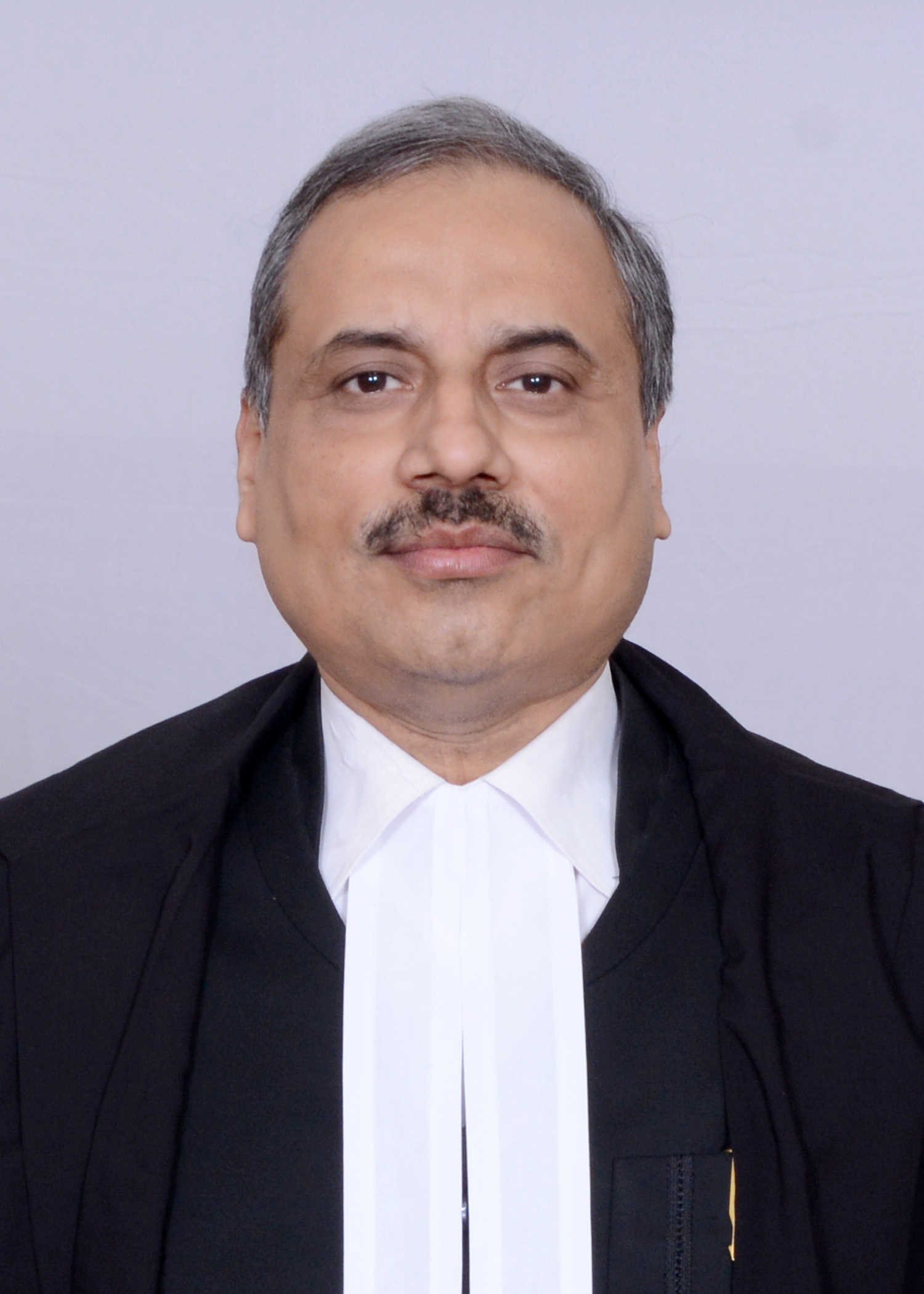
Legal Notes
Add a Note....