
As per case facts, a bank workman, after being transferred multiple times, failed to report for duty or provide satisfactory explanations for his prolonged absence, despite repeated notices and opportunities. ...
No Acts & Articles mentioned in this case
http://JUDIS.NIC.IN SUPREME COURT OF INDIA Page 1 of 7
CASE NO.:
Appeal (civil) 9676 of 2003
PETITIONER:
Viveka Nand Sethi
RESPONDENT:
Chairman, J & K Bank Ltd. & Ors.
DATE OF JUDGMENT: 03/05/2005
BENCH:
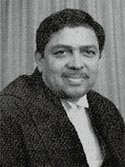
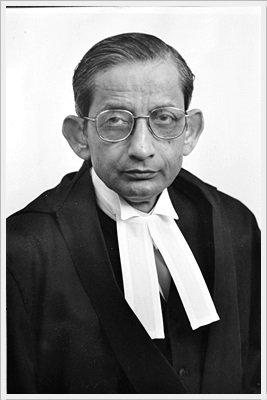
N. Santosh Hegde & S.B. Sinha
JUDGMENT:
J U D G M E N T
W I T H
CIVIL APPEAL NO.9678 OF 2003
S.B. SINHA, J :
These two appeals arising out of a common judgment and order dated
10.2.2003 passed by the High Court of Jammu & Kashmir at Jammu were
taken up for hearing together and are being disposed of by this common
judgment.
Interpretation of a bipartite settlement dated 8.9.1983 is in question in
these appeals which arise out of the aforementioned judgment and order
passed by a Division Bench of the said court dismissing an appeal preferred
by the Jammu & Kashmir Bank Ltd. (hereinafter referred to as 'the Bank),
affirming a judgment and order dated 15.12.1999 passed by a learned Single
Judge of the said court whereby and whereunder an award dated 4.10.1995
passed by the Central Government Industrial Tribunal-cum-Labour Court,
Chandigarh, directing the workman to be reinstated in service with the
benefit of past service without any back wages had not been interfered with.
The workman was working as a Cashier-cum-Clerk with the Bank.
He was transferred to Kolkata on or about 2.4.1981; but he did not join the
said office or before 14.4.1981, when he was supposed to do so. On his
failure to report to Kolkata office by 14.4.1981, a notice was issued by the
Bank on 22.6.1981 asking him to show cause as to why disciplinary
proceedings should not be initiated against him. Taking however a lenient
view, he was transferred to Amritsar on 6.8.1981 and then to Samba on a
representation having been made in this behalf. He later on was transferred
to Amritsar again. He joined Amritsar Branch on 29.7.1982. A leave for a
period of 28 days was sought for and sanctioned in favour of the workman
on an application made therefor by him on or about 9.10.1982. A further
leave of 9 days was sanctioned by an order dated 17.11.1982. Yet again he
filed an application seeking leave for one month on 19.5.1983; although he
had only 25 days accumulated leave to his credit and his leave account had
already been deducted by 50 days' medical leave.
A bipartite settlement was entered into by and between the
management of 58 Banks including the Appellant-Bank herein and their
workmen; clause 2 whereof is as under :
"2. Voluntary Cessation of employment by the
employees.
Whereas an employee has not submitted any
application for leave and absents himself from work for
http://JUDIS.NIC.IN SUPREME COURT OF INDIA Page 2 of 7
a period of 90 or more consecutive days without or
beyond any leave to his credit or absents himself for 90
or more consecutive days beyond the period of leave
originally sanctioned or subsequently extended and
where there is satisfactory evidence that he has taken up
employment in India and the management is satisfied that
he has no present intention of joining duties, the
management may at any time thereafter give a notice, to
the employee's last known address calling upon the
employee to report for duty within 30 days of the notice
stating, inter alia, the grounds for the management
coming to the conclusion that the employee has no
intention of joining duties and furnishing necessary
evidence, where available. Unless the employee reports
for duty within 30 days or unless he gives an explanation
for his absence satisfying the management that he has not
taken up another employment or avocation and that he
has no intention of not joining duties, the employee will
be deemed to have voluntarily retired from the bank's
service on the expiry of the said notice. In the event of
the employee submitting a satisfactory reply, he shall be
permitted to report for duty thereafter within 30 days
from the date of the expiry of the aforesaid notice
without prejudice to the Bank's right to take any action
under the law or rules of service."
Despite the expiry of the period of leave in June 1983, the workman
did not report back for duties, whereupon the Branch Manager, Amritsar,
informed him by a letter dated 2.11.1983 that he should rejoin his duties,
which was not complied with. An explanation was sought for from him by
Memorandum dated 2.11.1983 whereby and whereunder he was asked to
show cause as to why he had been on unauthorized leave for such a long
period. Such an explanation was to be filed by 10.11.1983. He had further
been asked to join duties. Despite service of the said memo., the workman
failed to join his duties by 31.12.1983. Consequently, a show cause notice
dated 31.12.1983 served on him whereby and whereunder he was intimated
that in the event of his failure to resume his duties by 15.1.1984 he would be
deemed to have been discharged from the services of the Bank. In reply
thereto, a telegram from one Krishan Chand Sethi was received stating that
the workman being unwell could not join his duties by 15.1.1984. He again
applied for grant of leave on medical ground on 15.2.1984. As by reason of
the aforementioned act on the part of the workman, the Bank felt a great
deal of inconvenience, a memorandum was served on 20.2.1984, pursuant
whereto again he requested for sanctioning of leave. His services were
dispensed with by invoking clause (2) of the bipartite settlement stating :
"3. Consequent upon receipt of these applications from
Mr. V. Sethi, the bank had no alternative but to make
confidential enquiries about the state of his health in
pursuance of which it was revealed that Mr. V. Sethi was
keeping a good health and even attended to his family
business. This convinced the bank that Mr. Sethi was not
at all interested in the services of the bank, which
prompted it to issue an order vide No. Per/Disp/84-448
dated 17.5.1984 in accordance with the provisions
contained in Memorandum of Settlements dated 8.9.1983
and Mr. Sethi was deemed to have voluntarily retired
from the services of the bank w.e.f.8.2.1984."
A legal notice was served upon the Bank herein after a long time
demanding the reinstatement of the workman on or about 6.4.1989, to
which it was replied that he had been engaged in some business at Samba
and thus it was clear that he had no interest in continuing in the services of
the Bank. Sometime in June 1989, a conciliation proceeding was initiated
http://JUDIS.NIC.IN SUPREME COURT OF INDIA Page 3 of 7
by him under the Industrial Disputes Act resulting in a reference made by
the Central Government in terms of a Notification dated 7.8.1990.
Inter alia, on the ground that the bank allegedly did not place on
records the settlement dated 8.9.1983, the impugned award was passed.
In the writ petition filed thereagainst by the Bank it was specifically
averred :
"\005It is important to point out here that the relevant
Bipartite Settlement is applicable to the Management of
the Bank and the Staff Union of the Workmen is just in
the form of Book and the petitioner-bank while perusing
its case has placed that book of Bi-Partite Settlement
before the respondent No.2 but the respondent No.2
without considering that settlement has remained under
this impression that Bi-Partite Settlement is just a form of
some document consisting of some leaves and has not
placed on record which is not true. The order passed by
the respondent No.2 is totally in contravention of Bi-
partite Settlement and deserves to be quashed on this
score only.
A writ petition was also filed by the workman questioning non-grant
of back wages. Both the writ petitions were heard together. In the said
proceedings, the workman filed an application purported to be under Section
17-B of the Industrial Disputes Act, which was not supported by an affidavit
as is required in law. The learned Single Judge although noticed the
contentions raised in both the writ petitions, but dealt with the one filed by
the workman only. An appeal preferred thereagainst was also dismissed.
Mr. Rohit M. Alex, the learned counsel appearing on behalf of the
Bank, would submit that the Central Government Industrial Tribunal-cum-
Labour Court as also both the learned Single Judge and the Division Bench
of the High Court proceeded on a wrong premise that it was obligatory on
the part of the Bank to conduct a full fledged departmental proceeding.
According to the learned counsel the Industrial Tribunal as also the High
Court erred in law insofar as they failed to take into consideration that the
principles of natural justice had been complied with as repeated
opportunities had been given to the workman to explain his position as also
report for duties. Strong reliance, in this behalf, has been placed on
Syndicate Bank vs. General Secretary, Syndicate Bank Staff Association and
Another [(2000) 5 SCC 65] and Punjab & Sind Bank and Others vs. Sakattar
Singh [(2001) 1 SCC 214].
Mr. Ashok Mathur, the learned counsel appearing on behalf of the
workman, on the other hand, would contend that as a plea for extension of
leave was raised by the workman, if the same had not been proved to be
satisfactory to the management, it was obligatory on its part to conduct a
departmental proceeding against him. In any event, the learned counsel
would contend that the applicability of the bipartite settlement having not
been gone into by the Industrial Tribunal as also by the High Court, the
matter should be remitted to the Tribunal.
Before the Industrial Tribunal, the workman did not deny or dispute
the existence of the bipartite settlement. He merely raised a plea that the
same was not applicable. The plea of the Bank, on the other hand, was that
the stipulations contained in the bipartite settlement were attracted if the
employer arrives at a satisfaction that that there were sufficient grounds for
it to arrive at a conclusion that the employee was no longer interested to
continue in the service.
The fact that there exists a bipartite settlement entered into by and
between the Banks and their workmen is not in dispute. The workman was
all along aware about the said legal position inasmuch as, at all stages, viz.,
http://JUDIS.NIC.IN SUPREME COURT OF INDIA Page 4 of 7
issuance of notices and memorandums, passing of the order of termination,
the said settlement had been referred to.
What fell for consideration before the Industrial Tribunal was the
interpretation and/or applicability of the said settlement. The Industrial
Tribunal committed an error of record insofar as it proceeded on the basis
that the said settlement had not been proved. The settlement being an
admitted document should have been considered in its proper perspective by
the Industrial Tribunal. Clause (2) of the said settlement is a complete code
by itself. It lays down a complete machinery as to how and in what manner
the employer can arrive at a satisfaction that the workman has no intention to
join his duties. A bare perusal of the said settlement clearly shows that it is
for the employee concerned to submit a proper application for leave. It is
not in dispute that after the period of leave came to an end in June 1983, the
workman did not report back for duties. He also did not submit any
application for grant of further leave on medical ground or otherwise. It is in
that situation the memorandum dated 2.11.1983 was issued and he was
asked to joint his duties. It is furthermore not in dispute that despite receipt
of the said memorandum, the workman did not join duties pursuant whereto
he was served with a notice to show cause dated 31.12.1982. He was
required to resume his duties by 15.1.1984. The Bank received a telegram
on 17.1.1984 and only about a month thereafter he filed an application for
grant of leave on medical ground. It is not the case of the workman that any
leave on medical ground or otherwise was due to him. Opportunities after
opportunities indisputably had been granted to the workman to explain his
position but he chose not to do so except filing applications for grant of
medical leave and that too without annexing proper medical certificates.
The bipartite settlement is clear and unambiguous. It should be given
a literal meaning. A bare perusal of the said settlement would show that on
receipt of a notice contemplated thereunder, the workman must either : (1)
report for duties within thirty days; (2) give his explanation for his absence
satisfying the management that he has not taken any employment or
avocation; and (3) show that he has no intention of not joining the duties. It
is, thus, only when the workman concerned does not join his duties within
thirty days or fails to file a satisfactory explanation, as referred to
hereinbefore, the legal fiction shall come into force. In the instant case
except for asking for grant of medical leave, he did not submit any
explanation for his absence satisfying the management that he has not taken
up any other employment or avocation and that he has no intention of not
joining his duties.
In the aforementioned fact situation we do not see any reason as to
why the Bank could not arrive at a satisfaction that the workman had no
intention to join his duties. It is interesting to note that though the said order
was passed on 17.5.1984, a representation to the Bank was made by the
workman to reconsider the said decision after a period of 3 years and 2
months by a letter dated 31.7.1987
Yet again a dispute was sought to be raised by issuance of a legal
notice on the Bank only on 6.4.1989.
Mere sending of an application for grant of leave much after the
period of leave was over as also the date of resuming duties cannot be said to
be a bona fide act on the part of the workman. The Bank, as noticed
hereinbefore, in response to the lawyer's notice categorically stated that the
workman had been carrying on some business elsewhere.
We cannot accept the submission of Mr. Mathur that only because on
a later date an application for grant of medical leave was filed, the same ipso
facto would put an embargo on the exercise of the jurisdiction of the Bank
from invoking clause (2 ) of the bipartite settlement.
It may be true that in a case of this nature, the principles of natural
justice were required to be complied with but the same would not mean that
a full-fledged departmental proceeding was required to be initiated. A
limited enquiry as to whether the employee concerned had sufficient
http://JUDIS.NIC.IN SUPREME COURT OF INDIA Page 5 of 7
explanation for not reporting to duties after the period of leave had expired
or failure on his part on being asked so to do, in our considered view,
amounts to sufficient compliance of the requirements of the principles of
natural justice.
Clause (2) of the bipartite settlement raises a legal fiction, which is of
wide import. Once the action on the part of the employer is found to be fair,
the court in view of such legal fiction would call upon the workman to prove
contra. It will bear repetition to state that the only defence which came to be
raised by the workman was non-applicability of the bipartite settlement. The
notice dated 31.12.1983 refers to the said settlement by necessary
implication, as on the failure of the workman to resume his duties by
15.1.1984, it was stated that he would be deemed to have been discharged
from the services of the Bank. Yet again in terms of the memorandum dated
20.2.1984, attention of the workman was drawn to the fact that his
application for grant of leave was neither in the prescribed form nor any
medical certificate was attached thereto. It was pointed out that the medical
certificate shows that he was under the doctor's treatment from 22.10.1983
to 22.1.1984 and as such he should have reported for duties on 23.1.1984
and as he failed to do so, it gave rise to an inference that he was not
interested to continue in Bank's services. He did not submit any satisfactory
explanation nor he filed any valid medical certificate. It was in that
situation, the order dated 17.5.1984 was issued which again referred to the
provisions contained in memorandum of settlement dated 8.9.1983. The
workman ex facie appears to have accepted the said order as for a long
period he maintained silence. Had he been interested in the Bank's services,
it was expected of him to resume his duties and/or file proper application for
grant of medical leave with a valid medical certificate.
The principle of natural justice, it is trite, is no unruly horse. When
facts are admitted, an enquiry would be an empty formality. Even the
principle of estoppel will apply. [See Dr. Gurjeewan Garewal (Mrs.) vs. Dr.
Dumitra Dash (Mrs.) and Others [(2004) 5 SCC 263]. The principles of
natural justice are required to be complied with having regard to the fact
situation obtaining therein. It cannot be put in a straitjacket formula. It
cannot be applied in a vacuum without reference to the relevant facts and
circumstances of the case. [See State of Punjab vs. Jagir Singh (2004) 8
SCC 129] and Karnataka State Road Transport Corporation & Anr. Vs. S.G.
Koturappa & Anr. 2005 (2) SCALE 493].
The contention raised at the Bar appears to be squarely covered by
two decisions of this Court relied upon by Mr. Alex. In Syndicate Bank
(supra) Wadhwa, J. speaking for the Division Bench observed :
"14. Two principles emerge from the decisions: (1)
principles of natural justice and duty to act in a just, fair
and reasonable manner have to be read in the Certified
Standing Orders which have statutory force. These can be
applied by the Labour Court and the Industrial Tribunal
even to relations between the management and workman
though based on contractual obligations; and (2) where
domestic inquiry was not held or it was vitiated for some
reason the Tribunal or Court adjudicating an industrial
dispute can itself go into the question raised before it on
the basis of the evidence and other material on record.
15. In the present case action was taken by the Bank
under clause 16 of the Bipartite Settlement. It is not
disputed that Dayananda absented himself from work for
a period of 90 or more consecutive days. It was thereafter
that the Bank served a notice on him calling upon him to
report for duty within 30 days of the notice stating
therein the grounds for the Bank to come to the
http://JUDIS.NIC.IN SUPREME COURT OF INDIA Page 6 of 7
conclusion that Dayananda had no intention of joining
duties. Dayananda did not respond to the notice at all. On
the expiry of the notice period the Bank passed orders
that Dayananda had voluntarily retired from the service
of the Bank."
It was further held :
"18. The Bank has followed the requirements of
clause 16 of the Bipartite Settlement. It rightly held that
Dayananda has voluntarily retired from the service of the
Bank. Under these circumstances it was not necessary for
the Bank to hold any inquiry before passing the order. An
inquiry would have been necessary if Dayananda had
submitted his explanation which was not acceptable to
the Bank or contended that he did report for duty but was
not allowed to join by the Bank. Nothing of the like has
happened here. Assuming for a moment that inquiry was
necessitated, evidence led before the Tribunal clearly
showed that notice was given to Dayananda and it is he
who defaulted and offered no explanation of his absence
from duty and did not report for duty within 30 days of
the notice as required in clause 16 of the Bipartite
Settlement."
The aforementioned legal position was reaffirmed by a decision of
three-Judge Bench in Punjab & Sind Bank (supra), wherein it has been held :
"\005Under this rule the employee is given an opportunity
to rejoin duty within a stipulated time or explain his
position to the satisfaction of the management that he has
no intention of not joining duty, and a presumption will
be drawn that the employee does not require the job
anymore and will stand retired from service. Thus, there
is no punishment for misconduct but only to notice the
realities of the situation resulting from long absence of an
employee from work with no satisfactory explanation
thereto\005".
In the fact situation obtaining therein it was held that there had been
sufficient compliance for principle of natural justice.
In Syndicate Bank (supra), this Court noticed the decision of three-
Judge Bench of this Court in D.K. Yadav vs. J.M.A. Industries Ltd. [(1993)
3 SCC 259] whereupon the Industrial Tribunal had placed strong reliance.
In D.K. Yadav (supra) admittedly no opportunity was given to the workman
and no inquiry was held. In that situation, it was observed :
"8. The cardinal point that has to be borne in mind, in
every case, is whether the person concerned should have
a reasonable opportunity of presenting his case and the
authority should act fairly, justly, reasonably and
impartially. It is not so much to act judicially but is to act
fairly, namely, the procedure adopted must be just, fair
and reasonable in the particular circumstances of the
case. In other words application of the principles of
natural justice that no man should be condemned unheard
intends to prevent the authority from acting arbitrarily
affecting the rights of the concerned person."
Keeping in view the fact that we have ourselves considered the
pleadings of the parties as also the materials on records, it is not necessary to
remit the matter to the Tribunal as it would not serve any purpose. So far as
the appeal preferred by the workman is concerned, it is not necessary to
http://JUDIS.NIC.IN SUPREME COURT OF INDIA Page 7 of 7
entertain the same as it is evident that Section 17-B of the of the Industrial
Disputes Act cannot now be applied in view of the fact that the workman did
not file an affidavit before the learned Single Judge in support of his
contentions and as required under law.
Having regard to the facts and circumstances of the case and for the
reasons stated hereinbefore, we are of the opinion that the appeal preferred
by the Bank should be allowed and that of the workman should be
dismissed. However, in the facts and circumstances of the case, there shall
be no order as to costs.

 Login with google
Legal Notes
Add a Note....