
Application of terms and conditions of sale of properties in terms of the provisions of the Special Court (Trial of Offences Relating to Transactions in Securities) Act, 1992 (for short, ’the Act’) ...
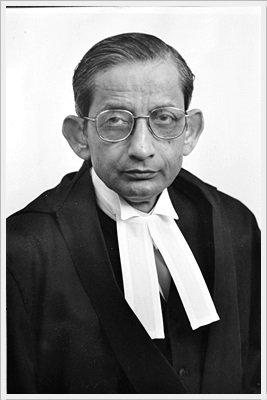

No Acts & Articles mentioned in this case
http://JUDIS.NIC.IN SUPREME COURT OF INDIA Page 1 of 12
CASE NO.:
Appeal (civil) 4512 of 2006
PETITIONER:
Yogesh Mehta
RESPONDENT:
Custodian Appointed under the Special Court & Ors
DATE OF JUDGMENT: 04/01/2007
BENCH:
S.B. Sinha & Markandey Katju
JUDGMENT:
J U D G M E N T
W I T H
CIVIL APPEAL NO. 4513 OF 2006
S.B. SINHA, J :
Introduction :
Application of terms and conditions of sale of properties in terms of
the provisions of the Special Court (Trial of Offences Relating to
Transactions in Securities) Act, 1992 (for short, 'the Act') is in question in
these appeals which arise out of the judgments and orders dated 22.06.2006,
31.07.2006 and 23.06.2006 passed by the Special Court (Trial of Offences
Relating to Transactions in Securities) at Bombay in Intervention
Application No.131 of 2006 filed in Misc. Petition No. 4 of 2001, Report
No. 12 of 2006 in Misc. Application No.131 of 2006; and Misc. Petition No.
41 of 1999 respectively.
Before adverting to the questions as also the fact involved in each of
these matters, we may at the outset notice that one Harshad Mehta was a
person notified under the Act. The private respondents herein being his
relatives were also notified (hereinafter referred to as 'the notified parties').
Apart from late Harshad S. Mehta, the Custodian had notified 29 entities in
terms of Section 3 of the said Act, inter alia, comprising three of his younger
brothers, his wife, wives of two of his younger brothers.
In the proceedings initiated before the Special Court various
applications were filed. Properties belonging to the said late Harshad S.
Mehta or other notified entities were put on auction. The auctioned
properties comprised of commercial as also the residential ones. The
residential properties, inter alia, were situate at Madhuli.
Order of this Court :
Notified parties questioned the validity and/or legality of the said
auction sales. They ultimately came to this Court. Whereas auction sales in
respect of the commercial properties were allowed to be completed by orders
passed by this Court from time to time, the auction sale in respect of the
residential properties was the subject-matter of the judgment of this Court in
Ashwin S. Mehta and Another v. Custodian and Others [(2006) 2 SCC 385]
wherein, inter alia, it was directed :
"(viii) The learned Judge, Special Court shall
allow the parties to make brief oral submissions which
pointed reference to their written submissions. Such
hearing in the peculiar facts and circumstances of this
case should continue from day to day.
http://JUDIS.NIC.IN SUPREME COURT OF INDIA Page 2 of 12
(ix) The learned Judge, Special Court while
hearing the matter in terms of this order shall also
consider as to whether the auction sale should be
confirmed or not. It will also be open to the learned
Judge, Special Court to pass an interim order or orders,
as it may think fit and proper, in the event any occasion
arises therefor.
(x) We would, however, request the learned
Special Judge, Special Court to complete the hearings of
the matter, keeping in view of the fact that auction sale in
respect of the residential premises is being considered, as
expeditiously as possible and not later than twelve weeks
from the date of the receipt of the copy of this order.
Save and except for sufficient or cogent reasons, the
learned Judge shall not grant any adjournment to either of
the parties.
(xi) The learned Judge, Special Court shall take up
the matter relating to confirmation of the auction sale in
respect of the commercial properties immediately and
pass an appropriate order thereupon within four weeks
from the date of receipt of copy of this order. If in the
meanwhile, the orders of assessment are passed by the
Income Tax Authorities, the Custodian shall be at liberty
to bring the same to the notice of the learned Special
Court which shall also be taken into consideration by the
learned Judge, Special Court."
Order of the Special Court :
Pursuant to or in furtherance of the said directions, the question as to
whether the auction sale should be confirmed or not came up for
consideration before the learned Judge, Special Court. By reason of the
impugned order dated 22.06.2006 passed in Intervention Application No.
131 of 2006 in Misc. Petition No. 4 of 2001, it was held that the as the
auction purchaser had not deposited the balance amount within the period
stipulated under the terms and conditions of the auction, the earnest money
deposited by the bidder was to be forfeited. By reason of the impugned
order dated 23.06.2006 passed in Misc. Petition No. 41 of 1999, with the
consent of the Custodian and the notified parties, a fresh auction sale was
directed to be held.
Terms and Conditions of Sales :
In the aforementioned backdrop of events, we may notice the relevant
terms and conditions of sale :
"3. The offers should be submitted in a sealed
envelope superscribed with the words "Bid for
sale in respect of Residential Flats/Office
Premises (mention the name of the property)".
There shall be only one consolidated bid in respect
of each of the following properties a) Maduli; b)
Khar; c) Guru Krupa. In respect of other
properties, single bid for a particular flat / property
or combined bid for more than one flat / property
is permitted; however, in such cases, the earnest
money for consolidated bid would be 2% of the
bid amount otherwise, the earnest money to be
deposited for each property shall be as mentioned
against respective property in the schedule.
Separate tender form and Agreement will have to
be submitted for each bid property.
4. The offers should reach at the office of the
Custodian at 10th floor, Nariman Bhawan, 227
Vinay K. Shah Marg, Nariman Point, Mumbai-400
http://JUDIS.NIC.IN SUPREME COURT OF INDIA Page 3 of 12
021 by 2.00 p.m. on the dates specified for each
property described in the schedule written
hereunder along with Demand Draft / Banker's
cheque / Pay Order of a Public Sector Bank in
favour of the Custodian, the Special Court payable
at Mumbai towards earnest money for participating
in the said auction for purchase of Residential Flats
/ Office Premises as indicated in the schedule
written hereunder. This amount of earnest money
will not carry any interest whatsoever.
7. If any dispute arises as to the last or highest
bidding, the said property shall be again put up for
sale at the last undisputed bidding and be resold at
the discretion of the Custodian subject to the
confirmation by the Special Court.
8. The sale is subject to sanction of the Hon'ble
Special Court at Mumbai in the above case. The
Court reserves the right to accept or reject any or
all offers without assigning any reasons. The
Court shall not be responsible in any way for not
accepting any or all the offers received by the
Custodian.
9. Within 60 days from the Hon'ble Special Court
granting sanction to the sale, the Purchaser shall
pay the balance of the purchase price and he/she
will have to take possession/delivery of the said
property from the Custodian at his/her own costs
and risks.
12. If the purchaser does not pay the balance amount
of the purchase price in the manner and within the
time provided herein or the time specified by the
Custodian or in any other respect fails to perform
these conditions or any of these, the Custodian
shall be at liberty to forfeit initial deposit made as
per para 4 above and shall then proceed to resell
the said property by public auction at such time
subject to such conditions and in such manner as
the Custodian shall deem fit and proper without
previously giving any notice to the purchaser and
the deficiency in price if any, occasioned by such
resale together with all costs charges and expenses
pertaining to the resale shall be made good by the
defaulting purchaser and be recovered by the
Custodian with interest on the amount of
deficiency at the rate of 18% per annum from the
expiration of the date of the aforesaid sanction of
sale till payment and in the event of non payment
of the whole or any part or any part thereof such
sum, the same shall be recoverable by the
Custodian from the defaulting Purchaser as and by
way of liquidated damages while any excess on
such resale shall not be available to such defaulting
Purchaser as and by way of liquidated damages
while any excess on such resale shall not be
available to such defaulting purchaser. This
condition shall be without prejudice to Custodian's
right and remedies, which the Custodian shall
otherwise have in law and/or under these
conditions.
http://JUDIS.NIC.IN SUPREME COURT OF INDIA Page 4 of 12
13. The Purchaser shall not be liable to pay outgoings
if any, in respect of the said property for the period
prior to the date of confirmation of sale and all
such outgoings shall be paid by the Custodian till
such confirmation.
16. Upon payment of the purchase price in full and all
costs, charges and expenses mentioned above,
Custodian's authorized representative shall sign
such papers and documents as may be necessary
for transfer of the said property in the name of the
Purchaser. Such documents of transfer shall be
prepared and executed by and at the cost, charges
and expenses of the Purchaser.
20. In case of sale of the said property is not
sanctioned by the Special Court in favour of the
highest bidder or is set aside, the initial deposit
made in terms of para 4 above shall be refunded to
such bidder without interest, other costs, charges
and expenses expended by him/her for the
property. Except as herein above provided, the
said initial deposit made in terms of para 4 above
shall in no event be refunded.
25. The time hereunder fixed for the observance and
performance by the Purchaser of any of the
obligations to be observed and performed by
him/her under these conditions is and shall be
deemed to be of the essence of the contract and
any forbearance by the Custodian of strict
observance and performance on the part of the
Purchaser thereof shall not be construed as a
waiver or relinquishment on the part of the
Custodian who shall have the right at his option
thereof to exercise his right and remedies as are
available to him under these conditions and under
law or in equity as arising from non-observance
and non-performance thereof including the right to
forfeit."
FACT:
Re Civil Appeal No. 4512 of 2006
The bids were invited on 19.11.2004. The last date for receipt of the
bids was 06.01.2004. Appeals were filed by the notified parties against the
order dated 17.10.2003 whereby and whereunder the Custodian was directed
to take all steps to sell the properties mentioned therein, which is the subject-
matter of the present appeals. This Court directed that the bids may be
received; but the same may not be opened till 05.01.2004. On 05.01.2004,
the bids were directed to be opened, but the results were to be placed before
this Court. Pursuant thereto, the bids were opened and the appellant was
found to be the highest bidder in respect of Flat Nos. 61A and 61B,
Gulmohar, S.V. Road, Khar, Mumbai. The valuation of the flat had been
fixed at Rs. 60,00,000/- (Rupees sixty lakhs), but his bid was of
Rs.85,00,000/- (Rupees eighty five lakhs). By an order dated 22.01.2004,
the learned Judge, Special Court while accepting the bid, inter alia, directed :
"\005Accordingly, the bid submitted by Mr. Madhu Suri
and Shiv Kumar Suri of Rs. 16,00,000 (Rupees sixteen
lakhs) is provisionally accepted, subject to final order to
be passed by the Hon'ble Supreme Court. The highest
bidder whose bid has been accepted shall comply with
the terms and conditions on which the bid is submitted.
The Highest bidder shall be at liberty to appear before the
Hon'ble Supreme Court on the appointed date.
http://JUDIS.NIC.IN SUPREME COURT OF INDIA Page 5 of 12
The initial deposit made by all the unsuccessful
bidders shall be refunded to the bidders."
[Emphasis supplied]
This Court thereafter by an order dated 30.01.2004 directed :
"The learned counsel for the Custodian brings on
record the result of the bids and the order of the Special
Court dated 17.12.2003 and 20.1.2004. The learned
counsel for the Appellants proposes to offer his
comments on the bids and the two orders of the Special
Court. Let it be done within two weeks.
The process of finalizing the bids according to law
may be proceeded ahead by the Special Court. However,
the finalization shall be subject to the result of these
appeals."
It is, however, stated that the learned Judge, Special Court did not take
any further step to finalize the bids pursuant thereto or in furtherance
thereof. As indicated hereinbefore, there being no serious dispute in regard
to auction sale of the commercial properties, this Court by an order dated
05.05.2004 directed that the interim order dated 31.01.2004 would not apply
to the sale of commercial properties. Pursuant to the directions and/or
observations made by the learned Judge, Special Court, an application was
filed for impleadment by the appellant. An application was also filed for
deposit of the amount in an interest bearing account of a Nationalized Bank.
The said applications were allowed. The appeals were finally disposed of in
the manner, as indicated hereinbefore, by an order dated 03.01.2006.
According to the appellant, although he had filed an application for
intervention and addressed several letters to the Custodian, as to when
payments in terms of the auction sales were required to be made, it did not
receive any response thereto.
By reason of the impugned judgment the learned Judge, Special
Court, however, directed the Custodian to consider as to whether the earnest
money deposited by the appellant was to be forfeited, stating :
"\005But in my opinion, this basic premise itself does not
exist. The right in relation to residential properties of the
Harshad Mehta group would have been created in favour
of the Applicant, had the applicant complied with the
Order passed by this Court accepting his bid. Essential
condition of that Order was that the Applicant complies
with all the terms and conditions of the bid. One of the
most essential condition of the bid was that within 60
days of the acceptance of the bid, he deposits the balance
amount of consideration. Failure of the Applicant to
deposit the balance amount of consideration resulted in
rejection of his bid and therefore, the Applicant lost all
his rights in relation to the property which could have
been created in his favour by the Order passed by this
Court. The submission of the learned Counsel appearing
for the Applicant that because the Supreme Court had
prevented the custodian from handing over of possession,
the Applicant was not obliged to deposit the balance
amount of consideration, in my opinion, has no
substance. For getting possession, the Applicant will
have to create an entitlement in him to get possession.
For creating that entitlement, he has to deposit full
amount of consideration. The learned Counsel for the
Applicant then submitted that the Supreme Court has
http://JUDIS.NIC.IN SUPREME COURT OF INDIA Page 6 of 12
observed that the question of confirmation of the bid
should be considered by the Court after deciding the
main application. In my opinion, that question will arise
only in relation to those bidders who have complied with
the Order accepting their bids and not in case like the
Applicant, who has lost the rights that may have been
created in his favour because of his default in complying
with the terms of the bid. The Applicant, therefore, has
no right in relation to the property which is the subject
matter of the main application filed by the custodian.
Therefore, the Applicant has no right to intervene. As I
find that the Applicant was liable to deposit the balance
amount of consideration as per the terms of the bid, the
custodian is directed to consider whether the amount of
earnest money deposited by the Applicant is to be
forfeited or not and submit a report to the Court seeking
appropriate orders. Application disposed of."
Pursuant to the said order, the Custodian submitted its report on
21.07.2006, recommending forfeiture of earnest money deposited by the
appellant, whereupon the learned Judge, Special Court by reason of the
impugned order dated 31.07.2006 directed :
"3. Both submissions made on behalf of the bidder
Yogesh Mehta have no substance. So far as
bidders in relation to commercial properties are
concerned, though they did not deposit the amount
immediately because there was stay order from the
Supreme Court operating, they deposited the
amount immediately after the Supreme Court
vacated the stay on sale of commercial properties.
Therefore, it was open to the bidder Mr. Yogesh
Mehta to deposit the amount at least immediately
after the Supreme Court decided the appeals by its
judgment dated 03.01.2006. That there was a stay
of all sale of the residential properties of Harshad
Mehta, does not appear to be correct, because the
Supreme Court in clear term has said in its
judgment dated 03.01.2006 that the Supreme Court
is concerned with those appeals only which relate
to sale of eight residential flats in a building
known as Madhuli. The flat in relation to which
the said Yogesh Mehta had submitted the bid
admittedly is not in the building called Madhuli.
4. In these circumstances, therefore, in my opinion,
the earnest money deposited by the bidder has to
be forfeited. In this view of the matter, the report
is disposed of with a direction to the Custodian to
forfeit the earnest money deposited by Mr. Yogesh
Mehta Report disposed of.
The Custodian is, directed to issue a fresh
advertisement for sale of the properties in
accordance withlaw."
Re Civil Appeal No. 4513 of 2006 :
Appellants herein are tenants of various flats in the building known as
'Gurukrupa'. They were also put on public auction. The said properties also
stood attached in terms of Section 3(3) of the Act. In response to the bids
invited for sale of the said flats, an offer was made by the appellants. By an
order dated 28.01.2004, the learned Judge, Special Court considered it
appropriate to tentatively accept the highest bid, subject to the final order
passed by this Court, stating :
http://JUDIS.NIC.IN SUPREME COURT OF INDIA Page 7 of 12
"\005Therefore, both the bidders increased their bids.
The highest bid is of Rs.170,00,000/- (Rupees One
crore seventy lakhs) from the occupants of the building.
The learned counsel for occupants is present and she
states that occupants are not in a position to increase the
bid. The other bidder namely West Cost Exim Pvt. Ltd.
is absent.
I have perused the valuation report dated
24.1.2004. As per the valuation report, value of the
property is about Rs.1,60,00,000/-. Considering that
the bid offered by the highest bidder is above the
valuation given in the valuation report, as also
considering that the bidders are the occupants of that
building itself, in my opinion, it would be appropriate
to accept the highest bid. The highest bid of the
occupants as per the report is therefore tentatively
accepted.
Learned Counsel for the highest bidder states that
the bid was given on behalf of the occupants, and
therefore, Conveyance should be executed in favour of
the Nominees nominated by the joint occupants/highest
bidders. The custodian is accordingly so directed.
In the Order dated 5.1.2004 passed in Civil
Application No. D. No.255575/03, D. No.25620/03, D.
No.25644/03 and D. No.25815/03, the Supreme Court
has directed this Court to open the bid and place the
result thereof before the Hon'ble Supreme Court.
Therefore, the highest bid given by the highest bidder is
tentatively accepted subject to final order to be passed
by the Hon'ble Supreme Court in the above said
proceedings."
[Emphasis supplied]
Appellants herein in that case also filed applications for intervention
before the Court.
The impugned order was passed ex parte. Appellants were not given
any notice. The fact that the building had already been put on sale by way of
auction and the bids had tentatively been accepted by the learned Judge,
Special Court by an order dated 28.01.2004 was not brought to its notice.
Question :
The short question which, therefore, arises for consideration is as to
what would be the interpretation of the said terms and conditions of sale.
Findings :
The auction was to be held at two stages : (i) submission of the bid;
and (ii) grant of sanction to the sale by the Special Court.
The word 'sanction' has been used in clause 9 as also in clause 20.
Evidently, the terms and conditions set out hereinbefore did not
contemplate a situation of this nature. When the bid was accepted, it was for
the Special Court to confirm the sale. It was only when the sale is
confirmed, which was to be done by way of grant of sanction thereto, the
purchaser was to pay the balance of the purchase price. Only on payment of
such purchase price, the auction purchaser would have been entitled to take
delivery of possession.
http://JUDIS.NIC.IN SUPREME COURT OF INDIA Page 8 of 12
Whether confirmation of sale and sanction of auction connote two
different things was not in issue. Parties also construed the terms of the
auction in the same manner. As noticed hereinbefore, acceptance of auction
by the Special Court was a provisional one. It was subject to the order of
this Court. It may be true that whereas in a case where the sanctioning
authority is the court itself and confirmation of sale would not be subject to
approval from some other authority; acceptance of the sale itself would
amount to sanction thereof. But situation became completely different in
view of the orders passed by this Court. We would deal with the matter a
little later, but we may at this juncture notice some decisions operating in the
field at this juncture.
In Bishan Paul v. Mothu Ram [AIR 1965 SC 1994], this Court laid
down the law in the following terms :
"8. The rules which we have earlier reproduced
show that the auction is held on a date fixed and is
subject to a reserve price which is confidential. The
officer conducting the sale declares at the fall of hammer
who is the highest bidder. The highest bid is subject to
the approval of the Settlement Commissioner or an
officer appointed by him. A period of seven days must
elapse before the bid is approved and there is also a
limitation of seven days from the acceptance of the bid
for making an application to set aside the sale. If the bid
is approved and if no application meanwhile for setting
aside the sale is made, the highest bidder is recognised as
the auction purchaser and he is required to produce a
treasury challan in respect of the balance of the purchase
money within a period of fifteen days (which period may
be extended without limit of time) before the Settlement
Commissioner or the officer appointed by him. When the
full purchase price is paid a certificate issues in Form No.
XXII and is sent to the Sub-Registrar for registration. If
the balance of the price is not paid, the amount of
advance in deposit is forfeited and the auction purchaser
has no claim to the property.
9. The passing of title thus presupposes the
payment of price in full and the question is at what stage
this takes place. Obviously, there are several distinct
stages in the sale of property. These are: (a) the fall of the
hammer and the declaration of the highest bid; (b) the
approval of the highest bid by the Settlement
Commissioner or officer appointed by him; (c) payment
of the full price after approval of the highest bid; (d)
grant of certificate; and (e) registration of the certificate."
Yet again in State of Uttar Pradesh v. Kishori Lal Minocha [(1980) 3
SCC 8], this Court held :
"The question that remains to be answered is, even
if there was no statutory provisions, whether there was a
concluded contract between the appellant and the
respondent under which the respondent was liable to pay
20,100 which represents the difference between the
highest bid at the first sale and the price fetched at the
resale. The sale proclamation containing the conditions
of sale has not been produced. Assuming that the
different clauses of Rule 357 barring the last part of the
fifth clause embody the conditions of sale, it is clear from
the second clause that in the absence of the final sanction
of the Excise Commissioner, the bid cannot be said to
have been finally accepted. It is not claimed by the
appellant that the bid offered by the respondent was
sanctioned by the Excise Commissioner. There was thus
http://JUDIS.NIC.IN SUPREME COURT OF INDIA Page 9 of 12
no concluded contract between the parties to make the
respondent liable for the alleged loss\005"
Mr. Arvind Kumar Nigam, the learned counsel appearing on behalf of
the notified parties has, however, placed strong reliance upon a decision of
this Court in Union of India and Others v. Messrs. Bhim Sen Walaiti Ram
[(1969) 3 SCC 146] wherein a distinction had been made between a situation
where auction sale is conducted by an officer lower than the authority
competent to approve the same and the acceptance of a bid by the officer
presiding at the auction and holding that in the event the transaction is
complete, failure on the part of the auction purchaser to deposit the
prescribed amount, the Collector would be entitled to resell the licence,
stating :
"\005It is not disputed that the Chief Commissioner has
disapproved the bid offered by the respondent. If the
Chief commissioner had granted sanction under Clause
33 of Ex. D-23 the auction sale in favour of the
respondent would have been a completed transaction and
he would have been liable for any shortfall on the re-sale.
As the essential pre-requisites of a completed sale are
missing in this case there is no liability imposed on the
respondent for payment of the deficiency in the price."
When a sale would be held to be completed would, thus, depend upon
the fact of each case. Indisputably, it will primarily depend upon the terms
and conditions of the contract. But herein there was another supervening
circumstance i.e. the interim orders passed by this Court. The core question
in this case would, thus, be whether having regard to the interim orders
passed by this Court, the learned Judge, Special Court could confirm the
sale. The answer thereto must be rendered in the negative. It is true that the
learned Judge, Special Court, in its order dated 22.01.2004 directed the
highest bidder to comply with the conditions, but what escaped the notice of
the learned Judge was that sanction could not have been granted on a
provisional basis. If there could be only one order of sanction, the same
would mean the final one and not the provisional one. That is how the
parties including the Custodian understood the same. It his report the
Custodian stated :
"The Supreme Court has further directed at page
50 that "the learned Special Court shall proceed to pass
appropriate orders as regard confirmation of the auction
sales in respect of commercial properties". The
Custodian states that commercial properties are reflected
at Serial Nos. 1 to 13 of Exhibit 'A'. In respect of these
properties, where sale had been sanctioned by this
Hon'ble Court subject to the orders of the Hon'ble
Supreme Court, full payments have been received and
possession of the properties has also been handed over to
the purchasers.
The Custodian therefore prays that this Hon'ble
Court may be pleased to confirm the sale of commercial
properties as listed at Sl. Nos.1 to 13 in the table annexed
hereto as Exhibit 'A'.
The Custodian also states that this Hon'ble Court
had also confirmed sale of the properties at Serial Nos.
14 to 17 which were not described as commercial
properties, subject to orders of the Hon'ble Supreme
Court. However, in these cases only earnest money was
received from the successful purchasers and possession
could not be handed over in view of orders of the
Hon'ble Supreme Court. No bids were, however,
received in respect of properties at Serial Nos. 18 to 25
http://JUDIS.NIC.IN SUPREME COURT OF INDIA Page 10 of 12
(various flats at Madhuli), Separate proceedings in
respect of properties at S. No. 26 are being adopted."
Before us a chart has been submitted, from a perusal whereof it
appears that even the purchasers of commercial properties made final
payments within the period 14.07.2004 and 05.01.2005. No payment,
therefore, was said to have been made within a period of sixty days from the
date of auction i.e. 05.04.2005.
If there had been a stay in regard to acceptance of the bid, it could not
have been sanctioned. It could be sanctioned subject to the final order of
this Court. Moreover, when this Court issued direction in regard to
confirmation of sale, the matter ought to have been considered afresh.
In the peculiar facts and circumstances of this case, it is difficult to
accept the submission of the learned counsel for the respondents that the bid
was accepted finally, but only possession was to be taken by the purchasers
at their own risk.
Strong reliance has been placed by Mr. Nigam upon a decision of this
Court in State of Maharashtra and Others v. A.P. Paper Mills Ltd. [(2006) 4
SCC 209], wherein this Court in a case where the bidder had withdrawn its
offer before the expiry of the period itself during which the bid was to
remain operative, held :
"\005Stand of the learned Counsel for the respondent that
another request was made after the expiry of the 45 days
period does not change the situation. Clause 5(v) clearly
spells that once a tender is tendered the offer shall be
considered valid for a period of 45 days from the date of
tender sale in case of tenders which are under
consideration. If this clause is read with Clause 5(iv) the
position is clear that once a tender is tendered no changes
can be made and no tender can be withdrawn. We are not
concerned with a case of consequences after acceptance
of the tender by the successful bidder. In such a situation
loss sustained in the re-sale and the amount realized less,
shall be recovered from the bidder while adjusting the
amount paid by him towards earnest money deposit. In
this case the acceptance of the tender was after the
validity of the period. Therefore, this is not a case which
could authorize the Government to recover the loss from
the respondent. But it is a case of withdrawal of tender
and the effect of it is to be considered. Since the tender is
valid for a period of 45 days and withdrawal is before
expiry of the period the earnest money is to be forfeited.
The stand of the respondent that because of delay in
declaration of the final sale results there was no bar on
withdrawal of the tender is clearly untenable. Once the
tender is withdrawn the result is that the tenderer who
withdraws the tender cannot take the stand that since the
final sale result has not been declared there is no bar on
the withdrawal."
The said decision cannot be said to have any application whatsoever
to the fact of the present case. The acceptance of the bid herein was subject
to order of this Court which, in our opinion, thus, by reason of the order of
the Special Court or otherwise did not result in a concluded contract. The
deposit was to be made within sixty days from the date of grant of sanction
which would mean final acceptance of the bid, which was to depend upon
the ultimate order which was to be passed by this Court.
We, therefore, are of the opinion that the impugned order cannot be
sustained.
http://JUDIS.NIC.IN SUPREME COURT OF INDIA Page 11 of 12
In Misc. Petition No. 41 of 1999, evidently a consent order had been
passed behind the back of the appellants. The said order, therefore, cannot
also be sustained.
There is another aspect of the matter which also cannot be lost sight
of. Forfeiture of the earnest money, in our opinion, in the aforementioned
situation, could not have been directed.
In Chairman of the Bankura Municipality, Bankura v. Lalji Raja &
Sons [(1953 SC 248 at 250], this Court noticed the definition of the word
'forfeiture' in the following terms :
"The word 'forfeiture' is defined in Murray's Oxford
Dictionary The fact of losing or becoming liable to
deprivation of goods in consequence of a crime, offence,
or breach of engagement"\005.."the penalty of the
transgression" or a "punishment for an offence".
While directing forfeiture of the 'earnest money' the provisions of the
Indian Contract Act, 1872 are to be kept in mind. Forfeiture is permissible
only when a concluded contract has come into being and not prior thereto.
[See Maula Bux v. Union of India [AIR 1970 SC 1955 : (1969) 2 SCC 554
& Saurabh Prakash v. DLF Universal Ltd. \026 2006 (12) SCALE 531] .
The learned counsel appearing for the Custodian submitted that the
time was of the essence of contract. It may or may not be so. This question
is required to be considered having regard to the fact situation obtaining in
each case. If the deposit was to be made from the date of final sanction of
the offer, question of applicability of the said proposition of law could not
arise.
We may, however, notice that in Mcdermott International Inc. v. Burn
Standard Co. Ltd. & Ors. [2006 (6) SCALE 220], this Court observed that in
a case of this nature, time was not of the essence and, therefore, Section 55
of the Contract Act was not attracted, noticing :
"This Court in Hind Construction v. State of
Maharashtra [(1979) 2 SCC 70] stated:
"7. The question whether or not time was of the
essence of the contract would essentially be a
question of the intention of the parties to be
gathered from the terms of the contract. [See
Halsbury's Laws of England, 4th ed., Vol.4, para
1179]."
"8. Even where the parties have expressly
proided that time is of the essence of the contract
such a stipulation will have to be read along with
other provisions of the contract and such other
provisions may, on construction of the contract,
exclude the inference that the completion of the
work by a particular date was intended to be
fundamental. [See Lamprell v. Billericay Union
(19849) 3 Exch 283, 308; Webbv. Hughes (1870)
LR 10 Eq 281; Charles Rickards Ltd. v.
Oppenheim (1950) 1 KB 616].""
Conclusion :
For the reasons aforementioned, the impugned judgments cannot be
sustained. They are set aside accordingly and the matter is remitted to the
learned Judge, Special Court for consideration of the matter afresh in the
light of the observations made hereinbefore. The appeals are allowed. We
may, however, hasten to add that it will be open to the learned Judge,
Special Court, to pass an appropriate order in accordance with law. We
http://JUDIS.NIC.IN SUPREME COURT OF INDIA Page 12 of 12
must also observe that we have not gone into the question in regard to the
validity or otherwise of the auction sale. In the facts and circumstances of
the case, there shall be no order as to costs.

 Login with google
Legal Notes
Add a Note....