
Victims: Babarao Kolhe and Jaidev Kolhe were attacked while returning home in a bullock cart.Attackers: Eight accused, including Himmat Sukhadeo Wahurwagh, armed with axes and sticks. Location;The incident occurred in ...
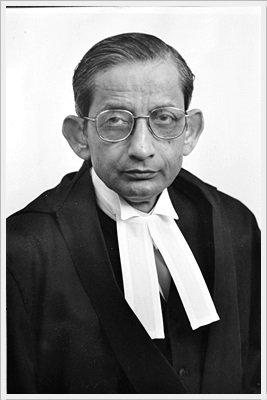
No Acts & Articles mentioned in this case
REPORTABL E
IN THE SUPREME COURT OF INDIA
CRIMINAL APPELLATE JURISDICTION
CRIMINAL APPEAL NO. 1641 OF 2007
HIMMAT SUKHADEO WAHURWAGH & ORS. APPELLANTS
VS.
STATE OF MAHARASHTRA ...RESPONDENT
J U D G M E N T
HARJIT SINGH BEDI, J.
1.This appeal is directed against the judgment of the
Bombay High Court dated 24
th
April 2007 whereby the State
appeal against acquittal against the judgment of the Additional
Sessions Judge, Akola has been allowed and the accused
convicted and sentenced for offences punishable under
Section 302/149 of the IPC etc. The facts are as under:
2.At about 4 p.m. on 11
th
June 1989 Babarao Kolhe, his
brother Jaidev Kolhe and grandson Sanjay PW-1 residents of
village Panaj, went to plough their fields, about one-and-a half
kilometers away from the village. As they were returning home
in their bullock cart, they were waylaid by the eight accused,
variously armed with axes and sticks who attacked Babarao
and Jaidev. Sanjay escaped from the spot and reached home
and informed his grandfather Namdeo Kolhe about what had
happened, giving details of the injuries caused by each of the
accused. In the meantime, the bullock cart sans Babarao and
Jaidev too returned to the residence in the village. Namdeo
Kolhe thereupon called his sons Dadarao and Wasudeo and
alongwith several other persons went in search and found
Babarao and Jaidev lying seriously injured in the field of one
Vishwanath Akotkar. It is the case of the prosecution that
Jaidev made a dying declaration to Dadarao that the eight
accused had beaten him and Babarao. The two injured were
thereafter taken homeward and as the party entered the
village. Namdeo and the others received information that the
accused were searching for them as well so that they too could
be killed. Dadarao and Wasudeo thereupon left the cart and
returned home by a circuitous route. Namdeo then left for the
2
house of the Police Patil accompanied by his grandson
Bhimrao PW 4 and Deokabai PW 5 but he too was assaulted
along the way by the accused. Bhimrao rushed back home
and narrated the incident to his mother Shantabai and to his
father. The accused also threatened Deokabai that they would
kill her as well on which she made a hasty retreat to her
home. Wasudeo then went to Karla to send a message to the
Police at Akot on phone, but he could not get the connection
on which the operator him to call the police at Anjangaonsurji
Police Station. The message was accordingly conveyed by the
Anjangaonsurji police to Akot police station on which PSI
Thombre recorded the message in the Daily Diary and also
informed Inspector Patil PW 14 about the incident. This police
officer reached Panaj at about 1:00 a.m. and on enquiry found
that Babarao, Jaidev and Namdeo were dead. He then
recorded the statement of Dadarao on which a First
Information Report under Section 302 r/w Section 34 of the
Indian Penal Code was registered. The Police also started on
the investigation and sent the dead bodies for the post mortem
examinations. The accused, who did not make an
3
attempt to run away, were arrested from the village the very
same day and on their disclosure statements, the weapons of
offence as also bloodstained clothes were recovered. On
committal the Additional District Judge framed charges under
Sections 147, 148 and 149 r/w Section 302 of the IPC against
the accused. The Trial Court in the course of a somewhat
laboured judgment held that the deposition of Sanjay PW 1,
the solitary eye witness to the murders of Jaideo and Babarao,
could not be believed as his conduct belied his presence in as
much that after reaching home he had hidden himself in the
house of one Abgad and had not reported the matter to his
neighbours. The Court also held that the graphic details of the
injuries caused by each of the accused made his story
improbable. The statements of Dadarao PW 2, to whom Jaideo
(deceased) had made a dying declaration and Wasudev PW 3
naming the accused as their assailants were also discarded,
on the premise that there were many improvements vis-à-vis
their statements under Section 161 of the Cr.P.C. The Trial
Court also observed that the witnesses were closely related to
the deceased and to each other and as there appeared to be no
4
plausible motive for the murders and the delay in the lodging
of the FIR were other factors which cast a serious doubt on the
prosecution’s story. The Trial Judge accordingly, by his
Judgment dated 20
th
February 1991, acquitted the accused.
On appeal the High Court observed that the finding of the
Court that the eye witness account was unreliable was
erroneous, the more so as Sanjay, who was a witness to the
first two murders, though a child, was absolutely reliable. The
Court also found that the testimonies of PW 4 Bhimrao, PW 5
Deokabai and Anandrao PW 6 with respect to the assault and
murder of Namdeo too were reliable and had to be accepted.
The High Court also observed that the finding of the Additional
Sessions Judge that there was no apparent motive for the
murders was, on the face of it, unacceptable as it was the
admitted position that in 1981, Namdeo (deceased) and his
sons had been prosecuted for an attempt to murder Sukhdeo,
father of accused nos. 1 to 5 and had been convicted and
sentenced to rigorous imprisonment for five years but on
appeal in the High Court, the sentence had been reduced to
three years whereafter the accused had been released from jail
5
in February 1989. The High Court, thus, deduced that the
present incident, which took place on 11
th
June 1989 was a
fall out of the incident of 1981 and had occurred about four
months after the accused had been released from jail. The
Trial Court further held that the medical evidence given by Dr.
Jaiswal PW 7 and the chemical examiners report corroborated
the eye witness account. The Court also believed the statement
of PW 2 Dadarao with respect to the dying declaration made by
Jaideo. Having recorded its findings on these basic issues, the
High Court reversed the order and judgment of acquittal and
convicted all the accused for offences punishable under
Sections 147, 148 and 302 r/w 149 of the Indian Penal code
and sentenced each of them as under; two years rigorous
imprisonment for the offence punishable under Section 147 of
the Indian Penal Code, three years rigorous imprisonment for
the offence under Section 148 and to imprisonment for life and
a fine of Rs.5,000/- in-default to suffer rigorous
imprisonment for one year for the offence punishable under
Section 302 r/w Section 149. It is in this background that the
matter is before us by way of Special Leave.
6
3.At the very outset, it has to be pointed out that the two
warring groups belong to Village Panaj, live in the same
locality and belong to the same caste. They are also, within
themselves, very closely related inter se. Namdeo (deceased),
was the father of Babarao and Jaideo (deceased) whereas
Dadarao PW 2, and Wasudeo PW 3 are his sons and PW 1
Sanjay is the son of Babarao whereas Bhimrao PW 4 is the son
of Dadarao aforesaid and Shantibai PW 10. Likewise we see
from the record that the appellants Himmat, Siddhartha,
Gautam, Anil and Sanjay Kumar are brothers; Waman- is an
uncle of the above mentioned accused whereas Prakash and
Suresh are his sons.
4.In this background, Mr. R.S. Lambat, the learned counsel
for the appellants has argued that the Trial Court on a minute
examination of the evidence had thought it fit to record an
order of acquittal, a view which was clearly tenable on the
facts of the case, and the High Court was, thus, not justified in
re-appreciating the evidence and arriving at a different
conclusion. He has highlighted that an accused was
presumed to be innocent till held guilty by a competent court
7
and this principle was immeasurably strengthened where the
Trial Court had made an order of acquittal. There can be no
quarrel with these basic propositions, but we are of the
opinion that the evidence in the case suggests that the
judgment of the Additional Sessions Judge was unjustified in
the face of extremely credible evidence and was based on a
complete misconception as to the evidence on record. We are,
therefore, of the opinion that the High Court was justified in
interfering in the matter on a re-appreciation of the evidence.
In this connection, we refer to the judgment in Chandrappa
and others vs. State of Karnataka (2007) 4 SCC 415
wherein it has been observed that an Appellate Court has full
authority to re-appreciate and re-consider the evidence in a
case of acquittal barring a case where two views are possible
on the evidence and one favouring the accused has been
taken. However where the judgment of the Trial Court is based
on a complete misreading of the evidence and a view in favour
of the accused was not justified and only one view with regard
to the culpability of the accused was possible, the High Court
would be failing in its duty if it did not interfere. Similar views
8
have been expressed in Swami Prasad vs. State of Madhya
Pradesh J.T. 2007 (4) SC 337 , and a plethora of other
judgments. We are, therefore, of the opinion that interference
by the High Court was called for in the circumstances.
5.Mr. Lambat then argued that there was no motive for the
triple murder as the earlier incident of 1981 had apparently
been forgotten inasmuch that the relations between the parties
had admittedly improved and they were on visiting terms. It
was then submitted that the first two murders had been seen
by Sanjay PW 1 but his presence was doubtful as he had
disappeared from the scene and hidden himself in the house of
Abgad and had surfaced only the next morning, and thereafter
narrated his story. It has also been pleaded that the evidence
of PW 4 Bhimrao another young child of about 13 years, PW 5
Deokabai and Anandrao PW 6 who had witnessed the attack
on Namdeo, could not be believed as the story projected by
them that they had rushed into their houses after seeing the
incident and had done little else could not be believed. It has
accordingly been emphasized that the entire eye witness
account was based on the testimony of close and interested
9
relatives of the deceased and though, the entire incident had
happened either in the village itself or just outside of it, no
independent witness had come forth in support of the
prosecution. It has been pointed out that in this background
the fact that the FIR had been filed belatedly was a factor
which cast a serious doubt on the prosecution story.
6.The Counsel for the respondent State has, however,
submitted that the motive for the incident was writ large on
the facts of the case and that merely because the primary
witnesses Sanjay and Bhimrao were related to the deceased
was no ground to disbelieve their testimonies particularly as
they had been corroborated by the dying declaration made by
Jaideo to Dadarao PW 2, the medical evidence in the case, as
also the recovery of the murder weapons at the instance of the
accused which were found on analysis to have been stained
with human blood of identifiable blood groups.
7.Before we embark on an appreciation of the evidence
some thoughts come to mind. The criminal justice system as
we understand it as of today in our country, is beset with
major issues, sometimes unrelated to what happens in court,
10
particularly in cases involving more than one accused.
Fudged and dishonest first information reports, tardy and
misdirected investigations and witnesses committing perjury
with not the slightest qualm or a quibble make the decision of
even the most diligent and focused of judges particularly
galling and difficult. Several other factors inhibit the proper
conduct of proceedings in a trial. As per “Crimes in India –
1998” a total of 5,42,345 cases under the Indian Penal Code
including those carried over from the previous years, and
another 6,37,345 criminal cases under Special and Local Laws
making a backlog of 11,79,690 cases were pending
investigation. It has also been found that the delay in the
investigation and disposal of a criminal case makes the
possibility of acquittal that much higher as witnesses tend to
turn hostile. The Fourth Report of the National Police
Commission (1980) Chapter XXVIII gives some alarming
statistics inasmuch that a sample study of Sessions cases in a
crime infested district revealed that out of 320 cases disposed
off in the concerned Sessions court during the 8 months
working period in a year, only 29 ended in conviction while
11
291 ended in acquittal. In conclusion, the Commission
observed:
“As many as 130 cases, which included
21 murders, 58 attempts at murder, 17
decoities and 9 robberies, took more than
3 years for disposal, reckoning the time
from the date of registration of First
Information Report. It was also noticed
that the longer a case took for disposal
the more were the chances of its
acquittal. Protracted proceedings in
courts followed by acquittal in such
heinous crimes tend to generate a feeling
of confidence among the hardened
criminals that they can continue to
commit crimes with impunity and
ultimately get away with it all at the end
of leisurely and long drawn legal battles
in courts which they can allow their
defence counsel to take care of. Such a
situation is hardly assuring to the law
abiding citizens and needs to be
immediately corrected by appropriate
measures even if they should appear
drastic and radical.”
8. We hasten to add that these alarming figures are not
universally applicable to all districts, but they are undoubtedly
indicative of the malaise that afflicts our criminal justice
system and paint a grim picture. The Commission also found
that one of the primary reasons for the failure of the
prosecution was the propensity of prosecution witnesses to
12
turn hostile and several reasons for this trend have been spelt
out. The Commission also quoted with approval from a letter
of a senior Sessions Judge in which he wrote that:
“A prisoner suffers for some act or
omission but a witness suffers for no
fault of his own. All his troubles arise
because he is unfortunate enough to be
on the spot when the crime is being
committed and at the same time “foolish”
enough to remain there till the arrival of
the police. It is for these reasons that
people do not take the victim of a road
accident to hospital or come to the help of
a lady whose purse or gold chain is being
snatched in front of her eyes. If some
person offers help in such cases he is to
appear as a witness in a court and has to
suffer not only indignities and
inconveniences but also has to spend
time and money for doing so. Some time
the witnesses incur the wrath of
hardened criminals and are deprived of
their lives or limbs.”
9. In this pernicious state of affairs, the judge, gravely
handicapped, has to apply his knowledge of the law and his
assessment of normal human behaviour to the facts of the
case, his sixth sense based on his vast experience as to what
must have happened, and then trust to God and good luck
that he strikes home to come to a right conclusion. To our
13
mind, the last two are undoubtedly imponderables but they do
come into play in negotiating the judicial minefield. This is an
undeniable fact whether we admit it or not
10.We now take up for discussion the various issues raised
by the learned counsel. Happily, the pitfalls that we have
noted above do not exist in the present case. Namdeo, the
deceased and his sons were prosecuted for an attempt to
murder Sukhdeo, the father of accused 1 to 5 in the year 1981
and were sentenced to five years by the trial court, but the
sentence was reduced to three years by the High Court and
the accused were released from jail in February 1989. The
present incident took place within four months of that release.
It is true that some of the prosecution witnesses have testified
that during the eight years between the earlier incident and
the present one, the relations between the two parties had
improved and that they were on visiting terms as well. It is
obvious, however, that the release of Namdeo and his sons
from jail was an event which undoubtedly ignited old passions
and animosities and precipitated the incident. The finding of
the Trial Court that there was no motive for the murders is,
14
thus, on the face of it unacceptable and it has been so found
by the High Court, a finding that we too firmly endorse.
11.The record reveals that the incident happened in two
parts, first at about 6:00 p.m. and again an hour later. In the
first incident Babarao and Jaideo were killed, an event which
was witnessed by PW 1 Sanjay, the son and nephew of the two
deceased, respectively. The second incident was witnessed by
PW 4 Bhimrao, PW 5 Deokabai and PW 6 Anandrao. We now
take up for consideration the evidence of each of these two
sets of witnesses.
12.It has been submitted by the learned counsel for the
appellants that Sanjay was a mere child of 11 years of age and
in running away and hiding himself in the house of Abgad
particularly after his father had been brutally murdered, was
an unacceptable story. We find no merit in this plea. On a
perusal of Sanjay’s evidence, it stands revealed that he was
able to discern between right and wrong and despite a
searching cross-examination made by the defence lawyer
nothing adverse could be brought out. Sanjay testified that he
had gone along with the two deceased to the plough fields at
15
about 4:00 p.m. and while they were returning home, they had
been surrounded by all the accused near the field of one
Vishwanath and injuries had been caused to his father and
uncle. Sanjay also specified the weapons that each of the
accused was holding and the manner of their use. He also
stated that in the confusion that followed the attack, he had
managed to escape, had rushed home, revealed the story to
his family and then hidden himself till the next morning. It is
also evident from the testimonies of the other prosecution
witnesses Bhimrao, Deokabai and Anandrao that when they
along with Namdeo (deceased), were planning to go to the
Police Patil to lodge the report with regard to the first incident,
they had been apprehended by the accused and injuries had
been caused to Namdeo which had led to his death. Deokabai
further deposed that after this incident the accused had also
come to her home and threatened to beat her as well. PW 14
Sub Inspector Vinayak, one of the investigation officers, in his
deposition stated that when he reached the village at about
1:45 a.m. on 12
th
June 1989, he noticed an unusual and
artificial calm in the village, an atmosphere of panic and fear
16
and that the inhabitants were unwilling to even open the door
till they were told that the police had arrived. It is, therefore,
obvious that the accused had let loose a reign of terror and
after having killed three persons were still not satisfied and
were looking around for other victims from the Kolhe family.
Little wonder, therefore, that Sanjay had thought it fit and
prudent to hide himself till the coast was clear. It is true that
the Addl. Sessions Judge did not put any questions to Sanjay
to ascertain his suitability as a witness. We, however, find
from the evidence that he fully understood the implications of
what he was saying and despite a stiff cross-examination
nothing to discredit him could be brought out. We endorse
the finding of the High Court that Section 118 of the Evidence
Act does not preclude a child from being a witness and the
only test that is applicable is as to whether the witness
understood the sanctity of an oath and the import of the
questions that were being put to him.
13.In Nivrutti Pandurang Kokate and Others vs. State
of Maharashtra (2008) 12 SCC 565 , it has been observed
that the Section 118 of the Evidence Act envisages that all
17
persons shall be competent to testify unless the Court thinks
otherwise. In summing up the various judgments on this
issue, this is what this Court had to say:
“The decision on the question whether the
child witness has sufficient intelligence
primarily rests with the trial Judge who
notices his manners, his apparent
possession or lack of intelligence, and the
said Judge may resort to any examination
which will tend to disclose his capacity
and intelligence as well as his
understanding of the obligation of an oath.
The decision of the trial court may,
however, be disturbed by the higher court
if from what is preserved in the records, it
is clear that his conclusion was erroneous.
This precaution is necessary because
child witnesses are amenable to tutoring
and often live in a world of make-believe.
Though it is an established principle that
child witnesses are dangerous witnesses
as they are pliable and liable to be
influenced easily, shaped and moulded,
but it is also an accepted norm that if after
careful scrutiny of their evidence the court
comes to the conclusion that there is an
impress of truth in it, there is no obstacle
in the way of accepting the evidence of a
child witness”.
14.We are of the opinion that Sanjay was aware of what had
happened in the answers given by him in the course of his
evidence which clearly proved that he was a competent
18
witness. We also find that Sanjay’s statement has been duly
corroborated by the dying declaration made by Jaideo, to
Dadarao PW 2 who had rushed to the spot on being informed
by Sanjay as to what had happened.
15.The murder of Namdeo had been witnessed by PW 4
Bhimrao, PW 5 Deokabai and PW 6 Anandrao. Admittedly,
PW 4 Bhimrao who was then 13 years of age, was a child
witness and is the grandson of Namdeo. He deposed that while
accompanying his grandfather to lodge the report with the
police Patil with respect to the earlier murders, they had met
Deokabai on the way and she too had accompanied them.
They had thereafter been accosted by all the accused who were
armed with axes and sticks and they had caused injuries to
Namdeo with their weapons. He also deposed that on seeing
this, he had run home, informed his mother about the
incident and on account of the panic prevailing in the village,
he too was hidden away till the next morning. We find that
the cross-examination of this witness was very sketchy and
nothing fruitful could be elicited by the defence counsel.
Bhimrao’s statement also finds corroboration from the
19
evidence of Deokabai a member of the Gram Panchayat, and
Anandrao. It has come in Deokabai’s statement that her
house and that of Namdeo were facing each other. It is,
therefore, obvious that her presence was absolutely natural.
She stated that she had witnessed the beating of Namdeo from
a distance of 15 feet. She specifically denied any relationship
with Namdeo or his family but candidly admitted that her
husband was one of the accused in the case involving Namdeo
and his sons and the accused party in the incident of 1981.
Anandrao too repeated the story given by the others and this
witness while in the witness box when called upon to identify
the accused identified six of them. He also denied any
relationship or any connection, even a remote one, with the
complainant party. We, therefore, find that though Bhimrao
was a child witness, he too satisfies the test laid down in the
above mentioned case.
16.The learned counsel for the State has also brought to our
notice some observations in the judgment of this court in
Dinesh Kumar vs. State of Rajasthan (2008) 8 SCC 270
20
with respect to the evaluation of the evidence of an interested
or relation witnesses. They are:
“When the eyewitnesses are stated to
be interested and inimically disposed
towards the accused, it has to be noted
that it would not be proper to conclude
that they would shield the real culprit and
rope in innocent persons. The truth or
otherwise of the evidence has to be
weighed pragmatically. The court would
be required to analyse the evidence of
related witnesses and those witnesses
who are inimically disposed towards the
accused. But if after careful analysis and
scrutiny of their evidence, the version
given by the witnesses appears to be
clear, cogent and credible, there is no
reason to discard the same. Conviction
can be made on the basis of such
evidence”.
17. It is true, as contented, that a transformation has
indeed taken place within the last three or four decades
and from the query ‘ why should an interested witness be
believed ’ to ‘ why should such a witness be disbelieved as
he is not likely to leave out the real culprits’, reflects the
anxiety and utter helplessness of criminal courts as
independent witness tend to turn hostile.
21
18.We are also aware of the fact that the evidence in most of
these cases is recorded after some delay and that in any case
if every witness were to give an identical and parrot like
statement, it would smack of tutoring and would lose
credibility. Some inconsistencies are thus bound to arise
particularly where a large number of victims, witnesses and
accused are involved and the incident itself is spread out over
a distance and period of time, as in the present case.
Moreover, the involvement of a large number of accused in the
present matter is further proved from the number of murders,
the injuries caused, and more glaringly, in that a reign of
terror had been let loose with the accused making repeated
forays into the village, looking for more members of the Kolhe
family.
19.We have also gone through the medical evidence and find
that it fully supports the prosecution’s story. The accused
were armed with axes and sticks capable of causing incised
and lacerated injuries. Two lacerated and two incised injuries
along with several fractures on the arms and legs were found
on the dead body of Namdeo. Likewise, Babarao had ten
22
injuries including four incised and six lacerated with four
compound fractures, two on the arms and two on the legs.
The post mortem of Jaideo likewise revealed 14 injuries in all
of which five were incised, four were abrasions and the
remaining were lacerated with three compound fractures; two
on the leg and one on the right hand. Dr. Jaiswal PW 7
clarified that these injuries could have been caused by the
axes and sticks recovered from the accused.
20. The prosecution story, to our mind, is further fortified by
the recoveries made from some of the accused. As per the
prosecution, two axes had been recovered from the residence
of Siddhartha accused, on 14
th
June 1989. These were found
to be stained with human blood of group ‘A’. Five bamboo
sticks were seized from the house of Anil accused, on 12
th
June 1989, which were stained with human blood of group ‘A’
and group ‘O’. It has come in evidence that the blood group of
Namdeo was ‘O’ and that of Babarao and Jaideo was ‘A’.
21.In this view of the matter, the argument made by the
defence counsel that there was some delay in the lodging of
the F.I.R., even if taken as correct, becomes insignificant. On
23
the contrary, however, we find that there is no delay in the
facts of the case. As per the record, after the gruesome
murders, PW 3 Wasudeo had gone to a nearby village from
where he had telephoned Village Anjangaonsurji from where
the information had further been conveyed to police station
Akot. The fact that information of the incident had been
received at Akot at 1:00 a.m. is clear from the daily diary entry
(Exh.31). In this entry, the fact that Babarao and Jaipal had
been killed also finds mention. It also appears that at that
stage Wasudeo was not aware that Namdeo too had been
killed as his murder had been committed some distance away
from his residential house and also away from the venue of the
first two murders. It has come in evidence that the police
reached the village within half-an-hour or so on which the
formal F.I.R. had been recorded. It needs reiteration that the
three murders and the manner in which the members of the
complainant party had been hunted out and killed and threats
had been held out to the other members of the Kolhe family as
well, had created an atmosphere of terror in the village and if
the entire investigation on the crucial day did not proceed with
24
clock work precision, no adverse inference can reasonably be
drawn from this fact.
22.We accordingly dismiss the appeal.
……………………………. .J.
(S.B. SINHA)
…………………………… .J.
(HARJIT SINGH BEDI)
…………………………… .J.
New Delhi, (AFTAB ALAM)
Dated: May 1, 2009
25

 Login with google
Legal Notes
Add a Note....