
As per case facts, the complainant filed an FIR under Section 498A and other IPC sections against her step mother-in-law, step brother-in-law, father-in-law, and a Munim, alleging dowry demand, physical ...
2024 INSC 737 1
REPORTABLE
IN THE SUPREME COURT OF INDIA
CRIMINAL APPELLATE JURISDICTION
CRIMINAL APPEAL NO. 4003/2024
ARISING OUT OF SLP (CRL) No. 4044 of 2018
KAILASHBEN MAHENDRABHAI PATEL
& ORS. ...APPELLANT(S)
VERSUS
STATE OF MAHARASHTRA & ANR. ...RESPONDENT(S)
J U D G M E N T
PAMIDIGHANTAM SRI NARASIMHA, J.
1. Leave granted.
2. This criminal appeal is against the dismissal of a petition
under Section 482 of the CrPC to quash the FIR and the
subsequent chargesheet against the appellants herein. By order
dated 01.05.2018, this Court issued notice in the Special Leave
Petition and stayed the criminal proceedings. The short and
necessary facts for disposal of this criminal appeal are as follows.
3. Respondent no. 2 is the complainant. She was married to one
Niraj Mahendrabhai Patel in 2002, and he is not a party in these
proceedings. On 01.03.2013, the complainant filed a complaint,
2
pursuant to which an FIR was registered on 25.03.2013 at P.S.
Jalna, Maharashtra under Sections 498A, 323, 504, 506 read with
Section 34 IPC against the appellants, who are her step mother-
in-law (appellant no. 1), step brother-in-law (appellant no. 2),
father- in-law (appellant no. 3), and the M unim (appellant no. 4).
The chargesheet in this case was filed on 30.07.2013.
4. A precise but accurate description of the allegations in the
FIR are that, i) her husband is the son of the appellant no. 3 and
his late first wife. Thereafter, the appellant no. 3 married appellant
no. 1 and their son is appellant no. 2. She lived with her husband,
son and daughter in Mumbai, from where her husband was
managing the family business by giving complete accounts to the
family, ii) at the time of marriage her father gave certain articles
and cash as dowry, and iii) she also held a joint locker at a bank
in Anand, Gujarat with appellant no. 1, keys to which were kept
by appellant no. 1 alone. iv) At the time of the birth of her daughter,
which was eight years before the complaint, appellant nos. 1 and
3 visited her at the hospital and threatened to deprive her of a
share in the property and refused to return the gold and silver
ornaments that were kept in the locker. v) About
2-4 months after the delivery , when she returned to her
3
matrimonial house in Mumbai, appellant nos. 1 and 3 initially
refused to take her and later deprived her of food and physically
assaulted her. vi ) Even when her son was born, which was four
years before the complaint, appellants no. 1 to 3 visited her at
Jalna and threatened to deprive her and her husband any share
in the property. vii) She has also alleged that appellant no. 2
hindered her daughter’s education by cancelling her school
admission. viii) Against appellant no. 4, who is the Munim, she has
alleged that he threatened her that the family property only
belongs to appellant no. 2 and that the complainant, and her
husband will have no share in it. ix ) Under these circumstances,
being frightened, she left the house of the appellants along with
her husband and children and started living in Jalna, her parental
home. x) Even at Jalna, the accused persons threatened her and
asked her to bring Rs. 5 0,00,000/- for the future of her son and
daughter. There is danger to her life and also to the life of her
husband and children and therefore the complaint on 01.03.2013.
The FIR was registered on 25.03.2013, and chargesheet came to
be filed on 30.07.2013.
5. The appellants filed a petition under Section 482 of the CrPC,
1973 for quashing the FIR dated 25.03.2013 and the chargesheet
4
dated 30.07.2013. By the order impugned herein, the High Court
held that a prima facie case of cruelty is made out under Section
498A. The High Court also observed that the complainant
specifically referred to instances of cruelty and attributed overt
acts to each appellant. Rejecting the contention of the appellants
that neither the Police Station, nor the Courts will have
jurisdiction, the Court held that Jalna would have jurisdiction as
per Sections 178 and 179 of the CrPC as some part of the offence
was committed there.
6. The appellants have preferred the present appeal against the
High Court’s order. While issuing notice on 01.05.2018, this Court
also stayed further proceedings.
7. We have heard Dr Abhishek Manu Singhvi and Mr Sidharth
Luthra, learned senior counsels for the appellants and Mr.
Shrirang B Varma, learned counsel for the State of Maharashtra
and Mr. Sanjeev Despande, learned senior counsel for respondent
no. 2.
7.1 The learned senior counsels for the appellants have
contended that the allegations in the FIR are general and omnibus
in nature and lack material particulars bereft of any details,
rendering the complaint vague and obscure. There is an existing
5
civil dispute between the father and the son and as such this FIR
is an abuse of the process of criminal law. Further, Section 161
statements of witnesses are identical and are based on information
from respondent no. 2. They are vague and do not have material
particulars about the date and time of the incident. Our attention
is also drawn to the judgment and order dated 16.01.2019, passed
by the Judicial Magistrate First Class, Jalna dismissing identical
allegations, but under Section 12 of the Domestic Violence Act. On
the other hand, the learned counsel for the respondent supported
the decision and reasoning adopted by the High Court.
8. Analysis: After identifying certain allegations in the
Complaint/FIR, the High Court came to a quick conclusion that
there are specific allegations against each of the accused. After
referring to certain precedents on the scope and ambit of the power
under Section 482 CrPC, the High Court c ame to a conclusion that
exercise of power under Section 482 for quashing an
FIR/Complaint is not warranted in the facts and circumstances of
the case. Beyond holding that there are specific allegations, there
is no other analysis. The duty of the High Court, when its
jurisdiction under Section 482 CrPC or Article 22 6 of the
Constitution is invoked on the ground that the Complaint/FIR is
6
manifestly frivolous, vexatious or instituted with ulterior motive for
wreaking vengeance, to examine the allegations with care and
caution is highlighted in a recent decision of this Court in
Mohammad Wajid and Another v . State of U.P. and Others
1:
“34. At this stage, we would like to observe something
important. Whenever an accused comes before the Court
invoking either the inherent powers under Section 482 of the
Code of Criminal Procedure (CrPC) or extraordinary jurisdiction
under Article 226 of the Constitution to get the FIR or the
criminal proceedings quashed essentially on the ground that
such proceedings are manifestly frivolous or vexatious or
instituted with the ulterior motive for wreaking vengeance,
then in such circumstances the Court owes a duty to look into
the FIR with care and a little more closely. We say so because
once the complainant decides to proceed against the accused
with an ulterior motive for wreaking personal vengeance, etc.,
then he would ensure that the FIR/complaint is very well
drafted with all the necessary pleadings. The complainant
would ensure that the averments made in the FIR/complaint
are such that they disclose the necessary ingredients to
constitute the alleged offence. Therefore, it will not be just
enough for the Court to look into the averments made in the
FIR/complaint alone for the purpose of ascertaining whether
the necessary ingredients to constitute the alleged offence are
disclosed or not. In frivolous or vexatious proceedings, the
Court owes a duty to look into many other attending
circumstances emerging from the record of the case over and
above the averments and, if need be, with due care and
circumspection try to read in between the lines. The Court
while exercising its jurisdiction under Section 482 of the CrPC
or Article 226 of the Constitution need not restrict itself only to
the stage of a case but is empowered to take into account the
overall circumstances leading to the initiation/registration of
the case as well as the materials collected in the course of
investigation. Take for instance the case on hand. Multiple
FIRs have been registered over a period of time. It is in the
background of such circumstances the registration of multiple
FIRS assumes importance, thereby attracting the issue of
wreaking vengeance out of private or personal grudge as
alleged.”
1
2023 SCC OnLine SC 951.
7
8.1 Keeping in mind the broad principle as enunciated in the
above referred precedent, we will now examine the Complaint/FIR
challenged by the appellants in the Section 482 proceeding.
9. The FIR in this case is rather unique, in as much as the
complainant has chosen not to involve her husband in the criminal
proceedings, particularly when all the allegations relate to demand
of dowry. It appears that the complainant and her husband have
distributed amongst themselves, the institution of civil and
criminal proceedings against the appellants. W hile the husband
institutes the civil suit, his wife, the complainant has chosen to
initiate criminal proceedings. Interestingly, there is no reference of
one proceeding in the other. On 27.02.2013, the husband filed the
Special Civil Suit No. 35 of 2013 in Anand against the three
appellants, i.e. his father, stepmother and stepbrother seeking for
a declaration that the property is ancestral in nature and that the
father has no right to alienate or dispose of the property. In th at
suit the husband also sought a declaration that he is entitled to
use the trademark of the family business. Though the written
statement filed by the appellants in the suit is brought on record,
we are not inclined to examine the details of the civil dispute, but
suffice to note the existence of a highly contentious civil dispute
8
between the complainant’s husband at one hand and her father-
in-law and others on the other hand.
9.1 While the husband chose to institute the civil suit on
27.02.2013, the complainant filed the present criminal complaint
on 01.03.2013 alleging demand of dowry and threat by appellants
that she and her husband will be denied a share in the property.
The provocation for the Complaint/FIR is essentially the property
dispute between father and son.
9.2 Further, the rights and claims in the suit are the very basis
and provocation for filing the criminal cases. The Complaint/FIR is
replete with just one theme i.e. that the appellants are threatening
them that they will deny share in the property. The Complaint/FIR
is intended only to further their interest of the civil dispute. In G.
Sagar Suri v. State of U.P
2 this Court cautioned that:
“8. Jurisdiction under Section 482 of the Code has to be
exercised with great care. In exercise of its jurisdiction the
High Court is not to examine the matter superficially. It is to be
seen if a matter, which is essentially of a civil nature, has been
given a cloak of criminal offence.
Criminal proceedings are not a short cut of other remedies
available in law. Before issuing process a criminal court has
to exercise a great deal of caution. For the accused it is a
serious matter. This Court has laid certain principles on the
basis of which the High Court is to exercise its jurisdiction
under Section 482 of the Code. Jurisdiction under this section
has to be exercised to prevent abuse of the process of any court
or otherwise to secure the ends of justice."
2
(2000) 2 SCC 636.
9
9.3 The duty of the court, when FIR has predominating and
overwhelming civil flavour is also reflected in the opinion of this
Court in Jaswant Singh v. State of Punjab
3, this court observed
that:
"19. From the above discussion on the settled legal principles,
it is clear from the facts of the present case that there was a
clear abuse of the process of the Court and further that the
Court had a duty to secure the ends of justice. We say so for
the following reasons;
a) The allegations made in the FIR had an overwhelmingly
and predominatingly a civil flavour inasmuch as the
complainant alleged that he had paid money to Gurmeet
Singh, the main accused to get employment for his son
abroad. If Gurmeet Singh failed the complainant could have
filed a suit for recovery of the amount paid for not fulfilling
the promise.
…
20. In our considered view, the High Court erred in firstly not
considering the entire material on record and further in not
appreciating the fact that the dispute, if any, was civil in
nature and that the complainant had already settled his score
with the main accused Gurmeet Singh against whom the
proceedings have been closed as far back as 26.09.2014. In
this scenario, there remains no justification to continue with
the proceedings against the appellant.”
10. We will now examine the ‘specific allegations’ in the
FIR/complaint. Firstly, the complainant referred to certain items
which are said to have been given by her father at the time of
marriage. These items are (i) one Scorpio car; (ii) T.V.; (iii) fridge;
(iv) DVD Tape; (v) silver utensils; (vi) 100 to 150 tolas gold; (vii) and
3
2021 SCC OnLine SC 1007.
10
Rs. 5 lacs. This allegation relates to the year 2002 and the present
complaint is of the year 2013. It is important to mention at this
very stage that identical allegations in a DV case filed by the
complainant were taken up at trial and the Judicial Magistrate,
First Class had disbelieved the complainant’s version. We will be
dealing with the j udgment of the Judicial Magistrate, First Class in
little more detail in the succeeding paras of the judgment. The
second allegation relates to a bare statement that there exist s a
joint locker and that the keys of the said locker are with her
stepmother-in-law, that is the appellant no. 1. Even on this, the
Judicial Magistrate, First Class has observed that there are no
details whatsoever, about the bank or the locker.
10.1 The tendency to make general, vague, and omnibus
allegation is noticed by this Court in many decisions. In Usha
Chakraborty v. State of W.B.
4, this court observed that:
"16... the respondent alleged commission of offences under
Sections 323, 384, 406, 423, 467, 468, 420 and 120B, IPC
against the appellants. A bare perusal of the said allegation
and the ingredients to attract them, as adverted to
hereinbefore would reveal that the allegations are vague and
they did not carry the essential ingredients to constitute the
alleged offences.... The ingredients to attract the alleged
offence referred to hereinbefore and the nature of the
allegations contained in the application filed by the respondent
would undoubtedly make it clear that the respondent had
failed to make specific allegation against the appellants herein
4
2023 SCC OnLine SC 90.
11
in respect of the aforesaid offences. The factual position thus
would reveal that the genesis as also the purpose of criminal
proceedings are nothing but the aforesaid incident and further
that the dispute involved is essentially of civil nature. The
appellants and the respondents have given a cloak of criminal
offence in the issue ...”
10.2 Similarly, dealing with allegations lacking in particulars
and details, in Neelu Chopra v. Bharti
5, this court observed that:
"7. ...what strikes us is that there are no particulars given as
to the date on which the ornaments were handed over, as to
the exact number of ornaments or their description and as to
the date when the ornaments were asked back and were
refused. Even the weight of the ornaments is not mentioned in
the complaint and it is a general and vague complaint that the
ornaments were sometime given in the custody of the
appellants and they were not returned. What strikes us more
is that even in Para 10 of the complaint where the complainant
says that she asked for her clothes and ornaments which were
given to the accused and they refused to give these back, the
date is significantly absent.”
11. The third allegation is against appellant no. 1, the mother-in-
law, who is said to have threatened the complainant when she gave
birth to a girl child. The threat is that the complainant will not get
her gold and silver ornaments, and her husband will not get any
share in the property. The allegations are again vague, lacking in
basic details. The essence of the complaint is in the alleged threat
to deprive the husband any share in the property with respect to
which the husband has already filed the sui t for declaration.
5
(2009) 10 SCC 184.
12
12. The complaint also refers to a small incident where the
complainant’s brother accompanied her to the matrimonial house,
when the appellants no. 1 and 3 are alleged to have refused to take
her back but on persuasion by her brother, she was allowed to stay.
There is also a vague allegation that, when the complainant gave
birth to a second child, appellants 1 and 2 came and “quarrelled”
with the complainant, her brother, parents and threatened them.
This Court had occasion to examine the phenomenon of general
and omnibus allegations in the cases of matrimonial disputes. In
Mamidi Anil Kumar Reddy v. State of A.P.
6 this Court observed that:
“14. ...A bare perusal of the complaint, statement of witnesses'
and the charge-sheet shows that the allegations against the
Appellants are wholly general and omnibus in nature; even if
they are taken in their entirety, they do not prima facie make
out a case against the Appellants. The material on record
neither discloses any particulars of the offences alleged nor
discloses the specific role/allegations assigned to any of the
Appellants in the commission of the offences.
15. The phenomenon of false implication by way of general
omnibus allegations in the course of matrimonial disputes is
not unknown to this Court. In Kahkashan Kausar alias Sonam
v. State of Bihar, this Court dealt with a similar case wherein
the allegations made by the complainant- wife against her in-
laws u/s. 498A and others were vague and general, lacking
any specific role and particulars. The court proceeded to quash
the FIR against the accused persons and noted that such a
situation, if left unchecked, would result in the abuse of the
process of law.”
6
2024 SCC OnLine SC 127.
13
13. There is also an allegation against the appellant no. 2 about
which the complainant passingly mentioned that “my daughter’s
education disturbed since my brother-in-law Rahul cancelled her
school admission by signing fraudulently”. The complaint is again
silent about when such an act was done, where was it done, which
was the school in which the admission was cancelled, what
documents were signed for such cancellation, and what is fraud
played by him. It is impossible to conceive of any offence on the
basis of such vague and unclear allegations. Lastly, there is an
allegation against the appellant no. 4, the M unim against whom it
is said “Vijay Ranch hodbhai Patel is telling stories to my in-laws
against me, my husband and my children and making them to
mentally torture us”. The Munim is said to have threatened them
and ask them to go away as there is nothing left for them as the
entire property belongs to Rahul, appellant no. 2.
13.1 In Kahkashan Kausar v. State of Bihar
7 this Court noticed
the injustice that may be caused when parties are forced to go
through tribulations of a trial based on general and omnibus
allegations. The relevant portion of the observation is as under:
“11. …in recent times, matrimonial litigation in the country has
also increased significantly and there is a greater disaffection
7
(2022) 6 SCC 599.
14
and friction surrounding the institution of marriage, now, more
than ever. This has resulted in an increased tendency to
employ provisions such as Section 498-A IPC as instruments
to settle personal scores against the husband and his
relatives.
18. ... upon a perusal of the contents of the FIR dated 1-4-
2019, it is revealed that general allegations are levelled
against the appellants. The complainant alleged that "all
accused harassed her mentally and threatened her of
terminating her pregnancy". Furthermore, no specific and
distinct allegations have been made against either of the
appellants herein i.e. none of the appellants have been
attributed any specific role in furtherance of the general
allegations made against them. This simply leads to a
situation wherein one fails to ascertain the role played by each
accused in furtherance of the offence. The allegations are,
therefore, general and omnibus and can at best be said to
have been made out on account of small skirmishes...
However, as far as the appellants are concerned, the
allegations made against them being general and omnibus, do
not warrant prosecution.
21. …it would be unjust if the appellants are forced to go
through the tribulations of a trial i.e. general and omnibus
allegations cannot manifest in a situation where the relatives
of the complainant's husband are forced to undergo trial. It has
been highlighted by this Court in varied instances, that a
criminal trial leading to an eventual acquittal also inflicts
severe scars upon the accused, and such an exercise must,
therefore, be discouraged.”
14. One important event that gives us a clear impression that the
criminal proceedings were instituted with a mala fide intention,
only to harass the appellants, is the filing of the D omestic Violence
case. After the institution of the Civil Case on 27.02.2013 and
thereafter the present Criminal Complaint/FIR, respondent no. 2
filed a complaint under Section 12 of the Domestic Violence Act o n
06.04.2013, based on similar allegations. The DV complaint refers
15
to the same items, a Scorpio car, T.V., fridge, DVD Tape, silver
articles, 100 to 150 tolas gold and cash of Rs. 5 lacs as dowry.
Again, there is an allegation that the accused have threatened that
she will not get a share in the property as she gave birth to a girl
child. There are similar allegations against appellant no. 2 as well
as the Munim, the appellant no. 4. The domestic violence complaint
went to trial and culminated in a detailed judgment of the Judicial
Magistrate, First Class, Jalna dated 1 6.01.2019. We are informed
that the judgment and order has become final as there was no
appeal against the said order. While dismissing the domestic
violence complaint, the learned judge observed as under:
“19. During cross examination, the applicant admitted that the
property dispute is going on in between her and respondents.
Again, she voluntarily stated that the property dispute is
pending in between her husband and parents in law.
Moreover, the applicant appears deposed specifically that
where ever Joint Bank Accounts are in the name of
respondents, her and her husband, in such cases,
respondents shall be prohibited from operation said accounts
and she shall be allowed to operate. It further appears that the
applicant family shall be provided same level of
accommodation as holding by respondents.
20. The above ocular evidence and admission are clearly
suggesting that the applicant has brought the present
application at the behest of her husband and with ulterior
motive to grab property which the husband of the applicant
may be entitled by other provisions of law. The wordings used
in the application reveal selfish nature of the applicant. Hence,
in the given circumstances, I am of opinion that it would be
unsafe to rely on the sole testimony of the applicant without
corroboration.
16
21. It seems that the applicant has not brought any other
cogent and reliable evidence in support of her said oral
evidence. Moreover, it appears that the case filed U/s 498(A)
of IPC bearing RCC No. 376/2014 is not yet concluded. There
is no record showing that respondents have been held guilty
till today in that matter. It means that said allegations are not
yet proved and not available for corroboration purpose.
Therefore, I am coming to the conclusion that there is no cogent
and reliable evidence as to domestic violence and accordingly
I record my finding to Point No. 1 as “No”.”
15. We are not referring to all the findings of the Court dismissing
the domestic violence complaint. It is sufficient to note that
identical allegations were examined in detail , subjected to strict
scrutiny, and rejected as being false and untenable. This case is
yet another instance of abuse of criminal process and it would not
be fair and just to subject the appellants to the entire criminal law
process. In Achin Gupta v. State of Haryana
8, this court observed
that:
"20. It is now well settled that the power under Section 482 of
the Cr. P.C. has to be exercised sparingly, carefully and with
caution, only where such exercise is justified by the tests laid
down in the Section itself. It is also well settled that Section
482 of the Cr. P.C. does not confer any new power on the High
Court but only saves the inherent power, which the Court
possessed before the enactment of the Criminal Procedure
Code. There are three circumstances under which the inherent
jurisdiction may be exercised, namely (i) to give effect to an
order under the Code, (ii) to prevent abuse of the process of
Court, and iii) to otherwise secure the ends of justice.
21. …It would be an abuse of process of the court to allow any
action which would result in injustice and prevent promotion
of justice. In exercise of the powers, the court would be
justified to quash any proceeding if it finds that the initiation
or continuance of it amounts to abuse of the process of court
8
2024 SCC OnLine SC 759.
17
or quashing of these proceedings would otherwise serve the
ends of justice. When no offence is disclosed by the complaint,
the court may examine the question of fact. When a complaint
is sought to be quashed, it is permissible to look into the
materials to assess what the complainant has alleged and
whether any offence is made out even if the allegations are
accepted in toto.
36. For the foregoing reasons, we have reached to the
conclusion that if the criminal proceedings are allowed to
continue against the Appellant, the same will be nothing short
of abuse of process of law & travesty of justice. This is a fit
case wherein, the High Court should have exercised its
inherent power under Section 482 of the Cr. P.C. for the
purpose of quashing the criminal proceedings.”
16. It is submitted on behalf of the respondent that after
investigation, charge sheet has already been filed and that this
Court should not interfere with the judgment of the High Court.
The chargesheet is on record and we have examined it carefully , it
simply reproduces all the wordings of the complaint. There is
nothing new even after investigation, the allegations made in the
FIR/complaint are exactly the allegations in the charge sheet. Even
otherwise, the position of law is well entrenched. There is no
prohibition against quashing of the criminal proceedings even after
the charge sheet has been filed. In Anand Kumar Mohatta v. State
(NCT of Delhi)
9.
"14. First, we would like to deal with the submission of the
learned Senior Counsel for Respondent 2 that once the charge-
sheet is filed, petition for quashing of FIR is untenable. We do
not see any merit in this submission, keeping in mind the
position of this Court in Joseph Salvaraj A. v. State of Gujarat...
9
(2019) 11 SCC 706.
18
15. Even otherwise it must be remembered that the provision
invoked by the accused before the High Court is Section 482
CrPC and that this Court is hearing an appeal from an order
under Section 482 CrPC….
16. There is nothing in the words of this section which restricts
the exercise of the power of the Court to prevent the abuse of
process of court or miscarriage of justice only to the stage of
the FIR. It is settled principle of law that the High Court can
exercise jurisdiction under Section 482 CrPC even when the
discharge application is pending with the trial court. Indeed, it
would be a travesty to hold that proceedings initiated against
a person can be interfered with at the stage of FIR but not if it
has advanced and the allegations have materialised into a
charge-sheet. On the contrary it could be said that the abuse
of process caused by FIR stands aggravated if the FIR has
taken the form of a charge-sheet after investigation. The power
is undoubtedly conferred to prevent abuse of process of power
of any court."
Similar view is taken by this Court in Joseph Salvaraj A. v. State
of Gujarat
10; A.M. Mohan v. State
11; Mamta Shailesh Chandra v.
State of Uttarakhand
12.
17. Having considered the matter in detail, we are of the opinion
that none of the ingredients of Sections 498A, 323, 504, 506 read
with Section 34 IPC are made out. We have no hesitation in
arriving at the conclusion that if the criminal proceedings are
allowed to continue against the appellants, the same will be
nothing short of abuse of process of law and travesty of justice.
Though the appellants have also argued on the ground that Jalna
10
(2011) 7 SCC 59.
11
2024 SCC OnLine SC 339.
12
2024 SCC OnLine SC 136.
19
Police Station and the Chief Judicial Magistrate, Jalna did not
have jurisdiction, we are not inclined to examine that position in
view of our finding that the C omplaint/FIR and the chargesheet
cannot be sustained.
18. For the reasons above mentioned, we allow the present
appeal, set aside the impugned judgment and order of the High
Court in Criminal Application No. 4015 of 2014 dated 05.05.2017,
and quash FIR dated 25.03.2013 bearing Crime No. 81/2013 filed
under Sections 498A, 323, 504, 506 read with Section 34 IPC at
P.S. Jalna and the chargesheet dated 30.07.2013 bearing
Chargesheet No. 123/2013 in the above FIR.
………………………………....J.
[PAMIDIGHANTAM SRI NARASIMHA]
………………………………....J.
[PANKAJ MITHAL]
NEW DELHI;
September 25, 2024.

 Login with google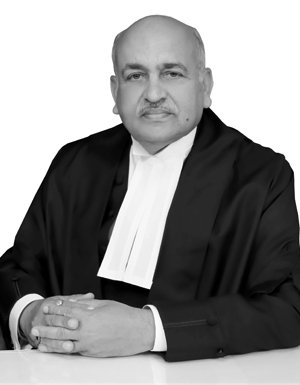

Legal Notes
Add a Note....