
As per case facts, the accused, N. Somashekar, was initially acquitted by the Trial Court for offenses including murder, but the High Court reversed this, convicting him under Section 304 ...

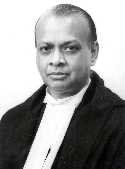
http://JUDIS.NIC.IN SUPREME COURT OF INDIA Page 1 of 5
CASE NO.:
Appeal (crl.) 1262 of 1997
PETITIONER:
N. Somashekar (Dead) by Lrs.
RESPONDENT:
State of Karnataka
DATE OF JUDGMENT: 06/05/2004
BENCH:
DORAISWAMY RAJU & ARIJIT PASAYAT.
JUDGMENT:
J U D G M E N T
ARIJIT PASAYAT, J.
One Somashekar (also described as 'accused') was
prosecuted for alleged commission of offences punishable
under Sections 341, 302, 201 and 506 of the Indian Penal
Code, 1860 (in short 'IPC'). He was acquitted by the
Trial Court. He was, however, convicted by the impugned
judgment by a Division Bench of the Karnataka High Court
by revision of the judgment of the Trial court. The High
Court held the accused guilty of offences punishable
under Section 304 (part II) and Section 201 IPC. For
the first offence the accused was sentenced to undergo
imprisonment for three years and a fine of Rs.1 lakh
with default stipulation. For the offence relating to
Section 201 IPC, one year rigorous imprisonment was
imposed. It was directed that in case the fine was
deposited the same was to be treated as compensation to
the mother of the deceased (PW 1). Said Somashekhar died
during pendency of the appeal before this Court. In his
place, his legal representatives have been impleaded.
The prosecution version is essentially as follows:
On 7.4.1991 in the afternoon, the accused along
with his wife Shamanthakamani and her two young sons had
come to the Lalitha Mahal swimming pool for a swim.
This swimming pool is attached to a posh five Star Hotel
known as Lalitha Mahal Palace Hotel, situate in Mysore.
When the accused came to the swimming pool, he noticed
that K. Sathyadev (hereinafter referred to as the
'deceased') was present in the swimming pool. Since the
deceased was an unauthorised user of the swimming pool,
the accused asked Swimming Attendant (PW-13) to remove
the said deceased Sathyadev, from the swimming pool.
After instructing PW-13 thus, the accused and his wife
went to the dressing room to change into their swimming
costumes. Shamanthakamani got into her swimming costume
and entered the swimming pool first. The accused also
came to the swimming pool in his swimming dress and he
noticed that the deceased was sniggering at his wife
Shamanthakamani. The accused abused the deceased and
gave three blows to the deceased. One blow landed on
the mouth, one blow on the shoulder and a third blow
which was given in Karate style landed on the left side
of neck of the deceased, who fell dead in the swimming
pool. PW-13 who was the swimming attendant rushed
towards the pool and wanted to save the deceased. The
http://JUDIS.NIC.IN SUPREME COURT OF INDIA Page 2 of 5
accused restrained him by holding his hand.
Subsequently, others brought the deceased out of the
swimming pool and placed him by the side of the swimming
pool. The deceased was dead when he was brought out of
the pool.
PW-34 was the Sub-Inspector of Police, Law and
Order, Nazarabad Police Station, Mysore. On 7.4.1991,
while he was at his residence, he got a message that
some person has been drowned in the Swimming Pool of the
hotel. He also received a message from the accused that
he should bring a life guard to the swimming pool. In
the meanwhile, the car of the accused also arrived at
the police station. The driver of the car one Chavan
told PW-34 that somebody had drowned in the swimming
pool. He went to a nearby Nursing Home and was not able
to find a doctor and, therefore, went in the accused's
car to bring a doctor, who was Dr. Vishnumurthy (PW-20).
PW-20 came in the accused's car to the swimming pool
followed by PW-34 in his Motorcycle. When PW-34 went to
the swimming pool, he saw the accused and his wife and
the children of the accused and PW-13 swimming pool
attendant. He also saw PW-27 and his son PW-29 near the
Swimming pool. He saw the deceased and noticed that he
had only an underwear on his body. The accused asked Dr.
Vishnumurty (PW-20) to examine the deceased. The sub-
Inspector (PW-34) reported before the accused at the
swimming pool. The accused told PW-34 in Kannada which
translated into English, reads as follows:-
"Look here, see some bastard has
fallen into the water and drowned. Take
the case as per Section 174 Cr.P.C. and
prepare inquest Panchanama".
PW-34 asked the accused who should give the
complaint. The accused retored as to why he was in such
a hurry and that Mrs. Mallik (PW-4), the Manager of the
Hotel would give the complaint. The accused told PW-34
to draw the inquest mahazar. In the meanwhile, apart
from Dr. Vishnumurty (PW-20), another doctor Dr. Ammanna
(not examined) came there. He also pronounced that the
deceased was dead. PW-34 wanted to ask the accused more
details about the incident. However, as the accused
started shouting at PW-34, he did not ask more
questions. PW-34 immediately drew the inquest mahazar.
According to PW-34, it was the accused, who dictated the
inquest mahazar. Even the statements that were recorded
during inquest, were done as per the directions of the
accused. PW-34 objected to the inquest being prepared
without the deceased being identified. The accused was
unrelenting. The accused directed that the inquest
report be prepared and the dead body be sent to the
mortuary and identification of the deceased be done on
the next day. Entire inquest on the dead body of
deceased was done as per the directions of the accused.
When the inquest report was being written, accused went
to the South of the Swimming pool and brought a pant, a
shirt and a pair of chappal kept near a chair. There was
a chit in the pant pocket identifying the deceased as
'Sathyadev' but without any address. However, there was
a tailor mark on the shirt collar which was noted by PW-
34. About that time, Dr. Shenoy (PW-32), also arrived on
the direction of the accused. He also examined the
deceased and pronounced the deceased dead. Accused
http://JUDIS.NIC.IN SUPREME COURT OF INDIA Page 3 of 5
specifically asked PW-34 that his presence or the
presence of his family members should not be shown at
the time of drawing of the inquest proceedings. Till the
completion of the inquest proceedings, accused remained
there and was giving 'directions and assistance'. It was
indeed the accused who brought a white cloth from the
hotel and wrapped the deceased and sent the dead body to
the mortuary for post mortem examination through PC 522.
The accused sent for PW-34 a little later from the
Manager's (PW-4) room. When PW-34 went there, he was
given a complaint. It contained Mrs. Mallik's (PW-4)
signature. On the basis of this complaint, PW-34
registered a U.D.R. case in Cr. No. 17/91 under Section
174 of the Code of Criminal Procedure, 1973 (in short
the 'Code').
On the basis of the challan, investigation was
undertaken and charge sheet was placed against the
accused for commission of offence punishable under
Sections 341, 302, 201 and 506 IPC. The accused pleaded
innocence and false implication at the behest of higher
officials. As noted earlier, the Trial court found the
accused innocent. In appeal, the High Court upset the
judgment of acquittal and directed conviction.
In support of the appeal, learned counsel submitted
that the Trial Court had found several infirmities in
the evidence tendered by the prosecution and had rightly
observed that the medical evidence clearly ruled out the
possibility of any assault having been done by the
accused. The case was one of dry drowning. The
possibility of the injuries having been sustained when
the dead body was being taken out, was not ruled out.
The stand was specifically taken that the death was due
to drowning which was probabilised by the evidence on
record. The doctor's evidence is unsustainable and the
fact that the evidence of some witnesses was recorded
under Section 164 of the Code shows that the prosecution
was trying to tie down the witnesses. The evidence of
so-called eye witness and the swimming coach (PW-13) was
not properly analysed.
The fact that the alleged complaint was recorded
much belatedly clearly indicates the prosecution's
effort to somehow implicate the accused who had fallen
from the grace of higher officials. In fact, the
Commissioner had obtained the complaint from the
deceased's mother i.e. PW-1. Though the incident took
place on 7.4.1991, practically nothing was done till
9.5.1991. Thereafter a different approach was adopted, a
second medical opinion was obtained and the appellant
was falsely implicated. The evidence of the child
witnesses which could not have been accepted as they are
not reliable witnesses because of their tender age was
accepted. Since the medical evidence and the ocular
evidence are at variance, the Trial Court was justified
in directing acquittal, while the High Court, without
taking note of the fact that the view taken by the Trial
Court was a possible view, erroneously directed
conviction.
In response, learned counsel for the State
submitted that the high police official had taken law
into his own hands, and strangely was directly
interfering with the investigation and even monitoring
http://JUDIS.NIC.IN SUPREME COURT OF INDIA Page 4 of 5
it. This itself shows the impropriety in the conduct of
the accused. The position that some of the officials
were showing partisan attitude is of significance,
because of diluting the evidence of the doctor by
seeking answers to hypothetical questions. The doctor's
evidence clearly substantiates the accusations. Presence
of the accused is accepted. The conduct of the accused
in not trying to save the deceased if he was really
drowning is significant. There is no embargo for
accepting the evidence of the child witness if found to
be credible and cogent. The acquittal recorded by the
Trial Court was based on surmises and conjectures and,
therefore, the High Court was justified in its decision.
It needs first to be noted that merely because the
statement of witnesses is recorded under Section 164 of
the Code that does not automatically dilute the worth of
his evidence. (See The State of Assam v. Jilkadar Ali
[AIR 1972 SC 2166] and in Vishwanath v. The State of
Uttar Pradesh [AIR 1960 SC 67]. There has been
sufficient explanation rendered as to why there was
delay in recording evidence. A high placed police
official was the accused and strangely, as noted above,
was participating and was associating himself with the
investigation. It is rather unusual that one of the
child witnesses was the son of one of the investigating
officers. The postmortem report of 8.4.1991 disclosed
commission of a cognizable offence. The distinction
between dry drowning and wet drowning is really of no
consequence, in view of the fact that the eye witness
version is credible and cogent. There is no reason as to
why PWs 28 and 29 would falsely implicate the accused.
It is on record that the accused was giving instructions
to Ganesh (PW-34) about the manner of recording the
inquest report. The evidence also shows that the blow
that was inflicted could cause the injury which is fatal
in the ordinary course of nature to cause death. Though
the scope for interference with the judgment of
acquittal is limited where the evidence has not been
properly analysed by the Trial Court and the conclusions
drawn are based on surmises and conjectures, it is not
only permissible but also desirable that the appellate
court should interfere with the order of acquittal. The
only criterion is that if the view taken by the Trial
Court is reasonable and possible view interference
should not be made. In the case at hand the evidence
clearly establishes that accused was the perpetrator of
the crime. The High Court was justified in directing
conviction and imposing sentence as noted above.
As noted supra, the appellant has died and his
legal representatives have been impleaded. Considering
this fact, which is of some relevance, we direct
reduction of fine to Rs. 50,000/-. The other directions
regarding disbursement as contained in the High Court's
order remain unaltered. In view of the death of the
accused, custodial sentence becomes unexecutable.
However, execution in accordance with law can be levied
by PW-1 if the fine amount is not deposited within four
months from today.
The appeal is accordingly finally disposed of.
http://JUDIS.NIC.IN SUPREME COURT OF INDIA Page 5 of 5

 Login with google
Legal Notes
Add a Note....