
As per case facts, the complainant filed a complaint against the accused, an insurance agent, alleging that the agent reduced the insurance value of his vehicle, leading to a loss. ...
( 2026:HHC:5594 )
IN THE HIGH COURT OF HIMACHAL PRADESH, SHIMLA
Criminal Revision No. 34 of 2024.
Reserved on: 24.02.2026.
Decided on: 05 March, 2026.
Nikka Ram .... Petitioner.
Versus
Padam Nath (since deceased) through his Lrs. & Anr.
...Respondents.
Coram:
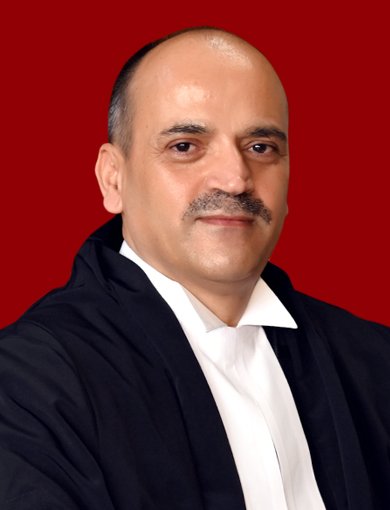
The Hon’ble Mr Justice Rakesh Kainthla, Judge.
Whether approved for reporting?
1
No.
For the Petitioner: Mr Pritam Singh Chandel,
Advocate.
For the Respondents: None for the LR-Kehar Chand
Mr Ajit Sharma, Dy. A.G., for
respondent No.2.
Rakesh Kainthla, Judge.
The present revision petition is directed against
the judgment passed by learned Additional Sessions Judge-I,
Mandi (learned Appellate Court) in Criminal Appeal No.
1
Whether reporters of the local papers may be allowed to see the judgment? Yes
2 ( 2026:HHC:5594 )
111/2023/20-22 on 15.12.2023 vide which the judgment of
conviction dated 02.07.2022 and the order of sentence dated
21.07.2022 passed by learned Judicial Magistrate 1
st
Class,
Karsog (learned trial Court) in Criminal Case No. 50 of 2017
were upheld. (The parties hereafter shall be referred to by the
same status as they held before the learned trial Court for the
sake of convenience).
2. Briefly stated, the facts giving rise to the present
revision petition are that the complainant filed a complaint
before the learned Trial Court against the accused for the
commission of an offence punishable under Section 138 of
the Negotiable Instruments Act (for short “N I Act”). It was
asserted that the accused was working as an insurance agent
of Oriental Insurance Company. He insured the
complainant’s vehicle bearing registration No. HP-65-2607;
however, he reduced the insurance value of the vehicle from
₹ 9,00,000/- to ₹ 80,000/-. The complainant had paid the full
amount to the accused, and the accused failed to insure the
3 ( 2026:HHC:5594 )
vehicle for its full value. The vehicle met with an accident. The
accused promised to pay ₹ 1,00,000/- to compensate the
complainant and issued a cheque to discharge his liability.
The complainant presented the cheque at Punjab National
Bank, but it was dishonoured with an endorsement
“insufficient funds”. The complainant issued a notice to the
accused asking him to repay the money within 15 days from
the date of receipt of the notice. The notice was duly served
upon the accused, but the accused failed to repay the
amount. Hence, a complaint was filed to take action against
the accused.
3. The learned Trial Court found sufficient reasons to
summon the accused for the commission of an offence
punishable under Section 138 of the N.I. Act. When the
accused appeared, a notice of accusation was put to him, to
which he pleaded not guilty and claimed to be tried.
4. The complainant examined himself (CW1) to prove
his complaint.
4 ( 2026:HHC:5594 )
5. Accused in his statement recorded under Section
313 of the Cr.P.C. admitted that he was working as an
insurance agent and he had insured the complainant’s bus
bearing registration No. HP-65-2607. He stated that the
amount might have been reduced from ₹ 9,00,000/-
to ₹ 80,000/- due to a typing mistake. He admitted that he
had entered into a compromise with the complainant to
compensate him, but claimed that the complainant had not
agreed to the compromise. He claimed that the complainant
had snatched the cheque from him, and he had reported the
matter to the police and the bank. He did not remember
whether the cheque was signed by him. He admitted that he
had received the notice. He stated that he was not liable to
pay ₹ 1,00,000/-. He examined HHC Ravinder Kumar (DW-1),
Smt. Rekha Sharma (DW-2), Mahender Lal Sharma (DW-3),
himself (DW-4) and Kaul Ram (DW-5) to prove his defence.
6. Learned Trial Court held that the accused
admitted his signature on the cheque, and a presumption
5 ( 2026:HHC:5594 )
arose that the cheque was issued in discharge of the
debt/liability. The burden shifted upon the accused to rebut
the presumption. The accused failed to rebut the
presumption. Mere registration of the report with the police
is not sufficient to rebut the presumption. Accused admitted
his liability to pay ₹ 1,00,000/- in his statement recorded
under Section 313 of the Cr.P.C. This admission corroborated
the complainant’s stand. The cheque was dishonoured with
an endorsement “insufficient funds”. The accused admitted
the receipt of notice. All the ingredients of the commission of
an offence punishable under Section 138 of the N I Act were
duly satisfied; hence, the learned Trial Court convicted the
accused for the commission of an offence punishable under
Section 138 of the N I Act and sentenced him to undergo
simple imprisonment for six months and pay compensation
of ₹ 1,50,000/-.
7. Being aggrieved by the judgment of conviction
and the order of sentence passed by the learned Trial Court,
6 ( 2026:HHC:5594 )
the accused filed an appeal, which was decided by the
learned Additional Sessions Judge-1, Mandi. Learned
Appellate Court concurred with the findings recorded by the
learned Trial Court that the issuance of the cheque was not
disputed. The cheque was given to the complainant by the
accused as per the compromise to compensate him (the
complainant) for the loss caused by the error of the accused.
The defence taken by the accused that he had no subsisting
liability to pay the amount to the complainant was not
probable. The cheque was dishonoured with an
endorsement “insufficient funds”. Notice was duly served
upon the accused, and he had not repaid the money. All the
ingredients of Section 138 of the NI Act were duly satisfied.
Learned Trial Court had rightly convicted the accused. There
was no error in the judgment and order; hence, the appeal
was dismissed.
8. Being aggrieved by the judgments and order
passed by the learned Courts below, the accused has filed the
7 ( 2026:HHC:5594 )
present petition asserting that the learned Courts below
failed to properly appreciate the material on record. There
was no proper service of notice upon the accused. The
vehicle was insured with the Oriental Insurance Company,
and the accused, being an agent, was not liable to pay any
money to the complainant. The cheque was issued without
any consideration. The complainant did not raise any
objection after the receipt of the policy, which falsifies the
plea taken by him that the amount was reduced by the
accused. Therefore, it was prayed that the present revision
be allowed and the judgments and order passed by the
learned Courts below be set aside.
9. I have heard Mr Pritam Singh Chandel, learned
counsel for the petitioner and Mr Ajit Sharma, learned Deputy
Advocate General for the respondent/State.
10. None had appeared on behalf of the legal
representative of the complainant on the date of the hearing,
and none could be heard on his behalf.
8 ( 2026:HHC:5594 )
11. Mr Pritam Singh Chandel, learned counsel for the
petitioner, submitted that the learned Courts below erred in
appreciating the material on record. The complainant had
failed to prove the existence of any debt/liability. The vehicle
was insured by the Oriental Insurance Company, and the
accused, being an agent, had no liability to pay compensation
to the complainant. The version of the accused that the
complainant had snatched the cheque was duly proved by
defence evidence. Therefore, he prayed that the present
revision petition be allowed and the impugned judgments
and order be set aside.
12. Mr Ajit Sharma, learned Deputy Advocate General,
has submitted that the dispute is between the private parties
and the State has nothing to say in the matter.
13. I have given considerable thought to the
submissions made at the bar and have gone through the
records carefully.
9 ( 2026:HHC:5594 )
14. It was laid down by the Hon’ble Supreme Court in
Malkeet Singh Gill v. State of Chhattisgarh, (2022) 8 SCC 204:
(2022) 3 SCC (Cri) 348: 2022 SCC OnLine SC 786 that a
revisional court is not an appellate court and it can only
rectify the patent defect, errors of jurisdiction or the law. It
was observed at page 207-
“10. Before adverting to the merits of the contentions,
at the outset, it is apt to mention that there are
concurrent findings of conviction arrived at by two
courts after a detailed appreciation of the material and
evidence brought on record. The High Court in criminal
revision against conviction is not supposed to exercise
the jurisdiction like the appellate court, and the scope
of interference in revision is extremely narrow. Section
397 of the Criminal Procedure Code (in short “CrPC”)
vests jurisdiction to satisfy itself or himself as to the
correctness, legality or propriety of any finding,
sentence or order, recorded or passed, and as to the
regularity of any proceedings of such inferior court.
The object of the provision is to set right a patent
defect or an error of jurisdiction or law. There has to
be a well-founded error which is to be determined on
the merits of individual cases. It is also well settled that
while considering the same, the Revisional Court does
not dwell at length upon the facts and evidence of the
case to reverse those findings.
10 ( 2026:HHC:5594 )
15. This position was reiterated in State of Gujarat v.
Dilipsinh Kishorsinh Rao, (2023) 17 SCC 688: 2023 SCC OnLine
SC 1294, wherein it was observed at page 695:
“14. The power and jurisdiction of the Higher Court
under Section 397 CrPC, which vests the court with the
power to call for and examine records of an inferior
court, is for the purposes of satisfying itself as to the
legality and regularities of any proceeding or order
made in a case. The object of this provision is to set
right a patent defect or an error of jurisdiction or law
or the perversity which has crept in such proceedings.
15. It would be apposite to refer to the judgment of
this Court in Amit Kapoor v. Ramesh Chander [Amit
Kapoor v. Ramesh Chander, (2012) 9 SCC 460: (2012) 4
SCC (Civ) 687: (2013) 1 SCC (Cri) 986], where scope of
Section 397 has been considered and succinctly
explained as under: (SCC p. 475, paras 12-13)
“12. Section 397 of the Code vests the court with
the power to call for and examine the records of
an inferior court for the purposes of satisfying
itself as to the legality and regularity of any
proceedings or order made in a case. The object
of this provision is to set right a patent defect or
an error of jurisdiction or law. There has to be a
well-founded error, and it may not be
appropriate for the court to scrutinise the
orders, which, upon the face of it, bear a token
of careful consideration and appear to be in
accordance with law. If one looks into the
various judgments of this Court, it emerges that
11 ( 2026:HHC:5594 )
the revisional jurisdiction can be invoked where
the decisions under challenge are grossly
erroneous, there is no compliance with the
provisions of law, the finding recorded is based
on no evidence, material evidence is ignored, or
judicial discretion is exercised arbitrarily or
perversely. These are not exhaustive classes, but
are merely indicative. Each case would have to
be determined on its own merits.
13. Another well-accepted norm is that the
revisional jurisdiction of the higher court is a
very limited one and cannot be exercised in a
routine manner. One of the inbuilt restrictions is
that it should not be against an interim or
interlocutory order. The Court has to keep in
mind that the exercise of revisional jurisdiction
itself should not lead to injustice ex facie. Where
the Court is dealing with the question as to
whether the charge has been framed properly
and in accordance with law in a given case, it
may be reluctant to interfere in the exercise of
its revisional jurisdiction unless the case
substantially falls within the categories
aforestated. Even the framing of the charge is a
much-advanced stage in the proceedings under
CrPC.”
16. It was held in Kishan Rao v. Shankargouda, (2018)
8 SCC 165: (2018) 3 SCC (Cri) 544: (2018) 4 SCC (Civ) 37: 2018
SCC OnLine SC 651 that it is impermissible for the High Court
12 ( 2026:HHC:5594 )
to reappreciate the evidence and come to its conclusions in
the absence of any perversity. It was observed at page 169:
“12. This Court has time and again examined the scope
of Sections 397/401 CrPC and the grounds for
exercising the revisional jurisdiction by the High Court.
In State of Kerala v. Puttumana Illath Jathavedan
Namboodiri, (1999) 2 SCC 452: 1999 SCC (Cri) 275],
while considering the scope of the revisional
jurisdiction of the High Court, this Court has laid down
the following: (SCC pp. 454-55, para 5)
5. … In its revisional jurisdiction, the High Court
can call for and examine the record of any
proceedings to satisfy itself as to the
correctness, legality or propriety of any finding,
sentence or order. In other words, the
jurisdiction is one of supervisory jurisdiction
exercised by the High Court for correcting a
miscarriage of justice. But the said revisional
power cannot be equated with the power of an
appellate court, nor can it be treated even as a
second appellate jurisdiction. Ordinarily,
therefore, it would not be appropriate for the
High Court to reappreciate the evidence and
come to its conclusion on the same when the
evidence has already been appreciated by the
Magistrate as well as the Sessions Judge in
appeal, unless any glaring feature is brought to
the notice of the High Court which would
otherwise amount to a gross miscarriage of
justice. On scrutinising the impugned judgment
of the High Court from the aforesaid standpoint,
13 ( 2026:HHC:5594 )
we have no hesitation in concluding that the
High Court exceeded its jurisdiction in
interfering with the conviction of the respondent
by reappreciating the oral evidence. …”
13. Another judgment which has also been referred to
and relied on by the High Court is the judgment of this
Court in Sanjaysinh Ramrao Chavan v. Dattatray
Gulabrao Phalke, (2015) 3 SCC 123: (2015) 2 SCC (Cri)
19]. This Court held that the High Court, in the exercise
of revisional jurisdiction, shall not interfere with the
order of the Magistrate unless it is perverse or wholly
unreasonable or there is non-consideration of any
relevant material, the order cannot be set aside merely
on the ground that another view is possible. The
following has been laid down in para 14: (SCC p. 135)
“14. … Unless the order passed by the Magistrate
is perverse or the view taken by the court is
wholly unreasonable or there is non-
consideration of any relevant material or there is
palpable misreading of records, the Revisional
Court is not justified in setting aside the order,
merely because another view is possible. The
Revisional Court is not meant to act as an
appellate court. The whole purpose of the
revisional jurisdiction is to preserve the power in
the court to do justice in accordance with the
principles of criminal jurisprudence. The
revisional power of the court under Sections 397
to 401 CrPC is not to be equated with that of an
appeal. Unless the finding of the court, whose
decision is sought to be revised, is shown to be
perverse or untenable in law or is grossly
erroneous or glaringly unreasonable or where
14 ( 2026:HHC:5594 )
the decision is based on no material or where
the material facts are wholly ignored or where
the judicial discretion is exercised arbitrarily or
capriciously, the courts may not interfere with
the decision in exercise of their revisional
jurisdiction.”
17. This position was reiterated in Bir Singh v. Mukesh
Kumar, (2019) 4 SCC 197: (2019) 2 SCC (Cri) 40: (2019) 2 SCC
(Civ) 309: 2019 SCC OnLine SC 13, wherein it was observed at
page 205:
“16. It is well settled that in the exercise of revisional
jurisdiction under Section 482 of the Criminal
Procedure Code, the High Court does not, in the
absence of perversity, upset concurrent factual
findings. It is not for the Revisional Court to re-analyse
and re-interpret the evidence on record.
17. As held by this Court in Southern Sales & Services v.
Sauermilch Design and Handels GmbH, (2008) 14 SCC
457, it is a well-established principle of law that the
Revisional Court will not interfere even if a wrong
order is passed by a court having jurisdiction, in the
absence of a jurisdictional error. The answer to the
first question is, therefore, in the negative.”
18. The present revision has to be decided as per the
parameters laid down by the Hon’ble Supreme Court.
15 ( 2026:HHC:5594 )
19. The ingredients of an offence punishable under
Section 138 of the NI Act were explained by the Hon’ble
Supreme Court in Kaveri Plastics v. Mahdoom Bawa
Bahrudeen Noorul, 2025 SCC OnLine SC 2019 as under: -
“5.1.1. In K.R. Indira v. Dr. G. Adinarayana (2003) 8
SCC 300, this Court enlisted the components,
aspects and the acts, the concatenation of which
would make the offence under Section 138 of the
Act complete, to be these (i) drawing of the cheque
by a person on an account maintained by him with
a banker, for payment to another person from out
of that account for discharge in whole/in part of
any debt or liability, (ii) presentation of the cheque
by the payee or the holder in due course to the
bank, (iii) returning the cheque unpaid by the
drawee bank for want of sufficient funds to the
credit of the drawer or any arrangement with the
banker to pay the sum covered by the cheque, (iv)
giving notice in writing to the drawer of the cheque
within 15 days of the receipt of information by the
payee from the bank regarding the return of the
cheque as unpaid demanding payment of the
cheque amount, and (v) failure of the drawer to
make payment to the payee or the holder in due
course of the cheque, of the amount covered by
the cheque within 15 days of the receipt of the
notice.”
16 ( 2026:HHC:5594 )
20. Accused admitted while appearing as DW-4 that
the cheque (Ex.CW1/A) contained his signature inside the
circle “A”, and it was issued for ₹ 1,00,000/-. It was laid down
by the Hon'ble Supreme Court in APS Forex Services (P) Ltd. v.
Shakti International Fashion Linkers (2020) 12 SCC 724, that
when the issuance of a cheque and signature on the cheque
are not disputed, a presumption would arise that the cheque
was issued in discharge of the legal liability. It was observed: -
“9. Coming back to the facts in the present case and
considering the fact that the accused has admitted the
issuance of the cheques and his signature on the
cheque and that the cheque in question was issued for
the second time after the earlier cheques were
dishonoured and that even according to the accused
some amount was due and payable, there is a
presumption under Section 139 of the NI Act that there
exists a legally enforceable debt or liability. Of course,
such a presumption is rebuttable. However, to rebut
the presumption, the accused was required to lead
evidence that the full amount due and payable to the
complainant had been paid. In the present case, no
such evidence has been led by the accused. The story
put forward by the accused that the cheques were
given by way of security is not believable in the
absence of further evidence to rebut the presumption,
and more particularly, the cheque in question was
17 ( 2026:HHC:5594 )
issued for the second time after the earlier cheques
were dishonoured. Therefore, both the courts below
have materially erred in not properly appreciating and
considering the presumption in favour of the
complainant that there exists a legally enforceable
debt or liability as per Section 139 of the NI Act. It
appears that both the learned trial court as well as the
High Court have committed an error in shifting the
burden upon the complainant to prove the debt or
liability, without appreciating the presumption under
Section 139 of the NI Act. As observed above, Section
139 of the Act is an example of reverse onus clause
and therefore, once the issuance of the cheque has
been admitted and even the signature on the cheque
has been admitted, there is always a presumption in
favour of the complainant that there exists legally
enforceable debt or liability and thereafter, it is for the
accused to rebut such presumption by leading
evidence.”
21. It was laid down in N. Vijay Kumar v. Vishwanath
Rao N., 2025 SCC OnLine SC 873, wherein it was held as under:
“6. Section 118 (a) assumes that every negotiable
instrument is made or drawn for consideration, while
Section 139 creates a presumption that the holder of a
cheque has received the cheque in discharge of a debt
or liability. Presumptions under both are rebuttable,
meaning they can be rebutted by the accused by
raising a probable defence.”
22. A similar view was taken in Sanjabij Tari v. Kishore
S. Borcar, 2025 SCC OnLine SC 2069, wherein it was observed:
18 ( 2026:HHC:5594 )
“ONCE EXECUTION OF A CHEQUE IS ADMITTED,
PRESUMPTIONS UNDER SECTIONS 118 AND 139 OF THE NI
ACT ARISE
15. In the present case, the cheque in question has
admittedly been signed by the Respondent No. 1-
Accused. This Court is of the view that once the
execution of the cheque is admitted, the presumption
under Section 118 of the NI Act that the cheque in
question was drawn for consideration and the
presumption under Section 139 of the NI Act that the
holder of the cheque received the said cheque in
discharge of a legally enforceable debt or liability
arises against the accused. It is pertinent to mention
that observations to the contrary by a two-Judge Bench
in Krishna Janardhan Bhat v. Dattatraya G. Hegde,
(2008) 4 SCC 54, have been set aside by a three-Judge
Bench in Rangappa (supra).
16. This Court is further of the view that by creating
this presumption, the law reinforces the reliability of
cheques as a mode of payment in commercial
transactions.
17. Needless to mention that the presumption
contemplated under Section 139 of the NI Act is
rebuttable. However, the initial onus of proving that
the cheque is not in discharge of any debt or other
liability is on the accused/drawer of the cheque [See:
Bir Singh v. Mukesh Kumar, (2019) 4 SCC 197].
23. Thus, learned Courts below had rightly held that a
presumption would apply that the cheque was issued for
consideration to discharge the debt/liability.
19 ( 2026:HHC:5594 )
24. The accused admitted in his cross-examination
that he used to get the complainant’s vehicle insured for
many years. He stated in his statement recorded under
Section 313 of the Cr.P.C. that he had insured the
complainant’s vehicle bearing registration No. HP-65-2607.
He stated that the amount might have been reduced from
₹ 9,00,000/- to ₹ 80,000/- due to a typing mistake. He
admitted that he had agreed to compensate the complainant
by paying him ₹ 1,00,000/-. It was laid down by the Hon'ble
Supreme Court in State of Maharashtra v. Sukhdev Singh,
(1992) 3 SCC 700: 1992 SCC (Cri) 705: 1992 SCC OnLine SC 421
that the Courts can rely upon the statement of the accused
recorded under Section 313 of the Cr.P.C. It was observed at
page 742:
“51. That brings us to the question of whether such a
statement recorded under Section 313 of the Code can
constitute the sole basis for conviction. Since no oath is
administered to the accused, the statements made by
the accused will not be evidence stricto sensu. That is
why sub-section (3) says that the accused shall not
20 ( 2026:HHC:5594 )
render himself liable to punishment if he gives false
answers. Then comes sub-section (4), which reads:
“313. (4) The answers given by the accused may
be taken into consideration in such inquiry or
trial, and put in evidence for or against him in
any other inquiry into, or trial for, any other
offence which such answers may tend to show
he has committed.”
Thus, the answers given by the accused in response to
his examination under Section 313 can be taken into
consideration in such an inquiry or trial. This much is
clear on a plain reading of the above sub-section.
Therefore, though not strictly evidence, sub-section (4)
permits that it may be taken into consideration in the
said inquiry or trial. See State of Maharashtra v. R.B.
Chowdhari (1967) 3 SCR 708: AIR 1968 SC 110: 1968 Cri
LJ 95. This Court, in the case of Hate Singh Bhagat
Singh v. State of M.B. 1951 SCC 1060: 1953 Cri LJ 1933:
AIR 1953 SC 468, held that an answer given by an
accused under Section 313 examination can be used
for proving his guilt as much as the evidence given by a
prosecution witness. In Narain Singh v. State of Punjab
(1963) 3 SCR 678: (1964) 1 Cri LJ 730, this Court held that
if the accused confesses to the commission of the
offence with which he is charged, the Court may,
relying upon that confession, proceed to convict him.
To state the exact language in which the three-Judge
bench answered the question, it would be
advantageous to reproduce the relevant observations
at pages 684-685:
“Under Section 342 of the Code of Criminal
Procedure by the first sub-section, insofar as it is
21 ( 2026:HHC:5594 )
material, the Court may at any stage of the
enquiry or trial and after the witnesses for the
prosecution have been examined and before the
accused is called upon for his defence shall put
questions to the accused person for the purpose
of enabling him to explain any circumstance
appearing in the evidence against him.
Examination under Section 342 is primarily to be
directed to those matters on which evidence has
been led for the prosecution to ascertain from
the accused his version or explanation, if any, of
the incident which forms the subject-matter of
the charge and his defence. By sub-section (3),
the answers given by the accused may ‘be taken
into consideration’ at the enquiry or the trial. If
the accused person in his examination under
Section 342 confesses to the commission of the
offence charged against him the court may, relying
upon that confession, proceed to convict him, but if
he does not confess and in explaining
circumstance appearing in the evidence against
him sets up his own version and seeks to explain
his conduct pleading that he has committed no
offence, the statement of the accused can only
be taken into consideration in its entirety.”
(emphasis supplied)
Sub-section (1) of Section 313 corresponds to sub-
section (1) of Section 342 of the old Code, except that it
now stands bifurcated in two parts with the proviso
added thereto clarifying that in summons cases where
the presence of the accused is dispensed with, his
examination under clause (b) may also be dispensed
with. Sub-section (2) of Section 313 reproduces the old
22 ( 2026:HHC:5594 )
sub-section (4), asd the present sub-section (3)
corresponds to the old sub-section (2) except for the
change necessitated on account of the abolition of the
jury system. The present sub-section (4) with which we
are concerned is a verbatim reproduction of the old
sub-section (3). Therefore, the aforestated observations
apply with equal force.”
25. It was laid down by the Hon’ble Supreme Court in
Mohan Singh v. Prem Singh, (2002) 10 SCC 236: 2003 SCC (Cri)
1514: 2002 SCC OnLine SC 933, that the statement made by
the accused under Section 313 Cr.P.C. can be used to lend
credence to the evidence led by the prosecution, but such
statement cannot form the sole basis for conviction. It was
observed at page 244:
27. The statement made in defence by the accused
under Section 313 CrPC can certainly be taken aid of to
lend credence to the evidence led by the prosecution,
but only a part of such statement under Section 313 of
the Code of Criminal Procedure cannot be made the
sole basis of his conviction. The law on the subject is
almost settled that the statement under Section 313
CrPC of the accused can either be relied on in whole or
in part. It may also be possible to rely on the inculpatory
part of his statement if the exculpatory part is found to
be false on the basis of the evidence led by the
prosecution. See Nishi Kant Jha v. State of Bihar (1969)
1 SCC 347: AIR 1969 SC 422: (SCC pp. 357-58, para 23)
23 ( 2026:HHC:5594 )
“23. In this case, the exculpatory part of the
statement in Exhibit 6 is not only inherently
improbable but is contradicted by the other
evidence. According to this statement, the injury
that the appellant received was caused by the
appellant's attempt to catch hold of the hand of
Lal Mohan Sharma to prevent the attack on the
victim. This was contradicted by the statement of
the accused himself under Section 342 CrPC to the
effect that he had received the injury in a scuffle
with a herdsman. The injury found on his body
when he was examined by the doctor on 13-10-
1961, negatives of both these versions. Neither of
these versions accounts for the profuse bleeding
which led to his washing his clothes and having a
bath in River Patro, the amount of bleeding and
the washing of the bloodstains being so
considerable as to attract the attention of Ram
Kishore Pandey, PW 17 and asking him about the
cause thereof. The bleeding was not a simple one
as his clothes all got stained with blood, as also his
books, his exercise book, his belt and his shoes.
More than that, the knife which was discovered on
his person was found to have been stained with
blood according to the report of the Chemical
Examiner. According to the post-mortem report,
this knife could have been the cause of the injuries
on the victim. In circumstances like these, there
being enough evidence to reject the exculpatory part
of the statement of the appellant in Exhibit 6, the
High Court had acted rightly in accepting the
inculpatory part and piercing the same with the
other evidence to come to the conclusion that the
24 ( 2026:HHC:5594 )
appellant was the person responsible for the crime.”
(emphasis supplied)
26. It was laid down in Ramnaresh v. State of
Chhattisgarh, (2012) 4 SCC 257: (2012) 2 SCC (Cri) 382: 2012
SCC OnLine SC 213, that the statement of the accused under
Section 313 Cr.P.C., insofar as it supports the prosecution’s
case, can be used against him for recording a conviction. It
was observed at page 275: -
“52. It is a settled principle of law that the obligation to
put material evidence to the accused under Section
313 CrPC is upon the court. One of the main objects of
recording a statement under this provision of the CrPC
is to give an opportunity to the accused to explain the
circumstances appearing against him as well as to put
forward his defence, if the accused so desires. But
once he does not avail this opportunity, then
consequences in law must follow. Where the accused
takes benefit of this opportunity, then his statement
made under Section 313 CrPC, insofar as it supports
the case of the prosecution, can be used against him
for rendering a conviction. Even under the latter, he
faces the consequences in law.”
27. This position was reiterated in Ashok Debbarma v.
State of Tripura, (2014) 4 SCC 747: (2014) 2 SCC (Cri) 417: 2014
SCC OnLine SC 199, and it was held that the statement of the
25 ( 2026:HHC:5594 )
accused recorded under Section 313 of the Cr.P.C. can be
used to lend corroboration to the statements of prosecution
witnesses. It was held at page 761: -
24. We are of the view that, under Section 313
statement, if the accused admits that, from the
evidence of various witnesses, four persons sustained
severe bullet injuries by the firing by the accused and
his associates, that admission of guilt in Section 313
statement cannot be brushed aside. This Court in
State of Maharashtra v. Sukhdev Singh [(1992) 3 SCC
700: 1992 SCC (Cri) 705 held that since no oath is
administered to the accused, the statement made by
the accused under Section 313 CrPC will not be
evidence stricto sensu and the accused, of course,
shall not render himself liable to punishment merely
on the basis of answers given while he was being
examined under Section 313 CrPC. But, sub-section
(4) says that the answers given by the accused in
response to his examination under Section 313 CrPC
can be taken into consideration in such an inquiry or
trial. This Court in Hate Singh Bhagat Singh v. State of
Madhya Bharat, 1951 SCC 1060: AIR 1953 SC 468: 1953
Cri LJ 1933 held that the answers given by the
accused under Section 313 examination can be used
for proving his guilt as much as the evidence given by
the prosecution witness. In Narain Singh v. State of
Punjab (1964) 1 Cri LJ 730: (1963) 3 SCR 678, this Court
held that when the accused confesses to the
commission of the offence with which he is charged,
26 ( 2026:HHC:5594 )
the court may rely upon the confession and proceed
to convict him.
25. This Court in Mohan Singh v. Prem Singh (2002) 10
SCC 236: 2003 SCC (Cri) 1514 held that: (SCC p. 244,
para 27)
“27. The statement made in defence by the
accused under Section 313 CrPC can certainly be
taken aid of to lend credence to the evidence led
by the prosecution, but only a part of such
statement under Section 313 CrPC cannot be
made the sole basis of his conviction.”
In this connection, reference may also be made to the
judgments of this Court in Devender Kumar Singla v.
Baldev Krishan Singla (2005) 9 SCC 15: 2005 SCC (Cri)
1185 and Bishnu Prasad Sinha v. State of Assam
(2007) 11 SCC 467: (2008) 1 SCC (Cri) 766 . The
abovementioned decisions would indicate that the
statement of the accused under Section 313 CrPC for
the admission of his guilt or confession as such
cannot be made the sole basis for finding the accused
guilty, the reason being he is not making the
statement on oath, but all the same the confession or
admission of guilt can be taken as a piece of evidence
since the same lends credence to the evidence led by
the prosecution.
26. We may, however, indicate that the answers given
by the accused while examining him under Section
313, fully corroborate the evidence of PW 10 and PW
13 and hence the offences levelled against the
appellant stand proved and the trial court and the
High Court have rightly found him guilty for the
offences under Sections 326, 436 and 302 read with
Section 34 IPC.”
27 ( 2026:HHC:5594 )
28. The answers given by the accused in his statement
recorded under Section 313 of the Cr.P.C. corroborate the
complainant’s version.
29. Smt. Rekha Sharma (DW-2) admitted in her cross-
examination that the complainant's vehicle was insured with
Oriental Insurance Company and the complainant had agreed
not to file any case regarding the compensation. She
admitted that the cheque was handedover by the accused to
the complainant in her presence to compensate the
complainant for the loss of the insurance. Sh. Mahender Lal
Sharma (DW-3) stated in his examination-in-chief that the
complainant had agreed not to file any claim against the
company. He admitted in his cross-examination that an
agreement was executed regarding the claim of the vehicle.
The accused made a report (Ex.DW1/A) to the police, stating
that he had issued a cheque in favour of the complainant, but
the complainant refused to acknowledge the compromise,
and he (the complainant) should be directed to return the
28 ( 2026:HHC:5594 )
cheque. Thus, the evidence on record proved that the
accused had agreed to compensate the complainant for his
loss, and the complainant had agreed not to sue the
insurance company.
30. It was submitted that the accused was an agent of
the insurance company, and he was not liable to pay any
money to the complainant. This submission will not help the
accused. The insured value of the vehicle was reduced by the
accused, which caused loss to the complainant. The accused
agreed to compensate the complainant for the loss caused by
his act. Therefore, the agreement between the complainant
and the accused was independent of the insurance
agreement between the complainant and the insurance
company. Hence, the plea that the accused was not liable to
pay anything to the complainant is not acceptable.
31. The accused claimed that the complainant had
snatched the cheque from him. This claim cannot be
accepted. The report (Ex. DW-1/A) nowhere mentions that the
29 ( 2026:HHC:5594 )
complainant had snatched the cheque from the accused;
rather, it mentions that the cheque was given to the accused
pursuant to the compromise. Hence, the plea that the
complainant had snatched the cheque from the accused was
rightly rejected by the learned Courts below.
32. Therefore, the learned Courts below had rightly
held that the accused had failed to rebut the presumption
attached to the cheque that it was issued for consideration in
discharge of the liability, and there is no infirmity in the
findings recorded by the learned Courts below.
33. Kaul Ram (DW-5) admitted in his cross-
examination that the cheque was dishonoured with an
endorsement “insufficient funds” vide memo (Ex. CW1/B).
Therefore, it was duly proved that the cheque was
dishonoured because of insufficient funds.
34. Accused Nikka Ram (DW-4) admitted in his cross-
examination that the complainant had served notice
(Ex.CW2/B) upon him. He voluntarily stated that he had issued
30 ( 2026:HHC:5594 )
a reply. Thus, the service of the notice was not disputed, and
the plea that the notice was not served upon the accused is
not acceptable.
35. The accused did not claim that any money was
paid to the complainant after receipt of notice.
36. Hence, it was duly proved that the accused had
issued the cheque for the discharge of his liability, which was
dishonoured, and the accused has failed to discharge his
liability despite the service of the notice. Hence, all the
ingredients of the commission of an offence punishable
under Section 138 of the N I Act were duly satisfied, and there
is no infirmity in the judgment convicting the accused for the
commission of an offence punishable under Section 138 of
the N I Act.
37. The learned Trial Court sentenced the accused to
undergo simple imprisonment for six months and to pay
compensation of ₹1,50,000/-. It was laid down by the Hon’ble
Supreme Court in Bir Singh v. Mukesh Kumar, (2019) 4 SCC
31 ( 2026:HHC:5594 )
197: (2019) 2 SCC (Cri) 40: (2019) 2 SCC (Civ) 309: 2019 SCC
OnLine SC 138 that the penal provisions of Section 138 of NI
Act is deterrent in nature. It was observed at page 203:
“6. The object of Section 138 of the Negotiable
Instruments Act is to infuse credibility into negotiable
instruments, including cheques, and to encourage and
promote the use of negotiable instruments, including
cheques, in financial transactions. The penal provision
of Section 138 of the Negotiable Instruments Act is
intended to be a deterrent to callous issuance of
negotiable instruments such as cheques without
serious intention to honour the promise implicit in the
issuance of the same.”
38. Keeping in view the deterrent nature of the
punishment, the sentence of six months cannot be said to be
excessive.
39. Learned trial Court awarded compensation of
₹1,50,000/- on 21.07.2022. The cheque was issued on
10.12.2016. Thus, the compensation was awarded after a
lapse of 5 ½ years. It was laid down by the Hon’ble Supreme
Court in Kalamani Tex v. P. Balasubramanian, (2021) 5 SCC 283:
(2021) 3 SCC (Civ) 25: (2021) 2 SCC (Cri) 555: 2021 SCC OnLine SC 75
32 ( 2026:HHC:5594 )
that the Courts should uniformly levy a fine up to twice the cheque
amount along with simple interest at the rate of 9% per annum. It
was observed at page 291: -
“19. As regards the claim of compensation raised on
behalf of the respondent, we are conscious of the
settled principles that the object of Chapter XVII of NIA
is not only punitive but also compensatory and
restitutive. The provisions of NIA envision a single
window for criminal liability for the dishonour of a
cheque as well as civil liability for the realisation of the
cheque amount. It is also well settled that there needs
to be a consistent approach towards awarding
compensation, and unless there exist special
circumstances, the courts should uniformly levy fines
up to twice the cheque amount along with simple
interest @ 9% p.a. [R. Vijayan v. Baby, (2012) 1 SCC
260, para 20: (2012) 1 SCC (Civ) 79: (2012) 1 SCC (Cri)
520]”
40. The cheque was issued for ₹ 1,00,000/- and
compensation of ₹1,50,000/-. It means that only ₹50,000/-
was awarded towards interest and litigation expenses, which
cannot be said to be excessive, requiring any interference
from this Court.
41. No other point was urged.
33 ( 2026:HHC:5594 )
42. In view of the above, the present revision petition
fails, and the same is dismissed, so are the pending
applications, if any.
43. Records be sent back forthwith.
(Rakesh Kainthla)
Judge
05 March, 2026.
(jai)

 Login with google
Legal Notes
Add a Note....