
As per the case facts, the appellant was accused of murder and conspiracy, and subsequently convicted by the trial court, a decision affirmed by the High Court. The appellant appealed ...
1
REPORTABLE
IN THE SUPREME COURT OF INDIA
CRIMINAL APPELLATE JURISDICTION
CRIMINAL APPEAL NO.1304 OF 2018
PRADEEP KUMAR ...APPELLANT
VERSUS
STATE OF CHHATTISGARH ...RESPONDENT
JUDGMENT
SANJAY KAROL, J.
1.On 01.10.2003, Umesh Chowdhary, a resident of village
Chitarpur falling within the territorial limits of Police
Station Dhaurpur District was allegedly murdered by
accused Pradeep Kumar (Appellant No. 2 in CRA No.940 of
2004) before the High Court Chhattisgarh, Bilaspur and
2
Bhainsa alias Nandlal (Appellant No.1. before the High
Court in the very same appeal) in relation to which FIR
No.126/03 (Ex.P-6) was registered at Police Station
Dhaurpur.
2.On 02.10.2003, Investigation Officer, I. Tirkey (PW-19)
commenced investigation and after verifying the place of
occurrence sent the dead body for post-mortem analysis
which was conducted by Dr. Kamlesh Kumar (PW-14) in
terms of his report (Ex.P-10). Investigation revealed that the
crime was committed on account of animosity which the
Appellant was harbouring against the deceased. The motive
being the former’s desire to use the shop in possession of
the deceased in village Chitarpur.
3.The Trial Court, based on the extra judicial confessional
statement (Ex.P-11) of accused Pradeep Kumar made in the
presence of Ramkripal Soni (PW-1) and Gopal Yadav (PW-7),
the depositions of Gajadhar Chowdhary (PW-10) father of
the deceased, co-villagers Sirodh (PW-6), Radhika (PW-13)
3
wife of (PW-7), all establishing the factum of prior
animosity/“tension” inter se the parties; and with the
addition of the police recovered keys of the shop of the
deceased and his currency notes amounting to Rs.300/-
from the possession of the Appellant. The Court convicted
both the accused in relation to offences punishable under
Section 302/34 IPC and 201/34 IPC and sentenced them to
serve imprisonment for life and pay fine of Rs.500/- in
relation to the offence under Section 302/34 as also suffer
imprisonment for seven years and pay fine of Rs.500/- in
respect of the offence punishable under Section 201 IPC.
4.The Trial Court found the testimonies of both PW-1 and
PW-7 reliable (despite PW-1 not supporting the prosecution)
and the prosecution to have established the factum of
accused Pradeep Kumar having confessed his guilt before
the Investigation Officer (PW-19). The Ld. Trial Court also
found the recovery of articles seized as a result of the
disclosure of statement, to be an additional link, as a chain
of events, in support of the case set up by the prosecution.
4
5.However in an appeal preferred by both the accused, the
High Court upheld the conviction of accused Pradeep
Kumar in relation to all the offences and the sentences in
terms thereunder, but acquitted accused Bhainsa alias
Nandlal on all counts.
6.Hence, the present appeal filed by the Appellant – accused
Pradeep Kumar. Significantly, none of the Courts below have
returned finding to the effect that the guilt of the accused
stands proven by the prosecution, beyond reasonable doubt.
Suspicion, howsoever grave or probable it may be, cannot
substitute the evidence, be it circumstantial or direct in
nature, in establishing the guilt of the accused beyond
reasonable doubt, the onus of which, at the first instance, is
to be discharged by the prosecution. The distance between
“may be” and “must be” is quite large and it divides vague
conjectures from solid conclusions. [Shivaji Sahabrao
Bobade & Another v. State of Maharashtra, (1973) 2 SCC
793.]
5
7.The High Court, by relying upon the principles of law
enunciated by the Apex Court in Hari Charan Kurmi vs
State Of Bihar, AIR 1964 SC 1184 , to the effect that
confession of a co-accused being inculpatory in nature,
cannot be used against the accused, acquitted Bhainsa
alias Nandlal.
8.However, in so far as accused Pradeep Kumar is concerned
the Court found testimonies of (PW-1) and (PW-7) to be
absolutely inspiring in confidence and that the witnesses
“being independent and disinterested”, having no reason to
“manufacture evidence”, “falsely implicating” the accused.
Further, the High Court held that the defence was not able
to show that the extra-judicial confession made by Pradeep
Kumar (Appellant No.2) before the said witnesses was
“involuntary” or “made on account of any coercion”,
“inducement”, “promise” or “favour”. The Court below also
held that there is no reason “whatsoever” to disbelieve the
testimonies of PW-1 & PW-7 qua the issue of extrajudicial
confession.
6
9.The accused cannot be convicted on the principles of
preponderance of probability. It is the duty of this Court to
ensure avoidance of miscarriage of justice at all costs and
the benefit of doubt, if any, given to the accused. [Sujit
Biswas v. State of Assam, (2013) 12 SCC 406,
Hanumant Govind Nargundkar v. State of M.P. (AIR 1952
SC 343) and State v. Mahender Singh Dahiya, (2011) 3
SCC 109].
10.The impugned judgement to say the least, is sketchy. The
presumption of the guilt of accused Pradeep Kumar by both
the courts below is based on improper and incomplete
appreciation of evidence which in the considered view of
this Court, has resulted into travesty of justice.
11.The prosecution case, at best, rests upon three
circumstances (a) the alleged confessional statement of
accused Pradeep Kumar made before PW-1 and PW-7; (b)
prior animosity/“tension” between Pradeep Kumar and the
deceased; and (c) the recovery of the keys of the shop of the
7
deceased and his currency notes amounting to Rs.300/- on
the asking of the accused.
12.Since both the Courts below have placed paramount
significance and reliance to the extra judicial confession
made by the Appellant, it is important to take note of the
principles enunciated by this Court in the case of
Sahadevan v. State of T.N., (2012) 6 SCC 403 as under:
“ 16. …..
(i) The extra-judicial confession is a weak
evidence by itself. It has to be examined
by the court with greater care and
caution.
(ii) It should be made voluntarily and
should be truthful.
(iii) It should inspire confidence.
(iv) An extra-judicial confession attains
greater credibility and evidentiary value
if it is supported by a chain of cogent
circumstances and is further
corroborated by other prosecution
evidence.
(v) For an extra-judicial confession to be
the basis of conviction, it should not
suffer from any material discrepancies
and inherent improbabilities.
(vi) Such statement essentially has to be
proved like any other fact and in
accordance with law.”
8
13.Before we deal with each of the aforesaid circumstances, we
must place on record certain undisputed facts. Those being
(a) the homicidal death of deceased Umesh Chowdhary S/o
Gajadhar Chowdhary, (b) the identity of the deceased, (c)
the recovery of the dead body of the deceased from the
Dodki Nala of village Chitarpur, (d) the post-mortem of the
dead body conducted by PW-14 affirming the deceased to
have died as a result of asphyxia due to throttling and (e)
the cause of the death being homicidal in nature. The ante-
mortem analysis reflects multiple abrasions present on the
front portion of the neck of the deceased caused by a hard
and blunt object. There was a fracture of the hyoid bone,
congestion in both the lungs and the trachea rings.
14.Proceeding further, examining the testimonies of the
prosecution witnesses we find that it is the case of
Manorama Devi (PW-11), w/o the deceased to have deposed
that on 1.10.2003 finding her husband not to have returned
home at night, asked her elder son Vinay Kumar (PW-12) to
visit the shop and makes enquiries. Soon, he returned
9
informing that his father’s dead body was lying besides the
road at Dodki Nala with marks of injuries. On the basis of
suspicion, Gajadhar Chowdhary (PW-10) father of the
deceased lodged a complaint with the police bearing FIR
No.126/03 (Ex.P-6) dated 2.10.2003.
15.Significantly, at this point in time, neither PW-11 nor PW-12
had suspected any person to have committed the crime.
16.Gajadhar Chowdhary (PW-10) states that it was he who
made inquiries about the death of the deceased and as
disclosed to him by Sirodh (PW-6), owner of the shop,
deceased was lastly seen by him closing the shop around
8:00 PM. We note that there is a significant time gap
between when the deceased was lastly seen by him and the
time of the crime. Also he was not seen in the company of
the accused. In his testimony he states that accused
Bhainsa and Pradeep Kumar killed Umesh Chowdhary but
then this fact is based on “his suspicion” for the reason that
accused had “harboured animosity” in connection with the
10
shop. Well that is about all and without any further
elaboration.
17.Significantly, even this limited fact is not disclosed in the
complaint. Also to this effect, we find there is material
improvement in his testimony. That apart, we do not find
this witness to be reliable or his testimony worthy of
credence. He failed to make inquiries about the cause of the
incident from any of the villagers. He is not a spot witness.
He is also not the witness who had lastly seen the Appellant
with the deceased or the Appellant having gone either
towards the shop of the deceased or the place of occurrence
of the incident, both being two separate places. However,
what is crucial, rendering his version to be self belied, in his
unequivocal admission that, “no quarrel ever took place
prior to the fatal incident between the deceased and the
accussed” and that he “never lodged any report in
connection with any quarrel.”
11
18.To this very effect, we may also take note of the deposition
of Sirodh (PW-6) who, in any event, has not supported the
prosecution in Court.
19.When we come to the deposition of Vinay Kumar (PW-12)
son of the deceased, unequivocally he states that “... later
on the police personnel told me that accused persons have
thrown my father after committing murder...” Now this
totally belies the testimony of his grandfather Gajadhar
Chowdhary (PW-10). To similar effect, it is the testimony of
Radhika (PW-13) who only adds that “...Later on I came to
know that Umesh has been murdered. I heard from the
villagers...”. Significantly, her statement that she was not
informed by her husband (PW-7), of the deceased being
murdered by the Appellant was not recorded in her previous
statement with which she was confronted. But what is
crucial is her deposition is that her husband himself was a
suspect and that she admits it to be correct, “... that the
police personnel took my husband for inquiry in connection
with the murder of deceased. The police personnel kept my
husband for one day...” This negates one of the
12
circumstances that there was tension between the deceased
and the accused, which was, the motive of commission of
crime, i.e. issue of use of the shop inter se the parties.
20.We notice in respect of the next circumstance, which is the
recovery of keys and the money, that there is no
independent corroborated material except for the
confessional statement of the accused, which also is not
proven on record. Even otherwise, the keys, the currency
notes and the blood stained clothes were not sent for
chemical analysis. There is only an unexhibited copy of the
FSL Report of the alleged blood stained clothes of the
Appellant which stands not proven by anyone. Also none
has come forward to depose that the accused had kept the
keys of the shop with himself, for after all, it is not the case
of the prosecution that the shop belonged to the accused.
21.The substratum of the evidence, that is the extra judicial
confessional statement of the Appellant, apart from being
hit by Section 27 of the Indian Evidence Act, 1872, we find
it not to have been supported by Ramkripal Soni (PW-1) and
13
Gopal Yadav (PW-7), who as is evident, was himself a
suspect. He admits it to be “...correct to say that the
Inspector had detained me and some villagers where the
dead body was laying...” and “...it is correct to say that I did
not disclose the statement made by accused Pradeep to any
other person before 4 o’clock...” We have already noticed his
wife Radhika (PW-13) to have supported this statement.
Now, if this witness was himself a suspect, his testimony
cannot be said to be unimpeachable or free from blemish.
Still further, deposition of PW-7 reveals the witness not to
have deposed truthfully and the prosecution to have
introduced another theory as according to him the accused
had immediately, after the incident confessed the crime with
him. This was in the night intervening first and second
October, 2003. But then, he does not disclose such fact to
anyone. We may remind the prosecution that he is a co-
villager. His version also appears to be false for he admits
voices and noises were audible from the place of the
occurrence of the incident and that he heard none on the
fateful day. He admits that there are houses of other
14
persons including Ramsanehi, closer to the spot of crime.
He did not bother to make inquiries for ascertaining the
truth from any of the co-villagers, including all those named
by him. This witness, in our considered view, cannot be said
to be reliable and trustworthy and this we say so for the
reason, that as according to his deposition, he received
information of the death of deceased at 7:00-8:00 AM, the
following morning and yet he did not visit the spot of the
crime until the police reached, which was at 10:00 AM and
only much later, got his statement recorded at about 4:00
PM. His stoic silence, in not informing or meeting any of the
family members of the deceased, neighbours or Police is
unexplainable.
22.Dealing with the star witness of the prosecution which is
the Investigation Officer, I.Tirkey (PW-19), we find his
testimony to be wholly unworthy of any credence:
unbelievable; and the witness to be unreliable. This we say
so for the reasons that he did not record the statement of
Gajadhar Chowdhary (PW-10) or Gopal Yadav (PW-7) in
15
respect any prior animosity between the deceased and the
accused. The evidence pertaining to the genesis of the crime
was not collected by him. He also does not state as to what
made him detain accused Pradeep Kumar on 3.10.2023. Be
that as it may, he did not examine witnesses, who in our
considered view, perhaps may have thrown some light about
regard to the actual occurrence of the incident. He admits
that houses of Ramsevak, Gopal and Rashri are just at a
distance of 30 to 70 meters from the spot of the crime. Yet,
he did not examine any of them. Why so? No explanation is
forthcoming. Crucially, he admits that, “the investigation
concluded having no direct evidence” indicating the time
and the manner in which the crime took place. He admits to
have prepared some document in relation to the keys
recovered from the accused however no such fact is
recorded in his diary. In fact, such fact is not found
recorded in the Panchnama prepared by him. The basis for
the Investigation Officer (PW-19) to have arrived at the guilt
of co-accused Bhainsa is missing in his statement. In fact,
he does not even state to have suspected Bhainsa of having
16
committed any crime. The sole basis for the Investigation
Officer (PW-19) to have arrested the Appellant for having
committed the crime is his extra judicial confession (Ex.
P.11) which in our considered view, apart from becoming
inadmissible, is of no use as it has not led to recovery of any
new fact – be it the place of the grocery shop; prevailing
tension between the accused and the deceased; recovery of
the body of the deceased near the Dodki drain: All these
facts were known to the police from before and as far as
recovery of money and keychain is concerned we have
already discussed issue.
23.Apart from sending the dead body for post-mortem, the
Investigation Officer (PW-19) does not state what
investigation he conducted on the crime spot. It is the case
of the prosecution that only this person conducted the
investigation and that he was not engaged in any other
crime or had to attend to other urgent work, resulting into
the delay thereof. Perusal of the First Information Report
(Ex.P-6) does reveal Gajadhar Chowdhary (PW-10) to have
17
disclosed the name of accused Pradeep Kumar as a suspect
in the crime. Whether such report was lodged in time or
not, itself is in doubt. That apart if the Investigation Officer
(PW-19) was himself aware of the suspect then what
prevented him from immediately detaining or examining
him. In fact, it has come on record that other persons were
detained as suspects. The investigation conducted is
absolutely shady and has been done in a casual manner. In
this backdrop it cannot be said that the prosecution
witnesses, more specifically (PW-19), (PW-10) and (PW-7)
have deposed truthfully.
24.It is important to note that the cardinal principles in the
administration of criminal justice in cases where heavy
reliance is placed on circumstantial evidence, is that where
two views are possible, one pointing to the guilt of the
accused and the other towards his innocence, the one which
is favourable to the accused must be adopted. [Kali Ram v.
State of H.P. (1973) 2 SCC 808].
18
25.In the present case, we state that the circumstances present
before us, taken together, do not establish conclusively only
one hypothesis, that being the guilt of the accused, Pradeep
Kumar. The presumption of innocence remains in favour of
the accused unless his guilt is proven beyond all reasonable
doubts against him. [Babu v. State Kerala, (2010) 9 SCC
189]. The cherished principles or golden threads of proof
beyond reasonable doubt which runs through the web of
our law should not be stretched morbidly which was done
by the Courts below.
26.In the present case, we find neither the chain of
circumstances to have been completely established nor the
guilt of the accused alone, having committed the crime to be
proven, much less beyond reasonable doubt. This Court has
stated essential conditions that must be fulfilled before an
accused can be convicted in a case revolving around
circumstantial evidence in the landmark case of Sharad
Birdhichand Sarda v. State of Mahrashtra, (1984) 4 SCC
116:
19
“153. A close analysis of this decision would
show that the following conditions must be
fulfilled before a case against an accused can be
said to be fully established:
(1) the circumstances from which the conclusion
of guilt is to be drawn should be fully established.
It may be noted here that this Court indicated
that the circumstances concerned “must or
should” and not “may be” established. There is
not only a grammatical but a legal distinction
between “may be proved” and “must be or should
be proved” as was held by this Court in Shivaji
Sahabrao Bobade v. State of Maharashtra [(1973)
2 SCC 793 : 1973 SCC (Cri) 1033 : 1973 Crl LJ
1783] where the observations were made: [SCC
para 19, p. 807: SCC (Cri) p. 1047]
“Certainly, it is a primary principle that the
accused must be and not merely may be guilty
before a court can convict and the mental
distance between ‘may be’ and ‘must be’ is long
and divides vague conjectures from sure
conclusions.”
(2) the facts so established should be consistent
only with the hypothesis of the guilt of the
accused, that is to say, they should not be
explainable on any other hypothesis except that
the accused is guilty,
(3) the circumstances should be of a conclusive
nature and tendency,
(4) they should exclude every possible hypothesis
except the one to be proved, and
(5) there must be a chain of evidence so complete
as not to leave any reasonable ground for the
conclusion consistent with the innocence of the
accused and must show that in all human
probability the act must have been done by the
accused.”
27.Normally, we do not interfere with the concurrent findings of
fact of the Courts below. We step in only in exceptional
20
cases or where gross errors are committed, overlooking
crying circumstances and well established principles of
criminal jurisprudence leading to miscarriage of justice.
Hence it becomes our bounden duty to correct such findings
in view of the principles enunciated in Ramaphupala
Reddy v. State of Andhra Pradesh, (1970) 3 SCC 474,
Balak Ram v. State of U.P., (1975) 3 SCC 219 and
Bhoginbhai Hirjibhai V. State of Gujarat, (1983) 3 SCC
217.
28.To conclude, we state that both the courts below, erred in
finding the Appellant guilty of having committed the crime,
charged for, under Section 302/34 IPC read with 201/34
IPC. Hence we set aside the findings of guilt and sentence
arrived at vide judgment dated 28.08.2004 by the Ld. Trial
Court as subsequently affirmed by the High Court in its
judgement dated 21.07.2017 in CRA No.940 of 2004 titled
as Bhainsa@Nandlal and Anr. vs. The State of Chhattisgarh.
29.The appeal is allowed and the Appellant stands acquitted of
all the charges framed against him.
21
We direct the Appellant Pradeep Kumar be released
forthwith unless required in any other case.
………………………..J.
(B.R. Gavai)
…………………….…J.
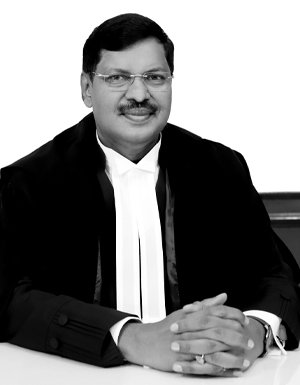
(Sanjay Karol)
Dated: 16
th
March, 2023;
Place: New Delhi.

 Login with google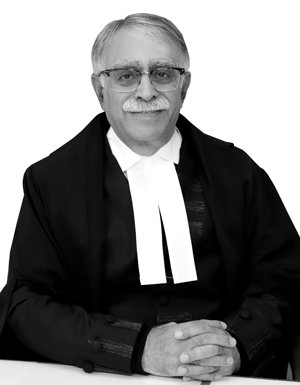
Legal Notes
Add a Note....