
As per case facts, an appeal was filed by the deceased's wife against an acquittal judgment. The deceased was allegedly taken by the accused for a marriage and later found ...
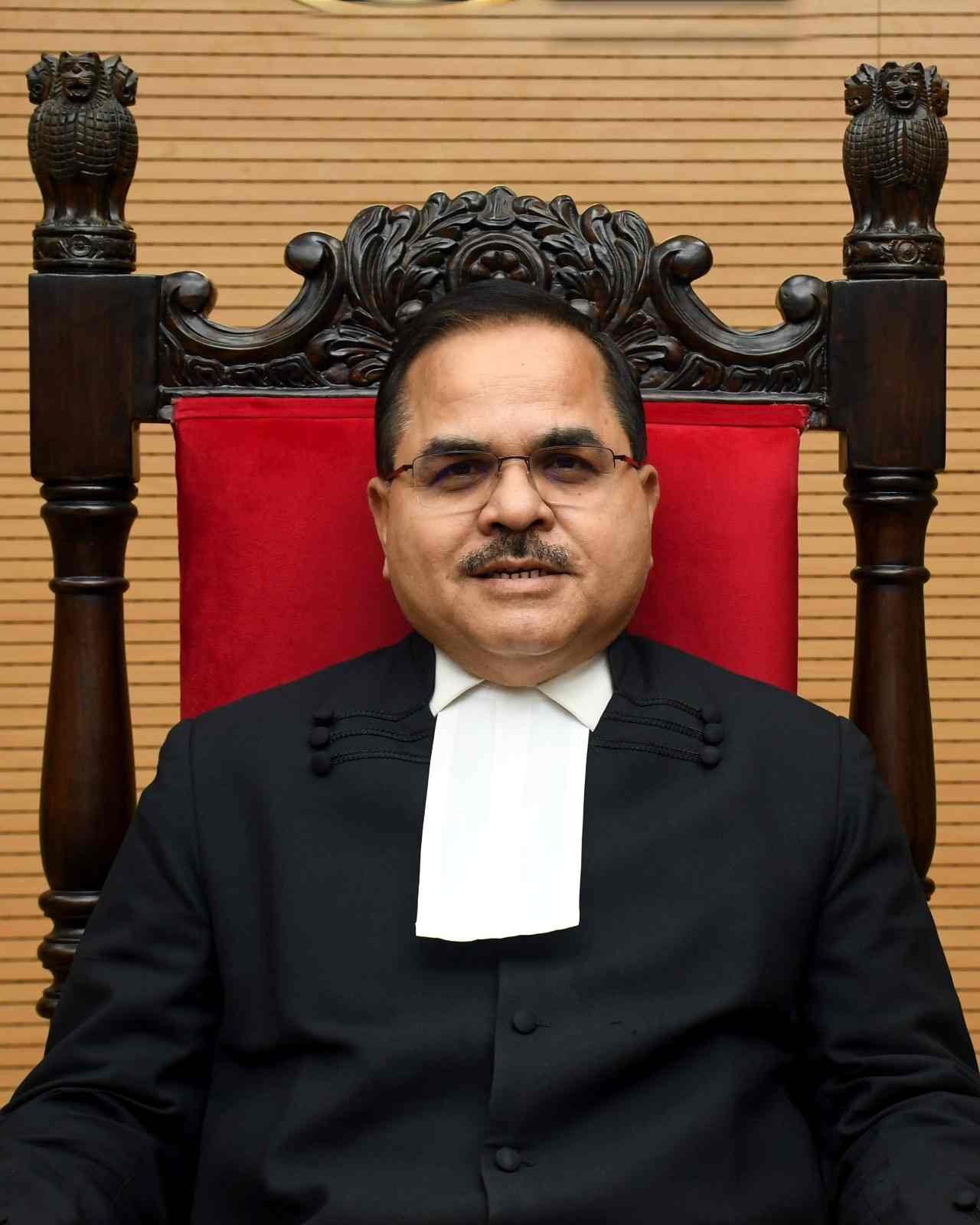

IN THE HIGH COURT OF JUDICATURE AT PATNA
CRIMINAL APPEAL (DB) No.517 of 2023
Arising Out of PS. Case No.-54 Year-2007 Thana- KOPA District- Saran
======================================================
Renu Devi @ Renu Kunwar Wife Of Late Tarkeshwar Singh (Deceased)
Daughter-in-law of Late Ganesh Singh (PW-3 Informant since deceased) R/o
Village- Patila, P.S.- Kopa, District-Saran
... ... Appellant
Versus
1.The State of Bihar
2.Rajesh Ram Son of Heera Lal Ram R/o Village- Patila, P.S.-Kopa, District-
Saran
... ... Respondents
======================================================
Appearance :
For the Appellant/s: Mr. Sanjay Singh, Sr. Advocate
Mr. Rudrank Shivam Singh, Advocate
Mr. Ranvir Pratap Singh, Advocate
For the State : Mr. Satya Narayan Prasad, APP
For the Pvt. Respondent: Mr. P.N. Shahi, Sr. Advocate
Mr. Anjani Parashar, Advocate
Mr. Madhukar Anand, Advocate
Mr. Shubham Kumar Singh, Advocate
======================================================
CORAM: HONOURABLE MR. JUSTICE RAJEEV RANJAN PRASAD
and
HONOURABLE MR. JUSTICE SHAILENDRA SINGH
CAV JUDGMENT
(Per: HONOURABLE MR. JUSTICE RAJEEV RANJAN PRASAD)
Date : 02-04-2026
The present appeal has been preferred by the wife of the
deceased and daughter-in-law of the informant under proviso to
Section 372 of the Code of Criminal Procedure (in short 'CrPC'),
1973 (since repealed).
2. Challenge in this appeal is to the judgment of
acquittal dated 28
th
March, 2023 (hereinafter referred to as the
‘impugned judgment’) passed by learned 3
rd
Additional Sessions
Judge-cum-Special MP/MLA/MLC Court, Saran at Chhapra
Patna High Court CR. APP (DB) No.517 of 2023 dt.02-04-2026
2/21
(hereinafter referred to as the ‘learned trial court’) in Sessions Trial
No. 552 of 2007 arising out of Kopa P.S. Case No. 54 of 2007
registered under Sections 302, 120B, 201/34 of the Indian Penal
Code (in short ‘IPC’) by which the accused-respondent no.2 who
was facing trial under Sections 302/34, 201/34 and 120B/34 IPC
has been acquitted.
3. By the impugned judgment, the learned trial court has
held that the prosecution has failed to prove the last seen theory
against the accused Rajesh Ram, therefore, the onus of explaining
special knowledge as envisaged under Section 106 of the Evidence
Act (since repealed) would not arise. The learned trial court has
further held that the prosecution has failed to prove the guilt of the
accused by establishing the chain of circumstantial evidence and
no motive of the accused to cause death of the accused has been
proved. It has also been held that on the basis of medical evidence
as well as the evidence on the facts, the homicidal death of the
deceased Tarkeshwar Singh has not been proved.
4. In its ultimate analysis, the learned trial court declared
that because of lack of evidence to prove the charges, the accused
Rajesh Ram is given benefit of doubt and he stands acquitted of
the charges framed against him under Sections 302/34, 201/34 and
120B/34 of the IPC.
Patna High Court CR. APP (DB) No.517 of 2023 dt.02-04-2026
3/21
Prosecution Case
5. The prosecution case is based on the fardbeyan of
Ganesh Singh (PW-3) recorded by Sub-Inspector of Police
Laxman Prasad (PW-7) on 02.07.2007 at 11:30 Hrs. on the parti
land of Bali Thakur in Village Patila in the District of Saran.
In his fardbeyan, the informant has alleged that in the morning
at 08:30 AM when he was sitting at his darwaja, he heard hulla in
the village that the dogs are pulling away a dead body which was
buried under the land in between the plot of Bali Thakur and
Gajnath Prasad. On receipt of this information, he took his
grandson Rajan (PW-1) and Kundan Singh (PW-4) with him and
reached at the plot of Bali Thakur where he found that towards
southern ridge of the plot of Bali Thakur in the direction of West-
East, a human skeleton of a dead body was lying on the land and
the dogs were pouncing and eating the same. The informant further
stated that the face and the upper part above the waist of the body
had decomposed (lj xy x;k Fkk). On the bone of the neck, one
chain and in the left hand one torn old red-blue and white color
bushirt part and in the body one mairoon and old full pant which
were torn were there and he identified that it was his son
Tarkeshwar Singh. The informant claimed that 200-250 villagers
from neighboring places assembled there.
Patna High Court CR. APP (DB) No.517 of 2023 dt.02-04-2026
4/21
He alleged that on 27.06.2007 during the night hours at 09:00
PM his co-villager Rajesh Ram, son of Hira Lal Ram had come to
his house/darwaja and took away his son Tarkeshwar Singh with
him on the pretext of attending the marriage ceremony of the
daughter of a co-villager namely Bharat Shah. He claimed that he
had also gone there with Rajan Singh and Munindra Singh but
before he reached they had already left the place. Thereafter, the
informant took his dinner and he left then he saw that at the door
of Sudama Sah and Raghuvir Sah, three motorcycles were parked
and about 8 to 10 people were having discussions. Thereafter the
motorcycles started and the first motorcycle was being driven by
Satyendra Yadav, the informant's son was sitting on this
motorcycle between Satyendra Yadav and an unknown person. On
second motorcycle, Dinesh Pandit, Sunil Sah and one unknown
person were sitting and on the third motorcycle Rajesh Ram and
two unknown persons were sitting. All the three motorcycles went
away towards the western side of the village. It is alleged that
when the informant's son did not return till 30.06.2007, informant
sent his grandson to enquire about the victim upon which he was
informed that the victim will return in 2-3 days. When the victim
did not return till 30.06.2007, then informant himself went to the
Patna High Court CR. APP (DB) No.517 of 2023 dt.02-04-2026
5/21
house of Rajesh Ram where he was informed that his son will
return on second or third.
On 02.07.2007, while the informant was sitting at his door he
heard hulla that one dead body has been found buried in southern
ridge in the village and dogs are pouncing and eating the dead
body. When the informant went to that place there were 200-250
people there and on seeing the bushirt, pant and the chain in the
neck, he identified that the dead body was of his son Tarkeshwar
Singh. The informant believes that all the six persons have
murdered his son Tarkeshwar Singh.
6. On the basis of the fardbeyan of Ganesh Singh (PW-
3), police registered Kopa P.S. Case No. 54 of 2007 dated
02.07.2007 against six named accused persons and four unknown
accused persons but after investigation, police submitted Charge-
sheet No. 74 of 2007 dated 26.10.2007 only against accused
Rajesh Ram under Sections 302, 201, 120B/34 IPC. At this stage,
the investigation against the other accused persons remained open.
7. Vide order dated 29.10.2007, the learned CJM, Saran
took cognizance of the offences under above mentioned sections
and on finding that the offences alleged against the accused are
liable to be tried by a Court of Sessions, the records were
committed to the Court of Sessions where the charges were
Patna High Court CR. APP (DB) No.517 of 2023 dt.02-04-2026
6/21
explained to the accused in Hindi who denied the same and
claimed to be tried. Accordingly, vide order dated 12.01.2008,
charges were framed under Sections 302/34, 201 and 120B IPC
against the accused-respondent no.2 Rajesh Ram.
8. In course of trial, the prosecution has examined
altogether seven witnesses and exhibited several documentary
evidences. The description of the prosecution witnesses and the
exhibits are given hereunder in tabular form:-
List of Prosecution Witnesses
PW-1 Rajan Kumar
PW-2 Munindra Singh
PW-3 Ganesh Singh
PW-4 Kundan Singh @ Kundan Kumar
PW-5 Dr. Umesh Sharma
PW-6 Dr. Shambhu Nath Singh
PW-7 Laxman Prasad
List of Exhibits on behalf of Prosecution
Exhibit '1'Signature of informant Ganesh Singh on the
fardbeyan
Exhibit '1/1'Signature of witness Ganesh Singh on the
carbon copy of Inquest Report
Exhibit '2'Carbon copy of postmortem report of
Tarkeshwar Singh
Exhibit '3'Signature of Dr. Shambhu Nath Singh on the
postmortem report of Tarkeshwar Singh
Exhibit '3/1'Signature of Dr. S.K. Chakiar on postmortem
report
Exhibit '4'writing and signature of SHO Laxman Prasad
on the fardbeyan of Ganesh Singh
Exhibit '5'Signature of Rajan Singh on fardbeyan
Patna High Court CR. APP (DB) No.517 of 2023 dt.02-04-2026
7/21
Exhibit '6'Signature of SHO Laxman Prasad on Formal
FIR
Exhibit '7'Carbon copy of Inquest Report
Exhibit '8'Charge-sheet No. 74 of 2007 dated 26.10.2007
Exhibit '9'S Tr 552 of 2007
9. Thereafter, the statement of the accused Rajesh Ram
was recorded under Section 313 CrPC. He claimed innocence and
in his defence, he submitted that he is engaged in agriculture work
and he had been only on talking terms occasionally with the
deceased. He claimed that at the instance of some other person, he
has been falsely implicated in this case.
10. The defence did not adduce any oral or
documentary evidence.
Findings of the learned Trial Court
11. The learned trial court has examined the oral and
documentary evidences and recorded a finding leading to acquittal
of the accused. The findings recorded by the learned trial court
have been briefly stated by this Court at the top of this judgment,
hence those are not reiterated at this stage.
Submissions on behalf of the appellant
12. Mr. Sanjay Singh, learned Senior Counsel
representing the victim submits that the learned trial court has
erred in assessing and considering the deposition of the
prosecution witnesses, more particularly of the eyewitnesses PW-
Patna High Court CR. APP (DB) No.517 of 2023 dt.02-04-2026
8/21
1, PW-2 and PW-3. According to him, these witnesses are
consistent and their testimonies have not been impeached in the
process of cross-examination by the defence.
13. Learned Senior Counsel further submits that it was
the accused, Rajesh Ram, who had called the deceased from his
house, later, he was seen with the other accused persons leaving
the place on a motorcycle, whereafter the deceased did not return.
These are the circumstances which ought to have been taken into
consideration by the learned trial court.
14. Learned Senior Counsel further submits that the fact
that on the inquiries by witnesses from the accused Rajesh Ram as
to the whereabouts of the deceased, the accused answered them in
affirmative that he would return soon indicates to the fact that he
had knowledge about the circumstances after the deceased had left
with the accused persons on the motorcycle.
15. Learned Senior Counsel submits that the learned
trial court further failed to appreciate that at least three of the six
named accused persons had admitted that they were on inimical
terms with the deceased and therefore they had strong motive to
kill him. The court also failed to consider that the dead body was
recovered within one kilometer from the village and the trial court
could not appreciate that the chain of circumstantial evidence was
Patna High Court CR. APP (DB) No.517 of 2023 dt.02-04-2026
9/21
complete, which the accused had not explained as required under
Section 106 of the Evidence Act.
Submissions on behalf of the State and Respondent No. 1
16. On the other hand, learned Senior Counsel for the
accused-respondent and learned Additional Public Prosecutor for
the State have submitted that the learned trial court has
meticulously examined the entire evidences on the record. It is
only after examination of the entire evidences, the learned trial
court concluded that the chain of circumstantial evidence has not
been proved in this case.
17. It is submitted that in this case there is no
eyewitness and the circumstantial evidence present on the record
are not completing the chain of criminological events. Relying
upon the judgment of the Hon’ble Supreme Court in the case of
Sharad Birdhichand Sarda vs. State of Maharashtra reported in
(1984) 4 SCC 116, learned counsel submits that in a case based on
circumstantial evidence, the prosecution is required to prove
motive behind the killing, but in this case, the prosecution has
completely failed to demonstrate any motive on the part of the
accused.
18. It is submitted that the present case is based on last
seen theory. The Hon’ble Supreme Court has settled the legal
Patna High Court CR. APP (DB) No.517 of 2023 dt.02-04-2026
10/21
position in this regard by holding that conviction of an accused
cannot be made solely on the basis of last seen together theory.
The circumstances preceding the last seen theory and the
circumstances following the point of being so last seen are to be
connected and established as a chain of events. It is submitted that
in the present case, the prosecution has not brought on record any
evidence regarding the events and circumstances followed from
the point of deceased Tarkeshwar Singh having been called by the
accused Rajesh Ram from his house and then being seen with
other accused persons. The time gap between the last seen and the
recovery of the dead body must be so proximate that any other
possibility than the accused being the perpetrator of the crime be
excluded. It is submitted that in this case there is a long gap of
five days and the prosecution has not brought on record the
intervening circumstances of those five days which connect or
establish the chain of evidence. Reliance in this regard is placed
on the judgment of the Hon’ble Supreme Court in the case of
Sharad Birdhichand Sarda (supra).
Consideration
19. We have heard the rival submissions and carefully
perused the trial court’s records.
Patna High Court CR. APP (DB) No.517 of 2023 dt.02-04-2026
11/21
20. The informant, Ganesh Singh (PW-3), has deposed
that the deceased was his son. On 27.06.2007 at about 9:00 PM,
marriage of the daughter of Bharat Sah was scheduled in his
village and for attending said marriage, the accused had come to
his house and took his son with him. PW-3 claimed that he along
with his two grandsons, Rajan Kumar (PW-1) and Munindra
Singh (PW-2), had also visited the place of marriage. According to
him, after taking dinner, he found that his son and this accused
went to the door of Sudama Sah, which is situated about 10 to 15
yards west from the house of Bharat Sah. This witness has stated
that Rajesh Ram, Tarkeshwar Singh, Satyendra Yadav, Raghubir
Sah, Sudama Sah, Dinesh Pandit and Sunil Sah were seen on three
motorcycles at the door of Sudama Sah and all of them proceeded
on those motorcycles. This witness has stated that on one
motorcycle Satyendra Yadav, Tarkeshwar Singh and one unknown
persons were seated, which was driven by Satyendra Yadav. He
has accordingly narrated that who were sitting together on other
two motorcycles. This witness has stated that when his son did not
return in the night, he went to the house of Rajesh Ram on
28.06.2007, who informed him that he would return back within
two to three days. He again visited house of Rajesh Ram on
30.06.2007 and this time Rajesh Ram is said to have informed him
Patna High Court CR. APP (DB) No.517 of 2023 dt.02-04-2026
12/21
that his son would return by second or third July. This witness
went on to depose that his son did not return and on 02.07.2007 he
got information that in the field of Bali Thakur one buried dead
body was found upon which the dogs were pouncing and eating.
This witness and his grandson Rajan went there and identified the
dead body on the basis of the chain in the neck. He further
deposed that police inspector arrived at the place where the dead
body was found. His fardbeyan was recorded and he put his
signature thereon. The signature has been marked Exhibit ‘1’ on
his identification. This witness has further proved his signature on
the inquest report as Exhibit ‘1/1’.
21. In his cross-examination, PW-3 could not tell the
date of his deposition and the date which would fall day after
tomorrow, but he could not tell the name of the month. He
deposed that on 27.06.2007, he got registered this case and gave
statement to the police on which the police had taken his LTI on
27.06.2007. He further deposed that the field of Bali Thakur
where the dead body was found is about half kilometre from his
house. He denied having knowledge that his son was involved in
cases of dacoity, robbery, etc. or not. PW-3 has stated in
paragraph ‘18’ that he had not given information of missing of his
son to any police officer or to any court. He has also stated that
Patna High Court CR. APP (DB) No.517 of 2023 dt.02-04-2026
13/21
there was no previous enmity between his son and the accused
persons. He claimed that he had attended the marriage ceremony
at the door of Bharat Sah which is situated west to his own house
and the house of Raghuvir Sah is situated about 20 to 30 yards
further west and also that the house of Rajesh Ram is situated 100
to 200 yards further west. This witness could not recall the colour,
number or company of any of the motorcycles. He has stated that
he went to the house of Rajesh Ram alone to enquire about the
whereabouts of his deceased son and he has further deposed that
the face of the dead body was completely decomposed and the
dogs had eaten up most parts of the body. The chain had remained
in the neck but the police officer did not make the seizure list of
the same. The inquest reports were prepared in between 12
o’clock and 1:00 PM and till then the dead body remained there.
This witness has stated that he could identify the dead body on the
basis of chain found in the neck. This witness denied the
suggestion of the defence that the dead body was not identifiable
and neither anybody else could have identified that the dead body
was of deceased Tarkeshwar Singh. The defence further suggested
that Rajesh Ram was selected in police department and this
witness was jealous about that and for that sake, he falsely
deposed in this case.
Patna High Court CR. APP (DB) No.517 of 2023 dt.02-04-2026
14/21
22. On examining the evidence of PW-3, it is evident
that he did not give the correct date of registration of the FIR, he
claims to have gone to the house of Rajesh Ram alone to enquire
about the whereabouts of his deceased son which seems to be
highly unnatural.
23. This Court further finds that this witness himself
states that the dead body was completely decomposed and the
dogs had eaten up most parts of the body. He clearly stated that he
could identify the dead body of his son on the basis of chain found
in the neck but it is also admitted that the police officer did not
make any seizure list of the same. Thus, on the point of
identification of the dead body, the only source of identification
being the chain said to have been found in the neck of the
deceased has not been brought in evidence as no seizure list of the
same was prepared.
24. This Court finds that in this case Bharat Sah whose
daughter’s marriage was fixed on the said day has not been
examined by the prosecution. He would have been a material
witness to say as to whether the informant, his two grandsons and
the deceased son had attended the marriage ceremony of his
daughter. Thus, there is no evidence on the record to show that the
informant and his two grandsons namely Rajan Kumar and
Patna High Court CR. APP (DB) No.517 of 2023 dt.02-04-2026
15/21
Munindra Singh had gone to attend the marriage ceremony of the
daughter of Bharat Sah.
25. The S.H.O. of Kopa Police Station has been
examined as PW-7 in this case. He has deposed that he had
inspected the place of occurrence and he had found that a five feet
wide in length and three feet in width with two and half feet deep
ditch was created and the human skeleton of the dead body was
lying in a decomposed condition. He has given the description of
the place of occurrence. He has stated in paragraph ‘6’ that he had
recorded the statement of several witnesses including Bharat Sah
and they had supported the prosecution story. This witness has
stated that it is not mentioned in the case diary as to whether there
is any criminal antecedent of the accused and he was not aware of
any prior enmity between the deceased and Rajesh Ram. He has
stated that there was no muscle on the human skeleton and nobody
told him that he had seen the occurrence.
26. This Court finds that so far as the I.O. (PW-7) is
concerned, he has not brought on record any oral or documentary
evidences so as to provide the proof of the circumstances that the
deceased had gone with the accused to attend the marriage
ceremony at the house of Bharat Sah and then he had left in the
company of the accused from the house of Sudama Sah.
Patna High Court CR. APP (DB) No.517 of 2023 dt.02-04-2026
16/21
27. In this case, Dr. Umesh Sharma (PW-5) and Dr.
Shambhu Nath Singh (PW-6) have been examined on behalf of the
prosecution. PW-5 found the following ante-mortem injuries on
the dead body.
“Body is in advanced stage of
decomposition, Skull is present without
any skin or muscles. Only bones were
present. The body could not be recognised
by face. It was recognised by Chaukidar
3/9 Kapil Manjhi, Rajan Singh S/o
Tarkeshwar Singh and other relative
present there as on inquest. Right fore
arms absent. Right arms without any skin
or muscles. In neck only cervical bones
present no muscle or skin. Left arms only
muscles attached, left fore arm only bone
present. Both hands are absent. Upper half
of the body almost turned into skeleton,
ribs present, lungs and heart absent, lower
half of the body has skin and muscle in
abdomen. Only kidney and stomach was
present. That too in putrefied state.
Stomach empty.”
28. Shambhu Nath Sharma (PW-6) is a formal witness
who has identified his signature on the postmortem report which is
marked Exhibit ‘3’ and also identified the signature of Dr. S.K.
Chakhyar which has been marked Exhibit ‘3/1’.
Patna High Court CR. APP (DB) No.517 of 2023 dt.02-04-2026
17/21
29. From a bare reading of the evidence of PW-5 it is
evident that he could not give any opinion as to the cause of death
and the dead body was in advanced stage of decomposition. The
skull was without any skin or muscles and only bones were
present. He has clearly stated that the body could not be
recognised by face. It was recognised by the Chowkidar 3/9 Kapil
Manjhi but said Kapil Manjhi has not been examined in this case.
It has already been noted that the informant claims to have
identified the body only on the basis of the chain present on the
neck but that chain has not been seized and very presence of the
said chain in the neck becomes highly doubtful.
30. We find that so far as PW-1, PW-2 and PW-4 are
concerned, they are the close family members of the deceased and
they have only deposed on the line of PW-3.
31. In a case based on circumstantial evidence it is
evident that motive behind the occurrence has not at all been
stated by the prosecution witnesses. In the case of Sharad
Birdhichand Sarda (supra), the Hon’ble Supreme Court has
considered as to how a case based on circumstantial evidence is
required to be proved. We reproduce the relevant paragraphs of
the said judgment hereunder for a ready reference:-
“152. Before discussing the cases relied
upon by the High Court we would like to
Patna High Court CR. APP (DB) No.517 of 2023 dt.02-04-2026
18/21
cite a few decisions on the nature, character
and essential proof required in a criminal
case which rests on circumstantial evidence
alone. The most fundamental and basic
decision of this Court is Hanumant v. State
of Madhya Pradesh
1
. “This case has been
uniformly followed and applied by this
Court in a large number of later decisions
up-to- date, for instance, the cases of Tufail
(Alias) Simmi v. State of Uttar Pradesh
17
and Ramgopal v. State of Maharashtra
18
.
It may be useful to extract what Mahajan, J.
has laid down in Hanumant case
1
:
“It is well to remember that in cases where
the evidence is of a circumstantial nature, the
circumstances from which the conclusion of
guilt is to be drawn should in the first
instance be fully established, and all the facts
so established should be consistent only with
the hypothesis of the guilt of the accused.
Again, the circumstances should be of a
conclusive nature and tendency and they
should be such as to exclude every hypothesis
but the one proposed to be proved. In other
words, there must be a chain of evidence so
far complete as not to leave any reasonable
ground for a conclusion consistent with the
innocence of the accused and it must be such
as to show that within all human probability
the act must have been done by the accused.”
1. 1952 SCR 1091 : AIR 1952 SC 343 : 1953 Cri LJ 129
17. (1969) 3 SCC 198 : 1970 SCC (Cri) 55
18. AIR 1972 SC 656 : (1972) 4 SCC 625
Patna High Court CR. APP (DB) No.517 of 2023 dt.02-04-2026
19/21
32. In the case of Kanhaiya Lal vs. State of
Rajasthan reported in (2014) 4 SCC 715, the Hon'ble Supreme
Court while dealing with a case of “last seen theory” observed in
paragraphs ‘11’, ‘12’ and ‘15’ as under:-
“11. The primary, if not the solitary basis of
the conviction of the appellant is on the theory
of last seen, as the deceased Kala along with
accused Kanhaiya Lal visited the house of PW
4 Hurma at 9.00 p.m. on 31-8-2003. PW 4
Hurma did not fully support the prosecution
case and was declared hostile. In his
examination-in-chief he has stated that on the
occurrence night he returned home at 8.00
p.m. and at about 9.00 p.m. accused Kanhaiya
Lal and Kala came to his house and demanded
daru and he gave one bottle and received a
sum of Rs 15 from accused Kanhaiya Lal and
they returned together and the next day
morning the wife of Kala, PW 10 Shantibai
came and inquired from him about her
husband Kala and he told her about the visit
of Kala with accused Kanhaiya Lal to his
house the previous night. It is the testimony of
PW 10 Shantibai that her husband Kala did
not return home on the night of the occurrence
and in the morning she went to the house of
PW 4 Hurma and inquired and came to know
from him about the visit of her husband along
with accused Kanhaiya Lal to his house in the
night. Though PW 4 Hurma was treated as a
hostile witness, the above testimony of him is
corroborated by the testimony of PW 10
Shantibai.
12. The circumstance of last seen together
does not by itself and necessarily lead to the
inference that it was the accused who
committed the crime. There must be
something more establishing connectivity
between the accused and the crime. Mere non-
explanation on the part of the appellant, in our
considered opinion, by itself cannot lead to
proof of guilt against the appellant.
15. The theory of last seen—the appellant
having gone with the deceased in the manner
noticed hereinbefore, is the singular piece of
circumstantial evidence available against him.
Patna High Court CR. APP (DB) No.517 of 2023 dt.02-04-2026
20/21
The conviction of the appellant cannot be
maintained merely on suspicion, however
strong it may be, or on his conduct. These
facts assume further importance on account of
absence of proof of motive particularly when
it is proved that there was cordial relationship
between the accused and the deceased for a
long time. The fact situation bears great
similarity to that in Madho Singh v. State of
Rajasthan
2
”
33. On a complete analysis of the evidences available
on the record, the detailed discussions made by the learned trial
court and on reconsideration and reappreciation of the entire
materials on the record, this Court is of the considered opinion
that there is no perversity in the judgment of the learned trial
court. This Court cannot reach to an irresistible conclusion with
regard to the guilt of the appellant.
34. We are conscious that this is an appeal against
acquittal and the principles governing an appeal against acquittal
have been reiterated times and again by the Hon’ble Supreme Court.
Reference in this regard is made to the judgment in the case of H.D.
Sundara and Others Vs. State of Karnataka reported in (2023) 9
SCC 581. We quote paragraph ‘8’ from the said judgment of the
Hon’ble Supreme Court is being reproduced hereunder for a ready
reference:-
“ 8. In this appeal, we are called upon to consider the
legality and validity of the impugned judgment
1
rendered by the High Court while deciding an appeal
against acquittal under Section 378 of the Code of
Criminal Procedure, 1973 (for short “CrPC”). The
2. (2010) 15 SCC 588 : (2012) 4 SCC (Cri) 767
1. State of Karnataka v. H.K. Mariyappa, 2010 SCC OnLine Kar 5591
Patna High Court CR. APP (DB) No.517 of 2023 dt.02-04-2026
21/21
principles which govern the exercise of appellate
jurisdiction while dealing with an appeal against
acquittal under Section 378 CrPC can be summarised as
follows:
8.1. The acquittal of the accused further strengthens the
presumption of innocence;
8.2. The appellate court, while hearing an appeal against
acquittal, is entitled to reappreciate the oral and
documentary evidence;
8.3. The appellate court, while deciding an appeal
against acquittal, after reappreciating the evidence, is
required to consider whether the view taken by the trial
court is a possible view which could have been taken on
the basis of the evidence on record;
8.4. If the view taken is a possible view, the appellate
court cannot overturn the order of acquittal on the
ground that another view was also possible; and
8.5. The appellate court can interfere with the order of
acquittal only if it comes to a finding that the only
conclusion which can be recorded on the basis of the
evidence on record was that the guilt of the accused was
proved beyond a reasonable doubt and no other
conclusion was possible.”
35. In result, we find no merit in this appeal, it is
dismissed accordingly.
Rishi/-
(Rajeev Ranjan Prasad, J)
I agree
(Shailendra Singh, J)
AFR/NAFR
CAV DATE 25.02.2026
Uploading Date 02.04.2026
Transmission Date 02.04.2026

 Login with google
Legal Notes
Add a Note....