
As per case facts, the appellant's sister died tragically by burns, leading to an FIR against the respondent. The appellant, brother of the deceased, engaged a private counsel for the ...
http://JUDIS.NIC.IN SUPREME COURT OF INDIA Page 1 of 5
PETITIONER:
SHIV KUMAR
Vs.
RESPONDENT:
HUKAM CHAND AND ANR.
DATE OF JUDGMENT: 30/08/1999
BENCH:
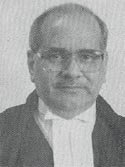
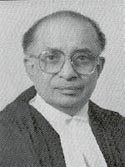
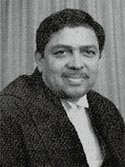
S.P.Kurdukar, K.T.Thomas, N.Santosh Hegde
JUDGMENT:
THOMAS,J
It is as well for the protection of accused persons in
sessions trials (in India) that provision is made to have
the case against him prosecuted only by a Public Prosecutor
and not by any counsel engaged by the aggrieved private
party. Fairness to the accused who faces prosecution is the
raison detre of the legislative insistence on that score.
In this case, appellant is aggrieved because a counsel
engaged by him was not allowed by the High Court to conduct
prosecution in spite of obtaining a consent from the Public
Prosecutor concerned. First respondent was the accused in
the sessions trial wherein appellant wanted his counsels
active role to be played. Appellant and respondent are
advocates practicing at the same station. The grievance of
the appellant developed in the following fact situation:
Appellant is the brother of five sisters, and the
youngest among them, Suman, had secured creditable academic
laurels. She was given in marriage to Dr.Dinesh Kumar Gupta
(the son of the respondent). But about 4 months after her
marriage she met with a tragic death by burns. On a
complaint lodged by the appellant, FIR under Section 302 and
120-B of the Indian Penal Code (IPC) was registered by the
local police against the respondent. But after completion
of the investigation a charge-sheet was laid against him for
the offence under Section 304-B of the Indian Penal Code.
Appellant, on his part, engaged Shri R.C. Gugnani,
advocate, to appear for him in the sessions court during
trial of the case. On 1.7.1996 when appellant was to be
examined as a witness for prosecution, Shri R.C. Gugnani,
advocate ventured to conduct the chief examination of that
witness. It was objected to by the counsel for the accused
on the premise that a private counsel cannot conduct
prosecution in a sessions trial. Appellant then moved an
application on the same day, the relevant portion of which
reads thus:
That the Public Prosecutor has no objection if the
case is conducted by Shri R.C. Gugnani, advocate. That as
per the prevailing practice being followed by this Honble
Court and as per provisions of section 301(2) Cr.P.C. my
counsel has a right to conduct the case under the directions
of the Public Prosecutor. It is, therefore, prayed that in
http://JUDIS.NIC.IN SUPREME COURT OF INDIA Page 2 of 5
view of the facts stated above, necessary permission may
please be given to the applicant for conducting the case
under the directions of the Public Prosecutor.
It seems, the Public Prosecutor in the trial court
endorsed the said application. The trial court passed an
order thereon, the material portion of which reads thus: I
accept the application and allow Shri R.C. Gugnani,
advocate of the complainant to conduct under the
supervision, guidance and control of the public prosecutor,
while conducting the same case and the public prosecutor
shall retain with himself the control over the proceedings.
Accused was not prepared to have his case prosecuted
by the complainants counsel and hence he approached the
High Court in revision. The impugned order of the High
Court was passed by a Single Judge. The operative portion
of the said order reads thus:
I allow this revision and direct that the lawyer
appointed by the complainant or private person in this case
shall act under the directions from the Public Prosecutor
and may with the permission of the court submit written
arguments after evidence is closed in the case. I further
direct that the Public Prosecutor in charge of the case
shall conduct the prosecution. Revision petition is
disposed of accordingly.
Learned counsel for the appellant informed us that
trial in the case is over by now. Nonetheless he pleaded
for consideration of the issue as he feels that a decision
thereon by this Court is necessary for future guidance also.
He contended that Section 302(2) of the Code of Criminal
Procedure (for short the Code) must be so construed as to
enable the pleader of an aggrieved private person to conduct
the prosecution in as best a manner as he deems fit.
Section 301 of the Code reads thus:
301. Appearance by public prosecutors.- (1) The
Public Prosecutor or Assistant Public Prosecutor in charge
of a case may appear and plead without any written authority
before any Court in which that case is under inquiry, trial
or appeal.
(2) If any such case any private person instructs a
pleader to prosecute any person in any Court, the Public
Prosecutor or Assistant Public Prosecutor in charge of the
case shall conduct the prosecution, and the pleader so
instructed shall act therein under the directions of he
Public Prosecutor or Assistant Public Prosecutor, and may,
with the permission of the Court, submit written arguments
after the evidence is closed in the case.
Section 302 of the Code has also some significance in
this context and hence that is also extracted below: 302.
Permission to conduct prosecution.- (1) Any Magistrate
inquiring into or trying a case may permit the prosecution
to be conducted by any person other than a police officer
below the rank of Inspector; but no person, other than the
Advocate-General or Government Advocate or a Public
Prosecutor or Assistant Public Prosecutor, shall be entitled
to do so without such permission: Provided that no police
officer shall be permitted to conduct the prosecution if he
has taken part in the investigation into the offence with
respect to which the accused is being prosecuted.
http://JUDIS.NIC.IN SUPREME COURT OF INDIA Page 3 of 5
(2) Any person conducting the prosecution may do so
personally or by a pleader.
It must be noted that the latter provision is intended
only for magistrate courts. It enables the magistrate to
permit any person to conduct the prosecution. The only
rider is that magistrate cannot give such permission to a
police officer below the rank of Inspector. Such person
need not necessarily be a Public Prosecutor.
In the magistrates court anybody (except a police
officer below the rank of Inspector) can conduct
prosecution, if the magistrate permits him to do so. Once
the permission is granted the person concerned can appoint
any counsel to conduct the prosecution on his behalf in the
magistrates court.
But the above laxity is not extended to other courts.
A reference to Section 225 of the Code is necessary in this
context. It reads thus: 225. Trial to be conducted by
Public Prosecutor.- In every trial before a Court of
Session, the prosecution shall be conducted by a Public
Prosecutor.
The old Criminal Procedure Code (1898) contained an
identical provision in Section 270 thereof. A Public
Prosecutor means any person appointed under Section 24 and
includes any person acting under the directions of the
Public Prosecutor,(vide Section 2(u) of the Code).
In the backdrop of the above provisions we have to
understand the purport of Section 301 of the Code. Unlike
its succeeding provision in the Code, the application of
which is confined to magistrate courts, this particular
section is applicable to all the courts of criminal
jurisdiction. This distinction can be discerned from
employment of the words any court in Section 301. In view
of the provision made in the succeeding section as for
magistrate courts the insistence contained in Section 301(2)
must be understood as applicable to all other courts without
any exception. The first sub-section empowers the Public
Prosecutor to plead in the court without any written
authority, provided he is in charge of the case. The second
sub-section, which is sought to be invoked by the appellant,
imposes the curb on a counsel engaged by any private party.
It limits his role to act in the court during such
prosecution under the directions of the Public Prosecutor.
The only other liberty which he can possibly exercise is to
submit written arguments after the closure of evidence in
the trial, but that too can be done only if the court
permits him to do so.
From the scheme of the Code the legislative intention
is manifestly clear that prosecution in a sessions court
cannot be conducted by any one other than the Public
Prosecutor. The legislature reminds the State that the
policy must strictly conform to fairness in the trial of an
accused in a sessions court. A Public Prosecutor is not
expected to show a thirst to reach the case in the
conviction of the accused somehow or the other irrespective
of the true facts involved in the case. The expected
attitude of the Public Prosecutor while conducting
prosecution must be couched in fairness not only to the
court and to the investigating agencies but to the accused
http://JUDIS.NIC.IN SUPREME COURT OF INDIA Page 4 of 5
as well. If an accused is entitled to any legitimate
benefit during trial the Public Prosecutor should not
scuttle/conceal it. On the contrary, it is the duty of the
Public Prosecutor to winch it to the fore and make it
available to the accused. Even if the defence counsel
overlooked it, Public Prosecutor has the added
responsibility to bring it to the notice of the court if it
comes to his knowledge. A private counsel, if allowed free
hand to conduct prosecution would focus on bringing the case
to conviction even if it is not a fit case to be so
convicted. That is the reason why Parliament applied a
bridle on him and subjected his role strictly to the
instructions given by the Public Prosecutor.
It is not merely an overall supervision which the
Public Prosecutor is expected to perform in such cases when
a privately engaged counsel is permitted to act on his
behalf. The role which a private counsel in such a
situation can play is, perhaps, comparable with that of a
junior advocate conducting the case of his senior in a
court. The private counsel is to act on behalf of the
Public Prosecutor albeit the fact he is engaged in the case
by a private party. If the role of the Public Prosecutor is
allowed to shrink to a mere supervisory role the trial would
become a combat between the private party and the accused
which would render the legislative mandate in Section 225 of
the Code a dead letter.
An early decision of a Full Bench of the Allahabad
High Court in Queen-Empress v. Durga (ILR 1894 Allahabad
84) has pinpointed the role of a Public Prosecutor as
follows: It is the duty of a Public Prosecutor to conduct
the case for the Crown fairly. His object should be, not to
obtain an unrighteous conviction, but, as representing the
Crown, to see that justice is vindicated: and, in
exercising his discretion as to the witnesses whom he should
or should not call, he should bear that in mind. In our
opinion, a Public Prosecutor should not refuse to call or
put into the witness-box for cross-examination a truthful
witness returned in the calendar as a witness for the Crown,
merely because the evidence of such witness might in some
respects be favorable to the defence. If a Public
Prosecutor is of opinion that a witness is a false witness
or is likely to give false testimony if put into the
witness-box, he is not bound, in our opinion, to call that
witness or to tender him for cross- examination.
As we are in complete agreement with the observation
of a Division Bench of the High Court of Andhra Pradesh in
Medichetty Ramakistiah & ors. v. The State of Andhra
Pradesh (AIR 1959 A.P. 659) we deem it fit to extract the
said observation: A prosecution, to use a familiar phrase,
ought not to be a persecution. The principle that the
Public Prosecutor should be scrupulously fair to the accused
and present his case with detachment and without evincing
any anxiety to secure a conviction, is based upon high
policy and as such courts should be astute to suffer no
inroad upon its integrity. Otherwise there will be no
guarantee that the trial will be as fair to the accused as a
criminal trial ought to be. The State and the Public
Prosecutor acting for it are only supposed to be putting all
the facts of the case before the Court to obtain its
decision thereon and not to obtain a conviction by any means
fair or foul. Therefore, it is right and proper that courts
should be zealous to see that the prosecution of an offender
http://JUDIS.NIC.IN SUPREME COURT OF INDIA Page 5 of 5
is not handed over completely to a professional gentleman
instructed by a private party.
Another Division Bench of the same High Court in re
Bhupalli Malliah & ors. (AIR 1959 A.P. 477) had in fact
deprecated the practice of Public Prosecutors sitting back
and permitting private counsel to conduct prosecution, in
the following terms: We would like to make it very clear
that it is extremely undesirable and quite improper that a
Public Prosecutor should be allowed to sit back, handing
over the conduct of the case to a counsel, however eminent
he may be, briefed by the complainant in the case.
Equally forceful is the observation of Bhimasankaram,
J. for the Division Bench in Medichetty Ramakistiah (cited
supra) which is worthy of quotation here: Unless,
therefore, the control of the Public Prosecutor is there,
the prosecution by a pleader for a private party may
degenerate into a legalized means for wreaking private
vengeance. The prosecution instead of being a fair and
dispassionate presentation of the facts of the case for the
determination of the Court, would be transformed into a
battle between two parties in which one was trying to get
better of the other, by whatever means available. It is
true that in every case there is the overall control of the
court in regard to the conduct of the case by either party.
But it cannot extend to the point of ensuring that in all
matters one party is fair to the other.
We, therefore, conclude that the High Court in the
impugned order has correctly approached the issue and it
does not warrant any interference. We, therefore, dismiss
this criminal appeal.
The landmark judgment in Shiv Kumar vs. Hukam Chand and Anr. delivered on August 30, 1999, by the Supreme Court of India, stands as a crucial clarification regarding the Role of Private Counsel in Sessions Trials and the indispensable Public Prosecutor's Discretion. This pivotal ruling, available for detailed analysis on CaseOn, outlines the specific boundaries and functions of private lawyers in criminal proceedings, reinforcing the fundamental principles of fair trial. Justices S.P. Kurdukar, K.T. Thomas, and N. Santosh Hegde presided over this significant case, the full text of which is readily accessible on CaseOn.
The appellant in this case, Shiv Kumar, was aggrieved by the High Court's decision to disallow his privately engaged counsel from actively conducting the prosecution in a sessions trial. This situation arose despite the Public Prosecutor (PP) having granted consent for the private counsel's involvement. The appellant, himself an advocate, sought to have his counsel, Shri R.C. Gugnani, conduct the chief examination of witnesses, a move objected to by the accused's counsel. The trial court initially permitted the private counsel to conduct the case under the PP's supervision, but the High Court, in revision, restricted the private counsel's role significantly, leading to the appeal before the Supreme Court.
The Supreme Court meticulously examined various provisions of the Code of Criminal Procedure (Cr.P.C.) to ascertain the correct legal position:
This section unequivocally states: "In every trial before a Court of Session, the prosecution shall be conducted by a Public Prosecutor." This provision underscores the legislative intent to vest the primary responsibility of prosecution in sessions trials with the Public Prosecutor, ensuring a standardized and impartial approach.
Crucially, Section 301 Cr.P.C. governs the appearance of public prosecutors and, specifically, the role of private counsel:
This provision, applicable to all criminal courts, clearly delineates that a private counsel's role is subordinate and directed by the Public Prosecutor. Their independent actions are limited to submitting written arguments, that too, with the court's permission, after the evidence phase concludes. For legal professionals looking to quickly grasp the nuances of such rulings, CaseOn.in offers 2-minute audio briefs, providing concise analyses of complex judgments like this one.
The Court also highlighted Section 302 Cr.P.C., which allows Magistrates to permit prosecution by persons other than police officers below the rank of Inspector. However, the Court clarified that Section 302 is specifically for Magistrate courts and does not extend the same leniency to sessions trials, where Section 301(2) imposes stricter controls on private counsel.
The Supreme Court's analysis firmly rooted in the legislative intent behind the Cr.P.C. provisions:
The Court emphasized that the Public Prosecutor's role is not merely to secure a conviction but to ensure a fair trial and that justice is vindicated. A PP is expected to be detached, objective, and even bring facts favourable to the accused to the court's notice. This impartial stance is paramount for a just legal system.
Allowing a private counsel free rein to conduct prosecution, even with the PP's consent, would transform a criminal trial from an objective pursuit of justice into a "combat between the private party and the accused." This, the Court reasoned, would undermine the legislative mandate and the fairness essential to sessions trials. The private counsel's role is likened to that of a junior advocate assisting a senior, always acting under the direct supervision and control of the Public Prosecutor.
The judgment drew strength from earlier High Court decisions:
These precedents collectively reinforce the idea that the Public Prosecutor cannot abdicate their responsibility to private counsel, as the integrity of the trial process depends on their active control.
The Supreme Court concluded that the High Court's order correctly interpreted the legal provisions. It affirmed that a private counsel, even with the Public Prosecutor's consent, cannot actively conduct the prosecution, including examining witnesses, in a sessions trial. Their role is strictly subordinate, acting under the Public Prosecutor's directions, with the limited liberty to submit written arguments (with court permission) after evidence closure. Consequently, the criminal appeal was dismissed, upholding the integrity of the prosecution process.
This judgment is an essential read for:
Understanding this ruling ensures that legal practitioners uphold the principles of fair trial and the legislative intent behind the Cr.P.C., thereby contributing to a robust and just legal system.
All information provided in this article is for informational purposes only and does not constitute legal advice. While efforts have been made to ensure accuracy, readers are advised to consult with a qualified legal professional for specific legal guidance on their matters.

 Login with google
Legal Notes
Add a Note....