
As per case facts, deceased Balram Mandavi, a Sarpanch, allegedly committed suicide after being persistently harassed by contractor Ashok Wadhwani for an inflated debt amount, which was much higher than ...
1
2026:CGHC:25275
The date when
the judgment is
reserved
The date when the
judgment is
pronounced
The date when the
judgment is uploaded on
the website
Operative Full
13.05.2026 22.06.2026 -- 22.06.2026
AFR
HIGH COURT OF CHHATTISGARH AT BILASPUR
ACQA No. 228 of 2015
1.Smt. Satwati Bai W/o Late Balram Mandavi Aged About 40 Years R/o
Village Baliyara, P.O. Bhatali, P.S. Arjuni, District- Dhamtari,
Chhattisgarh
2.Indra Kumar Mandavi S/o Late Balram Mandavi, Aged About 19 Years,
Village Baliyara, P.O. Bhatali, P.S. Arjuni, District- Dhamtari,
Chhattisgarh
--- Appellants
versus
1.State of Chhattisgarh, through S.H.O., P.S. Arjuni, District- Dhamtari,
Chhattisgarh
2.Ashok Kumar Wadhwani, S/o Late Parasram Wadwani, Aged About 53
Years R/o Quarter No. 09, Arihant Vihar Colony, Aamapara, Dhamtari,
District- Dhamtari, Chhattisgarh
--- Respondents
2
CRA No. 1191 of 2015
•Ashok Kumar Wadhwani, S/o Late Parasram Wadwani, Aged About 53
Years R/o Quarter No. 09, Arihant Vihar Colony, Aamapara, Dhamtari,
District- Dhamtari, Chhattisgarh
---Appellant
Versus
•State of Chhattisgarh, Through Police Station- Arjuni, District–
Dhamtari, Chhattisgarh
---Respondent
For Appellants :Ms. Meena Shastri, Advocate in ACQA No. 228 of 2015
and Mr. T. K. Jha, Senior Advocate along with Mr. Parth
Jha, Advocate in CRA No. 1191 of 2015
For Objector
:Ms. Meena Shastri, Advocate in CRA No. 1191 of 2015
For State :Mr. Jitendra Shrivastava, G.A. in ACQA No. 228 of 2015
&Mr. Siddhant Tiwari, PL in CRA No. 1191 of 2015
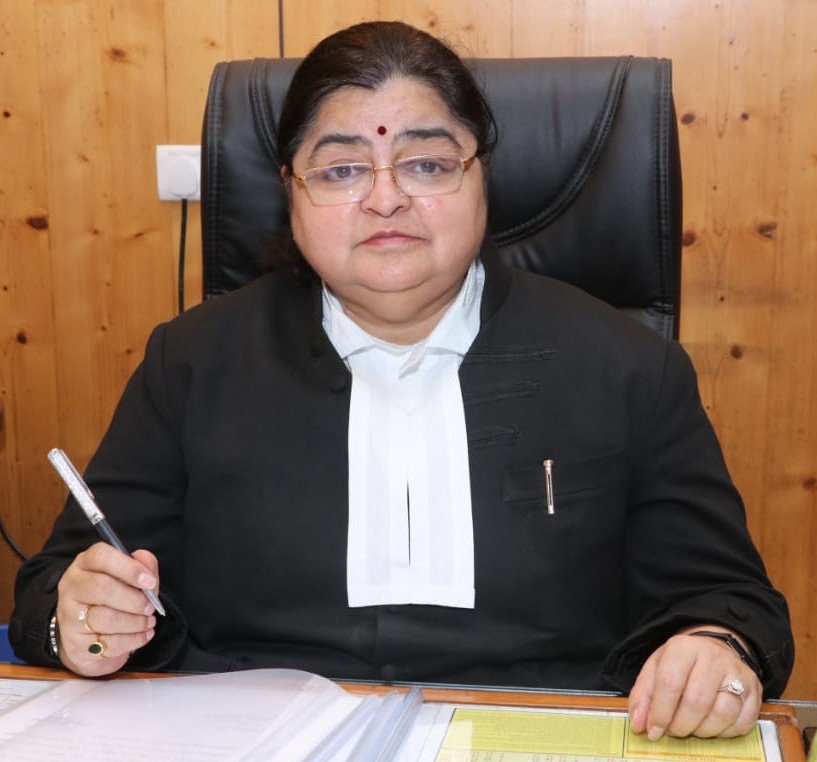
Hon’ble Smt. Justice Rajani Dubey
C A V Judgement
ACQA No. 228 of 2015
1.This acquittal appeal has been preferred by Appellant No. 1- Smt.
Satwati Bai, and Appellant No. 2- Indra Kumar Mandavi, against the
judgment dated 21.09.2015 passed by the learned Special Judge, SC
& ST (Prevention of Atrocities) Act, 1989, Dhamtari, in Special
Sessions Trial No. 02/2015, whereby Respondent No. 2, Ashok Kumar
Wadhwani, was acquitted of the offence under Section 3(2)(v) of the
SC & ST Act and awarded a lesser sentence for the offence
punishable under Section 306 of the IPC.
3
CRA No. 1191 of 2015
2. This appeal is preferred by the accused/appellant under Section 374 (2)
of the Code of Criminal Procedure, 1973 against the judgment dated
21.09.2015 passed by learned Special Judge, SC & ST (Prevention of
Atrocities) Act, 1989, Dhamtari in Special Sessions Trial No. 02/2015,
wherein the said Court convicted the accused/appellant and sentenced
him as under:-
Conviction Sentence
Under Section 306 of
IPC
R.I. for 07 years along with a fine
amount of Rs. 2000/-, in default
of payment of fine, to undergo
additional R.I. for 03 months
3.The case of the prosecution, as unfolded from the impugned judgment
and the records of the case in the appeals, is that on 14.06.2014
complainants- Indra Kumar, Ramlal Sahu (Up-Sarpanch of Village
Baliyara), Raghvendra Sinha (Secretary) and Hansraj (Kotwar), lodged
an oral report at Police Station- Arjuni stating that Balram Mandavi had
left his house on 13.06.2014 at about 4:00 PM without informing
anyone and had not returned. Despite inquiries made in the village, his
whereabouts could not be ascertained. On 14.06.2014, the
complainants, along with Puna Ram Mandavi and Umesh Mandavi,
went to inspect the fields and found Balram Mandavi lying dead in his
field at Navagaon Khar. His motorcycle was found parked near a drain
and a box of pesticide was lying nearby. The body was thereafter
brought home. On the basis of this information, a case was registered
and investigation commenced. During the inquest proceedings, a diary
4
and a suicide note were recovered from the pocket of the deceased
Balram Mandavi, wherein he had stated the reasons for taking his life.
The articles were seized in the presence of witnesses under a seizure
memo. During investigation, statements of the complainants and the
children of the deceased were recorded. They disclosed that Balram
Mandavi, the Sarpanch, had procured materials for the construction of
a NREGA Chaupal from a contractor Ashok Wadhwani and owed him
approximately Rs. 40,000/-. It was alleged that the accused- Ashok
Wadhwani, persistently harassed the deceased by demanding Rs. 3–4
lakhs as enhanced interest on the outstanding amount. Being fed up
with the aforesaid illegal persistent demand and harassment, Balram
Mandavi allegedly consumed pesticide in the field of Sudarshan in
Village- Baliyara after 5:00 PM on 13.06.2014, resulting in his death.
Witnesses were summoned for the inquest proceedings and in their
presence, an inquest memo was prepared, during which a diary and a
suicide note were recovered from the pocket of the deceased and
were seized under a seizure memo. A post-mortem examination of the
deceased was conducted and the post-mortem report was obtained.
Thereafter, an FIR was registered at Police Station- Kurud, statements
of witnesses were recorded and a spot map was prepared. Specimen
documents containing the natural handwriting of the deceased and
caste certificate were seized. The accused was arrested and a supply
bill was recovered and seized from his possession. The seized
documents were forwarded through the Superintendent of Police,
Dhamtari, to the Director, State Handwriting Expert, Raipur, for
examination and the expert's report was subsequently obtained. After
5
completion of due and necessary investigation, charge-sheet was led
before the concerned jurisdictional Magistrate who, in turn, committed
the case for trial. On the basis of the material contained in the charge-
sheet, learned trial Court framed charges against the accused person
for alleged commission of offence under Section 306 of IPC and
Section 3 (2) (v) of the Act, 1989. The accused person having abjured
guilt was subjected to trial.
4.In order to bring home the guilt, the prosecution has examined as
many as 13 witnesses to prove its case against the appellant/accused.
Statement of the accused was also recorded under Section 313 of
Cr.P.C., in which he denied all the incriminating circumstances
appearing against him in the prosecution case and pleaded his
innocence and false implication in the case.
5.Learned counsel for the complainants/appellants in ACQA No. 228 of
2015 submits that the learned trial Court erred in acquitting
accused/Respondent No. 2 of the charge under Section 3(2)(v) of the
SC & ST Act and in imposing an inadequate sentence for the offence
punishable under Section 306 IPC, without properly appreciating the
evidence and material available on record. It is contended that the
prosecution established that Respondent No. 2 continuously harassed
the deceased for payment of Rs. 4,00,000/-, despite the deceased
having already paid the amount due towards the construction
materials purchased by him. Such harassment constituted the
instigation that drove the deceased to commit suicide, while the trial
Court rightly convicted accused/Respondent No. 2 for offence under
Section 306 of IPC, it imposed an unduly lenient sentence considering
6
the gravity of the offence. It is further submitted that the prosecution
proved that the deceased belonged to a Scheduled Tribe community
and that accused/Respondent No. 2 was fully aware of this fact, yet he
deliberately subjected the deceased to harassment knowing his
financial inability to pay the alleged amount. Therefore, the ingredients
of the offence punishable under Section 3(2)(v) of the Act, 1989 stood
proved, but the trial Court has failed to record a conviction under the
said section. Therefore, considering the facts and circumstances of the
case, the acquittal of accused/Respondent No. 2 for the offence under
the Atrocities Act is not sustainable in law and is contrary to the settled
principles of law. Hence, the impugned judgment is liable to be
modified.
To buttress her contention, she relied upon the judgments of the
Hon’ble Supreme Court in the matters of Gurbachan Singh vs.
Satpal Singh and Ors
1
and Pawan Kumar vs. State of Himachal
Pradesh
2
6.Ex adverso, learned Senior counsel for the accused/appellant in CRA
No. 1191 of 2015 and respondent No. 2 in ACQA No. 228 of 2015
vehemently opposes the prayer made by learned counsel for the
complainants/appellants in ACQA No. 228 of 2015.
7.Learned Senior counsel for the accused/appellant in CRA No. 1191 of
2015 submits that the impugned judgment is perverse, contrary to law,
and unsupported by the evidence on record. It is contended that
conviction of the accused/appellant under Section 306 IPC requires
1(1990) SCC 445
2(2017) 7 SCC 780
7
proof of mens rea and a positive act of instigation, aid, or intentional
conduct that leaves the deceased with no option but to commit suicide.
The prosecution has failed to establish any such intention or conduct
on the part of the appellant. It is further submitted that the prosecution
has not proved any circumstances showing that the appellant
compelled or provoked the deceased to take the extreme step of
suicide. The suicide note does not state that the deceased was
instigated by the appellant to commit suicide. Except for a reference to
the appellant’s name, the note contains no allegation of any act,
omission, or conduct amounting to instigation, intentional aid or
abetment. There is also no evidence of any conspiracy involving the
appellant that led to the suicide. Relying on settled law laid down by
the Hon’ble Supreme Court, learned Senior counsel submits that mere
demand for repayment of money legally due from the deceased
cannot constitute abetment of suicide under Section 306 IPC. In the
present case, the deceased was burdened with an outstanding bank
loan of Rs. 2,58,000/-, which is a relevant circumstance ignored by the
trial Court. Attention is also drawn to the testimony of PW-1 (son of the
deceased), who admitted in his deposition that he did not inform the
police at the time of lodging the report that the deceased had
committed suicide due to any instigation by the appellant, nor did he
state during the inquest proceedings that his father had been harassed
by the appellant. It is further argued that most independent witnesses
did not support the prosecution case, yet the learned trial Court
convicted the appellant solely on the testimonies of PW-1 (Son of the
deceased) and PW-2 (father of the deceased). Accordingly, the
8
conviction under Section 306 IPC is unsustainable and liable to be set
aside. Learned Senior counsel also submits that learned trial Court
rightly acquitted the appellant of the charge under Section 3(2)(v) of
the Act, 1989 and acquittal appeal filed by the complainants/appellants
without any merit is liable to be dismissed and appeal filed by the
accused/ appellant may be allowed.
To buttress his contention, he relied upon the judgment of the
Hon’ble the Apex Court in the matters of Mahendra Awase vs. State
of Madhya Pradesh
3
& Dhirubhai Nanjibhai Patel Lotwala vs. State
of Gujarat and Anr.
4
and also relied upon the judgment of Hon’ble
Delhi High Court in the matter of Smt. Sunil vs. State of Govet of
NCT of Delhi
5
and in the matter of Smt. Shaila Singh vs. State of
C.G. and Anr.
6
passed by this Court.
8.Ex adverso, learned counsel for the appellants/complainants in ACQA
No. 228 of 2015 vehemently opposes the submissions advanced on
behalf of the accused/appellant in CRA No. 1191 of 2015. It is
contended that the prosecution has successfully established its case
beyond reasonable doubt and that the learned trial Court rightly
convicted the appellant for the offence punishable under Section 306
IPC. It is further submitted that although the evidence on record clearly
attracted the provisions of the Act, 1989, but the learned trial Court
failed to properly appreciate the relevant statutory provisions and
erroneously acquitted the accused/Respondent No.2 of the charge
3(2025) 4 SCC 801
42026 LiveLaw (SC) 270
5CRL REV.P. 591/2023 & CRL.M.A. 14085/2023
6CRMP No. 1441 of 2017
9
under Section 3(2)(v) of the Act, 1989. Accordingly, it is prayed that
ACQA No. 228 of 2015 filed by the complainants/appellants may be
allowed by setting aside the acquittal under the Act, 1989 and CRA
No. 1191 of 2015 preferred by the accused may be dismissed.
9.Learned counsel for the State supporting the argument of learned
counsel for the appellants/complainants in Acquittal Appeal No. 228 of
2015 and vehemently opposes the submissions advanced on behalf of
the accused/appellant in CRA No. 1191 of 2015, submits that the
learned trial Court minutely appreciated the oral and documentary
evidence and has rightly convicted and sentenced the appellants/
accused for offence under Section 306 of IPC, but the learned trial
Court failed to minutely appreciate the relevant statutory provisions
and erroneously acquitted the appellant of the charge under Section
3(2)(v) of the Act, 1989.
10.I have heard learned counsel for the parties and perused the material
available on record.
11.It is not disputed in this case that learned trial Court framed charges
under Section 306 of IPC and 3 (2) (v) of the Act, 1989 against the
accused- Ashok Kumar Wadhwani. After appreciation of oral and
documentary evidence available on record, learned trial Court
acquitted the accused person of charge under Section 3 (2) (v) of Act,
1989, but convicted him for offence under Section 306 of IPC and
sentenced as mentioned in para 02 of this judgment. It is also not
disputed in this case that deceased Balram Mandavi had committed
suicide on 13.06.2014 by consuming pesticide.
10
12.The prosecution produced the caste certificate of Indra Kumar, son of
the deceased, marked as Ex. P/8, which was issued by the S.D.O.,
Dhamtari. The said certificate establishes that the deceased Balram
Mandavi, belonged to the Scheduled Tribe community. The learned
trial Court has also recorded a finding to the same effect.
13.PW-1- Indra Kumar, son of the deceased Balram Mandavi, stated that
the accused worked as a contractor and also lent money on interest in
the village. His father had engaged the accused for gravel and stone
work and made payments from time to time. The accused was
demanding the remaining amount of 40,000 and had allegedly
₹
inflated the liability by charging interest, claiming an amount of 3–4
₹
lakhs. According to the witness, his father committed suicide due to
this persistent harassment, which was also mentioned in the suicide
note. The police subsequently recorded his statement.
14.PW-2, Raghunandan, father of the deceased, stated that he had
known the accused for a long time and that the accused was engaged
in money lending on interest. He deposed that the accused once came
to his house looking for his son (deceased). While his son was
present, a conversation took place between the accused and his son;
however, he was unable to state the contents of that conversation.
15.A careful scrutiny of the statements of PW-1 Indra Kumar and PW-2
Raghunandan reveals that neither witness has alleged that the
accused ever subjected the deceased to any caste-based insult,
intimidation, humiliation or harassment. Their evidence is confined to
the allegation that the accused was demanding repayment of money
11
allegedly due from the deceased. Both witnesses have admitted that
an amount was in fact payable by the deceased to the accused. The
contents of the suicide note (Article-1) also do not disclose any
allegation of caste-related harassment. The deceased merely stated
that the accused was demanding 3–4 lakhs by charging excessive
₹
interest on the outstanding amount of 40,000/-. The suicide note
₹
further reveals that the deceased along with his father and brother,
had purchased a tractor and that a sum of 2 lakhs remained unpaid
₹
towards the said purchase.
16.Thus, the material available on record indicates that the deceased was
under financial liabilities and was facing demands for repayment of
dues. Even if the prosecution case is accepted at its highest, the
allegations pertain solely to a monetary dispute and recovery of an
outstanding amount. There is no evidence, either oral or documentary,
to suggest that the accused harassed or intimidated the deceased on
account of his caste. Consequently, the essential ingredients of caste-
based offences are conspicuously absent from the prosecution
evidence.
17.A perusal of the suicide note (Article-1) does not disclose any
allegation that the deceased was harassed, humiliated, or subjected to
any ill-treatment by the accused/appellant on account of his caste. The
contents of the note pertain only to a monetary dispute between the
parties.
18.The learned Trial Court has meticulously appreciated the entire oral
and documentary evidence on record and has rightly concluded that
12
the prosecution has failed to establish the essential ingredients of the
offence punishable under Section 3(2)(v) of the Act, 1989. The finding
of acquittal is based on proper appreciation of evidence and does not
suffer from any perversity or illegality warranting interference.
Consequently, ACQA No. 228 of 2015, preferred by the complainants/
appellants against the acquittal under the Special Act is devoid of
merit.
19.Insofar as ACQA No. 228 of 2015, seeking enhancement of sentence
under Section 306 IPC by the complainants and CRA No. 1191 of
2015, preferred by the accused/appellant challenging his conviction,
are concerned, the evidence of PW-1 Indra Kumar and PW-2
Raghunandan unequivocally establishes that the accused had been
demanding repayment of the amount due from the deceased Balram
Mandavi.
20.At this juncture, it is appropriate to look into the provisions of Sections
306 & 107 of Indian Penal Code, which reads as under:-
“306. Abetment of Suicide- If any person commits suicide,
whoever abets the commission of such suicide, shall be
punished with imprisonment of either description for a term
of which may extend to ten years, and shall also be liable to
fine.
107. Abetment of a thing- A person abets the doing of a
thing who-
First- Instigates any person to do that thing: or
Second- Engages with one or more other person in any conspiracy
for the doing of that thing, if an act or illegal mission takes place
in pursuance of that conspiracy, and in order to the doing of that
thing; or
13
Third- Intentionally aids, by any act or illegal omission, the doing
of that thing.
Explanation 1. A person who, by willful misrepresentation, or by
willful concealment of a material fact which he is bound to disclose,
voluntarily causes or procures, or attempts to cause or procure, a
thing to be done, is said to instigate the doing of that thing.
Explanation 2. Whoever, either prior to or at the time of the
commission of an act, does anything in order to facilitate the
commission of that act, and thereby facilitate the commission thereof,
is said to aid the doing of that act. ”
21. It has been recently held and observed by the Hon’ble Apex Court in
the matter of Dhirubhai (supra) in paras 13 and 14 as under:-
“13. What is evident from the charge-sheet submitted
by the investigating agency is that the deceased had
borrowed money from multiple accused. Insofar as the
present appellant is concerned, it appears the deceased
initially borrowed Rs. 4 lacs and in lieu thereof, issued a
cheque drawn on State Bank of India. Later, Rs. 6 lacs
were also lent. The only basis on which the charge-
sheet has been laid against the accused is the suicide
note coupled with the call detail records which indicate
that 40 phone calls were made by the appellant to the
deceased in last six months. As far as the suicide note
is concerned, we find that it lacks material particulars
regarding the nature of those threats and the time and
place when those threats were extended. Moreover, the
suicide note indicts as many as 9 accused without
specifying the role of any one of them. It is not the case
14
of the prosecution that all accused belong to one family
or were harassing the deceased as a group. Further, the
deceased has painted all creditors with one brush.
Therefore, a trial based on such a suicide note would
be a futile exercise. Besides, if a creditor makes a
phone call to the debtor for return of his money that
being a lawful act, it cannot on its own constitute a
ground to prosecute the creditor. Moreover, the
deceased may have committed suicide on account of
depression for not being able to clear of the debt.
14. In such circumstances, particularly when there is
no material to indicate that the deceased was beaten
or physically assaulted to return the dues, we are of
the view that there is hardly any material on basis
whereof it could be inferred that the appellant by
demanding his dues abetted commission of suicide by
the deceased. In our view, therefore, the continuance
of the proceedings against the appellant would be a
futile exercise and would amount to abuse of the
process of the Court. Hence, to secure the ends of
justice, it is necessary that the same be quashed.”
22. It has been held and observed by the Hon’ble Apex Court in the matter
of Mahendra Awase (supra) in paras 19, 20, 21, 22 & 23 as under:-
“ 19. As has been held hereinabove, to satisfy the
requirement of instigation the accused by his act or
15
omission or by a continued course of conduct should
have created such circumstances that the deceased was
left with no other option except to commit suicide. It was
also held that a word uttered in a fit of anger and emotion
without intending the consequences to actually follow
cannot be said to be instigation.
20. Applying the above principle to the facts of the
present case, we are convinced that there are no grounds
to frame charges under Section 306 IPC against the
appellant. This is so even if we take the prosecution's
case on a demurrer and at its highest. A reading of the
suicide note reveals that the appellant was asking the
deceased to repay the loan guaranteed by the deceased
and advanced to Ritesh Malakar.
21. It could not be said that the appellant by performing
his duty of realising outstanding loans at the behest of his
employer can be said to have instigated the deceased
commit suicide. Equally so, with the transcripts, including
the portions emphasised hereinabove. Even taken
literally, it could not be said that the appellant intended to
instigate the commission of suicide.
22. It could certainly not be said that the appellant by his
acts created circumstances which left the deceased with
no other option except to commit suicide. Viewed from
the armchair of the appellant, the exchanges with the
deceased, albeit heated, are not with intent to leave the
16
deceased with no other option but to commit suicide. This
is the conclusion we draw taking a realistic approach,
keeping the context and the situation in mind. Strangely,
the FIR has also been lodged after a delay of two months
and twenty days.
23. This Court has, over the last several decades,
repeatedly reiterated the higher threshold, mandated by
law for Section 306 IPC (Now Section 108 read with
Section 45 of the Nyaya Sanhita, 2023) to be attracted.
They however seem to have followed more in the breach.
Section 306 IPC appears to be casually and too readily
resorted to by the police. While the persons involved in
genuine cases where the threshold is met should not be
spared, the provision should not be deployed against
individuals, only to assuage the immediate feelings of the
distraught family of the deceased.”
23.It has been held and observed by Hon’ble Delhi High Court in the matter
of Smt. Sunil (supra) in paras 25, 26, 28, 29 and 30 as under:-
“ 25. Harassment in the present case is alleged on
account of exuberant rate of interest, threats of jail.
visits to the home of deceased and constant calls by
Respondent No.2. In allegations, there is also mention
of a remark made by Respondent No.2 on one call,
soon before the victim committed suicide, where he
asked the victim to pay the dues or to commit suicide.
17
Pertinently, in his suicide note, the deceased has only
mentioned the threat of jail as the reason of
harassment.
26. Insofar as the remark in relation to suicide is
concerned, even if the same is taken at the highest.
such words of casual nature employed in heat of the
moment are to be seen from a practical point of view,
and the same alone does not reflect intention on part of
the accused to incite the deceased into committing
suicide. Even as per the statement of the petitioner, the
remark only appears to be made in an attempt to
pressure the deceased into making payment of the
remaining dues.
28. Merely pursuing the borrower by way of repeated
calls, or making occasional house visits where harsh
words are said in the moment, for repayment are also
not sufficient to prima facie raise grave suspicion
against the accused qua instigating suicide.
29. Simple harassment is insufficient to make out a
case of abetment and by no stretch of imagination can
it be said that the accused created a scenario that left
the deceased with no other option but to commit
suicide. As has also been rightly appreciated by the
learned Trial Court, in the face of threats of jail, the
victim had the option of repaying the debt and facing
legal consequences. Alternatively, in case the charged
18
interest was indeed usurious, the deceased was
entitled to refuse payment and pursue his legal
remedies in this regard instead.
30. It is imperative to appreciate that although financial
distress and 'harassment' by Respondent No.2 (who
was seeking to recover dues) may have been the
motivating factors behind the suicide of the deceased,
as is canvassed from the suicide note and statement of
the petitioner, culpability cannot be attracted against
the accused in absence of any mens rea. Even if the
allegations of harassment are presumed to be correct,
in their capacity as lenders, the intent of the accused
appears to be to only pressurise the deceased to
recover the loan amount and not to instigate the
deceased into committing suicide. As also appreciated
by this Court in the case of Laxmi Jha & Anr v. State &
Anr: 2025: DHC:8234, while conduct of a person may be
a reason for the victim to take their life, in the absence
of active instigation, the said conduct cannot be
equated with abetment to suicide. “
24.In light of the above judgments, in this present case also, it is evident
that the appellant had merely demanded repayment of the loan
amount due from the deceased- Balram Mandavi. PW-1 and PW-2
have categorically admitted that the accused was seeking recovery of
his outstanding dues and had even warned him by saying that in the
event of non-payment, he would go to the Court and initiate legal
19
proceedings for getting back his money. The evidence of PW-1 further
reveals that the deceased had availed a bank loan for purchase of a
tractor. Due to non-payment of the loan installments, the bank
repossessed and auctioned the tractor. PW-1 has also admitted that
the deceased was deeply distressed by the loss of the tractor and that
these facts were specifically mentioned in the suicide note. He further
admitted that a sum of 2,58,000/- remained outstanding towards the
₹
bank loan during the lifetime of the deceased. The suicide note itself
reflects the financial liabilities of the deceased, including the
outstanding bank dues and his mental state of health due to the loss of
the tractor. The independent witnesses have also supported the
defence version by acknowledging that the appellant/accused used to
lend money on interest in the village and had demanded repayment of
the amount due from the deceased. It is evident from all the witnesses
that that no overt act done by the accused against the deceased and it
is well settled principle of law that merely pursuing the borrower by
way of repeated calls, or making occasional house visits where harsh
words are said in the moment, for repayment are also not sufficient to
prima facie grave suspicion against the accused qua instigating
suicide. Consequently, the prosecution has utterly failed to prove the
essential ingredients of abetment as contemplated under Section 107
IPC.
25. It has been held and observed by this Court in the matter of Smt.
Shaila (supra) in para 13 as under:-
13. Even if the prosecution version is taken as true
20
and correct, there is no material on record to
establish that the petitioner had adopted any coercive
methods to recover her loan amount. Further, if there
was any demand made by the petitioner, that cannot
be treated as abetment as any person who has given
loan would certainly like to get it back. If there was
any unlawful activity performed by the petitioner in
order to recover the loan amount, either the deceased
or her husband could have taken shelter of any
competent Court of law or at least made a complaint
before the police authorities, which admittedly in this
case is missing.
26.In the light of above, the prosecution has failed to prove its case
beyond reasonable doubt against the accused for offence under
Section 306 of IPC, but the learned trial Court did not minutely
appreciate the material evidence on record in its correct perspective
and erroneously recorded a finding of conviction. The conclusions
drawn by learned trial Court are thus not sustainable in law and are
liable to be set aside.
27. On the basis of aforesaid discussions,
1.Ex consequenti, the Acquittal Appeal No. 228 of 2015 filed by the
appellants/complainants being devoid of any substance is hereby
dismissed.
2.The criminal appeal filed by the appellant- Ashok Kumar Wadhwani in
CRA No.1191 of 2015 is allowed and the impugned judgment of
21
conviction and order of sentence dated 21.09.2015 is hereby set-aside
and the appellant is acquitted of the aforesaid charge.
The appellant is reported to be on bail, therefore, in view of
provisions of Section 481 of BNSS his bail bond shall remain in
operation for a period of six months from today.
The trial Court record along with a copy of this judgment be sent
back immediately to the trial Court concerned for compliance and
necessary action.
SD/-
(Rajani Dubey)
JUDGE
AMIT PATEL
In a significant ruling concerning criminal jurisprudence, the Chhattisgarh High Court recently delivered a noteworthy judgment in ACQA No. 228 of 2015 and CRA No. 1191 of 2015. This decision, now prominently featured on CaseOn, delves into critical aspects of Abetment of Suicide Cases and the application of the Scheduled Castes and Tribes (Prevention of Atrocities) Act. The court meticulously analyzed the fine line between persistent debt recovery and criminal instigation, offering crucial insights for legal practitioners and students alike.
The case involved two appeals arising from a judgment dated September 21, 2015, by the Special Judge, SC & ST (Prevention of Atrocities) Act, 1989, Dhamtari. In the original trial, Respondent No. 2, Ashok Kumar Wadhwani, was acquitted of the charge under Section 3(2)(v) of the SC & ST Act but convicted under Section 306 of the Indian Penal Code (IPC) for abetment of suicide, receiving a seven-year rigorous imprisonment sentence and a fine.
The prosecution's case revolved around the suicide of Balram Mandavi on June 13, 2014. According to the police report, Mandavi, a Sarpanch, had procured construction materials from contractor Ashok Wadhwani, owing him approximately Rs. 40,000. It was alleged that Wadhwani incessantly harassed Mandavi, demanding an inflated sum of Rs. 3-4 lakhs as enhanced interest. Overwhelmed by these demands and harassment, Mandavi allegedly consumed pesticide and died. A suicide note was recovered, which mentioned the reasons for his extreme step, including financial liabilities and the loss of a repossessed tractor.
During the investigation, it was established that Mandavi belonged to a Scheduled Tribe community. Witnesses were examined, and documents, including Mandavi's caste certificate and the suicide note, were seized. The charge sheet led to Wadhwani being tried under Section 306 IPC and Section 3(2)(v) of the SC & ST Act.
Section 3(2)(v) of the SC & ST (Prevention of Atrocities) Act, 1989, targets offenses committed against a person because they are a member of a Scheduled Caste or a Scheduled Tribe. The key ingredient is that the act of harassment, insult, or intimidation must be specifically motivated by the victim's caste.
The High Court carefully reviewed the evidence, including the statements of PW-1 (Indra Kumar, son of the deceased) and PW-2 (Raghunandan, father of the deceased). While both witnesses spoke of Wadhwani's demands for money, neither alleged any caste-based insult, intimidation, or harassment. The suicide note, too, did not contain any allegations of caste-related ill-treatment. Instead, it focused squarely on monetary disputes and financial distress. Therefore, the essential ingredients of a caste-based offense were conspicuously absent from the prosecution's evidence.
The High Court upheld the trial court's acquittal of Ashok Kumar Wadhwani under Section 3(2)(v) of the SC & ST Act, finding no perversity or illegality in the lower court's appreciation of the evidence. The appeal (ACQA No. 228 of 2015) seeking to overturn this acquittal was thus dismissed.
Section 306 IPC punishes abetment of suicide, which is defined by Section 107 IPC. Abetment requires:
The High Court meticulously re-examined the evidence concerning Wadhwani's actions. PW-1 and PW-2 confirmed that Wadhwani was primarily demanding repayment of a loan. The deceased's suicide note highlighted his financial liabilities, including an outstanding bank loan and distress over a repossessed tractor. There was no evidence of any "overt act" by Wadhwani that actively pushed Mandavi to commit suicide. The court emphasized that Wadhwani's intent was clearly to recover his outstanding dues, not to instigate Mandavi's death. While his demands might have contributed to Mandavi's financial distress, they did not constitute the kind of "active instigation" required under Section 107 IPC. The court noted that merely pursuing a borrower for repayment, even with repeated calls or visits, does not automatically create a "grave suspicion" of abetment.
In fact, CaseOn.in's 2-minute audio briefs provide a quick and efficient way for legal professionals to grasp the nuances of such rulings, offering concise summaries that highlight the critical distinctions between debt recovery and criminal instigation, as seen in this very judgment.
Drawing parallels with cited precedents, the court reinforced that if a creditor makes a phone call to a debtor for money, it's a lawful act. It further noted that if the deceased had other options, such as seeking legal recourse against usurious interest rates or managing other debts, it diminishes the argument that the accused left him with "no other option." The court ultimately found that the prosecution failed to prove the essential ingredients of abetment beyond a reasonable doubt.
The High Court concluded that the trial court erroneously convicted Ashok Kumar Wadhwani under Section 306 IPC. His appeal (CRA No. 1191 of 2015) was therefore allowed, setting aside the conviction and sentence.
The Chhattisgarh High Court, after a comprehensive review, dismissed the appeal by the complainants (ACQA No. 228 of 2015), upholding the acquittal of Ashok Kumar Wadhwani under the SC & ST Act due to a lack of caste-based allegations. Concurrently, the court allowed the appeal by the accused (CRA No. 1191 of 2015), acquitting him of the Section 306 IPC charge. The judgment emphasized that mere demands for loan repayment, even if persistent and involving harsh words, do not automatically constitute abetment of suicide unless a direct and intentional instigation to commit the act is proven beyond reasonable doubt. The court found that Wadhwani's intent was to recover debt, not to cause Mandavi's death, and that Mandavi's suicide was more attributable to his overall financial distress rather than active instigation by Wadhwani.
This ruling is a crucial resource for anyone studying or practicing criminal law, particularly concerning abetment of suicide and the SC & ST Act. It meticulously clarifies the high evidentiary threshold required to prove "instigation" under Section 306 IPC, distinguishing it from general harassment or debt recovery. For legal professionals, it provides a strong precedent for defending or prosecuting cases involving financial distress leading to suicide. For students, it serves as an excellent case study on the application of statutory provisions, the importance of mens rea, and the nuanced interpretation of "abetment" by higher courts. Understanding these distinctions is vital for a just application of the law and preventing the casual deployment of serious criminal charges without sufficient proof of intent.
All information provided in this article is for informational purposes only and does not constitute legal advice. While efforts have been made to ensure accuracy, readers should consult with a qualified legal professional for advice pertaining to their specific circumstances.

 Login with google
Legal Notes
Add a Note....