
As per case facts, the High Court quashed a detention order under the National Security Act, citing severe irregularities in prison management, including unauthorized entries and alleged conspiracies. The High ...

http://JUDIS.NIC.IN SUPREME COURT OF INDIA Page 1 of 6
CASE NO.:
Appeal (crl.) 284 of 1998
PETITIONER:
State of Maharashtra & Ors.
RESPONDENT:
Asha Arun Gawali & Anr.
DATE OF JUDGMENT: 27/04/2004
BENCH:
DORAISWAMY RAJU & ARIJIT PASAYAT.
JUDGMENT:
J U D G M E N T
With
Crl.A. Nos. 285 and 286 of 1998
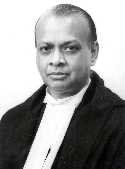
ARIJIT PASAYAT, J.
The concern for reformation of prisoners and
improvement of prison conditions has been judicially
recognised. But the same does not countenance "holding
of darbars in prisons by prisoners", "five star hotel
comforts for prisoners" or "free entry to and exit from
jail" as surface in these cases, that too by statements
of admission marked by abashed inefficiency unbecoming
of those who are ordained to strictly carry out their
duties and responsibilities i.e., state of jail
authorities and the highly placed Governmental
functionaries. The Bombay High Court while dealing with
the legality of order directing detention of one Arun
Gawali (hereinafter referred to as "detenu") gave
certain directions, to be noted hereinafter.
These three appeals are interlinked and have their
matrix to the impugned judgment by a Division Bench of
the Bombay High Court. The High Court in addition to
quashing of order of detention gave the following
directions:
"The State Government is directed
to launch prosecution against S/Shri
D.M. Jadhav, M.G. Ghorpade and L.T.
Samudrawar and other Jail Officials, in
case, if any, for the offences
punishable under sections 120-B, 217 and
218 of the Indian Penal Code and also
under any other relevant provision of
law, either independently or in the
prosecution pending against the detenu.
Shri P. Subramaniam, Additional
Chief Secretary (Home), Shri S.C.
Malhotra, Commissioner of Police Mumbai
and Shri M.G. Narvane, Inspector General
of Prisons, Pune shall pay exemplary
costs of Rs.25,000/- each.
S/Shri D.M. Jadhav, M.G. Ghorpade
http://JUDIS.NIC.IN SUPREME COURT OF INDIA Page 2 of 6
and L.T. Samudrawar, Superintendents of
Jail, shall pay exemplary costs of
Rs.15000/- each.
The Government of Maharashtra shall
deposit the entire exemplary costs
payable by these officers as indicated
in this Court within a period of 10 days
and the state Government shall
thereafter recover the costs so paid
from the respective officials, in
accordance with law.
The Government shall pay, by way of
remuneration, Rs.5000/- to Shri W.G.
Charde, Advocate, who acted as an Amicus
Curies, within a period of 10 days."
Detenu's wife Asha Gowali filed a Writ Petition
questioning legality of the order of detention passed
under Section 3 of the National Security Act, 1980 (in
short 'the Act'). The directions were given while, as
noted above quashing the detention taking note of
certain baffling fact situations which came to light
while hearing the writ petition and which should sound
as 'nightmares' to any law abiding citizen and law
enforcing authorities. While the State of Maharashtra
questions the directions relating to launching of
prosecution, the other two appeals i.e. Criminal Appeal
No. 286 of 1998 has been filed by Mr. P. Subramanyam,
who was then functioning as Chief Secretary (Home) and
Criminal Appeal No. 285 of 1998 has been filed by Mr.
Mahadu Govindrao Narvane, who was then functioning as
Inspector General of Prisons. Though the judgment has
been assailed by the State of Maharashtra no separate
appeal has been filed by Mr. S.C. Malhotra, Commissioner
of Police Mumbai, Mr. D.M. Jadhav, Mr. M.G. Ghorpade and
Mr. L.T. Samudrawar, who were acting as Superintendents
of Jail, though the directions given by the High Court
also related to them.
The High Court noticed some startling features of
monstrosity found prevailing and while dealing with the
Habeas Corpus application tried to pierce the veils and
noticed the actual distressing as well as disgusting
state of affairs. This was felt necessary because of
certain observations in the detention order to the
effect that the detenu while in jail had master-minded
killings of certain persons in connivance with the
active participation of certain persons who had come to
meet him in jail.
Certain registers like the visitors' register etc.
were called for verification and High Court noticed that
there was no entry about the alleged visit of so called
co-conspirators and there was no record of their having
met the detenu. Certain officials were asked to file
affidavits. Finding many inconsistent and irreconcilable
statements High Court did not give any credence to the
affidavits. In the aforesaid background it was observed
that the order of detention was passed on irrelevant
materials and was indefensible. In view of the sensitive
nature of the matter a learned counsel was appointed as
Amicus Curie and his assistance was appreciated by the
High Court.
http://JUDIS.NIC.IN SUPREME COURT OF INDIA Page 3 of 6
Taking note of the sad state of affairs in the jail
and the total indifference of the concerned authorities,
the High Court felt that there was a need for imposition
of exemplary costs on the erring officials and that is
how the directions quoted above were made.
The legality of the directions has been questioned
in the three appeals. Mr. Mukesh K. Giri, learned
counsel appearing for the appellant-State submitted that
the High Court should not have given direction for
launching of prosecution straightaway without adequate
material. Further the order of detention was passed bona
fide and appropriate actions have also been taken
against erring officials and, therefore, the imposition
of costs is uncalled for. Similar is the stand taken by
the other learned counsel for the appellants.
Though the legality of the order quashing the
detention order was questioned that was not very
seriously pressed. Mr. M.D. Adkar, learned counsel
appearing for the respondent No.1 - writ petitioner
submitted that the High Court has taken note of the
realities and has passed an appropriate order and no
interference is called for.
Certain baffling features have emerged on a bare
reading of the High Court's Order. The activities in
the jail, entry of unauthorised persons and holding of
"Darbar" are part of the defensive stand taken by the
State Authorities in the affidavits filed before the
High Court. We are shocked to find that the norms
relating to entry of persons to the jail, maintenance of
proper record of persons who entered the jail have been
observed more in breach than observance and the rules
and regulations have been found thrown to winds. The
affidavits filed by the officials amply demonstrate this
factor. One used to hear and read about lavish parties
being thrown inside the jail. Doubts at times were
entertained about the authenticity of such news having
regard to the normal good faith to be reposed in the
regularity of official activities. But the admissions
made in the affidavits filed by the Jail Authorities and
the officials, accept it as a fact. What is still more
shocking is that persons have entered the jail, met the
inmates and if the statements of the officials are seen
hatched conspiracies for committing murders. The High
Court was therefore justified in holding that without
the active cooperation of the officials concerned these
things would not have been possible. The High Court
appears to have justifiably felt aghast at such acts
of omissions and commissions of the jail officials which
per se constituted offences punishable under various
provisions of the IPC and has, therefore, necessarily
directed the launching of criminal prosecution against
them, besides mulcting them with exemplary costs.
The High Court noticed and in our view correctly
that when the names of visitors who allegedly were a
part of the conspiracy warranting detention of the
detenu were not in the list of visitors during the
concerned period, there is a patent admission about
people getting unauthorised entry into the jails without
their names being recorded in the official records
something which would be impossible except with the
http://JUDIS.NIC.IN SUPREME COURT OF INDIA Page 4 of 6
connivance of those who otherwise should have prevented
such things happening. It was noted by the High Court
that there was no explanation as to how somebody could
gain entry in the jail and meet the detenu and yet no
entry would be made therefor. It is not possible unless
the jail officials are themselves a party to the same.
On one hand the detaining authority was referring to the
activities of the detenu inside the jail and the
conspiracies hatched, and at the same time official
records belied their version. In respect of certain
officials' misconducts explanations were called for
regarding involvement of jail officials, their
negligence or connivance relating to Yerwada Central
Prison. The High Court noticed that after taking some
initial disciplinary action, nothing concrete was really
done. It felt that the Inspector General of Prisons,
other high placed officials and the Chief Secretary
acted with unwarranted casualness and indifference and
there was total lack of any seriousness or sensitivity
exhibited in the matter. If the criminal activities of
the detenu were to be prevented and the recurrence of
lapses which are serious on the part of those concerned
were to be averted, firm action was necessary which yet
was not even taken for reasons best known to themselves.
In the aforesaid background the concern exhibited by the
High Court as a necessary corollary by imposition of
costs cannot at all be found fault with.
In the background of what has been noticed by the
High Court, one thing is very clear that there is a
total casualness by the jail authorities. In the matter
of maintaining records of persons who meet the inmates,
the factual position as admitted in the affidavit filed
is that the authorities themselves were conscious of the
prevalent position but yet allowed to go scot free with
impunity, except a pretended lip service. The purpose
for which the jails are set-up have been totally
destroyed by the manner in which the jail officials have
acted. If the real purpose for setting up jails is to
keep criminals out of circulation in the society and to
ensure that their activities are restricted or
curtailed, the same appears to have remained only a
pious wish on paper and what happens in reality is just
the reverse. High sounding words like "Writ of police
runs beyond stone wall and iron bar", used in the
affidavits have not been reflected in the action of the
authorities and does not do real justice to the
situation which only apparently necessitated, a hardline
of action by the High Court. On the contrary the High
Court came to hold on the basis of indisputable material
placed before it that the jail officials rendered
support to the criminals in their crimes by completely
disregarding the mandate of law and this was done with a
view to save them and in particular the detenu from
punishment. An officer is supposed to act for protection
of people, and prevent their criminal activities. Such
activities are not merely lapses or omissions but more
dangerous than the crimes and criminals who commit them
for insulation it officially provides as alibi for
avoiding and escaping from actual liability, under law,
for those crimes . If they themselves become a party to
the crimes by directly or indirectly helping the
criminals to carry out their criminal activities using
their incarceration as a protective shield to go scot
free for their crimes , the credentials of the police
http://JUDIS.NIC.IN SUPREME COURT OF INDIA Page 5 of 6
officials are bound to suffer severe beating beyond
repair and redemption. That is precisely what the High
Court has observed and attempted to activate and
rectify.
The High Court noticed that the Maharashtra Prisons
Facilities to Prisoners Rules, 1962 prescribed the modes
of interview of relatives etc. It was noticed that these
provisions were not prima facie observed. The under-
trial detenues and prisoners locked in different prisons
are in the custody of the jail officials, and they are
responsible for the safety of the prisoners, maintenance
of the prisons and the enforcement of discipline amongst
the prisoners. In the affidavit dated 2.5.1997 the
common plea of the Jail Superintendents was in the
following words:
"That absence of entry in the gate
register is not conclusive proof to
establish that the so called persons
have entered the jail. The statement
before the Police during investigation
is not admissible. It is further stated
that First Information Reports in the
respective crimes were recorded after
long time."
If what is stated in the affidavit is the reality
one need not probe further to find out the nature and
extent of infractions.
But we feel a further detailed enquiry was
necessary in the matter. Therefore, the matter should be
elaborately enquired into by the State Government. We
are conscious that the officials have exhibited a total
lack of seriousness and urgency but in the peculiar
circumstances of the case where the entire system is
under scrutiny, a detailed study of the factual position
is necessary. What has happened in the jail to which
this case relates, may or may not be different from
other jails and that there is no guarantee that such
things are now not happening . But a doubt lingers about
the position being no better in other jails also.
We, therefore, dispose of the appeals with the
following directions:
(1) The State Government shall cause enquiry into
the matter in depth and whatever action has to
be taken departmentally or in accordance with
the criminal laws shall be taken within six
months from today. The directions for
imposition of costs on the appellants - Mahadu
Govindrao Narvane and P.Subramanyam personally
are waived for the present.
(2) Since the other officials in respect of whom
costs were imposed have not questioned the
imposition, the directions of the High Court
in relation to such officers remain unaltered.
(3) So far as the two appellants before this Court
i.e. P.Subramanyam and Mahadu Govindrao Narvane
http://JUDIS.NIC.IN SUPREME COURT OF INDIA Page 6 of 6
are concerned, it shall be open to the
Government to initiate actions against them if
felt necessary even if they have retired on the
basis of enquiry as directed.
(4) Judicial officers go for inspection of jails
periodically. The disturbing features noticed
in the case at hand shall be kept in view by
them while they make the inspections and
appropriate remedial measures and actions shall
be taken on the basis of the reports, if any,
submitted by the concerned officers.
5. The Government may consider the appointment of
a Commission headed by former Judge of the
Supreme Court to be assisted by a former
Inspector General of Prisons and DG Police to
probe into the nature of such lapses and
explore the possibilities of effectively
curbing their recurrence and devising methods
and means to prevent them by appropriate
statutory Provisions or Rules, to sufficiently
meet the exigencies of the situation.
The appeals are disposed of on the aforesaid terms.

 Login with google
Legal Notes
Add a Note....