
The dispute centered on the admission of in-service candidates to post-graduate medical courses in Tamil Nadu, where the Tamil Nadu Medical Officers Association contested the interpretation of Regulation 9 of ...


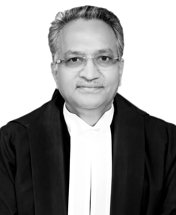
No Acts & Articles mentioned in this case
1 REPORTABLE
IN THE SUPREME COURT OF INDIA
CIVIL ORIGINAL JURISDICTION
I A No. 33686 OF 2018
IN
WRIT PETITION (CIVIL) NO. 196 OF 2018
TAMIL NADU MEDICAL OFFICERS
ASSOCIATION AND ORS. .... PETITIONERS
VERSUS
UNION OF INDIA AND ORS ..... RESPONDENTS
WITH
WRIT PETITION (CIVIL) NO. 252 OF 2018
WITH
WRIT PETITION (CIVIL) NO. 295 OF 2018
AND
WITH
WRIT PETITION (CIVIL) NO. 293 OF 2018
2
O R D E R
Dr D Y CHANDRACHUD, J
1 The judgment rendered by a three judge Bench in State of Uttar Pradesh
v Dinesh Singh Chauhan
1
, construed the provisions of Regulations 9(IV) and
9(VII) of the Medical Council of India Post-Graduate Medical Education
Regulations 2000, as amended on 15 February 2012. In the present batch of
cases, a Bench of three Judges opined, by an order dated 13 April 2018, that these
petitions require consideration by a larger Bench.
2 In making this reference, the referring order primarily indicated the following
reasons :
(i) The decision in Dinesh Singh Chauhan has not considered the entries in
the legislative lists of the Seventh Schedule, more particularly Entry 66 of
the Union List and Entry 25 of the Concurrent List;
(ii) The main contention of the petitioners is that while coordination and
determination of standards in institutions for higher education falls within the
exclusive domain of the Union (Entry 66 List I), medical education is a
subject in the Concurrent List (Entry 25 List III). Though, Entry 25 of List III
1
(2016) 9 SCC 749
3
is subject to Entry 66 of List I, the State is not denuded of its power to
legislate on the manner and method of making admissions to post-graduate
medical courses;
(iii) The contentions which have been raised in the present batch of petitions
were not addressed before this Court in Dinesh Singh Chauhan;
(iv) The judgment in Dinesh Singh Chauhan does not consider three decisions
of the Constitution Bench in R Chitralekha v State of Mysore
2
, Kumari
Chitra Ghosh v Union of India
3
and Modern Dental College and
Research Centre v State of Madhya Pradesh
4
; and
(v) There are decisions rendered by Benches of an equal strength as in Dinesh
Singh Chauhan.
3 While making a reference to a larger Bench, the referring order observed
that it would be “appropriate that even the interim relief should be considered by
the larger Bench”. Accordingly, on the directions of the learned Chief Justice, the
proceedings have been placed before the Constitution Bench to consider the
question of interim relief.
4 We have heard Mr Arvind Datar and Mr K V Vishwanathan, learned Senior
Counsel for the petitioners, Mr Aman Lekhi, learned Additional Solicitor General
and Mr A K Sinha, learned Senior Counsel for the Respondents - Union of India,
2
((1964) 6 SCR 368
3
(1969) 2 SCC 228
4
(2016) 7 SCC 353
4
Mr Vikas Singh learned Senior Counsel for the MCI and Mr V Giri, learned Senior
Counsel for the State of Tamil Nadu.
5 In Tamil Nadu Medical Officers Association v Union of India
5
, the
following reliefs have been sought :
“(a) Declare by issuance of a writ of mandamus or any other
suitable writ/order/direction that Regulation 9 of the Post-
Graduate Medical Education Regulations, 2000 (more
particularly, Regulation 9(iv) and 9(vii), does not take away the
power of the States under Entry 25, List III to provide for a
separate source of entry for in-service candidates seeking
admission to Degree Courses;
(b) Alternatively, if Regulation 9 of the Post Graduate Medical
Regulations, 2000 is understood to not allow for States to
provide for a separate source of entry for in-service candidates
seeking admission to Degree Courses, declare by issuance of
a writ of mandamus or any other suitable writ/order/direction,
Regulation 9 (more particularly, Regulations 9(iv) and 9 (vii) as
being arbitrary, discriminatory and violative of Article 14 and
Article 19(1)(g) of the Constitution and also ultra vires the
provisions of the Indian Medical Council Act, 1956;”
6 The interim prayer is that this Court should stay the operation of Regulation
9 of the Post-Graduate Medical Education Regulations 2000, to the extent that it
is deemed to prohibit the states from providing a separate source of entry to in-
service candidates seeking admission to post-graduate degree courses. A
direction has been sought permitting the State of Tamil Nadu to implement its
5
WP (C) No. 196 of 2018
5
policy of providing for a separate source of entry to in-service candidates for
admissions to post-graduate degree courses for academic year 2018-2019.
7 Learned Senior Counsel appearing on behalf of the petitioners submit that
since 1989, the State of Tamil Nadu has had a policy of providing a separate
source of entry to in-service candidates to the extent of 50 per cent of the state’s
seats in degree courses. Further, since 2007 the State of Tamil Nadu has, by a
government order, provided a preferential weightage to those in-service
candidates who have served in rural, hilly and difficult areas. This policy has been
adopted to ensure the provision of adequate healthcare facilities in government
hospitals particularly in rural, hilly and difficult locations. In this backdrop, the
following submissions have been urged :
(i) Though, Entry 25 of List III of the Seventh Schedule to the Constitution
(“education, including..medical education..”) is subject to the provisions of
Entry 66 of State List I (“coordination and determination of standards in
institutions for higher education”), the state is not denuded of its power to
determine the manner or method for making admissions to post-graduate
medical courses;
(ii) The relationship between Entry 66 of List I and Entry 25 of List III has been
considered by three Constitution Bench decisions of this Court in
R Chitralekha, Kumari Chitra Ghosh and Modern Dental College (supra);
6
(iii) In its decisions in K Duraisamy v State of Tamil Nadu
6
, AIIMS Students’
Union v AIIMS
7
and State of M P v Gopal D Tirthani
8
, this Court has upheld
the right of the State Governments to set apart a definite percentage of seats
at the post-graduate level in degree and diploma courses with a separate
source of entry for a defined classes of persons. The exercise of such a power
has been held to be valid so long as it is based on a legitimate classification;
(iv) The classification between in-service doctors in government and others is
reasonable and has a nexus with the object of ensuring adequate and
affordable healthcare facilities in the public sector; and
(v) The interpretation placed on Regulation 9 in Dinesh Singh Chauhan that
reservation for in-service candidates in post-graduate degree courses is not
permissible since it has been provided only for diploma courses under
Regulation 9(VII) requires reconsideration for the following reasons :
(a) There is no express or implied bar in Regulation 9, prohibiting the State
under Entry 25 of List III from providing a separate channel of entry to
in-service candidates. On the contrary, the grant of preference to in-
service candidates is perceived to be a laudable object by virtue of the
proviso to Regulations 9(IV) and 9(VII);
(b) An implied inclusion cannot be inferred in regard to the states providing
reservations for in-service candidates in degree courses merely on the
basis that Regulation 9(VII) provides a reservation for diploma courses;
6
(2001) 2 SCC 538
7
(2002) 1 SCC 428
8
(2003) 7 SCC 83
7
(c) While holding that Regulation 9 is a complete code in itself, the decision
in Dinesh Singh Chauhan has not appropriately dealt with the
decisions in Sudhir N v State of Kerala
9
and Gopal D Tirthani (supra);
(d) Providing a separate source of entry for in-service candidates would not
result in a lowering of standards prescribed by the Medical Council of
India
10
since all eligible candidates would have met the minimum
qualifying marks in the NEET examination and admissions would take
place on the inter se merit of in-service candidates; and
(e) In its decision in Modern Dental College and Research Centre, the
Constitution Bench has observed that a State being responsible for the
welfare and development of its residents, it is the prerogative of the
State to adopt appropriate steps;
(f) Merely providing a weightage for in-service candidates in degree
courses will not ensure that an adequate number of in-service
candidates qualify, having regard to the difficulties faced by such
candidates while working in difficult conditions.
Since counselling in the first round has already taken place, it has been
submitted that interim orders are necessary to ensure that States are
not precluded from providing a separate source of entry to in-service
candidates in post-graduate degree courses.
8 On the other hand, it has been submitted on behalf of the Union of India and
MCI that Entry 25 of List III is expressly subject to Entry 66 of List I. Hence, the
authority of the States under Article 246 to legislate on medical education is subject
9
(2015) 6 SCC 685
10
The MCI
8
to the overriding authority of the Union in matters relating to the coordination and
determination of standards in higher education. Regulation 9 is a complete code
in itself. Regulation 9(iv) provides an incentive to in-service candidates at the rate
of 10 per cent of the marks obtained, for each year of service in remote and/or
difficult areas upto a maximum 30 per cent of the marks obtained in the NEET
examination. MCI, as an expert policy making authority constituted under central
legislation, has formulated statutory regulations under which only incentive marks
can be granted for in-service candidates in post-graduate degree admissions to
medical courses. In the considered view of the Union government and MCI, the
grant of reservations or a separate source of entry for in-service candidates would
directly impinge on the authority of MCI to coordinate and determine standards of
medical education. The decision in Dinesh Singh Chauhan specifically construes
the provisions of the Regulation 9 as amended in 2012. The grant of any interim
relief at this stage cannot be contemplated so long as the three judge Bench
decision holds the field. Prescribing a separate source of entry for in-service
degree candidates would, in the submission of the MCI, directly result in a lowering
of standards in medical education. Merit would be compromised and the
prescription of criteria under Entry 66 of List I would be a casualty.
9 Rule 9, as amended on 15 February 2012, reads as follows :
“9. Procedure for selection of candidate for postgraduate courses
shall be as follows.—
9
(I) There shall be a single eligibility-cum-entrance examination,
namely, “National Eligibility-cum-Entrance Test for admission to
Postgraduate Medical Courses” in each academic year. The
superintendence, direction and control of National Eligibility-
cum-Entrance Test shall vest with National Board of
Examinations under overall supervision of the Ministry of Health
& Family Welfare, Government of India.
(II) 3% seats of the annual sanctioned intake capacity shall be filled
up by candidates with locomotory disability of lower limbs
between 50% to 70%:
Provided that in case any seat in this 3% quota remains
unfilled on account of unavailability of candidates with
locomotory disability of lower limbs between 50% to 70%
then any such unfilled seat in this 3% quota shall be filled
up by persons with locomotory disability of lower limbs
between 40% to 50% before they are included in the
annual sanctioned seats for general categor y
candidates:
Provided further that this entire exercise shall be
completed by each medical college/institution as per the
statutory time schedule for admissions.
(III) In order to be eligible for admission to any postgraduate course
in a particular academic year, it shall be necessary for a
candidate to obtain minimum of marks at 50th percentile in
“National Eligibility-cum-Entrance Test for Postgraduate
courses” held for the said academic year. However, in respect
of candidates belonging to the Scheduled Castes, the
Scheduled Tribes, the Other Backward Classes, the minimum
marks shall be at 40th percentile. In respect of candidates as
provided in clause (II) above with locomotory disability of lower
limbs, the minimum marks shall be at 45th percentile. The
percentile shall be determined on the basis of highest marks
secured in the all-India common merit list in “National Eligibility-
cum-Entrance Test” for postgraduate courses:
Provided when sufficient number of candidates in the respective
categories fail to secure minimum marks as prescribed in
National Eligibility-cum-Entrance Test held for any academic
year for admission to postgraduate courses, the Central
Government in consultation with the Medical Council of India
may at its discretion lower the minimum marks required for
admission to postgraduate course for candidates belonging to
respective categories and marks so lowered by the Central
Government shall be applicable for the said academic year only.
(IV) The reservation of seats in medical colleges/institutions for
respective categories shall be as per applicable laws prevailing
10
in States/Union Territories. An all-India merit list as well as
State-wise merit list of the eligible candidates shall be prepared
on the basis of the marks obtained in National Eligibility-cum-
Entrance Test and candidates shall be admitted to postgraduate
courses from the said merit lists only:
Provided that in determining the merit of candidates who are in
service of Government/public authority, weightage in the marks
may be given by the Government/competent authority as an
incentive at the rate of 10% of the marks obtained for each year
of service in remote and/or difficult areas up to the maximum of
30% of the marks obtained in National Eligibility-cum-Entrance
Test, the remote and difficult areas shall be as defined by the
State Government/competent authority from time to time.
(V) No candidate who has failed to obtain the minimum eligibility
marks as prescribed in clause (II) above shall be admitted to
any postgraduate courses in the said academic year.
(VI) In non-governmental medical colleges/institutions, 50% (fifty
per cent) of the total seats shall be filled by the State
Government or the Authority appointed by them, and the
remaining 50% (fifty per cent) of the seats shall be filled by the
medical colleges/institutions concerned on the basis of the merit
list prepared as per the marks obtained in National Eligibility-
cum-Entrance Test.
(VII) 50% of the seats in postgraduate diploma courses shall
be reserved for medical officers in the government service, who
have served for at least three years in remote and/or difficult
areas. After acquiring the PG diploma, the medical officers shall
serve for two more years in remote and/or difficult areas as
defined by State Government/competent authority from time to
time.
(VIII) The Universities and other authorities concerned shall
organise admission process in such a way that teaching in
postgraduate courses starts by 2nd May and by 1st August for
super specialty courses each year. For this purpose, they shall
follow the time schedule indicated in Appendix III.
(IX) There shall be no admission of students in respect of any
academic session beyond 31st May for postgraduate courses
and 30th September for super specialty courses under any
circumstances. The Universities shall not register any student
admitted beyond the said date.
(X) The Medical Council of India may direct, that any student
identified as having obtained admission after the last date for
closure of admission be discharged from the course of study, or
any medical qualification granted to such a student shall not be
a recognized qualification for the purpose of the Indian Medical
11
Council Act, 1956. The institution which grants admission to any
student after the last date specified for the same shall also be
liable to face such action as may be prescribed by MCI including
surrender of seats equivalent to the extent of such admission
made from its sanctioned intake capacity for the succeeding
academic year.” (Id at pages 764-766)
Entry 66 of List I provides thus :
“66. Coordination and determination of standards in institutions
for higher education or research and scientific and technical
institutions.”
Entry 25 of List III provides thus :
“25. Education, including technical education, medical education and
universities, subject to the provisions of Entries 63, 64, 65 and 66 of
List I; vocational and technical training of labour.”
10 In Modern Dental College and Research Centre (supra), a Constitution
Bench of this Court held that the expression “coordination and determination of
standards” means laying down standards. Hence, when it comes to prescribing the
standards for institutions of higher learning, the exclusive domain is given to the
Union. Dr Justice A K Sikri speaking for the Constitution Bench held thus :
“102. Most educational activities, including admissions, have two
aspects: the first deals with the adoption and setting up the
minimum standards of education. The objective in prescribing
minimum standards is to provide a benchmark of the calibre and
quality of education being imparted by various educational
institutions in the entire country. Additionally, the coordination of
12
the standards of education determined nationwide is ancillary to
the very determination of standards. Realising the vast diversity
of the nation wherein levels of education fluctuated from lack of
even basic primary education, to institutions of high excellence, it
was thought desirable to determine and prescribe basic minimum
standards of education at various levels, particularly at the level
of research institutions, higher education and technical education
institutions. As such, while balancing the needs of States to impart
education as per the needs and requirements of local and regional
levels, it was essential to lay down a uniform minimum standard
for the nation. Consequently, the Constitution-makers provided for
List I Entry 66 with the objective of maintaining uniform standards
of education in fields of research, higher education and technical
education.” (id at page 430)
Implementing the standards of education determined by Parliament and regulating
the complete activity of education entails the application of the standards so
determined. The balance between Entry 66 of List I and Entry 25 of List III has
been drawn succinctly, on a review of the earlier Constitution Bench decisions,
thus :
“104…In Gujarat University [Gujarat University v. Krishna
Ranganath Mudholkar, AIR 1963 SC 703 : 1963 Supp (1) SCR
112] , a Bench of five Judges examined the scope of List II
Entry 11 (which is now List III Entry 25) with reference to List I
Entry 66. It was held that the power of the State to legislate in
respect of education to the extent it is entrusted to Parliament,
is deemed to be restricted. Coordination and determination of
standards was in the purview of List I and power of the State
was subject to power of the Union on the said subject. It was
held that the two entries overlapped to some extent and to the
extent of overlapping the power conferred by List I Entry 66
must prevail over power of the State. Validity of a State
legislation depends upon whether it prejudicially affects
“coordination or determination of standards”, even in absence
of a Union legislation. In R. Chitralekha v. State of Mysore [R.
Chitralekha v. State of Mysore, AIR 1964 SC 1823 : (1964) 6
13
SCR 368] , the same issue was again considered. It was
observed that if the impact of the State law is heavy or
devastating as to wipe out or abridge the Central field, it may
be struck down. In State of T.N. v. Adhiyaman Educational &
Research Institute [State of T.N. v. Adhiyaman Educational &
Research Institute, (1995) 4 SCC 104 : 1 SCEC 682] , it was
observed that to the extent that State legislation is in conflict
with the Central legislation under Entry 25, it would be void and
inoperative. To the same effect is the view taken in Preeti
Srivastava [Preeti Srivastava v. State of M.P., (1999) 7 SCC
120 : 1 SCEC 742] and State of Maharashtra v. Sant
Dnyaneshwar Shikshan Shastra Mahavidyalaya [State of
Maharashtra v. Sant Dnyaneshwar Shikshan Shastra
Mahavidyalaya, (2006) 9 SCC 1 : 5 SCEC 637] . Though the
view taken in State of M.P. v. Nivedita Jain [State of
M.P. v. Nivedita Jain, (1981) 4 SCC 296] and Ajay Kumar
Singh v. State of Bihar[Ajay Kumar Singh v. State of Bihar,
(1994) 4 SCC 401] to the effect that admission standards
covered by List I Entry 66 could apply only post admissions
was overruled in Preeti Srivastava [Preeti Srivastava v. State
of M.P., (1999) 7 SCC 120 : 1 SCEC 742] , it was not held that
the entire gamut of admissions was covered by List I as
wrongly assumed in Bharati Vidyapeeth [Bharati
Vidyapeeth v. State of Maharashtra, (2004) 11 SCC 755 : 2
SCEC 535] . (Id at page 431)
The Constitution Bench held that while Entry 25 of List III is subject to Entry 66 of
List I, the entire gamut of admissions is not excluded from the purview of the
statutes. However, the “exercise of any power under List III Entry 25 has to be
subject to a Central law referable to Entry 25”.
11 The provisions of Regulation 9 have been construed by the three judge
Bench decision in Dinesh Singh Chauhan (supra). The decision, it must be
emphasised, has construed the amended provisions of Regulation 9. Regulation
14
9 is held it to be a self-contained code regarding the procedure to be followed for
admissions to medical courses. In that context, it has been held :
“24. By now, it is well established that Regulation 9 is a self-
contained code regarding the procedure to be followed for
admissions to medical courses. It is also well established that the
State has no authority to enact any law much less by executive
instructions that may undermine the procedure for admission to
postgraduate medical courses enunciated by the Central
legislation and regulations framed thereunder, being a subject
falling within Schedule VII List I Entry 66 of the Constitution
(see Preeti Srivastava v. State of M.P. [Preeti Srivastava v. State
of M.P., (1999) 7 SCC 120 : 1 SCEC 742] ). The procedure for
selection of candidates for the postgraduate degree courses is
one such area on which the Central legislation and regulations
must prevail.” (Id at page 766)
The above statement of the law in Dinesh Singh Chauhan is consistent with the
principles which have been reaffirmed by the Constitution Bench in Modern Dental
College and Research Centre. The referring order notes that the decision in
Modern Dental College and Research Centre was published in the reports after
the decision in Dinesh Singh Chauhan. In our view, the fundamental basis of the
three judge Bench decision is in accord with the principles which have been laid
down by the Constitution Bench.
12 While interpreting Regulation 9(IV), Dinesh Singh Chauhan holds that the
reservations referred to in the opening sentence are obviously constitutional
reservations for the Scheduled Castes and Scheduled Tribes and the socially and
15
educationally backward classes of citizens and not those for in-service candidates.
Explaining the proviso to Rule 9 (IV) it has been held :
“25.4…This provision, however, contains a proviso. It
predicates that in determining the merit of candidates who are
in service of the Government or a public authority, weightage
in the marks may be given by the Government/competent
authority as an incentive @ 10% of the marks obtained for each
year of service in specified remote or difficult areas of the State
up to the maximum of 30% of the marks obtained in NEET.
This provision even if read liberally does not provide for
reservation for in-service candidates, but only of giving a
weightage in the form of incentive marks as specified to the
class of in-service candidates (who have served in notified
remote and difficult areas in the State).” (Id at page 767)
This interpretation of the proviso plainly follows the natural and ordinary meaning
of the words used. The proviso to Rule 9(IV) does not contemplate a reservation
for in-service candidates in post-graduate courses but the grant of incentive marks.
Dinesh Singh Chauhan has categorically rejected the submission that there is no
express prohibition on reservations for in-service candidates and hence it would
be permissible for the State Governments to provide them :
“27…As there is no express provision prohibiting reservation
to in-service candidates in respect of admission to
postgraduate “degree” courses, it was contended that
providing for such reservation by the State Government is not
impermissible in law. Further, there are precedents of this
Court to suggest that such arrangement is permissible as a
separate channel of admission for in-service candidates. This
argument does not commend to us. In the first place, the
decisions pressed into service have considered the provisions
regarding admission process governed by the regulations in
force at the relevant time. The admission process in the
present case is governed by the regulations which have come
into force from the academic year 2013-2014. This Regulation
16
is a self-contained code. There is nothing in this Regulation to
even remotely indicate that a separate channel for admission
to in-service candidates must be provided, at least in respect
of postgraduate “degree” courses. In contradistinction,
however, 50% seats are earmarked for the postgraduate
“diploma” courses for in-service candidates, as is discernible
from clause (VII). If the regulation intended a similar separate
channel for in-service candidates even in respect of
postgraduate “degree” courses, that position would have been
made clear in Regulation 9 itself.” (Id at pages 767-768)
13 The judgment has noticed that in framing Regulation 9, reservations have
been provided for in-service candidates of the government in diploma seats.
Where the delegate of the legislature intended to provide reservations, a specific
provision has been made, as in Regulation 9(VII). On the other hand, for post-
graduate degree seats, there is only a prescription of incentive marks in Regulation
9(IV). Noticing that these regulations have been framed by an expert body, it has
been held thus :
“35. As aforesaid, the Regulations have been framed by an
expert body based on past experience and including the
necessity to reckon the services and experience gained by the
in-service candidates in notified remote and difficult areas in
the State. The proviso prescribes the measure for giving
incentive marks to in-service candidates who have worked in
notified remote and difficult areas in the State. That can be
termed as a qualitative factor for determining their merit. Even
the quantitative factor to reckon merit of the eligible in-service
candidates is spelt out in the proviso. It envisages giving of
incentive marks @ 10% of the marks obtained for each year of
service in remote and/or difficult areas up to 30% of the marks
obtained in NEET. It is an objective method of linking the
incentive marks to the marks obtained in NEET by the
candidate.” (Id at page 772)
17
It may be noted that in arriving at this conclusion, the court has taken due note of
the decision of the Constitution Bench in Dr Preeti Srivastava v State of M P
11
as well as of the decisions in Tirthani, AIIMS Students’ Union and Sudhir N
(supra) among other decisions.
14 The decision in Dinesh Singh Chauhan holds the field. It is based on a
construction of Regulation 9(IV) which, at least at the present stage, cannot be
brushed aside. The principle which has been adopted in that decision is consistent
with the primacy which is attributed by the Constitution to Entry 66 of List I. This is
the clear intendment of the words “subject to” in Entry 25 of List III. The grant of
any interim relief at the present stage would amount to a mandatory final order
which cannot be countenanced. MCI has, as an expert body, proceeded on a
principled basis. Any attempt at this stage to read into Regulation 9(IV), a separate
source of entry or a reservation for in-service candidates in degree courses would
impinge upon Entry 66 of List I and the exercise of regulatory powers under the
central statute.
15 For these reasons, we are unable to accede to the prayer for interim relief
which has been urged on behalf of the petitioners. Interim relief is accordingly
refused. We, however, clarify that the counselling which takes place shall
11
(1999) 7 SCC 120
18
ultimately abide by the result of the reference. I.A. No 33686 of 2018 is disposed
of accordingly.
…........................................... CJI
[DIPAK MISRA]
....................................................J
[A K SIKRI]
....................................................J
[A M KHANWILKAR]
.....................................................J
[D Y CHANDRACHUD ]
......................................................J
[ASHOK BHUSHAN ]
New Delhi;
April 24, 2018.

 Login with google
Legal Notes
Add a Note....