
As per case facts, petitioners, employed by LIC after 1992, sought regularization and service benefits based on a 2001 CGIT Award, upheld by the Supreme Court in 2015, meant for ...
1/20 904 WP 723-21.doc
IN THE HIGH COURT OF JUDICATURE AT BOMBAY
CIVIL APPELLATE JURISDICTION
WRIT PETITION NO. 723 OF 2021
Vikas Madhukar Narvekar and ors .. Petitioners
Versus
Life Insurance Corporation of India &
ors.
.. Respondents
…
Adv. Ramesh Ramamurthy a/w Adv. Saikumar Ramamurthy, Adv.
Aalim N. Pinjari, for the Petitioners.
Mr. B.M. Chatterji, Senior Advocate a/w Adv. Shreyash Shah, Adv.
Anjali Sahu, Adv. Aditya Singh i/b Little & Co for Respondent No.1.
Smt. S.A. Prabhune- AGP for the Respondent-State.
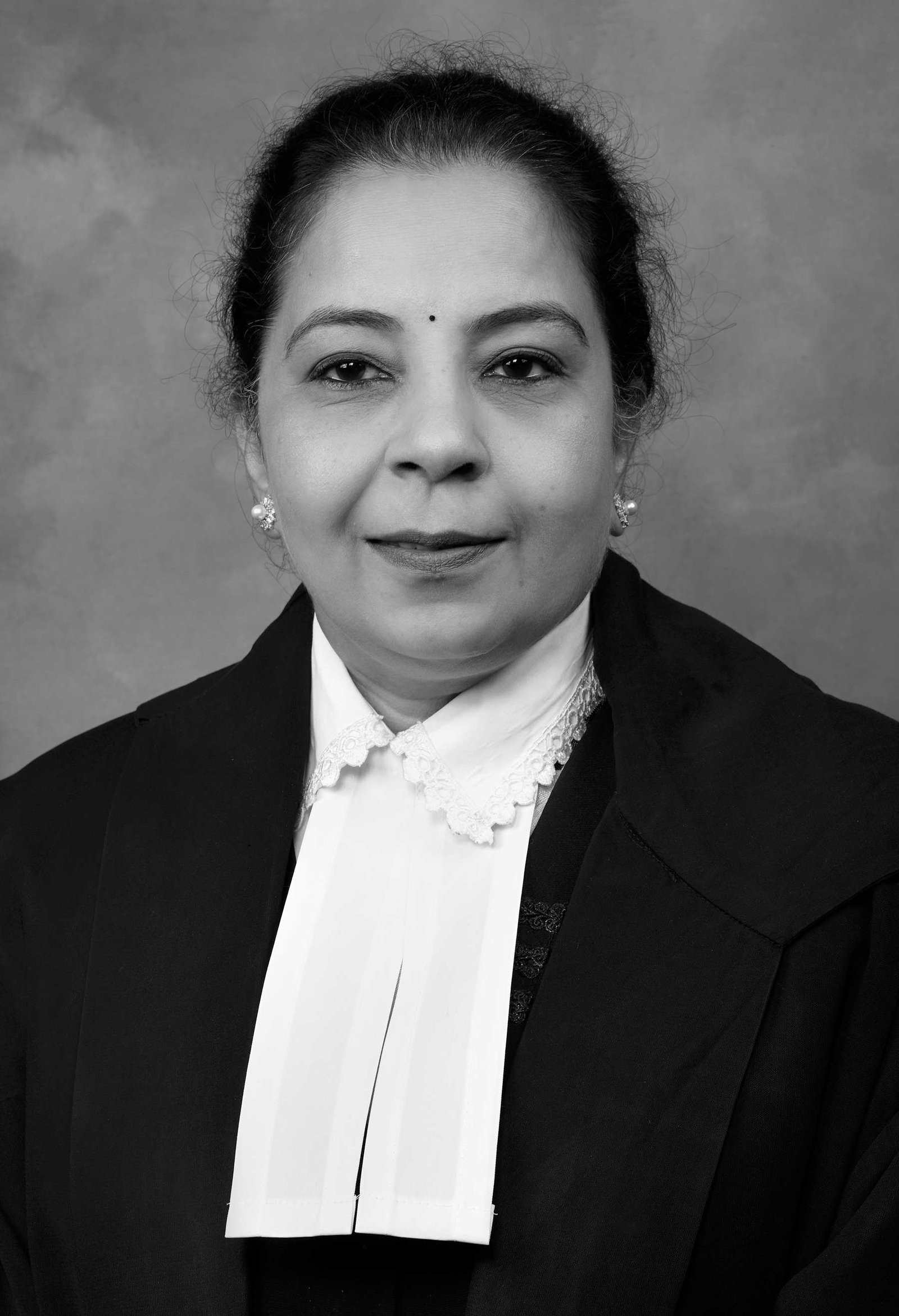
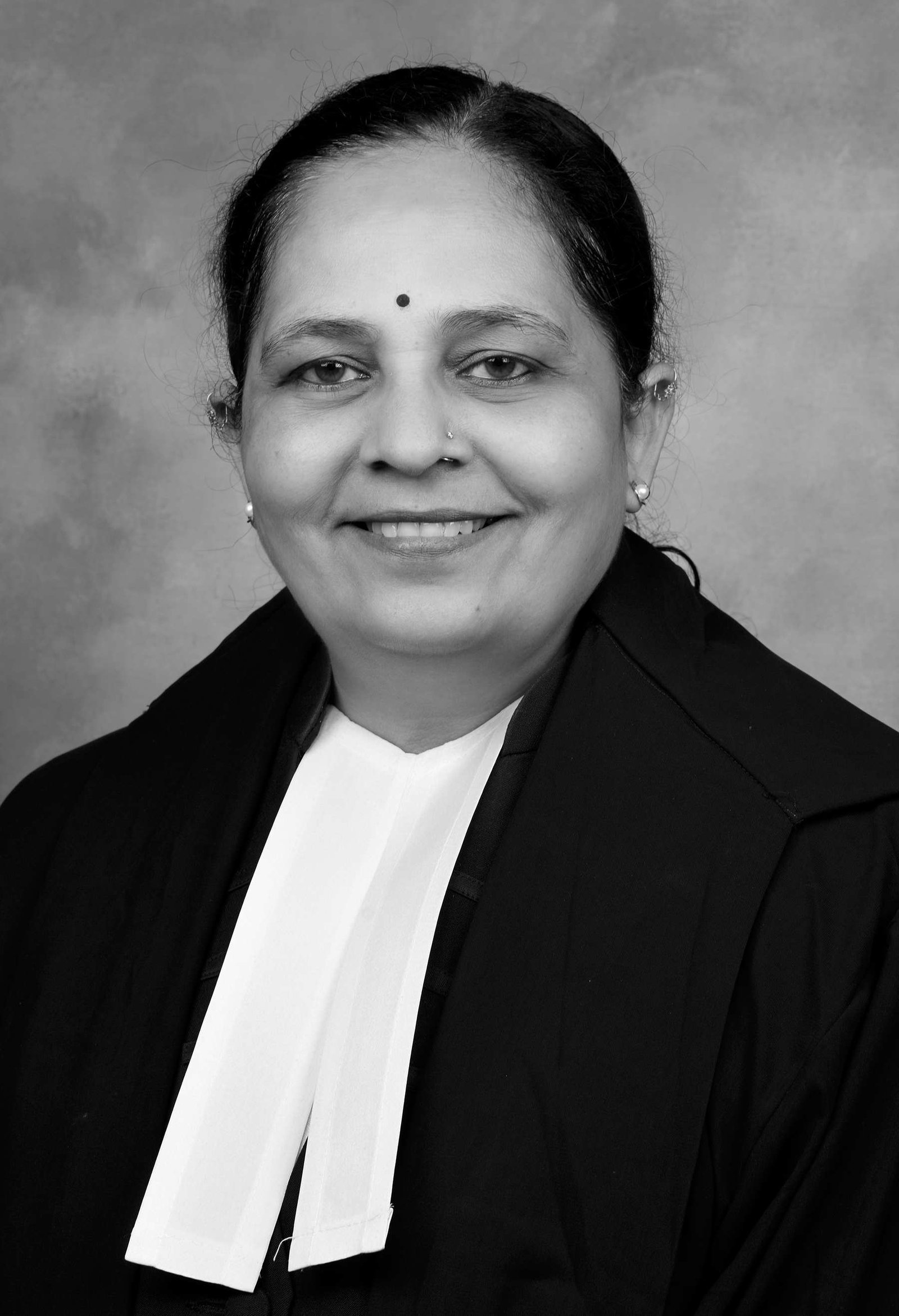
CORAM: BHARATI DANGRE &
MANJUSHA DESHPANDE, JJ.
RESERVED ON : 5th MARCH, 2026
PRONOUNCED ON: 6th APRIL, 2026
JUDGMENT (PER BHARATI DANGRE J)
1. The Petitioners, twenty one in number have approached this
Court seeking appropriate direction directing the Life Insurance
Corporation of India (LIC), Respondent No.1, and its Zonal Manager,
being impleaded as Respondent No.2 to confer benefits of
regularization and all other service benefits upon them as per the
Central Industrial Tribunal (CGIT), New Delhi, Award dated
18/06/2001, it being upheld by the Supreme Court of India on
18/03/2015.
Writ of mandamus is prayed for taking the Petitioners on duty
and by providing them work, also to pay the emoluments due to them
Ashish
2/20 904 WP 723-21.doc
on monthly basis as regular employees.
2. Heard learned counsel Mr. Ramesh Ramamurthy for the
Petitioners and learned Senior counsel Mr. B.M. Chatterji a/w
Mr. Shreyash Shah for Life Insurance Corporation of India.
By consent of the respective counsel, we have taken up the
Petition for final hearing and hence we deem it appropriate to issue
‘Rule’. Rule is made returnable forthwith.
3. It is the claim of the Petitioners that they were employed
directly by the LIC from 1992 onwards on different dates on the post
of Watchman, Liftman, Peon and Sweeper, all in class IV cadre.
It is the claim of the Petitioners that since they were registered
with Employment Exchange, they were recruited by LIC and they are
eligible and qualified to be regularly appointed on the Post on which
they were appointed, as per the policy of the LIC on casual/daily
rated or sometimes on badli and temporary basis.
On being so employed, they were paid wages less than the
minimum prescribed. Further in order to deprive them benefit of
continuity it is the case of the Petitioner, that they were given
artificial breaks after a few months and they were also engaged in
different places and periods and they were also shifted from one duty
to other, all steps to avoid continuity in service.
4. The Petition plead that due to irregular manner of filling up of
the vacant posts, a demand was raised by the Unions for absorption
of the employees, who were appointed at stop-gap arrangement, as
they were fully eligible for appointment against the posts. Since the
notification permitting the LIC to engage the services of employees
Ashish
3/20 904 WP 723-21.doc
for sweeping, cleaning and watching of buildings, contemplated only
their engagement as temporary staff, the issue about their absorption
was referred by the Central Government to the National Industrial
Tribunal at Mumbai as regards absorption of the employees based on
specific criteria. Reference No. NTB-1 of 1985 referred to the parties
as Employers in relation of M/s. Life Insurance Corporation of India
and Their Workmen and the reference was presided over by Dr.
Justice R.D. Tulpule, the Presiding Officer.
With reference to the dispute referred to the National Industrial
Tribunal concerning certain categories of employees of the LIC,
relating to wages and other conditions of service and conditions of
their absorption was determined by the Award dated 17/04/1986,
which issued a direction for absorption of temporary employees
based on a criteria of working of 70 days in a three year period and
by setting out the specific procedure and the modalities, the Award
declared that people who were working on temporary, badli and part-
time basis with the corporation are entitled for consideration of their
past service and it was directed that for class IV workman, if they
have worked for total period of 70 days during a period of three
calendar years they should be considered eligible for being absorbed.
For those who have worked for less than 70 days in any capacity and
as a any kind of workman was not held to be eligible for
consideration of absorption.
With regards to class III employees, the qualifying days were
prescribed with 85 days in a period of two years and if the
employment has below this period the employee was not entitled for
absorption.
Ashish
4/20 904 WP 723-21.doc
Though no specific criteria was laid down to be adopted by the
screening committee, it was directed that if the screening committee
comprising of Senior Officers with experience considered a workman
to be undesirable or unsuitable his name shall be removed from the
pool and he will not be thereafter entitled for any consideration to
the employment with the Corporation.
5. On 14/08/1986, the challenge to the Award was rejected by the
Bombay High Court. As a compliance the LIC issued direction
through circulars issued on 17/09/1986 and 18/09/1986, for
implementing the Award, but since it was based on total
misrepresentation and distortion, the Union made a request to the
Central Government to intervene and therefore the Central
Government under Section 36 A of the Industrial Disputes Act, 1947
again referred the Award of the National Industrial Tribunal headed
by Justice Dr. R. D Tulpule, to another National Tribunal presided
over by Justice M.S. Jamdar. The second Award was pronounced by
Justice Jamdar on 26/08/1988, which clarified the Award of the
Tribunal headed by Justice Tulpule, without modifying the directions.
6. The LIC challenged both the Awards before the Supreme Court
by filing an SLP and during its pendency all the Unions except one
entered into terms of compromise on 1/03/1989, for giving effect to
some of the directions contained in the two Awards of the National
Industrial Tribunal.
Pursuant to the said terms of compromise, LIC absorbed a
number of employees in their service on permanent basis. The SLP
was disposed of by the Apex Court on 7/02/1996, when the Supreme
Court issued directions for liberalizing the terms of absorption, so as
Ashish
5/20 904 WP 723-21.doc
to consider the absorption of the balance employees and it also
directed the Management to exempt class IV employees from test
and interview, if the management had the power to do so and if at all
there was no power of relaxation, it was directed that the test to be
conducted shall be of lesser standard than the one which has been
prescribed under the circulars mentioned in the compromise.
7. According to the Petitioners, the two Awards were made
applicable to all employees in service upto 20/05/1985, but since
such persons were also recruited beyond that date, Government of
India again made a reference to the Central Government Industrial
Tribunal, New Delhi in 1991, with the following terms of reference:-
“Whether the action of the management of Life Insurance Corporation of India
in not absorbing Badli/Temporary and part time workman employed in the
establishment of LIC after 20/05/1985 is justified, if not, to what relief the
workman are entitled.”
8. Though the reference was made in respect of certain
employees, all the Unions of LIC were also permitted to address
CGIT, New Delhi on the said issue in respect of other similarly
situated employees in the LIC all over India. The Petitioner who
represented the interests of workmen in the Western Zone were also
heard by CGIT, New Delhi.
CGIT declared its Award on 18/06/2001, which was published
in the Gazette Notification dated 22/06/2001, whereby the CGIT,
New Delhi directed that the workmen who are employed in the LIC
after 20/05/1985, are also entitled to similar treatment in the matter of
absorption. The CGIT, New Delhi further held that the basis for
absorption should be, as laid down in the Award of Justice R.D.
Tulpule and Award of Justice M.S. Jamdar.
Ashish
6/20 904 WP 723-21.doc
The CGIT, New Delhi referred to para 54 of Justice Tulpule
Award and recorded that class III employees who have put in 85
days of working in a period of 2 calendar years and in case of class
IV employees, those who have worked for 70 days in a period of 3
years were held entitled for absorption. It was also held by CGIT,
New Delhi that if at the time of consideration of absorption of such
workmen, no regular vacancy was available then supernumerary post
should be created and the workman should be absorbed.
9. The Award of the CGIT, New Delhi was subject matter of
challenge in the Delhi High Court in WP No.4346 of 2001.
In the said Petition, the Western Zone Insurance Employees
Association was impleaded as Respondent No.5 and upon the LIC
seeking stay of the Award, Delhi High Court, on 23/07/2001 granted
interim stay and issued notice to the Respondents, upon a statement
being recorded on behalf of LIC that status quo in respect of services
of Respondents/workmen shall be maintained.
During the course of hearing of stay application, LIC was
directed to pay Rs.11,000/- to each of the Unions which had
represented before the CGIT, New Delhi towards cost and expenses
in respect of those employees/workmen who were covered by the
Award, but whose services were terminated and who were
represented by various Unions.
However, before Delhi High Court, the LIC made a submission
that since all workmen who were covered by the Award in Western
Zone were working and none was terminated, an amount of
Rs. 11,000/- need not be disbursed and admittedly, no payment was
Ashish
7/20 904 WP 723-21.doc
received by the Petitioner No.21 Union.
10. The Petitioners claim that they were fully covered by the
Award of CGIT, New Delhi and were entitled to be absorbed since
they were fulfilling the qualifying service criteria prescribed by the
Award. The Petitioner Nos.1 to 20 are similarly situated to those
employees whose cases were before the CGIT, New Delhi and even
Petitioner No.21 had represented them along with other Unions.
11. Certain employees working in the Pune Office of the LIC in
the category of Sweeper, Watchman and Peon filed Writ Petition (L)
No. 65 of 1999 before the Bombay High Court, through the Insurance
Employees Union and made out a case on the basis of the matter
pending before the CGIT, New Delhi . The Hon’ble High Court by
order dated 1/02/2000 directed that the Union should make an
application before the CGIT, New Delhi and till the reference is
decided and for a period of two weeks thereafter in case the decision
is adverse, none of the workmen who was party to the Petition shall
be discontinued. Ultimately, the Petition was disposed of on
1/02/2000, with the aforesaid direction.
12. The Petitioners claim that they were working in class IV and
they had fulfilled the criteria of working for total period of 70 days
in period of 3 years, they were given certificates for the periods of
their work in LIC, which made them eligible for absorption in LIC on
permanent basis.
The reference which was decided by CGIT, New Delhi on
18/06/2001, which was challenged by LIC and in which stay was
granted, was decided by learned Single Judge, who set aside the order
Ashish
8/20 904 WP 723-21.doc
dated 18/06/2001, while deciding WP No. 4346 of 2001. Against this
an LPA was filed before the Division Bench, which was rejected on
21/03/2007.
Against the judgment of the Division Bench, the Tamil Nadu
Terminated Full Time Temporary LIC Employees Association filed
Civil Appeal No. 6950 of 2009 before the Supreme Court and it was
heard along with connected Appeals and a detailed judgment was
delivered on 18/03/2015, in case of Tamil Nadu Terminated Full Time
Temporary LIC Employees Association vs. LIC Of India and Ors
1
.
The judgment highlighted the history of the litigation and it
referred to the compromise between the Corporation and certain
sections of workmen during the pendency of SLP preferred by the
Corporation against the Award of the Tribunal. It was noted that
between the years 1981-85, a large number of employees of class III
and IV posts were employed by LIC in the capacity of badli,
temporary and part-time workers. Their wage, conditions for the
absorption into the regular cadre and other conditions of service was
the subject matter of an industrial dispute and this reference was
made in regard to the National Industrial Tribunal as a reference No.
NTB-1 of 1995 and an Award was passed on 17/04/1986. In the said
Award it was held that only those workmen who had worked in LIC
during 01/01/1982 to 20/05/1985, the date of reference were to be
considered eligible for absorption.
Thereafter, the Central Government made a reference under
Section 36-A for clarification of the Award and while answering the
reference the Tribunal clarified that observations contemplated by the
1 (2015) 9 SCC 62.
Ashish
9/20 904 WP 723-21.doc
earlier Award did not mean recruitment, and an Award dated
26/08/1988 was passed by the Tribunal, clarifying the Award dated
17/04/1986, that absorption of workmen does not mean recruitment.
Being aggrieved by the Award, LIC preferred SLP and during
its pendency a compromise was entered between LIC and 8 out of 9
unions and an order was passed on 01/03/1989 based on the
compromise.
13. The Apex Court also noted that in pursuance of the
compromise, LIC gave appointments to a large number of workmen
working on temporary, badli and part-time basis in class III and class
IV and those appointments were given to persons recruited on
temporary basis between 01/01/1982 to 20/05/1985, and therefore,
those employees who were appointed after 20/05/1985 raised a
similar demand of their absorption and regularization and when their
demands were not accepted several writ petitions were filed before
the High Court, which were dismissed.
Being aggrieved, Special Leave Petitions were filed in the
Supreme Court and on direction of the Supreme Court, LIC framed a
scheme for regularization of the employees in their service.
In case of E. Prabavathy vs. LIC in SLP (C) 10393-413 of
1992, noting that during the pendency of the Writ Petitions before the
High Court, which led to the decision in case of Prabavathy, the
industrial dispute that had arisen between the workmen after
20/05/1985 and LIC, was referred to CGIT, which conducted an
inquiry to answer the points in respect of those employed after
20/05/1985 and it was held that the Award dated 17/04/1986 which
Ashish
10/20 904 WP 723-21.doc
was clarified in the Award of 26/08/1988, is applicable to the
workmen concerned in the dispute and CGIT passed an Award on
18/06/2001 based on the two Awards giving directions for their
absorption in the respective posts.
Consequent to the decision of the Division Bench of the Delhi
High Court, upholding the order of the Single Judge, who accepted
the contention of LIC that on plain reading of the decision of the
Supreme Court, the terms of reference before CGIT dated 4/03/1991
stood answered and it was concluded and reiterated in the decision in
case of LIC v. G. Sudhakar, in Civil Appeal No. 2104 of 2000.
14. As a result, the workman of LIC, who has employed as
temporary, badli and part-time workers but appointed after
20/05/1985 approached the Supreme Court.
In the background facts, the Supreme Court held that the
Award passed by the Tribunal is binding on LIC till it is substituted
by another Award or replaced by another settlement in relation to the
service conditions of the workman of LIC in accordance with law as
provided under Section 12 r/w Section 18(3) of the Industrial
Disputes Act, or another Award that is required to be passed by the
jurisdictional CGIT in relation to the said subject matter. But until
then, the Award passed by the Tribunal was operative in law.
Holding that the two Tribunal Awards have been rightly
applied to the fact situation on hand in the Award passed by CGIT
and it could not have been set aside by the High Court, as both the
Awards are operative and are not terminated by either of the parties
under Section 19(6) of the Act. It was also clarified that the Tribunal
Ashish
11/20 904 WP 723-21.doc
Award of 17/04/1986 reiterated by those clarification in the Tribunal
Award dated 26/08/1988 in the disputes was operative even after a
compromise was arrived between the parties and recorded in the
order dated 1/03/1989 by the Apex Court.
The contention of the LIC that the Awards were not in
operation and only terms and conditions of compromise and orders
of Supreme Court are binding upon the workmen concerned was
found to be factually and legally incorrect. In conclusion, the Apex
Court recorded thus:-
“46. Further, by a careful reading of the said order in LIC v. Workmen, it
has been made clear that the Awards passed by NIT (by Justice Jamdar and
Justice Tulpule) after adjudicating the points of dispute in the industrial dispute
raised by similarly placed workmen is not disturbed by substituting the terms
and conditions of compromise between the parties therein in SLP No. 14906 of
1988. Therefore, the Awards in relation to the absorption of the workmen as
permanent workmen in the Corporation have got statutory force. This is what is
stated by CGIT in its Award dated 18-6-2001 on the basis of pleadings and
evidence on record, which was erroneously set aside by the High Court by
assigning erroneous reasons which is sought to be justified by the Senior
Counsel on behalf of the Corporation by placing reliance upon the orders and
the Scheme framed in E. Prabavathy and G. Sudhakar cases which Scheme has
no application to the case of the workmen concerned involved in these appeals
referred to supra.”
49. In view of the law laid down by this Court in the case referred to supra, both
the Award of Justice Tulpule reiterated by way of clarification Award by Justice
Jamdar are still operative as the same are not terminated by either of the parties
as provided under Section 19(6) of the Act. The compromise between the parties
in LIC v. Workmen and the scheme formed in E Prabavathy and G. Sudhakar do
not amount to substitution of the Awards passed by Justice R.D. Tulpule and by
Justice S. M. Jamdar. Hence, in view of the aforesaid reasons, the submissions
made by Mr. Naphade, learned Amicus Curiae, in justification of the Award
passed by CGIT is based on the terms and conditions laid down in the Awards
passed by NIT (by Justice Tulpule and Justice Jamdar) in favour of the workmen
for absorption as they have been rendering their service to the Corporation in
the perennial nature of work for a number of years and hence, the High Court
was not justified in interfering with the said Award passed by CGIT. The said
contention urged by the learned Amicus Curiae is accepted by us, as the
impugned judgment and order of the High Court is contrary to the Awards
referred to supra, the provisions of the Industrial Disputes Act and the law laid
down by this Court in the aforesaid cases.
50. The Award passed by NIT is binding upon the Corporation till it is
substituted by another Award or replaced by another settlement in relation to the
Ashish
12/20 904 WP 723-21.doc
service conditions of the workmen of the Corporation in accordance with law as
provided under Section 12 read with Section 18(3) of the ID Act or another
Award that is required to be passed by the jurisdictional CGIT in relation to the
above subject-matter after the Awards which are in operation are terminated by
either of the parties as provided under Section 19(6) of the Act. Until, then the
said Award passed by NIT will still be operative in law. Therefore, the same has
been rightly applied to the fact situation on hand in the Award passed by CGIT
and it could not have been set aside by the High Court. Thus, we are of the
opinion that the learned Single Judge erroneously set aside the Award passed by
CGIT and the said judgment of the learned Single Judge has been further
erroneously affirmed by the Division Bench of the High Court. The said
judgments of the High Court are clearly contrary to law and legal principles laid
down by this Court in the cases referred to supra. Hence, the same are liable to
be set aside by allowing these appeals and restoring the Award of CGIT.”
15. When the judgment passed by the Apex Court to the aforesaid
effect was not implemented, contempt petition was filed by the Tamil
Nadu Terminated Full Time Temporary LIC Employees Association
and also by the All India National Life Insurance Employees
Federation.
The chairman of LIC filed an affidavit in the said contempt
petition on 15/09/2015, when it sought to restrict the benefit with the
Award to the persons appointed prior to 1985 only. It thus became
clear that the LIC was not desirous of extending the benefit of the
Judgment of the Apex Court to those who were appointed after 1985
and this constrained the Petitioners to address a legal notice to the
Zonal Manager of LIC to comply with the directions contained in the
Judgment of the Supreme Court and confer the benefits as per the
CGIT Award dated 18/06/2001. However it received no response.
16. It is in light of the aforesaid sequence of events, the Petitioners
have approached this Court, seeking the relief of extending the
benefit of regularization as per the CGIT, New Delhi Award dated
18/06/2001, which is upheld by the Supreme Court on 18/03/2015. It
is the case of the Petitioner that they have never been informed by the
Ashish
13/20 904 WP 723-21.doc
LIC that they are not covered by the Award dated 18/06/2001, and
rather the Petitioners were diligent in prosecuting their remedy from
time to time and they survived on the hope that the benefit of the
Award shall also be extended to them.
It is urged by Mr. Ramamurthy that the Supreme Court has not
prescribed any cutoff date or restricted the application of the Award
dated 18/06/2001 to certain class of employees in LIC, and it covers
all similarly situated employees all over India and the Award has to
be uniformly applied by LIC management, but since the same is not
so done, they are constrained to approach this Court.
17. During the course of the argument, learned Senior Counsel Mr.
Chatterji has placed before us the decision of the Apex Court in case
of Ranbir Singh vs. SK Roy, Chairman, Life Insurance Corp. of India
& Anr.
2
, and according to him, the issue has been put to rest by the
aforesaid judgment, with the declaration that the verification process
to be carried out for implementation of the Award shall be confined to
persons working between 20/05/1985 and 4/03/1991 and nothing
beyond the said date.
According to Mr. Chatterji, the Apex Court taking cognizance
of the long stand discord and dispute traveling through various stages
clearly noted that finality had to be drawn on the dispute to avoid
uncertainty and more litigation since nearly 31 years have lapsed
since 1991 and therefore the following directions were issued:-
“75. The dispute is now of an antiquity tracing back to nearly four
decades. Finality has to be wrung down on the dispute to avoid uncertainty and
more litigation. Nearly thirty-one years have elapsed since 1991. We have come
to the conclusion that the claims of those workers who are duly found upon
verification to meet the threshold conditions of eligibility should be resolved by
2 (2023) 17 SCC 196
Ashish
14/20 904 WP 723-21.doc
the Award of monetary compensation in lieu of absorption, and in full and final
settlement of all claims and demands. Thus, this Court directs the following:
(i) A fresh verification of the claims of workers who claim to have been
employed for at least 70 days in Class IV posts over a period of three years or 85
days in Class III posts over a period of two years shall be carried out;
(ii) The verification shall be confined to persons who were working between 20
May 1985 and 4 March 1991;
(iii) All persons who are found to be eligible on the above norm shall be entitled
to compensation computed at the rate of Rs. 50,000 for every year of service or
part thereof. The payment of compensation at the above rate shall be in lieu of
reinstatement, and in full and final settlement of all claims and demands of the
workers in lieu of regularisation or absorption and notwithstanding the
directions issued by this Court in TN Terminated Employees Association (supra);
(iv) In carrying out the process of verification, the Committee appointed by this
Court shall not be confined to the certified list before the CGIT and shall
consider the claims of all workers who were engaged between 20 May 1985 and
4 March 1991;
(v) For the purpose of verification, LIC shall make available all the records at
the Divisional level to the Committee appointed by this Court;
(vi) It will be open to the workers concerned or, as the case may be, the Unions
and Associations representing them, to make available such documentary
material in their possession for the purpose of verification;
(vii)The process of verification shall be carried out independently without regard
to the Dogra Report, which is held to be flawed;
(viii) The payment of compensation in lieu of reinstatement shall be
effected by LIC within a period of three months from the date of receipt of the
report of verification by the Committee; and
(ix) The task of verification shall be carried out by a Committee consisting of (a)
Mr Justice P K S Baghel, former Judge of the Allahabad High Court; and (b)
Shri Rajiv Sharma, former District Judge and member of the UPHJS.
LIC shall provide all logistical assistance to the Committee and bear all
expenses, including secretarial expenses, travel and incidental expenses, as well
as the fees payable to the members of the Committee. Justice P K S Baghel shall
fix the terms of remuneration payable to the members of the Committee.”
18. We have considered the submissions advanced by Mr.
Ramamurthy in the background facts and in the wake of the decision
of the Apex Court in case of Tamil Nadu Terminated Full Time
Temporary LIC Employees Association (supra) and the latest
pronouncement in case of Ranbir Singh (supra), which was decided
along with the pending Contempt Petitions.
Ashish
15/20 904 WP 723-21.doc
The exhaustive judgment, deal with the history of the litigation,
revolving around the claim of absorption of employees, who were
engaged by Life Insurance Corporation of India, as temporary,
badli/part-time workers.
With reference to Section 23(1) of the Life Insurance
Corporation Act, 1956, which enables the LIC to employ such
number of persons as it thought fit to discharge its functions, it also
made reference to the Life Insurance Corporation of India (Staff
Regulations) 1960, and which authorize LIC to appoint persons on a
temporary basis in class III and class IV.
With reference to the industrial dispute that was raised by
Western Zonal Insurance Employees Association on 13/08/1982, it is
noted that the association alleged that LIC had been engaging in
unfair labour practices by employing temporary, badli and part-time
workers and was restricting their employment to short tenures to
deprive them of the claim for permanency.
The judgment then make a reference to the adjudication by the
National Industrial Tribunal presided over by Justice R.D. Tulpule,
former Judge of the Bombay High Court, and the subsequent Award
rendered by Justice Jamdar on a reference being made under Section
36-A.
The Apex Court also exhaustively referred to the Terms of
Compromise and as it noted that in the backdrop that by interim order
of 29/06/1987, when Justice Jamdar Tribunal prohibited LIC from
recruiting persons to class III and class IV from the ‘open market’
during the pendency of the proceedings, the Award being declared on
Ashish
16/20 904 WP 723-21.doc
26/08/1988, which was notified in the gazette of 01/10/1988, had
held that absorption contemplated in the Justice Tulpule Award did
not imply recruitment, and this interpretation was challenged before
the Apex Court, when compromise was arrived between LIC and all
the Unions representing the workers, except one of them i.e. Akhil
Bharatiya Jeevan Bima Nigam Chaturthi Sreni Karmachari Sangh.
The terms of compromise envisaged that the Justice Jamdar
and Justice Tulpule Award shall be substituted by the terms and
conditions of compromise in relation to the question of regular
employment of the workmen concerning the said reference.
The terms of reference was accepted by the two Judges of the
Court on 1/03/1989 and pending the final disposal of the appeal the
Management and the members of the 8 Unions to implement the
terms of compromise by way of interim measure without prejudice to
rights and contentions of the members of the other Union, who have
not entered into the compromise.
19. It is in this background, by a detail judgment and on a thread
bare analysis of the terms of Justice Tulpule and Justice Jamdar
Award and reference was also made to the order of CGIT in respect
of the part-time workmen employed in the establishment after
20/05/1985 and the CGIT delivered its Award presided over by
Justice K S Shrivastav, on 18/06/2001, by directing absorption of the
temporary/badli workers on the same terms as the Justice Tulpule and
Justice Jamdar Awards, with some modifications. The Award held
thus:-
“88. In view of the fact I am of the definite view that such type of workmen
belonging to temporary/badly/ part time categories in class III and Class IV
Ashish
17/20 904 WP 723-21.doc
service of the corporation who were employed after following the procedure and
were allowed to continue service beyond the qualifying period and were eligible
and suitable to every respect should be given absorption in the service from date
of the vacancy in the service in which they could have been absorbed. It will also
apply to these employees whose service were terminated by the corporation.
13. In its ultimate directions, the Srivastav Award directed that the temporary,
badli and part-time workers who were employed after 20 May 1985 should be
granted absorption on the same terms and conditions as was stipulated in the
Tulpule and Jamdar Awards (in respect of workers who were employed from 1
January 1982 to 20 May 1985). LIC was directed to publish a notice in the
newspapers for inviting applications from individual workers for absorption. If
no regular vacancy was available, the Award directed supernumerary posts to be
created. Paragraph 94 of the Srivastav Award is extracted below:
94. In view of the matter I find and conclude that the action of corporation
denying the absorption of these temporary/badli/part time workmen as dealt with
above in the body of this Award and employed after 20-05-85 is not justified. I
further find that these workmen employed after 20- 5-85 should be given
absorption in their job on the same terms and conditions as laid down in the
aforesaid two Awards namely Hon’ble Mr Justice R.D. Tulpule and of Hon’ble
Mr Justice M.S. Jamdar in respect of the workmen employed with effect from 1-
1-82 to 20-05-85 and dealt with by me as above. It is directed that the
corporation shall take into consideration for the absorption of the workmen, on
their eligibility and suitability as dealt with above in the Award. The case of
those workmen belonging to the category of temporary, badli, part-time who had
become eligible for their absorption in their job after completing the qualified
period of working and were suitable in every respect but their services were
terminated and they were turned out of the job by the corporation should also
considered for the absorption of such terminated workmen of the corporation
shall publish a notice in the daily newspaper having wide circulation throughout
India and if in compliance of the notice the workman concerned consent in
writing within stipulated period which could be given in the said notice the case
of such workman should also be considered for their absorption in the regular
vacancy then existing. At the time of the consideration of absorption of such
workmen if it is found that no regular vacancy is available to such workmen,
supernumerary posts should also be created and such workmen should be given
absorption in it. It is also directed that the cases of these workmen for
absorption in existing vacancies should be taken for consideration first
irrespective of the regular recruitment if taken. The case of the contractual
workmen for absorption shall be taken into consideration as per observation
made in the body of the Award and on the basis on conditions as stated above.”
20. Thus, Justice Shrivastav Award directed that temporary, badli
and part-time workers employed after 20/05/1985 should be granted
absorption on the same terms and conditions as stipulated in Justice
Tulpule and Justice Jamdar Award.
Ashish
18/20 904 WP 723-21.doc
21. The Apex Court then made reference to the its decision in case
of Tamil Nadu Terminated Full Time Temporary LIC Employees
Association (supra), which concluded that Justice Shrivastav Award
was binding and while restoring Justice Shrivastav Award, the Delhi
High Court’s judgment was set aside.
22. Taking note of the subsequent events in form of an
advertisement issued calling application from workers who were
employed as badli, temporary, part-time, in its establishment from
20/05/1985 to 4/03/1991 in terms of the eligibility criteria, it was
noted that contempt proceedings were filed and even LIC instituted
Review Petition against the judgment of Tamil Nadu Terminated Full
Time Temporary LIC Employees Association (supra).
On a detail analysis, the Court noted that on 7/02/1996, a two
Judge bench of the Apex Court in LIC vs. Their workman, and
accepted the terms of compromise with directions that LIC should
exempt class IV workers from test and interview, if the management
has power to do so, and if it do not possess the power then the test
should be of lesser standard compare to other applicants from the
open market.
It taking note of the three Judge Bench decision on 23/10/1992,
by disposing of Civil Appeals E Prabavathy, when the scheme
formulated by LIC for regularising workers who were engaged on a
temporary basis was accepted, and the scheme clearly contemplated,
all those temporary employees who have worked for 85 days in two
consecutive years, with LIC between 20/05/1985 till date and who
confirmed to the required eligibility criteria for regular recruitment
on the dates of their initial temporary employment will be permitted
Ashish
19/20 904 WP 723-21.doc
to complete for the next regular recruitment to be made by the LIC
scheduled for November, 1992. This candidates were given age
relaxation and were permitted to apply for regular recruitment in
normal course. Noting that in E-Prabavathy, the scheme proposed by
LIC was found to be reasonable and the regularization will be by
selection for appointment, the scheme was held to be applicable to
workers of all division of LIC in the country.
23. Very pertinently the Apex Court has noted that the judgment of
the two Judge Bench in Tamil Nadu Terminated Full Time Temporary
LIC Employees Association (supra), however, failed to notice that as
a result of the final order dated 7/02/1996, in LIC vs. Their Workmen
(supra), Justice Tulpule and Justice Jamdar Awards have been
substituted by terms of compromise, but the two Judge bench
overruled the said order while it adverted only to the interim order
dated 1/03/1989 and arrived at a conclusion that Justice Jamdar and
Justice Tulpule Award were still operative.
In light of the whole conundrum, resulting into a conflict
between a two Judge Bench in Tamil Nadu Terminated Full Time
Temporary LIC Employees Association (supra) on one hand, and
earlier binding decision of larger bench in E Prabavathy (supra), the
Apex Court held that LIC cannot be directed to carry out mass
absorption without following recruitment process, which is consistent
with principle of equality of opportunity governed by Articles 14 and
16 of the Constitution as such absorption would provide backdoor
entry which negate the principle of equal opportunity and fairness
specifically declared by this Court in Secretary, State of Karnataka v.
Ashish
20/20 904 WP 723-21.doc
Umadevi
3
24. In the wake of the aforesaid, in para 75, the Apex Court issued
the directions which we have reproduced above, but has directed the
verification to be confined to the persons working between
20/05/1985 and 4/03/1991 and we find that the Petitioners are the one
who are employed after 1992 and definitely they are not entitled for
extension of the benefit either of the Award of the CGIT, New Delhi,
or the compromise that has been entered and accepted by the
Supreme Court.
Since, we find the issue to be concluded by the decision of the
Apex Court in case of Ranbir Singh (supra) and if the Petitioners are
not able to make up and find a place in the window, set out by the
said judgment, in our view, they are not entitled for extension of the
benefit of regularization and absorption as sought by them.
As a result, the Writ Petition is dismissed. Rule is discharged.
No order as to costs.
(MANJUSHA DESHPANDE, J.) (BHARATI DANGRE, J.)
3 (2006) 4 SCC 2.
Ashish

 Login with google
Legal Notes
Add a Note....