
As per case facts, Laxman Kumar Sahoo's wife, Gitanjali Palo, was subjected to dowry demands and ill-treatment. After a quarrel, her husband poured kerosene on her and set her ablaze. ...
CRLA No.122 of 2004 Page 1 of 15
IN THE HIGH COURT OF ORISSA AT CUTTACK
CRLA No.122 of 2004
(From the judgment and order dated 24.2.2004 passed by
learned Sessions Judge, Ganjam-Gajapati, Berhampur in S.C.
Case No.228/1999)
Laxman Kumar Sahoo
… Appellant
- versus-
State of Odisha … Respondent
Advocates appeared in the case through hybrid mode:
For Appellant : Ms.Diptirekha Nanda,
Advocate
-versus-
For Respondent
: Ms. Subhalaxmi Devi,
A.S.C.
---------------------------------------------------------------------------
CORAM:
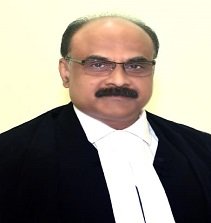
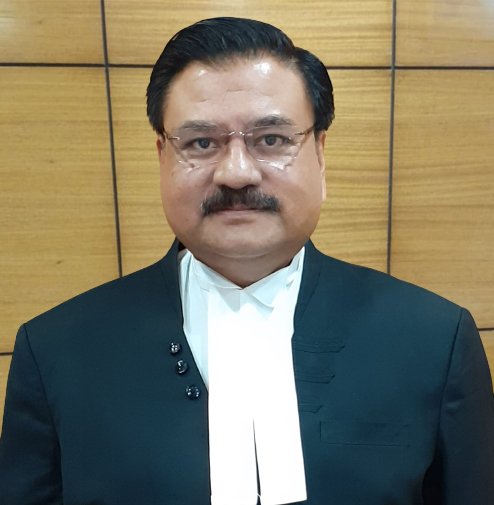
THE HONOURABLE MR. JUSTICE MANASH RANJAN PATHAK
THE HONOURABLE MR. JUSTICE SASHIKANTA MISHRA
Date of Hearing:05.03.2026 :: Date of Judgment:12.03.2026
CRLA No.122 of 2004 Page 2 of 15
Sashikanta Mishra,J. The appellant faced trial for committing
dowry death/murder of his wife in Sessions Case
No.228/1999 in the court of learned Sessions Judge,
Ganjam-Gajapati at Berhampur and being convicted for
the offence punishable under Section 302 I.P.C., he was
sentenced to undergo rigorous imprisonment for life vide
judgment dated 24.2.2004, which is impugned in the
present appeal.
2. Prosecution case, briefly stated, is as follows;
The accused married one Gitanjali Palo, daughter of
Prabhasini Palo, as per Hindu rites on 17.1.1999 at
Jagannath Temple, Puri. It was agreed to pay
Rs.2,00,000/- as dowry as demanded by the bridegroom.
Prabhasini, paid Rs.50,000/-, gold ornaments, wearing
apparels and several household articles. The accused
used the said amount for purchasing articles for his
stationary shop. The balance amount was agreed to be
paid after marriage. The accused ill-treated his wife by
physically and mentally torturing her demanding the
balance amount. The couple was staying in a rented
accommodation. On 23.3.1999, Prabhasini heard that
CRLA No.122 of 2004 Page 3 of 15
the accused had set her daughter ablaze by pouring
kerosene on her body. Hearing this, she rushed to the
house of her daughter and found her with severe burn
injuries all over the body with kerosene smell. Her
daughter informed her that the accused had poured
kerosene on her and set fire to her using a match stick.
Prabhasini took her daughter on a rickshaw to the
hospital with the help of others where she was treated in
a critical condition. She reported the matter at Mahila
P.S., Berhampur on the next date. Basing on such
report, P.S. Case No.14 dated 24.3.1999 was registered
under Section 498-A/307 I.P.C. and Section 4 of the D.P.
Act followed by investigation. In course of investigation,
the victim having died, the case turned to Section 304-
B/302 of I.P.C. Charge sheet was accordingly submitted.
3. The plea of the accused is of complete denial.
4. To prove its case, prosecution examined 10
witnesses and proved 20 documents. Defence, on the
other hand, did not adduce any oral evidence but
exhibited two documents.
CRLA No.122 of 2004 Page 4 of 15
5. After analyzing the evidence on record, learned
Sessions Judge held that the prosecution had well
established its case against the accused. The dying
declaration of the deceased and the evidence of the other
witnesses including the informant were taken into
consideration by the learned Sessions Judge in arriving
at the above conclusion.
6. Heard Ms. Diptirekha Nanda, learned counsel for
the appellant and Ms. Subhalaxmi Devi, learned Addl.
Standing counsel for the State.
7. Ms. Nanda assails the impugned judgment of
conviction on the ground that the presence of the
appellant at the spot has not been proved nor his motive
to cause death of the deceased. Reliance on the dying
declaration is incorrect as there is no evidence to show
that the deceased was in a fit state of mind to make such
a statement. Prosecution never proved that the dying
declaration was voluntary, truthful and free from
tutoring. Though it has been alleged that there was a
large gathering of people when the informant reached the
CRLA No.122 of 2004 Page 5 of 15
spot, no one has stated about the dying declaration
purportedly made by the deceased before her.
8. Per contra, Ms. Subhalaxmi Devi would contend
that it is well settled that only because a person
sustained 90% burn injuries does not automatically
imply that he/she is not in a fit mental state to make a
statement. There is no reason to disbelieve the doctor
who recorded the dying declaration as he is an
independent person having no interest in the case. Once
dying declaration is accepted, other considerations such
as motive etc. are not material. According to Ms.
Subhalaxmi, there is overwhelming evidence to show that
the accused had committed the crime.
9. Before delving into the merits of the rival
contentions, we feel it proper to examine the evidence on
record independently. The mother of the deceased, who is
the informant, was examined as P.W.2. Though she
mentioned in the F.I.R. that it was agreed to pay Rs.2
lakhs on the demand of the accused as dowry, she stated
before the Court that prior to the marriage there was no
demand either from the accused or from any of his
CRLA No.122 of 2004 Page 6 of 15
relations and that they had decided to give cash of Rs.2
lakhs to the accused. On the date of occurrence, her
daughter had come to her house for the tonsure
ceremony of her granddaughter. At about 7 to 8 P.M., the
accused came to their house and on his arrival the
deceased offered him some tiffin but he refused and left
their house. The deceased went to her house thereafter.
After some hours, the Sahi people came and informed
that the accused had set fire to Gitanjali hearing which,
they rushed to his house. P.W.2 further stated that she
found that her daughter was already brought out from
the room and kept on the verandah and that she had
severe burn injuries, but she was conscious and talking.
She told that the accused had burnt her by pouring
kerosene on her body. P.W.2 took her to the MKCG
Medical College and Hospital but she died two days after.
P.W.2 was cross-examined extensively. We find nothing
in the cross-examination so as to even remotely shake
her testimony.
10. Surprisingly, the brother of the deceased (son of
P.W.2) did not entirely support the prosecution case
CRLA No.122 of 2004 Page 7 of 15
against the accused though he corroborated the version
of P.W.2 regarding residence of the deceased in a rented
house at Sashtri Nagar and that on the date of the
occurrence the tonsure Ceremony was in progress in
their house and that the accused and the deceased had
come to their house and left after the feast. He did not
whisper a word about the oral dying declaration of the
deceased before P.W.2 for which he was declared hostile.
11. No other witness has stated anything to incriminate
the accused other than P.W.2.
12. P.W.8 is the doctor who recorded the dying
declaration of the deceased as her treating doctor. He
stated as follows:
“On 24.3.99, at 7-30 A.M. as the attending Doctor of
the patient, I recorded the dying declaration of the
patient, namely, Gitanjali Palo. The patient was then
conscious. I examined her condition and then I
recorded her dying declarations in my own hand in
presence of two P.G. Students, who have also signed
on the dying declaration statement. In the bed-head
ticket, I have clearly recorded about the condition of
the patient to the effect that the patient was conscious
and well oriented. This is my endorsement to that
effect marked as Ext.7/2. I could not take the L.T.I. or
R.T.I. of the patient as her both hands were severely
burnt. I have also recorded this fact in the dying
declaration statement. This is the dying declaration
recorded by me marked as Ext.7/3. This is my
endorsement with signature below it marked as
Ext.7/4. This is my signature at the foot of the dying
declaration marked as Ext.7/5. Both the P.G.
students in whose presence, I recorded the dying
CRLA No.122 of 2004 Page 8 of 15
declaration also signed on the dying declaration in
my presence. These are the signatures of the P.G.
Students, namely, Dr. Benu Panigrahi and Dr. Rajesh
Dora, marked as axts.7/6 and 7/7 respectively. I
have recorded the dying declaration in question and
answer form.
I did not requisition the services of any Magistrate for
recording the dying declaration of the patient.”
P.W.8 was also extensively cross-examined and he
admitted to not having endorsed any certificate that the
patient was conscious and that he examined her and
recorded her dying declaration.
13. P.W.9 is the autopsy surgeon, who found the
following injuries;
“Superficial burn injuries involving almost all the
parts of the body except (1) both sole, (2) an area of
44 c.m X 12 c.m involving outer lateral surface of right
upper lip staring just below the lateral end of clavicle
extending downwards. (3) an area of 42 c.m X 10 c.m
involing the outer lateral aspect of right thigh starting
10 c.m below the iliac crest ante-mortem showing line
of redness at the junction of burnt and unbrunt areas
looking black covered by medicaments and
amounting to 90 to 95 percent of body surface.”
He opined that the deceased died due to shock as a
result of the injuries.
The dying declaration was marked Ext.7/3. It is
recorded in question-answer form and is reproduced
below;
CRLA No.122 of 2004 Page 9 of 15
We think it proper to render an English
translation of the dying declaration as follows-
“ DYING DECLARATION
Dying declaration of Geetanjali Palo vide Regd. No.-C-
11571/23.03.99, Time 7.30 am on dt. 24.03.99
Q. What is your name?
A. Gitanjali Palo.
Q. Are your married – Yes
Q. What is the name of your husband? What is your
address?
A. Laxman Kumar Sahu, Sashtrinagar, Bijipur,
Berhampur, Ganjam.
Q. What caused your present situation?
A. Yesterday night at 11 P.M. my husband quarreled
with me and poured kerosene on me and then set fire
by lighting match stick.”
CRLA No.122 of 2004 Page 10 of 15
14. From the above narration, we find that there are no
eye witnesses to the occurrence. P.W.2 is the only witness
who has directly implicated the accused. That apart, the
oral dying declaration of the deceased made before P.W.2
and the recorded dying declaration marked Ext.7 also
directly implicate the accused. The trial Court, while not
accepting the prosecution case of dowry death, has held
it to be a case of murder basing on the above referred
evidence. Ex-facie, we find no infirmity much less
illegality in the judgment of the trial Court.
15. Having held as above, we shall now consider the
grounds raised by the accused-appellant to question the
correctness of the judgment.
16. It is urged that there is no evidence that the
accused was present at the spot. Admittedly, no evidence
is adduced in this regard. But in a question put to him
during his examination under Section 313 of Cr.P.C., the
accused admitted that the deceased was inside the
house. Since there is otherwise evidence on record to
show that the accused had visited his in-laws’ house for
the tonsure ceremony and had returned with his wife
CRLA No.122 of 2004 Page 11 of 15
following him shortly thereafter, there is no reason to
hold that the accused had gone somewhere else and not
to his house. In fact, in his examination under Section
313 Cr.P.C., the accused admitted that he had gone to
bring his wife from his in-laws’ house. Nothing has been
suggested to the prosecution witnesses, particularly
P.W.2 as to the presence of the accused elsewhere if not
at his home. Since the deceased clearly stated that her
husband poured kerosene on her body and set fire to her,
there can be no other conclusion that he was present at
home with the deceased. Prosecution cannot be expected
to lead evidence as to what had transpired inside the
house, but an inference can be drawn based on the
surrounding circumstances and the other evidence
adduced in this regard.
17. Coming to the dying declaration, prosecution relies
upon two such declarations- one made before P.W.2 at
the spot and the other recorded by the doctor at the
hospital. We may leave aside the oral dying declaration
for a moment and focus on the recorded declaration vide
Ext.7. Ms. Nanda has vehemently argued that in the
CRLA No.122 of 2004 Page 12 of 15
absence of any endorsement by the doctor that the
deceased was in a fit mental condition to give a
statement, Ext.7 cannot be accepted. She further argues
that the deceased having admittedly sustained 90% burn
injuries cannot be expected to be conscious or mentally
oriented enough to give a clear statement.
We have given our anxious consideration to the
above argument, but are unable to accept the same. We
say so for the reason that the doctor recording the dying
declaration is an entirely independent person having no
interest in the case. In fact, nothing was suggested to
him that he was actuated by malafides. The dying
declaration is in question-answer form. As can be seen
from its bare perusal, she clearly stated that on the
previous night her husband, after quarrelling with her,
poured kerosene and set fire using matchstick. The dying
declaration was recorded in presence of two P.G.
students but they were not examined. Law relating to use
of dying declaration is no longer res integra. In the case of
P.V. Radhakrishna v. State of Karnataka
1, it was held
that there is no hard and fast rule that percentage of
1
(2003) 6 SCC 443
CRLA No.122 of 2004 Page 13 of 15
burns is determinative factor to affect the credibility of
dying declaration and probability of its recording.
Percentage of burns alone will not determine the
probability or otherwise of making the dying declaration.
Even in a case of 100% burns, the Supreme Court has
held that merely for 100% burn injuries, it cannot be said
that the victim was incapable to make a statement.
Reference in this regard may be had to the judgment of
the Supreme Court in the case of, Purshottam Chopra
v. State (NCT of Delhi)
2. Therefore, only because the
deceased sustained 90% burn does not, ipso facto, render
her incapable of giving a statement. As regards the
absence of a certificate showing her fit mental condition,
it has been held in the case of State of Madhya Pradesh
vs. Dal Singh and others
3, the Supreme Court held
that-
“20. The law on the issue can be summarised to the
effect that law does not provide who can record a
dying declaration, nor is there any prescribed form,
format, or procedure for the same. The person who
records a dying declaration must be satisfied that the
maker is in a fit state of mind and is capable of
making such a statement. Moreover, the requirement
of a certificate provided by a doctor in respect of such
state of the deceased, is not essential in every case.”
2
(2020) 11 SCC 489
3
(2013) Supreme Court Cases 159
CRLA No.122 of 2004 Page 14 of 15
18. As already stated, P.W.8 stated that he had
recorded in the bed-head ticket at the time of admission
of the deceased that she was conscious and well oriented.
The dying declaration was recorded within two hours
thereafter. P.W.8 has categorically stated that the patient
was then conscious, he examined her condition and then
recorded her dying declaration. We find no reason to
disbelieve the version of the doctor who, as already
stated, is an independent person and a medical
professional having no personal interest in the case other
than treating the patient. So, leaving aside all other
evidence, the dying declaration is enough to show the
complicity of the accused.
19. As regards the question whether it can form the sole
basis of conviction, the Supreme Court in the case of
Kamla v. State of Punjab
4, referring to the oft quoted
judgment in Khushal Rao v. State of Bombay
5, held
that if a dying declaration is found to be voluntary,
reliable and made in fit mental condition, it can be relied
upon even without any corroboration. The deceased made
4
(1993) 1 SCC 1
5
1957 SCC OnLine SC 20
CRLA No.122 of 2004 Page 15 of 15
an oral dying declaration before her mother P.W.2,
wherein she also stated the same thing as she stated
before the Doctor. There is no inconsistency whatsoever.
Moreover, there is no reason why a person facing
imminent death would falsely implicate her husband. The
grounds raised by the appellant are therefore untenable.
20. Thus, from a conspectus of the analysis of the
evidence, reasoning of the trial Court and its findings, the
contentions raised and the discussions made, we are left
with no doubt that the accused was rightly convicted for
the offence of murder. We, therefore, find no reason to
interfere with the impugned order.
21. In the result, the appeal fails and is therefore,
dismissed. The accused-appellant being on bail, his bail
bonds be cancelled and he be taken to custody forthwith
to serve the remaining part of the sentence.
..........................................
Sashikanta Mishra, J.
Manash Ranjan Pathak, J. I agree.
…........................................
Manash Ranjan Pathak, J.
Ashok Kumar Behera

 Login with google
Legal Notes
Add a Note....