
As per case facts, the petitioner claimed her deceased mother-in-law's Will was discovered several years after her death, just days before the testatrix passed away. The petitioner had initiated multiple ...
1
$-
* IN THE HIGH COURT OF DELHI AT NEW DELHI
BEFORE
HON'BLE MR. JUSTICE PURUSHAINDRA KUMAR KAURAV
+ TEST.CAS. 32/2018
LIPIKA SUD
WIFE OF HEMANT SUD
DAUGHTER OF S.N. MAJUMDAR
W-26, GROUND FLOOR
GREATER KAILASH - II
NEW DELHI 110048
....PETITIONER
(Through: Mr. Rajesh Yadav, Sr. Advocate with Mr. Mohd. Umar,
Advocate along with Petitioner in person.)
Versus
1. STATE
THROUGH SDM
CHITTARANJAN PARK
GNCT OF DELHI
2. HEMANT SUD
SON OF LATE H.L. SUD
W-26, SECOND FLOOR
GREATER KAILASH - II
NEW DELHI 110048
....RESPONDENTS
(Through: Mr Samman Vardhan Gautam, Ms Khushi Sharma,
Mr.Priyam Tiwari, Ms Anshika Priyadarshini and Ms Pooja Sharma
Advocates for Respondent no. 2)
2
------------------------------------------------------------------------------------
% Reserved on: 09.03.2026
Pronounced on: 16.04.2026
-----------------------------------------------------------------------------------
JUDGMENT
The present petition has been instituted by the petitioner, Mrs. Lipika
Sud, seeking the grant of probate under Section 276, read with Sections 278
and 234 of the Indian Succession Act, 1925 (hereinafter “the Act”) of the
Will dated 08.08.2012 (hereinafter “Will”), stated to have been executed by
her deceased mother-in-law, Late Smt. Suraksha Sud (hereinafter "the
testatrix"). Respondent No. 2, Hemant Sud, is the adopted son of the
testatrix and the husband of the petitioner.
2. The testatrix left for her heavenly abode on 25.08.2012, following an
ailment of sepsis and food poisoning. Under the purported Will, the testatrix
bequeathed a residential plot measuring 500 sq. yds. situated at Saraswati
Kunj, Gurgaon, and Flat No. 503, 5
th
Floor, Kanchanjunga Building,
Barakhamba Road, along with two commercial car parking spaces, in favour
of her granddaughters, Ms. Sanjana Sud and Ms. Shreya Sud, who are the
daughters of the petitioner and respondent No. 2. The property bearing No.
W-26, Greater Kailash-II, New Delhi (hereinafter "the GK Property") was
bequeathed in equal shares to the petitioner, as the daughter-in-law of the
testatrix, and to respondent No. 2. Additionally, all bank balances and
investments were bequeathed to respondent No. 2, the jewellery to the
granddaughters, and a sum of INR 10,00,000/- to the testatrix's niece, Kanta
Sood.
3
3. The GK Property was originally allotted to Late Sh. H.L. Sud and the
Testatrix, who had together adopted respondent No. 2. The petitioner
married respondent No. 2 on 26.01.1989 and has since been residing at the
GK Property. Two daughters were born from the wedlock, namely Ms.
Sanjana Sud and Ms. Shreya Sud. Upon the demise of Sh. H.L. Sud on
22.01.2009, his entire share in the GK Property devolved upon the testatrix
by virtue of a Will executed by him, whereafter she became the absolute
owner thereof.
4. It is the petitioner's case that she shared cordial relations with her in-
laws. In the year 2012, during a family trip to Goa organised to celebrate the
birthday of the testatrix, the petitioner disclosed to her mother-in-law certain
alleged financial irregularities committed by respondent No. 2 in relation to
the affairs of the company run by the petitioner, including alleged siphoning
of company funds and the opening of bank accounts and loans in the
petitioner's name without her knowledge. It is stated that upon being so
apprised, the testatrix expressed apprehension regarding the security of the
family after her demise, disclosed that she had earlier signed certain blank
papers at the instance of respondent No. 2, and informed the petitioner that
she had made arrangements in her estate to safeguard the future of the
petitioner and her granddaughters.
5. Thereafter, disputes arose between the petitioner and respondent No.
2. Consequent to the same, the petitioner instituted proceedings under the
Protection of Women from Domestic Violence Act, 2005 (hereinafter “the
DV Act”) on 28.08.2014 seeking protection of her right to reside in the GK
Property, in addition to various civil proceedings seeking redressal of her
grievances against respondent No. 2.
4
6. As per the petition, in May 2018, certain persons allegedly brought by
Respondent No. 2 began residing in the GK Property, on account of which
the petitioner decided to vacate the premises owing to safety concerns.
While in the process of packing her belongings, the petitioner claims to have
discovered the original of the purported Will dated 08.08.2012 in a leather
bag belonging to the deceased testatrix, from the ground floor of the GK
Property where the testatrix had resided until her demise.
7. The purported Will bears the signatures of the testatrix and two
attesting witnesses, namely Mr. Raju Sahni and Mr. Shamsher Kalra. Mr.
Raju Sahni, described as a family friend, is stated to have passed away prior
to the filing of the present petition. The surviving attesting witness, Mr.
Shamsher Kalra, has filed an affidavit before this Court in support of the due
execution of the purported Will. On the aforesaid basis, the petitioner seeks
the grant of probate of the purported Will.
8. Notice was issued in the petition on 24.05.2018, and subsequently on
28.11.2018, the Court framed the following issues: -
i) Whether late Smt. Suraksha Sud legally and validly executed the Will
dated 8
th
August, 2012? OPP til
ii) Whether Will dated 8 August, 2012, propounded by the petitioner, is a
forged and fabricated Will? OPR-2
iii) Relief.
9. In order to discharge the onus of proof for the aforenoted issues, the
parties examined the following witnesses: -
S.No Witness Description
1. PW-1 Mrs. Lipika Sud (Petitioner)
5
2. PW-2 Samarendra Nath Majumdar (father of Petitioner),
3.
PW-3 Debashish Majumdar (brother of Petitioner),
4. PW-4 Mrs. Durgesh Nandini (Notary Public),
5. PW-5 Dr. Sarita Sharma (Senior Scientific Assistant, FSL),
6. PW-6 Vivek Seigell (childhood friend of Petitioner),
7. PW-7 Mr. Shamsher Kalra (attesting witness to the alleged Will).
8. DW-1 DW-1 Mr. Hemant Sud (Respondent No. 2),
9. DW-2 DW-2 Mr. Devak Ram Sharma (Forensic Document and
Fingerprint Expert, former Assistant Director, FSL Delhi).
10. Further, the parties also exhibited various documents that tabulated as under
S.No Witness Description
1. Ex. PW-1/1 Will dated 08.08.2012
2. Ex. PW-1/2 to
PW-1/8
Photographs from the Goa trip
3. Ex. PW-1/9 Mobile picture of admission register of Talwar Nursing
Home,
4. Ex. PW-1/10 Complaint under Section 12 of the Protection of Women
from Domestic Violence Act, 2005
5. Ex. PW-1/11 Order dated 28.08.2014 passed in the domestic violence
complaint,
6. Ex. PW-1/12 Reply filed by Respondent No. 2 in the domestic violence
proceedings
7. Ex. PW-1/13 Order dated 05.06.2015,
8. Ex. PW-1/14 Order dated 18.06.2015
9. Ex. PW-1/15 Plaint in CS(OS) No. 1441/2015,
10. Ex. PW-1/16 Written Statement in CS(OS) No. 1441/201
6
11. Ex. PW-1/17 Copy of Plaint in CS(OS) No. 681/2017
12. Ex. PW-1/18 FIR No. 284/2015 under Sections 420/467/468/471 IPC
registered at PS Chitaranjan Park
13. Ex. PW-1/19 Status Report dated 04.04.2019 submitted by the
Investigating Officer
14. Ex. DW-1/1 Registered Relinquishment Deed dated 01.02.200924
15. Ex. DW-1/2 Allotment Letter dated 14.06.1990 for Farm Houses No.
10A and 10B, Bagicha Farms Complex
16. Ex. DW-1/3 Registered Will of Late Sh. H.L. Sud dated 29.05.2003
17. Ex. DW-1/4 Sale Deed dated 19.01.2007
18. Ex. DW-1/5 Trust Deed dated 12.05.2011 executed by the testatrix
19. Ex. DW-1/7 Report of Sh. Devak Ram Sharma, Asst. Director (Retd.),
FSL Delhi
20. Ex. DW-1/8 Criminal Complaints dated 14.05.2015, 23.08.2015 and
MLC of Shreya dated 21.08.2015
21. Ex. DW-1/9 FIR No. 55/2018, PS CR Park
22. Mark A Email communications between the testatrix and M/s
Warmond Trustees & Executors Pvt. Ltd.
Submissions
11. Mr. Rajesh Yadav, learned senior counsel appearing on behalf of the
petitioner, has advanced the following submissions: -
a. The Will has been executed in conformity with Section 63 of
the Act. The testatrix affixed her signature in the simultaneous
presence of two attesting witnesses, namely Mr. Raju Sahni,
since deceased prior to the filing of the Petition, and Mr.
Shamsher Kalra (PW-7), who in turn attested the Will in the
presence of the testatrix and of each other. In the affidavit of
PW-7 sworn before this Court, he categorically deposed that he
was present and witnessed the testatrix affixing her signature,
7
that he, thereafter, signed the Will in the presence of the
testatrix and the other attesting witness. Although PW-7 was
declared hostile during the course of trial, the law is well-
settled that the testimony of a hostile witness is not to be
entirely discarded.
b. Furthermore, the testimony of Smt. Durgesh Nandini, Notary
Public (PW-4), lends material corroboration to the due
execution of the Will. PW-4 deposed that the Will was
presented before her, that the testatrix signed it in her presence,
and that she attested the document on 08.08.2012 in her official
capacity, with her signatures appearing at Point 'Z' of the Will.
Though the Notary Public is distinct from an attesting witness
under Section 63(c) of the Act, her evidence is nonetheless
relevant and admissible to establish the circumstances attending
the execution, particularly in light of the death of one attesting
witness and the hostile turn taken by the other.
c. The evidence of DW-2, Mr. Devak Ram Sharma, the
handwriting expert examined on behalf of respondent No. 2, is
rendered unreliable by his own admissions in cross-
examination. Specifically, DW-2 admitted that he relied upon
photocopies rather than original documents for the purpose of
signature comparison, and that the passport used by him for
comparison was neither furnished by its holder nor by any
family member, thereby fundamentally undermining the
foundation of the respondent's case on this aspect.
8
d. Reliance is placed upon M.B. Ramesh v. K.M. Veeraje Urs,
1
,
Janki Narayan Bhoir v. Narayan Namdeo Kadam,
2
Ajay
Kumar v. The State and Ors.
3
, and Khujji v. State of M.P
4
.
12. Per contra, Mr. Samman Vardhan Gautam, learned counsel appearing
on behalf of respondent No. 2, submitted as under: -
a. The Will is surrounded by several glaring suspicious
circumstances. Primary among them being that despite the
petitioner having instituted more than five legal proceedings
prior to the instant petition, there is no whisper about the Will
in any of these proceedings. It is further submitted that the Will
was not entrusted to the custody of any person and surfaced
only after nearly six years of its execution, allegedly just
seventeen days before the death of the testatrix.
b. It was also brought on record the fact that the testatrix had
already created H.L. Sud Family Trust and had executed a
Registered Relinquishment Deed dated 01.02.2009,
relinquishing her 50% share in the GK Property in favour of
respondent No. 2, and therefore could not have bequeathed the
said property in the manner alleged. Emphasis is placed on the
testimony of PW-7, the sole surviving attesting witness, who
during examination-in-chief denied having seen the testatrix
sign the Will and denied having any acquaintance with the
testatrix at any point of time. Thus, as per respondent no.2’s
1
(2013) 7 SCC 490
2
(2003) 2 SCC 91
3
2017 SCC OnLine Del 8973
4
(1991) 3 SCC 627.
9
case, the petitioner has failed in demonstrating that the
mandatory requirements of Section 63 of the Act have been
complied with. Further, the expert report of DW-2 categorically
establishes that the signatures of the testatrix are forged and that
the signature of the attesting witness Mr. Raju Sahni has been
traced from his passport.
c. Reliance is placed upon H. Venkatachala Iyengar v. B.N.
Thimmajamma,
5
, Kavita Kanwar v. Pamela Mehta &
Others,
6
Dhaniram (Died) through LRs & Ors. v. Shiv
Kumar,
7
13. I have heard learned counsel appearing for the parties and have
perused the record.
Analysis
14. Before proceeding to examine the facts of the present case, it would
be apposite to set out the legal framework governing the standard of proof of
testamentary instruments and the doctrine of suspicious circumstances, as
enunciated by the Supreme Court in a catena of judgements.
15. The law governing the proof of a Will is no longer res integra. A
Will, unlike other documents, speaks after the death of the testator, at which
point the testator is no longer available to confirm or deny its contents. The
very nature of a testamentary document, therefore, demands that the Court
apply a higher degree of scrutiny before acting upon it. At the same time, the
5
AIR 1959 SC 443;
6
(2021) 11 SCC 209
7
2023 SCC Online SC 1263
10
standard of proof required is not that of proof beyond reasonable doubt as
applicable in criminal proceedings, but rather the satisfaction of the prudent
mind, which is the civil standard of proof on a preponderance of
probabilities. The propounder of a Will is not required to prove it with
mathematical precision, but must bring on record sufficient material to
satisfy the judicial conscience that the Will is genuine and was executed by
the testator in accordance with law.
16. The foundational requirements for the valid execution of a Will are
contained in Section 63 of the Act which mandates that the testator shall
sign or affix his mark to the Will, or shall cause some other person to sign it
in his presence and by his direction, and that such signature or mark shall be
so placed that it shall appear that it was intended to give effect to the writing
as a Will. Most importantly, Section 63(c) of the Act requires that the Will
shall be attested by two or more witnesses, each of whom has seen the
testator sign or affix his mark to the Will, or has seen some other person sign
the Will in the presence and by the direction of the testator, and each of the
witnesses shall sign the Will in the presence of the testator. Section 68 of the
Indian Evidence Act, 1872 (hereinafter “Evidence Act”) further provides
that if a document is required by law to be attested, it shall not be used as
evidence until at least one attesting witness has been called for the purpose
of proving its execution. The combined effect of these provisions is that the
examination of at least one attesting witness is a condition precedent to the
grant of probate, and no amount of other evidence can substitute for this
mandatory requirement.
17. The initial burden of proving a Will lies on its propounder. This
burden is discharged upon proof of the essential facts, namely that the
11
testator had testamentary capacity at the time of execution, that the Will was
executed and attested in the manner prescribed by law, and that the testator
knew and approved of its contents. Once this primary burden is discharged,
the burden shifts to those who oppose the grant. However, the nature and
weight of the burden on the propounder undergoes a significant
transformation when the Will is surrounded by suspicious circumstances.
18. In the aforesaid regard, the law has been authoritatively stated by the
Supreme Court in H. Venkatachala Iyengar wherein, it was held that if a
Will is surrounded by suspicious circumstances, the propounder must
remove all legitimate suspicions before the document can be accepted as the
last Will of the testator. The onus on the propounder, in such a case, is not
merely to prove the formal requirements of execution but to satisfy the
Court by cogent, convincing, and reliable evidence that the document
represents the free, voluntary, and genuine expression of the testamentary
intent of the testator.
19. In Kavita Kanwar v. Pamela Mehta & Others,
8
the Supreme Court
emphasised that in a case where the only attesting witness examined either
fails to support the execution of the Will or turns hostile, the Court is
entitled to take an adverse view of the matter, and the mandatory
requirements of Section 63 of the Act and Section 68 of the Evidence Act
must be treated as not satisfied. The Court reiterated that the examination of
an attesting witness is not a mere formality but goes to the root of the matter,
and the failure of an attesting witness to depose to the due execution of a
Will is a circumstance of the most serious consequence.
8
(2021) 11 SCC 209
12
20. In Shivkumar v. Sharanabasappa,
9
the Supreme Court further held
that the test of satisfaction of the judicial conscience is the operative
standard in all cases involving suspicious circumstances, and that this test is
more demanding than the ordinary civil standard of proof. The Court is
required to be fully satisfied, upon a careful and circumspect consideration
of all the evidence, that the Will propounded is genuine and represents the
free and uninfluenced testamentary intention of the testator.
21. In Janki Narayan Bhoir, the Supreme Court laid down with great
precision the requirements of valid attestation under Section 63 of the Act,
holding that the attesting witness must have been present at the time of
execution and must have seen the testator sign the Will, and that without
this, the requirements of attestation are not fulfilled. The Court held that
attestation is not a mere formality but a substantive requirement, the absence
of which is fatal to the grant of probate.
22. The doctrine of suspicious circumstances received its most
comprehensive and authoritative exposition by the Supreme Court in Meena
Pradhan & Ors. v. Kamla Pradhan & Ors.,
10
wherein the Court undertook
an exhaustive survey of the entire body of law on the subject and crystallised
the governing principles with admirable clarity. In Meena Pradhan, the
Supreme Court held that suspicious circumstances are not a term of art and
do not admit of a rigid or exhaustive definition. The Court reiterated that to
qualify as a suspicious circumstance, there must exist a real, cogent, and
genuine reason for doubt, not merely a circumstance manufactured for the
sake of argument or speculation. The Court further held that the following
9
(2021) 8 SCC 578
10
(2023) 4 SCC 768
13
circumstances, amongst others, may give rise to suspicion warranting
heightened scrutiny: a shaky or doubtful signature of the testator; a feeble or
uncertain mind of the testator at the time of execution; an unfair and unjust
disposition of the testator's estate; the exclusion of natural and dependent
heirs without cogent explanation; the active and leading role of the
beneficiary in the preparation and execution of the Will; the execution of the
Will in the vicinity of death without satisfactory explanation; the non-
disclosure of the Will for an inordinately long period after the testator's
death; the execution of a Will in a manner wholly inconsistent with the
testator's established habits and practice; and the propounding of a Will by a
person who stands to gain substantially therefrom, in suspicious
circumstances pointing to fabrication.
23. In Meena Pradhan, the Supreme Court also emphasised that the
doctrine of suspicious circumstances must be applied holistically and not
piecemeal. Individual circumstances, each of which might appear explicable
in isolation, may in their totality create a cumulative effect of suspicion so
overwhelming as to disentitle the propounder from the grant of probate. The
Court further clarified that once suspicious circumstances are established,
the burden on the propounder is a heavy one and cannot be discharged by
mere formal proof of execution or by calling upon the Court to extend
benefit of the doubt.
24. If upon the anvil of the aforesaid comprehensive delineation of law
the Will is examined, it is seen that the same is surrounded by grave,
compelling, and significant suspicious circumstances, which make it
difficult for the judicial conscience of this Court to grant probate in favour
14
of the petitioner. This Court proceeds to examine each circumstance as
under:-
I. Execution in Proximity to Death
25. The testatrix is stated to have passed away on 25.08.2012. As per the
petitioner’s own case, the Will bears the date 08.08.2012, which means it
was purportedly executed a mere seventeen days before the testatrix’s death.
It is stated by the petitioner herself that the testatrix had fallen gravely ill on
12.08.2012 after consuming contaminated prasad at the Arya Samaj Mandir
in Greater Kailash-II, had suffered a collapse, and was admitted to Talwar
Nursing Home, from where she was shifted to Pushpawati Singhania
Research Institute where she was diagnosed as a terminal case. She was
thereafter, brought home and passed away on 25.08.2012.
26. The medical trajectory of the testatrix in the last weeks of her life
raises serious doubts about her physical and mental condition at the time of
the alleged execution of the Will on 08.08.2012, which is merely four days
before the recorded date of her falling ill on 12.08.2012. The Petitioner has
not placed on record any medical evidence to establish that the testatrix was
in good health and sound testamentary capacity on 08.08.2012. As held by
the Supreme Court in Meena Pradhan, execution of a Will in close
proximity to death, without satisfactory explanation, is a circumstance of
grave suspicion.
II. Inordinate Delay in Propounding the Will and Conspicuous
Silence Across Multiple Proceedings
15
27. The testatrix passed away on 25.08.2012. The present petition was
filed only in 2018, nearly six years after the death of the testatrix. The
Petitioner's case is that the Will was discovered only in May 2018. However,
the Petitioner's own evidence, as well as the testimony of PW-3, Sh.
Samarendra Nath Majumdar, establishes that the Petitioner was aware of the
existence of the Will and its contents well prior to the alleged discovery. The
Petitioner had, during this period of nearly six years, instituted no fewer than
five judicial proceedings across various forums, lodged an FIR bearing No.
284/2015 under Sections 420/467/468/471 IPC at PS Chitaranjan Park,
executed a Settlement Deed dated 02.02.2015, and filed a complaint under
Section 12 of the DV Act, 2005. In not a single one of these proceedings,
including the FIR which specifically alleged forgery of a Will, did the
Petitioner make any reference whatsoever to the existence of the alleged
Will dated 08.08.2012. The Civil Suit CS(OS) No. 1441/2015 filed by the
petitioner herself specifically sought a declaration that the Will dated
10.02.2012 and the H.L. Sud Family Trust were void, and yet even in this
suit there is not a whisper of any other Will. The Settlement Deed dated
02.02.2015 executed by the Petitioner herself mentions only the Will dated
10.02.2012, without any reference to any other Will.
28. This Court finds it wholly inconceivable that a person who is aware of
a Will executed in her favour, and who is simultaneously engaged in
litigation with the very person against whom the Will operates, involving the
very property bequeathed under the Will, would not breathe a single word
about the existence of that Will across all these proceedings over a period of
nearly six years. The non-disclosure of a Will for an inordinately long
period, particularly by a person engaged in active litigation over the very
16
subject matter of the Will, is a circumstance of the gravest suspicion. The
Petitioner's explanation that she was aware of the existence of the Will but
had not physically traced the document is wholly unsatisfactory. If she was
aware of its existence and contents, nothing prevented her from taking the
position across her various proceedings that a Will existed in her favour and
that she was in the process of tracing the original. Her deliberate and
complete silence across all proceedings is entirely inconsistent with the
conduct of a genuine and bona fide beneficiary.
III. The Inherently Improbable Discovery Narrative
29. The story of the discovery of the Will is, upon careful examination,
inherently improbable and unworthy of credence. The Petitioner claims to
have discovered the original Will in May 2018 in a leatherette bag belonging
to the testatrix, allegedly kept undisturbed in the ground floor of the GK
Property since the death of the testatrix in August 2012. The Petitioner
herself was residing in the very same premises throughout this period. The
leatherette bag was not hidden in any locked or inaccessible location, but
was present in the room of the testatrix on the ground floor. The Petitioner's
own evidence discloses that the bag contained daily use articles of the
testatrix, including daily jewellery, a Nivea cream, keys, expired passports,
and a debit card. The photograph of the bag, which has been exhibited on
record, confirms this. This Court finds it wholly incredible that a bag
containing such valuable daily use articles of a recently deceased family
member, including jewellery and financial instruments, would have been left
entirely undisturbed and unopened by any member of the household for a
period of nearly six years. This is not the conduct of a prudent person, nor is
17
it consistent with any normal human experience. Any person of ordinary
prudence would have sorted through the belongings of a recently deceased
family member within a reasonable time of her death, particularly when
those belongings included daily use jewellery and financial documents. The
improbability of this narrative is so palpable as to warrant the inference that
the discovery story has been fabricated to explain the belated propounding
of the Will.
IV. Failure of Attesting Witness Evidence and Non-Compliance
with Section 63 of the Indian Succession Act, 1925
30. As noted above, the mandatory requirements of Section 63 of the Act
demand that the Will be attested by two or more witnesses, each of whom
must have seen the testator sign the Will. Section 68 of the Indian Evidence
Act further requires that at least one attesting witness be called to prove the
execution of the Will. In the present case, one of the two attesting witnesses,
Mr. Raju Sahni, had predeceased the filing of the petition, making it
impossible to examine him. The sole surviving attesting witness, Mr.
Shamsher Kalra (PW-7), was accordingly examined before this Court and
his testimony is the most critical piece of evidence on record.
31. PW-7's evidence is, in its totality, wholly destructive of the
Petitioner's case. In his examination-in-chief, PW-7 stated that while he
identified his own signature on the Will, he could not identify the signatures
of the testatrix and did not know whether Mr. Raju Sahni had signed the
Will. When PW-7 failed to support the Petitioner's case, he was declared
hostile by the Petitioner's own counsel. Upon further cross-examination at
the instance of the Respondent's counsel, PW-7 made the following
18
devastating admissions: that he had never met the testatrix at any point of
time; that he had never seen the testatrix sign the alleged Will in his
presence; and that he had no acquaintance whatsoever with the other
attesting witness, Mr. Raju Sahni. These are not merely admissions of a
faded memory or a want of recollection; they are categorical, positive, and
unequivocal denials of the very factual foundation upon which the alleged
Will rests.
32. The Petitioner's learned Senior Counsel has sought to urge that
notwithstanding PW-7's hostility, certain portions of his testimony,
specifically his identification of his own signature on the Will, constitute a
dependable part of his evidence and are sufficient to prove due execution.
This Court is unable to accept this submission. The principle in Khujji, upon
which reliance is placed by Mr. Yadav, is that the testimony of a hostile
witness may be accepted to the extent it is found to be credible upon careful
scrutiny. However, the portions of PW-7's testimony that the petitioner seeks
to rely upon, namely, his identification of his own signature cannot by
themselves establish due execution under Section 63 of the Act. The
statutory requirement is not merely that the attesting witness signed the Will,
but that he did so having seen the testator sign the Will in his presence. PW-
7 has expressly and categorically denied having seen the testatrix sign the
Will and has denied ever having met the testatrix at all. This positive denial,
elicited upon cross-examination, is a part of PW-7's testimony that is
entirely credible, consistent, and unshaken, and this Court is bound to act
upon it. As held by the Supreme Court in Janki Narayan Bhoir, due
attestation requires the attesting witness to have been present at the time of
execution and to have seen the testator sign the Will. In the absence of such
19
evidence, and in the face of a positive denial by the attesting witness, the
mandatory requirements of Section 63 of the Act must be treated as not
satisfied. Moreover, the evidence of PW-4, the Notary Public, cannot
substitute for the evidence of an attesting witness, as her role is entirely
distinct and does not satisfy the requirements of Section 63(c) of the Act.
Her evidence at best establishes that a document was presented before her
for notarisation, which is a far cry from establishing that the testatrix signed
the Will in the presence of two attesting witnesses in compliance with
Section 63 of the Act.
V. The Forensic Evidence Establishing Forgery
33. Respondent No. 2 took timely and appropriate steps to challenge the
authenticity of the signatures on the alleged Will by filing an application for
de-sealing of the Will and seeking permission to have it forensically
examined. This Court vide order dated 20.08.2018 permitted the same, and
DW-2, Mr. Devak Ram Sharma, former Assistant Director (Retd.) of the
Forensic Science Laboratory, Delhi, examined the original Will and
prepared a detailed expert report, exhibited as Ex. DW-1/7. The said report,
which has been placed on record and proved through the oral evidence of
DW-2, categorically opines that the signatures of the testatrix on the alleged
Will are forged and fabricated, and that the signature of the deceased
attesting witness, Mr. Raju Sahni, appearing on the Will has been traced
from his passport. The petitioner has sought to undermine the credibility of
DW-2 by pointing to his admission in cross-examination that he relied upon
photocopies for certain comparisons, and that the passport of Mr. Raju Sahni
used for comparison was not furnished by his family. While these are valid
20
points of criticism going to the weight to be attached to the expert opinion,
they do not entirely neutralise its value. The expert evidence of DW-2 must
be read in the context of the totality of the suspicious circumstances on
record. Thus, this Court accordingly finds that the forensic evidence, read
alongside the other circumstances enumerated herein, lends further and
compelling support to the conclusion that the Will is under grave suspicion.
34. In view of the foregoing analysis and findings, it is seen that the
petitioner has failed to prove the due and valid execution of the Will by the
testatrix.
35. Accordingly, the instant petition stands dismissed. No order as to
costs.
(PURUSHAINDRA KUMAR KAURAV)
JUDGE
APRIL 16, 2026
Nc

 Login with google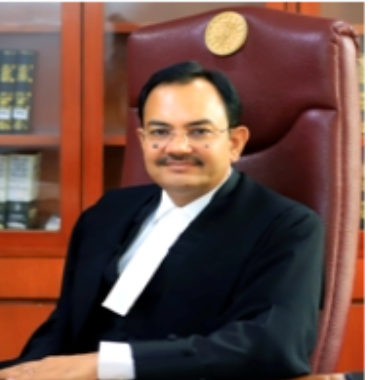
Legal Notes
Add a Note....